Executive Summary:
RTX Corporation subsidiary Raytheon has been selected to provide SeaRAM self-defense missile systems for Australia’s future Mogami-class frigates. The deal strengthens the Royal Australian Navy’s close-in air defense capability amid rising regional maritime security challenges in the Indo-Pacific.
The RTX Corporation SeaRAM system is set to become a core defensive component aboard Australia’s future Mogami-class frigates, reinforcing the Royal Australian Navy’s layered naval air defense architecture. The selection reflects Canberra’s continued investment in survivable surface combatants capable of operating in increasingly contested maritime environments across the Indo-Pacific.
Raytheon will provide the SeaRAM close-in weapon systems for the new frigates being developed under Australia’s broader naval modernization effort. The move comes as regional navies place greater emphasis on defending ships against anti-ship cruise missiles, drones, and saturation attacks.
Australia Expands Naval Self-Defense Capabilities
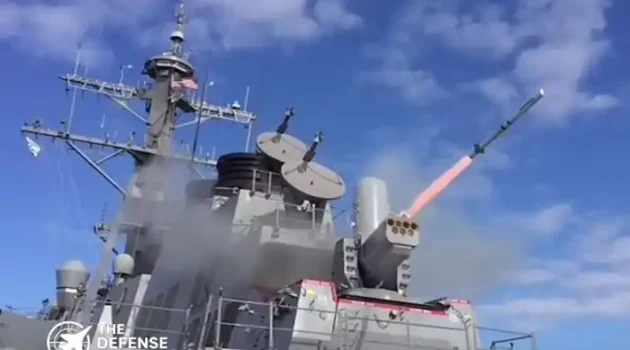
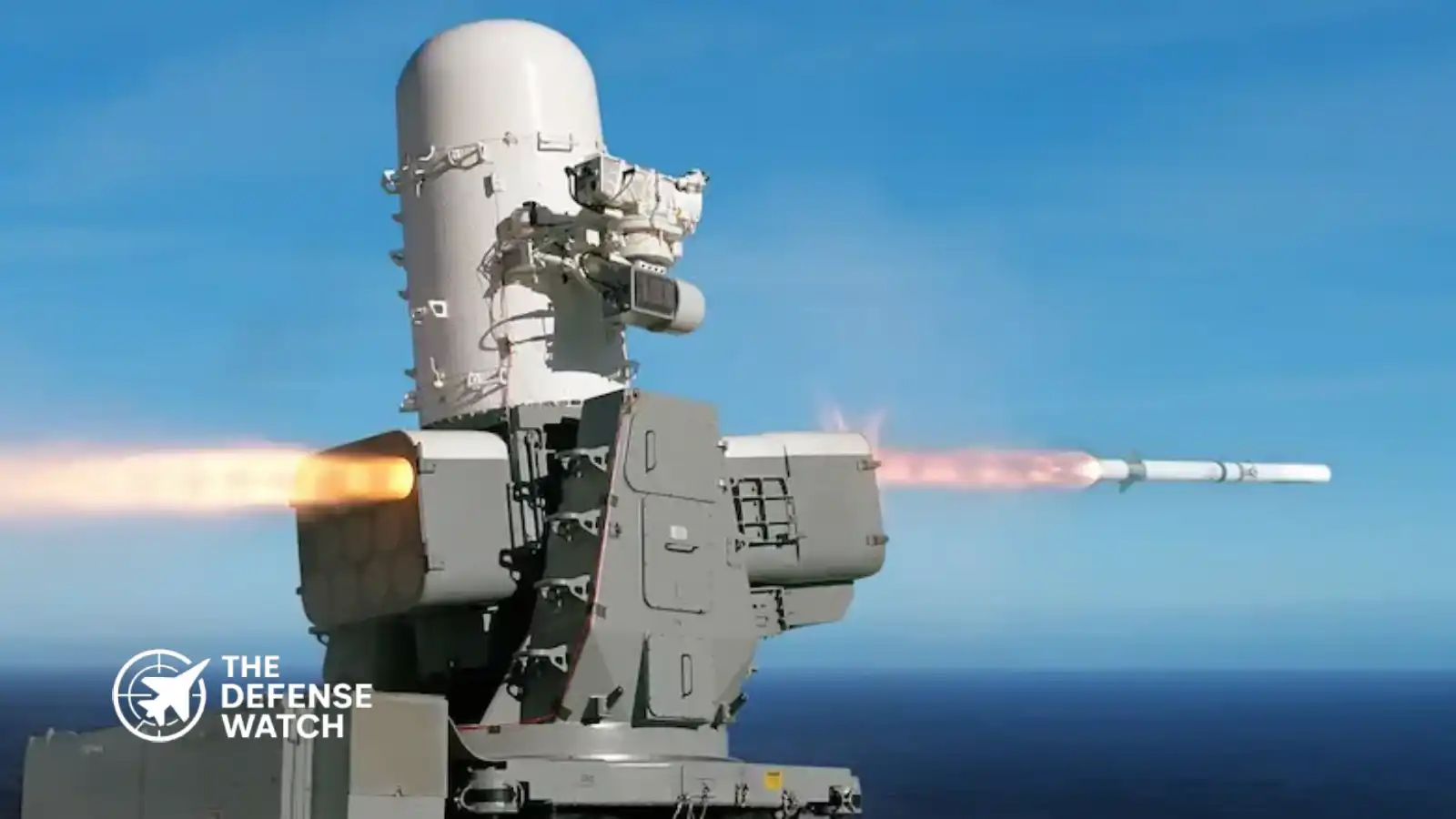
The SeaRAM system combines the combat-proven Phalanx radar and sensor suite with the Rolling Airframe Missile interceptor, creating an autonomous ship self-defense weapon designed to counter high-speed aerial threats at short range.
RTX Corporation has marketed SeaRAM as a rapid-response defensive solution capable of engaging anti-ship missiles, helicopters, unmanned aerial systems, and other airborne threats in complex naval combat environments.
Australia selected Japan’s Mogami-class frigate design in 2025 as part of its SEA 3000 general-purpose frigate program. The ships are expected to complement the Royal Australian Navy’s larger Hobart-class destroyers and Hunter-class frigates while providing enhanced operational flexibility and reduced crew requirements.
The integration of SeaRAM adds another layer to the vessels’ survivability profile, particularly in high-threat maritime regions where anti-ship missile proliferation continues to accelerate.
SeaRAM’s Operational Role
SeaRAM has become increasingly attractive for navies seeking compact, autonomous close-in defense systems with lower integration complexity than larger vertical launch systems.
The system uses an 11-missile launcher equipped with RIM-116 Rolling Airframe Missiles and leverages the Phalanx weapon system’s tracking and targeting sensors. Unlike gun-based close-in weapon systems alone, SeaRAM provides an extended engagement envelope against maneuvering threats.
The system is already deployed by the U.S. Navy aboard aircraft carriers, amphibious ships, and other surface combatants. Several allied navies, including those of Germany, South Korea, Qatar, and Egypt, also operate the platform.
For Australia, the addition of SeaRAM aligns with broader efforts to improve fleet survivability as regional military modernization accelerates across the Indo-Pacific theater.
Strategic Importance In The Indo-Pacific
Australia’s naval modernization strategy has increasingly focused on distributed lethality, fleet resilience, and interoperability with allied forces, particularly the United States and Japan.
The decision to equip the Mogami-class frigates with SeaRAM highlights Canberra’s emphasis on layered air and missile defense at a time when anti-ship missile threats are expanding in both sophistication and range.
Regional security concerns have intensified due to growing military competition in the South China Sea and broader Indo-Pacific maritime corridors. Modern naval operations now require warships to defend against simultaneous threats from missiles, drones, and electronic warfare systems.
SeaRAM’s autonomous targeting capability may provide Australian vessels with faster reaction times during saturation attacks, especially in contested electromagnetic environments where reaction windows are limited.
The system also strengthens interoperability with U.S. naval platforms, an increasingly important factor as Australia deepens defense cooperation under frameworks such as AUKUS and expanded regional maritime partnerships.
Raytheon’s Broader Naval Defense Portfolio
The SeaRAM selection further reinforces RTX Corporation position in the global naval missile defense market. The company continues to supply a range of naval air defense systems, including the Standard Missile family, ESSM interceptors, and the Phalanx Close-In Weapon System.
Demand for shipborne missile defense systems has risen sharply in recent years as naval forces adapt to lessons emerging from conflicts involving drone warfare and long-range precision strike capabilities.
Australia’s investment in modern frigates equipped with advanced self-defense systems reflects a wider trend among allied navies seeking improved survivability without significantly increasing ship size or crew burden.
Conclusion
Australia’s decision to equip its future Mogami-class frigates with SeaRAM systems marks another step in the Royal Australian Navy’s modernization strategy focused on survivability and regional deterrence. As Indo-Pacific maritime competition intensifies, close-in naval defense systems are becoming increasingly central to surface fleet operations.
The SeaRAM integration provides Australia with a proven, combat-tested capability designed to counter evolving airborne threats while strengthening interoperability with allied naval forces operating across the region.