Executive Summary:
The United States has deployed F-16 fighters to enhance air defense coverage over the Strait of Hormuz, a key global energy transit route. The move aims to strengthen maritime security amid rising regional tensions and protect critical shipping lanes.
U.S. Deploys F-16 Fighters To Strengthen Strait Of Hormuz Air Defense
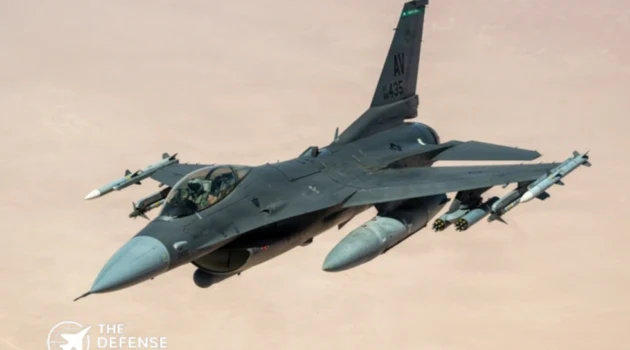
The U.S. F-16 deployment to the Strait of Hormuz marks a renewed effort to reinforce air defense coverage over one of the world’s most strategically vital maritime chokepoints. The move underscores Washington’s focus on safeguarding commercial shipping lanes amid persistent regional tensions and evolving aerial threats.
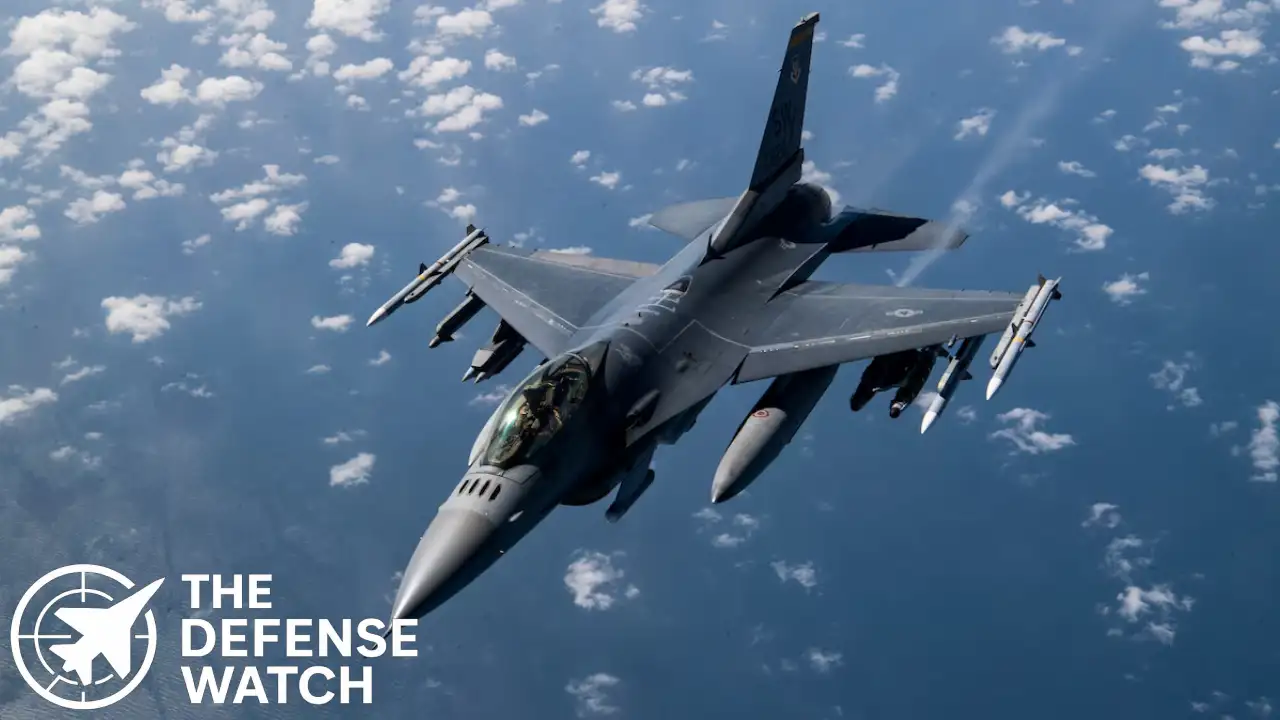
The deployment involves U.S. Air Force F-16 Fighting Falcons tasked with expanding aerial surveillance, deterrence, and rapid response capabilities across the Gulf region. The Strait of Hormuz handles roughly one-fifth of global oil trade, making its security a core priority for both the United States and its allies.
Strategic Context Behind The Deployment
The Strait of Hormuz air defense mission comes at a time of heightened geopolitical sensitivity in the Middle East. The narrow waterway, bordered by Iran and Oman, has long been a flashpoint for maritime security incidents, including vessel seizures, drone activity, and asymmetric threats.
The U.S. military has maintained a continuous presence in the region through the U.S. Central Command (CENTCOM), but the addition of F-16 fighters signals a calibrated adjustment rather than a routine rotation. This suggests a response to specific operational concerns, particularly the growing use of drones and low-altitude aerial systems that challenge traditional naval defenses.
From an operational standpoint, F-16s offer flexibility that complements naval assets. Unlike ship-based systems, fighter aircraft can quickly cover wide مناطق, intercept aerial threats, and provide real-time intelligence. This layered defense approach is increasingly important as adversaries rely more on unmanned systems and hybrid tactics.
Role Of The F-16 In Maritime Security Operations
The F-16 fighters maritime security role is centered on multi-mission capability. Equipped with advanced radar systems, precision-guided munitions, and air-to-air missiles, the aircraft can perform air policing, escort missions, and strike operations if required.
In the context of the Strait of Hormuz, their primary tasks likely include:
- Monitoring airspace for unauthorized or hostile aircraft and drones
- Providing escort to high-value naval or commercial vessels
- Acting as a rapid reaction force in case of escalation
- Enhancing situational awareness through airborne sensors
While the F-16 is not a stealth platform, its proven reliability and adaptability make it well-suited for sustained operations in contested but not fully denied environments. Its deployment also allows higher-end assets, such as fifth-generation fighters, to be reserved for more demanding scenarios elsewhere.
Operational Impact On Regional Security
The U.S. F-16 deployment to Hormuz contributes to a broader deterrence posture aimed at ensuring freedom of navigation. By increasing visible airpower presence, Washington signals its readiness to respond to disruptions without escalating to large-scale force deployments.
This approach aligns with recent U.S. defense strategy trends, which emphasize distributed operations and flexible force packages. Rather than relying solely on carrier strike groups, the Pentagon is leveraging land-based aircraft and regional partnerships to maintain coverage.
From a military balance perspective, the deployment does not fundamentally alter the regional power structure. However, it does complicate potential adversary calculations by reducing the window for opportunistic actions against shipping or allied forces.
Evolving Threat Landscape In The Gulf
One of the key drivers behind the Strait of Hormuz air defense reinforcement is the evolving threat environment. The increasing use of unmanned aerial vehicles (UAVs), loitering munitions, and fast attack craft has blurred the line between conventional and irregular warfare.
These threats are often low-cost, difficult to detect, and capable of causing significant disruption. Traditional naval defenses alone may not provide sufficient coverage, especially against swarming tactics or coordinated attacks.
Airpower, particularly platforms like the F-16, adds an essential layer by enabling early detection and interception. This is critical in a region where reaction time can determine the difference between deterrence and escalation.
Broader Implications For U.S. Defense Posture
The U.S. F-16 deployment to the Strait of Hormuz reflects a broader shift toward adaptive force positioning. Rather than maintaining static deployments, the U.S. military is increasingly adjusting its posture based on real-time threat assessments.
This approach offers several advantages:
- Greater operational flexibility
- Reduced logistical burden compared to large-scale deployments
- Enhanced ability to respond to emerging threats
- Improved coordination with regional allies
It also aligns with ongoing efforts to integrate air, naval, and cyber capabilities into a cohesive defense architecture.
Conclusion
The deployment of F-16 fighters to the Strait of Hormuz represents a targeted effort to strengthen air defense coverage over a critical global shipping route. While not a dramatic escalation, it highlights the importance of maintaining a credible and adaptable military presence in a region where even limited disruptions can have global economic consequences.
As the threat landscape continues to evolve, the role of versatile platforms like the F-16 will remain central to U.S. efforts to ensure maritime security and regional stability.