

Executive Summary:
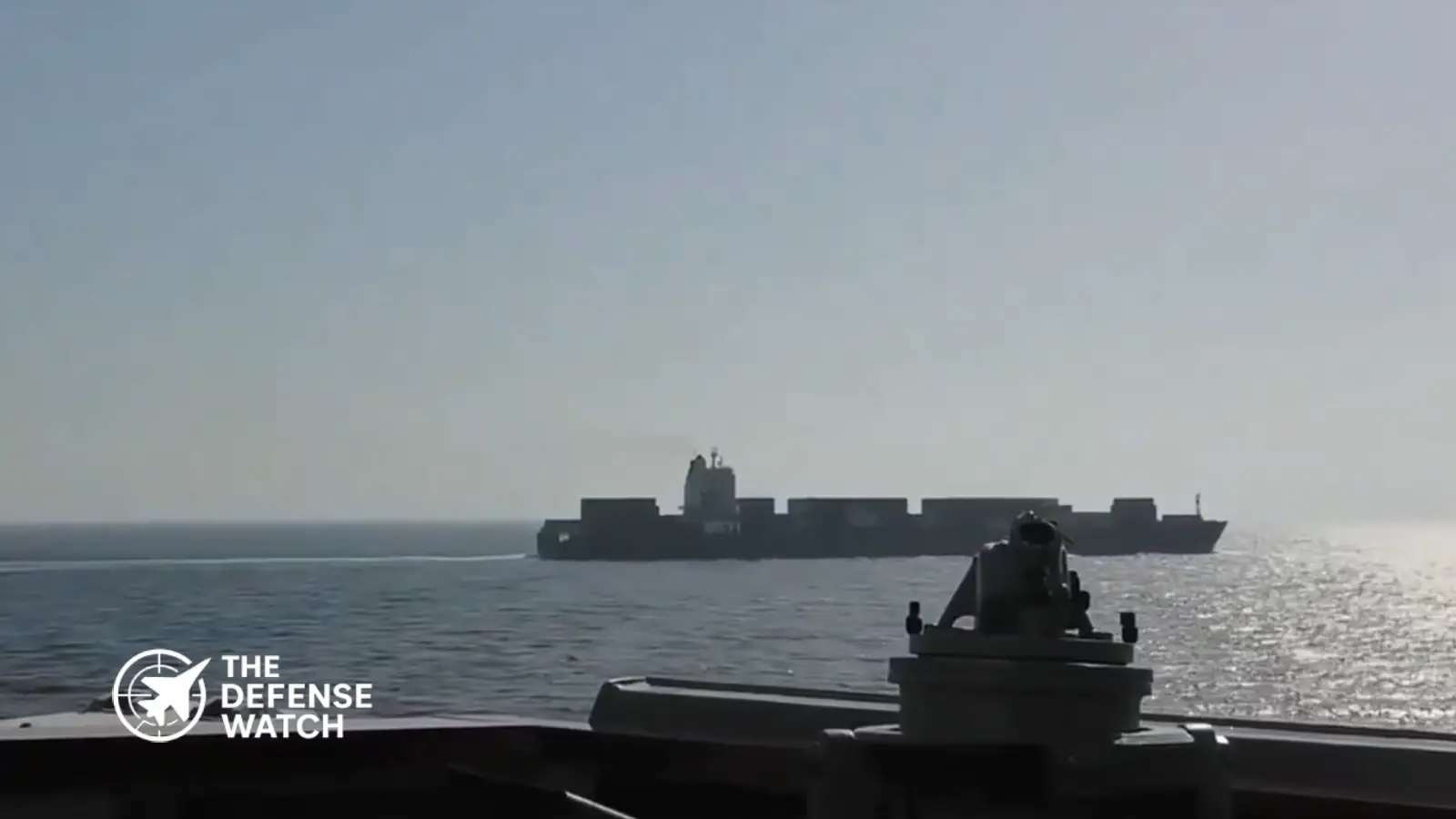
Pakistan has safely evacuated 22 crew members from the seized Iranian container vessel MV Touska, in coordination with Iran and the United States. The operation reflects a rare instance of trilateral cooperation aimed at maritime safety and regional stability. The vessel is now being returned to Pakistani waters for repairs before repatriation.
Pakistan Oversees Safe Evacuation of MV Touska Crew
Authorities in Pakistan confirmed that twenty-two crew members from the Iranian-flagged container vessel MV Touska were successfully evacuated and flown into the country overnight. The individuals are scheduled for transfer back to Iran following standard processing.
The vessel had previously been seized under unclear operational circumstances, though officials have not disclosed specific details regarding the initial interdiction. The safe recovery of personnel was prioritized as a humanitarian measure.
Coordinated Diplomatic and Operational Effort
The evacuation and subsequent vessel handling were carried out with support from both United States and Iranian authorities, underscoring a coordinated approach despite broader geopolitical tensions.
Key elements of the operation included:
- Air evacuation of all crew members under secure conditions
- Medical and logistical support upon arrival in Pakistan
- Planned repatriation of crew to Iran within 24 hours
- Backloading of the vessel into Pakistani territorial waters for inspection and repairs
Pakistani officials described the effort as a confidence-building measure, highlighting its role in reducing friction in a sensitive maritime environment.
Vessel Recovery and Repatriation Process
The MV Touska is currently being transferred back into Pakistani waters, where it will undergo necessary technical repairs and inspections before being returned to its original owners.
Operational Priorities
- Ensuring structural integrity of the vessel
- Verifying cargo safety and documentation
- Coordinating secure handover procedures with Iranian stakeholders
No timeline has been publicly confirmed for the vessel’s full return, though officials indicate the process is underway.
Comparison: Seized Vessel Handling vs Standard Maritime Incident Response
| Parameter | MV Touska Operation | Standard Maritime Incident Response |
|---|---|---|
| Range | Regional (Pakistan–Iran corridor) | Typically localized |
| Payload | Commercial container cargo | Varies by vessel type |
| Status | Seized, then stabilized and released | Usually distressed, not seized |
| Key Technology | Coordinated logistics and airlift | Search and rescue systems |
Strategic Context: Maritime Stability and Confidence Building
The operation comes at a time of heightened sensitivity in regional waters, particularly across the Arabian Sea and Gulf corridors, where commercial shipping lanes intersect with geopolitical fault lines.
Broader Implications
- Demonstrates functional cooperation between traditionally adversarial actors
- Reinforces Pakistan’s role as a regional mediator
- Signals commitment to maritime safety and lawful navigation
- Reduces risk of escalation tied to commercial vessel seizures
While limited in scale, the MV Touska operation reflects a pragmatic alignment of interests centered on safety, diplomacy, and controlled de-escalation.
Outlook
Pakistan has reiterated its commitment to facilitating dialogue, diplomacy, and mediation in regional security matters. The successful handling of the MV Touska incident may serve as a model for future cooperative maritime interventions, particularly in contested or sensitive waterways.
