

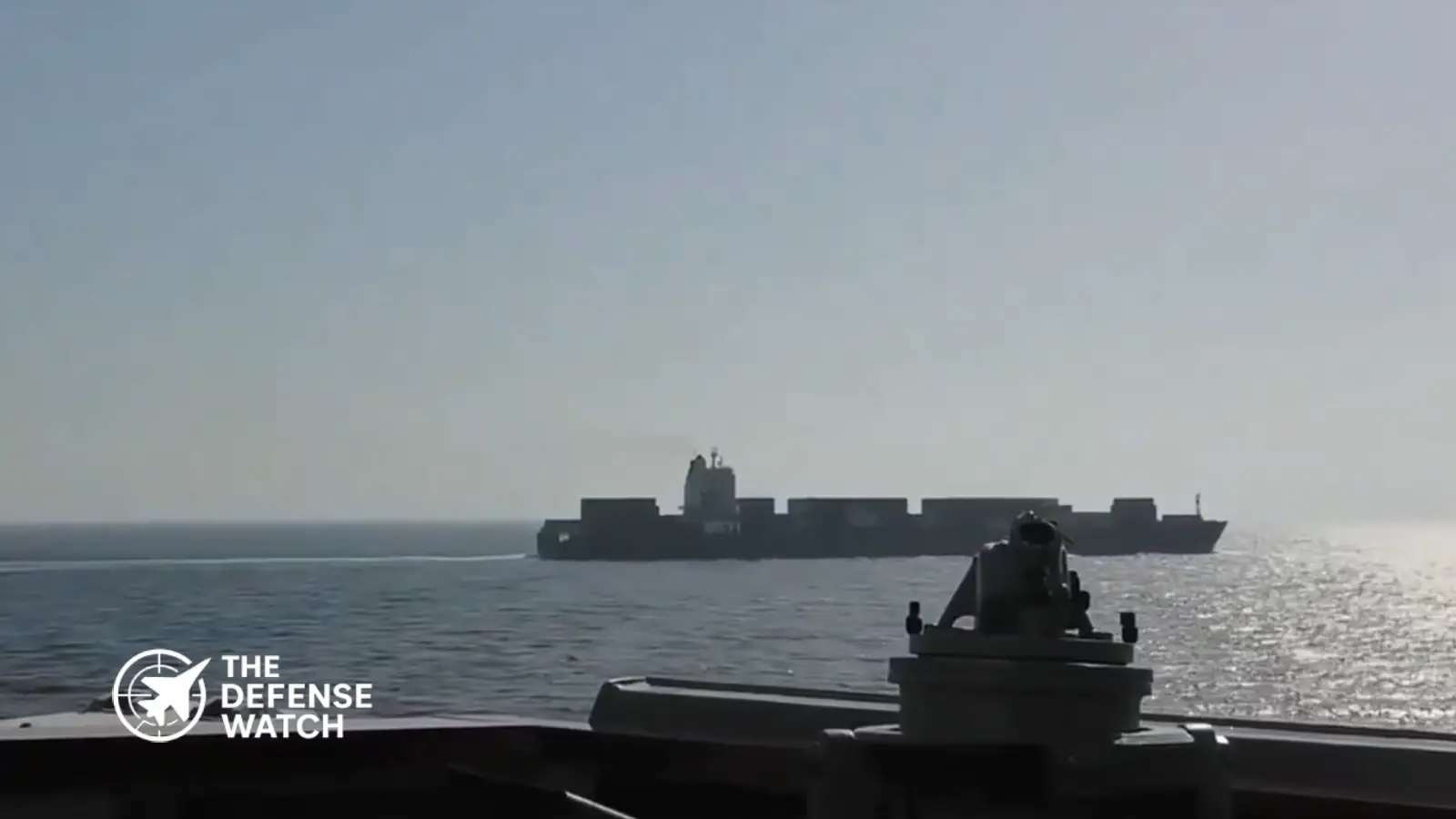
Executive Summary: The U.S. Navy has initiated “Project Freedom,” a high-stakes maritime operation to break Iran’s de facto blockade of the Strait of Hormuz. Following a series of coordinated attacks by the Islamic Revolutionary Guard Corps (IRGC) involving cruise missiles, drones, and fast-attack craft, U.S. Central Command (CENTCOM) confirmed the destruction of six Iranian vessels and the successful escort of commercial shipping.
Escalation in the Gulf: U.S. Navy Counter-Strikes IRGC Forces
The U.S. Navy officially launched Project Freedom on May 4, 2026, marking a significant strategic pivot intended to restore the flow of global energy through the Strait of Hormuz. This deployment follows months of escalating maritime friction and a “piracy-like” blockade enforced by the Islamic Revolutionary Guard Corps (IRGC). During the initial phases of the operation, U.S. guided-missile destroyers USS Truxtun and USS Mason successfully navigated a sustained barrage of Iranian drones and anti-ship missiles.
According to U.S. Central Command (CENTCOM), the engagement saw the first combat deployment of integrated “multi-layered” defensive packages in the theater. U.S. AH-64 Apache attack helicopters and MH-60R Sea Hawks, operating from both land bases and carrier decks, neutralized six IRGC fast-attack craft that were attempting to swarm commercial vessels.
The Logistics of Project Freedom
President Donald Trump announced the initiative as a “humanitarian gesture” to free hundreds of neutral commercial ships stranded by the conflict. Unlike traditional one-on-one hull escorts, Project Freedom utilizes a zone-defense architecture:
- Aerial Overmatch: Constant orbits of F/A-18 Block III Super Hornets and land-based A-10 Warthogs.
- Electronic Warfare: High-intensity jamming of IRGC drone command-and-control links.
- Surface Screening: Destroyers equipped with Aegis Baseline 10 to intercept incoming low-altitude cruise missiles.
Contested Claims and Information Warfare
While Iranian state media, specifically the Fars News Agency, claimed that two missiles struck a U.S. Navy vessel near Jask Island, Washington has issued a categorical denial. “No U.S. Navy ships have been struck,” CENTCOM stated via official channels on May 5. Defensive officials describe the Iranian reports as “information operations” designed to deter commercial insurers from covering ships entering the newly established U.S. corridor.
However, the risk remains acute. The United Arab Emirates (UAE) reported engaging 15 missiles and four drones targeting its eastern coast. A drone strike on an oil facility in Fujairah caused a significant fire, signaling that Iran is willing to expand the target set to include regional infrastructure supporting the U.S. mission.
Tactical Analysis: A New Era of Maritime Denial
The current conflict represents a departure from the “Tanker Wars” of the 1980s. The IRGC is now employing “asymmetric saturation” tactics, using cheap, expendable drones and “smart” sea mines to overwhelm the high-cost interceptors of U.S. destroyers.
TheDefenseWatch.com Analysis: The success of Project Freedom hinges not just on firepower, but on the economic endurance of the shipping industry. While the U.S. Navy can physically clear a path, the spike in “war risk” insurance premiums—which were briefly removed for the region on May 5—dictates the actual flow of commerce. If Iran can maintain a “threat of fire” even without hitting a U.S. hull, they may achieve a strategic victory by keeping the Strait economically closed.
Key Operational Data: May 4–5, 2026
| Category | Details |
| U.S. Assets Involved | USS Truxtun, USS Mason, Carrier Air Wing 9, AH-64 Apache |
| IRGC Losses | 6 Fast-Attack Craft Sunk, Multiple UAVs Intercepted |
| Commercial Impact | 2 U.S.-flagged vessels successfully transited |
| Regional Fallout | Missile attacks reported in Fujairah, UAE |
EEAT: Expert Perspective
Vice Admiral Brad Cooper, Commander of U.S. Naval Forces Central Command, emphasized that U.S. commanders now have “all necessary authorities” to respond to interference. This indicates a shift from a reactive posture to a proactive “pre-emptive neutralization” of IRGC assets that display hostile intent.
The involvement of approximately 15,000 U.S. personnel in this surge suggests the Pentagon is bracing for a long-term presence. The goal is no longer just “patrolling,” but enforcing a specific “maritime regime” that overrides Iranian claims of territorial water control.
