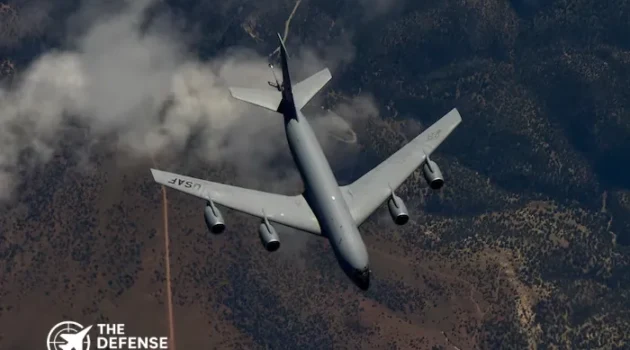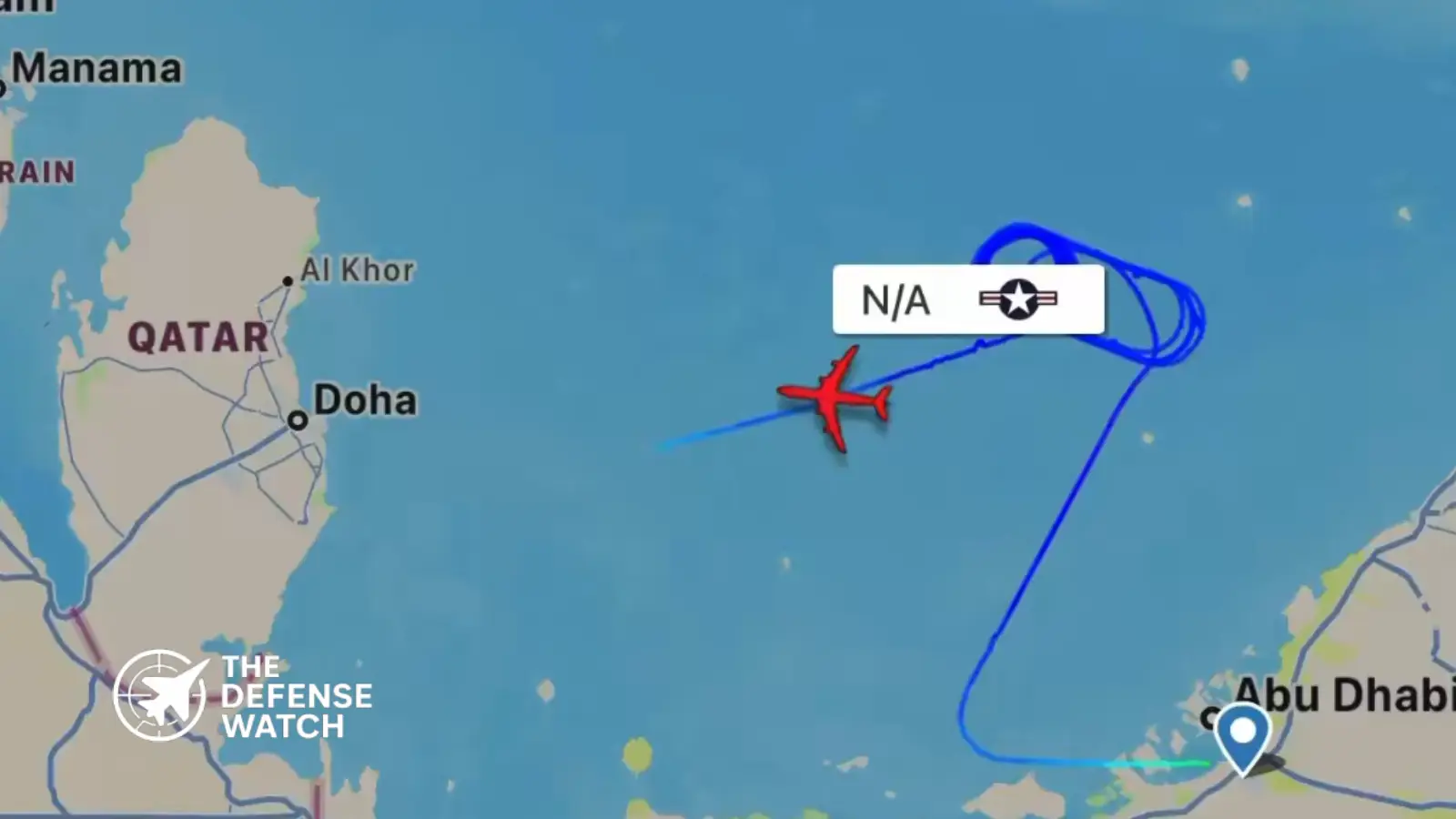
Executive Summary: A U.S. Air Force KC-135R Stratotanker issued a Transponder Code 7700 (General Emergency) while transiting the Strait of Hormuz before disappearing from flight tracking radar. The incident occurred amidst intense regional GPS spoofing and jamming, with the aircraft last seen descending toward Qatari airspace.
U.S. KC-135R Stratotanker Declares Emergency Amid Regional Electronic Interference
A U.S. Air Force KC-135R Stratotanker reportedly encountered a critical inflight emergency earlier today while operating over the Strait of Hormuz, a vital maritime chokepoint currently experiencing a surge in electronic warfare activity. Flight tracking data indicated the aircraft began a rapid descent while “squawking” a 7700 emergency code—the international signal for an immediate distress situation—before its signal was lost to open-source intelligence (OSINT) monitors.
The aircraft, a cornerstone of U.S. power projection in the Middle East, appeared to be banking toward Al Udeid Air Base in Qatar. However, the loss of ADS-B (Automatic Dependent Surveillance-Broadcast) telemetry has left the current status of the airframe—whether it performed a successful emergency landing or suffered a hull loss—unconfirmed by official Department of Defense (DoD) channels.
The Impact of Regional GPS Spoofing
The disappearance of the KC-135R Stratotanker coincides with high-level reports of sophisticated AIS (Automatic Identification System) and GPS jamming across the Persian Gulf. For the past several hours, regional monitors have noted significant “spoofing” incidents, where false location data is injected into navigation systems, causing aircraft and maritime vessels to appear miles away from their actual positions.
In the Strait of Hormuz, these electronic disruptions are often attributed to regional state actors seeking to complicate U.S. and allied transit. While it remains unclear if electronic interference directly caused the Stratotanker’s emergency, such an environment significantly increases the “fog of war” for flight crews managing mechanical or hydraulic failures.
Technical Analysis: The Vulnerability of Legacy Platforms
The KC-135R Stratotanker, while extensively modernized, remains a legacy platform based on the 1950s-era Boeing 707 design. As the backbone of U.S. Air Force refueling operations, these aircraft are essential for maintaining combat air patrols over the Central Command (CENTCOM) area of responsibility.
Emergency Protocols and Signal Loss
When a pilot sets the transponder to 7700, it notifies all air traffic control (ATC) units in the vicinity that the aircraft requires priority handling. The subsequent signal loss observed in this incident could stem from several factors:
- Terrain Masking: As the aircraft descended toward Qatar, it may have dropped below the line-of-sight required for ground-based ADS-B receivers.
- Intentional Shutdown: In an emergency involving electrical fires or specific electronic warfare protocols, crews may disable non-essential transponders.
- System Failure: A total loss of electrical power would result in an immediate cessation of all broadcast signals.
Analysis of the Electronic Warfare Environment
The Strait of Hormuz has become a premier laboratory for Electronic Warfare (EW). The “spoofing” seen today is a step beyond simple jamming; it is a deceptive measure designed to trick navigation suites into calculating incorrect flight paths. For a heavy tanker carrying thousands of pounds of volatile aviation fuel, a loss of primary navigation in one of the world’s most congested airspaces is a worst-case scenario.
Strategic Implications for CENTCOM
This incident highlights the precarious nature of U.S. operations in the Middle East Defense & Security sector. If the KC-135R Stratotanker was indeed forced down due to external interference, it marks a significant escalation in the use of non-kinetic effects against U.S. manned assets.
Maintaining the Air Bridge
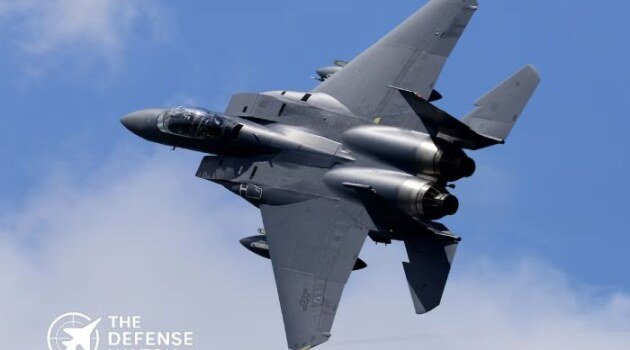
The loss or grounding of even a single Stratotanker can ripple through the theater. These aircraft enable the long-endurance missions of F-15E Strike Eagles and F-16 Fighting Falcons that currently patrol regional flashpoints. Without reliable “gas stations in the sky,” the U.S. footprint becomes restricted to short-range sorties based on immediate proximity to runways.
Verification of Safety
As of the time of publication, there have been no reports of wreckage or distress flares from the surface of the Strait. Military aviation experts suggest that the heading toward Qatar indicates a controlled attempt to reach the massive runway infrastructure at Al Udeid.
Conclusion: Awaiting Official Confirmation
The U.S. Air Force has not yet issued a formal “Condition of Aircraft” report. In previous instances of signal loss in this region, aircraft have often “gone dark” for operational security reasons while managing mechanical issues. However, the combination of a 7700 squawk and verified GPS jamming makes this a high-priority event for defense analysts.
TheDefenseWatch.com will continue to monitor the situation as more data becomes available from CENTCOM and regional ATC.