Executive Summary:
NATO fighter aircraft were scrambled to intercept a Russian Su-24 strike jet operating near Baltic airspace during a routine air policing mission. The incident highlights continued military activity around NATO’s eastern flank and growing concerns over regional air security in Northern Europe.
NATO Fighters Intercept Russian Strike Jet Over Baltic Sea
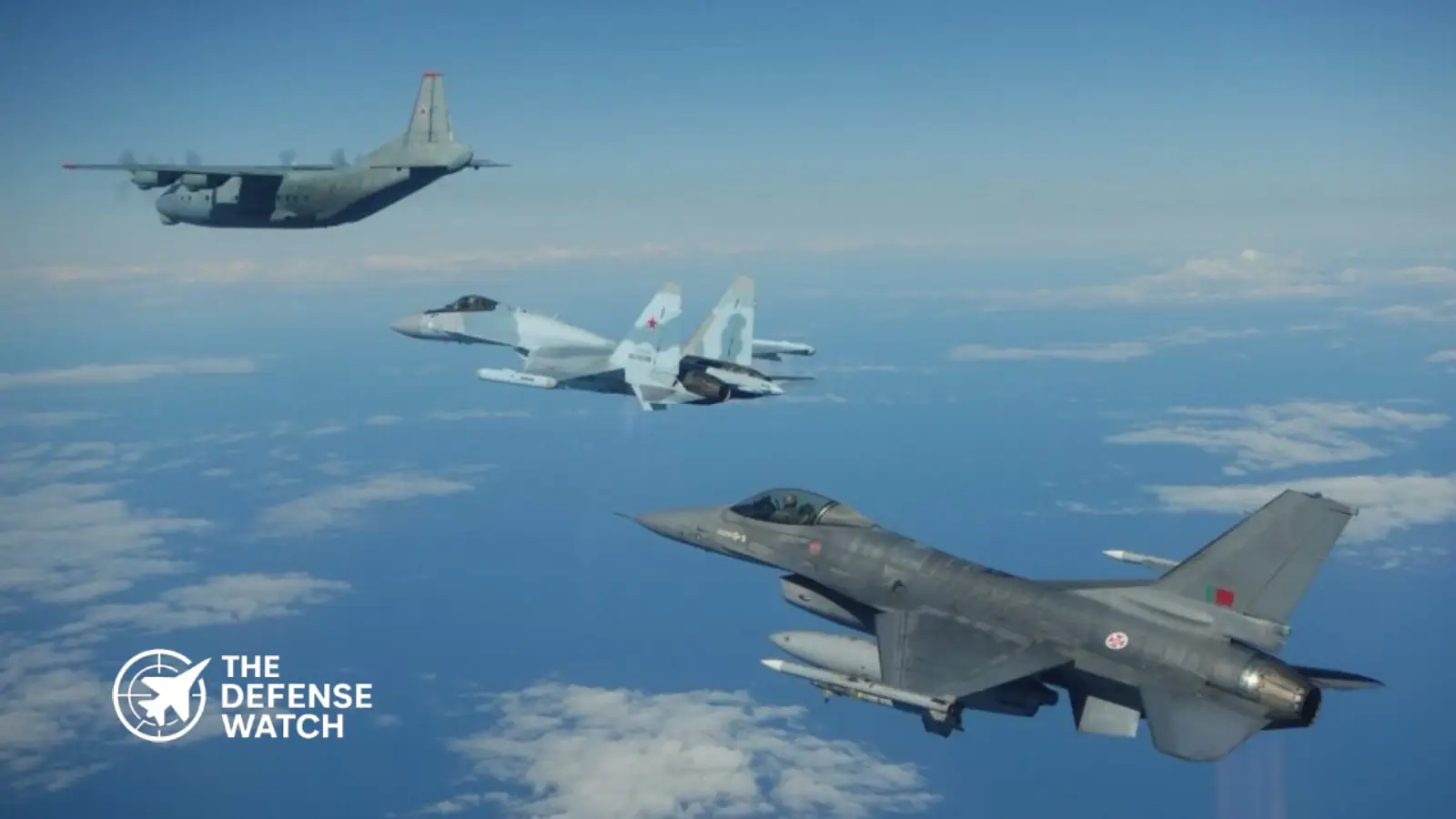
NATO fighters intercepted a Russian strike aircraft over the Baltic Sea in the latest air policing mission involving allied aircraft monitoring Russian military activity near NATO territory. According to reports from the Baltic region, the intercepted aircraft was identified as a Russian Su-24 tactical strike jet operating close to allied airspace.
The interception was conducted under NATO’s Baltic Air Policing mission, a long-running alliance operation designed to safeguard the airspace of Estonia, Latvia, and Lithuania. NATO aircraft were reportedly scrambled after the Russian aircraft approached the region without complying with standard international flight transparency measures.
The incident comes amid continued military pressure across NATO’s eastern flank following heightened tensions between Russia and Western nations since the start of the war in Ukraine.
NATO Baltic Air Policing Remains Highly Active
The NATO Baltic Air Policing mission has become one of the alliance’s most visible deterrence activities in Northern Europe. Fighter aircraft from multiple NATO member states rotate through bases in the Baltic region to conduct rapid-response interception missions.
Military aircraft from Russia frequently operate over the Baltic Sea, often flying from Kaliningrad or western Russian air bases. NATO states regularly monitor these flights when aircraft fail to transmit transponder signals or do not file recognized flight plans.
While such intercepts are not uncommon, defense analysts note that the frequency of NATO scrambles has remained elevated since 2022. The Baltic Sea region has become a strategically important operational zone for both NATO and Russia due to its proximity to key military infrastructure, shipping lanes, and alliance member states.
The Russian Su-24 involved in the latest incident is a Cold War-era strike aircraft designed for low-level attack missions. Despite its age, the platform remains in active Russian service and continues to be used in operational patrols and military exercises.
Strategic Importance Of The Baltic Region
The Baltic region has emerged as a critical theater in NATO’s broader deterrence posture. Finland and Sweden’s moves toward deeper NATO integration have significantly changed the regional security environment, increasing allied military coordination around the Baltic Sea.
NATO has expanded surveillance flights, naval patrols, and quick reaction alert operations across Northern Europe in response to increased Russian military activity. Air policing missions are intended not only to defend alliance airspace but also to demonstrate readiness and collective defense capabilities.
The latest NATO interception reflects how military aviation activity continues to serve as a signal of strategic competition between Russia and the alliance. Defense officials have repeatedly emphasized that intercept missions are conducted professionally and in accordance with international aviation rules.
At the same time, the operational tempo places sustained pressure on NATO air forces tasked with maintaining continuous readiness across multiple regions, including Eastern Europe, the Arctic, and the Black Sea theater.
Russian Military Flights Continue Near NATO Borders
Russian military aircraft activity near NATO territory has remained consistent throughout the conflict in Ukraine. Aircraft including Tu-95 bombers, Su-27 fighters, MiG-31 interceptors, and Su-24 strike jets have all been tracked near allied airspace in recent years.
These operations are closely monitored by NATO’s integrated air defense network, which combines radar surveillance, airborne early warning aircraft, and quick reaction fighter units.
The Baltic Sea is particularly sensitive because of the concentration of military assets in Kaliningrad, where Russia maintains advanced air defense systems, anti-ship missiles, and naval forces. NATO countries bordering the Baltic Sea continue to invest heavily in air defense modernization and rapid deployment capabilities.
The interception of the Russian strike jet also reflects the growing importance of tactical readiness and response speed within NATO air operations. Quick reaction alert aircraft are maintained at high readiness levels specifically to respond to unidentified or potentially unsafe military flights.
Broader Security Implications
Although air interceptions between NATO and Russian aircraft are generally managed without escalation, they remain politically significant. Each encounter is closely watched by military planners and political leaders as part of the broader security competition unfolding across Europe.
For NATO, maintaining visible and credible air policing operations is viewed as essential to alliance deterrence. For Russia, continued military aviation patrols near NATO territory demonstrate operational reach and strategic signaling capability.
The latest Baltic Sea interception reinforces how airpower remains central to regional security dynamics. It also highlights the continued risk of military incidents in heavily contested operating environments where NATO and Russian forces routinely operate in close proximity.