

America’s Nuclear Triad Modernization Enters Its Most Critical Phase Yet
The United States is preparing to execute the most sweeping overhaul of its nuclear deterrent since the Cold War arms race. The Trump administration’s fiscal year 2027 budget proposal dedicates $71.4 billion to modernizing all three legs of the U.S. nuclear triad — land-based missiles, submarine-launched ballistic missiles, and strategic bombers — along with the nuclear command, control, and communications architecture that ties them together. Secretary of War Pete Hegseth, testifying before the Senate Armed Services Committee on April 30, 2026, framed the stakes bluntly: get nuclear deterrence wrong, and everything else in the defense portfolio collapses with it.
- The FY2027 U.S. defense budget totals $1.5 trillion — the largest in American history — announced at the Pentagon on April 22, 2026.
- $71.4 billion is earmarked specifically for nuclear triad modernization and nuclear command, control, and communications (NC3) systems.
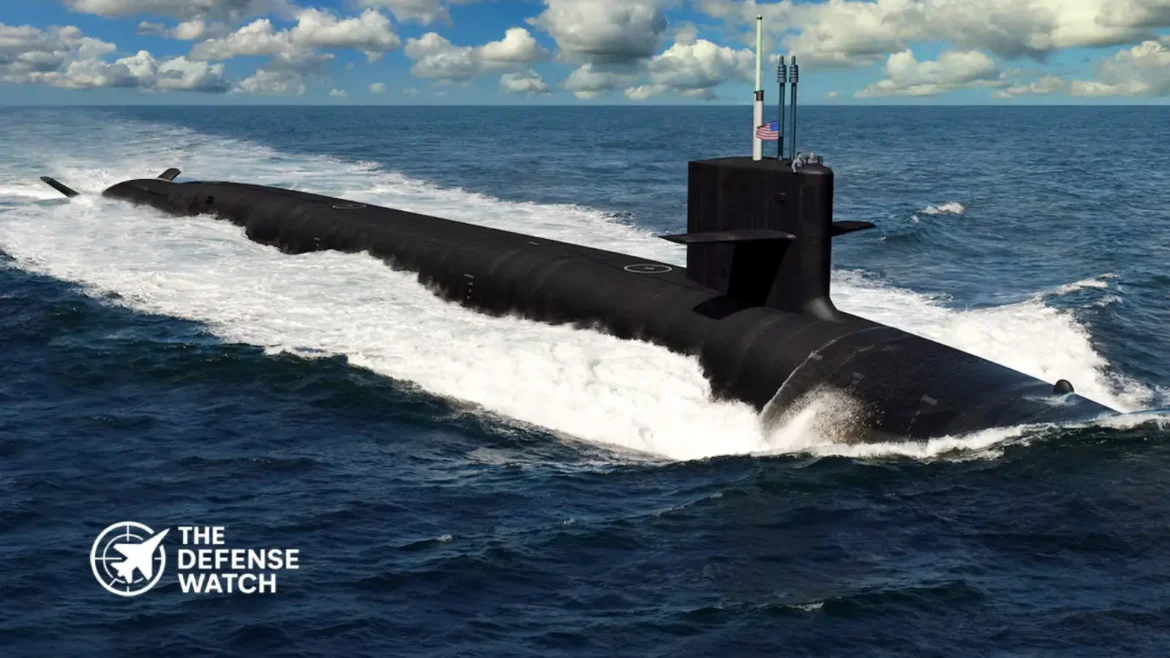
- The sea leg receives the largest share: $16.2 billion for the Columbia-class ballistic missile submarine program, including procurement of the fourth boat in class.
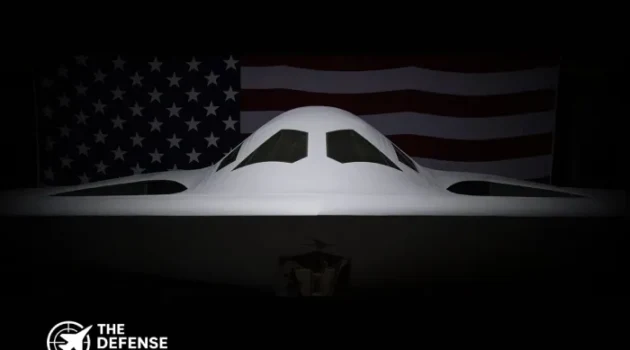
- The air leg receives $6.1 billion for the B-21 Raider stealth bomber and $1.5 billion for the Long-Range Standoff cruise missile (LRSO).
- The land leg receives $4.6 billion for the LGM-35 Sentinel ICBM program, which will field 400 deployed missiles across 450 hardened silos in five states.
The broader $1.5 trillion FY2027 budget request — described by the Pentagon as the largest defense spending proposal in U.S. history — was unveiled at a Pentagon briefing on April 22, 2026, and is intended to support service members and their families, secure the American homeland, modernize aging equipment, and rebuild the defense industrial base. Within that historic number, the nuclear modernization allocation stands apart for both its scale and its urgency.
Why $71 Billion — and Why Now?
The timing of this investment is not coincidental. Hegseth pointed specifically to Iran’s pursuit of nuclear weapons as a live demonstration of why the United States maintains a credible nuclear deterrent, and why that deterrent must remain modern and reliable. That argument carries fresh weight in May 2026, following a period of acute regional instability in the Middle East.
But Iran is only part of the calculus. The proposal is being framed as a response to near-peer competitors — specifically China and Russia — with the administration arguing that decades of underinvestment have left the United States’ strategic posture in need of urgent repair. Pentagon planners are not merely patching aging Cold War infrastructure; they are pursuing a near-simultaneous replacement of all three delivery systems that constitute the triad — a generational shift that no previous administration has attempted at this scale or speed.
Space Force Lt. Gen. Steven P. Whitney, the Pentagon’s joint staff director of force structure, described the request as a continuation of a “generational modernization effort” and highlighted $20.2 billion within the nuclear envelope specifically for NC3 architecture — ensuring missile warning capabilities and strengthening presidential decision-making authority over the country’s strategic forces.
The Air Leg: B-21 Raider and the Long-Range Standoff Weapon
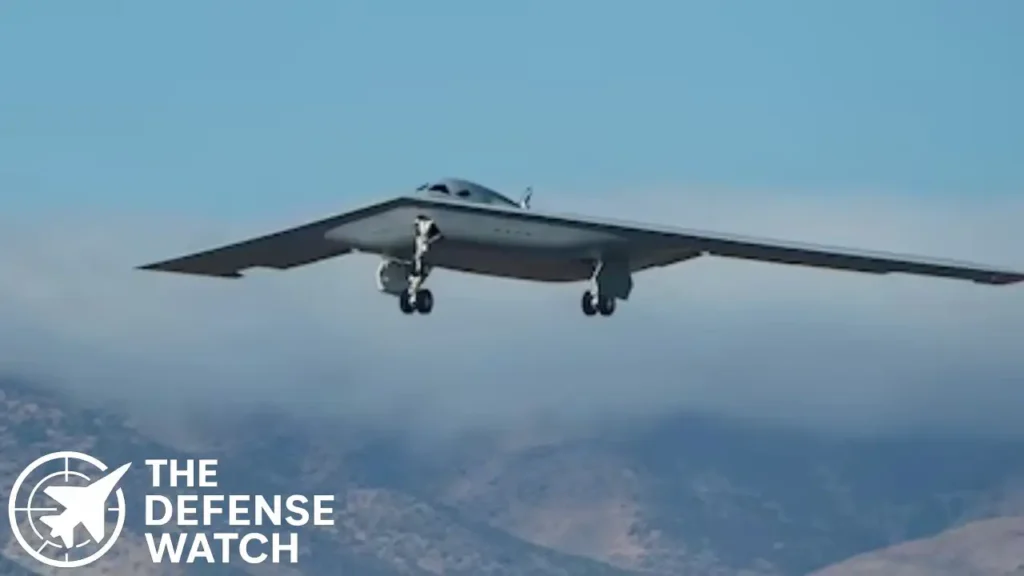
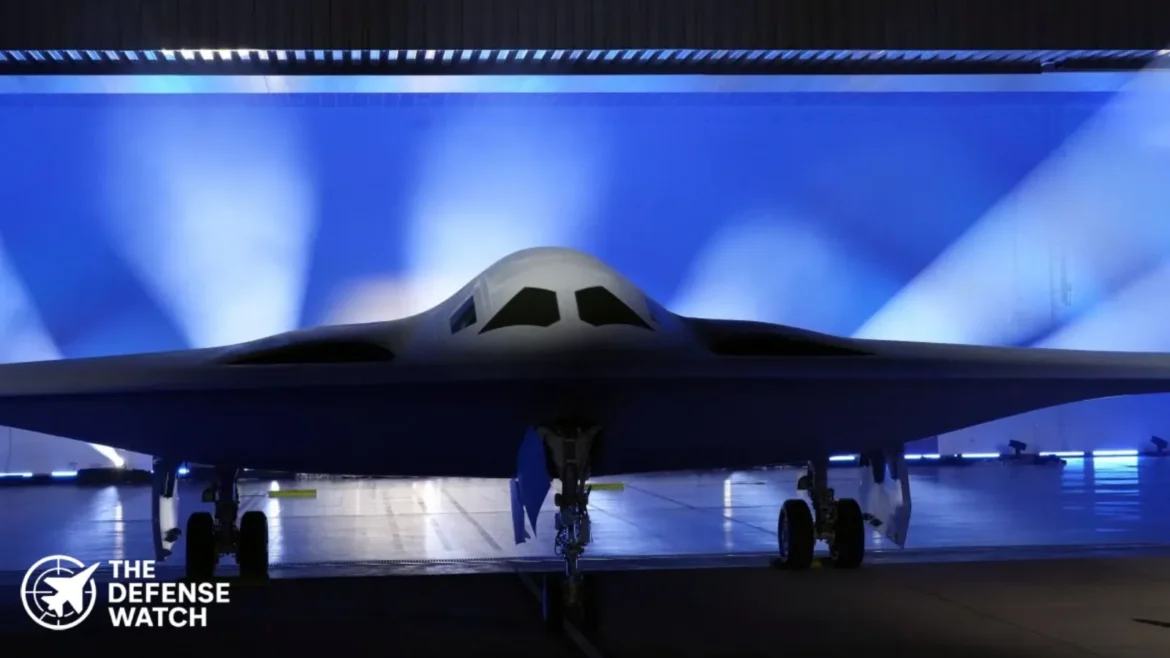
The air component of the triad receives $6.1 billion for the B-21 Raider program. The next-generation stealth bomber, developed by Northrop Grumman, is designed as a dual-capable platform able to deliver both conventional and nuclear payloads, and the U.S. Air Force plans to procure a minimum of 100 aircraft. FY2027 funding supports continued development, testing, production readiness, and low-rate initial production.
Alongside the Raider, $1.5 billion is allocated for the Long-Range Standoff (LRSO) cruise missile, the intended replacement for the aging AGM-86B air-launched cruise missile that currently arms the B-52H bomber fleet. Lifetime procurement costs for the LRSO have climbed to $11.8 billion — up from $9.8 billion projected just two years ago — with the FY2027 request nearly doubling the previous year’s enacted funding for the program.
The B-21 and LRSO together represent a penetrating strike-plus-standoff combination designed to defeat even the most advanced integrated air defense systems that adversaries like China and Russia are fielding. The combination gives U.S. Strategic Command far more flexibility than the bomber leg has historically offered.
The Land Leg: Sentinel ICBM Faces Cost Pressure but Moves Forward
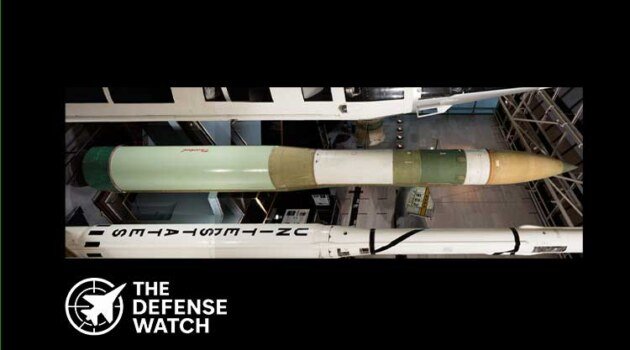
The FY2027 budget includes $4.6 billion for the LGM-35 Sentinel program, the long-overdue replacement for the Minuteman III intercontinental ballistic missile. When fully fielded, the Sentinel will deploy 400 operational warheads across 450 hardened silos in five states, requiring major infrastructure projects at each location.
The Air Force anticipates achieving Milestone B approval for the Sentinel by the end of 2026, following significant cost overruns and a program restructuring. Northrop Grumman broke ground in February 2026 on a test silo intended to validate a new modular silo launcher design. FY2027 silo construction funding of just over $1 billion is distributed across F.E. Warren Air Force Base in Wyoming ($632 million), Minot Air Force Base in North Dakota ($232 million), and Malmstrom Air Force Base in Montana ($138.5 million).
The Sentinel program has absorbed criticism for budget overruns and schedule delays, but its strategic logic remains intact. Minuteman III missiles have been in service since the early 1970s, and their guidance, propulsion, and communication systems are stretching the limits of maintainability. Delaying Sentinel further would eventually force a choice between operating an increasingly unreliable land leg or standing it down — neither of which is acceptable under current threat conditions.
The Sea Leg: Columbia-Class Submarine Leads the Pack
The nuclear sea leg receives the largest single allocation within the triad package: $16.2 billion for the Columbia-class ballistic missile submarine program. The FY2027 request funds procurement of the fourth Columbia-class boat as well as continued development work on the third submarine in the class, USS Groton, along with research, development, testing, evaluation, and investment in the submarine industrial base.
The Navy still expects to receive the first Columbia-class boat by the end of 2028, according to Vice Adm. Robert Gaucher, the service’s direct reporting portfolio manager for submarines. The Trident II ballistic missile — the sea leg’s primary weapon — is also moving from an R&D phase into full procurement in FY2027, with associated costs rising from $2.6 billion to $3.9 billion.
The Columbia program is arguably the most critical single investment in the entire nuclear enterprise. Submarines on patrol are essentially invulnerable to first-strike targeting, making the sea-based leg the ultimate guarantor of a retaliatory second strike. Any gap in Columbia deliveries as Ohio-class boats age out would create a structural vulnerability in the deterrent posture that adversaries could exploit in a crisis.
Industrial Base: The Hidden Variable in the Entire Budget
Secretary Hegseth told lawmakers that rebuilding the industrial base underpins everything else in the budget, arguing that the capacity of America’s private sector to deliver advanced weapons at speed and scale is itself a form of deterrence — and that for years, that capacity had been deliberately neglected.
The central physical constraint confronting the entire modernization effort is the eroded state of the U.S. defense industrial base. The country has only two shipyards capable of building nuclear submarines, and expanding that capacity requires new dry docks, cranes, and skilled workers — a process that takes five to seven years before the first additional hull is laid.
This is the quiet risk buried inside an otherwise impressive budget document. Money is necessary but not sufficient. The Sentinel silo construction program requires specialized contractors; the Columbia program requires a submarine workforce that has been contracting for decades. Throwing capital at a depleted industrial ecosystem does not instantly restore it, and the Pentagon’s own planners acknowledge that the timeline for full capacity restoration extends well beyond a single budget cycle.
What the Numbers Mean Strategically
The $71.4 billion nuclear allocation should be read in the context of a broader strategic signaling exercise as much as a procurement plan. The FY2027 request represents a 44 percent increase over prior defense spending levels and is structured as $1.15 trillion in base discretionary funding plus $350 billion in supplemental funding for what the administration terms “critical presidential priorities.
Peer competitors are watching. China is expanding its own land-based ICBM force at a pace that U.S. intelligence has described as alarming, while Russia continues to invest in hypersonic nuclear delivery vehicles designed to penetrate missile defense systems. The United States is not modernizing the triad in a vacuum — it is doing so in an environment where nuclear competition is actively accelerating on multiple fronts simultaneously.
The key analytical question for 2026 and beyond is not whether the budget request is bold enough — it clearly is — but whether the industrial, congressional, and fiscal conditions exist to execute it on the timelines the administration has set. History suggests that nuclear modernization programs routinely slip, cost more than projected, and encounter technical obstacles that no budget document anticipates. The Sentinel program has already demonstrated that lesson once. Whether the political will exists to sustain $71 billion in annual nuclear investment through successive budget cycles remains an open question that Capitol Hill will ultimately answer.
FAQs
What is the total nuclear triad funding in the FY2027 defense budget?The FY2027 budget allocates $71.4 billion specifically to the nuclear triad and nuclear command, control, and communications systems — the largest such investment in the current modernization cycle.
What is the B-21 Raider’s role in the nuclear triad?The B-21 Raider is the air leg of the triad. It is a dual-capable stealth bomber that can deliver both conventional and nuclear weapons, including the Long-Range Standoff cruise missile. The Air Force plans to procure a minimum of 100 aircraft.
What is the LGM-35 Sentinel and why is it significant?The Sentinel is the replacement for the Minuteman III ICBM, which has been in service since the early 1970s. The FY2027 budget includes $4.6 billion to continue its development, and the program will eventually deploy 400 operational missiles across 450 hardened silos in five states.
How does the Columbia-class submarine fit into the nuclear triad?The Columbia-class submarine is the sea leg of the triad. Submarines on patrol are considered the most survivable component of the deterrent because they are extremely difficult to detect and target. The FY2027 budget allocates $16.2 billion to the program, including procurement of the fourth boat.
Will the $1.5 trillion defense budget actually pass Congress?The proposal is a request, not an enacted appropriation. The request faces significant debate over its scale, with analysts noting industrial base constraints, competing fiscal priorities, and bipartisan concerns about the national debt. Congressional passage at the full requested level is considered unlikely, though substantial portions are expected to be approved.

Executive Summary:
Canada is moving to establish a Defence Security and Resilience Bank aimed at strengthening national security financing and industrial capacity. The initiative reflects growing geopolitical pressures and the need for faster, more flexible defense investment mechanisms. It is expected to support critical infrastructure, defense innovation, and supply chain resilience.
Canada Defence Security And Resilience Bank Signals Strategic Financing Shift
Canada’s plan to create a defence security and resilience bank marks a significant shift in how the country intends to finance national security and defense modernization. The initiative, reported by Defence Industry Europe, aims to provide a dedicated financial structure to support critical defense projects, infrastructure resilience, and industrial capacity.
The proposed bank is designed to address a growing gap between traditional government budgeting cycles and the urgent investment needs driven by evolving security threats. Ottawa’s move reflects a broader trend among Western nations seeking more agile funding tools to accelerate military readiness and technological innovation.
At its core, the defence security and resilience bank would function as a specialized financial institution, channeling public and potentially private capital into strategic sectors tied to national security.
Addressing Capability Gaps And Industrial Constraints
The defence security and resilience bank comes at a time when Canada faces mounting pressure to modernize its armed forces and meet alliance commitments, particularly within NATO. Years of underinvestment, procurement delays, and industrial bottlenecks have created capability gaps that require sustained and flexible funding.
Traditional defense procurement models often struggle with long timelines and rigid budget allocations. By contrast, a resilience bank could enable faster deployment of capital into priority areas such as:
- Defense infrastructure modernization
- Cybersecurity and digital resilience
- Advanced manufacturing and supply chains
- Dual-use technologies with civilian and military applications
This approach aligns with similar efforts in allied nations to strengthen defense industrial bases while ensuring supply chain security in contested geopolitical environments.
Strategic Context: Rising Global Security Pressures
Canada’s move to establish a defence security and resilience bank is closely tied to the evolving global threat landscape. Increased geopolitical competition, particularly among major powers, has exposed vulnerabilities in defense supply chains and critical infrastructure.
The war in Ukraine, heightened tensions in the Indo-Pacific, and growing concerns over cyber threats have all underscored the importance of resilience in national defense planning. Governments are increasingly recognizing that military capability is not only about platforms and personnel, but also about industrial capacity and economic security.
In this context, the resilience bank concept serves as a bridge between economic policy and defense strategy, enabling coordinated investment in areas that directly impact national security.
Enabling Faster And More Flexible Investment
One of the primary advantages of the proposed defence security and resilience bank is its potential to accelerate funding decisions. Unlike traditional government programs, which can be constrained by annual budgets and bureaucratic processes, a dedicated financial institution can operate with greater flexibility.
This could allow Canada to:
- Rapidly fund emerging technologies such as artificial intelligence and autonomous systems
- Support domestic defense कंपनies in scaling production
- Respond quickly to supply chain disruptions
- Co-invest with private sector partners
Such flexibility is increasingly viewed as essential in an era where technological change and security threats evolve faster than conventional procurement cycles.
Strengthening The Defense Industrial Base
A key objective of the defence security and resilience bank is to bolster Canada’s defense industrial base. The country has historically relied on a mix of domestic production and international partnerships, but recent disruptions have highlighted the risks of overdependence on external suppliers.
By directing investment into domestic उद्योग capabilities, the bank could help:
- Expand manufacturing capacity for critical systems
- Encourage innovation in defense-related technologies
- Support small and medium-sized enterprises in the defense sector
- Enhance export competitiveness
This aligns with broader efforts among NATO allies to ensure greater self-reliance while maintaining interoperability within the alliance.
Policy Implications And Implementation Challenges
While the concept of a defence security and resilience bank offers clear advantages, its implementation will require careful planning. Key considerations include governance, funding sources, and alignment with existing defense policies.
Questions remain regarding:
- The scale of initial capitalization
- The balance between public and private investment
- Oversight mechanisms to ensure accountability
- Integration with Canada’s existing procurement framework
Additionally, ensuring that investments are strategically targeted, rather than politically driven, will be critical to the bank’s long-term effectiveness.
Broader Trend Among Western Allies
Canada’s initiative reflects a broader shift among Western governments toward innovative defense financing models. Countries such as the United States and members of the European Union have explored similar mechanisms to accelerate defense investment and strengthen industrial resilience.
These efforts are driven by a shared recognition that traditional funding approaches may not be sufficient to meet the demands of modern warfare and strategic competition. The defence security and resilience bank concept represents an attempt to adapt financial tools to the realities of 21st-century security challenges.
Outlook: A New Model For Defense Investment
If successfully implemented, Canada’s defence security and resilience bank could serve as a model for other nations seeking to modernize their defense financing frameworks. By combining public resources with private capital and focusing on strategic priorities, the initiative has the potential to enhance both military capability and economic resilience.
However, its success will depend on execution, including clear governance structures, transparent investment criteria, and alignment with national security objectives.

Executive Summary:
A new survey from the European Central Bank indicates euro zone companies expect inflation to rise again if ongoing conflicts persist. The findings highlight growing concern over energy costs, supply chains, and economic stability. The warning underscores how geopolitical risks are increasingly shaping economic policy in Europe.
ECB Inflation Warning Signals Renewed Economic Pressure
The ECB inflation warning euro zone outlook has taken a more cautious turn as businesses across the bloc prepare for a potential resurgence in price pressures tied to prolonged conflict. Firms surveyed by the central bank expect inflation to accelerate again if war-related disruptions continue in the coming months.
The survey reflects mounting concern that earlier gains in controlling inflation could reverse. Companies pointed to energy volatility, supply chain instability, and rising input costs as key drivers behind the renewed risks.
This shift comes at a critical moment for policymakers, who have spent the past two years tightening monetary policy to bring inflation closer to target levels.
War-Driven Risks Reshape Inflation Expectations
At the center of the ECB inflation warning euro zone outlook is the direct link between geopolitical instability and economic performance.
Businesses indicated that prolonged conflict, particularly in regions affecting energy supply routes, could trigger another wave of cost increases. Europe remains structurally exposed to energy shocks despite efforts to diversify supply following earlier disruptions tied to the Russia-Ukraine war.
Higher transportation costs, insurance premiums, and raw material shortages are also feeding into broader inflation expectations. These factors suggest that even localized conflicts can produce system-wide economic effects.
From a defense and security perspective, this underscores how modern conflicts increasingly extend beyond military domains into financial and industrial systems.
Policy Implications For The European Central Bank
The ECB inflation warning euro zone scenario presents a complex challenge for monetary policy.
On one hand, inflation has been trending downward, allowing for cautious optimism among policymakers. On the other, the survey suggests that external shocks could quickly reverse that progress.
If inflation expectations begin to rise again, the ECB may be forced to maintain tighter financial conditions for longer than anticipated. That could delay potential rate cuts and slow economic recovery across the region.
This balancing act highlights a broader strategic issue. Central banks are now operating in an environment where geopolitical uncertainty plays a central role in shaping economic outcomes.
Defense And Geopolitical Linkages To Economic Stability
The ECB inflation warning euro zone findings also carry implications beyond economics, particularly for defense and security planning.
Sustained inflation driven by conflict can strain national budgets, including defense spending. Governments may face competing priorities between maintaining military readiness and supporting domestic economic stability.
At the same time, higher inflation can increase the cost of defense procurement, from fuel and logistics to advanced weapons systems. This creates additional pressure on modernization programs across Europe.
The situation reinforces a key trend. Economic resilience is now a core component of national security, alongside traditional military capabilities.
Industry Perspective: Supply Chains And Strategic Vulnerabilities
European firms responding to the ECB survey highlighted supply chain fragility as a major concern.
Even limited disruptions can cascade through industrial networks, affecting production timelines and pricing. Critical sectors such as energy, manufacturing, and transportation remain particularly vulnerable.
For defense industries, which rely on complex global supply chains, these risks are especially pronounced. Delays or cost increases in raw materials and components can impact everything from aircraft production to missile systems.
This aligns with broader efforts across NATO and EU members to strengthen supply chain resilience and reduce dependency on external sources.
Outlook: Inflation Risks Tied To Conflict Duration
The ECB inflation warning euro zone outlook ultimately hinges on the duration and intensity of ongoing conflicts.
A short-term stabilization could help maintain the current downward trend in inflation. However, a prolonged or expanding conflict scenario would likely reignite price pressures across multiple sectors.
Energy markets remain the most immediate risk factor, but secondary effects such as trade disruptions and financial volatility could amplify the impact.
For policymakers, the message is clear. Economic forecasts can no longer be separated from geopolitical developments.
Conclusion
The ECB inflation warning euro zone survey highlights a growing intersection between economic stability and global security dynamics. As conflicts continue to influence energy markets and supply chains, inflation risks remain elevated despite recent progress.
For Europe, the challenge lies in balancing monetary policy, economic resilience, and strategic security priorities in an increasingly uncertain environment.
European Defense Sector Challenges Intensify Amid Rising Demand
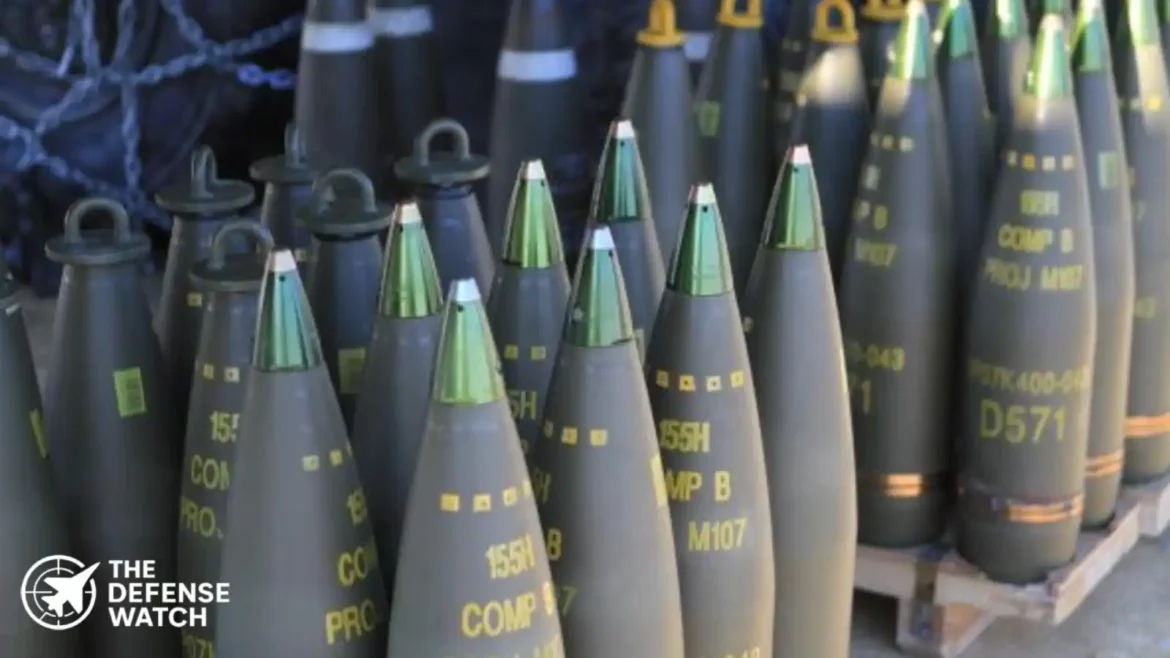
The European defense sector challenges are becoming increasingly visible as governments attempt to expand military capabilities in response to shifting security dynamics. While defense budgets across Europe have risen sharply since 2022, industrial capacity, coordination, and supply chains have struggled to keep pace.
- Europe faces major defense production bottlenecks despite rising military spending since 2022.
- Fragmented procurement across EU states limits economies of scale and slows modernization.
- Supply chain constraints, especially in munitions and electronics, remain a critical vulnerability.
- Workforce shortages and regulatory delays are hindering rapid industrial expansion.
- Strategic dependence on U.S. systems continues to shape Europe’s defense posture.
According to data from NATO and the European Defence Agency, many European nations are still working to translate financial commitments into deployable capability. The result is a widening gap between political intent and operational readiness.
Fragmentation Undermines Efficiency
One of the most persistent European defense sector challenges is fragmentation across national industries. Unlike the United States, where procurement is largely centralized, Europe operates through a patchwork of national programs and competing industrial champions.
This leads to duplication of platforms, inconsistent standards, and reduced economies of scale. For example, Europe fields multiple main battle tank designs, fighter aircraft programs, and naval platforms, often developed in parallel rather than jointly.
The European Commission has acknowledged this issue, noting that collaborative procurement accounts for a relatively small share of total defense spending. Efforts such as the European Defence Fund aim to address this, but progress remains gradual.
Analysis:
Fragmentation is not just an economic inefficiency. It directly affects interoperability within NATO. In high-intensity conflict scenarios, differences in equipment, logistics, and maintenance systems can complicate joint operations, slowing response times and increasing costs.
Production Bottlenecks Limit Output
A second major factor shaping European defense sector challenges is limited industrial production capacity. The war in Ukraine exposed critical shortages in artillery shells, air defense systems, and spare parts.
Despite increased orders, scaling production has proven difficult. Defense manufacturers face long lead times for expanding facilities, securing raw materials, and hiring skilled labor.
For instance, European ammunition production has struggled to meet demand targets set by the European Union. Reports from industry groups indicate that output increases are constrained by both infrastructure and supply chain limitations.
Analysis:
This bottleneck highlights a structural issue. European defense industries were optimized for peacetime efficiency, not sustained high-volume conflict. Reconfiguring production lines for wartime output requires long-term investment and policy consistency, which cannot be achieved quickly.
Supply Chain Vulnerabilities Persist
Supply chain disruptions remain a central element of European defense sector challenges. Critical components such as semiconductors, explosives, and specialized metals often depend on global suppliers.
The COVID-19 pandemic and subsequent geopolitical tensions exposed these vulnerabilities. Defense firms now face delays in sourcing key inputs, which slows production timelines across multiple programs.
In some cases, reliance on non-European suppliers raises strategic concerns. Governments are increasingly focused on reshoring or diversifying supply chains, but such transitions are complex and costly.
Analysis:
Supply chain resilience is becoming as important as platform capability. Without secure access to components, even advanced systems cannot be produced or maintained at scale. This shifts defense planning toward industrial security as a core priority.
Workforce and Skills Gap
Another pressing issue within European defense sector challenges is the shortage of skilled labor. Expanding production requires engineers, technicians, and specialized manufacturing personnel, many of whom are in short supply.
Industry reports indicate that aging workforces and limited recruitment pipelines are slowing expansion efforts. Training new workers takes time, further delaying production increases.
Governments and companies are investing in workforce development programs, but results will take years to materialize.
Analysis:
The skills gap reflects a broader trend across advanced manufacturing sectors. Defense industries compete with commercial technology firms for talent, often facing disadvantages in salary and flexibility. Addressing this imbalance is essential for long-term growth.
Regulatory and Procurement Delays
Complex regulatory frameworks and lengthy procurement processes also contribute to European defense sector challenges. Approval timelines for new programs can stretch over several years, delaying deployment.
While oversight is necessary, excessive bureaucracy can hinder responsiveness, particularly in rapidly evolving threat environments.
Recent initiatives aim to streamline procurement and accelerate decision-making, but implementation varies across member states.
Analysis:
Speed is increasingly a strategic factor. Adversaries capable of rapid innovation and deployment can exploit delays in Western procurement systems. Reforming these processes is critical to maintaining technological and operational parity.
Strategic Dependence on External Suppliers
Despite efforts to strengthen autonomy, Europe remains reliant on external partners, particularly the United States, for key defense capabilities. This includes advanced missile systems, intelligence assets, and certain aircraft platforms.
This dependence shapes procurement decisions and limits strategic flexibility. While transatlantic cooperation remains strong, European policymakers continue to debate the balance between autonomy and alliance integration.
Analysis:
Strategic dependence is not inherently negative, but it introduces risk in scenarios where priorities diverge. Building indigenous capabilities is therefore seen as both an economic and security imperative.
Outlook: Structural Reform Required
The European defense sector challenges are unlikely to be resolved in the short term. Addressing fragmentation, scaling production, securing supply chains, and closing skills gaps will require sustained political commitment and coordinated policy action.
Efforts at the EU and NATO levels are beginning to align priorities, but implementation remains uneven. The coming years will test whether Europe can translate increased spending into tangible military capability.
Pentagon Requests $71.4 Billion for Nuclear Triad Modernization in FY27 Budget
The War Department’s fiscal year 2027 budget proposal allocates $71.4 billion specifically for nuclear triad modernization — the largest publicly disclosed, consolidated nuclear investment in recent memory — covering every leg of America’s strategic deterrent force.
Secretary of War Pete Hegseth presented the proposal during Senate Armed Services Committee testimony, framing the nuclear triad as the irreducible foundation of U.S. deterrence strategy.
- The FY27 War Department budget request totals $1.5 trillion, with $71.4 billion earmarked specifically for nuclear triad modernization and nuclear command, control, and communications (NC3).
- The B-21 Raider stealth bomber receives $6.1 billion; the Air Force plans a minimum procurement of 100 aircraft to anchor the air leg of the triad.
- $4.6 billion funds the LGM-35 Sentinel ICBM to replace the aging Minuteman III, covering 400 deployed missiles and 450 hardened silos across five states.
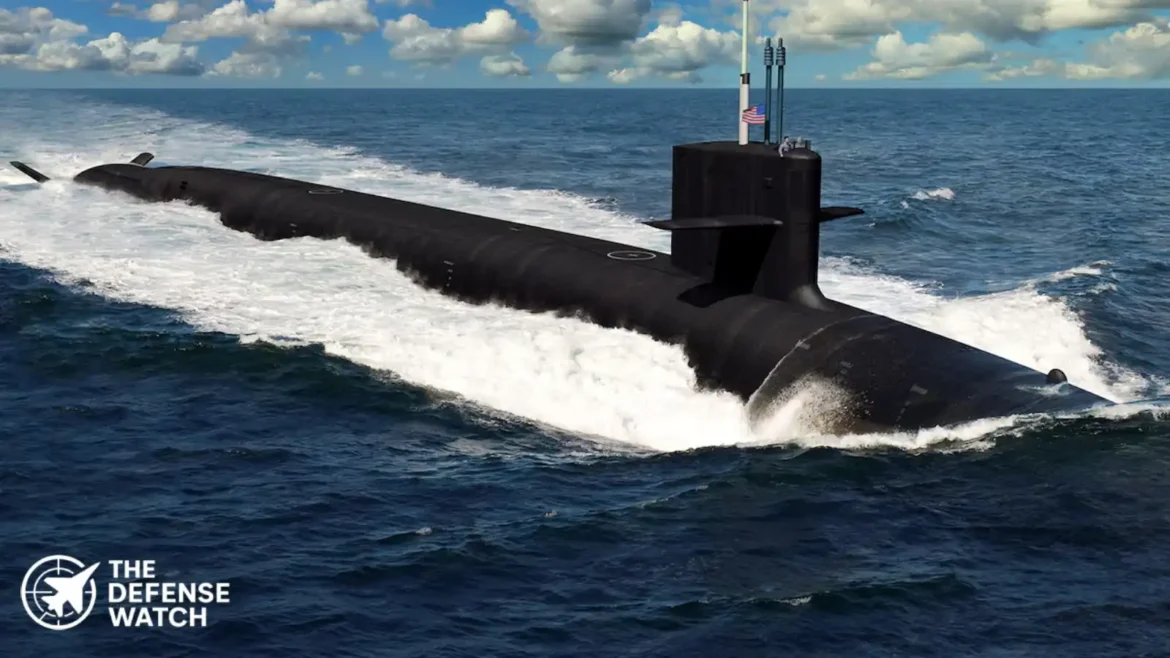
- The sea-based leg receives $16.2 billion for the Columbia-class ballistic missile submarine, including procurement of the fourth boat and continued development of the USS Groton.
- Secretary of War Pete Hegseth told the Senate Armed Services Committee that nuclear deterrence is the foundational priority: “If you get that wrong, you get everything else wrong.”
The Big Picture
The United States has operated a nuclear triad — land-based ICBMs, submarine-launched ballistic missiles, and nuclear-capable bombers — since the Cold War. That architecture has not been simultaneously modernized across all three legs in decades.
Russia completed a near-total overhaul of its strategic nuclear forces over the past fifteen years, fielding the RS-28 Sarmat heavy ICBM, the Borei-class ballistic missile submarines, and continuing Tu-160M bomber production. China has expanded its nuclear arsenal at a pace that U.S. Strategic Command officials have publicly described as unprecedented, with projections placing Beijing’s warhead count above 1,000 by 2030.
Against that backdrop, Washington’s FY27 commitment signals that the administration views nuclear recapitalization not as an incremental upgrade cycle, but as an urgent strategic imperative.
What’s Happening
The $1.5 trillion War Department budget proposal, unveiled during Hegseth’s April 30 Senate Armed Services Committee appearance, dedicates $71.4 billion to modernizing all three legs of the U.S. nuclear capability and nuclear command, control, and communications infrastructure.
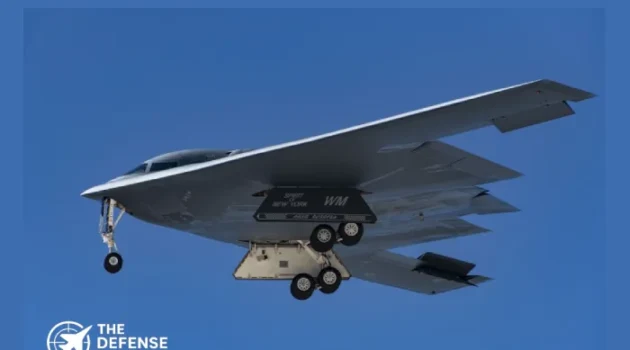
In the air domain, the budget allocates $6.1 billion for the B-21 Raider, the nation’s sixth-generation dual-capable penetrating strike stealth bomber, with the Air Force planning a minimum procurement of 100 aircraft.
The ground-based leg receives $4.6 billion for the LGM-35 Sentinel intercontinental ballistic missile program, which will replace the Minuteman III with 400 operationally deployed missiles and 450 hardened silos across five states, plus supporting infrastructure.
Around $1.5 billion covers the long-range standoff cruise missile, which will replace the AGM-86B air-launched cruise missile carried by bomber aircraft.
The sea-based leg draws $16.2 billion for the Columbia-class ballistic missile submarine program, covering procurement of the fourth boat in the class, continued development of the third vessel — the USS Groton — and investment in the submarine industrial base.
Why It Matters
The simultaneous recapitalization of all three triad legs is operationally significant for a specific reason: each leg contributes a different layer of survivability and deterrence resilience.
ICBMs provide rapid response and force the adversary to allocate an enormous number of warheads just to suppress them. Ballistic missile submarines are the most survivable leg, operating covertly and holding adversary populations and infrastructure at continuous risk. Bomber aircraft provide the most flexible leg — visible, recallable, and deployable in ways that send unmistakable political signals without crossing the threshold of use.
Allowing any single leg to atrophy creates exploitable gaps. The Minuteman III has been in service since 1970. The Ohio-class submarines that the Columbia-class will replace are approaching the limits of their extended service lives. The B-2 Spirit bomber fleet, at just 20 aircraft, is too small for a peer-conflict deterrence posture.
Hegseth told lawmakers that a nation’s ability to build, innovate, and support warfighters at speed and scale is the foundation upon which deterrence and survival rest — framing industrial base investment as inseparable from nuclear capability.
Strategic Implications
The $71.4 billion nuclear allocation carries implications that extend beyond hardware procurement.
The explicit inclusion of NC3 — nuclear command, control, and communications — within the investment envelope signals awareness that modernized delivery platforms are only as credible as the communications architecture that commands and authenticates their use. Adversary investments in electronic warfare, cyber capabilities, and anti-satellite weapons have placed legacy NC3 systems under growing stress.
The decision to pursue the long-range standoff cruise missile alongside the B-21 Raider reflects a layered penetration strategy. Standoff weapons allow bombers to deliver nuclear effects without entering the dense integrated air defense systems that both Russia and China have developed specifically to defeat penetrating aircraft. Pairing a new standoff missile with a stealth bomber produces compounding deterrence complexity for any adversary planner.
Hegseth pointed directly to Iran’s nuclear ambitions as illustrative of why the U.S. maintains strategic deterrence, noting the constraints a nuclear-armed Iran would impose on American freedom of action in the region. That framing is analytically important: it positions the triad not merely as a great-power tool but as the backstop that enables conventional operations globally.
Competitor View
Moscow will interpret the FY27 nuclear investment through the lens of its own modernization trajectory. Russia has used its nuclear arsenal rhetorically throughout the conflict in Ukraine, and U.S. triad recapitalization confirms for Russian strategic planners that Washington remains committed to first-tier nuclear parity.
Beijing’s calculus is more complex. China is currently in an expansion phase, building toward a force posture that requires the United States to plan against a near-peer nuclear adversary in the Pacific for the first time. The Columbia-class investment — particularly the industrial base component — signals that the U.S. is sustaining its most survivable strike capability for decades, complicating Chinese targeting assumptions in any future crisis scenario.
For both Moscow and Beijing, the sheer fiscal scale of the commitment — $71.4 billion in a single budget year — communicates political will as much as it does military capability.
What To Watch Next
class submarine program and shipyard capacity challenges here.
Congressional authorization and appropriations remain the next critical gates. The Senate Armed Services Committee hearing marked the opening of a legislative process that will involve significant negotiation over line-item allocations. The Sentinel program, in particular, has faced cost growth scrutiny, and lawmakers may probe whether the $4.6 billion FY27 allocation is sufficient given contractor performance history.
The B-21 Raider program at Northrop Grumman’s Palmdale facility will remain under close watch as the Air Force moves from developmental testing toward low-rate initial production decisions. The aircraft completed flight testing milestones at Edwards Air Force Base in September 2025, and procurement cadence will determine how quickly the bomber fleet reaches operationally meaningful numbers.
On the sea leg, Columbia-class production capacity at General Dynamics Electric Boat is a known constraint. Industrial base investment funded in this budget is intended to address workforce and supplier limitations that have affected Virginia-class submarine production timelines — a bottleneck that must be resolved before Columbia-class delivery schedules can be held.
Capability Gap
The FY27 nuclear investment explicitly targets a set of aging systems that have accumulated risk over decades of deferred recapitalization.
The Minuteman III was designed in the 1960s. Sustaining it beyond its intended service life has required expensive life-extension efforts that address symptoms rather than the underlying obsolescence of the weapon system itself. The Sentinel program aims to close that gap with a modern ICBM designed from the ground up for the current threat environment, with updated command and control interfaces and hardened infrastructure.

The Ohio-class submarines, while still operationally capable, are reaching the service life boundaries set by their reactor plants and pressure hull certification timelines. Columbia-class production must proceed on schedule to prevent a gap in sea-based deterrence coverage.
Realistic limitations exist. The Sentinel program’s cost trajectory and the Columbia-class shipyard constraint are not resolved by a budget request alone. Congressional oversight, industrial execution, and workforce development will determine whether the investment translates into delivered capability within the timelines the department requires.
The Bottom Line
America’s $71.4 billion nuclear triad modernization commitment in FY27 represents the most comprehensive — and fiscally consequential — recapitalization of U.S. strategic deterrence in a generation, and its success will hinge as much on industrial execution and congressional support as on the budget figures Secretary Hegseth placed before the Senate.
U.S. Air Power Plan Signals New Focus On Deep Strike
The U.S. air power plan worth roughly $102 billion highlights Washington’s push to strengthen deep strike capacity and maintain air superiority against rising challenges from China and Russia. The spending profile, aligns with broader Pentagon modernization priorities focused on stealth aircraft, long range weapons, survivable networks, and next generation combat aviation.
- U.S. funding package centers on long range strike and future air superiority programs.
- Major priorities include stealth bombers, advanced fighters, weapons, and support networks.
- Strategy reflects rising concern over Chinese force growth and Russian combat aviation threats.
- Investment scale signals multi year modernization rather than a one year surge.
- The central goal is to preserve U.S. ability to strike first, survive, and sustain operations.
The Big Picture
Airpower remains central to U.S. military strategy. It enables rapid response, precision strike, intelligence collection, airlift, and deterrence across Europe, the Indo Pacific, and the Middle East.
That advantage is no longer uncontested. China has expanded fighter production, long range missile forces, airborne sensors, and integrated air defenses. Russia, despite combat losses in Ukraine, still fields a capable tactical aviation force and layered air defense architecture. For U.S. planners, the era of automatic air dominance is over.
The result is a shift from counterinsurgency era fleets toward systems built for heavily defended battlespace.
What’s Happening
The reported U.S. air power plan allocates major resources toward several categories:
- Stealth bomber procurement, led by the B-21 Raider
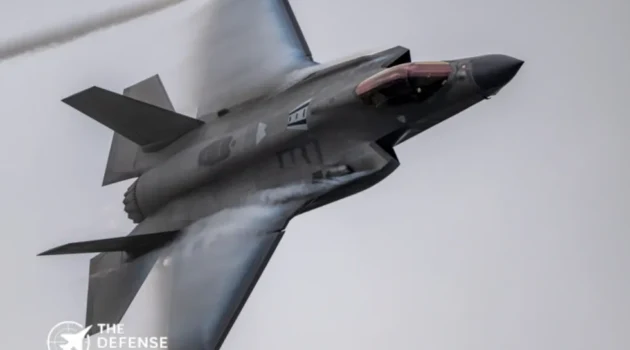
- Tactical fighter modernization, including F-35A Lightning II fleets
- Future air dominance programs, including sixth generation concepts
- Precision munitions and stand off strike weapons
- Tankers, command and control, and support infrastructure
- Research into collaborative autonomous aircraft and networked warfare systems
This reflects a force design built for penetrating defended airspace and sustaining long range campaigns rather than short duration permissive operations.
Why It Matters
Modern air warfare depends on more than fighters. Aircraft need tankers, electronic warfare support, resilient communications, munitions stockpiles, and distributed bases.
That is why the U.S. air power plan matters. It suggests Washington understands that advanced adversaries will target airfields, satellites, fuel logistics, and command networks early in any conflict.
Buying aircraft without fixing those enablers would leave gaps. Funding both strike platforms and supporting architecture is strategically more credible.
Strategic Implications
For the Indo Pacific, range is the defining challenge. Distances are vast, bases are exposed, and resupply could be contested. Long range bombers and survivable tankers become essential.
For Europe, readiness and mass matter more. NATO would need rapid sortie generation, missile defense integration, and sustained combat power if facing Russian escalation.
In both theaters, airpower is tied directly to deterrence. If adversaries believe U.S. forces can penetrate defenses and keep fighting after initial attacks, the threshold for aggression rises.
Competitor View
China is likely to read this investment as confirmation that the U.S. intends to preserve power projection inside the first and second island chains. That may reinforce Beijing’s own spending on missiles, sensors, fighters, and counter space tools.
Russia will likely view the plan through a NATO lens, especially if paired with more rotational deployments and precision strike capacity in Europe.
Neither competitor is standing still, which means procurement speed may matter as much as total dollars.
Capability Gap The Plan Aims To Close
The most serious U.S. weakness is not pilot skill or technology quality. It is the combination of aging fleets, limited production rates, fragile logistics chains, and insufficient munition depth for a prolonged high end war.
The U.S. air power plan appears designed to close four gaps:
- Range against distant targets
- Survivability in contested airspace
- Mass after early attrition
- Sustainment over long campaigns
A realistic limitation remains industrial capacity. Even large budgets cannot instantly produce engines, airframes, chips, or trained maintainers.
What To Watch Next
Watch these indicators over the next 12 to 24 months:
- Annual procurement numbers for bombers and fighters
- Progress on next generation air dominance programs
- Missile stockpile expansion
- New tanker and dispersal basing concepts
- Defense industry production timelines
- Congressional support during budget negotiations
If funding turns into timely deliveries, the plan gains real weight. If programs slip, strategic value falls quickly.
The Bottom Line
The $102 billion push shows the United States is investing not just in aircraft, but in restoring credible air dominance for a more contested era.
U.S. Funds $4.6 Billion Sentinel ICBM Program
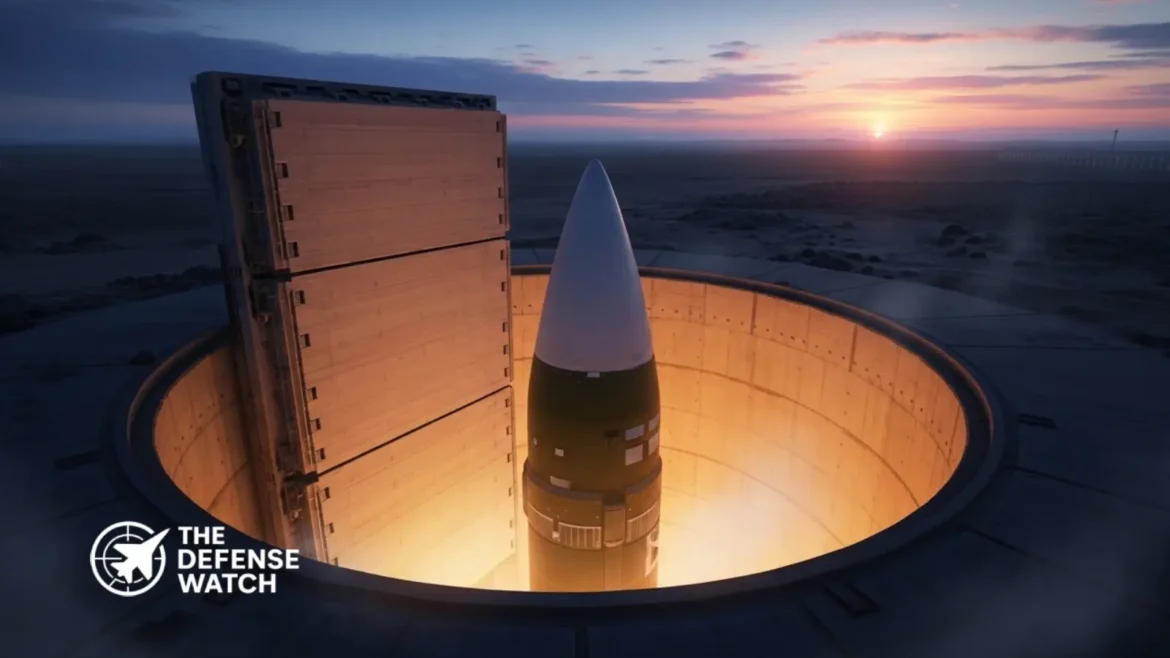
The Sentinel ICBM program has received a new $4.6 billion funding boost, underlining Washington’s commitment to replace the aging LGM-30G Minuteman III missile force with the next-generation LGM-35A Sentinel system.
- The United States is allocating $4.6 billion for the Sentinel ICBM program in the latest defense budget cycle.
- Sentinel is designed to replace the aging Minuteman III missile force first deployed in 1970.
- The program is led by :contentReference[oaicite:0]{index=0} and includes missile, launch control, and silo infrastructure upgrades.
- Initial operational capability is now expected in the early 2030s after delays and restructuring.
- Sentinel remains central to the land-based leg of the U.S. nuclear triad.
The funding, highlighted in recent defense reporting, comes as the Pentagon works to stabilize one of its most complex modernization efforts. Sentinel is intended to renew the ground-based component of the U.S. nuclear triad, alongside ballistic missile submarines and strategic bombers.
For U.S. planners, replacing Minuteman III is no longer optional. The missile entered service in 1970 and has remained operational through repeated life-extension efforts. Many of its core support systems, launch facilities, and command networks date back decades.
Why Sentinel Matters
Unlike a simple missile swap, Sentinel is a full system rebuild. It includes:
- New solid-fuel intercontinental ballistic missiles
- Modernized launch control centers
- Refreshed underground silos and support sites
- Updated communications and command links
- Cyber-resilient digital architecture
Congressional research notes the existing Minuteman III infrastructure includes facilities originating in the 1960s, which adds urgency to replacement timelines.
That broader scope explains why Sentinel has become one of the Pentagon’s most expensive strategic programs.
Delays And Rising Costs
The Sentinel program has faced schedule pressure and major cost growth. In 2024, the Pentagon acknowledged the effort was significantly over budget, triggering a Nunn-McCurdy review process for troubled acquisition programs. Reuters previously reported total program estimates above $140 billion.
More recently, the U.S. Government Accountability Office said the first missile flight has slipped roughly four years from earlier plans, with testing now expected in 2028.
Still, the Air Force says initial capability is targeted for the early 2030s.
Strategic Analysis
The latest $4.6 billion Sentinel ICBM allocation suggests the U.S. government has chosen continuity over delay despite mounting costs.
That matters for three reasons:
First, Washington sees land-based missiles as a core deterrent against peer nuclear rivals such as Russia and China.
Second, abandoning Sentinel would likely require another expensive life-extension for Minuteman III, itself an aging system with shrinking industrial support.
Third, the program supports a specialized industrial base tied to solid rocket motors, hardened infrastructure, and nuclear command systems.
In short, Sentinel is costly, but cancellation would also carry strategic and financial risks.
What Comes Next
The next milestones to watch include:
- Completion of program restructuring
- New acquisition baseline approval
- First pad launch testing
- 2028 flight test progress
- Infrastructure construction across missile fields
If these steps hold, the Sentinel ICBM could begin replacing Minuteman III during the next decade.

UK Defence Industry Faces Mounting Pressure
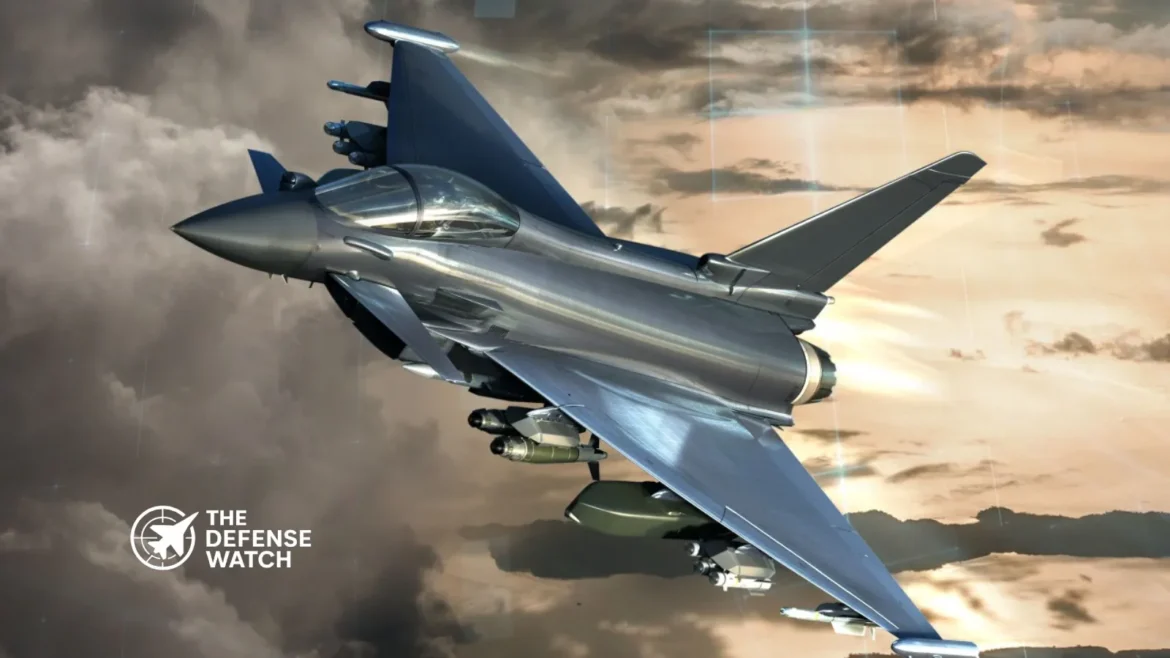
The UK defence industry is warning that continued delays to Britain’s long-promised Defence Investment Plan (DIP) are creating uncertainty across the sector, threatening suppliers, investment flows, and future military readiness.
According to evidence presented to UK lawmakers, industry representatives described the situation as one of growing paralysis, with firms unable to make long-term decisions on hiring, production capacity, and capital spending.
- UK defence firms say delays to the Defence Investment Plan are creating industrial paralysis.
- The plan was originally expected in autumn 2025 but has yet to be released.
- Industry leaders warn smaller suppliers are losing cash and struggling to retain staff.
- Investors may shift capital toward Germany, Poland, and the United States instead.
- The delay could slow modernization of UK armed forces and weaken supply chains.
The Defence Investment Plan is intended to outline how the British government will fund key modernization programs after its Strategic Defence Review. It was originally expected in autumn 2025 but has been repeatedly postponed.
Why The Delay Matters
For defence manufacturers, especially small and mid-sized suppliers, long-term visibility is essential. Aerospace components, naval systems, electronics, and missile production lines often require years of planning and upfront investment.
Without clear procurement schedules, companies face three immediate risks:
- Delayed hiring of engineers and skilled labor
- Postponed factory upgrades and tooling
- Reduced confidence from private investors
Industry witnesses told Parliament that some companies are already bleeding cash while waiting for direction from London.
That matters because the UK defence industrial base depends heavily on specialist small firms that build precision parts, sensors, propulsion systems, and subassemblies for larger prime contractors.
Strategic Impact On Britain
The problem extends beyond economics. Delays in the Defence Investment Plan may slow programs tied to:
- Munitions replenishment
- Air defence modernization
- Shipbuilding schedules
- Uncrewed systems procurement
- Advanced combat aircraft development
- Army equipment recapitalization
At a time when Europe is rearming and NATO members are increasing defence spending, uncertainty can create a competitive disadvantage for Britain.
Industry groups have reportedly warned that global defence firms can choose to invest in Germany, Poland, or the United States instead if the UK cannot provide predictable policy signals.
Analysis: A Signal To Allies And Adversaries
The UK defence industry issue is not only domestic. Parliamentary committee leaders previously warned that prolonged delay in publishing the plan risks sending damaging signals to adversaries and limits public scrutiny of defence spending.
In practical terms, Britain is trying to balance fiscal pressure with rising security demands from Russia, NATO commitments, and global instability. But delayed decisions can become decisions themselves, especially in defence procurement where timelines are measured in years.
If Britain wants sovereign production capacity, export competitiveness, and credible deterrence, industry needs clarity more than slogans.
What Comes Next
The Ministry of Defence has said officials are working to finalize the Defence Investment Plan and will publish it as soon as possible.
Until then, the UK defence industry remains in a holding pattern, waiting for the spending roadmap that could shape British military capability for the next decade.
Global Military Spending Hit $2.89 Trillion in 2025, Led by Record European Rearmament
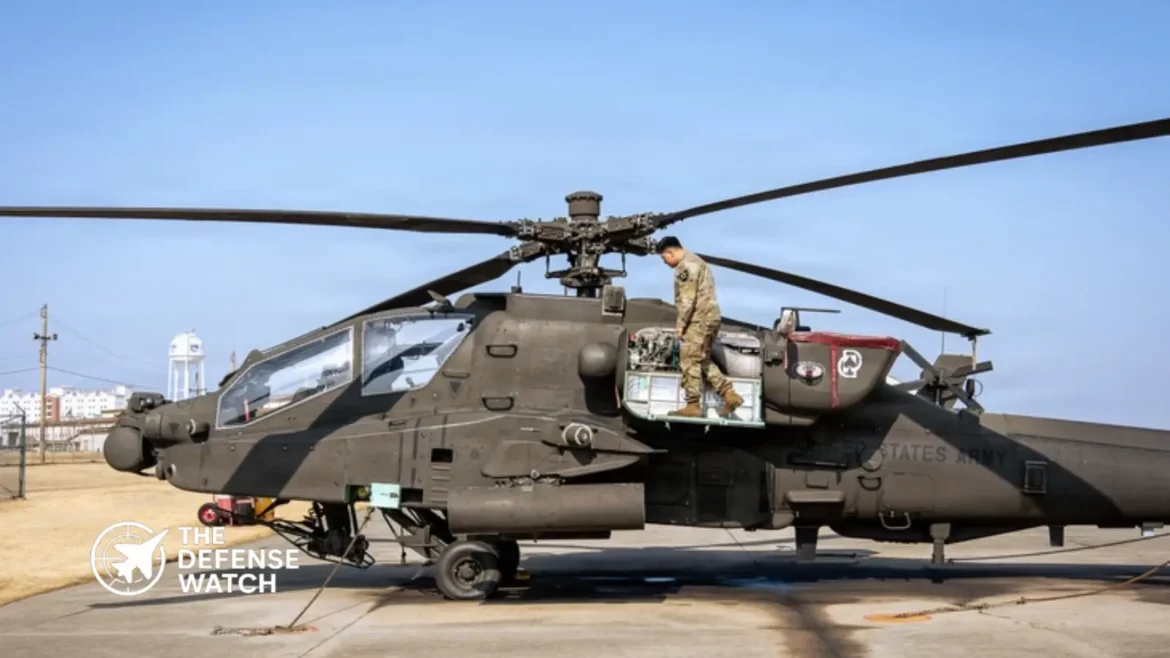
Global military spending climbed to $2.887 trillion in 2025, rising for the 11th straight year despite a significant U.S. drawdown, according to new data published April 27 by the Stockholm International Peace Research Institute (SIPRI). The annual increase of 2.9% was considerably smaller than the 9.7% jump recorded in 2024, but that moderation is almost entirely explained by the drop in U.S. spending — outside the United States, global outlays grew by 9.2%.
- Global military expenditure reached $2.887 trillion in 2025 — the 11th consecutive annual rise — pushing the global military burden to 2.5% of GDP, the highest since 2009.
- U.S. military spending fell 7.5% to $954 billion, primarily because the Trump administration approved no new financial military aid for Ukraine — a sharp reversal from the $127 billion committed over the prior three years.
- European NATO members collectively spent $559 billion, with 22 of 29 members hitting the 2% GDP threshold. Germany surpassed 2% for the first time since 1990; Spain crossed it for the first time since 1994.
- China increased military spending 7.4% to $336 billion — its 31st consecutive annual rise — while Taiwan surged 14% to $18.2 billion amid intensifying PLA exercises.
- U.S. Congress has approved defense funding of over $1 trillion for 2026, with a Trump budget proposal that could push spending to $1.5 trillion by 2027.
The report positions 2025 as a structural inflection point: Washington’s pullback was policy-driven and almost certainly temporary, while Europe’s acceleration reflects a generational shift in how the continent approaches collective defense.
The Big Picture
The world is rearming at a pace unseen since the Cold War’s final decade. Persistent conflict in Ukraine, expanding Chinese military power in the Indo-Pacific, and the Trump administration’s transactional approach to alliance commitments have collectively forced governments across Europe, Asia, and beyond to recalibrate their defense postures.
SIPRI researcher Xiao Liang summarized it plainly: “Global military spending rose again in 2025 as states responded to another year of wars, uncertainty and geopolitical upheaval with large-scale armament drives.” The institute projects that growth will persist through 2026 and beyond, given the breadth and depth of ongoing rearmament programs.
The global military burden now stands at 2.5% of GDP — its highest level since 2009 — a milestone that reflects not just rising nominal expenditures but genuine structural prioritization of defense across dozens of governments simultaneously.
What’s Happening
The United States, China, and Russia combined for $1.48 trillion in military outlays, accounting for 51% of all global defense spending. But the composition of that dominance is shifting in ways that carry long-term implications.
United States: U.S. military spending fell to $954 billion in 2025, primarily because no new financial military assistance for Ukraine was approved. Over the previous three years, Washington had committed $127 billion to Kyiv. Critically, the Pentagon continued investing in nuclear modernization and conventional force improvements targeting the Indo-Pacific, meaning the reduction did not reflect declining core military capacity.
Europe: European military spending rose 14% to $864 billion — the largest single regional driver of global spending growth. Spending by Russia and Ukraine each continued to climb in the fourth year of the war, while European NATO members recorded the sharpest annual spending growth since the Cold War ended.
Germany led European NATO spenders at $114 billion, a 24% year-on-year increase, crossing the 2% of GDP threshold for the first time since 1990. Spain surged 50% to $40.2 billion, also clearing the 2% threshold for the first time since 1994.
Ukraine and Russia: Ukraine, the seventh largest military spender in 2025, increased outlays by 20% to $84.1 billion — equivalent to 40% of GDP. Russia’s spending grew 5.9% to $190 billion, representing 7.5% of GDP. Both countries reached the highest share of government spending ever recorded for their respective militaries.
Asia and Oceania: The region registered 8.1% spending growth to $681 billion — the fastest annual rise since 2009. China’s $336 billion represented a 7.4% increase and its 31st consecutive year-on-year climb. Japan reached $62.2 billion (1.4% of GDP, highest since 1958), and Taiwan surged 14% to $18.2 billion, its largest single-year increase in at least three decades.
Why It Matters
The 2025 data confirms that the post-Cold War “peace dividend” era is definitively over. Defense budgets are no longer calibrated to peacetime baselines; they are being sized against active wars, near-peer competitors, and the erosion of arms control frameworks.
For the U.S. defense industrial base, the data is actually bullish. SIPRI’s Program Director Nan Tian stated: “The decline in US military expenditure in 2025 is likely to be short-lived. Spending approved by the US Congress for 2026 has risen to over $1 trillion, a substantial increase from 2025, and could rise further to $1.5 trillion in 2027 if President Trump’s latest budget proposal is accepted.”
That trajectory — from $954 billion in 2025 to a potential $1.5 trillion by 2027 — would represent one of the fastest two-year increases in U.S. defense outlays in history. For prime contractors and second-tier suppliers, the production ramp-up implications are significant, touching everything from munitions stockpiling to shipbuilding to advanced fighter procurement.
Strategic Implications
The structural meaning of Europe’s 14% spending surge runs deeper than headline budget numbers. SIPRI researcher Jade Guiberteau Ricard noted that “in 2025 military spending by European NATO members rose faster than at any time since 1953, reflecting the ongoing pursuit of European self-reliance alongside increasing pressure from the United States to strengthen burden sharing within the alliance.”
This dual dynamic — the European Union developing independent defense capacity while simultaneously satisfying NATO burden-sharing demands — marks a geopolitical shift that will define transatlantic relations for the next decade. Europe is no longer free-riding; it is building sovereign capability that may reduce its strategic dependence on Washington over time.
The acceleration of Asia-Pacific spending carries equally profound implications. SIPRI Senior Researcher Diego Lopes da Silva assessed that U.S. allies in Asia “are spending more on their militaries, not only due to long-standing regional tensions but also due to growing uncertainty over US support.” Japan, Australia, the Philippines, and Taiwan are each hedging against the possibility of reduced American commitment in a future crisis — a calculus driven directly by the Trump administration’s unpredictability on alliance commitments.
Competitor View
Beijing will read the SIPRI data through two distinct lenses. China’s own 31-year consecutive spending increase — now at $336 billion — continues to validate its military modernization strategy. At the same time, Taiwan’s 14% surge and Japan’s accelerating rearmament confirm a regional balancing dynamic that the PLA must factor into its operational planning, particularly regarding any cross-strait contingency timeline.
Moscow’s position is paradoxical. Russia sustains a war economy at 7.5% of GDP, but its military burden is approaching fiscal stress points. SIPRI researcher Lorenzo Scarazzato noted that “spending is likely to keep growing in 2026 if the war continues, with revenues from Russia’s oil sales increasing and a major European Union loan expected by Ukraine.” A prolonged war sustains Russia’s advantage in absorbing attrition, but the European spending surge is beginning to close the long-term capability gap that Moscow relied upon.
Iran presents a different picture. Despite ongoing regional conflicts, Iran’s spending fell 5.6% in real terms to $7.4 billion due to 42% annual inflation, though SIPRI noted that official figures “almost certainly understate the true level of Iran’s spending,” as Tehran uses off-budget oil revenues to fund missile and drone programs. The regime’s actual military investment in asymmetric tools — drones, precision missiles, proxy forces — substantially exceeds what any budget figure captures.
What To Watch Next
Several near-term developments will determine how the 2025 data translates into actual capability.
The U.S. fiscal year 2026 defense budget — already authorized above $1 trillion — enters execution. Watch for supplemental requests and whether the Trump administration’s proposed $1.5 trillion FY2027 figure survives Congressional negotiation.
Within NATO, the alliance adopted new spending targets in 2025. SIPRI cautioned that “as states strive to meet the new NATO spending targets, there is a risk that the boundaries between military and other ‘defence- and security-related’ expenditures become blurred, reducing transparency and further complicating the assessment of military capabilities.” That warning deserves close attention: inflated headline figures that include civilian infrastructure spending could mask genuine readiness gaps.
In Asia, Taiwan’s procurement pipeline — funded by that 14% spending surge — will be monitored closely by both the Pentagon and the PLA. Japan’s multi-year defense buildup, targeting 2% of GDP, continues to accelerate with new strike capability acquisitions.
Capability Gap
The most operationally consequential gap exposed by the 2025 data is in European munitions production capacity. European governments committed more money in 2025, but the defense industrial base — particularly artillery shell, air defense interceptor, and armored vehicle production — has not yet scaled to meet wartime demand levels. Budget increases take 18 to 36 months to translate into deliverable hardware.
Germany’s 24% spending increase and Spain’s 50% surge reflect political will; they do not yet reflect fielded capability. The gap between authorized budgets and operational readiness remains the central challenge for NATO’s eastern flank.
On the U.S. side, the 7.5% spending reduction in 2025 was largely isolated to Ukraine aid transfers — it did not reduce core readiness funding. However, any multi-year pause in allied resupply creates inventory depletion risks that the 2026 and 2027 budgets must address.
The Bottom Line
The 2025 SIPRI data confirms that the world has entered a sustained global rearmament cycle — one in which U.S. spending is set to surge past $1 trillion, Europe is investing at Cold War-era intensity, and China’s military expansion shows no signs of plateauing, making the structural drivers of global defense spending growth more durable than at any point in the post-Cold War era.
Saab’s Q1 2026 Results Reflect Accelerating European Defense Demand
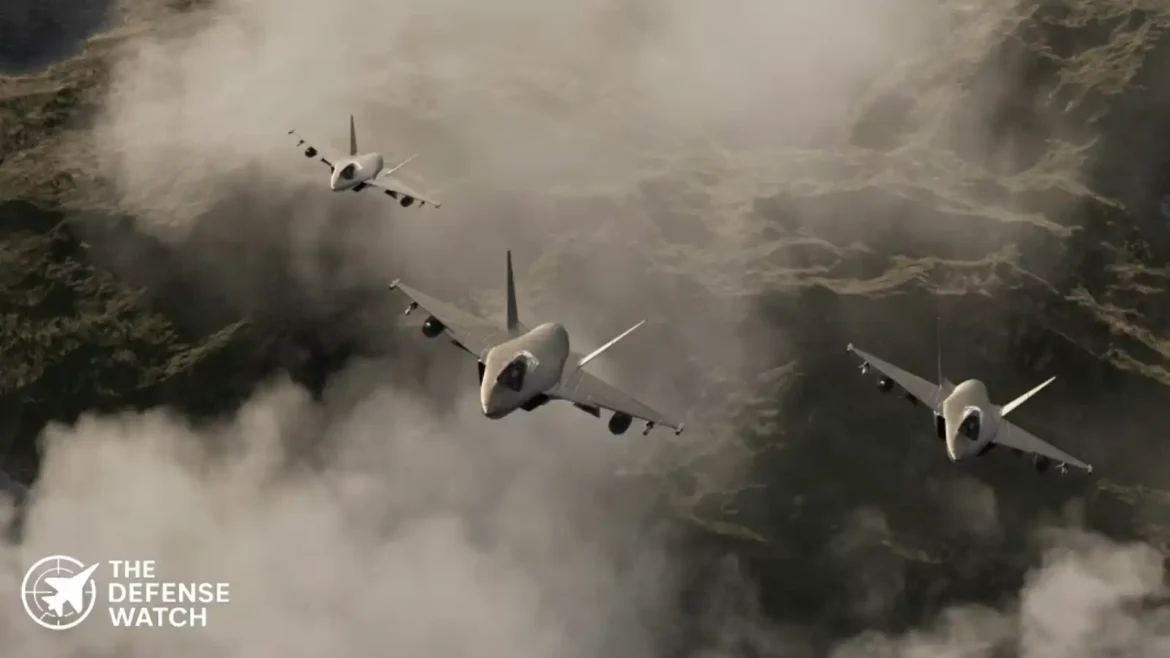
Saab reported Q1 2026 sales of SEK 19,164 million, representing organic growth of 23.6% compared to SEK 15,792 million in the same period last year. The results confirm the Swedish defense contractor is capitalizing on a historic surge in European defense procurement, driven by persistent security pressures across NATO’s eastern flank and growing urgency among allied governments to expand their military capabilities.
- Saab reported Q1 2026 sales of SEK 19,164 million, up from SEK 15,792 million in Q1 2025 — representing 23.6% organic growth.
- EBIT rose 32% year-over-year to SEK 1,920 million, with an EBIT margin improving to 10.0% from 9.2%.
- All business areas — including Surveillance, Aeronautics, Weapons, and Combitech — posted double-digit sales growth.
- Order bookings reached SEK 18,243 million in Q1 2026, with strong growth in medium-sized orders across NATO and partner nations.
- Operational cash flow turned sharply positive, reaching SEK 1,017 million compared to negative SEK 14 million in Q1 2025.
The Big Picture
European defense spending has entered a structural expansion phase not seen since the Cold War. NATO members collectively pledged to meet and exceed the 2% of GDP defense spending target following Russia’s 2022 invasion of Ukraine, and many are now committing to 3% or higher. This fiscal shift is producing tangible industrial results across the continent’s defense sector — and Saab stands among the clearest beneficiaries.
The company’s product portfolio spans air, land, naval, and security domains, aligning directly with the modernization priorities of both European governments and international partners seeking sovereign defense capabilities. Saab’s Gripen fighter, GlobalEye airborne early warning system, Giraffe radar family, AT4 anti-armor weapons, and Carl-Gustaf recoilless rifles are all in active procurement cycles across multiple NATO and partner nations.
This is not a temporary demand spike — it reflects a structural reorientation of European defense investment that analysts expect to persist through the end of the decade.
What’s Happening
Saab CEO and President Micael Johansson stated that the company delivered strong organic sales growth, a higher operating margin, and solid cash flow in the first quarter, adding that Saab’s product offering is well aligned with the defense priorities of many nations globally.
EBITDA reached SEK 2,731 million in Q1 2026, up from SEK 2,140 million, with the EBITDA margin improving to 14.3% from 13.6%. Net income rose to SEK 1,466 million from SEK 1,277 million, and earnings per share increased to SEK 2.65 from SEK 2.35.
Operational cash flow increased sharply to SEK 1,017 million, compared to negative SEK 14 million in the same quarter of 2025 — a turnaround that signals improved delivery execution and billing cycles across major contracts.
Order bookings in the quarter amounted to SEK 18,243 million, down slightly from SEK 19,144 million in Q1 2025. Saab noted that growth was strong for medium-sized orders, but that fewer large orders were received in the quarter.
Why It Matters
The 23.6% organic sales growth figure is exceptional by any standard in the defense industry. Most Western defense primes operate on multi-year procurement cycles with incremental annual revenue growth. Saab’s acceleration at this pace reflects two converging forces: an expanded backlog built from recent years of order wins, and the company’s deliberate investment in production capacity to actually convert that backlog into delivered revenue.
Saab noted particularly strong development in its Surveillance business area, which includes airborne surveillance systems, ground-based radar, and air traffic management — product lines that are currently among the highest procurement priorities for NATO members filling critical ISR gaps.
The double-digit growth across all business units is strategically significant. It indicates Saab is not dependent on a single platform or contract vehicle, but is generating broad demand across its entire portfolio. That diversification makes the company more resilient to procurement delays or cancellations in any one program.
Strategic Implications
Saab’s financial performance carries direct implications for NATO’s collective defense posture. Sweden’s formal entry into NATO in March 2024 effectively transformed Saab from a Nordic defense supplier into an embedded NATO industrial partner. Allied governments can now structure procurement with greater confidence in interoperability, information sharing, and political alignment.
The strong Surveillance segment performance deserves particular attention. Europe and NATO collectively face persistent gaps in ground-based air defense, early warning radar coverage, and counter-drone capability. Saab recently received an order from the Swedish Defence Materiel Administration (FMV) valued at approximately SEK 2.6 billion for a mobile and modular counter-unmanned aerial system (C-UAS), with deliveries planned for 2027 to 2028. This contract illustrates exactly the kind of capability gap that Saab’s current product roadmap targets.
Saab’s growing U.S. market presence also warrants attention. The company operates a significant footprint in the United States through subsidiaries involved in training systems, combat vehicles, and weapons. As the U.S. Defense Department seeks to diversify its supplier base and deepen allied industrial cooperation, Saab represents an increasingly credible non-domestic source.
Competitor View
Russia will interpret accelerating Western European defense production as confirmation that its strategic gambit in Ukraine has failed to fracture NATO cohesion — and may in fact have strengthened it. Saab’s growth numbers, alongside equivalent expansions at BAE Systems, Rheinmetall, Leonardo, and Thales, illustrate that Europe’s defense industrial base is now genuinely scaling up rather than simply pledging to do so.
China will monitor Saab’s Surveillance and airborne early warning programs closely. The GlobalEye multi-role surveillance aircraft and Giraffe radar family provide persistent, long-range detection capabilities that hold direct relevance to the Indo-Pacific security debate. Several of Saab’s regional customers — including nations in Southeast Asia — operate in areas of active Chinese strategic competition.
What To Watch Next
Saab’s Q2 2026 results will serve as the next key indicator of whether the company can sustain this growth trajectory. Several factors will influence the outcome: the timing and size of new large contract awards, continued execution on existing deliveries, and the trajectory of the Swedish krona against the euro and dollar.
Investors and defense analysts will also track whether Saab announces additional capacity investments. CEO Johansson has consistently noted the need to balance near-term delivery obligations with longer-term capability development — a challenge that every major defense prime is navigating as order books outpace physical production capacity.
The company’s C-UAS order from Sweden, with deliveries running through 2027 and 2028, highlights an emerging product line that could generate significant follow-on revenue as drone threats proliferate across European and NATO operational environments.
Capability Gap
Saab’s surge in Surveillance revenue directly addresses one of NATO’s most persistent operational shortfalls: the lack of scalable, mobile early warning and tracking systems capable of operating across contested electromagnetic environments.
Fixed radar installations remain vulnerable to suppression and precision strike. Saab’s mobile Giraffe radar variants and airborne GlobalEye platform offer survivable, deployable alternatives that aligning with NATO’s emphasis on multi-domain resilience.
The newly ordered C-UAS system addresses a separate but equally urgent gap. Drone proliferation — demonstrated extensively in Ukraine — has exposed the inadequacy of legacy air defense against low-cost, high-volume UAS threats. Saab’s modular C-UAS approach, combining detection, tracking, and effector systems, positions the company at the center of what is becoming one of the highest-priority procurement categories across allied defense ministries.
One realistic limitation: Saab, like all European defense primes, faces a constrained skilled labor market and supply chain bottlenecks in critical components including semiconductors, precision optics, and energetic materials. Sustained 20%-plus growth rates will eventually require continued investment in both workforce and industrial infrastructure to avoid delivery delays that could pressure margins.
The Bottom Line
Saab’s Q1 2026 results confirm that European defense rearmament has moved from political commitment to measurable industrial output, with the Swedish company positioned as one of the primary beneficiaries of NATO’s most significant military buildup in a generation.