Pentagon Requests $71.4 Billion for Nuclear Triad Modernization in FY27 Budget
The War Department’s fiscal year 2027 budget proposal allocates $71.4 billion specifically for nuclear triad modernization — the largest publicly disclosed, consolidated nuclear investment in recent memory — covering every leg of America’s strategic deterrent force.
Secretary of War Pete Hegseth presented the proposal during Senate Armed Services Committee testimony, framing the nuclear triad as the irreducible foundation of U.S. deterrence strategy.
- The FY27 War Department budget request totals $1.5 trillion, with $71.4 billion earmarked specifically for nuclear triad modernization and nuclear command, control, and communications (NC3).
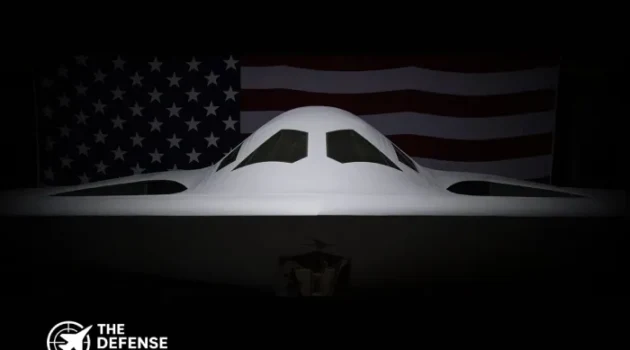
- The B-21 Raider stealth bomber receives $6.1 billion; the Air Force plans a minimum procurement of 100 aircraft to anchor the air leg of the triad.
- $4.6 billion funds the LGM-35 Sentinel ICBM to replace the aging Minuteman III, covering 400 deployed missiles and 450 hardened silos across five states.
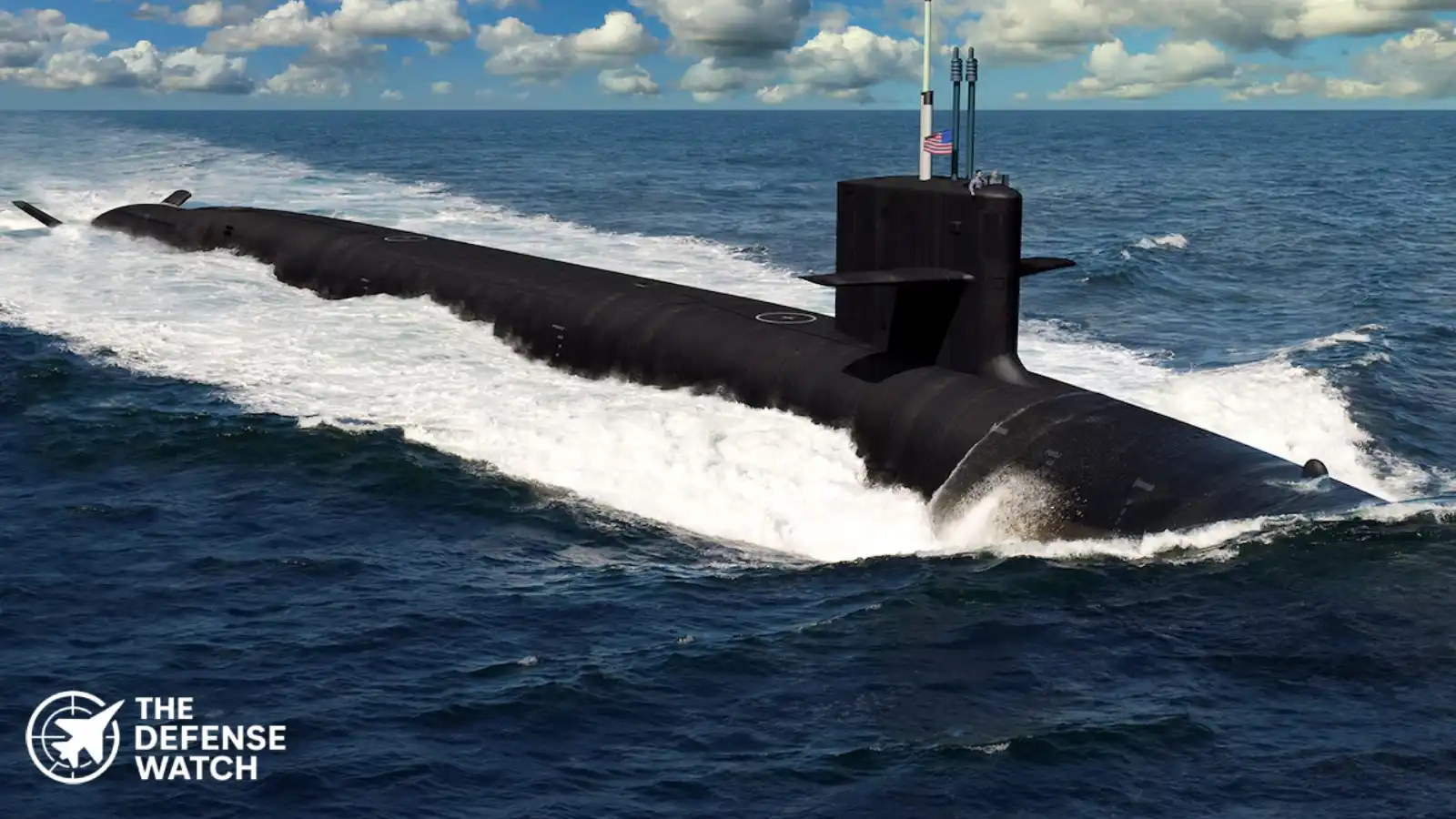
- The sea-based leg receives $16.2 billion for the Columbia-class ballistic missile submarine, including procurement of the fourth boat and continued development of the USS Groton.
- Secretary of War Pete Hegseth told the Senate Armed Services Committee that nuclear deterrence is the foundational priority: “If you get that wrong, you get everything else wrong.”
The Big Picture
The United States has operated a nuclear triad — land-based ICBMs, submarine-launched ballistic missiles, and nuclear-capable bombers — since the Cold War. That architecture has not been simultaneously modernized across all three legs in decades.
Russia completed a near-total overhaul of its strategic nuclear forces over the past fifteen years, fielding the RS-28 Sarmat heavy ICBM, the Borei-class ballistic missile submarines, and continuing Tu-160M bomber production. China has expanded its nuclear arsenal at a pace that U.S. Strategic Command officials have publicly described as unprecedented, with projections placing Beijing’s warhead count above 1,000 by 2030.
Against that backdrop, Washington’s FY27 commitment signals that the administration views nuclear recapitalization not as an incremental upgrade cycle, but as an urgent strategic imperative.
What’s Happening
The $1.5 trillion War Department budget proposal, unveiled during Hegseth’s April 30 Senate Armed Services Committee appearance, dedicates $71.4 billion to modernizing all three legs of the U.S. nuclear capability and nuclear command, control, and communications infrastructure.
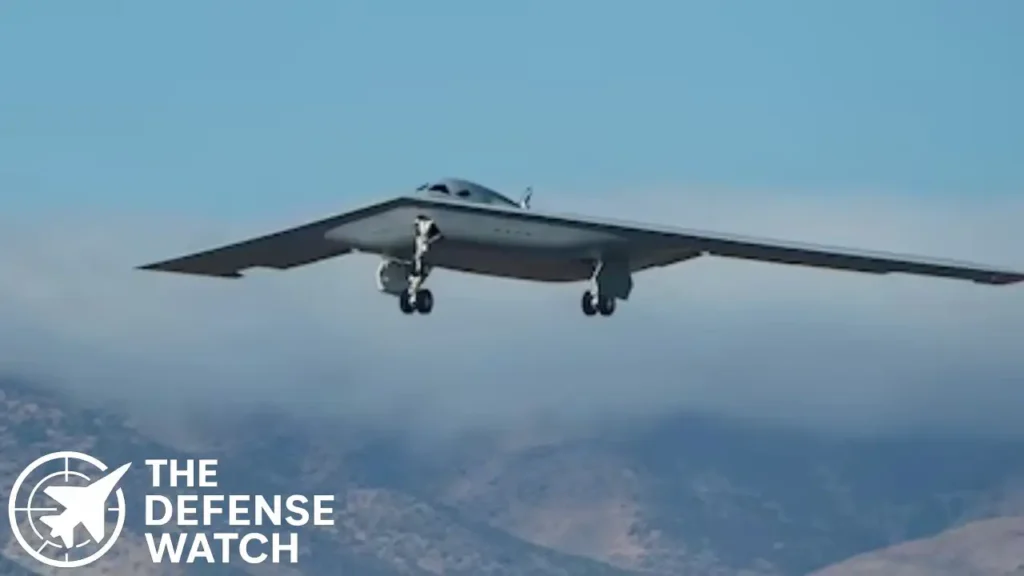
In the air domain, the budget allocates $6.1 billion for the B-21 Raider, the nation’s sixth-generation dual-capable penetrating strike stealth bomber, with the Air Force planning a minimum procurement of 100 aircraft.
The ground-based leg receives $4.6 billion for the LGM-35 Sentinel intercontinental ballistic missile program, which will replace the Minuteman III with 400 operationally deployed missiles and 450 hardened silos across five states, plus supporting infrastructure.
Around $1.5 billion covers the long-range standoff cruise missile, which will replace the AGM-86B air-launched cruise missile carried by bomber aircraft.
The sea-based leg draws $16.2 billion for the Columbia-class ballistic missile submarine program, covering procurement of the fourth boat in the class, continued development of the third vessel — the USS Groton — and investment in the submarine industrial base.
Why It Matters
The simultaneous recapitalization of all three triad legs is operationally significant for a specific reason: each leg contributes a different layer of survivability and deterrence resilience.
ICBMs provide rapid response and force the adversary to allocate an enormous number of warheads just to suppress them. Ballistic missile submarines are the most survivable leg, operating covertly and holding adversary populations and infrastructure at continuous risk. Bomber aircraft provide the most flexible leg — visible, recallable, and deployable in ways that send unmistakable political signals without crossing the threshold of use.
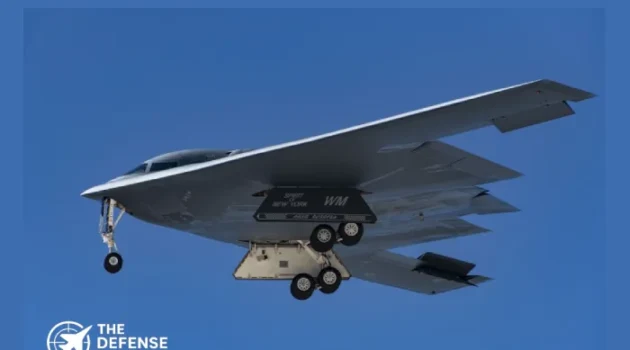
Allowing any single leg to atrophy creates exploitable gaps. The Minuteman III has been in service since 1970. The Ohio-class submarines that the Columbia-class will replace are approaching the limits of their extended service lives. The B-2 Spirit bomber fleet, at just 20 aircraft, is too small for a peer-conflict deterrence posture.
Hegseth told lawmakers that a nation’s ability to build, innovate, and support warfighters at speed and scale is the foundation upon which deterrence and survival rest — framing industrial base investment as inseparable from nuclear capability.
Strategic Implications
The $71.4 billion nuclear allocation carries implications that extend beyond hardware procurement.
The explicit inclusion of NC3 — nuclear command, control, and communications — within the investment envelope signals awareness that modernized delivery platforms are only as credible as the communications architecture that commands and authenticates their use. Adversary investments in electronic warfare, cyber capabilities, and anti-satellite weapons have placed legacy NC3 systems under growing stress.
The decision to pursue the long-range standoff cruise missile alongside the B-21 Raider reflects a layered penetration strategy. Standoff weapons allow bombers to deliver nuclear effects without entering the dense integrated air defense systems that both Russia and China have developed specifically to defeat penetrating aircraft. Pairing a new standoff missile with a stealth bomber produces compounding deterrence complexity for any adversary planner.
Hegseth pointed directly to Iran’s nuclear ambitions as illustrative of why the U.S. maintains strategic deterrence, noting the constraints a nuclear-armed Iran would impose on American freedom of action in the region. That framing is analytically important: it positions the triad not merely as a great-power tool but as the backstop that enables conventional operations globally.
Competitor View
Moscow will interpret the FY27 nuclear investment through the lens of its own modernization trajectory. Russia has used its nuclear arsenal rhetorically throughout the conflict in Ukraine, and U.S. triad recapitalization confirms for Russian strategic planners that Washington remains committed to first-tier nuclear parity.
Beijing’s calculus is more complex. China is currently in an expansion phase, building toward a force posture that requires the United States to plan against a near-peer nuclear adversary in the Pacific for the first time. The Columbia-class investment — particularly the industrial base component — signals that the U.S. is sustaining its most survivable strike capability for decades, complicating Chinese targeting assumptions in any future crisis scenario.
For both Moscow and Beijing, the sheer fiscal scale of the commitment — $71.4 billion in a single budget year — communicates political will as much as it does military capability.
What To Watch Next
class submarine program and shipyard capacity challenges here.
Congressional authorization and appropriations remain the next critical gates. The Senate Armed Services Committee hearing marked the opening of a legislative process that will involve significant negotiation over line-item allocations. The Sentinel program, in particular, has faced cost growth scrutiny, and lawmakers may probe whether the $4.6 billion FY27 allocation is sufficient given contractor performance history.
The B-21 Raider program at Northrop Grumman’s Palmdale facility will remain under close watch as the Air Force moves from developmental testing toward low-rate initial production decisions. The aircraft completed flight testing milestones at Edwards Air Force Base in September 2025, and procurement cadence will determine how quickly the bomber fleet reaches operationally meaningful numbers.
On the sea leg, Columbia-class production capacity at General Dynamics Electric Boat is a known constraint. Industrial base investment funded in this budget is intended to address workforce and supplier limitations that have affected Virginia-class submarine production timelines — a bottleneck that must be resolved before Columbia-class delivery schedules can be held.
Capability Gap
The FY27 nuclear investment explicitly targets a set of aging systems that have accumulated risk over decades of deferred recapitalization.
The Minuteman III was designed in the 1960s. Sustaining it beyond its intended service life has required expensive life-extension efforts that address symptoms rather than the underlying obsolescence of the weapon system itself. The Sentinel program aims to close that gap with a modern ICBM designed from the ground up for the current threat environment, with updated command and control interfaces and hardened infrastructure.

The Ohio-class submarines, while still operationally capable, are reaching the service life boundaries set by their reactor plants and pressure hull certification timelines. Columbia-class production must proceed on schedule to prevent a gap in sea-based deterrence coverage.
Realistic limitations exist. The Sentinel program’s cost trajectory and the Columbia-class shipyard constraint are not resolved by a budget request alone. Congressional oversight, industrial execution, and workforce development will determine whether the investment translates into delivered capability within the timelines the department requires.
The Bottom Line
America’s $71.4 billion nuclear triad modernization commitment in FY27 represents the most comprehensive — and fiscally consequential — recapitalization of U.S. strategic deterrence in a generation, and its success will hinge as much on industrial execution and congressional support as on the budget figures Secretary Hegseth placed before the Senate.