

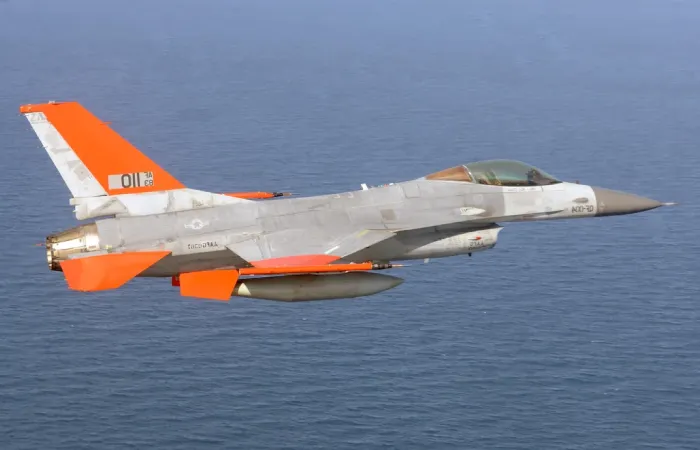
The U.S. Air Force has officially received the final QF-16 target drone, cementing its capability to conduct realistic live-fire training operations for the next decade. The milestone delivery ensures continuous access to a sophisticated aerial target system, critical for preparing pilots and units for modern combat scenarios.
Background
The QF-16 is a conversion of retired F-16s into remotely piloted target drones. Operated by the Air Force’s 82nd Aerial Targets Squadron, the drone allows for safe, realistic, and flexible live-fire training. With increasing reliance on precision-guided munitions and advanced air defense systems, the QF-16 provides a platform for testing weapons systems and improving pilot readiness in a controlled, yet realistic, environment.
Drone Specifications and Capabilities
Each QF-16 drone retains the aerodynamic profile and flight capabilities of the original F-16, including supersonic speeds and advanced maneuverability. The drones are equipped with telemetry and guidance systems to simulate enemy aircraft during exercises. Their use allows pilots to engage high-speed, maneuverable targets, mirroring real-world aerial combat scenarios without risking human lives.
Operational Impact
The delivery of the final QF-16 means the Air Force can sustain a decade of training continuity. “These drones give our pilots the most realistic target experience possible, enhancing combat readiness and operational confidence,” said an Air Force spokesperson. The QF-16’s advanced capabilities also support testing and evaluation of air-to-air and surface-to-air weapons systems.
Training and Readiness Enhancements
Beyond standard training, the QF-16 fleet supports advanced mission rehearsals, tactics development, and integration of new weapons systems. Pilots gain experience against high-performance targets in a range of scenarios, from simple interception exercises to complex multi-domain engagements. This ensures that the U.S. Air Force maintains a competitive edge against evolving aerial threats.
Looking Ahead
With the final delivery, the Air Force secures long-term training capacity, ensuring that both legacy and next-generation aircraft can be tested against realistic targets. The QF-16 program reinforces the importance of investment in live-fire training infrastructure and unmanned systems for sustained operational excellence.
