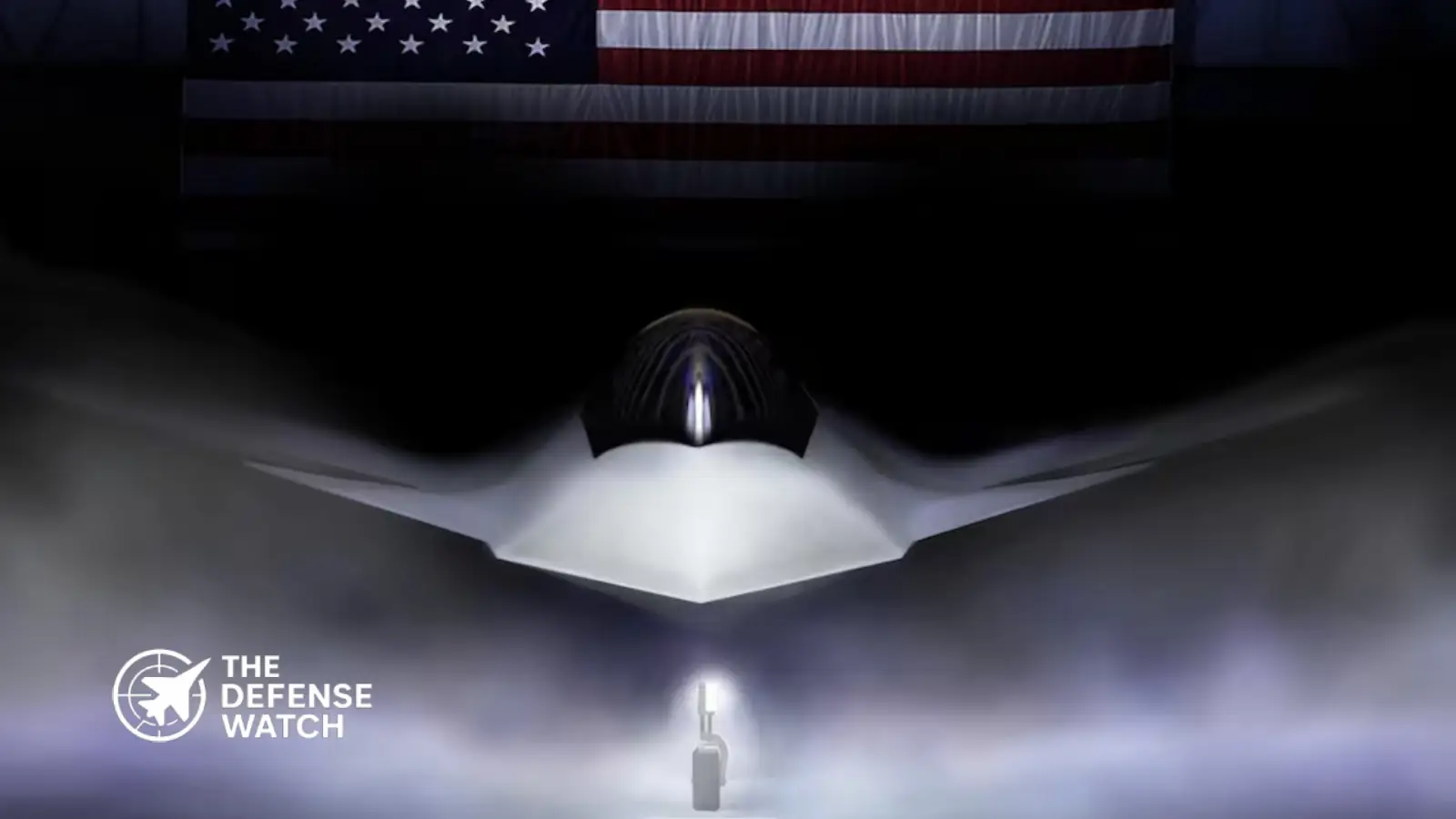
(adsbygoogle = window.adsbygoogle || []).push({});Executive Summary: The world’s first sixth-generation fighter jets have moved from classified skunkworks to funded, contracted, test-flying reality — and three distinct programs are now vying to define the future of air combat. The U.S. F-47 leads on funding at nearly $8.5 billion cumulative, China’s J-36 and J-50 are flight-testing simultaneously, and the UK-Italy-Japan GCAP has just awarded a £686 million development contract. Whoever fields a combat-ready platform first will set the technological and strategic baseline for the next 50 years of aerial warfare.
Three sovereign powers are simultaneously constructing the most lethal, autonomous, and stealthy combat aircraft in history. None of them plan to wait for the others to finish.
- Technical Analysis: What Makes a “Sixth-Generation” Fighter Different From the F-35
- Program Breakdown: The F-47, GCAP, and China’s Twin Track
- United States: F-47 (NGAD)
- United Kingdom, Italy, Japan: GCAP (Global Combat Air Programme)
- China: J-36 and J-50 (Parallel Track Development)
- Europe: FCAS (Futura Combat Air System) — The Stalled Program
- Data Block: Sixth-Generation Fighter Program Comparison (2026)
- The Strategic Insight: Why “First Look, First Shot” Is No Longer Enough
- Conclusion: The Decade That Decides Air Dominance for 50 Years
As of mid-2026, the United States’ Boeing-built F-47 has accumulated nearly $8.5 billion in cumulative programmatic funding and is targeting first flight in 2028. China’s two competing prototypes — the J-36 and J-50 — completed their first flight tests in late 2024 and have accelerated through multiple prototype iterations since. The UK-Italy-Japan Global Combat Air Programme (GCAP) just contracted Edgewing, a newly formed tri-national industrial consortium, for £686 million (~$908 million) to formally begin detailed design work. Europe’s Franco-German FCAS, by contrast, is sinking under workshare disputes and may not produce a demonstrator before the mid-2030s.
The gap between the front-runners and the stragglers isn’t just programmatic. It’s strategic.
Technical Analysis: What Makes a “Sixth-Generation” Fighter Different From the F-35
The term “sixth generation” isn’t a marketing tier. It describes a genuinely new doctrine of air combat — one where the crewed fighter is not the primary weapon, but the command node of a broader, AI-managed kill web.
Every major program converges on five defining characteristics:
1. Manned-Unmanned Teaming (MUM-T) The F-47 is explicitly designed to operate alongside Collaborative Combat Aircraft (CCAs) — autonomous drones controlled from the cockpit capable of electronic warfare, ISR, SEAD (Suppression of Enemy Air Defenses), and kinetic strikes. The Pentagon’s logic: one F-47 paired with two CCAs may provide more combat-relevant capability than two or three F-35s at comparable lifecycle cost.
2. Adaptive Cycle Engines Next-generation propulsion isn’t just about thrust. Adaptive cycle engines (like GE Aerospace’s XA100) can switch operating modes mid-flight — high-bypass for fuel economy at cruise, low-bypass for supercruise and afterburner for combat. The F-47 is targeting Mach 1.8+ supercruise without afterburner, extending combat radius dramatically over the F-22.
3. Embedded, All-Spectrum Stealth Fifth-generation stealth (F-22, F-35) was primarily radar-cross-section (RCS) management. Sixth-generation platforms extend this to infrared signature reduction, acoustic masking, electronic emission control (EMCON), and low-probability-of-intercept radar systems. The J-36’s tailless flying-wing configuration — no vertical stabilizers — reduces RCS in the rear hemisphere where legacy fighters are most vulnerable.
4. On-Board AI for Sensor Fusion The GCAP program describes its aircraft not as a fighter in the traditional sense but as a “super-connected, supercomputing command node.” Processing data from distributed sensors, networked CCAs, space-based ISR, and legacy platforms in real time requires on-board AI that no current production fighter possesses.
5. Directed-Energy Weapons Integration Laser and high-power microwave (HPM) weapons are structural design requirements, not retrofits. The airframes are being engineered from the outset to accommodate power generation and thermal management for directed-energy payloads that defeat both missiles and drone swarms.
(adsbygoogle = window.adsbygoogle || []).push({});Program Breakdown: The F-47, GCAP, and China’s Twin Track
United States: F-47 (NGAD)
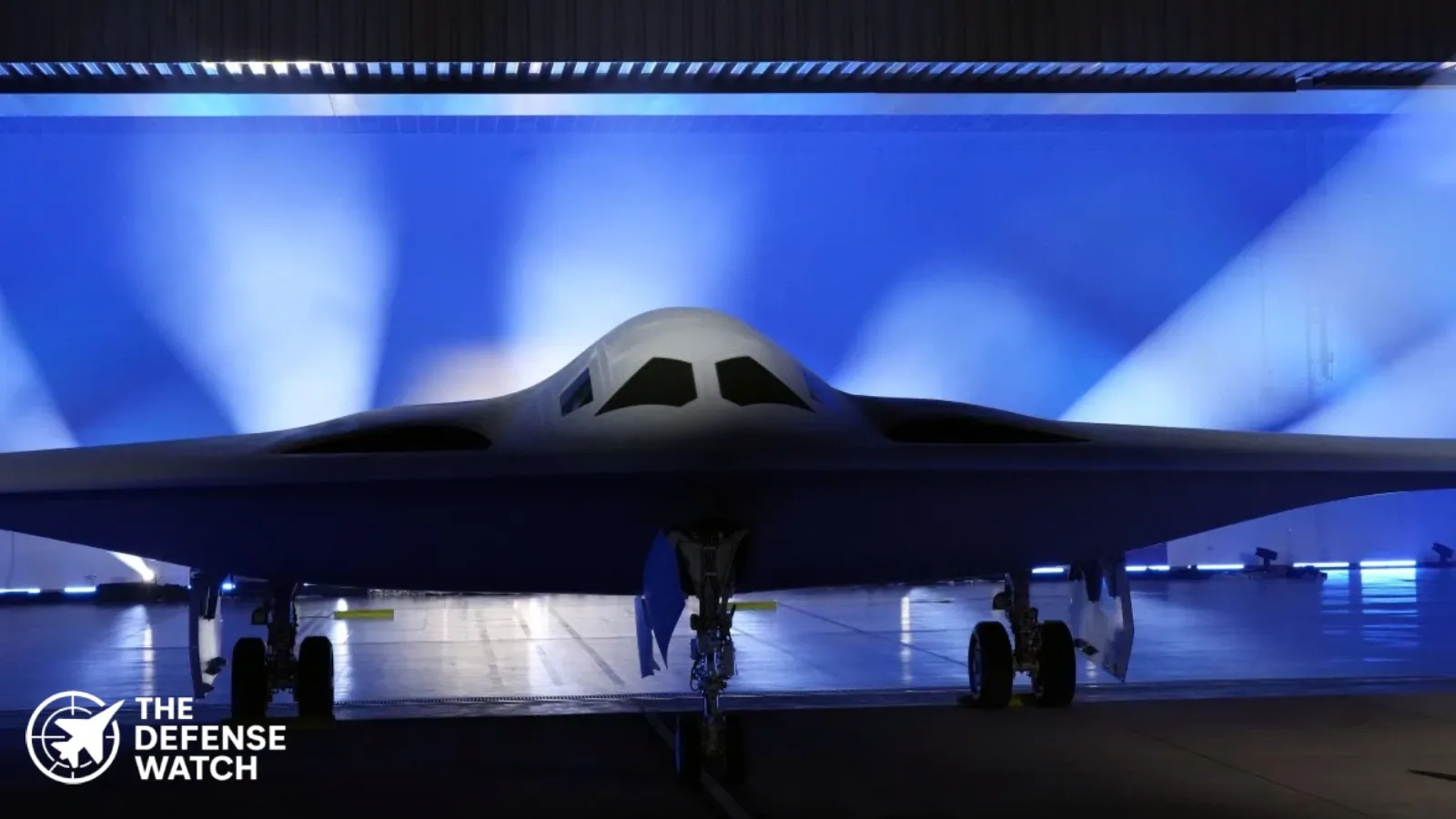
Boeing won the Next Generation Air Dominance contract on March 21, 2025, defeating Lockheed Martin and Northrop Grumman after a classified fly-off that reportedly began with initial demonstrator flights in 2020. The designation “F-47” is a deliberate historical callback to the P-47 Thunderbolt — a rugged, high-output multi-role fighter that dominated every theater of World War II.
The Air Force’s FY2026 budget request allocated $5 billion in new baseline discretionary funding for the F-47, with an additional $900 million in reconciliation funding. Combined with prior allocations, the program has received approximately $8.5 billion by end of FY2026. The first prototype article is currently in production, with Air Force Chief of Staff Gen. David Allvin confirming in September 2025 that Boeing had already begun manufacturing the first physical article months after contract award. Target: first flight 2028, initial operational capability 2029, initial fielding in the early 2030s.
One program complexity that is now openly discussed: the F-47 may be an “Increment 1” design — the first in a family of iteratively improved variants, rather than a single fixed-design production run. This “spiral development” approach mirrors how the F-16 evolved through Blocks 15, 40, 52, and beyond, but at a far higher baseline capability level.
The U.S. Navy’s parallel F/A-XX carrier-based program was effectively put on ice in FY2026 to concentrate funding on the F-47. Congress moved to restore F/A-XX funding in January 2026, but the program’s timeline remains uncertain.
United Kingdom, Italy, Japan: GCAP (Global Combat Air Programme)
Formally launched in December 2022, GCAP is the most geopolitically significant multinational defense program in a generation. In June 2025, BAE Systems (UK), Leonardo (Italy), and Japan Aircraft Industrial Enhancement formed Edgewing — a purpose-built joint venture — to lead design and development. The £686 million Edgewing contract, awarded in early 2026, marks the program’s transition from concept to funded development.
(adsbygoogle = window.adsbygoogle || []).push({});The target service entry date is 2035. The airframe is described as a tailless delta-wing with Rolls-Royce/IHI co-developed engines. Each nation will integrate its own sensors, radar, and weapons — Japan’s active electronically scanned array (AESA) radar technology is considered one of the program’s key technical differentiators, while BAE’s Digital Design and Manufacturing capabilities are providing the industrial backbone. GCAP explicitly builds on work done under the UK’s Tempest program, including new-generation integrated avionics, digital twin manufacturing, and AI-assisted cockpit design.
Italy’s Defense Minister Guido Crosetto has publicly pushed back at proposals to slow or dilute the Italian industrial workshare, calling any such move “madness” — a signal that the political cohesion that has doomed the Franco-German FCAS is, so far, holding for GCAP.
China: J-36 and J-50 (Parallel Track Development)
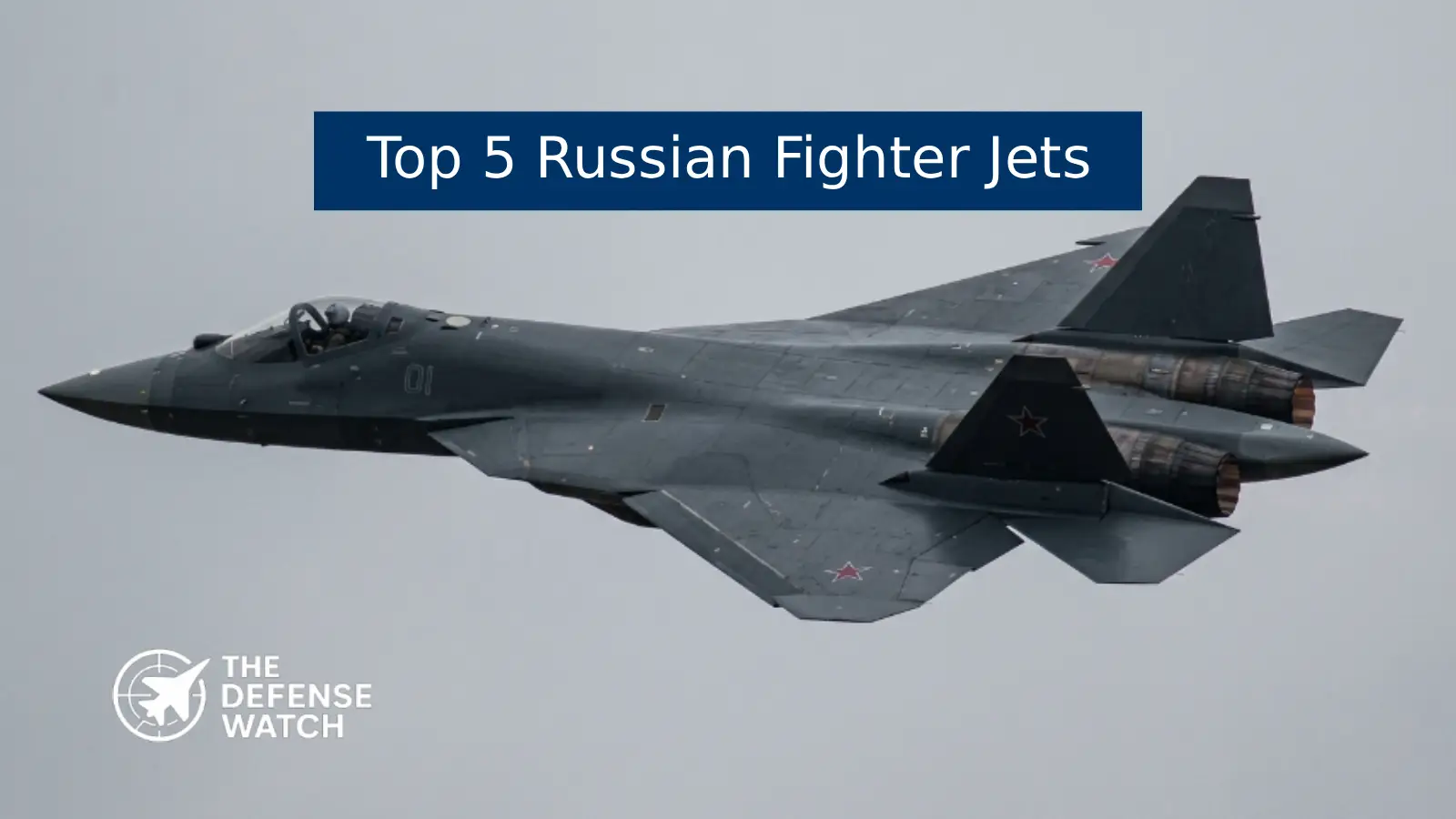
China is the only nation simultaneously flight-testing two distinct sixth-generation prototype programs. The U.S. Department of War confirmed in December 2025 that both aircraft completed initial flight tests in late 2024.
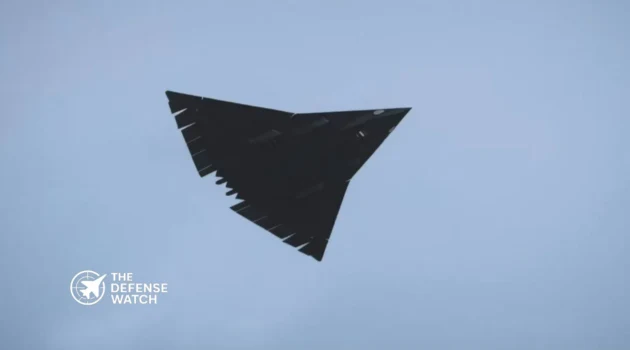
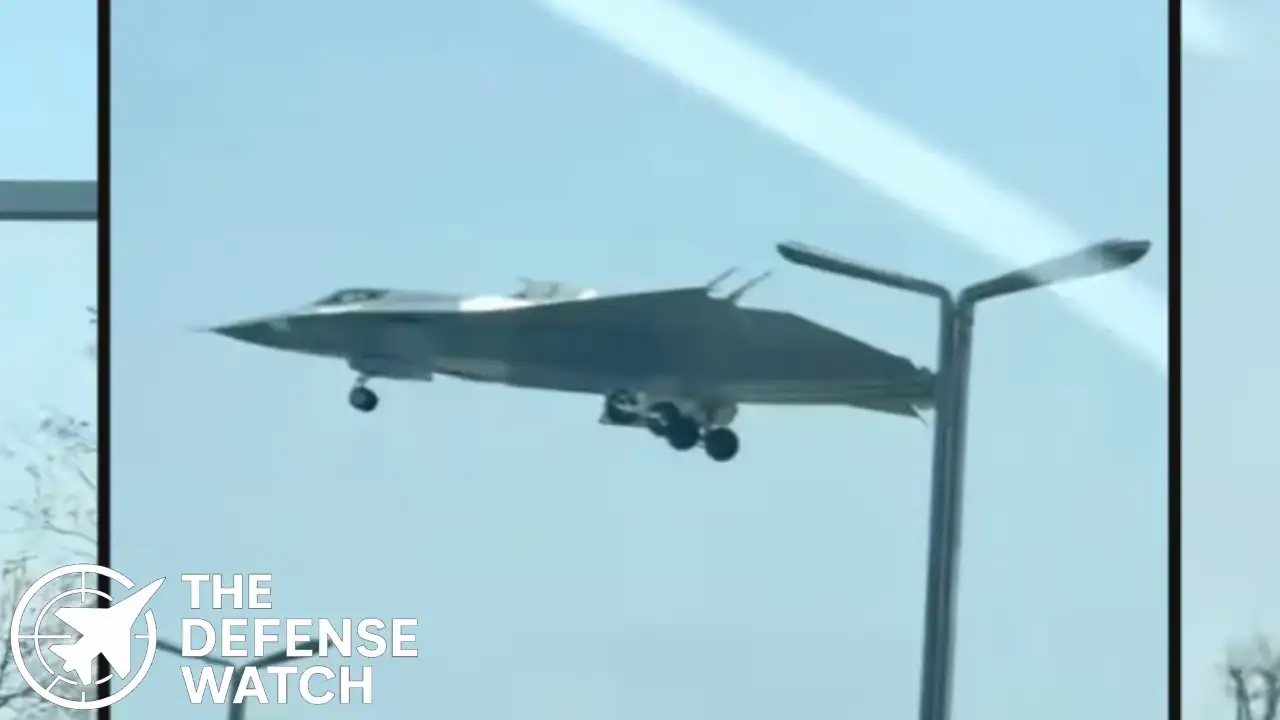
The J-36, attributed to Chengdu Aircraft Corporation (CAC), features a large tailless diamond-wing flying configuration with an estimated MTOW of 50–55+ tons, three engines, and deep stealth shaping. Its physical dimensions suggest an emphasis on range, payload, and long-duration maritime patrol — making it a credible anti-access/area-denial asset against U.S. carrier strike groups operating in the South China Sea and Western Pacific.
The J-50, attributed to Shenyang Aircraft Corporation (SAC), is more compact, twin-engine, and still tailless. Based on images circulated in 2025 and early 2026, its delta-wing layout with seamless fuselage blending and large internal weapons bays suggest a multi-mission, carrier-capable design. The J-50 was publicly acknowledged during China’s September 3, 2025 military parade as among Beijing’s “sixth-generation” platforms.
By October 2025, a second J-36 prototype appeared with substantial design revisions — redesigned serrated exhausts resembling 2D thrust-vectoring nozzles, revised DSI side intakes, and a new main landing gear layout. The pace of prototype iteration demonstrates an industrial design-to-flight velocity that caught Western analysts off guard. China’s declared goal is to field operational sixth-generation fighters before 2030 — a timeline most Western defense establishments consider aggressive but no longer implausible.
(adsbygoogle = window.adsbygoogle || []).push({});Europe: FCAS (Futura Combat Air System) — The Stalled Program
The Franco-German-Spanish FCAS represents what happens when defense industrial politics override operational urgency. Despite enormous projected contract value, the program has been mired in workshare disputes between Dassault (France), Airbus (Germany/Spain), and Indra (Spain). As of 2026, no demonstrator has flown. Timeline projections have slipped to 2045 and beyond in some assessments. The ongoing Franco-German rift threatens to collapse the program in its current form entirely.
The operational consequences of FCAS slipping are not abstract. If Germany — the program’s second-largest contributor — pivots toward GCAP or purchases an F-47 variant, the European sovereign air combat industrial base fragments in ways that would take decades to repair.
Data Block: Sixth-Generation Fighter Program Comparison (2026)
Program Nation(s) Lead Contractor Cumulative Funding First Flight Target IOC Target Key Differentiator F-47 (NGAD) United States Boeing ~$8.5B (FY2026) 2028 2029–early 2030s CCA drone teaming; highest funding velocity GCAP (Tempest) UK, Italy, Japan Edgewing (BAE/Leonardo/JAIE) £686M contracted (2026) 2027 (demonstrator) 2035 Tri-nation sensor fusion; Japan AESA technology J-36 China Chengdu Aircraft Corp. Classified Flew 2024 (prototype) Pre-2030 (target) Tailless flying wing; long-range maritime strike J-50 China Shenyang Aircraft Corp. Classified Flew 2024 (prototype) Pre-2030 (target) Compact, likely carrier-capable; twin-engine FCAS France, Germany, Spain Dassault / Airbus ~€3B+ (contested) Not started 2045+ (slipped) European sovereignty; currently stalled F/A-XX United States (Navy) TBD (Boeing/Northrop) FY2026 funding frozen 2030s (uncertain) Late 2030s Carrier-based; Congress working to restore funding The Strategic Insight: Why “First Look, First Shot” Is No Longer Enough
For 30 years, the defining mantra of U.S. air superiority was first look, first shot — the ability to detect, track, and engage any adversary before they could detect you. The F-22 and F-35 were engineered to own that advantage decisively.
Sixth-generation doctrine abandons the linear logic of individual aircraft superiority. What replaces it is network kill web management — the ability for a single crewed platform to orchestrate a distributed swarm of autonomous systems across multiple domains simultaneously.
This is where the gaming and esports analogy holds genuine analytical weight. The shift from fifth- to sixth-generation air combat architecture closely mirrors the shift in competitive strategy gaming from individual mechanical skill (the F-22 model) to real-time resource management across multiple agents (the F-47 model). The best competitive StarCraft II players are not the ones with the fastest reflexes in a single engagement — they’re the ones who can maintain optimal decision-making across 12 simultaneous production queues, scout movements, and combat theaters. The F-47 pilot operating three CCAs in a denied-access environment faces an analogous cognitive architecture challenge.
(adsbygoogle = window.adsbygoogle || []).push({});The U.S. Air Force’s answer to the cognitive load problem is AI-enabled automation — shifting sensor fusion, threat classification, and CCA tasking to on-board systems so the human pilot focuses exclusively on decision authorization. Not execution. Authorization.
China’s dual-track development strategy reflects a different doctrinal answer to the same question. By pursuing two distinct platforms simultaneously — one optimized for range and maritime strike (J-36), one for carrier operations and multi-mission flexibility (J-50) — Beijing is hedging against single-point design failures while accelerating its overall development velocity. This mirrors China’s broader industrial strategy: parallel competition between Chengdu and Shenyang, the same way Silicon Valley runs competing internal teams on the same product.
“Standing still is not an option. The ‘first look, first shot’ advantage must be maintained through continuous advancement — and that now means continuous advancement not of individual aircraft, but of the entire networked kill system those aircraft command.” — U.S. Air Force strategic framing on NGAD/F-47, as summarized across USAF budget and doctrine documents, 2025–2026
Conclusion: The Decade That Decides Air Dominance for 50 Years
The 2026–2035 window is the decisive decade. Every program on this list that produces a combat-ready aircraft by the mid-2030s will set the baseline that every air force on earth must answer for the next half century. Every program that misses will face a generation of technological and strategic subordination to those that didn’t.
(adsbygoogle = window.adsbygoogle || []).push({});The F-47 has the funding advantage and the most mature industrial execution. GCAP has the geopolitical coherence and some of the most technically capable industrial partners in the world. China’s J-36 and J-50 have demonstrated a prototype velocity and design iteration speed that no Western program has matched since the Cold War.
FCAS has a budget request and a political dispute.
When the first F-47 lifts off from Edwards Air Force Base in 2028, it will not just be the most advanced fighter jet ever flown. It will be a timer. Every nation watching that flight will have to calculate how far behind they are — and whether the gap is still closeable.
For some, the answer will already be no.