GCAP Electronics Contract Advances Sixth Generation Fighter Development
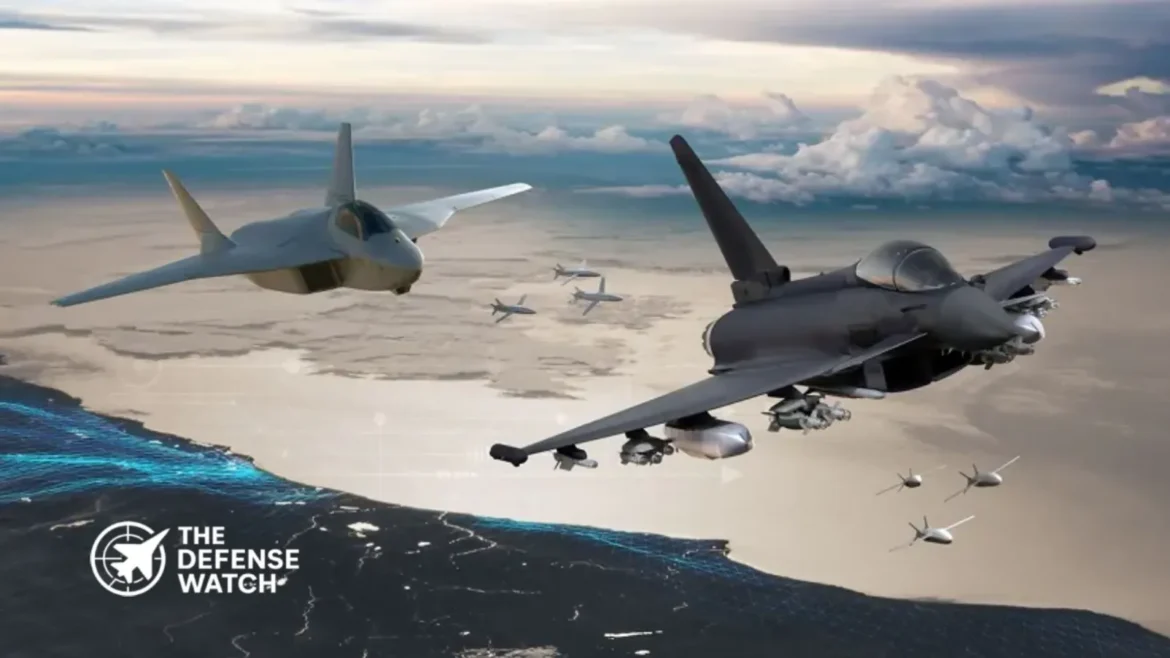
GCAP Electronics Evolution has received an 18-month contract to further develop the integrated sensing, communications and non-kinetic effects architecture of the Global Combat Air Programme, marking another step in the development of the Japan, Italy and UK sixth generation fighter. The contract was awarded by Edgewing, the industrial joint venture responsible for designing and developing the aircraft.
Takeaways
A new 18-month contract moves GCAP’s integrated electronics architecture into another development phase as Japan, Italy and the UK work toward a 2035 next-generation fighter.
The agreement covers the Integrated Sensing And Non-Kinetic Effects and Integrated Communications Systems, known as ISANKE & ICS. The architecture is intended to combine information from multiple sensing and communications functions and give the aircraft an integrated view of the battlespace.
The development is important because GCAP is not being designed around an aircraft in which individual avionics systems operate largely as separate functions. The programme’s stated approach is to build sensing, communications and non-kinetic effects into an integrated architecture from the beginning.
Edgewing Awards Contract To GCAP Electronics Evolution
Edgewing is the joint venture established by BAE Systems of the UK, Leonardo of Italy and Japan Aircraft Industrial Enhancement Co. Ltd., or JAIEC, to lead industrial development of the GCAP fighter.
G2E operates as a strategic electronics partner within that wider structure. Its consortium consists of ELT Group and Leonardo in Italy, Mitsubishi Electric in Japan, and Leonardo UK.
The latest award follows the broader government and industry contracting framework established for GCAP. In July 2026, the GCAP International Government Organisation and Edgewing signed a major contract covering work through the end of 2027. Japan’s Ministry of Defense said that agreement was intended to strengthen the programme foundation and accelerate development.
The UK government separately announced a £4.6 billion contract in July for the next stage of GCAP development. That agreement was designed to advance the aircraft’s design and support the programme’s target of bringing the sixth generation fighter into service from 2035.
What ISANKE & ICS Means For GCAP
The central technical feature of the new contract is the integration of sensing, communications and non-kinetic effects.
In a conventional fighter architecture, radar, electronic warfare equipment, communications systems and other sensors can be developed as distinct subsystems. Integration still occurs, but the aircraft’s information architecture can remain constrained by interfaces between those systems.
GCAP is taking a different approach.
The programme describes ISANKE & ICS as an integrated architecture that will combine large volumes of information and provide pilots with the data required to operate in complex and contested airspace.
Area GCAP Approach Operational Relevance Sensing Integrated sensing architecture Builds a broader picture of the battlespace Communications Integrated communications systems Supports information exchange across the force Non-kinetic effects Included within the wider electronics architecture Supports operations involving the electromagnetic spectrum Data integration Fusion of information from multiple sources Reduces dependence on isolated sensor displays System architecture Designed into the aircraft from the outset Allows electronics requirements to influence the aircraft design The significance is less about a single new sensor and more about how the aircraft processes and distributes information.
For a future fighter operating against modern air defenses, the ability to collect information is only one part of the problem. The aircraft also needs to determine what information matters, share relevant information with other assets and operate effectively when communications or sensors are degraded or contested.
Why The Electronics Architecture Matters
Sixth generation combat aircraft are increasingly being designed as nodes within a larger combat network rather than as standalone platforms.
That means the aircraft’s value depends not only on aerodynamic performance, weapons or low observability, but also on its ability to function within a wider system of sensors, communications links, weapons and other aircraft.
The GCAP approach reflects this shift.
The programme’s electronics architecture is intended to make the aircraft a major airborne sensing and information platform. G2E has described its role as delivering information superiority for future congested and contested airspace.
This also creates a demanding engineering problem. Sensor fusion requires common data structures, high-speed processing, carefully managed interfaces and software that can combine information without creating additional workload for the pilot.
Communications introduce another challenge. A future combat aircraft must exchange information with other platforms while dealing with electromagnetic interference, hostile electronic warfare and the possibility that some communication paths may be unavailable.
The inclusion of non-kinetic effects in the same architecture makes the problem more complex because electromagnetic operations can involve both sensing and effects. The aircraft therefore needs an architecture capable of supporting multiple functions without creating unnecessary conflicts between them.
GCAP Moves Into A More Integrated Development Phase
The latest contract comes as GCAP moves deeper into joint industrial development.
Japan, Italy and the UK established GCAP to develop a common next-generation fighter, with the three governments targeting 2035 for the aircraft. The partners have repeatedly reaffirmed that schedule.
Japan’s defense planning also connects the aircraft to future unmanned capabilities. Its 2026 defense budget documents include funding for GCAP development and separate research into UAVs intended to collaborate with the next-generation fighter.
That broader direction matters for the electronics architecture.
If a future fighter operates alongside uncrewed aircraft, ships, ground-based sensors and other combat aircraft, the value of its sensing and communications systems extends beyond the aircraft itself. The fighter can become part of a distributed network in which information is collected by one platform and used by another.
GCAP’s integrated architecture is therefore closely connected to the programme’s wider concept of a future combat air system.
Implications For The U.S. And Allied Air Forces
For the United States and other allied air forces, GCAP is significant beyond the aircraft itself.
The programme brings together three major U.S. security partners and creates an independent multinational pathway toward a sixth generation combat aircraft. The UK, Japan and Italy are developing technologies across areas including aircraft design, propulsion, sensors, data systems and digital engineering.
The electronics work is particularly relevant because the same broad operational problem exists across future U.S. combat aircraft programmes: how to maintain an information advantage when adversaries can challenge aircraft sensors, communications and command networks.
The U.S. is pursuing its own sixth generation systems under the Next Generation Air Dominance effort, including the Air Force’s F-47 programme and the Navy’s F/A-XX effort. The parallel development of GCAP means allied nations are also building expertise in advanced sensing, networking and electromagnetic operations.
For Washington, this could create opportunities for closer interoperability with Japan, the UK and Italy, while also highlighting the importance of common data standards, secure communications and cross-domain information sharing.
However, GCAP remains a separate multinational programme, and the details of its classified electronics architecture, sensor performance and communications capabilities have not been publicly disclosed.
The Industrial Challenge Behind GCAP’s Electronics
The formation of G2E is also significant from an industrial perspective.
Rather than leaving the electronics work divided permanently among national companies, the consortium is attempting to operate the participating companies as a single strategic partner. G2E said the latest contract reflects progress in moving from national companies toward a unified international organization.
That model could help reduce duplication and improve integration, but it also requires the partners to align engineering processes, intellectual property arrangements, software development practices and national requirements.
GCAP’s multinational structure makes those issues central to programme execution.
The UK has also updated its export-control framework for GCAP. A new open general licence published in September 2026 reflects the programme’s move into its next phase and allows specified military and dual-use goods, software and technology to move among approved GCAP partner and supply-chain nations under defined conditions.
This is an important supporting element because advanced electronics development depends on the ability to exchange technology, components, software and engineering information across national industrial bases.
What Comes Next
The new G2E contract covers 18 months, making it part of the near-term development cycle rather than a final production agreement.
The immediate focus is further development of ISANKE & ICS and continued integration with the wider GCAP aircraft architecture.
The larger objective remains the same: deliver a sixth generation combat aircraft for Japan, Italy and the UK around 2035.
The key measure of progress will therefore not simply be the maturity of individual sensors or communications components. It will be whether the programme can combine those technologies into a reliable architecture that provides useful information to the pilot, supports other platforms and remains effective in a heavily contested electromagnetic environment.
GCAP’s latest electronics contract represents progress toward that goal, while the difficult work of integrating those capabilities into a production-ready combat aircraft remains ahead.

South Korea Begins Sixth Generation Fighter Concept Study
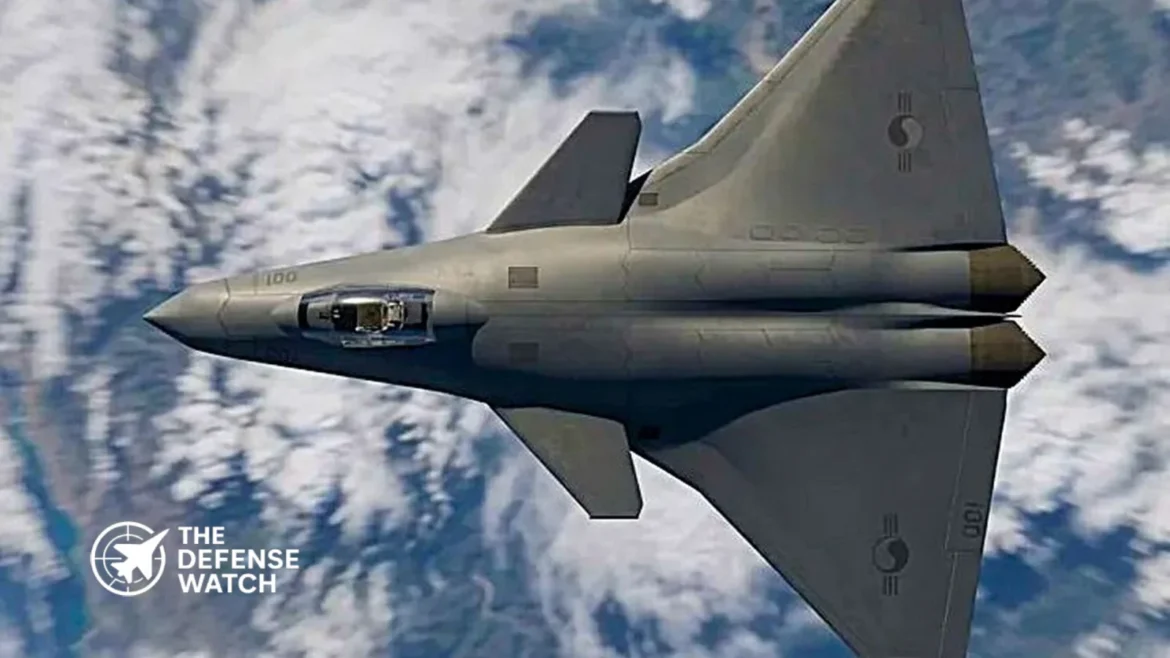
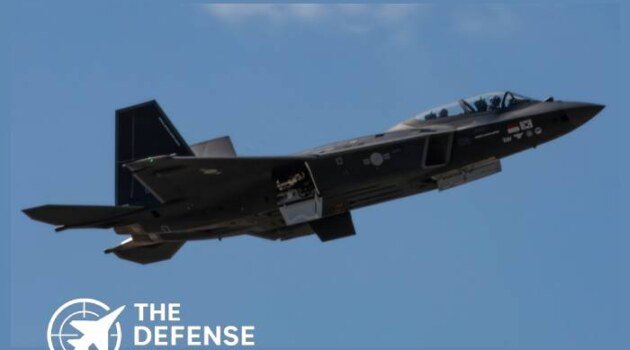
South Korea’s sixth generation fighter effort has entered a formal concept phase after the Defense Acquisition Program Administration, or DAPA, issued a request for proposals on August 21 for a Korean Next Generation Fighter Concept Study. The 14-month effort is intended to define future operational requirements, examine aircraft configurations and establish a technology roadmap for a possible next generation combat aircraft.
Takeaways
South Korea has started a formal concept study for a future fighter beyond the KF-21, but no sixth generation aircraft acquisition program has yet been approved.
The initiative comes only weeks after South Korea formally completed development of the KF-21 Boramae. DAPA said the KF-21 passed its final combat suitability assessment in May after more than 1,600 flight tests, while the first production aircraft are scheduled for delivery to the Republic of Korea Air Force during the second half of 2026.
The new study should not be confused with an approved aircraft acquisition program. At this stage, Seoul is defining what a future fighter would need to accomplish and which technologies would be necessary to support those requirements.
What The Korean Next Generation Fighter Study Will Examine
The reported study has a budget of KRW 900 million, approximately $650,000, and is scheduled to run for 14 months. Its purpose is to develop operational concepts, examine competing aircraft configurations and establish technology development priorities before any potential full-scale fighter program.
Available reporting indicates that the study is considering both conventional and tailless aircraft configurations.
Reported areas of investigation include:
Area Reported Direction Aircraft configuration Conventional and tailless designs Crew Single-seat configuration under study Low observability Broadband stealth Radar bands L, S and X bands Weapons Internal weapons carriage Propulsion Twin adaptive-cycle engines under study Flight performance Supersonic cruise capability Combat architecture Manned-unmanned teaming Mission systems AI-enabled capabilities These characteristics remain study requirements and concepts, not confirmed specifications for an operational South Korean fighter.
That distinction is important. The current effort is intended to provide technical and operational evidence that could later support formal requirements, preliminary studies and a possible acquisition decision.
KF-21 Gives Seoul A Starting Point
The timing of the study is significant because South Korea has just demonstrated that it can complete a domestically led fighter development program.
The KF-21 began system development in 2015. In May 2026, DAPA announced that the aircraft had received a combat suitability determination after completing more than 1,600 flight tests and validating more than 13,000 test conditions.
The aircraft subsequently received its initial type certification after South Korean authorities determined that it met all 745 applicable airworthiness requirements across 14 areas.
Those achievements matter beyond the KF-21 itself. Developing a modern combat aircraft requires expertise in aerodynamic design, flight controls, avionics, radar integration, weapons integration, structural testing, certification and large-scale industrial production.
South Korea now has experience in each of those areas that it did not possess at the same level before the KF-21 program.
The next challenge is significantly more demanding.
Why A Tailless Design Matters
One of the most technically important elements reported in the new study is the examination of tailless configurations.
Conventional fighters use vertical and horizontal tail surfaces to provide aerodynamic stability and control. Removing those surfaces can reduce radar reflections and potentially improve low observability, but it also creates difficult flight-control problems.
A tailless fighter must maintain adequate control authority through alternative aerodynamic surfaces, thrust management and sophisticated flight-control software.
The challenge becomes greater as the aircraft is optimized for multiple radar-frequency bands. Low observability is not simply a matter of shaping the aircraft. Designers must account for the interaction among the airframe, materials, apertures, sensors, weapons carriage, propulsion system and antennas.
South Korea’s decision to study these issues at the concept stage indicates that the country is evaluating a clean-sheet architecture rather than simply adding individual stealth features to the KF-21.
Propulsion Could Become The Critical Technology
Aircraft propulsion represents one of the largest remaining gaps between South Korea’s current fighter capability and a fully sovereign future combat-air system.
The KF-21 uses foreign propulsion, while Seoul has started work on indigenous aviation engines for future aircraft.
In July, DAPA and the Agency for Defense Development publicly displayed a 5,500-pound-class turbofan prototype intended for possible use on collaborative unmanned combat aircraft. DAPA also said South Korea plans to develop an indigenous engine for a future crewed fighter, with the effort extending to 2041.
A separate advanced aviation-engine program approved by South Korea calls for development of a 16,000-pound-force-class turbofan, rising to approximately 24,000 pounds-force with afterburning. The program is scheduled to run from 2027 through 2040 and has a reported total cost of about KRW 3.35 trillion.
These engine efforts are strategically important because propulsion affects almost every major aircraft characteristic, including acceleration, range, thermal management, electrical power generation and sustained high-speed performance.
For a future stealth aircraft using high-powered sensors and electronic warfare systems, thermal and electrical management can be almost as important as raw engine thrust.
From A Fighter To A Combat Air System
Another major change under consideration is the relationship between the future crewed aircraft and uncrewed platforms.
South Korea is increasingly developing technology for manned-unmanned teaming, in which a crewed fighter operates alongside collaborative combat aircraft or other autonomous systems.
This approach changes the role of the fighter. Instead of treating the aircraft as an isolated weapons platform, the crewed aircraft becomes part of a wider network involving sensors, autonomous aircraft, communications and other combat systems.
That architecture could allow uncrewed aircraft to perform missions such as sensing, electronic warfare or weapons delivery while the crewed aircraft retains responsibility for higher-level decisions.
The technology is still developing, and the precise level of autonomy that South Korea would ultimately authorize remains a requirements question rather than an established capability.
Nevertheless, DAPA’s simultaneous investment in uncrewed aircraft engines and future crewed fighter technology suggests that Seoul is approaching future airpower as an interconnected system rather than as a single aircraft project.
South Korea Is Building On Its KF-21 Technology Base
The sixth generation study also runs alongside continued interest in more advanced KF-21 configurations.
Future KF-21 development has been associated with greater low observability, internal weapons carriage, improved sensors, mission computing and the ability to control collaborative aircraft. These capabilities could provide a technology bridge between the current aircraft and a clean-sheet future fighter.
That distinction could become important for South Korea’s force planning.
A clean-sheet sixth generation fighter would require decades of technology development and testing. Developing selected technologies through the KF-21 family could allow engineers to mature systems before integrating them into a new airframe.
South Korea is already pursuing additional KF-21 sensor capabilities. The Agency for Defense Development began a three-year effort in January to validate the aircraft’s AESA radar for air-to-ground and air-to-sea modes, with testing scheduled through December 2028.
This creates a potential technology progression from the current KF-21, through more advanced derivatives, toward a future aircraft architecture.
Regional And U.S. Defense Implications
South Korea’s move has significance for the wider Indo-Pacific defense environment.
The Republic of Korea Air Force operates in a region where advanced fighters, long-range missiles, increasingly capable air defenses and uncrewed systems are reshaping the air domain. A future South Korean fighter would therefore need to address more than traditional fighter-versus-fighter combat.
Survivability against integrated air defenses, electronic warfare resistance, sensor networking, long-range weapons employment and coordination with autonomous aircraft are likely to be central design considerations.
For the United States, the development of a stronger South Korean combat-air industrial base could also have implications for alliance interoperability.
The United States and South Korea already operate closely integrated air forces, including U.S. F-35A and South Korean F-35A fleets. A future Korean aircraft designed around advanced networking and collaborative systems could eventually add another indigenous layer to the alliance’s air combat architecture.
At the same time, an indigenous fighter program does not automatically mean South Korea will become independent of foreign suppliers. Engines, weapons, electronic components and other critical technologies can remain internationally sourced even when an aircraft is domestically designed.
The more meaningful measure of sovereignty will therefore be how much of the aircraft’s design, software, propulsion, sensors and upgrade cycle South Korea can control.
South Korea Enters A Crowded Sixth Generation Race
South Korea’s study is beginning as other major powers pursue their own next generation combat-air programs.
The U.S. Air Force’s F-47 is being developed under the Next Generation Air Dominance effort. The United Kingdom, Japan and Italy are pursuing the Global Combat Air Programme, while China is developing advanced future combat-aircraft designs.
These programs do not share identical requirements.
The emerging sixth generation category is therefore unlikely to produce one standard aircraft configuration. Some countries may prioritize range and weapons capacity, while others may place greater emphasis on affordability, distributed operations, autonomous systems or operating from geographically constrained bases.
South Korea’s geography makes those trade-offs particularly important. A future aircraft must provide high survivability and advanced sensing while remaining compatible with the country’s force structure, industrial capacity and operating environment.
That could make the Korean program distinct from much larger aircraft being studied elsewhere.
The Next Decision Is Still Years Away
The most important point is that South Korea has not yet committed to building a sixth generation fighter.
The 14-month study is intended to establish the operational concepts, performance requirements, configuration options and technology roadmaps that could support a future decision. The aircraft’s final design, propulsion system, development schedule, production quantity and acquisition budget remain unresolved.
For Seoul, however, the timing provides an opportunity to build on the KF-21 while its engineering workforce, suppliers, testing infrastructure and institutional knowledge remain active.
That may ultimately be the most important strategic feature of the new study.
South Korea’s fighter ambitions are moving from proving that it can build a modern combat aircraft toward determining whether it can sustain an indigenous combat-air ecosystem spanning aircraft design, stealth, sensors, propulsion, autonomy, weapons integration and continuous upgrades.
The current study is only an early step, but it provides the framework for answering that larger question.
(adsbygoogle = window.adsbygoogle || []).push({});Executive Summary:
The United Kingdom has committed more than £6 billion (over US$8 billion) to the Global Combat Air Programme (GCAP), reinforcing its long term investment in developing a sixth generation combat aircraft alongside Italy and Japan. The funding supports research, technology development, and industrial capacity as the three nations work toward fielding the aircraft by 2035.
UK Commits More Than $8 Billion To Advance GCAP Sixth Generation Fighter
The UK GCAP fighter program received a major financial boost after the British government confirmed it will invest more than £6 billion (approximately US$8 billion) over the next four years to accelerate development of the Global Combat Air Programme (GCAP). The announcement was made as part of the government’s broader defense spending plans and reinforces Britain’s commitment to one of the world’s most ambitious future combat aviation projects.
GCAP is a trilateral initiative involving the United Kingdom, Italy, and Japan. It aims to develop a sixth generation combat aircraft capable of replacing the Royal Air Force’s Eurofighter Typhoon fleet while delivering advanced air superiority capabilities well into the second half of the century.
The funding demonstrates London’s intention to maintain sovereign combat aircraft design expertise while strengthening defense industrial cooperation with key allies in Europe and the Indo Pacific.
Major Investment Supports Long Term Fighter Development
The latest funding package will finance research, engineering, testing, and industrial infrastructure needed to mature technologies required for a sixth generation fighter.
According to the UK government, the investment forms part of a wider defense modernization strategy intended to maintain technological superiority amid increasingly contested security environments.
(adsbygoogle = window.adsbygoogle || []).push({});Key objectives include:
Program Element Details Investment More than £6 billion (over US$8 billion) Timeframe Next four years Partner Nations United Kingdom, Italy, Japan Planned Entry Into Service 2035 Primary Mission Air superiority and multi domain operations The program is managed through the GCAP International Government Organisation (GIGO), which coordinates government requirements while industry partners jointly develop the aircraft.
GCAP Brings Together Leading Aerospace Companies
The industrial partnership combines some of the world’s most experienced combat aircraft manufacturers.
Principal industry participants include:
- BAE Systems (United Kingdom)
- Leonardo (Italy)
- Japan Aircraft Industrial Enhancement Company (JAIEC)
- Rolls Royce
- Mitsubishi Heavy Industries
- Avio Aero
- IHI Corporation
- MBDA
- Mitsubishi Electric
- Leonardo Electronics
Each company contributes specialized expertise spanning aircraft design, propulsion, sensors, electronic warfare, mission systems, advanced manufacturing, and weapons integration.
The collaborative approach distributes development costs while enabling each nation to retain critical aerospace capabilities.
Sixth Generation Capabilities Extend Beyond Traditional Fighters
Unlike previous fighter development programs, GCAP is designed around highly networked operations rather than standalone aircraft performance.
Although final specifications remain under development, officials have consistently outlined several core capability areas:
- Advanced stealth across multiple threat spectrums
- Artificial intelligence assisted mission management
- Long range operations
- Secure multi domain data sharing
- Open mission systems architecture
- Integration with autonomous collaborative combat aircraft
- Advanced electronic warfare capabilities
- Increased onboard power generation for future sensors and directed energy technologies
The aircraft is expected to function as a command node capable of coordinating unmanned systems, space based assets, and joint force operations simultaneously.
Strategic Importance For The United Kingdom
The latest investment underscores Britain’s determination to preserve an independent combat aircraft design capability after decades of participation in multinational fighter programs.
The UK defense industrial base employs tens of thousands of workers across aerospace manufacturing, propulsion systems, avionics, software engineering, and weapons integration. Sustained investment in GCAP helps retain highly specialized engineering skills that might otherwise erode between major aircraft programs.
Government officials have also emphasized the program’s anticipated contribution to economic growth through exports, high value manufacturing, and technological innovation extending beyond defense applications.
Why GCAP Matters For Global Defense
Beyond replacing legacy fighter fleets, GCAP reflects broader shifts in international defense cooperation.
Unlike traditional alliance structures centered primarily on NATO, the program establishes a long term strategic partnership linking Europe with the Indo Pacific. The United Kingdom, Italy, and Japan face increasingly similar challenges involving advanced air defense systems, long range precision weapons, electronic warfare, and rapidly evolving military technologies.
For the United States, GCAP represents an important complementary capability rather than direct competition. While the U.S. Air Force continues development of its Next Generation Air Dominance (NGAD) family of systems, allied sixth generation platforms can improve burden sharing and interoperability across future coalition operations.
The program also diversifies the global market for advanced combat aircraft. Instead of relying exclusively on American or domestic designs, partner nations are pooling technological expertise to create an alternative high end fighter platform capable of supporting allied air forces for decades.
atOptions = { ‘key’ : ‘e7d18db8b7513fb2a224cf4c3f18bbf0’, ‘format’ : ‘iframe’, ‘height’ : 90, ‘width’ : 728, ‘params’ : {} };From an industrial perspective, GCAP demonstrates a new model for multinational defense acquisition. Rather than one nation leading development with others joining later, Britain, Italy, and Japan are jointly defining operational requirements, governance, technology development, and industrial participation from the outset. This approach could reduce duplication while improving interoperability among partner militaries.
Development Timeline Remains Focused On 2035
The three governments continue targeting operational service entry by 2035, an ambitious schedule given the technological complexity involved.
Major milestones expected over the coming years include:
- Continued digital design validation
- Prototype development
- Flight testing
- Sensor integration
- Engine maturation
- Mission systems testing
- Autonomous systems integration
Maintaining schedule discipline will be critical as participating nations seek to replace aging combat aircraft before capability gaps emerge during the 2030s.
(adsbygoogle = window.adsbygoogle || []).push({});Outlook
The UK’s commitment of more than £6 billion marks one of the largest investments yet in the Global Combat Air Programme and signals continued political support for sixth generation fighter development.
As GCAP progresses from technology maturation toward prototype production, the program is expected to become a cornerstone of British, Italian, and Japanese airpower modernization. Its success will depend not only on delivering an advanced aircraft, but also on integrating emerging technologies such as artificial intelligence, collaborative autonomous systems, and next generation electronic warfare into a coherent operational capability.
(adsbygoogle = window.adsbygoogle || []).push({});Executive Summary:
Airbus has launched a new industrial consortium called Team Gen 6 after the collapse of the Franco-German-Spanish FCAS fighter program. The initiative aims to preserve European sixth-generation fighter development capability under a German-led framework. The move reflects widening fractures in Europe’s previous joint combat aircraft effort and a shift toward nationally anchored industrial programs.
Airbus Team Gen 6 Sixth Generation Fighter Emerges After FCAS Collapse
The Airbus Team Gen 6 sixth generation fighter initiative marks a major reset in European combat aircraft development following the breakdown of the FCAS program. The announcement was made during the ILA Berlin 2026 air show, where Airbus and a group of German and European defense firms outlined a new path forward for next-generation air combat capability.
According to reporting from defense media at ILA Berlin and industry statements, the move follows the effective end of the Franco-German-Spanish New Generation Fighter effort after sustained disagreements over leadership, design authority, and industrial workshare.
(adsbygoogle = window.adsbygoogle || []).push({});FCAS Collapse Reshapes European Fighter Development
The Future Combat Air System was originally launched in 2017 as a trilateral effort between France, Germany, and Spain to develop a sixth-generation fighter ecosystem centered on a manned aircraft, unmanned teaming systems, and a digital combat cloud.
However, long-running disputes between industrial partners ultimately stalled progress. The breakdown between Airbus Defence and Space and Dassault Aviation over program leadership and design authority became a key factor in the program’s collapse.
Recent reporting confirms that European governments effectively ended the manned fighter component of FCAS in early June 2026, clearing the way for alternative national and industrial approaches.
This outcome has left a capability gap in Europe’s planned next-generation air combat roadmap, particularly as peer competitors accelerate their own sixth-generation efforts.
(adsbygoogle = window.adsbygoogle || []).push({});Airbus Team Gen 6 Consortium Structure and Goals
In response, Airbus has formed an eight-company industrial alliance under the Team Gen 6 banner. The group includes:
- Airbus Defence and Space
- MBDA
- Hensoldt
- Diehl Defence
- MTU Aero Engines
- Liebherr
- Autoflug
- Rohde & Schwarz
The consortium is positioning itself as a Germany-centered industrial base for a future sixth-generation fighter aircraft program.
Initial statements indicate the group has already submitted a position paper to German defense authorities outlining its vision for a next-generation combat aircraft and urging timely procurement decisions.
The initiative reflects an effort to retain key aerospace engineering and defense technology skills within Europe, particularly in avionics, propulsion, sensors, and systems integration.
(adsbygoogle = window.adsbygoogle || []).push({});Strategic Shift Away From Multinational Dependence
The emergence of Airbus Team Gen 6 signals a broader shift in European defense procurement dynamics.
Instead of a tightly integrated multinational fighter program, Europe now appears to be moving toward parallel national or regional development paths. Germany is emerging as the primary anchor for the new effort, while France is expected to pursue alternative options following the FCAS breakdown.
Defense analysts note that this fragmentation increases short term industrial competition but may also accelerate parallel innovation streams across European aerospace firms.
At the same time, policymakers in Berlin are reportedly evaluating multiple options, including participation in other international programs or additional procurement of fifth generation aircraft to bridge capability gaps.
(adsbygoogle = window.adsbygoogle || []).push({});Industrial and Strategic Implications
The collapse of FCAS and the rise of Team Gen 6 highlight several structural issues in European defense collaboration:
First, differing national operational requirements continue to challenge joint fighter development programs. France, Germany, and Spain had diverging priorities around carrier compatibility, strike range, and aircraft size.
Second, industrial leadership disputes remain a persistent barrier in high value defense programs, particularly when major primes compete for control of design authority.
Third, Europe now faces increased pressure to maintain technological parity with emerging sixth-generation programs being developed in the United States, United Kingdom, Italy, Japan, and China.
While Team Gen 6 aims to preserve industrial continuity, the program is still in an early conceptual stage, with detailed design and funding pathways yet to be fully defined.
(adsbygoogle = window.adsbygoogle || []).push({});Perspective
From a defense industry standpoint, the Team Gen 6 initiative is less a finalized program and more a structured attempt to prevent capability fragmentation after FCAS. It preserves workforce continuity and technical expertise while governments reassess long term procurement strategies.
The key question going forward is whether Germany can convert this industrial consortium into a fully funded state-backed development program, or whether it remains a preparatory framework for future international cooperation.

(adsbygoogle = window.adsbygoogle || []).push({});Executive Summary: The world’s first sixth-generation fighter jets have moved from classified skunkworks to funded, contracted, test-flying reality — and three distinct programs are now vying to define the future of air combat. The U.S. F-47 leads on funding at nearly $8.5 billion cumulative, China’s J-36 and J-50 are flight-testing simultaneously, and the UK-Italy-Japan GCAP has just awarded a £686 million development contract. Whoever fields a combat-ready platform first will set the technological and strategic baseline for the next 50 years of aerial warfare.
Three sovereign powers are simultaneously constructing the most lethal, autonomous, and stealthy combat aircraft in history. None of them plan to wait for the others to finish.
As of mid-2026, the United States’ Boeing-built F-47 has accumulated nearly $8.5 billion in cumulative programmatic funding and is targeting first flight in 2028. China’s two competing prototypes — the J-36 and J-50 — completed their first flight tests in late 2024 and have accelerated through multiple prototype iterations since. The UK-Italy-Japan Global Combat Air Programme (GCAP) just contracted Edgewing, a newly formed tri-national industrial consortium, for £686 million (~$908 million) to formally begin detailed design work. Europe’s Franco-German FCAS, by contrast, is sinking under workshare disputes and may not produce a demonstrator before the mid-2030s.
The gap between the front-runners and the stragglers isn’t just programmatic. It’s strategic.
Technical Analysis: What Makes a “Sixth-Generation” Fighter Different From the F-35
The term “sixth generation” isn’t a marketing tier. It describes a genuinely new doctrine of air combat — one where the crewed fighter is not the primary weapon, but the command node of a broader, AI-managed kill web.
Every major program converges on five defining characteristics:
1. Manned-Unmanned Teaming (MUM-T) The F-47 is explicitly designed to operate alongside Collaborative Combat Aircraft (CCAs) — autonomous drones controlled from the cockpit capable of electronic warfare, ISR, SEAD (Suppression of Enemy Air Defenses), and kinetic strikes. The Pentagon’s logic: one F-47 paired with two CCAs may provide more combat-relevant capability than two or three F-35s at comparable lifecycle cost.
2. Adaptive Cycle Engines Next-generation propulsion isn’t just about thrust. Adaptive cycle engines (like GE Aerospace’s XA100) can switch operating modes mid-flight — high-bypass for fuel economy at cruise, low-bypass for supercruise and afterburner for combat. The F-47 is targeting Mach 1.8+ supercruise without afterburner, extending combat radius dramatically over the F-22.
3. Embedded, All-Spectrum Stealth Fifth-generation stealth (F-22, F-35) was primarily radar-cross-section (RCS) management. Sixth-generation platforms extend this to infrared signature reduction, acoustic masking, electronic emission control (EMCON), and low-probability-of-intercept radar systems. The J-36’s tailless flying-wing configuration — no vertical stabilizers — reduces RCS in the rear hemisphere where legacy fighters are most vulnerable.
4. On-Board AI for Sensor Fusion The GCAP program describes its aircraft not as a fighter in the traditional sense but as a “super-connected, supercomputing command node.” Processing data from distributed sensors, networked CCAs, space-based ISR, and legacy platforms in real time requires on-board AI that no current production fighter possesses.
5. Directed-Energy Weapons Integration Laser and high-power microwave (HPM) weapons are structural design requirements, not retrofits. The airframes are being engineered from the outset to accommodate power generation and thermal management for directed-energy payloads that defeat both missiles and drone swarms.
(adsbygoogle = window.adsbygoogle || []).push({});Program Breakdown: The F-47, GCAP, and China’s Twin Track
United States: F-47 (NGAD)
Boeing won the Next Generation Air Dominance contract on March 21, 2025, defeating Lockheed Martin and Northrop Grumman after a classified fly-off that reportedly began with initial demonstrator flights in 2020. The designation “F-47” is a deliberate historical callback to the P-47 Thunderbolt — a rugged, high-output multi-role fighter that dominated every theater of World War II.
The Air Force’s FY2026 budget request allocated $5 billion in new baseline discretionary funding for the F-47, with an additional $900 million in reconciliation funding. Combined with prior allocations, the program has received approximately $8.5 billion by end of FY2026. The first prototype article is currently in production, with Air Force Chief of Staff Gen. David Allvin confirming in September 2025 that Boeing had already begun manufacturing the first physical article months after contract award. Target: first flight 2028, initial operational capability 2029, initial fielding in the early 2030s.
One program complexity that is now openly discussed: the F-47 may be an “Increment 1” design — the first in a family of iteratively improved variants, rather than a single fixed-design production run. This “spiral development” approach mirrors how the F-16 evolved through Blocks 15, 40, 52, and beyond, but at a far higher baseline capability level.
The U.S. Navy’s parallel F/A-XX carrier-based program was effectively put on ice in FY2026 to concentrate funding on the F-47. Congress moved to restore F/A-XX funding in January 2026, but the program’s timeline remains uncertain.
United Kingdom, Italy, Japan: GCAP (Global Combat Air Programme)
Formally launched in December 2022, GCAP is the most geopolitically significant multinational defense program in a generation. In June 2025, BAE Systems (UK), Leonardo (Italy), and Japan Aircraft Industrial Enhancement formed Edgewing — a purpose-built joint venture — to lead design and development. The £686 million Edgewing contract, awarded in early 2026, marks the program’s transition from concept to funded development.
(adsbygoogle = window.adsbygoogle || []).push({});The target service entry date is 2035. The airframe is described as a tailless delta-wing with Rolls-Royce/IHI co-developed engines. Each nation will integrate its own sensors, radar, and weapons — Japan’s active electronically scanned array (AESA) radar technology is considered one of the program’s key technical differentiators, while BAE’s Digital Design and Manufacturing capabilities are providing the industrial backbone. GCAP explicitly builds on work done under the UK’s Tempest program, including new-generation integrated avionics, digital twin manufacturing, and AI-assisted cockpit design.
Italy’s Defense Minister Guido Crosetto has publicly pushed back at proposals to slow or dilute the Italian industrial workshare, calling any such move “madness” — a signal that the political cohesion that has doomed the Franco-German FCAS is, so far, holding for GCAP.
China: J-36 and J-50 (Parallel Track Development)
China is the only nation simultaneously flight-testing two distinct sixth-generation prototype programs. The U.S. Department of War confirmed in December 2025 that both aircraft completed initial flight tests in late 2024.
The J-36, attributed to Chengdu Aircraft Corporation (CAC), features a large tailless diamond-wing flying configuration with an estimated MTOW of 50–55+ tons, three engines, and deep stealth shaping. Its physical dimensions suggest an emphasis on range, payload, and long-duration maritime patrol — making it a credible anti-access/area-denial asset against U.S. carrier strike groups operating in the South China Sea and Western Pacific.
The J-50, attributed to Shenyang Aircraft Corporation (SAC), is more compact, twin-engine, and still tailless. Based on images circulated in 2025 and early 2026, its delta-wing layout with seamless fuselage blending and large internal weapons bays suggest a multi-mission, carrier-capable design. The J-50 was publicly acknowledged during China’s September 3, 2025 military parade as among Beijing’s “sixth-generation” platforms.
By October 2025, a second J-36 prototype appeared with substantial design revisions — redesigned serrated exhausts resembling 2D thrust-vectoring nozzles, revised DSI side intakes, and a new main landing gear layout. The pace of prototype iteration demonstrates an industrial design-to-flight velocity that caught Western analysts off guard. China’s declared goal is to field operational sixth-generation fighters before 2030 — a timeline most Western defense establishments consider aggressive but no longer implausible.
(adsbygoogle = window.adsbygoogle || []).push({});Europe: FCAS (Futura Combat Air System) — The Stalled Program
The Franco-German-Spanish FCAS represents what happens when defense industrial politics override operational urgency. Despite enormous projected contract value, the program has been mired in workshare disputes between Dassault (France), Airbus (Germany/Spain), and Indra (Spain). As of 2026, no demonstrator has flown. Timeline projections have slipped to 2045 and beyond in some assessments. The ongoing Franco-German rift threatens to collapse the program in its current form entirely.
The operational consequences of FCAS slipping are not abstract. If Germany — the program’s second-largest contributor — pivots toward GCAP or purchases an F-47 variant, the European sovereign air combat industrial base fragments in ways that would take decades to repair.
Data Block: Sixth-Generation Fighter Program Comparison (2026)
Program Nation(s) Lead Contractor Cumulative Funding First Flight Target IOC Target Key Differentiator F-47 (NGAD) United States Boeing ~$8.5B (FY2026) 2028 2029–early 2030s CCA drone teaming; highest funding velocity GCAP (Tempest) UK, Italy, Japan Edgewing (BAE/Leonardo/JAIE) £686M contracted (2026) 2027 (demonstrator) 2035 Tri-nation sensor fusion; Japan AESA technology J-36 China Chengdu Aircraft Corp. Classified Flew 2024 (prototype) Pre-2030 (target) Tailless flying wing; long-range maritime strike J-50 China Shenyang Aircraft Corp. Classified Flew 2024 (prototype) Pre-2030 (target) Compact, likely carrier-capable; twin-engine FCAS France, Germany, Spain Dassault / Airbus ~€3B+ (contested) Not started 2045+ (slipped) European sovereignty; currently stalled F/A-XX United States (Navy) TBD (Boeing/Northrop) FY2026 funding frozen 2030s (uncertain) Late 2030s Carrier-based; Congress working to restore funding The Strategic Insight: Why “First Look, First Shot” Is No Longer Enough
For 30 years, the defining mantra of U.S. air superiority was first look, first shot — the ability to detect, track, and engage any adversary before they could detect you. The F-22 and F-35 were engineered to own that advantage decisively.
Sixth-generation doctrine abandons the linear logic of individual aircraft superiority. What replaces it is network kill web management — the ability for a single crewed platform to orchestrate a distributed swarm of autonomous systems across multiple domains simultaneously.
This is where the gaming and esports analogy holds genuine analytical weight. The shift from fifth- to sixth-generation air combat architecture closely mirrors the shift in competitive strategy gaming from individual mechanical skill (the F-22 model) to real-time resource management across multiple agents (the F-47 model). The best competitive StarCraft II players are not the ones with the fastest reflexes in a single engagement — they’re the ones who can maintain optimal decision-making across 12 simultaneous production queues, scout movements, and combat theaters. The F-47 pilot operating three CCAs in a denied-access environment faces an analogous cognitive architecture challenge.
(adsbygoogle = window.adsbygoogle || []).push({});The U.S. Air Force’s answer to the cognitive load problem is AI-enabled automation — shifting sensor fusion, threat classification, and CCA tasking to on-board systems so the human pilot focuses exclusively on decision authorization. Not execution. Authorization.
China’s dual-track development strategy reflects a different doctrinal answer to the same question. By pursuing two distinct platforms simultaneously — one optimized for range and maritime strike (J-36), one for carrier operations and multi-mission flexibility (J-50) — Beijing is hedging against single-point design failures while accelerating its overall development velocity. This mirrors China’s broader industrial strategy: parallel competition between Chengdu and Shenyang, the same way Silicon Valley runs competing internal teams on the same product.
“Standing still is not an option. The ‘first look, first shot’ advantage must be maintained through continuous advancement — and that now means continuous advancement not of individual aircraft, but of the entire networked kill system those aircraft command.” — U.S. Air Force strategic framing on NGAD/F-47, as summarized across USAF budget and doctrine documents, 2025–2026
Conclusion: The Decade That Decides Air Dominance for 50 Years
The 2026–2035 window is the decisive decade. Every program on this list that produces a combat-ready aircraft by the mid-2030s will set the baseline that every air force on earth must answer for the next half century. Every program that misses will face a generation of technological and strategic subordination to those that didn’t.
(adsbygoogle = window.adsbygoogle || []).push({});The F-47 has the funding advantage and the most mature industrial execution. GCAP has the geopolitical coherence and some of the most technically capable industrial partners in the world. China’s J-36 and J-50 have demonstrated a prototype velocity and design iteration speed that no Western program has matched since the Cold War.
FCAS has a budget request and a political dispute.
When the first F-47 lifts off from Edwards Air Force Base in 2028, it will not just be the most advanced fighter jet ever flown. It will be a timer. Every nation watching that flight will have to calculate how far behind they are — and whether the gap is still closeable.
For some, the answer will already be no.

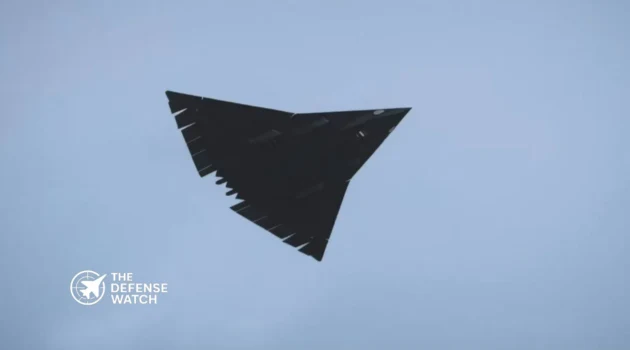
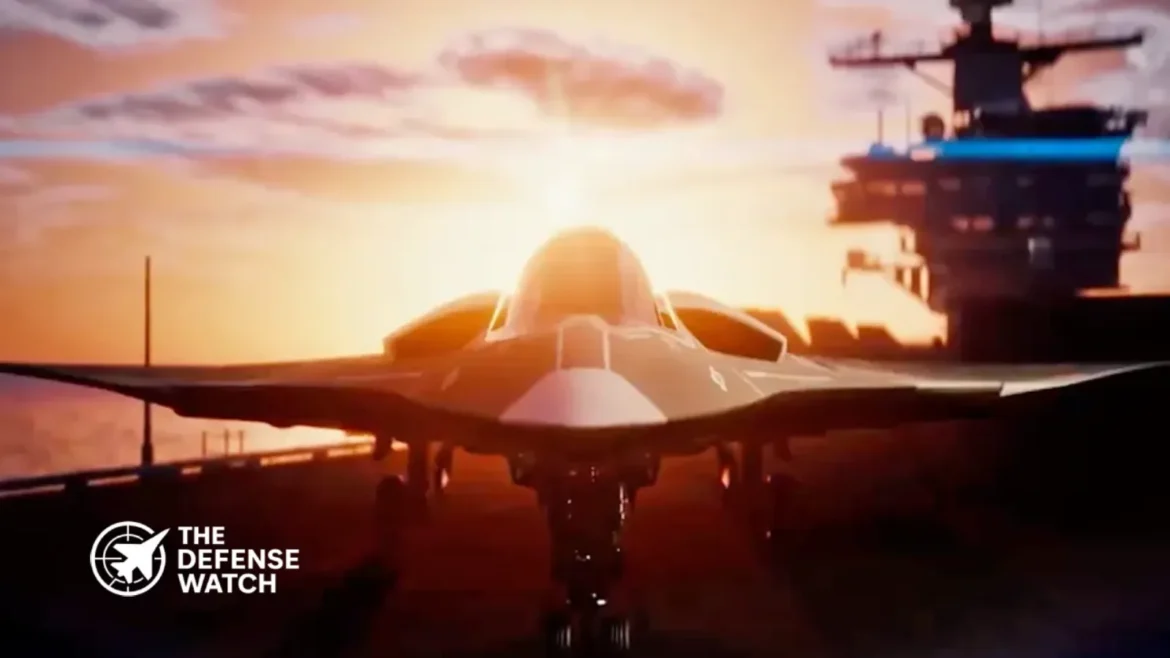
Northrop Grumman F/A-XX Emerges As Navy Decision Nears
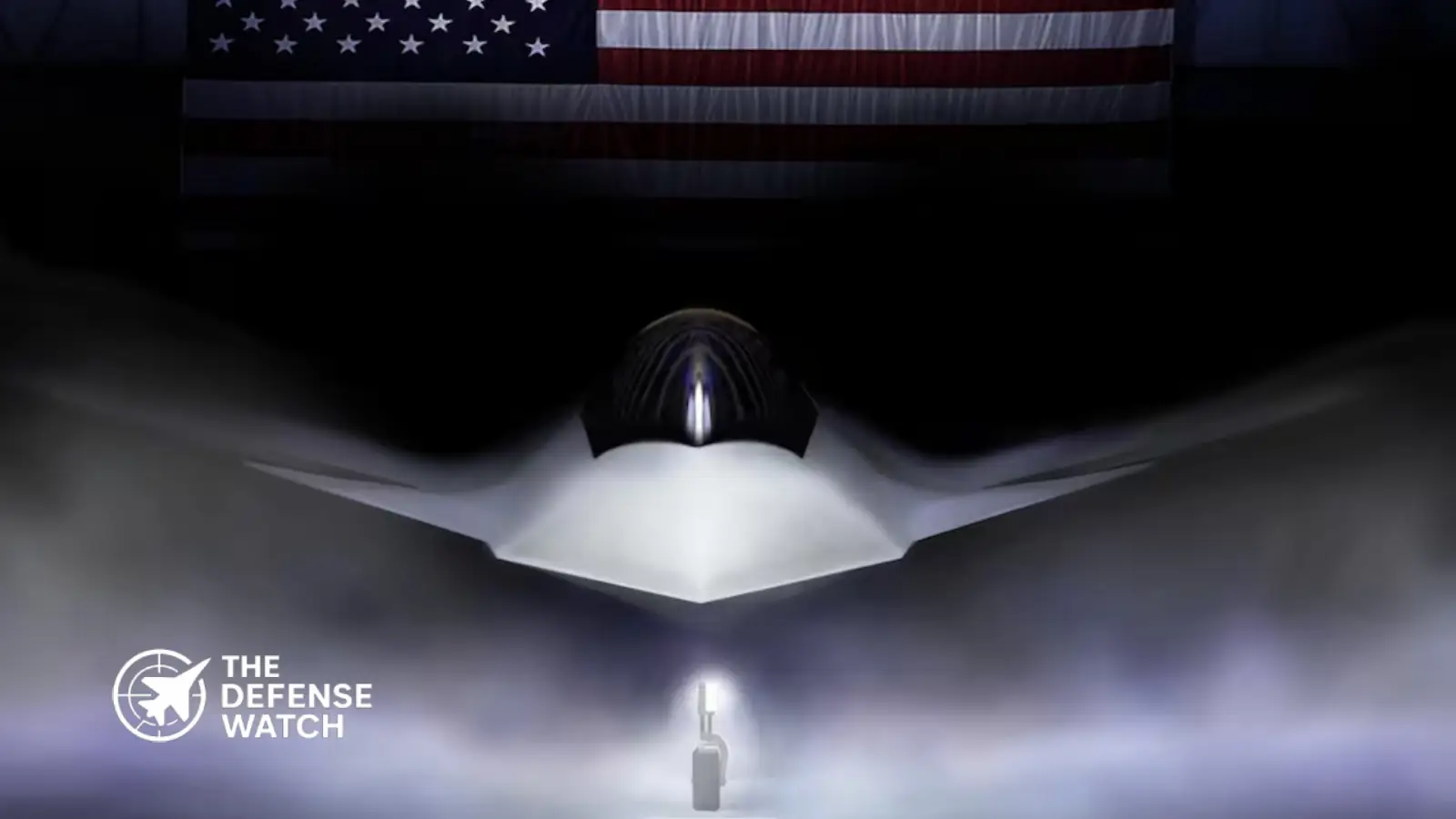
The F/A-XX naval fighter moved back into the spotlight after Northrop Grumman released a short promotional video showing its next-generation carrier fighter concept. The footage offers the most detailed public glimpse so far of the company’s proposed aircraft for the U.S. Navy’s classified F/A-XX competition.
- Northrop Grumman released a new teaser video showing an updated F/A-XX fighter concept.
- The aircraft appears tailless, carrier-capable, and optimized for stealth and long-range operations.
- The U.S. Navy is expected to choose between Northrop Grumman and Boeing for the program.
- F/A-XX is intended to replace portions of the F/A-18E/F Super Hornet fleet in future carrier air wings.
- The platform is expected to operate with drones and advanced networked systems.
The release is notable because it comes as the Navy reportedly approaches a program milestone. According to reporting cited by The War Zone, Navy leadership has indicated a final selection between Northrop Grumman and Boeing could come in the coming months.
What The New F/A-XX Concept Shows
The updated imagery suggests a large, tailless stealth aircraft designed for carrier operations. Visible features include:
- Broad forward fuselage for sensors and radar aperture
- Dorsal or high-mounted engine inlets for reduced radar signature
- Folding wings for carrier deck storage
- Apparent internal weapons bay doors
- Heavy landing gear suited for catapult launches and arrested recoveries
These design cues align with what analysts expect from a sixth-generation naval fighter focused on survivability, reach, and persistence in contested airspace.
While concept art should not be treated as final configuration data, companies often use controlled imagery to signal design direction, maturity, and market confidence. That makes this teaser strategically timed.
Why F/A-XX Matters For The U.S. Navy
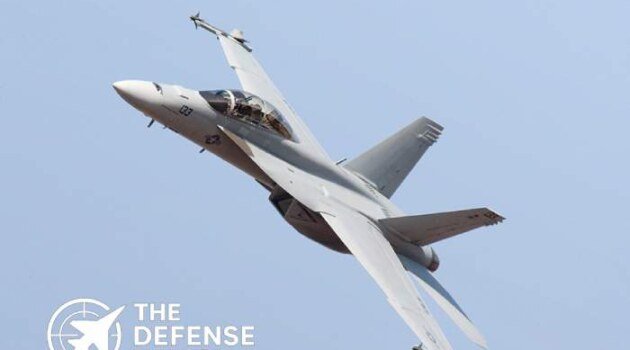
The F/A-XX program is expected to become the centerpiece of future carrier air wings, eventually complementing and replacing parts of the Boeing F/A-18E/F Super Hornet fleet. It would also operate alongside the Lockheed Martin F-35C Lightning II and future unmanned systems.
For the Navy, range is one of the most critical requirements. Carrier aircraft must operate farther from enemy missile threats while still striking targets deep inland or defending the fleet. That challenge has become more urgent in the Indo-Pacific, where China’s anti-access systems continue to expand.
A longer-range stealth fighter paired with drones could give carriers more stand-off flexibility than today’s legacy tactical aviation mix.
Northrop Grumman’s Position In The Race
Northrop Grumman brings strong stealth credentials to the contest, including work on the B-2 Spirit and B-21 Raider. The company previously stepped away from the Air Force’s NGAD fighter competition, a move many analysts interpreted as a decision to prioritize naval aviation and bomber programs.
That could give Northrop additional focus if selected for F/A-XX.
Boeing, however, remains a formidable competitor with deep Navy fighter heritage through the F/A-18 Super Hornet and EA-18G Growler families.
Strategic Outlook
The F/A-XX award will shape U.S. naval aviation for decades. Beyond the aircraft itself, the winner could secure a long pipeline of software upgrades, sustainment contracts, and autonomous teaming systems.
This new Northrop Grumman release appears designed to send a clear message: the company is ready, visible, and still firmly in the fight.

GCAP Fighter Program Gains Financial Momentum
The GCAP fighter program is moving forward as the United Kingdom begins unlocking funding to sustain development of its next-generation combat aircraft.
British officials are working through internal budget processes to ensure steady financial support for the Global Combat Air Programme, a trilateral initiative with Japan and Italy aimed at delivering a sixth-generation fighter by 2035.
The funding progress comes at a critical stage, as partner nations transition from early concept work toward more intensive development and industrial alignment.
- The UK is finalizing funding mechanisms to sustain the GCAP sixth-generation fighter program.
- GCAP is a trilateral effort between the UK, Japan, and Italy targeting service entry by 2035.
- The program aims to replace aging Eurofighter Typhoon fleets and maintain advanced air superiority.
- Funding flows are beginning despite broader UK defense budget pressures and fiscal constraints.
- GCAP represents one of the most ambitious multinational combat aircraft programs in Europe.
The Big Picture
Europe is accelerating efforts to field sixth-generation air combat systems as global competition intensifies. The GCAP fighter program reflects a broader shift among U.S. allies to maintain technological parity with emerging threats, particularly in the Indo-Pacific and Euro-Atlantic theaters.
The United States continues to advance its own Next Generation Air Dominance program, while France, Germany, and Spain are pursuing the Future Combat Air System. GCAP positions the UK and its partners as a parallel center of advanced combat aviation development.
The program also reinforces defense industrial cooperation between Europe and Asia, linking British and Italian aerospace capabilities with Japan’s growing defense technology base.
What’s Happening
The UK government has begun allocating funding streams to sustain GCAP development, even as it navigates broader fiscal pressures within its defense budget.
Officials are reportedly refining how funding will be structured over the coming years, ensuring predictable investment for industry partners. This includes major defense contractors responsible for propulsion, avionics, and advanced sensors.

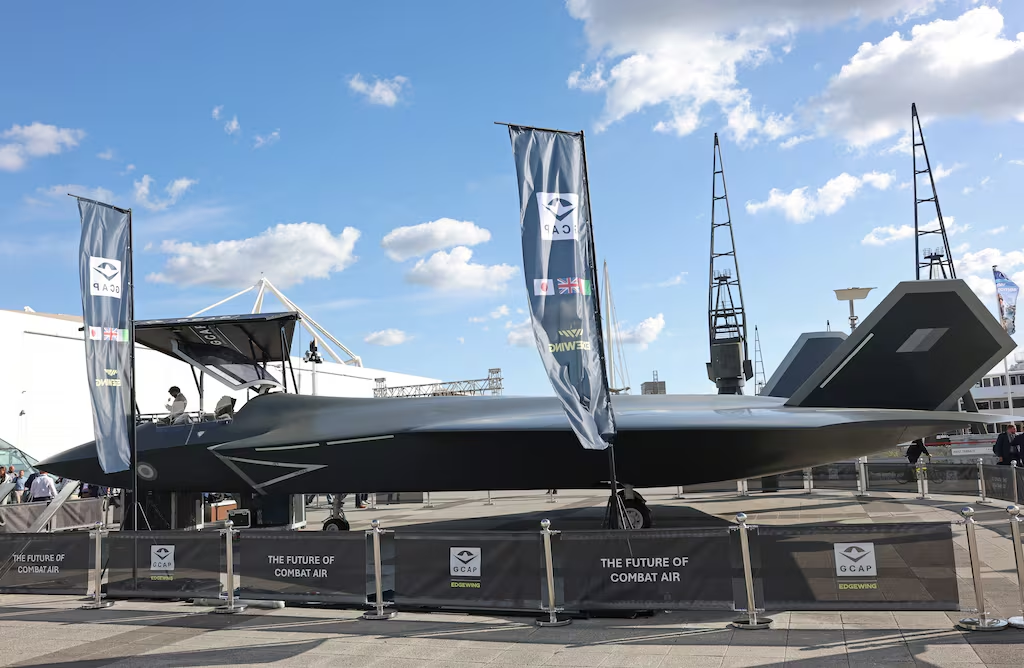
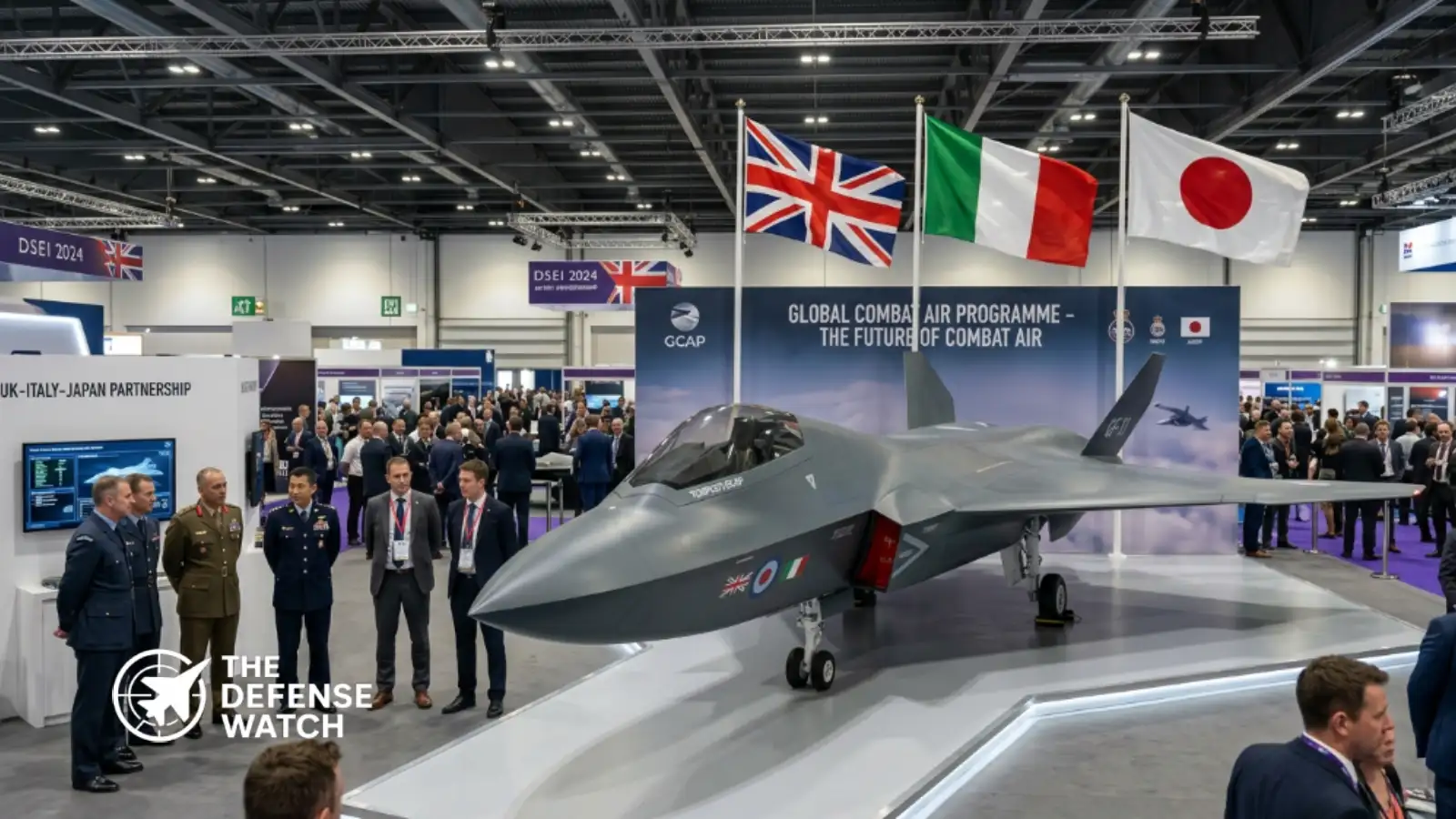
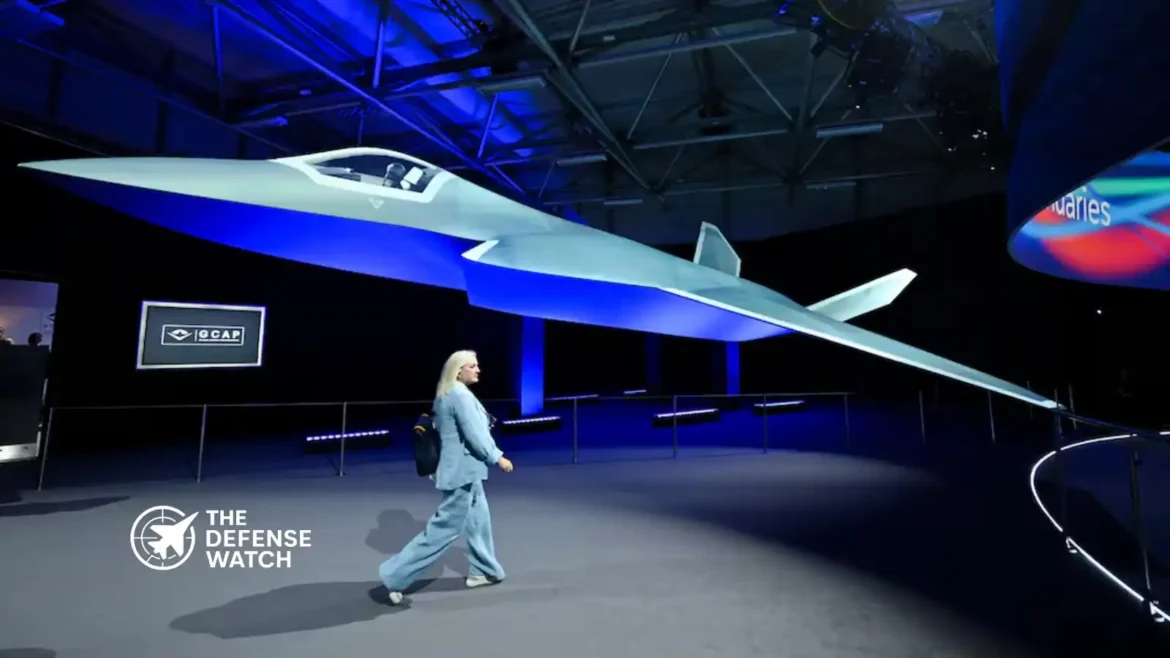
A design model for the Global Combat Air Programme (GCAP) fighter jet is displayed at the Defence and Security Equipment International (DSEI) arms fair in London on Sept. 9, 2025. (Reuters/Toby Melville) GCAP remains a joint effort between the United Kingdom, Japan, and Italy, formally announced in 2022. The program aims to deliver a stealthy, networked, and highly survivable fighter aircraft capable of operating in contested environments.
The target in-service date remains 2035, a timeline that requires sustained funding discipline across all partner nations.
Why It Matters
Stable funding is the single most critical factor in determining whether the GCAP fighter program meets its timeline.
Sixth-generation fighters require long development cycles, often spanning more than a decade. Any disruption in funding can delay key milestones such as prototype testing, systems integration, and production ramp-up.
The UK’s effort to secure financing signals political commitment to maintaining sovereign and allied airpower capabilities. It also reassures industry partners that the program will not face near-term cancellation risks.
This is particularly important given the scale of investment required, which is expected to reach tens of billions of dollars over the program’s lifecycle.
Strategic Implications
GCAP strengthens NATO-aligned airpower by ensuring that European allies retain access to advanced combat aircraft beyond the current generation.
The program enhances deterrence by signaling that partner nations are willing to invest in high-end capabilities designed for peer conflict scenarios. These include advanced stealth, sensor fusion, artificial intelligence-assisted decision-making, and collaborative combat with unmanned systems.
GCAP also diversifies the global fighter market, reducing reliance on U.S.-built platforms such as the F-35. While interoperability with U.S. systems remains essential, independent development gives allies greater operational flexibility.
Competitor View
China and Russia are likely to view the GCAP fighter program as part of a broader Western effort to sustain technological superiority in air combat.
China is advancing its own next-generation fighter concepts alongside existing fifth-generation platforms like the J-20. Russia continues work on programs such as the Su-57 and future designs, despite industrial and financial constraints.
From Beijing’s perspective, GCAP’s integration with Japan introduces a direct Indo-Pacific dimension, potentially affecting regional military balances.
What To Watch Next
Program milestones over the next several years will determine whether GCAP stays on track.
Observers should monitor prototype development timelines, engine testing progress, and the establishment of joint industrial structures among the three partner nations.
Funding stability across all partners will remain a key indicator. Any divergence in national priorities could affect the program’s schedule or scope.
Formal contracts, industrial workshare agreements, and technology demonstrations are expected to accelerate as the program moves deeper into development.
Capability Gap
The GCAP fighter program aims to close a growing capability gap in advanced air combat.
Current fourth-generation platforms such as the Eurofighter Typhoon face limitations in contested environments dominated by advanced air defenses and electronic warfare systems.
Fifth-generation aircraft address many of these challenges, but sixth-generation systems are expected to go further by integrating manned-unmanned teaming, enhanced stealth, and real-time data fusion across multiple domains.
However, the program faces inherent risks. These include cost growth, technological complexity, and the challenge of coordinating three national defense industries with differing requirements.
The Bottom Line
The UK’s move to secure funding for the GCAP fighter program signals firm commitment to sixth-generation airpower and reinforces allied efforts to maintain long-term air superiority.
 ■ KEY FACTS AT A GLANCE
- ► EU defense commissioner publicly labeled the FCAS fighter jet project a failure.
- ► FCAS is a joint program led by France, Germany, and Spain to develop a sixth generation fighter system.
- ► The program has faced delays, industrial disputes, and cost growth concerns.
- ► FCAS aims to replace Rafale and Eurofighter fleets in the 2040 timeframe.
- ► Criticism raises fresh questions about Europe’s defense industrial coordination.
EU Defense Commissioner Calls FCAS Fighter Jet Project A Failure As Europe’s Airpower Plans Face Scrutiny
The FCAS fighter jet project is facing renewed pressure after the European Union’s defense commissioner publicly described the program as a failure, intensifying debate over Europe’s ability to deliver a next generation combat aircraft on schedule.
(adsbygoogle = window.adsbygoogle || []).push({});The remarks, reported by Euractiv, mark one of the strongest public criticisms yet of the Future Combat Air System, Europe’s flagship sixth generation fighter initiative led by Airbus, Dassault Aviation, and Indra.
The program, commonly known as FCAS, is designed to replace France’s Dassault Rafale and Germany’s Eurofighter Typhoon beginning in the 2040s.
Growing Political Frustration In Brussels
The unusually blunt assessment reflects mounting concern inside the European Commission about fragmentation across the continent’s defense industry.
The Future Combat Air System is not just a fighter aircraft. It is intended as a networked system of systems, centered on a next generation fighter supported by unmanned remote carriers, advanced sensors, and a secure combat cloud.
However, repeated disagreements between industrial partners have slowed progress. Disputes over intellectual property rights, workshare allocations, and program leadership have created friction, particularly between Airbus and Dassault Aviation.
From Brussels’ perspective, these delays risk undermining Europe’s strategic autonomy goals at a time when transatlantic security dynamics are shifting.
Strategic Context: Why FCAS Matters
The FCAS fighter jet project is central to Europe’s long term airpower strategy.
France views FCAS as essential to maintaining sovereign combat aircraft design capability, including nuclear delivery options. Germany sees it as a pillar of its industrial base and future NATO commitments. Spain joined later, seeking a role in high end aerospace development.
But the program exists alongside a parallel British led effort, the Global Combat Air Programme, which includes the United Kingdom, Italy, and Japan. The split has long raised concerns about duplication of effort and fragmented investment.
For Washington observers, the issue goes beyond industrial politics. A delayed or weakened FCAS could widen Europe’s dependence on U.S. platforms such as the F-35 Lightning II, already widely adopted across NATO.
That dynamic carries implications for interoperability, procurement budgets, and long term alliance burden sharing.
Delays And Industrial Friction
The FCAS fighter jet project formally entered its demonstrator phase after protracted negotiations. Yet even this milestone followed years of stalled talks over technology ownership and control of flight critical systems.
Dassault Aviation, which leads the new generation fighter element, has insisted on design authority over core flight systems. Airbus, representing German industrial interests, has sought a more balanced structure.
These tensions highlight a deeper structural challenge. Unlike U.S. programs led by a single prime contractor, FCAS is built on a multi national governance framework that requires political and industrial consensus at nearly every stage.
That structure aims to preserve national sovereignty but often slows decision making.
From an operational standpoint, time is critical. Rafale and Eurofighter fleets will require upgrades to remain viable into the 2040s. Any slippage in FCAS timelines increases pressure on interim modernization efforts.
Budget Pressures And Capability Gaps
European defense spending has risen sharply since 2022, according to NATO data. Yet funding growth alone does not guarantee program execution.
Large collaborative programs are inherently complex. Cost growth, evolving requirements, and export policy differences can strain partnerships.
The commissioner’s comments appear intended as a warning. Without stronger coordination, Europe risks missing its window to field a competitive sixth generation fighter while the United States advances next generation air dominance concepts.
The FCAS fighter jet project must therefore navigate both technological ambition and political realities.
What Comes Next
Public criticism from Brussels may inject urgency into negotiations among partner nations. It could also trigger calls for structural reform in how major European defense programs are managed.
Whether the description of failure becomes a turning point or simply another chapter in a long running industrial dispute remains to be seen.
For now, the statement underscores a central tension in European defense policy. Strategic autonomy requires cooperation. But cooperation among sovereign states often proves harder than expected.
The coming years will determine whether the FCAS fighter jet project regains momentum or reinforces doubts about Europe’s ability to execute large scale, next generation combat aviation programs.
■ KEY FACTS AT A GLANCE- ► U.S. Navy is accelerating development of the F A XX sixth generation fighter under its Next Generation Air Dominance effort.
- ► Program aims to counter China long range anti ship ballistic and cruise missile capabilities targeting carrier strike groups.
- ► F A XX will replace the F A 18E F Super Hornet beginning in the 2030s.
- ► Aircraft expected to integrate advanced stealth, long range sensors, and manned unmanned teaming.
- ► Move reflects growing Pentagon focus on high end conflict in the Indo Pacific.
U.S. Navy Accelerates F A XX Sixth Generation Fighter Program
The F A XX sixth generation fighter is moving ahead at a faster pace as the U.S. Navy responds to China long range missile threat against aircraft carriers and forward deployed forces.
(adsbygoogle = window.adsbygoogle || []).push({});According to Bloomberg, the Navy is prioritizing development of its carrier based next generation fighter under the broader Next Generation Air Dominance, or NGAD, initiative. The effort is designed to maintain air superiority in contested environments, particularly in the Indo Pacific.
The F A XX program will eventually replace the aging F A 18E F Super Hornet fleet, which has served as the backbone of carrier air wings for more than two decades.
Responding To China Long Range Missile Threat
The central driver behind the accelerated timeline is China long range missile threat. The People Liberation Army has fielded anti ship ballistic missiles such as the DF 21D and the DF 26, both designed to hold U.S. carrier strike groups at risk at extended ranges.
These systems are part of a broader anti access area denial strategy aimed at limiting U.S. military freedom of movement in the Western Pacific. According to U.S. Department of Defense assessments in its annual China Military Power Report, Beijing continues to expand its missile inventory, sensor networks, and long range targeting capabilities.
This evolving threat environment has forced the Navy to reconsider how close carriers can safely operate to contested coastlines. A longer range, more survivable fighter is seen as essential to restoring operational flexibility.
(adsbygoogle = window.adsbygoogle || []).push({});What F A XX Is Expected To Deliver
While detailed specifications remain classified, Navy officials have outlined several core attributes for the F A XX sixth generation fighter.
First, extended range. Analysts note that range is now as critical as stealth. A carrier air wing must be able to strike from outside the reach of advanced anti ship missiles.
Second, advanced survivability. The aircraft is expected to feature next generation low observable design, electronic warfare capabilities, and improved networking for operations in heavily contested airspace.
Third, integration with unmanned systems. The Navy has signaled that the future carrier air wing will combine manned aircraft with collaborative combat aircraft, or CCA type drones, enabling distributed operations and greater mission endurance.
(adsbygoogle = window.adsbygoogle || []).push({});The F A XX sixth generation fighter is also expected to operate alongside the F 35C Lightning II, which provides fifth generation stealth and sensor fusion today.
Strategic Implications For The Indo Pacific
Accelerating the F A XX program reflects a broader Pentagon shift toward preparing for high intensity conflict with a peer adversary. The Indo Pacific theater presents unique challenges, including vast distances, dense air defenses, and advanced missile systems.
The U.S. Navy remains committed to maintaining credible deterrence in the region. However, China long range missile threat has complicated traditional carrier strike group concepts.
By pushing forward the F A XX sixth generation fighter, the Navy aims to extend the effective reach of carrier based aviation. That could allow U.S. forces to operate from safer standoff distances while still holding targets at risk.
(adsbygoogle = window.adsbygoogle || []).push({});This approach aligns with guidance from the U.S. National Defense Strategy, which emphasizes integrated deterrence and the ability to project power in contested domains.
Budget And Industrial Considerations
The timeline acceleration will depend on sustained funding from Congress. The F A XX effort competes with other major modernization priorities, including the Columbia class ballistic missile submarine and next generation surface combatants.
Industry teams are expected to compete for the program, though the Navy has not publicly detailed its acquisition strategy. The outcome will shape the future of U.S. naval aviation for decades.
From an industrial base perspective, the F A XX sixth generation fighter could anchor advanced aerospace manufacturing and propulsion development well into the 2040s.
Analysis: A Necessary Evolution
The decision to accelerate the F A XX sixth generation fighter is not simply about replacing an aging platform. It reflects a structural change in how the Navy must fight.
(adsbygoogle = window.adsbygoogle || []).push({});Carrier air power once assumed relative freedom of maneuver near hostile shores. That assumption no longer holds against a state actor with precision guided long range missile systems, integrated air defenses, and space based targeting support.
In that context, range becomes protection. Survivability becomes endurance. And networked operations become decisive.
The F A XX sixth generation fighter represents an attempt to adapt carrier aviation to this new reality. Whether it succeeds will depend on technology maturation, stable funding, and realistic testing against high end threat scenarios.
For now, the message from the Pentagon is clear. Maintaining air dominance in the Indo Pacific requires faster modernization, not incremental upgrades.
SM-39 Razor Fighter Concept
Minnesota-based Stavatti Aerospace has unveiled specifications for its SM-39 Razor, a concept sixth-generation fighter aircraft that the company claims will achieve speeds exceeding Mach 4 while carrying a price tag of approximately $85 million per unit. The triple-fuselage design represents one of the aerospace industry’s most ambitious paper aircraft proposals, targeting markets from the U.S. Navy’s Next Generation Air Dominance (NGAD) program to international customers including India.
(adsbygoogle = window.adsbygoogle || []).push({});However, the SM-39 Razor proposal emerges from a company that, according to multiple investigations by defense industry publications, has never manufactured a single aircraft in its three-decade existence—raising fundamental questions about the viability of bringing such an advanced design from concept to reality.
Unprecedented Design Configuration and Claimed Capabilities
The SM-39 Razor features a radical triple-fuselage architecture designed to minimize supersonic wave drag through careful volume distribution approximating the Sears-Haack ideal body. The center fuselage houses primary avionics, cockpit, nose landing gear, and two internal weapons bays, while secondary fuselages contain individual variable-cycle engines, main landing gear, and serpentine air intakes positioned ventrally to ensure airflow at high angles of attack.
According to Stavatti’s technical documentation, the aircraft would be powered by two proprietary NeoThrust E1400 variable-cycle afterburning turbofans, each producing 52,400 pounds of static thrust. Alternative powerplant options include General Electric Aerospace’s Adaptive Cycle Engine (ACE), though GE has not publicly confirmed any partnership with Stavatti.
Performance specifications published by the company claim a maximum level speed exceeding Mach 4 at 60,000 feet, supercruise capability above Mach 2.5, a tactical radius of 1,400 nautical miles, and service ceiling beyond 100,000 feet. The aircraft would employ non-carbothermic titanium diboride cermet construction with titanium foam metal sandwich structures to withstand the extreme thermal loads of sustained hypersonic flight.

Image: Stavatti Aerospace. Armament would include a 20mm M61A2 Vulcan cannon with 1,000 rounds or an optional gas dynamic laser weapon, plus two internal weapons bays rated for a combined 17,000 pounds of ordnance. Four external wing hardpoints could accommodate an additional 18,000 pounds of stores, bringing total warload capacity to 25,000 pounds.
The company envisions piloted single-seat (SM-39S) and two-seat tandem (SM-39T) variants, as well as unpiloted autonomous configurations (SM-39U) featuring what Stavatti describes as “Synthetically Intelligent” flight control systems.
The Credibility Question: Decades Without Production
The SM-39 Razor’s ambitious specifications must be evaluated against Stavatti Aerospace’s business history. Founded in 1994 by CEO Christopher Beskar while he was a university student, the company has promoted numerous advanced aircraft concepts over three decades without producing a flyable prototype of any original design.
According to a December 2024 investigation by The Buffalo News, Stavatti “has never produced a single airplane” despite establishing operations in Niagara Falls, New York, where it leased a former U.S. Army Reserve station. The newspaper reported that the company was evicted from portions of its occupied space in December 2024 after sub-leasing facilities to other tenants without permission and failing to advance aircraft production plans.
(adsbygoogle = window.adsbygoogle || []).push({});In February 2023, an investor filed a lawsuit against Stavatti alleging racketeering and fraud, claiming the company operated as a Ponzi scheme, according to The Buffalo News. The Niagara County Industrial Development Agency subsequently rescinded tax subsidies awarded in 2020 after determining the company made insufficient progress on its stated manufacturing plans. Local construction contractors filed additional lawsuits alleging nonpayment for services.
Defense industry analysts have repeatedly characterized Stavatti’s various aircraft proposals as “vaporware”—heavily promoted products that fail to materialize. A 2024 Vice magazine article described the company’s earlier incarnation as “the industrial equivalent of an internet troll, spreading titillating graphics depicting futuristic airplanes it stood little chance of ever producing.”
Image: Stavatti Aerospace. The company’s only tangible aerospace asset is the ATG Javelin design, acquired from bankrupt Aviation Technology Group in 2008. While a Javelin prototype flew briefly in 2005, Stavatti has not advanced the design to production. The company submitted the Javelin for the U.S. Air Force’s T-X trainer competition in 2017 but was eliminated; the contract ultimately went to Boeing-Saab’s T-7 Red Hawk.
Technical Feasibility and Industry Context
Beyond Stavatti’s business track record, aerospace engineers have questioned the technical feasibility of several SM-39 design elements. The proprietary NeoThrust E1400 engine, incorporating titanium diboride cermet materials and magnetohydrodynamic (MHD) bypass technology, represents technology that exists primarily in research laboratories rather than qualified aerospace applications.
Variable-cycle engines remain challenging even for established manufacturers. General Electric’s XA100 adaptive-cycle engine for the F-35 program required decades of development and billions in funding. The technology demands precise management of bypass ratios, thermal loads, and complex mechanical systems operating across extreme flight regimes.
The claimed Mach 4+ performance would place the SM-39 in a category currently occupied only by experimental aircraft like the retired SR-71 Blackbird. Sustained hypersonic flight presents enormous materials science, thermal management, and propulsion challenges that have eluded even well-funded programs at major aerospace corporations.
Image: Stavatti Aerospace. The proposed $85 million flyaway cost appears incongruous with the aircraft’s claimed capabilities. For comparison, the F-35A costs approximately $80 million per unit after decades of development and with economies of scale from orders exceeding 3,000 aircraft. A genuinely sixth-generation fighter with Mach 4 capability would likely require development costs measured in tens of billions of dollars.
Marketing to International Customers
Despite lacking a production aircraft, Stavatti actively markets the SM-39 to international customers. Recent reports indicate the company has pitched the design to India’s Multi-Role Fighter Aircraft (MRFA) program, which seeks 114 new fighters to modernize the Indian Air Force fleet.
(adsbygoogle = window.adsbygoogle || []).push({});According to April 2025 reporting by Defence News India, Stavatti proposed a total program cost of $3.3 billion to develop and produce the SM-39 for India. However, defense analysts note that India’s MRFA competition includes established manufacturers offering proven platforms such as the Rafale, F/A-18 Super Hornet, F-15EX, Eurofighter Typhoon, and Saab Gripen E.
The company has also positioned the SM-39 as a candidate for the U.S. Navy’s F/A-XX program and potential Air Force NGAD requirements, though neither service has publicly acknowledged Stavatti’s submissions.
Industry Perspective and Analysis
The SM-39 Razor represents a fascinating case study in the gap between conceptual aerospace design and actual aircraft development. Modern computational tools enable detailed virtual aircraft modeling, allowing companies to produce professional-looking technical documentation and renderings. However, translating digital models into flying hardware requires manufacturing infrastructure, supply chain relationships, regulatory certification, flight testing capabilities, and crucially, sustained funding measured in billions of dollars.
Successful aerospace startups like Textron with its Scorpion jet or Boom Supersonic demonstrate that new entrants can advance unconventional designs, but these companies typically focus on achievable performance targets using proven technologies and maintain transparency about development timelines and funding requirements.
The sixth-generation fighter landscape features well-funded programs like the U.S. Air Force’s NGAD, U.S. Navy’s F/A-XX, and the UK-Italy-Japan Global Combat Air Programme (GCAP), all backed by established aerospace primes and government investment totaling tens of billions of dollars. These programs face significant technical and schedule challenges despite enormous resources.
For Stavatti to realize the SM-39, the company would need to overcome not only its lack of production experience but also secure funding orders of magnitude beyond anything in its history, establish supplier relationships for thousands of components, develop or license revolutionary propulsion technology, and navigate complex military certification processes.
Conclusion
The SM-39 Razor showcases ambitious aerospace engineering concepts including innovative configuration design, advanced materials applications, and integrated autonomous systems. As a thought exercise in future fighter capabilities, the proposal contributes to discussions about next-generation air dominance requirements.
(adsbygoogle = window.adsbygoogle || []).push({});However, potential customers evaluating the SM-39 must weigh these specifications against Stavatti Aerospace’s three-decade history without producing an original aircraft, recent legal and financial difficulties, and the enormous gap between concept drawings and operational hardware. Until Stavatti demonstrates concrete progress—funded development programs, prototype hardware, or partnerships with established aerospace manufacturers—the SM-39 Razor remains speculative rather than a credible procurement option.
Defense procurement professionals emphasize that selecting a fighter aircraft represents a multi-decade commitment affecting national security, requiring proven contractors with demonstrated capabilities in design, manufacturing, certification, and sustainment. Whether Stavatti can transition from concept developer to credible defense contractor remains an open question that only time and demonstrated progress will answer.
FAQs
What makes the SM-39 Razor’s design unique?The SM-39 features a triple-fuselage configuration with a streamlined center body flanked by secondary fuselages housing engines and landing gear. This architecture aims to reduce wave drag at supersonic speeds while distributing systems efficiently across the airframe.
Has Stavatti Aerospace ever built an aircraft?No. According to multiple investigations, Stavatti has not manufactured any original aircraft design in its 30-year history. The company acquired the ATG Javelin design in 2008, which flew as a prototype in 2005, but has not produced it.
What is the estimated cost of the SM-39 Razor?Stavatti advertises a flyaway cost of approximately $85 million per aircraft, though this figure has not been validated through actual production or independent cost assessment.
Which countries are considering purchasing the SM-39?Stavatti has reportedly pitched the SM-39 to India’s MRFA program and submitted the design for U.S. Navy and Air Force next-generation fighter requirements, though no formal procurement discussions have been publicly confirmed.
What are the main concerns about the SM-39 program?Primary concerns include Stavatti’s lack of production history, unproven proprietary technologies (particularly the NeoThrust engines), legal disputes involving fraud allegations, and the enormous funding gap between current resources and typical sixth-generation fighter development costs.
How does the SM-39’s claimed performance compare to existing fighters?If realized, the claimed Mach 4+ speed would exceed all current operational fighters. However, these specifications remain theoretical without validated testing or demonstrated prototypes.
Newer Posts