- Home
- Defense Systems
- Radar and Jamming Systems
- Robin Radar IRIS Drone Detection Radar
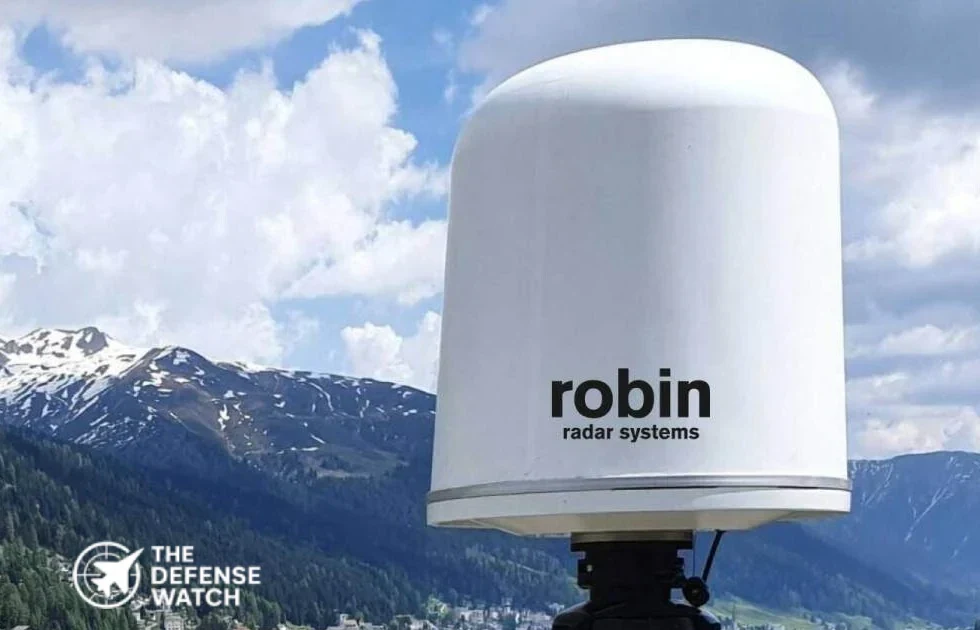
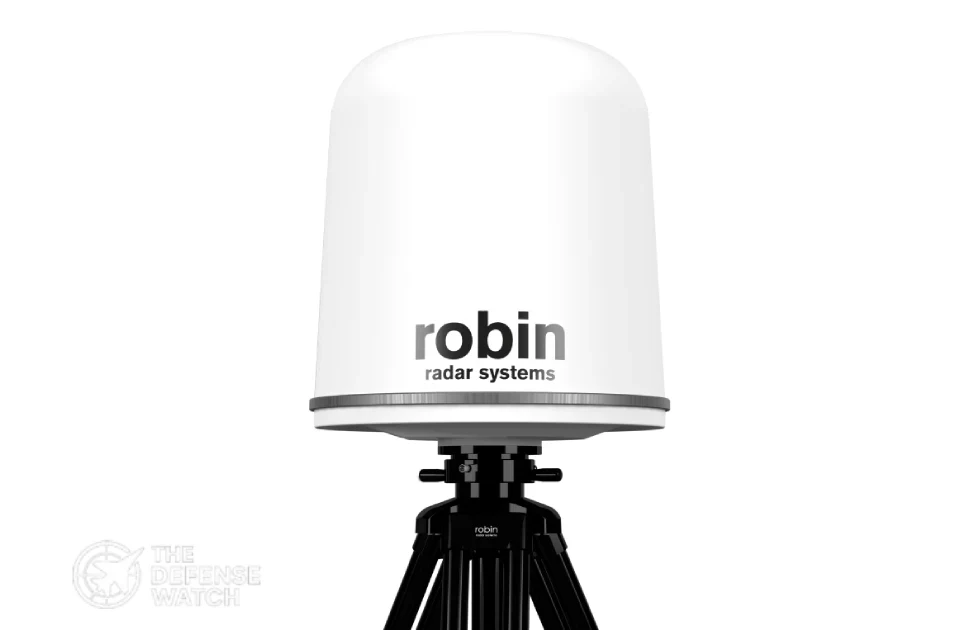
Robin Radar IRIS Drone Detection Radar
Defense Systems Full Specifications
1. General Information
| Name / Designation | IRIS |
| Manufacturer | Robin Radar Systems |
| Country of Origin | Netherlands |
| Type / Role | 3D drone detection and counter-UAS radar |
| Operational Domain | Defense, security, aviation, critical infrastructure |
| Status | Operational / In production |
2. Technical Specifications
| Frequency Band | X-band, 8.775 to 9.800 GHz selectable bands |
| Antenna Type | Rotating radar antenna |
| Antenna Aperture / Size | 550 mm diameter x 630 mm height |
| Power Output | 12 W |
| Detection Range | Up to 12 km instrumented with Long-Range Mode |
| Tracking Range | Target dependent; up to instrumented range |
| Target Tracking Capacity | Multi-target tracking, exact maximum not publicly specified |
| Elevation Coverage | 60° |
| Azimuth Coverage | 360° |
| Beam Steering | Mechanical rotation |
| Pulse Repetition Frequency (PRF) | Not publicly specified, FMCW architecture |
| Resolution | 0.6 m range accuracy; 0.6° to 0.75° angular accuracy |
| Update Rate | Approximately 1 second |
| Clutter Rejection / ECCM | Micro-Doppler classification, DNN processing, clutter filtering |
3. Functional Capabilities
| Primary Functions | Detection, tracking, 3D positioning, classification |
| Target Types | Small drones, fixed-wing drones, hovering drones, loitering munitions, birds |
| Integration / Networking | C2 and layered C-UAS integration |
| IFF Capability | Not publicly specified |
| Data Link / Networking | SAPIENT, ASTERIX, CoT, XML interfaces |
| Weather & Terrain Resistance | IP66; MIL-STD-810H and STANAG 4370 tested |
| Mobility / Mounting | Tripod, building, vehicle, maritime platform |
4. Physical & Operational Characteristics
| Dimensions | 550 mm diameter x 630 mm height |
| Weight | 29 kg, excluding tripod |
| Power Requirement | 253 W nominal, 600 W maximum |
| Cooling System | Not publicly specified |
| Operating Temperature Range | -46°C to +50°C |
| Deployment Platform | Fixed sites, tripods, vehicles, maritime platforms |
| Crew Requirement | Single operator for deployment |
5. Software & Processing
| Signal Processor Type | Dedicated IRIS processing station |
| Processing Speed | Real-time processing, approximately 1-second scan cycle |
| AI / Automation Features | Deep neural network and micro-Doppler classification |
| Data Output / Interface | SAPIENT, ASTERIX, CoT and XML |
| Software Upgradeability | Yes, including Long-Range Mode software update |
6. Operational History
| Year Introduced | 2020 |
| Users / Operators | Netherlands Ministry of Defence and international defense/security users |
| Notable Deployments | Dutch air bases and critical infrastructure; U.S. DHS-supported FIFA World Cup 2026 security |
| Successor / Predecessor | Successor to earlier Robin drone radar development, including ELVIRA |
7. Export / Compliance Data
| Export Availability | Commercially available, subject to applicable controls |
| ITAR / MTCR Status | Classified by Robin as dual-use; Dutch and EU export controls apply |
| Cost Estimate | No per-unit price publicly released; Dutch IRIS procurement falls within €50M to €250M project band |
PROS
- 360-degree 3D coverage
- X-band FMCW radar technology
- Micro-Doppler and DNN classification
- Compact 29 kg sensor
- On-the-move capability
CONS
- Limited instrumented range compared with larger air-defense radars
- Specific procurement pricing is not public
- Requires a processing station and supporting equipment
- Performance varies with target size, clutter, and weather
- Primarily designed for small-object detection rather than long-range air defense
The Robin Radar IRIS is a compact 3D counter-UAS radar designed to detect, track, and classify small drones and other low-altitude airborne objects. Developed for defense, security, aviation, and critical infrastructure, IRIS combines X-band FMCW radar, micro-Doppler analysis, and deep neural network processing to help distinguish drones from birds and other objects.
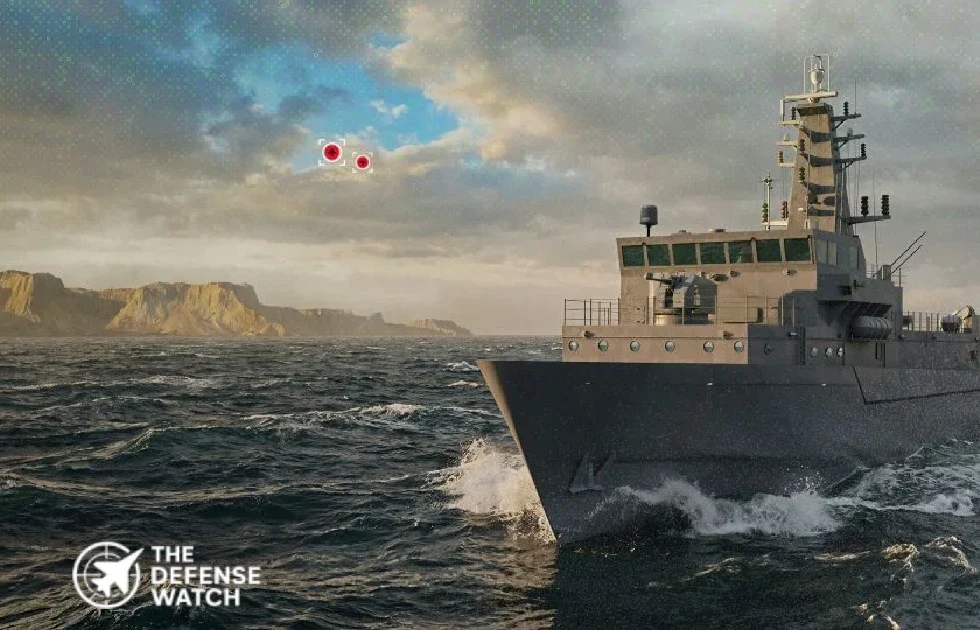
The current IRIS system provides 360-degree azimuth coverage and 60-degree elevation coverage. Its standard instrumented range is 5 km, while the newer Long-Range Mode provides selectable 5 km and 12 km instrumented ranges. The radar can also operate on moving land and maritime platforms, with the on-the-move version supporting vehicle speeds of up to 100 km/h.
Manufacturer
Robin Radar Systems is a Dutch radar technology company headquartered in The Hague. The company was founded in 2010 after Siete Hamminga spun radar technology out of the Dutch research organization TNO. The company’s roots trace back to a 1980 TNO project focused on detecting birds around Royal Netherlands Air Force aircraft.
IRIS entered the market in 2020 and has since been deployed for counter-drone and airspace security missions. In 2025, the Dutch Ministry of Defence ordered 100 IRIS radars for air bases and critical infrastructure.
Speed and Range
IRIS scans at 30 rpm, providing a one-second scan cycle. Standard instrumented range is 5 km, while Long-Range Mode extends this to 12 km. Detection performance varies by target size and conditions. The 2026 product sheet lists detection ranges from 1.1 km for a 0.249 kg nano drone to 7.6 km for a 52 kg target.
Cost/Price
A standalone IRIS unit does not have a publicly listed retail price. The Dutch government has disclosed that its IRIS procurement falls within a broader €50 million to €250 million project budget, but it has not published a specific per-radar price.
FAQs
What is Robin Radar IRIS?
A portable 3D radar designed primarily for drone detection, tracking, and classification.
How far can IRIS detect drones?
Its standard instrumented range is 5 km, with Long-Range Mode extending the instrumented range to 12 km.
Can IRIS detect drones while moving?
Yes. Its on-the-move configuration supports detection, tracking, and classification while traveling at up to 100 km/h.
Does IRIS use AI?
Yes. IRIS uses micro-Doppler classification and deep neural network technology to help distinguish drones from birds and other objects.
Who uses IRIS?
The system is used in defense, security, aviation, and critical infrastructure applications. The Dutch Ministry of Defence has ordered 100 systems.
Disclaimer Note
The information provided on TheDefenseWatch.com is for general informational purposes only. While we strive to ensure the accuracy, completeness, and timeliness of our content regarding defense and aerospace products, technologies, and specifications, we cannot guarantee that all information is 100% accurate or up-to-date due to the evolving nature of military technology and classified data.TheDefenseWatch.com does not warrant the reliability, suitability, or availability of the information for any specific purpose. Users are advised to consult official sources, such as manufacturers, government publications, or defense agencies, for precise and verified data before making decisions based on our content.We are not affiliated with any defense manufacturers, governments, or military organizations mentioned. Opinions, reviews, and ratings reflect expert analysis but are subjective and should not be considered endorsements. TheDefenseWatch.com is not responsible for any errors, omissions, or consequences arising from the use of this website’s content.External links are provided for convenience and do not imply endorsement. TheDefenseWatch.com reserves the right to update or modify content without prior notice. By using this website, you agree to our Privacy & Cookies Policy.
New Arrivals




Popular Comparisons
-
 J-10C vs JF-17 Thunder: Which Fighter Is More Capable?
View Comparison →
J-10C vs JF-17 Thunder: Which Fighter Is More Capable?
View Comparison → -
Tejas vs Gripen: Key Differences and Capabilities
View Comparison →
-
Tejas vs MiG-21 Bison: How India Replaced Its Iconic Supersonic Fighter
View Comparison →
-
F-35 vs F-16: Stealth, Sensors and Combat Roles
View Comparison →
-
Tejas Fighter Jet vs F-16 Fighting Falcon: Capability Compared
View Comparison →
-
Rafale Fighter Jet vs F-16 Fighting Falcon : Which Fighter Has the Edge?
View Comparison →
-
Su-57 Fighter Jet vs J-20 Fighter Jet: Stealth and Air Combat Compared
View Comparison →
-
Mirage 2000 vs Tejas Mk1A: Legacy Combat Power vs Indigenous Modernization
View Comparison →
-
Rafale Fighter Jet vs F-22 Raptor: Which Air Dominance Fighter Has the Edge?
View Comparison →
-
Tejas Fighter Jet vs. Rafale Fighter Jet: India’s Indigenous Fighter Meets France’s Proven Multirole Combat Aircraft
View Comparison →


- P-800 Oniks Missile: Range, Speed and BrahMos Comparison

- Ukrainian Drone Unit Caused 70% of Simulated U.S. Brigade Casualties in Germany Exercise
- OCCAR Marks 25 Years of European Defense Cooperation With 28 Programs
- Saab Q3 2026 Results Show 30.6% Organic Sales Growth as Orders Surge
- How Much Does a Tomahawk Missile Cost? Price, Range and Blocks
- Faster Than Sound, Unstoppable at Sea: Inside China’s YJ-20 and YJ-17 Hypersonic Missiles
- U.S., Australia and UK Test Maritime Autonomy Under AUKUS
- TAI Anka-3: Turkey’s Stealth Flying-Wing Drone and Specifications
- Lockheed Martin’s Third-Quarter Innovations Span Missile Defense, Aviation and Space
- RTX Plans to Increase Missile Production Up to Fourfold Under Pentagon Contracts



Fighter Jets
-
 SU-57 Felon Stealth Fighter
-
Boeing F/A-XX Fighter
-
JF-17 Thunder Fighter Jet
-
F-47 Fighter Jet
-
MIG-31 Fighter Jet
-
J-10CE Fighter Jet
-
Chengdu J-10 Fighter Jet
-
Chengdu J-10C Fighter Jet
-
Gripen E Fighter Jet
-
Tejas Mk1A Fighter Jet
-
Tejas Mk‑2 Fighter Jet
-
F-16V Viper Block 70 Fighter Jet
-
F-15EX Eagle II Fighter
-
F-15E Strike Eagle Fighter
-
F/A-18E/F Super Hornet Fighter Jet
-
Saab Gripen F Fighter Jet
-
JAS 39E/F Gripen Fighter Jet
-
JAS 39 Gripen Fighter Jet
-
F-35A Lightning II Fighter Jet
-
F/A-18F Super Hornet
-
J-50 Fighter Jet
-
Spanish EF-18 Hornet Fighter
-
F-35i Adir Fighter Jet
-
F-16 Fighting Falcon






Recent Compares
-
J-10C vs JF-17 Thunder: Which Fighter Is More Capable?
View Comparison →
-
Tejas vs Gripen: Key Differences and Capabilities
View Comparison →
-
Tejas vs MiG-21 Bison: How India Replaced Its Iconic Supersonic Fighter
View Comparison →
-
F-35 vs F-16: Stealth, Sensors and Combat Roles
View Comparison →
-
Tejas Fighter Jet vs F-16 Fighting Falcon: Capability Compared
View Comparison →
Latest Defense Systems
10 Compares Defense Systems
-
J-10C vs JF-17 Thunder: Which Fighter Is More Capable?
View Comparison →
-
Tejas vs Gripen: Key Differences and Capabilities
View Comparison →
-
Tejas vs MiG-21 Bison: How India Replaced Its Iconic Supersonic Fighter
View Comparison →
-
F-35 vs F-16: Stealth, Sensors and Combat Roles
View Comparison →
-
Tejas Fighter Jet vs F-16 Fighting Falcon: Capability Compared
View Comparison →
-
Rafale Fighter Jet vs F-16 Fighting Falcon : Which Fighter Has the Edge?
View Comparison →
-
Su-57 Fighter Jet vs J-20 Fighter Jet: Stealth and Air Combat Compared
View Comparison →
-
Mirage 2000 vs Tejas Mk1A: Legacy Combat Power vs Indigenous Modernization
View Comparison →
-
Rafale Fighter Jet vs F-22 Raptor: Which Air Dominance Fighter Has the Edge?
View Comparison →
-
Tejas Fighter Jet vs. Rafale Fighter Jet: India’s Indigenous Fighter Meets France’s Proven Multirole Combat Aircraft
View Comparison →
- P-800 Oniks Missile: Range, Speed and BrahMos Comparison
- Ukrainian Drone Unit Caused 70% of Simulated U.S. Brigade Casualties in Germany Exercise
- OCCAR Marks 25 Years of European Defense Cooperation With 28 Programs
- Saab Q3 2026 Results Show 30.6% Organic Sales Growth as Orders Surge
- How Much Does a Tomahawk Missile Cost? Price, Range and Blocks