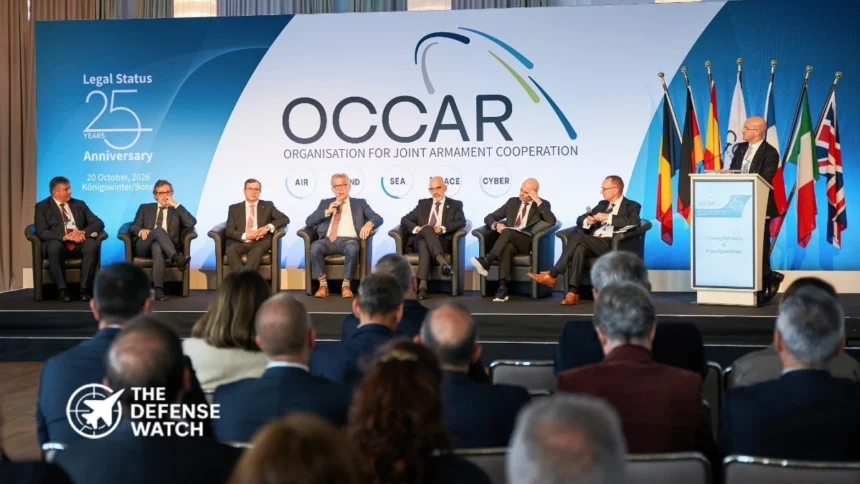
Europe’s multinational defense procurement system now oversees 28 cooperative programs with an annual portfolio of approximately €8.5 billion, as the Organisation for Joint Armament Cooperation (OCCAR) marks 25 years since gaining its legal status as an international organization.
- Why OCCAR matters to European defense procurement
- The programs behind the €8.5 billion portfolio
- Boxer: Multinational armored vehicles
- FREMM: Multirole naval combatants
- MALE RPAS: European remotely piloted aircraft
- The next phase: More countries, more complex requirements
- A larger portfolio does not automatically mean faster delivery
- European cooperation faces a delivery test
OCCAR’s anniversary provides an opportunity to assess the role of joint procurement in European defense, where countries seek to share development costs, coordinate requirements and manage complex military equipment programs across national boundaries. The organization says it has delivered more than €125 billion in capability output since becoming an international organization in 2001.
The portfolio spans air, land, maritime, space and cyber-related capabilities. Its programs include the A400M military transport aircraft, the Boxer armored vehicle, the FREMM frigate family, the Tiger combat helicopter and multinational missile and communications initiatives. These projects differ in maturity, participating countries and procurement arrangements, but share a reliance on coordinated program management.
Why OCCAR matters to European defense procurement
OCCAR was established to address a recurring problem in European military acquisition: countries often need similar capabilities but have different budgets, operational requirements, industrial interests and procurement schedules.
The organization originated in an administrative arrangement signed by France, Germany, Italy and the United Kingdom on Nov. 12, 1996. The four countries signed the OCCAR Convention in 1998, and it entered into force on Jan. 28, 2001, giving the organization its legal status and authority to award contracts and employ its own staff. Belgium and Spain subsequently joined as member states.
OCCAR manages contracts on behalf of participating countries and coordinates programs throughout their life cycles. Depending on the project, this can include development, production, delivery, upgrades and in-service support.
That role distinguishes OCCAR from a weapons manufacturer and from a national defense ministry. The organization manages agreed multinational programs, while participating governments retain responsibility for their national defense requirements, funding decisions and operational use of the equipment.
Joint management can help countries avoid duplicating some administrative and development activities. It can also create a common framework for equipment, training and support, although shared procurement does not automatically guarantee lower costs or faster delivery.
The programs behind the €8.5 billion portfolio
Boxer: Multinational armored vehicles
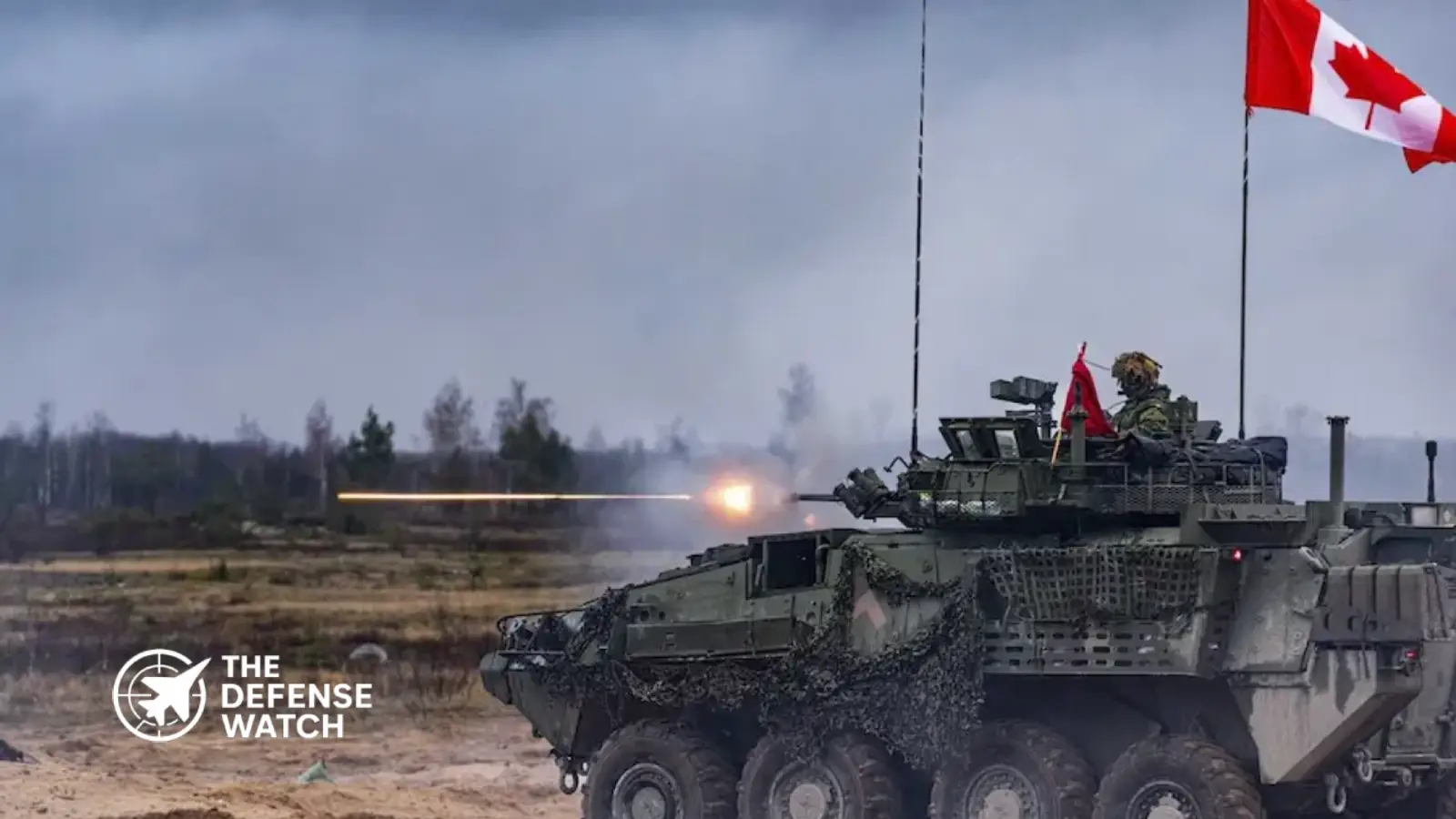
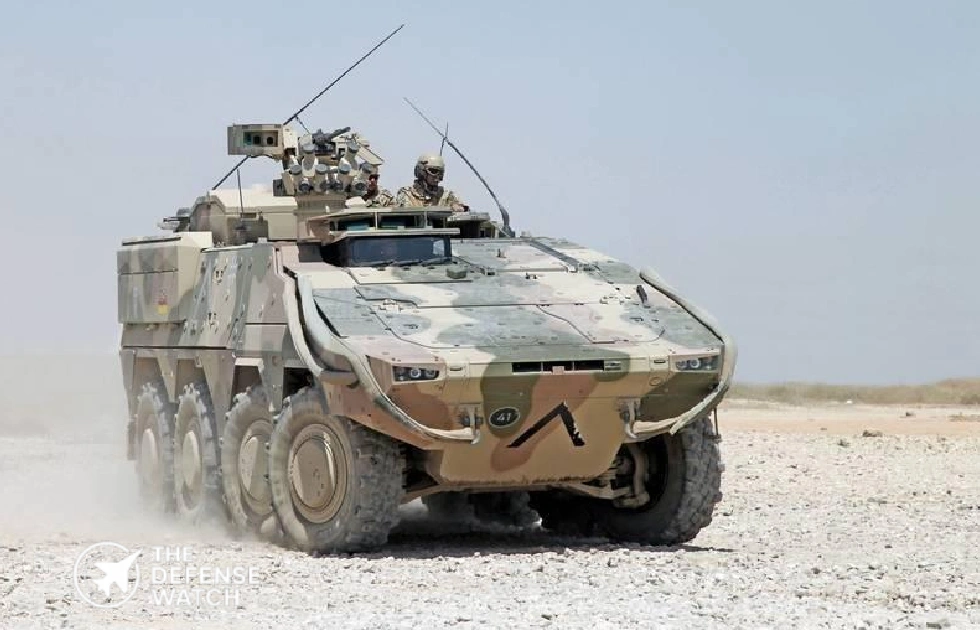
The Boxer program provides a modular wheeled armored vehicle platform for participating armed forces. It illustrates how several countries can cooperate on a shared vehicle family while adapting configurations and procurement decisions to their respective requirements. OCCAR’s program history records the project’s integration in 2001.
FREMM: Multirole naval combatants
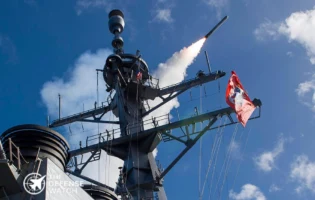
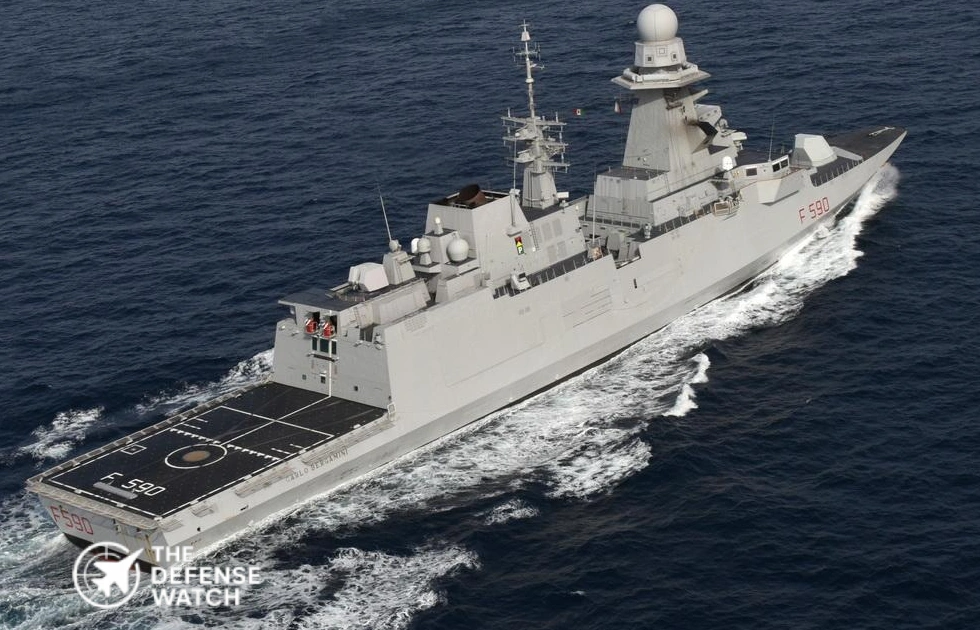
The French and Italian FREMM frigate program is an example of cooperation in a technically demanding naval sector. OCCAR’s responsibilities include multinational program management, while the ships provide participating navies with capabilities for a range of maritime missions. The program entered OCCAR’s portfolio in 2005.
MALE RPAS: European remotely piloted aircraft
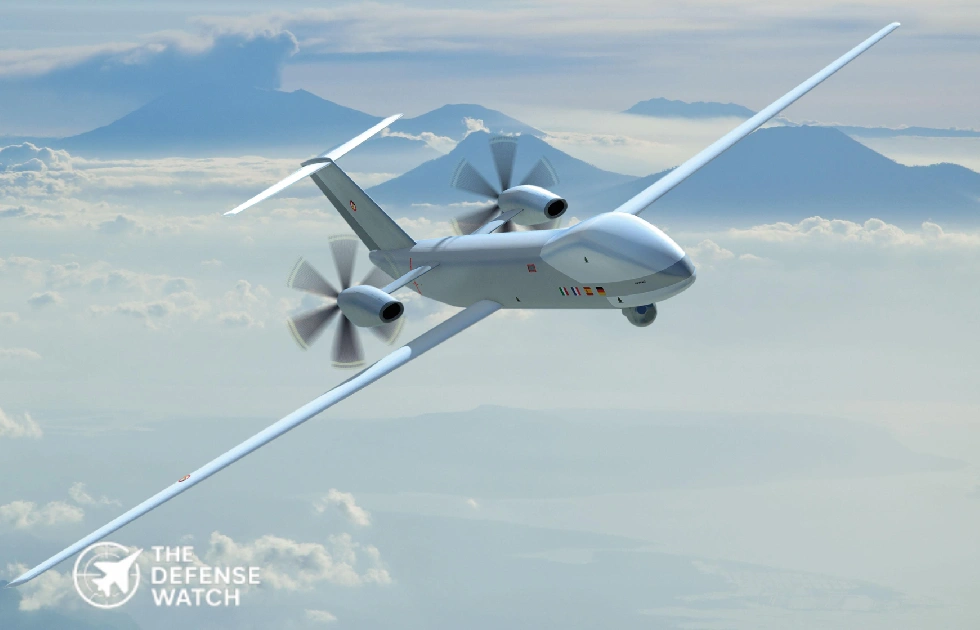
The European Medium Altitude Long Endurance Remotely Piloted Aircraft System program is intended to provide intelligence, surveillance, target acquisition and reconnaissance capabilities. Its multinational structure offers participating countries a route toward a shared European-developed platform, although development, certification and delivery remain important measures of program performance.
These programs demonstrate why the portfolio’s value alone cannot measure its effectiveness. An aircraft program, a frigate program and a communications project have different development cycles, industrial supply chains and operational requirements. Their progress must be judged against their own delivery schedules, costs and capability objectives.
The next phase: More countries, more complex requirements
OCCAR’s current structure consists of six member states: Belgium, France, Germany, Italy, Spain and the United Kingdom. Other countries can participate in individual programs without becoming full members of the organization.
According to OCCAR’s October 2026 anniversary statement, the organization brings together 14 participating states in addition to its members. The Netherlands is expected to become its seventh member, having already participated in OCCAR-managed programs.
This distinction matters because multinational defense cooperation does not require every country to join every project. Governments can select programs that fit their operational needs, industrial capabilities and budgets, while avoiding commitments to projects that offer limited national value.
The model also gives smaller countries access to programs that might be difficult to develop independently. However, participation does not eliminate the need for national funding approvals, industrial coordination or agreement on technical requirements.
A larger portfolio does not automatically mean faster delivery
OCCAR’s reported annual program portfolio of approximately €8.5 billion reflects the scale of the programs it manages. It is not the organization’s administrative operating budget, nor does it represent a single new contract awarded at the anniversary.
The distinction is important for readers assessing European defense spending. The portfolio includes separate programs at different stages, and their financial requirements change as development, production and support activities progress. OCCAR’s published program information shows projects ranging from established equipment to developing capabilities, including hypersonic defense research and unmanned maritime systems.
Multinational procurement also carries risks. Countries may disagree over requirements, production responsibilities, export rules or delivery priorities. When one partner changes its needs or funding plans, other participants can face additional costs or schedule uncertainty.
The practical test for OCCAR is therefore not simply how many programs it manages or how much money flows through its portfolio. It is whether common management helps participating nations field usable equipment on time, maintain it effectively and coordinate upgrades over its service life.
That question has become more relevant as European governments seek to strengthen military readiness while sustaining support for existing fleets and developing new capabilities.
European cooperation faces a delivery test
OCCAR enters its next phase with an established role in Europe’s defense procurement system and a portfolio covering several military domains. Its anniversary figures indicate the scale of the organization, but they do not by themselves establish whether individual programs are meeting cost and schedule targets.
The expected Dutch accession would expand the organization’s membership, while its existing multinational projects continue to require coordination between governments, armed forces and defense companies.
For European defense planners, the central measure of success will be the equipment delivered and sustained, rather than the number of agreements signed. OCCAR’s long-term value will depend on its ability to turn shared requirements and funding into dependable military capabilities.