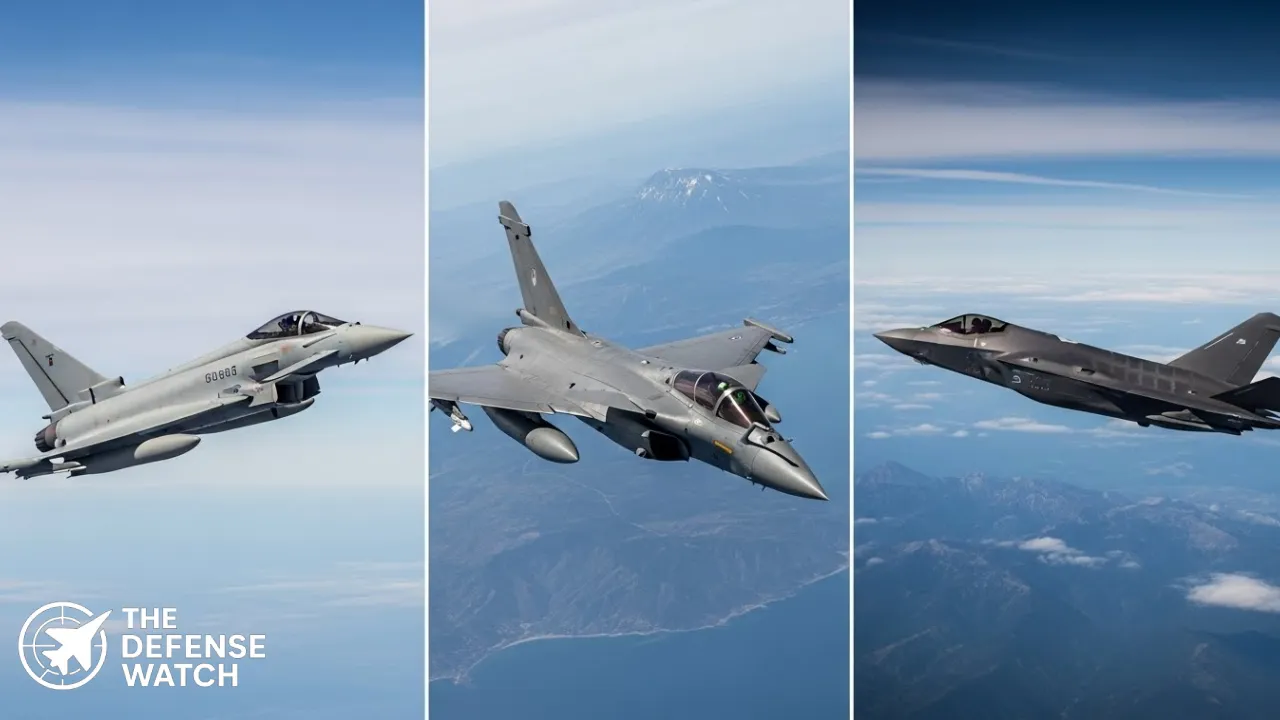
Britain’s combat air fleet spent much of 2025 defined by delay and uncertainty — a slipping F-35B delivery schedule, an unresolved Typhoon retirement debate, and open questions about how much of the original 138-aircraft F-35 ambition would survive contact with budget reality. Several of those threads have now resolved, at least for the moment. Here’s where things actually stand as of August 2026.
The Typhoon Fleet: A Bigger Upgrade Than Planned
The headline shift this year is on the Typhoon side. The UK’s latest Defence Investment Plan commits to upgrading all 107 of the RAF’s Tranche 2 and Tranche 3 Eurofighter Typhoons — a significant expansion from the 40 aircraft originally announced as recently as January 2026. The upgrade package, worth £5.4 billion, covers radar, communications, and software improvements, a new defensive aids system, and enhancements to weapons integration, funded across FY 2026/27 through FY 2029/30. A further £1.1 billion is earmarked to sustain the fleet into the 2040s through the Long Term Evolution programme.

That investment confirms what UK defense officials have signaled for some time: the Typhoon isn’t a bridge aircraft waiting to be replaced, but the core of RAF combat air capability for roughly another 15 years, alongside the F-35B and, eventually, the GCAP/Tempest sixth-generation fighter.
The RAF’s oldest Typhoons haven’t been as fortunate. Of the original 30 Tranche 1 airframes, 26 have been scrapped, stripped for spares, or placed in storage pending disposal. Four remain in active service — but only in the Falkland Islands, flying Quick Reaction Alert duty out of Mount Pleasant Complex, where they’re scheduled to serve until 2027 before final retirement. Unlike the Tranche 2/3 fleet, the Tranche 1 jets lacked the avionics and structural provisions needed for the newer upgrade package, making retention uneconomical despite some earlier industry suggestions that BAE Systems could modernize them.
The F-35B: First Tranche Complete, Long Road Still Ahead
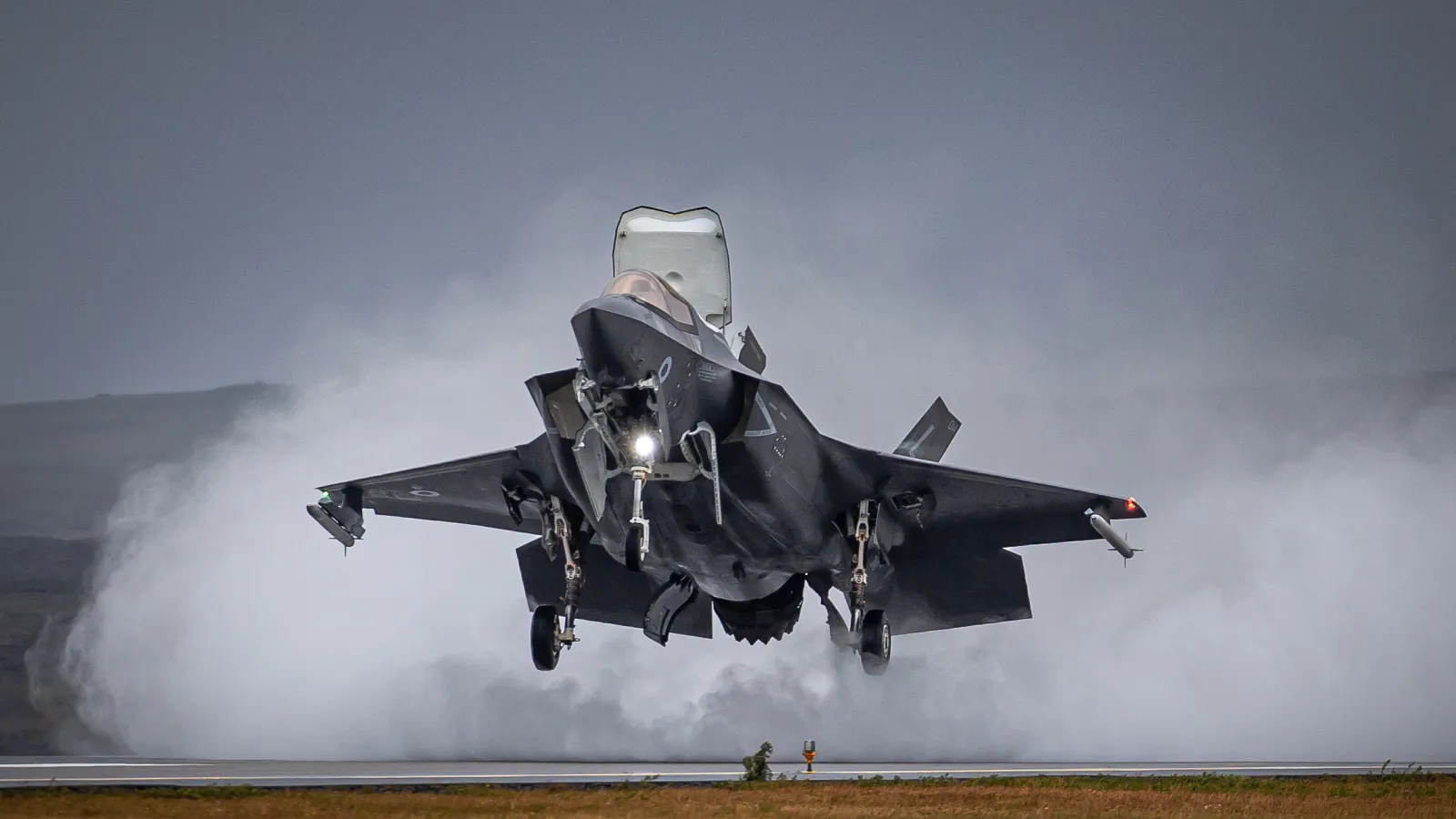
On the Lightning Force side, the UK Ministry of Defence confirmed in late March 2026 that it had received the last of its first 48 contracted F-35B Lightning IIs — a milestone reached roughly 14 years after the first STOVL F-35B was delivered to the MoD in 2012, and eight years after the type’s arrival at RAF Marham in 2018.
That completion came later than planned. Lot 17 aircraft that were originally due by the end of 2025 slipped into early 2026, with the final deliveries landing by April 2026 — a three-to-four month delay attributable to the Joint Program Office’s shared production-lot structure, under which the UK, as sole Tier One international partner, has no contractual mechanism to impose delay penalties on Lockheed Martin.
As of the completed first tranche, the RAF and Royal Navy’s joint Lightning Force — comprising 617 Squadron and 809 Naval Air Squadron, both based at RAF Marham — operates 47 F-35Bs, following the loss of one airframe. The government has confirmed a long-term delivery plan extending well beyond that first batch: a written parliamentary answer in January 2026 set expectations for the UK’s 75th F-35 to arrive by the end of 2033, with deliveries continuing steadily through the 2030s.
That trajectory still falls well short of the UK’s original ambition of 138 F-35Bs, first set out in the 2015 Strategic Defence and Security Review. Analysts and reporting have increasingly described that full order as unaffordable, with some commentary suggesting future purchases may lean toward the cheaper F-35A variant at the B model’s expense — though the UK’s carrier-based, STOVL-dependent force structure makes a wholesale pivot away from the B model operationally complicated.
What the F-35B Still Can’t Do
Delivery numbers are only part of the readiness picture. The RAF’s F-35Bs remain constrained by weapons integration timelines tied to the aircraft’s Block 4 software upgrade. Until Block 4 arrives, UK F-35Bs will continue operating with a more limited weapons set than originally envisioned: SPEAR 3 integration is now targeted for financial year 2028-29, and Meteor beyond-visual-range missile integration isn’t expected until the early 2030s. In the meantime, the aircraft’s stealth, sensor fusion, and electronic-attack capability are doing most of the operational work — its RAF nickname, “the assassin,” reflects that role, working alongside the Typhoon (“the thug”) in a high-low mix where the F-35B clears the way and the Typhoon brings the heavier ordnance load.
Comparing the Two Fleets
Eurofighter Typhoon F-35B Lightning II Current fleet size 111 total (107 Tranche 2/3 active + 4 Tranche 1 in Falklands) 47 operational 2026 development £5.4B upgrade covering all 107 Tranche 2/3 jets First 48-aircraft tranche completed (delayed to April 2026) Out-of-service date Tranche 1: 2027; Tranche 2/3: 2040 Deliveries continuing through the 2030s; 75th aircraft expected by end of 2033 Key limitation Tranche 1 lacked upgrade-compatible avionics Full weapons set (SPEAR 3, Meteor) awaiting Block 4, not expected until 2028-early 2030s Role Heavy ordnance, air defense, core fast-jet mass Stealth, sensor fusion, carrier operations, first-in strike FAQ
How many F-35Bs does the UK have as of 2026?The RAF and Royal Navy’s Lightning Force operates 47 F-35Bs following completion of the first 48-aircraft contracted tranche in March/April 2026, with one airframe lost. The government expects to reach 75 total F-35s by the end of 2033.
Why was the UK’s F-35B delivery delayed?Lot 17 aircraft due by the end of 2025 slipped into early 2026 due to production issues within the Joint Program Office’s shared-lot structure. Because the UK buys through annual international production lots rather than a bespoke bilateral contract, it has no financial remedy or delay penalty available against Lockheed Martin.
Is the RAF still planning to buy 138 F-35Bs?The original 2015 target of 138 F-35Bs is now widely viewed as unaffordable. Current confirmed government planning extends only to a 75th aircraft by 2033, with the long-term fleet size beyond that still unresolved.
What happened to the RAF’s Tranche 1 Typhoons?Of the original 30 Tranche 1 Typhoons, 26 have been scrapped, stripped for parts, or placed in storage. Four remain in service on Quick Reaction Alert duty in the Falkland Islands until 2027, after which the type will be fully retired from RAF service.
When will RAF F-35Bs get their full weapons package?SPEAR 3 integration is targeted for financial year 2028-29, and Meteor missile integration isn’t expected until the early 2030s, both tied to the aircraft’s Block 4 software upgrade.
How much is the UK spending to upgrade the Typhoon fleet?£5.4 billion to upgrade and sustain all 107 Tranche 2 and 3 Typhoons, spread across FY 2026/27 to FY 2029/30, plus a further £1.1 billion for long-term sustainment into the 2040s.
The Loadout Problem, In Gaming Terms
Any player who’s grinded through a live-service shooter’s weapon-unlock tree will recognize the RAF’s current F-35B situation instantly: you’ve got the platform, you’ve got the base kit, but half your loadout is still locked behind a content update that keeps slipping right. SPEAR 3 and Meteor are effectively the F-35B’s endgame weapon unlocks — available on the roadmap, promised for a future patch, but not yet in the loadout menu. Until Block 4 ships, RAF pilots are running a stealth platform that’s already lethal in its current build, but still waiting on the DLC that unlocks its full kit.
Executive Summary: HMS Medway conducted live machine-gun firing during a four-day Royal Navy patrol near the Falkland Islands from July 26 to 29. The exercise was part of Operation Southern Vigilance and was presented by British Forces South Atlantic Islands as a demonstration of operational readiness and the UK’s continuing military presence in the region.
HMS Medway Conducts Live-Fire Patrol Near Falklands
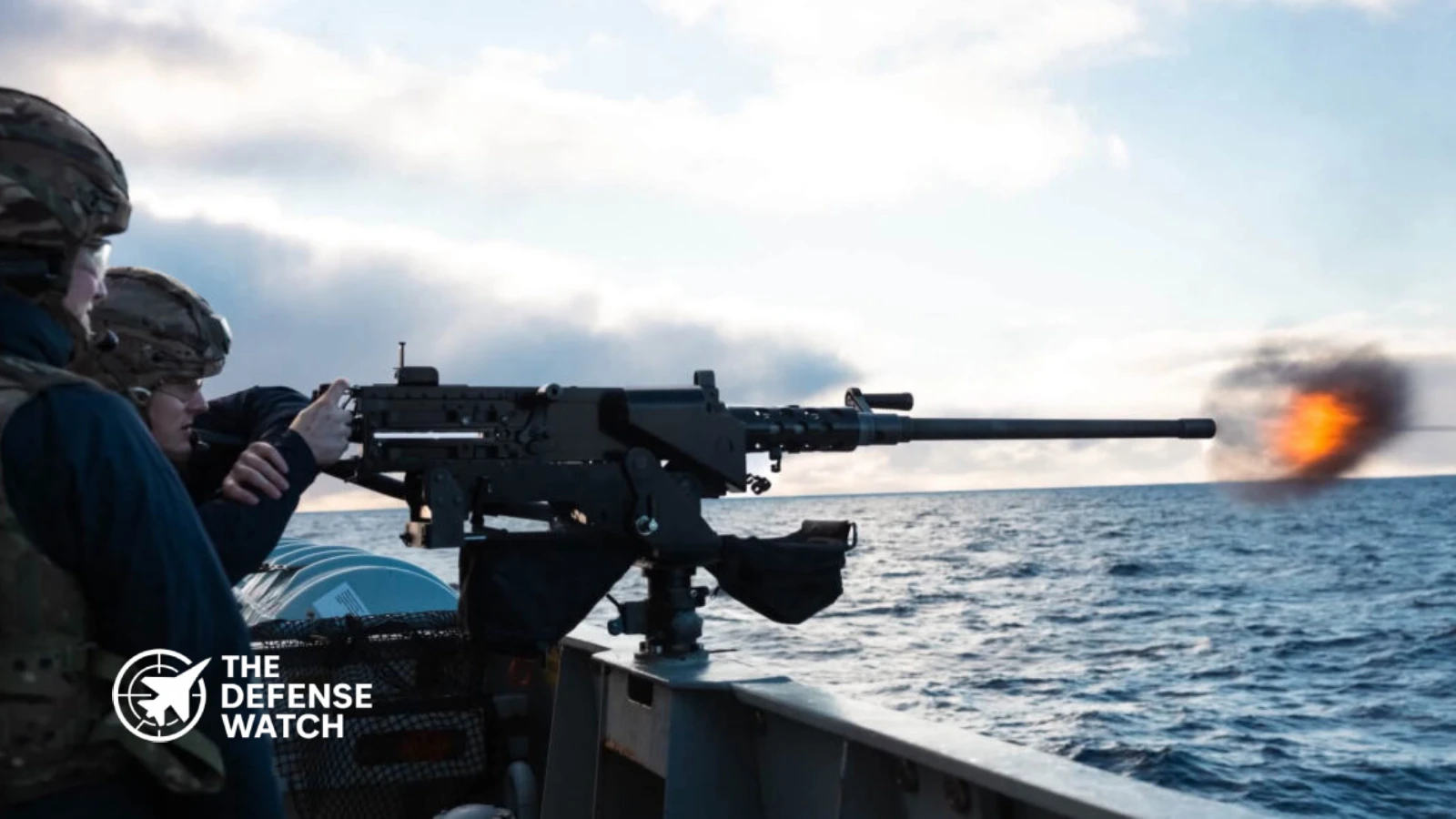
HMS Medway Falklands operations entered a higher-profile phase in late July when the Royal Navy patrol ship conducted live machine-gun firing during a four-day deployment near the Falkland Islands.
Citing British Forces South Atlantic Islands, the patrol ran from July 26 through July 29 under Operation Southern Vigilance. The ship’s crew conducted mounted machine-gun firing, a man-overboard exercise and coordination activity involving an RAF A400M Atlas transport aircraft.
The activity was described by British forces as part of routine operational readiness and as a visible demonstration of the UK’s continuing commitment to the Falkland Islands.
The exercise is significant because the Falklands remain the subject of a long-running sovereignty dispute between the United Kingdom and Argentina. Argentina refers to the islands as the Malvinas and continues to assert a sovereignty claim, while the UK maintains its administration of the islands and emphasizes the right of Falkland Islanders to determine their political status.
HMS Medway’s Role In The South Atlantic
HMS Medway is a second-generation River-class offshore patrol vessel designed for long-duration patrol and maritime security missions.
The Royal Navy assigned HMS Medway to the South Atlantic in early 2026, replacing HMS Forth as the UK’s permanent patrol ship in the Falklands. HMS Forth had accumulated more than 155,000 nautical miles during its lengthy South Atlantic deployment before returning to the United Kingdom.
The River-class vessels are not frontline destroyers or frigates. Their primary value in the Falklands is their ability to maintain a persistent maritime presence, conduct patrols, support local authorities and work alongside the wider British military force stationed on the islands.
HMS Medway carries a 30mm main gun and machine guns and has a flight deck capable of supporting helicopter operations. Its relatively modest armament reflects its patrol role rather than preparation for conventional fleet combat.
That distinction is important when assessing the significance of the July live-fire activity.
The firing itself should not be interpreted as evidence that Britain was preparing for an imminent conflict with Argentina. Live-fire drills are a normal component of maintaining weapons proficiency, crew readiness and safe handling procedures. In this case, however, the exercise also provided a visible demonstration of British military activity in waters surrounding the Falklands.
What Operation Southern Vigilance Demonstrated
The July patrol combined several activities rather than focusing solely on weapons training.
HMS Medway conducted machine-gun firing while also carrying out a man-overboard exercise and operating in coordination with an RAF A400M Atlas. Such activities allow personnel to train across different areas of maritime operations while deployed away from the UK.
The involvement of the A400M also highlights the wider military network supporting British forces in the South Atlantic.
RAF Mount Pleasant hosts British air and military capabilities that support the defense of the islands. The RAF maintains A400M capability in the region, while Typhoon fighters provide air defense and rapid-response capability.
The combination of naval patrols, air power and land-based forces gives Britain a layered military presence rather than relying on a single warship.
This is particularly relevant because the Falklands are thousands of miles from the United Kingdom. Sustaining forces at such distance requires transport aircraft, logistics infrastructure, maritime support and the ability to move personnel and equipment rapidly.
Why The Falklands Patrol Matters
The immediate military value of the HMS Medway Falklands patrol is readiness.
For a permanently deployed offshore patrol vessel, regular live firing provides crews with an opportunity to maintain familiarity with mounted weapons under operational conditions. Man-overboard drills similarly test the ship’s ability to respond to emergencies at sea.
The broader strategic value is presence.
A permanent Royal Navy patrol ship gives Britain a continuous maritime platform in the South Atlantic without requiring a major combatant such as a destroyer or frigate to remain deployed there. HMS Medway can conduct routine patrols, maritime security missions and exercises while supporting the wider British Forces South Atlantic Islands structure.
British Forces have previously described operations in the region as supporting deterrence and demonstrating UK sovereignty. During an earlier South Atlantic operation, the RAF said joint activity involving naval, land and air forces was intended to deter aggression and reassure the local population.
The July exercise therefore fits into a broader pattern of maintaining an enduring British military footprint.
HMS Medway And Argentina’s Sovereignty Claim
The Falklands dispute remains politically sensitive.
Argentina continues to claim sovereignty over the islands and has maintained that position through diplomatic channels and international forums. The UK rejects Argentina’s sovereignty claim and points to the wishes of Falkland Islanders, who voted overwhelmingly in a 2013 referendum to remain a British Overseas Territory.
The existence of a permanent Royal Navy patrol ship is consequently both a practical security measure and a visible expression of British policy.
At the same time, the available information does not establish that the July firing was a response to a specific Argentine military action or that an immediate confrontation was expected.
That distinction matters.
The term deterrence can describe a broad military objective, but a training firing event is not itself evidence of an impending conflict. The most supportable conclusion is that Britain used a routine operational patrol to maintain readiness while demonstrating that it continues to maintain military forces in the South Atlantic.
A Persistent Military Presence, Not A Major Naval Deployment
The HMS Medway Falklands mission also illustrates how Britain manages a geographically remote security commitment.
A River-class offshore patrol vessel provides a lower-cost persistent presence compared with deploying a major surface combatant. Its role is supported by aircraft, personnel and infrastructure already based in the region.
The Royal Navy’s January 2026 handover from HMS Forth to HMS Medway reinforced this model. HMS Forth had spent years conducting patrols around the Falklands and South Georgia, including maritime security and fishery protection activities. HMS Medway assumed the same South Atlantic patrol responsibility as part of Britain’s continuing regional presence.
The July firing therefore represents one element of a much wider operational picture.
For Britain, the priority is maintaining forces that can operate independently in remote waters while remaining connected to the air and land components at Mount Pleasant.
For Argentina, the continuing presence of British forces remains tied to the unresolved sovereignty dispute.
For regional security, the immediate significance of the exercise is limited. There is no publicly available evidence from the sources reviewed that the firing represented an escalation toward armed conflict.
Instead, the episode demonstrates how routine military training can also carry strategic messaging when conducted in a politically contested region.
Bottom Line
HMS Medway’s July patrol combined live machine-gun firing, emergency-response training and coordination with an RAF A400M Atlas. British Forces South Atlantic Islands presented the activity as part of maintaining operational readiness and demonstrating the UK’s continuing commitment to the Falkland Islands.
The exercise comes against the backdrop of Argentina’s continuing sovereignty claim, but the available evidence does not support describing the firing as preparation for an imminent confrontation.
For the Royal Navy, the more significant point is persistence. HMS Medway provides Britain with a permanent naval presence in the South Atlantic, while RAF and Army forces at Mount Pleasant add air and land capabilities.
That combination remains the core of Britain’s military posture around the Falkland Islands.
Executive Summary:
Britain is moving to acquire a dedicated drone warfare testbed vessel as the Royal Navy accelerates the development of autonomous maritime capabilities. The platform will provide a flexible environment for testing uncrewed surface, underwater, and aerial systems, reflecting the UK’s broader transition toward a hybrid fleet combining crewed and autonomous platforms.
Royal Navy Plans Dedicated Drone Warfare Testbed Vessel
The Royal Navy drone warfare testbed vessel will become a central component of Britain’s expanding effort to integrate autonomous technologies into future naval operations. According to reporting by the UK Defence Journal, the Ministry of Defence intends to procure a dedicated experimentation platform capable of supporting trials involving multiple classes of uncrewed systems.
Rather than serving as an operational combat ship, the vessel will function as a floating laboratory where emerging technologies can be evaluated under realistic maritime conditions before entering frontline service.
The initiative aligns with the UK’s wider modernization strategy, which places increasing emphasis on autonomous systems, artificial intelligence, and distributed maritime operations.
Supporting the Royal Navy’s Hybrid Fleet Vision
The planned vessel is expected to support experiments involving:
| Capability | Intended Purpose |
|---|---|
| Uncrewed Surface Vessels (USVs) | Maritime surveillance, reconnaissance, logistics, and strike concepts |
| Uncrewed Underwater Vehicles (UUVs) | Mine countermeasures, anti-submarine warfare, seabed monitoring |
| Uncrewed Aerial Systems (UAS) | Intelligence, surveillance, communications relay, targeting |
| AI-enabled Command Systems | Autonomous mission management and human-machine teaming |
| Electronic Warfare Payloads | Testing resilience against jamming and electromagnetic threats |
The Ministry of Defence has increasingly emphasized rapid experimentation instead of waiting for lengthy acquisition cycles. A dedicated test vessel allows developers, operators, and industry partners to validate new concepts before they are integrated into operational warships.
Why the Testbed Matters
Modern naval warfare is evolving rapidly.
Recent conflicts have demonstrated that relatively inexpensive autonomous platforms can threaten traditional warships, gather intelligence, and conduct long-endurance surveillance missions.
The Royal Navy has already begun investing in autonomous technologies through several programs, including uncrewed surface vessels acquired under Project Beehive and broader efforts supporting the service’s Hybrid Navy concept.
A dedicated experimentation vessel provides several advantages:
- Faster integration of emerging technologies.
- Reduced risk before operational deployment.
- Continuous testing of software updates and AI algorithms.
- Better interoperability between air, surface, and underwater drones.
- Real-world evaluation under challenging sea conditions.
Unlike laboratory testing, maritime environments introduce unpredictable weather, sea states, communications challenges, and navigation hazards that autonomous systems must overcome before entering service.
Part of Britain’s Larger Investment in Autonomy
The procurement follows a series of British investments aimed at expanding autonomous military capabilities.
The UK government has significantly increased funding for drone and autonomous technologies under recent defense modernization plans. In addition to maritime systems, investments include new drone testing facilities, AI development initiatives, and accelerated procurement programs designed to shorten capability development timelines.
These initiatives support the Strategic Defence Review’s emphasis on rapidly fielding autonomous capabilities across all military domains.
The maritime domain remains particularly important because autonomous vessels can conduct missions that are hazardous, repetitive, or require extended endurance without exposing sailors to unnecessary risk.
Technical Role of the Test Platform
Although detailed specifications have not been released, vessels of this type generally provide modular mission spaces that allow equipment to be installed, removed, and upgraded quickly.
Expected capabilities may include:
- Flight decks for unmanned aerial systems.
- Launch and recovery equipment for autonomous surface vessels.
- Deployment systems for underwater drones.
- Mission control centers.
- Secure satellite and tactical communications.
- Open architecture software integration.
- Space for government, military, and industry experimentation teams.
The modular approach enables the platform to support multiple technology programs without requiring extensive redesign between trials.
Strategic Implications
From a U.S. defense perspective, Britain’s investment reflects a broader trend among NATO navies toward distributed maritime operations.
The United States Navy, Royal Navy, and several allied fleets increasingly view autonomous systems as force multipliers rather than direct replacements for traditional warships.
Instead of concentrating capability aboard a limited number of expensive vessels, future naval operations are expected to distribute sensors, weapons, and electronic warfare assets across networks of crewed and uncrewed platforms.
A dedicated experimentation vessel accelerates this transition by allowing concepts to mature before they are incorporated into frontline ships or multinational exercises.
It also improves interoperability with allied autonomous programs, an increasingly important consideration as NATO expands collaborative development of maritime technologies.
Challenges Remain
Despite rapid progress, several technical hurdles remain before autonomous fleets can operate routinely alongside conventional naval forces.
These include:
- Secure and resilient communications.
- Resistance to electronic warfare and cyber attacks.
- Reliable autonomous navigation in congested waters.
- Human oversight for lethal decision-making.
- Logistics and maintenance for large autonomous fleets.
- Integration with existing naval command-and-control systems.
Testing these issues under operational conditions is one of the primary reasons dedicated experimentation platforms are becoming increasingly valuable.
Looking Ahead
The planned drone warfare testbed vessel represents another step in Britain’s broader effort to transform the Royal Navy into a force capable of integrating autonomous technologies across every aspect of maritime operations.
As unmanned surface vessels, underwater drones, and AI-enabled command systems become more capable, dedicated experimentation platforms will play an increasingly important role in reducing development risks while accelerating innovation.
For allied navies, including the United States, Britain’s approach provides another example of how maritime powers are adapting procurement strategies to keep pace with rapidly evolving autonomous technologies and the changing character of naval warfare.
Executive Summary:
HMS Portland conducted live firing with its 4.5 inch main gun off the south coast of England during a Royal Navy training serial.
The exercise was described as part of a week at sea and reflects routine operational readiness training for the Type 23 frigate fleet.
While not linked to an active operation, the firing highlights the continued importance of naval gunnery proficiency as the Royal Navy maintains maritime security and deployable surface combatant capability.
HMS Portland Conducts Live Naval Gunnery Off Southern England
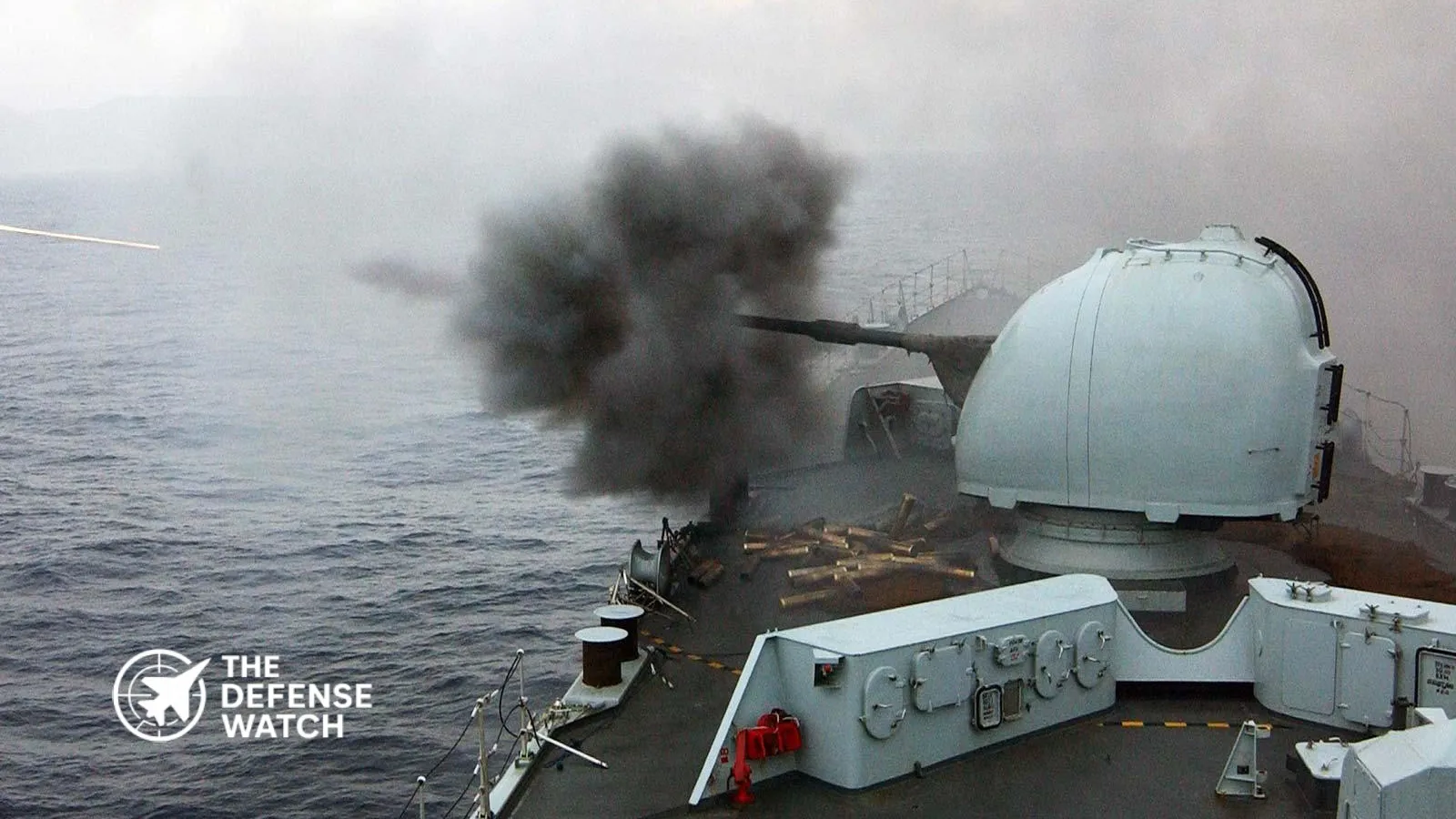
HMS Portland conducted live firing with its 4.5 inch main gun off the UK coast as part of a Royal Navy training deployment, according to reporting by UK Defence Journal .
The Type 23 frigate carried out the gunnery serial during operations in waters off the south coast of England. The ship later referenced the firing on social media, describing it as part of a successful week at sea.
The activity was presented as routine naval training rather than a response to a specific security incident. Live firing exercises are a standard element of Royal Navy readiness programs, allowing crews to maintain qualification on primary weapons systems.
What The Exercise Involved
The reported firing involved HMS Portland’s 4.5 inch Mk 8 naval gun, the principal medium caliber gun fitted to Royal Navy Type 23 frigates.
The weapon is used for naval surface fire support, engagement of surface targets, warning shots when required, and maritime security operations. During training serials, crews practice targeting, firing procedures, safety protocols, and command coordination.
The Royal Navy did not indicate that the firing was connected to combat operations or an active threat. The serial appears to have been conducted as part of normal sea training.
Type 23 Frigate Gunnery Capability
HMS Portland is one of the Royal Navy’s Type 23 frigates, a class originally designed for anti submarine warfare but upgraded over time for broader maritime operations.
The frigate’s 4.5 inch Mk 8 gun remains a core weapon for surface engagements and naval gunfire support.
HMS Portland At A Glance
| Capability | Details |
|---|---|
| Ship | HMS Portland |
| Class | Type 23 frigate |
| Navy | Royal Navy |
| Main gun | 4.5 inch Mk 8 naval gun |
| Primary role | Frigate operations and maritime security |
| Exercise area | South coast of England |
| Activity | Live naval gunnery training |
Why Live Gunnery Training Matters
Naval gunnery is one of the foundational combat skills for a surface warship. Even as modern frigates rely heavily on missiles, sensors, and networked targeting systems, crews must still be proficient in operating the ship’s gun under realistic conditions.
Training Objectives Typically Include
- Weapon handling and firing drills.
- Target acquisition and tracking.
- Fire control coordination.
- Bridge and combat information center communication.
- Safety procedures during live ammunition use.
- Assessment of weapon system performance at sea.
Conducting these serials at sea allows crews to train under real maritime conditions, including ship movement, weather, and operational command procedures.
Operational Context For The Royal Navy
The exercise comes as the Royal Navy continues to maintain a global operational presence, including commitments to NATO maritime security, North Atlantic patrols, and deployments beyond European waters.
Although this particular firing was routine, it reflects the broader requirement for Royal Navy surface combatants to remain deployable and combat ready.
Type 23 frigates continue to perform a wide range of missions, including:
- Maritime security patrols.
- Escort duties.
- Anti submarine warfare operations.
- NATO task group participation.
- Protection of critical sea lines of communication.
- Presence operations in contested maritime regions.
Analysis: What This Signals About Readiness
Routine live firing exercises rarely attract major attention on their own, but they are an important indicator of fleet readiness. For surface combatants, weapons proficiency cannot be maintained through simulation alone.
The Royal Navy has faced pressure in recent years from fleet availability challenges, personnel demands, and the transition toward newer platforms such as the Type 26 frigate.
Against that backdrop, visible live gunnery training by an active Type 23 frigate demonstrates that operational crews are continuing to maintain core combat skills.
For U.S. and NATO observers, the significance is less about the firing itself and more about alliance readiness. Allied navies rely on interoperable surface combatants that can conduct maritime security operations, escort missions, and higher end naval warfare if required.
The 4.5 inch gun remains relevant because it provides a flexible, lower cost engagement option for many maritime scenarios where missiles may not be necessary or appropriate.
No Indication Of Active Engagement
There is no indication that HMS Portland fired in response to a threat or operational incident.
The reported activity was a training serial conducted during routine operations off the south coast of England. Such exercises are regularly carried out by naval vessels to maintain qualification and readiness standards.
The Bottom Line
HMS Portland’s live firing exercise off the UK coast was a routine but meaningful demonstration of Royal Navy operational readiness.
By conducting live gunnery training with its 4.5 inch main gun, the frigate maintained a core combat capability that remains relevant for maritime security, escort operations, and potential naval engagements.
For defense observers, the event is a reminder that day to day readiness training remains a critical part of sustaining an effective surface fleet.
Executive Summary:
The Royal Navy has confirmed the retirement of HMS Richmond, HMS Iron Duke, and HMS Chiddingfold as part of its long term fleet modernization strategy announced on July 13, 2026. The move redirects resources toward the introduction of Type 26 and Type 31 frigates while expanding the Royal Navy’s growing use of autonomous mine warfare systems.
Royal Navy Confirms Withdrawal Of Three Warships
The Royal Navy warship retirement program entered another significant phase after the service officially confirmed that HMS Richmond, HMS Iron Duke, and HMS Chiddingfold will leave active service. The announcement was made by the Royal Navy on July 13 as part of its broader transition toward what it describes as a “Hybrid Navy” combining conventional warships with autonomous maritime systems.
According to the Royal Navy, the decision reflects the increasing cost and technical risk associated with maintaining aging vessels that have served for more than three decades. Rather than continuing expensive life extension programs, the Ministry of Defence intends to shift investment toward newer platforms already under construction.
Which Ships Are Leaving Service?
The retirement includes two well known Type 23 Duke-class frigates and one Hunt-class mine countermeasures vessel.
| Ship | Class | Primary Role | Replacement |
|---|---|---|---|
| HMS Richmond | Type 23 Frigate | Anti-submarine warfare | Type 26 City-class |
| HMS Iron Duke | Type 23 Frigate | General-purpose frigate | Type 31 Inspiration-class |
| HMS Chiddingfold | Hunt-class Minehunter | Mine countermeasures | Autonomous mine hunting systems |
Each vessel accumulated decades of operational service supporting NATO missions, maritime security operations, anti-submarine patrols, humanitarian assistance, and freedom of navigation deployments worldwide.
Why The Royal Navy Is Retiring These Ships
The retirement reflects a broader modernization effort rather than an isolated force reduction.
The Royal Navy stated that sustaining older Type 23 frigates has become increasingly expensive due to aging hulls, machinery, and maintenance requirements. Several vessels have already undergone extensive refits that consumed considerable time and funding while delivering diminishing operational returns.
For example, HMS Iron Duke previously completed a major refit valued at approximately £103 million, yet continued availability challenges highlighted the growing difficulty of extending the service life of aging frigates.
Instead, defense planners are prioritizing investment in modern platforms designed to remain operational well into the second half of the century.
Type 26 And Type 31 Will Replace The Type 23 Fleet
Britain’s future surface fleet centers on two complementary frigate classes.
The Type 26 City-class will become the Royal Navy’s premier anti-submarine warfare platform. Designed to protect carrier strike groups and monitor increasingly active submarine operations, the ships incorporate advanced sonar systems, quieter propulsion, and improved mission flexibility.
Meanwhile, the Type 31 Inspiration-class provides a more affordable general-purpose frigate optimized for maritime security, forward presence, escort duties, and international deployments.
The Royal Navy confirmed that HMS Richmond’s mission set will transition to the Type 26 fleet led by HMS Glasgow, while HMS Iron Duke’s responsibilities will eventually pass to the Type 31 class currently under construction.
Autonomous Mine Warfare Replaces Traditional Minehunters
Perhaps the most significant technological shift involves HMS Chiddingfold.
Rather than replacing the Hunt-class minehunter with another crewed vessel, the Royal Navy plans to rely increasingly on remotely operated and autonomous mine countermeasure systems.
These systems deploy unmanned surface vessels, underwater vehicles, and advanced sensors capable of detecting and neutralizing naval mines while keeping sailors farther from danger.
According to the Royal Navy, these technologies are already undergoing operational deployment and testing, representing a fundamental change in how mine warfare will be conducted during future naval operations.
Strategic Analysis: What This Means For The Royal Navy
The retirement of three additional vessels illustrates the difficult balance facing many Western navies between maintaining legacy fleets and funding modernization.
For the United Kingdom, the challenge is particularly acute because the retirement schedule is advancing while replacement ships are still entering service. This creates a temporary reduction in available hulls, especially among escort vessels, before the Type 26 and Type 31 fleets reach full operational strength.
From a strategic perspective, however, the Royal Navy is prioritizing long term capability over maintaining larger numbers of aging ships.
The transition also aligns with broader NATO trends emphasizing networked operations, autonomous systems, improved anti-submarine warfare, and distributed maritime capabilities. Similar modernization efforts are underway across several allied navies, including the United States, Australia, and Canada, as they prepare for increasingly contested maritime environments.
The UK’s Defence Investment Plan supports this approach through approximately £1.3 billion for the Hybrid Navy initiative and £1.1 billion for future mine hunting capabilities, complementing ongoing investment in Type 26 and Type 31 construction.
Although fleet numbers will remain under pressure during the transition period, British defense officials argue that the resulting force will be more capable, more survivable, and better suited to future maritime operations.
Looking Ahead
The retirement of HMS Richmond, HMS Iron Duke, and HMS Chiddingfold marks another milestone in the Royal Navy’s long planned transformation.
As the remaining Type 23 frigates gradually leave service over the coming years, the Royal Navy expects Type 26 and Type 31 frigates, supported by autonomous maritime systems, to become the foundation of Britain’s future surface fleet.
The transition underscores a broader shift among NATO navies toward technologically advanced, digitally connected, and increasingly unmanned maritime forces capable of operating across high threat environments.
Executive Summary:
The Royal Navy has opened a dedicated Uncrewed Systems Centre in Swindon to accelerate the development and fielding of drones, autonomous surface vessels, and autonomous minehunting technologies. The new organization is intended to shorten the path from experimentation to operational deployment as the United Kingdom expands the role of autonomous systems across maritime operations.
Royal Navy Launches Uncrewed Systems Centre To Accelerate Autonomous Maritime Capabilities
The Royal Navy Uncrewed Systems Centre has officially opened in Swindon as part of the United Kingdom’s broader effort to integrate autonomous technologies across naval operations. Announced by the Royal Navy, the new center brings together expertise in unmanned aircraft, autonomous surface vessels, mine countermeasure systems, and digital technologies under a single organization designed to speed capability development.
The facility represents another step in the UK’s long-term modernization strategy, which increasingly relies on autonomous platforms to enhance fleet effectiveness while reducing operational risk and personnel demands.
Rather than treating individual drone programs separately, the new center will coordinate experimentation, procurement support, operational testing, and doctrine development across multiple uncrewed capabilities.
A Central Hub For Maritime Autonomy
The Uncrewed Systems Centre is intended to serve as the Royal Navy’s focal point for autonomous technologies, supporting programs from early concept development through operational deployment.
Its responsibilities include:
| Capability Area | Operational Purpose |
|---|---|
| Uncrewed Surface Vessels (USVs) | Maritime surveillance, force protection, logistics and mine warfare |
| Uncrewed Aerial Systems (UAS) | Intelligence, reconnaissance and targeting support |
| Autonomous Mine Countermeasures | Detecting and neutralizing naval mines without placing crews at risk |
| Digital Integration | Networking autonomous systems with naval command and control |
| Operational Experimentation | Rapid testing of emerging autonomous technologies |
The organization is expected to work closely with industry, research institutions, defense laboratories, and Royal Navy operational commands to reduce the time required to transition promising technologies into frontline service.
Supporting The Royal Navy’s Minehunting Transformation
One of the most significant areas supported by the new center is autonomous mine warfare.
Traditional mine countermeasure missions have historically required specialized crewed vessels operating in hazardous environments. Modern autonomous systems instead allow unmanned surface vessels and remotely operated underwater vehicles to locate, classify, and neutralize mines while keeping sailors outside dangerous areas.
The Royal Navy has already begun replacing portions of its legacy mine countermeasure fleet with autonomous systems through programs developed alongside industry partners. The Swindon center will help coordinate future development and operational integration of these capabilities.
This shift reflects a broader trend among NATO navies toward distributed, unmanned mine warfare operations.
Faster Innovation Through Centralized Development
According to the Royal Navy, the new organization is designed to streamline how emerging technologies move from laboratory demonstrations into operational use.
Instead of multiple organizations independently evaluating similar technologies, the center provides a single structure responsible for:
- Capability assessment
- Technical evaluation
- Operational experimentation
- User feedback
- Training support
- Integration with fleet requirements
This centralized approach aims to reduce duplication while accelerating procurement decisions for rapidly evolving autonomous technologies.
Growing Role Of Autonomous Systems Across Naval Operations
Autonomous platforms are becoming increasingly important across modern naval missions beyond mine warfare.
Current and future applications include:
- Persistent maritime surveillance
- Intelligence gathering
- Harbor protection
- Anti-submarine support
- Logistics resupply
- Environmental monitoring
- Electronic warfare support
- Long-endurance reconnaissance
Many of these missions can be conducted by smaller, lower-cost autonomous systems that complement larger crewed warships instead of replacing them.
For naval commanders, this creates opportunities to distribute sensors across wider operating areas while preserving high-value combat ships for missions requiring greater firepower or endurance.
Why The New Centre Matters
The establishment of the Uncrewed Systems Centre reflects a broader change in how modern navies are approaching force development.
Rather than viewing drones as niche capabilities, leading naval powers increasingly treat autonomous systems as core elements of future fleet operations. The United States, United Kingdom, Australia, and several NATO allies are investing heavily in autonomous surface vessels, underwater vehicles, and unmanned aircraft designed to operate alongside traditional fleets.
Centralizing expertise allows the Royal Navy to respond more rapidly as autonomous technologies mature. Software-driven systems evolve far faster than conventional shipbuilding programs, making streamlined experimentation and operational feedback increasingly important.
The center also supports the UK’s ambition to maintain interoperability with NATO partners that are pursuing similar concepts for distributed maritime operations, autonomous mine countermeasures, and networked sensing.
Strategic Context
The opening of the Swindon facility aligns with broader defense modernization efforts across Europe.
Russia’s continued naval activity, increasing competition in the North Atlantic, and the growing importance of protecting critical undersea infrastructure have reinforced demand for persistent maritime surveillance and autonomous capabilities.
At the same time, autonomous systems offer practical advantages beyond high-intensity conflict. They can conduct routine patrols, monitor shipping lanes, inspect underwater infrastructure, and support humanitarian or disaster response missions while reducing operational costs.
For the United Kingdom, integrating these systems into regular naval operations strengthens resilience while expanding operational flexibility across multiple theaters.
Looking Ahead
The Royal Navy’s Uncrewed Systems Centre represents an organizational investment as much as a technological one. By bringing expertise for drones, autonomous surface vessels, and mine warfare under one command structure, the service aims to shorten development cycles and improve how emerging technologies transition into operational capability.
As autonomous maritime systems continue to mature, centralized organizations like the Swindon center are likely to play an increasingly important role in ensuring new technologies can be tested, validated, and fielded quickly while maintaining interoperability with allied naval forces.
Executive Summary:
The United Kingdom is preparing to replace Royal Navy Wildcat helicopters with uncrewed aerial systems as part of its 2026 Defence Investment Plan. The move reflects a wider modernization effort that prioritizes autonomous reconnaissance, artificial intaelligence, and distributed sensor networks while reducing risks to aircrews in increasingly contested environments.
Royal Navy Begins Transition From Wildcat Helicopters To Drones
The Royal Navy Wildcat replacement program is moving from concept toward implementation as the UK government reshapes military aviation under its newly released Defence Investment Plan.
According to the Ministry of Defence, the transition will see Wildcat helicopters gradually replaced in reconnaissance missions by uncrewed aerial systems capable of scouting ahead of friendly forces without exposing aircrews to enemy air defenses.
Officials said the decision reflects operational lessons learned from the war in Ukraine, where inexpensive drones have increasingly displaced traditional reconnaissance aircraft in high-threat environments. Rather than sending crewed helicopters deep into contested airspace, autonomous platforms can provide persistent surveillance at significantly lower cost and risk.
Part Of A Much Broader Defense Modernization Strategy
The retirement of Wildcat reconnaissance helicopters is one element of Britain’s broader shift toward autonomous warfare.
The Defence Investment Plan allocates approximately £5 billion to drones and autonomous systems while expanding investment in artificial intelligence, digital targeting networks, electronic warfare, and long-range precision fires.
The strategy also includes:
| Modernization Area | Planned Capability |
|---|---|
| Autonomous systems | Expanded air, surface, and underwater drones |
| AI integration | Digital targeting web connecting sensors and shooters |
| Electronic warfare | Improved battlefield sensing and resilience |
| Long-range fires | Greater strike capability for land forces |
| Naval operations | Hybrid fleets combining crewed and uncrewed platforms |
Together, these investments represent one of the UK’s largest shifts toward autonomous military capabilities in decades.
Wildcat Has Remained An Important Naval Aircraft
The decision does not diminish the operational value the Wildcat has provided.
The Royal Navy’s AW159 Wildcat HMA2 has served in anti-surface warfare, maritime surveillance, force protection, and counter-drone operations. Earlier this year, Wildcats deployed to Cyprus armed with Martlet missiles to strengthen British air defenses against unmanned aerial threats in the Eastern Mediterranean.
The helicopter has also demonstrated growing integration with autonomous systems.
In January, Royal Navy trials successfully linked Wildcat helicopters with multiple drones through a distributed communications network, allowing helicopter crews to receive live targeting data from uncrewed aircraft beyond visual range. The demonstration provided an early example of the UK’s emerging “hybrid air wing” concept.
Those experiments now appear to have laid the technological groundwork for the broader transition outlined in the Defence Investment Plan.
Why Britain Is Choosing Drones
The operational logic behind the move is increasingly difficult for modern militaries to ignore.
Modern battlefields are saturated with:
- Long-range surface-to-air missiles
- Electronic warfare systems
- Counter-air radars
- One-way attack drones
- Precision-guided artillery
These threats make low-flying reconnaissance helicopters significantly more vulnerable than they were during previous decades.
Uncrewed aircraft offer several advantages:
- Longer endurance over target areas
- Lower procurement and operating costs
- Reduced risk to personnel
- Easier deployment in large numbers
- Faster replacement if lost
Military planners increasingly view drones as expendable sensors rather than high-value aviation assets that require extensive protection.
Strategic Analysis
Britain’s decision represents more than a platform replacement.
It signals an institutional shift away from using helicopters as the primary battlefield reconnaissance asset and toward distributed autonomous sensor networks.
That mirrors trends already visible across NATO. The United States, several European allies, and Indo-Pacific partners are investing heavily in crewed and uncrewed teaming rather than relying solely on traditional aviation platforms.
For the Royal Navy, this evolution also supports the government’s wider concept of a hybrid fleet. The Defence Investment Plan calls for new Common Combat Vessels designed to command air, surface, and underwater drones while integrating autonomous systems across maritime operations.
From a U.S. defense perspective, Britain’s approach closely aligns with ongoing efforts across NATO to create resilient, networked forces capable of operating in highly contested environments where traditional reconnaissance aircraft face increasing survivability challenges.
The transition is unlikely to eliminate crewed helicopters entirely. Wildcats will continue performing missions that require human judgment, weapons employment, and maritime aviation flexibility during the transition period. However, reconnaissance, historically one of the helicopter’s defining missions, is expected to become increasingly autonomous over the coming years.
What Comes Next
The British Army’s Wildcat reconnaissance fleet is scheduled to begin retiring from 2027, with uncrewed systems assuming its scouting role. Although the Ministry of Defence has not yet detailed the specific drone platforms that will replace every Wildcat mission, officials have confirmed that future reconnaissance will rely on networked autonomous systems integrated with AI-enabled targeting and electronic warfare capabilities.
The transition marks one of the clearest examples yet of how lessons from recent conflicts are reshaping Western military doctrine, replacing traditional reconnaissance helicopters with autonomous systems designed for contested battlefields.
Executive Summary:
Britain has confirmed that the Royal Navy will receive all eight planned Type 26 frigates, ending speculation that the fleet could be reduced following discussions with Norway over production slots. The decision preserves a key pillar of the United Kingdom’s future anti-submarine warfare capability at a time of heightened concern over Russian submarine activity and North Atlantic security.
Britain Confirms Full Type 26 Frigate Order
The British government has reaffirmed its commitment to the complete eight ship Type 26 frigate program, with Defence Minister Luke Pollard stating in Parliament that the Royal Navy’s planned force structure remains unchanged despite ongoing cooperation with Norway on future frigate procurement. The confirmation was reported on June 2 by UK Defence Journal and follows months of debate over whether production slots allocated to Britain could be transferred to Norway.
Pollard’s statement provides clarity after earlier parliamentary responses suggested that some Type 26 construction slots could be offered to Norway as part of a broader defense cooperation arrangement. Those comments had fueled concerns that the Royal Navy’s final order could fall below eight vessels.
The latest government position confirms that all eight anti-submarine warfare frigates remain part of the Royal Navy’s future fleet plan. According to Pollard, Britain and Norway are working toward a combined fleet of 13 Type 26 vessels while maintaining the UK’s original requirement.
Why The Type 26 Matters To British Naval Strategy
The Type 26 City-class frigate is designed primarily for anti-submarine warfare operations and will replace the Royal Navy’s aging Type 23 frigates.
The platform is expected to become the backbone of Britain’s submarine hunting capability across the North Atlantic, a region that has regained strategic importance due to increased Russian naval activity and growing concerns about undersea infrastructure security.
Key Type 26 Program Facts
| Category | Details |
|---|---|
| Class | Type 26 City-class Frigate |
| Planned Royal Navy Fleet | 8 Ships |
| Primary Mission | Anti-Submarine Warfare (ASW) |
| Replacement For | Type 23 ASW Frigates |
| Expected Service Entry | 2028 to 2035 |
| Builder | BAE Systems |
| Construction Location | Clyde Shipyards, Scotland |
Sources indicate that HMS Glasgow, the lead ship of the class, is progressing through final outfitting, while additional vessels are at various stages of construction at BAE Systems facilities on the Clyde.
Norway Partnership Raises Questions, But Not Fleet Cuts
The controversy emerged after Britain and Norway explored options allowing Oslo to acquire Type 26 frigates through British production capacity.
Earlier parliamentary statements acknowledged that some build slots originally associated with Royal Navy planning had been discussed as part of the Norwegian agreement. However, officials also indicated that any resulting shortfall would be addressed through future procurement decisions.
The latest clarification effectively removes uncertainty surrounding the Royal Navy’s requirement. Rather than reducing Britain’s fleet, the government now appears committed to ensuring that both nations receive their intended capabilities.
For Norway, the Type 26 selection represents a major investment in interoperability with NATO partners operating in the North Atlantic and Arctic regions. For Britain, maintaining eight vessels preserves force structure assumptions underpinning future carrier strike group operations and anti-submarine missions.
Strategic Significance For NATO And The North Atlantic
The decision carries implications beyond fleet numbers.
The North Atlantic has re-emerged as a central theater of strategic competition, particularly as NATO increases focus on protecting sea lines of communication, undersea cables, energy infrastructure, and reinforcement routes connecting North America and Europe.
Type 26 frigates are specifically optimized for detecting and tracking advanced submarines operating in contested maritime environments. Their low acoustic signature, advanced sensors, and future weapons integration are intended to provide the Royal Navy with a high-end ASW capability through the 2060s.
From a NATO perspective, a combined British and Norwegian Type 26 fleet could create a highly interoperable force focused on northern European waters, including the Greenland-Iceland-United Kingdom gap and Arctic approaches.
Industrial And Shipbuilding Implications
The confirmation also delivers certainty for Britain’s naval shipbuilding sector.
BAE Systems has invested heavily in modernizing shipyard infrastructure on the Clyde, including facilities intended to accelerate construction and support simultaneous assembly of multiple vessels. Continued production of all eight Royal Navy ships helps sustain long-term workload stability across the British naval industrial base.
The Type 26 program has become one of Britain’s most successful naval exports, with variants already selected by international partners. Norway’s decision further strengthens the platform’s position as a leading Western anti-submarine warfare frigate design.
Analysis: Why The Confirmation Matters
The government’s statement is significant because it preserves capability rather than merely maintaining ship numbers.
The Royal Navy is simultaneously managing the retirement of older Type 23 frigates, construction of the Type 31 class, future planning for the Type 83 destroyer program, and broader force modernization initiatives. Any reduction in Type 26 numbers would have placed additional strain on Britain’s ability to sustain carrier escort groups and conduct independent anti-submarine operations.
For defense planners, the issue is particularly important because anti-submarine warfare remains one of the most specialized and resource-intensive naval missions. High-end ASW platforms cannot be replaced quickly or cheaply once force structure decisions are made.
By confirming all eight ships, London has signaled that anti-submarine warfare remains a core national and NATO priority, even as defense budgets face competing modernization demands.
Outlook
Construction of the Type 26 fleet continues at shipyards in Scotland, with the first ships expected to enter operational service later this decade. Government officials maintain that all eight frigates will be delivered between 2028 and 2035, ensuring continuity as the Royal Navy transitions away from the Type 23 fleet.
The latest announcement removes uncertainty surrounding fleet numbers and reinforces the Type 26 program’s central role in Britain’s future maritime strategy.
Executive Summary: A British aircraft carrier has arrived in Norway as part of NATO maritime operations in the North Atlantic region. The deployment supports joint training and strengthens allied naval coordination in northern waters. It reflects growing emphasis on Arctic and high north security planning.
British Aircraft Carrier Arrives In Norway Strengthening NATO Maritime Posture
British aircraft carrier Norway deployment highlights continued NATO efforts to reinforce maritime readiness in the North Atlantic and Arctic approaches. The arrival of the carrier strike group underscores coordinated allied operations focused on training, deterrence, and interoperability in northern waters.
The deployment involves a Royal Navy carrier strike group operating alongside Norwegian forces and NATO allies. The activity reflects an increasing pattern of allied naval presence in strategically sensitive regions, where sea lines of communication and Arctic access routes remain central to defense planning.
Strategic Context of the Deployment
British aircraft carrier Norway deployment comes at a time when NATO members are expanding their operational focus toward northern Europe and the Arctic region. Cold weather training environments and complex maritime geography make Norway a key partner for allied naval exercises.
The Royal Navy carrier strike group typically integrates a carrier, destroyers, frigates, and support vessels, along with embarked air wings. This structure allows for flexible response options across air defense, maritime patrol, and strike missions during joint operations.
Norwegian waters provide access to deep-water training areas and Arctic operating conditions that are difficult to replicate elsewhere in Europe. These conditions are critical for testing readiness in environments where weather, ice, and limited infrastructure can affect operations.
Role of Carrier Strike Group Operations
NATO carrier strike group operations are designed to enhance interoperability among allied navies and air forces. The presence of a carrier allows for sustained air operations far from home bases, supporting both defensive and training missions.
In the Norwegian theater, these operations typically focus on:
Joint air patrol coordination
Anti submarine warfare training
Maritime domain awareness drills
Integrated air defense exercises
Logistics and replenishment operations
The British carrier deployment also enables embarked aircraft to operate in coordination with Norwegian F35 fleets and other NATO air assets, improving shared tactics and communication systems across allied platforms.
Northern Flank Security and NATO Priorities
The North Atlantic and Arctic regions are increasingly central to NATO planning. British aircraft carrier Norway deployment fits into broader efforts to maintain presence and readiness in areas where maritime routes are strategically important.
Key concerns in the region include:
Protection of sea lanes connecting the Atlantic and Arctic
Monitoring of submarine activity in northern waters
Rapid reinforcement capability for northern Europe
Coordination between Nordic NATO members
Norway plays a central role due to its geography and extensive coastline facing the North Atlantic. Its infrastructure supports allied naval operations and provides staging points for training exercises involving carrier strike groups.
Royal Navy Carrier Capability in Focus
The Royal Navy carrier strike group is built around modern carrier aviation and integrated command systems. These capabilities allow it to operate as a mobile airbase, supporting a range of missions without reliance on fixed infrastructure.
Core elements include:
F35B short takeoff and vertical landing aircraft
Maritime helicopters for anti submarine operations
Surface escorts for protection and area control
Replenishment vessels for sustained deployment
This configuration allows the carrier to operate across multiple domains, including air defense, surface warfare, and intelligence gathering, making it a central asset in NATO naval exercises.
NATO Interoperability and Training Value
One of the main objectives of British aircraft carrier Norway deployment is improving interoperability between allied forces. Training in Norwegian waters allows multiple NATO members to operate in a shared environment under realistic conditions.
Exercises in the region often include coordinated strike planning, airspace deconfliction, and joint maritime surveillance. These activities help align procedures across different platforms and national doctrines.
The presence of a carrier strike group also provides a command and control hub, enabling large scale coordination across air and sea assets during multinational exercises.
Regional and Geopolitical Implications
While the deployment is framed as routine training, it also reflects broader geopolitical shifts in Europe’s security environment. NATO has increased its focus on northern defense planning, especially following expanded cooperation among Nordic countries.
British aircraft carrier Norway deployment signals continued emphasis on forward presence and allied visibility in strategic maritime corridors. It also reinforces deterrence through regular rotation of high value naval assets in the region.
Expert Analysis and Defense Perspective
From a defense planning standpoint, carrier deployments to Norway provide measurable advantages in readiness testing. Cold weather operations, long range coordination, and multi domain integration are all stress tested in the North Atlantic environment.
Such deployments also highlight the evolving role of carriers. Rather than purely power projection platforms, modern carrier strike groups increasingly function as integrated command nodes within NATO force structures.
The operational experience gained in Norway contributes to refining tactics for distributed maritime operations, where smaller units operate across wide geographic areas while remaining networked through shared command systems.
Conclusion
British aircraft carrier Norway deployment reinforces NATO’s focus on maritime readiness and northern security coordination. The operation demonstrates continued allied investment in joint training, interoperability, and sustained presence in strategically important waters.
As NATO adapts to evolving security challenges in the North Atlantic, carrier strike group operations are likely to remain a key component of multinational exercises and deterrence planning.
Executive Summary:
The United Kingdom has announced a major military contribution to a multinational mission aimed at protecting shipping through the Strait of Hormuz. The deployment includes Royal Navy destroyer HMS Dragon, Typhoon fighter jets, autonomous mine-hunting systems, and counter-drone capabilities as tensions in the Gulf continue to disrupt global trade and energy markets.
UK Expands Strait Of Hormuz Security Mission
The UK Strait of Hormuz mission marks one of Britain’s most significant recent military commitments in the Middle East, combining naval, air, and autonomous systems to protect one of the world’s most strategically important waterways.
During a virtual summit involving representatives from more than 40 nations, UK Defence Secretary John Healey confirmed Britain would contribute Typhoon fighter aircraft, advanced drone systems, mine-clearance specialists, and the Royal Navy destroyer HMS Dragon to a future multinational maritime security operation.
The Strait of Hormuz remains critical to global energy markets, with roughly one-fifth of the world’s oil shipments passing through the narrow maritime corridor. Continued regional instability and threats to commercial shipping have increased insurance costs, disrupted tanker routes, and intensified pressure on Western governments to guarantee freedom of navigation.
HMS Dragon And Typhoon Jets At The Center Of UK Deployment
The centerpiece of the British deployment is the Royal Navy Type 45 destroyer HMS Dragon, which is already moving toward the Middle East following additional mission preparation and systems calibration. The destroyer will be prepared for potential operations tied to maritime security in the Strait of Hormuz.
HMS Dragon carries the Sea Viper air defense system, designed to counter aircraft, missiles, and drone threats. Its deployment reflects growing concern over the use of unmanned systems and asymmetric maritime tactics in the Gulf region.
Alongside the destroyer, Britain is deploying Royal Air Force Typhoon fighter jets for air patrol operations over the strait. The aircraft have previously operated in Middle East missions and are expected to provide rapid-response air cover and surveillance support.
The UK government also confirmed new funding worth £115 million for autonomous mine-hunting and counter-drone systems. The package includes the Royal Navy’s Beehive modular system and Kraken autonomous drone boats designed to identify and neutralize maritime threats.
Why The Strait Of Hormuz Matters
The Strait of Hormuz remains one of the most contested maritime choke points in the world. Any prolonged disruption immediately affects global oil prices, shipping rates, and regional security calculations.
British officials described the upcoming multinational operation as defensive and focused solely on protecting commercial shipping. London also stressed the mission would operate independently while coordinating with allies and regional stakeholders.
The deployment also highlights how Western militaries are increasingly integrating autonomous technologies into naval operations. Mine-hunting drones, unmanned surface vessels, and counter-drone systems are becoming central tools for maritime security missions where traditional naval assets face persistent asymmetric threats.
From a strategic perspective, the mission demonstrates Britain’s continued effort to maintain relevance in Gulf security operations despite pressure on Royal Navy fleet numbers and defense resources. The use of unmanned systems allows the UK to expand operational capability without relying solely on larger surface combatants.
Growing Multinational Coordination
The UK and France have emerged as leading European contributors to the proposed maritime mission, while several allied nations are expected to provide surveillance, logistics, and naval support. Reuters reported that more than 1,000 British personnel are already stationed across the region supporting existing defensive operations, including counter-drone units and fast jet squadrons.
The British deployment comes as governments across Europe and the Gulf attempt to stabilize shipping lanes while avoiding further escalation in the wider regional conflict.
Defense analysts note that the operation could become an important test case for future coalition maritime security missions centered around unmanned systems, distributed surveillance, and integrated air defense networks.
Strategic Analysis
The UK Strait of Hormuz mission reflects a broader shift in modern naval strategy. Rather than relying only on large carrier groups or traditional mine countermeasure vessels, Britain is emphasizing hybrid naval operations built around drones, autonomous boats, and networked air defense systems.
That approach offers several operational advantages. Autonomous systems can remain deployed longer, reduce risks to personnel, and provide persistent surveillance in congested maritime environments. For the Royal Navy, the mission also provides an opportunity to validate new technologies under real-world operational conditions.
At the same time, the deployment underscores the continuing importance of the Gulf region to NATO-aligned maritime strategy. Even limited disruptions in the Strait of Hormuz can rapidly affect global energy markets, making freedom of navigation operations a strategic priority for Western governments.