• Home
  • About
  • Defense Systems
  • Manufacturer
  • Comparisons
  • Compare 
  • Tools
TheDefenseWatch.com
  • Aerospace & Aviation
  • Military & Ordnance
  • Naval & Maritime
  • Cyber & Space Defense
  • Policy & Strategy
  • Global News
  • Tools Library
    • Smart Calculator
    • Drone Flight Time Calculator
    • Drone Range Calculator
    • Counter-Drone Jammer Effective Range Calculator
    • Counter-Battery Radar Detection Calculator
    • Artillery Fire Correction Calculator
    • Thermal Camera Detection Range Calculator
    • Missile Range & Time-of-Flight Calculator
    • Radar Detection Range Calculator
    • FPV Strike Drone Payload vs Range Calculator
    • Loitering Munition Endurance Calculator
    • Sniper Ballistic Drop & Windage Calculator
    • Bullet Drop Calculator
    • U.S. Army Combat Fitness Test (ACFT) Calculator
    • Military Pension Calculator
    • Military Retirement Calculator
    • Military Pension Calculator
    • Large Number Calculator
Font ResizerAa

TheDefenseWatch.com

The Defense Watch | U.S. & Global Defense News, Analysis & Military Updates

Search
  • Home
  • About
  • Defense Systems
  • Manufacturer
  • Comparisons
  • Compare 
  • Tools

Stay Updated

Get the latest update

Subscribe

Explore

  • Drone
  • Fighter Jets & Military Aircraft
  • Hypersonic Weapons
  • Aircraft Carriers
  • Strategic History & Missions
  • Tools Library
Home » Norway Eelume S Autonomous Underwater Drone Set To Replace Traditional Mine Hunting Vessels
Naval & MaritimeNaval Strategy & Maritime Security

Norway Eelume S Autonomous Underwater Drone Set To Replace Traditional Mine Hunting Vessels

Daniel Mercer / Defense & Aerospace Analyst
Last updated: February 25, 2026 12:18 pm
Daniel Mercer / Defense & Aerospace Analyst
Share
8 Min Read
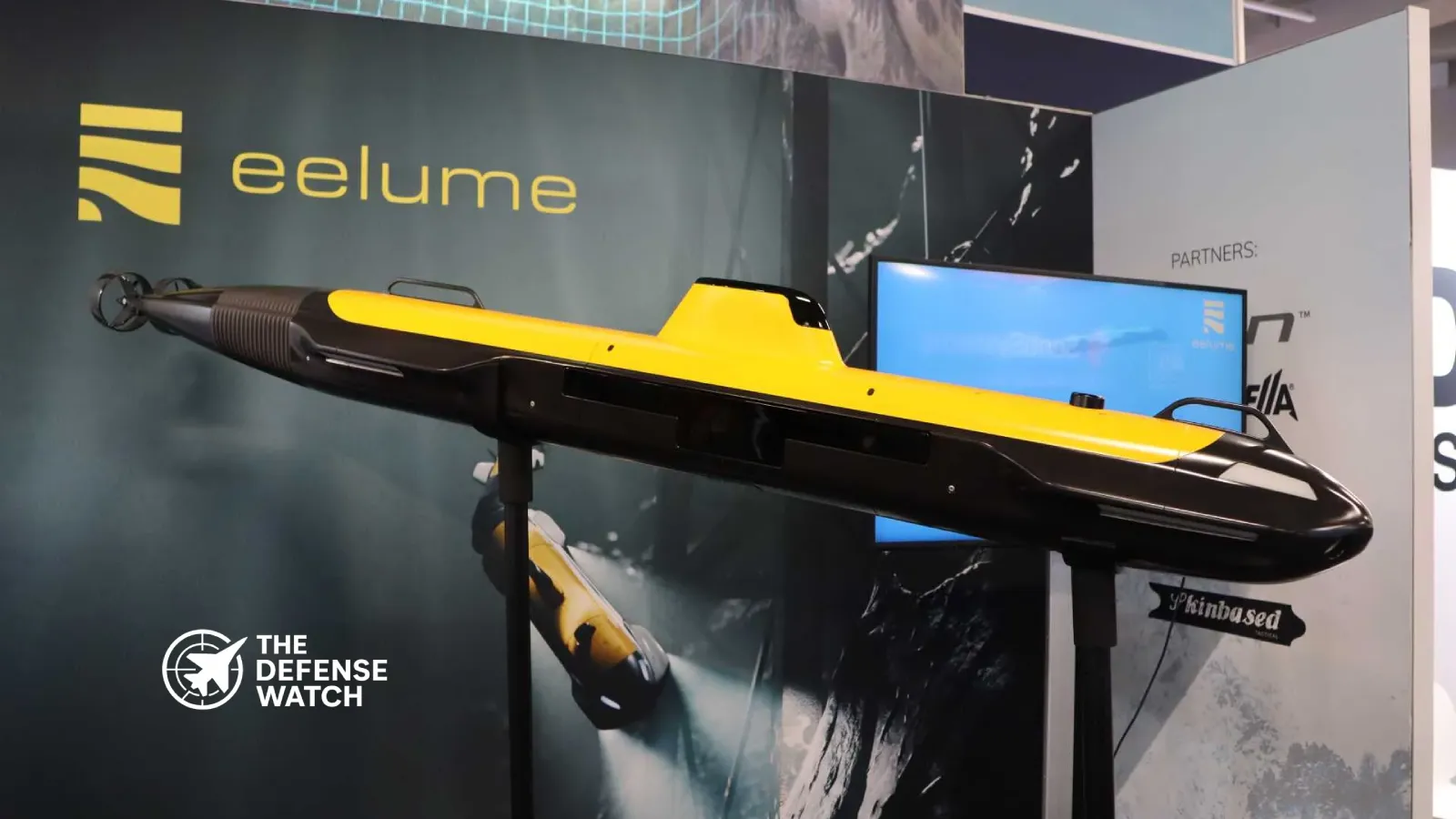
Norway Eelume S autonomous underwater drone
SHARE
■ KEY FACTS AT A GLANCE
  • ► Norway Eelume S autonomous underwater drone designed to conduct mine countermeasures without dedicated mine hunting vessels.
  • ► Fully autonomous system operates subsea for extended periods with minimal human oversight.
  • ► Supports Norway’s broader naval modernization and shift toward unmanned maritime operations.
  • ► Reflects wider NATO trend toward autonomous mine countermeasures capabilities.
  • ► Signals a potential reduction in risk to crews in high threat littoral environments.

Norway Eelume S Autonomous Underwater Drone Advances Mine Countermeasures

The Norway Eelume S autonomous underwater drone is emerging as a next generation solution to replace traditional mine hunting vessels in naval operations. Developed in Norway and reported by Army Recognition, the system is designed to conduct mine countermeasures missions without placing crewed ships in contested waters.

Contents
  • Norway Eelume S Autonomous Underwater Drone Advances Mine Countermeasures
    • From Crewed Mine Hunters To Persistent Subsea Robots
    • Technical Concept And Operational Role
    • Strategic Context: Mines Remain A Persistent Threat
    • Implications For NATO And Allied Navies
    • Industrial And Technological Significance
    • Analysis: A Structural Shift In Mine Warfare

Unlike legacy mine hunting vessels that must enter potentially mined areas, the Eelume S operates fully autonomously below the surface. This shift reflects a broader naval trend toward unmanned and robotic systems capable of persistent, low risk operations.

From Crewed Mine Hunters To Persistent Subsea Robots

Traditional mine countermeasures operations rely on specialized surface vessels equipped with sonar and remotely operated vehicles. These ships are slow, manpower intensive, and vulnerable in high threat environments.

The Norway Eelume S autonomous underwater drone changes that model. Instead of deploying from a mine hunter each time a mission is required, the drone can remain subsea for extended durations. It is designed to dock underwater, recharge, and redeploy without constant surface support.

- Advertisement -

This approach reduces exposure of sailors and high value ships. In contested littoral zones, where naval mines remain one of the most cost effective denial weapons, removing crews from direct risk is a significant operational advantage.

The Eelume S is positioned as a direct alternative to traditional mine hunting vessels, not simply a supplementary unmanned tool. That distinction matters. It signals a structural change in fleet composition.

Technical Concept And Operational Role

The Eelume platform, originally developed for subsea inspection in the offshore energy sector, features a snake like, articulated design. This allows maneuverability in complex underwater environments.

The Norway Eelume S autonomous underwater drone adapts that architecture for defense missions. Equipped with sensors for detection and classification, it can search for, identify, and support neutralization of naval mines.

Autonomy is central to the concept. Rather than relying on continuous remote piloting, the system is designed to execute missions with minimal real time intervention. Operators can supervise from a secure location, reducing the need for forward deployed command platforms.

This aligns with broader defense investments in autonomous systems across NATO. The U.S. Navy, for example, is expanding its own unmanned surface and underwater vehicle programs under its Distributed Maritime Operations concept. European navies are also moving toward modular, unmanned mine countermeasures packages.

Strategic Context: Mines Remain A Persistent Threat

Naval mines continue to pose a serious operational challenge. From the Persian Gulf to the Baltic Sea, mines have demonstrated their ability to disrupt shipping and naval movements at low cost.

The Norwegian approach reflects lessons learned from decades of mine warfare. Dedicated mine hunting vessels are expensive to build and maintain. They require specialized crews and operate at slow speeds. In high end conflict, they may themselves become targets.

- Advertisement -

By contrast, the Norway Eelume S autonomous underwater drone offers persistence and lower visibility. It can operate quietly beneath the surface, conduct surveillance, and return to docking stations without exposing large surface assets.

For Norway, a country with an extensive coastline and strategic interest in the High North, autonomous mine countermeasures capability supports maritime domain awareness and protection of critical sea lines of communication.

Implications For NATO And Allied Navies

The introduction of the Norway Eelume S autonomous underwater drone reflects a wider transformation in naval strategy. NATO allies increasingly view unmanned systems as force multipliers rather than niche assets.

Mine countermeasures is often among the first mission sets to transition toward autonomy. The task is dangerous, repetitive, and sensor driven, making it suitable for robotic platforms.

If proven effective at scale, systems like Eelume S could reduce the requirement for large fleets of dedicated mine hunting vessels. Instead, navies may rely on modular unmanned systems deployed from multipurpose ships or fixed subsea infrastructure.

That shift would reshape procurement priorities. Funding could move from single mission hulls to flexible, software driven autonomous fleets.

Industrial And Technological Significance

The development of the Norway Eelume S autonomous underwater drone also underscores the growing overlap between commercial offshore robotics and defense applications.

Norway’s offshore energy industry has long invested in subsea inspection and intervention technologies. Leveraging that industrial base for defense provides cost and innovation advantages.

This dual use foundation may accelerate capability maturation. Commercial sectors often move faster in robotics and autonomy, allowing defense customers to adopt proven technologies rather than starting from scratch.

At the same time, military adaptation requires hardened communications, secure autonomy frameworks, and integration with command networks. Those factors will determine how rapidly such systems move from pilot deployments to full operational status.

Analysis: A Structural Shift In Mine Warfare

The most important takeaway is not the platform itself, but the doctrinal signal. Positioning the Norway Eelume S autonomous underwater drone as a replacement for traditional mine hunting vessels suggests confidence in autonomy as a primary capability.

That is a marked departure from past decades, when unmanned systems were seen as support tools.

If this model proves operationally reliable, it could reduce risk to personnel, lower lifecycle costs, and increase mission availability. Persistent subsea drones can remain on station for longer periods than crewed ships, enabling faster response to emerging threats.

However, integration challenges remain. Command and control resilience, cybersecurity, and rules of engagement for autonomous systems must be addressed carefully. Trust in autonomy will be built through testing, exercises, and real world deployments.

For now, Norway’s move places it among the more forward leaning navies in the unmanned mine countermeasures domain.


TAGGED:Autonomous Underwater VehicleDefense TechnologyMine CountermeasuresNaval InnovationNorwegian Navy
Share This Article
Facebook Copy Link Print
ByDaniel Mercer / Defense & Aerospace Analyst
Follow:
Daniel Mercer is a defense and aerospace analyst at TheDefenseWatch.com covering military aviation, aerospace technology, unmanned systems, air warfare, and defense procurement. His reporting uses official documents, government and military statements, company announcements, and other public sources.
Leave a Comment

Leave a Reply Cancel reply

Your email address will not be published. Required fields are marked *

Latest Defense Systems

  • John F. Kennedy Aircraft Carrier John F. Kennedy Aircraft Carrier
  • Voyager Tanker Voyager Tanker
  • YU-20 Tanker YU-20 Tanker
  • China KJ-500 Aircraft China KJ-500 Aircraft
  • SPY-6 Radar SPY-6 Radar
  • Boeing VC-25B Presidential Aircraft Boeing VC-25B Presidential Aircraft
  • SM-3 Block IB Missile SM-3 Block IB Missile
  • USS Abraham Lincoln Aircraft Carrier USS Abraham Lincoln Aircraft Carrier
  • M142 HIMARS M142 HIMARS

Recent Compares

  • Tejas vs Gripen: Key Differences and Capabilities Tejas vs Gripen: Key Differences and Capabilities View Comparison →
  • Tejas vs MiG-21 Bison: How India Replaced Its Iconic Supersonic Fighter Tejas vs MiG-21 Bison: How India Replaced Its Iconic Supersonic Fighter View Comparison →
  • F-35 vs F-16: Stealth, Sensors and Combat Roles F-35 vs F-16: Stealth, Sensors and Combat Roles View Comparison →
  • Tejas Fighter Jet vs F-16 Fighting Falcon: Capability Compared Tejas Fighter Jet vs F-16 Fighting Falcon: Capability Compared View Comparison →
  • Rafale Fighter Jet vs F-16 Fighting Falcon : Which Fighter Has the Edge? Rafale Fighter Jet vs F-16 Fighting Falcon : Which Fighter Has the Edge? View Comparison →
  • Su-57 Fighter Jet vs J-20 Fighter Jet: Stealth and Air Combat Compared Su-57 Fighter Jet vs J-20 Fighter Jet: Stealth and Air Combat Compared View Comparison →
  • Mirage 2000 vs Tejas Mk1A: Legacy Combat Power vs Indigenous Modernization Mirage 2000 vs Tejas Mk1A: Legacy Combat Power vs Indigenous Modernization View Comparison →
  • Rafale Fighter Jet vs F-22 Raptor: Which Air Dominance Fighter Has the Edge? Rafale Fighter Jet vs F-22 Raptor: Which Air Dominance Fighter Has the Edge? View Comparison →
  • Tejas Fighter Jet vs. Rafale Fighter Jet: India’s Indigenous Fighter Meets France’s Proven Multirole Combat Aircraft Tejas Fighter Jet vs. Rafale Fighter Jet: India’s Indigenous Fighter Meets France’s Proven Multirole Combat Aircraft View Comparison →
  • F-22 Raptor vs. F-35 Joint Strike Fighter: Which Fifth Generation Fighter Has the Edge? F-22 Raptor vs. F-35 Joint Strike Fighter: Which Fifth Generation Fighter Has the Edge? View Comparison →

Recent Posts

  • US Rejects Automatic Body Camera Activation for ICE Officers
  • Iron Dome Architect Develops New Counter-Swarm Drone Defense System
  • U.S. Navy Conducts First F-35C Landing on USS John F. Kennedy
  • Huntington Ingalls Wins $56.2 Million Contract for Foreign Nuclear Submarine Support
  • US Forces Disable Cargo Ship Attempting to Evade Iran Blockade

You Might Also Like

HMS Glasgow sea trials
Naval & MaritimeNaval Strategy & Maritime Security

UK’s First Type 26 Frigate HMS Glasgow Nears Sea Trials After Major Build Progress

September 7, 2026
Royal Navy submarine maintenance plan
Naval & Maritime

Royal Navy Unveils Submarine Maintenance Recovery Plan to Boost Availability

January 25, 2026
Bangladesh Eurofighter deal
Naval & MaritimeNaval Strategy & Maritime Security

NATO Expands Maritime Vigilance In Mediterranean And Black Sea After Neptune Strike 2026

May 11, 2026
France FDI frigate missile launch system
Naval & MaritimeNaval Strategy & Maritime Security

France Develops New Missile Launch System for FDI Frigates

December 13, 2025

Logo

Copyright © 2026 TheDefenseWatch.com

Helpful Links

  • Home
  • About Us
  • Privacy Policy
  • Terms of Use / Disclaimer
  • U.S. Privacy Notice – CCPA Compliance

Defense Systems

  • Defense Systems
  • Comparisons 
  • Manufacturer
  • Tactical Calculators

Popuplar

Which 5 Air Forces Possess the Costliest Fighter Jet Fleets in the World
Evolving Strategic Value: Carrier Strike Groups in the Indo-Pacific’s Future Security Architecture
Autonomous Weapon Systems Spark U.S. Ethics Debate Amid Rapid Military AI Integration

We report on developments involving military forces, governments, defense companies, research organizations, and security institutions around the world. 

Welcome Back!

Sign in to your account

Username or Email Address
Password

Lost your password?