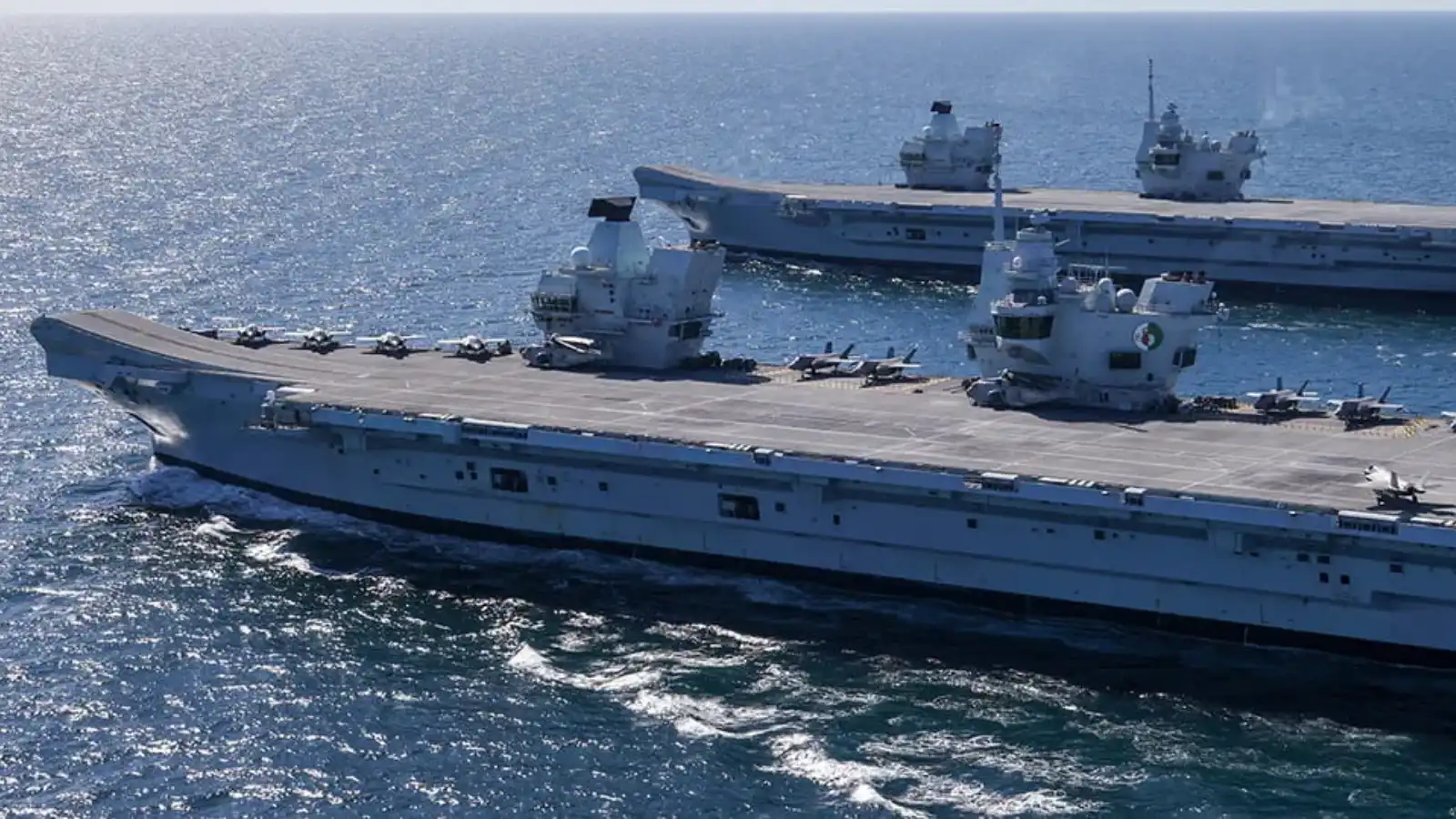
Executive Summary: A British aircraft carrier has arrived in Norway as part of NATO maritime operations in the North Atlantic region. The deployment supports joint training and strengthens allied naval coordination in northern waters. It reflects growing emphasis on Arctic and high north security planning.
British Aircraft Carrier Arrives In Norway Strengthening NATO Maritime Posture
British aircraft carrier Norway deployment highlights continued NATO efforts to reinforce maritime readiness in the North Atlantic and Arctic approaches. The arrival of the carrier strike group underscores coordinated allied operations focused on training, deterrence, and interoperability in northern waters.
The deployment involves a Royal Navy carrier strike group operating alongside Norwegian forces and NATO allies. The activity reflects an increasing pattern of allied naval presence in strategically sensitive regions, where sea lines of communication and Arctic access routes remain central to defense planning.
Strategic Context of the Deployment
British aircraft carrier Norway deployment comes at a time when NATO members are expanding their operational focus toward northern Europe and the Arctic region. Cold weather training environments and complex maritime geography make Norway a key partner for allied naval exercises.
The Royal Navy carrier strike group typically integrates a carrier, destroyers, frigates, and support vessels, along with embarked air wings. This structure allows for flexible response options across air defense, maritime patrol, and strike missions during joint operations.
Norwegian waters provide access to deep-water training areas and Arctic operating conditions that are difficult to replicate elsewhere in Europe. These conditions are critical for testing readiness in environments where weather, ice, and limited infrastructure can affect operations.
Role of Carrier Strike Group Operations
NATO carrier strike group operations are designed to enhance interoperability among allied navies and air forces. The presence of a carrier allows for sustained air operations far from home bases, supporting both defensive and training missions.
In the Norwegian theater, these operations typically focus on:
Joint air patrol coordination
Anti submarine warfare training
Maritime domain awareness drills
Integrated air defense exercises
Logistics and replenishment operations
The British carrier deployment also enables embarked aircraft to operate in coordination with Norwegian F35 fleets and other NATO air assets, improving shared tactics and communication systems across allied platforms.
Northern Flank Security and NATO Priorities
The North Atlantic and Arctic regions are increasingly central to NATO planning. British aircraft carrier Norway deployment fits into broader efforts to maintain presence and readiness in areas where maritime routes are strategically important.
Key concerns in the region include:
Protection of sea lanes connecting the Atlantic and Arctic
Monitoring of submarine activity in northern waters
Rapid reinforcement capability for northern Europe
Coordination between Nordic NATO members
Norway plays a central role due to its geography and extensive coastline facing the North Atlantic. Its infrastructure supports allied naval operations and provides staging points for training exercises involving carrier strike groups.
Royal Navy Carrier Capability in Focus
The Royal Navy carrier strike group is built around modern carrier aviation and integrated command systems. These capabilities allow it to operate as a mobile airbase, supporting a range of missions without reliance on fixed infrastructure.
Core elements include:
F35B short takeoff and vertical landing aircraft
Maritime helicopters for anti submarine operations
Surface escorts for protection and area control
Replenishment vessels for sustained deployment
This configuration allows the carrier to operate across multiple domains, including air defense, surface warfare, and intelligence gathering, making it a central asset in NATO naval exercises.
NATO Interoperability and Training Value
One of the main objectives of British aircraft carrier Norway deployment is improving interoperability between allied forces. Training in Norwegian waters allows multiple NATO members to operate in a shared environment under realistic conditions.
Exercises in the region often include coordinated strike planning, airspace deconfliction, and joint maritime surveillance. These activities help align procedures across different platforms and national doctrines.
The presence of a carrier strike group also provides a command and control hub, enabling large scale coordination across air and sea assets during multinational exercises.
Regional and Geopolitical Implications
While the deployment is framed as routine training, it also reflects broader geopolitical shifts in Europe’s security environment. NATO has increased its focus on northern defense planning, especially following expanded cooperation among Nordic countries.
British aircraft carrier Norway deployment signals continued emphasis on forward presence and allied visibility in strategic maritime corridors. It also reinforces deterrence through regular rotation of high value naval assets in the region.
Expert Analysis and Defense Perspective
From a defense planning standpoint, carrier deployments to Norway provide measurable advantages in readiness testing. Cold weather operations, long range coordination, and multi domain integration are all stress tested in the North Atlantic environment.
Such deployments also highlight the evolving role of carriers. Rather than purely power projection platforms, modern carrier strike groups increasingly function as integrated command nodes within NATO force structures.
The operational experience gained in Norway contributes to refining tactics for distributed maritime operations, where smaller units operate across wide geographic areas while remaining networked through shared command systems.
Conclusion
British aircraft carrier Norway deployment reinforces NATO’s focus on maritime readiness and northern security coordination. The operation demonstrates continued allied investment in joint training, interoperability, and sustained presence in strategically important waters.
As NATO adapts to evolving security challenges in the North Atlantic, carrier strike group operations are likely to remain a key component of multinational exercises and deterrence planning.