Executive Summary:
The Patriot missile defense system remains one of the most battle-tested air and missile defense networks ever fielded. Designed to defeat aircraft, cruise missiles, and ballistic missile threats, it has evolved from a Cold War air defense weapon into a strategic shield protecting critical infrastructure and military forces across multiple continents.
Its combination of advanced radar technology, networked command systems, and highly capable interceptors has made Patriot a cornerstone of U.S. and allied missile defense architecture.
The Patriot missile defense system is one of the few military platforms whose name is recognized far beyond defense circles. From the skies over the Middle East to NATO’s eastern flank, Patriot batteries have become symbols of strategic protection against increasingly sophisticated missile threats.
What began as an anti-aircraft weapon during the Cold War has transformed into a layered defense system capable of intercepting ballistic missiles traveling at several times the speed of sound. Today, Patriot protects military bases, population centers, and critical infrastructure in more than a dozen countries.
For military planners, Patriot is not simply a missile launcher. It is an integrated battle management network designed to find, track, identify, and destroy incoming threats within seconds.
Technical Analysis: Inside The Patriot Missile Defense System
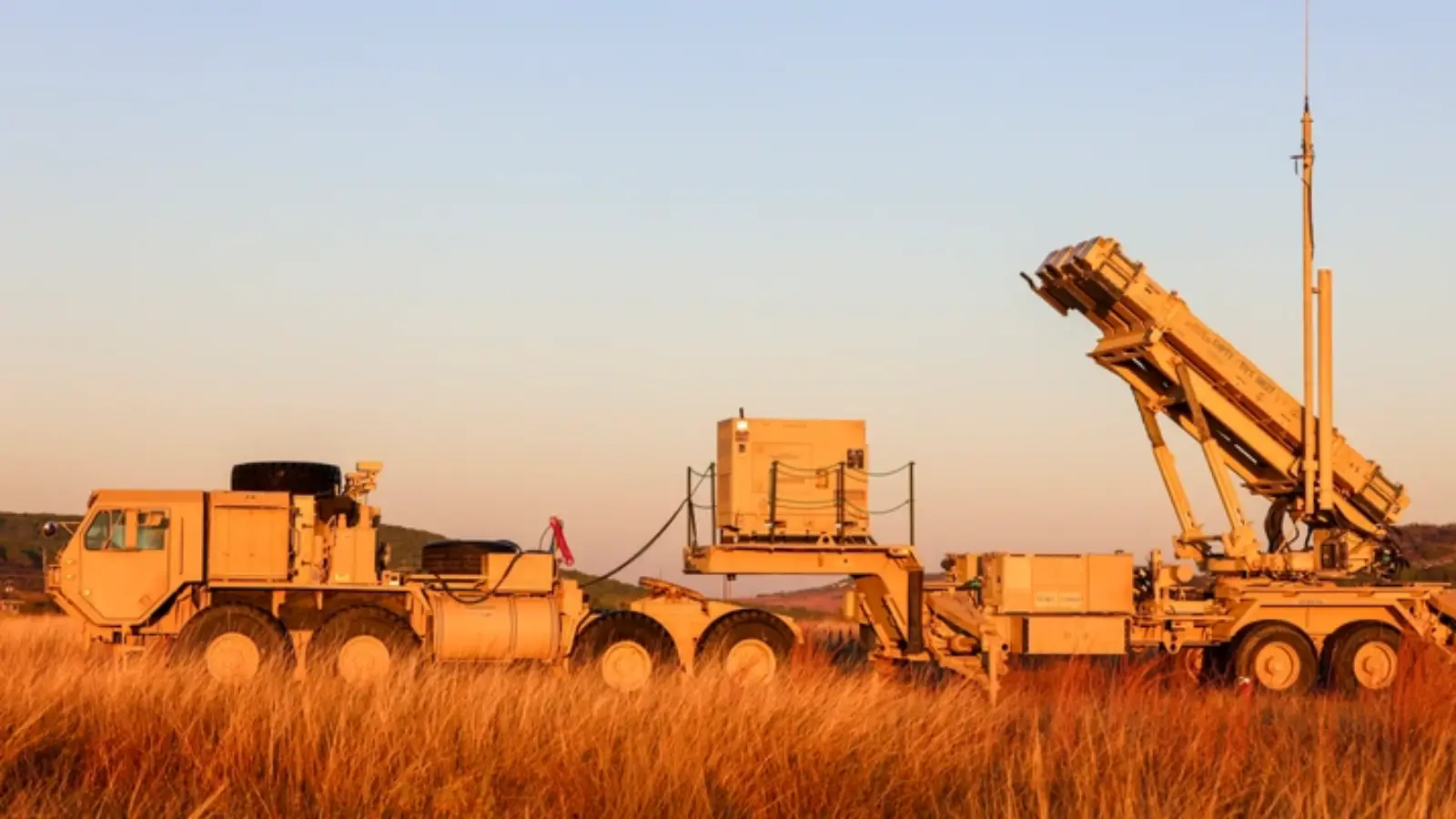
At its core, the Patriot missile defense system consists of four primary elements:
- Radar
- Engagement control station
- Launch stations
- Interceptor missiles
The radar continuously scans the airspace, detecting threats hundreds of kilometers away. Once a target is identified, the engagement control station calculates an interception solution and launches the appropriate missile.
The latest Patriot variants primarily use the PAC-3 and PAC-3 MSE interceptors. Unlike older missiles that relied heavily on proximity detonation, PAC-3 employs a hit-to-kill approach, destroying targets through direct kinetic impact.
This method dramatically increases effectiveness against ballistic missiles and reduces the likelihood of debris continuing toward the defended area.
How Patriot Engages A Threat
A typical engagement unfolds rapidly:
- Radar detects an incoming target.
- Command systems classify the threat.
- Operators authorize engagement.
- Interceptor launches vertically.
- Missile receives guidance updates.
- Terminal seeker acquires target.
- Direct collision destroys the threat.
The entire sequence can occur in less than a minute against high-speed missile attacks.
Who Makes Patriot Missiles?
For those searching who makes Patriot missiles, the answer involves several major defense contractors.
The Patriot system itself is produced primarily by Raytheon Technologies, which develops the radar, command-and-control architecture, launchers, and system integration components.
The PAC-3 interceptor is manufactured by Lockheed Martin, which produces the advanced hit-to-kill missile used by many Patriot operators.
Together, the two companies form one of the most important industrial partnerships in global missile defense.
Patriot Missile System Data Block
| Metric | Patriot PAC-2 | Patriot PAC-3 MSE |
|---|---|---|
| Primary Mission | Aircraft & Missile Defense | Advanced Missile Defense |
| Intercept Method | Proximity Fragmentation | Hit-to-Kill |
| Guidance | Track-via-Missile | Active Radar Seeker |
| Ballistic Missile Capability | Moderate | High |
| Deployment Type | Mobile Battery | Mobile Battery |
| Approximate Interceptor Cost | $2M to $4M | $4M to $6M+ |
| Key Manufacturer | Raytheon | Lockheed Martin |
| Main Threats | Aircraft, Cruise Missiles | Ballistic Missiles, Cruise Missiles, Aircraft |
Why Patriot Missiles Are So Expensive
A modern Patriot interceptor is effectively a high-speed autonomous spacecraft compressed into a missile body.
Each round contains advanced guidance electronics, precision seekers, secure communications, propulsion systems, and sophisticated flight-control software. The missile must identify and destroy targets moving at thousands of miles per hour while operating under intense electronic warfare conditions.
The cost reflects that challenge. Missing a ballistic missile carrying a conventional or potentially strategic payload can result in damage worth billions of dollars and significant loss of life.
The Insight: What Patriot Teaches About Modern Strategy
One reason the Patriot missile system remains relevant is that it reflects a fundamental principle seen across military history and even competitive gaming.
Victory is not always achieved by destroying the opponent’s forces. Sometimes success comes from denying the opponent’s ability to execute their strategy.
In modern warfare, ballistic and cruise missiles are often intended to disrupt command centers, logistics hubs, airfields, and infrastructure. Patriot’s mission is to prevent those attacks from shaping the battlefield.
This concept resembles high-level real-time strategy games. Elite players often focus on defending key economic assets while limiting an opponent’s offensive options. The goal is not maximum destruction. It is maintaining operational freedom while forcing the opponent into increasingly costly decisions.
Patriot applies the same logic at a national scale.
A successful interception can preserve an airbase, protect a power grid, or maintain a supply corridor. The strategic value of that outcome often far exceeds the cost of the interceptor itself.
“The true value of missile defense is not the missile it destroys. It is the military and economic capability that remains operational after the attack.”
Combat Record And Global Expansion
The Patriot system first gained worldwide attention during the 1991 Gulf War. While assessments of early performance remain debated, the conflict accelerated investment in missile defense technologies.
Subsequent upgrades dramatically improved effectiveness against ballistic missile threats.
Today, Patriot systems serve with the United States and numerous allies, including:
- Germany
- Japan
- South Korea
- Poland
- Romania
- Saudi Arabia
- Ukraine
Growing missile arsenals in Europe, the Middle East, and the Indo-Pacific continue to drive demand for advanced air and missile defense systems.
Conclusion & Takeaway
The Patriot missile defense system remains one of the most important defensive weapons ever fielded by the United States and its allies. Its ability to detect, track, and destroy aircraft, cruise missiles, and ballistic missiles has made it a cornerstone of modern integrated air defense.
As missile threats become faster, stealthier, and more numerous, the value of Patriot continues to grow. The system’s enduring success lies not only in its interceptors or radar technology, but in its ability to preserve combat power, protect critical infrastructure, and deny adversaries the strategic effects they seek.
In an era defined by precision strikes and long-range missile warfare, Patriot remains one of the clearest examples of how defense can shape the outcome of conflict before the first shot ever reaches its target.