(adsbygoogle = window.adsbygoogle || []).push({});Executive Summary:
French aerospace and defense company Safran will invest €120 million ($138 million) to expand production of hemispherical resonator gyroscopes at its Montluçon facility in central France. The project will triple annual output by 2032 and support growing demand for high precision navigation systems used in military and aerospace platforms. The investment reflects increasing emphasis on resilient navigation technologies that can operate without reliance on GPS signals.
Safran Precision Navigation Sensors Receive Major Production Boost
French aerospace and defense manufacturer Safran is investing €120 million ($138.2 million) to significantly expand production of advanced precision navigation sensors at its Montluçon facility in central France, according to company executives. The investment will allow the company to triple production of hemispherical resonator gyroscopes (HRGs) by 2032, strengthening France’s industrial base for critical navigation technologies.
The expansion is part of a broader €1.4 billion industrial investment plan approved by Safran in 2025 to increase manufacturing capacity across its global operations. Company CEO Olivier Andriès disclosed the latest investment plans in an interview with French newspaper La Tribune.
What Are Hemispherical Resonator Gyroscopes?
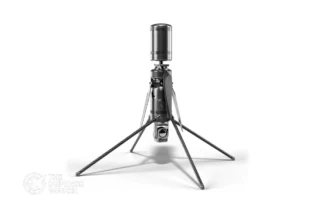
Hemispherical resonator gyroscopes are among the most precise inertial navigation sensors currently available. Unlike satellite based navigation systems, HRGs allow aircraft, missiles, ships, submarines, and ground vehicles to determine their position and orientation without depending on external signals such as GPS.
This capability has become increasingly important for military forces operating in contested environments where GPS signals may be jammed, spoofed, degraded, or unavailable. Modern militaries are investing heavily in alternative navigation technologies to ensure operational effectiveness during high intensity conflicts.
The technology is widely used across aerospace, maritime, and land defense applications, making it a strategic component of next generation military systems. Safran’s Montluçon facility has long specialized in inertial navigation systems and advanced gyroscopic technologies supporting air, land, and sea platforms.
(adsbygoogle = window.adsbygoogle || []).push({});Production To Triple By 2032
Under the new investment plan, annual production of HRGs at the Montluçon site will increase from approximately 10,000 units to 30,000 units by 2032. The expansion is also expected to create more than 150 new jobs.
The scale of the increase highlights growing demand for resilient navigation technologies across both commercial aerospace and defense sectors.
As military planners increasingly prepare for operations in electronically contested environments, precision inertial navigation systems are becoming a critical element of modern defense architectures. Missiles, precision guided munitions, combat aircraft, naval vessels, and autonomous systems all require reliable navigation capabilities even when satellite connectivity is disrupted.
Strategic Importance For Defense Modernization
The significance of Safran’s investment extends beyond industrial growth. It reflects a broader shift within Western defense industries toward strengthening sovereign production of critical technologies.
Recent conflicts have underscored the vulnerability of satellite dependent systems to electronic warfare. As a result, defense ministries across Europe, North America, and Asia are investing in technologies that can maintain accuracy and mission effectiveness without relying solely on space based positioning networks.
HRGs play a key role in that effort. By providing highly accurate inertial guidance, they enable military platforms to continue navigating and targeting even in GPS denied environments. This capability is particularly valuable for long range missiles, precision strike weapons, naval operations, and advanced aircraft missions.
Safran’s expanded production capacity could therefore support not only French military requirements but also growing demand from allied nations and international defense programs.
Part Of A Broader Industrial Expansion
The navigation sensor investment follows another major manufacturing announcement by Safran. In May, the company revealed plans to invest €150 million in a high tonnage hydraulic press intended to increase output of critical aircraft engine components.
Together, these investments demonstrate how major aerospace and defense manufacturers are scaling production to meet rising demand across military aviation, propulsion systems, precision weapons, and advanced electronics.
For France, the expansion reinforces national efforts to strengthen strategic autonomy in critical defense technologies while supporting domestic industrial capacity and skilled manufacturing employment.
(adsbygoogle = window.adsbygoogle || []).push({});Why This Matters
While missiles, drones, and combat aircraft often receive the most public attention, navigation systems remain one of the foundational technologies enabling modern military operations.
Safran’s decision to triple production of precision navigation sensors highlights an increasingly important reality: future military effectiveness may depend as much on resilient guidance technologies as on the platforms they support.
As electronic warfare capabilities continue to evolve, demand for GPS independent navigation solutions is expected to grow across global defense markets, making advanced inertial sensors a strategically important capability for both industry and military planners.