• Home
  • About
  • Defense Systems
  • Manufacturer
  • Comparisons
  • Compare 
  • Tools
TheDefenseWatch.com
  • Aerospace & Aviation
  • Military & Ordnance
  • Naval & Maritime
  • Cyber & Space Defense
  • Policy & Strategy
  • Global News
  • Tools Library
    • Smart Calculator
    • Drone Flight Time Calculator
    • Drone Range Calculator
    • Counter-Drone Jammer Effective Range Calculator
    • Counter-Battery Radar Detection Calculator
    • Artillery Fire Correction Calculator
    • Thermal Camera Detection Range Calculator
    • Missile Range & Time-of-Flight Calculator
    • Radar Detection Range Calculator
    • FPV Strike Drone Payload vs Range Calculator
    • Loitering Munition Endurance Calculator
    • Sniper Ballistic Drop & Windage Calculator
    • Bullet Drop Calculator
    • U.S. Army Combat Fitness Test (ACFT) Calculator
    • Military Pension Calculator
    • Military Retirement Calculator
    • Military Pension Calculator
    • Large Number Calculator
Font ResizerAa

TheDefenseWatch.com

The Defense Watch | U.S. & Global Defense News, Analysis & Military Updates

Search
  • Home
  • About
  • Defense Systems
  • Manufacturer
  • Comparisons
  • Compare 
  • Tools

Stay Updated

Get the latest update

Subscribe

Explore

  • Drone
  • Fighter Jets & Military Aircraft
  • Hypersonic Weapons
  • Aircraft Carriers
  • Strategic History & Missions
  • Tools Library
Home » Rocket Lab Wins $266 Million U.S. Space Force Contract for 12 Suborbital Launch Missions
Defense Contracts

Rocket Lab Wins $266 Million U.S. Space Force Contract for 12 Suborbital Launch Missions

Samuel Drake | Defense Analyst
Last updated: September 8, 2026 7:50 am
Samuel Drake | Defense Analyst
Share
2 Min Read
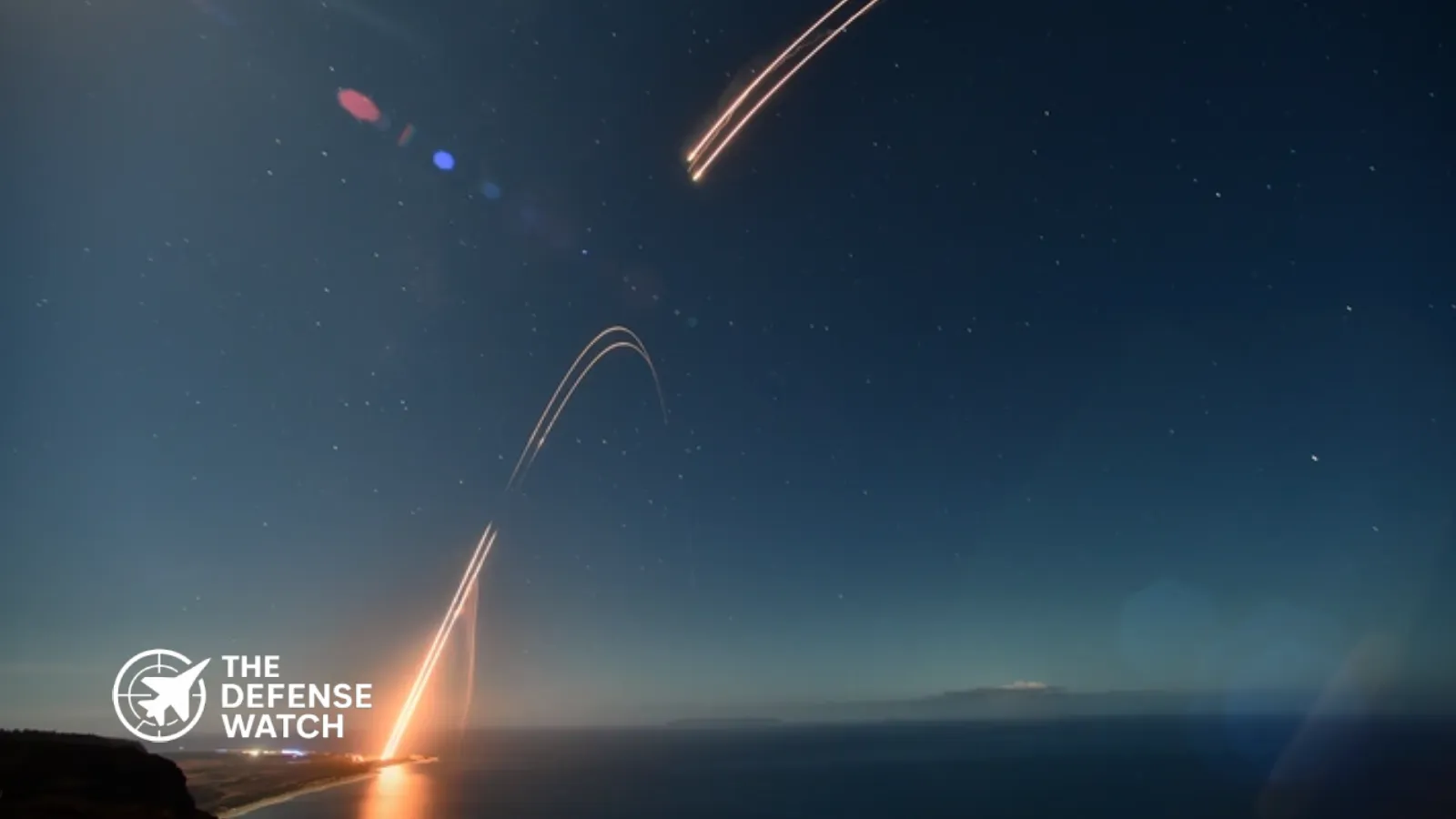
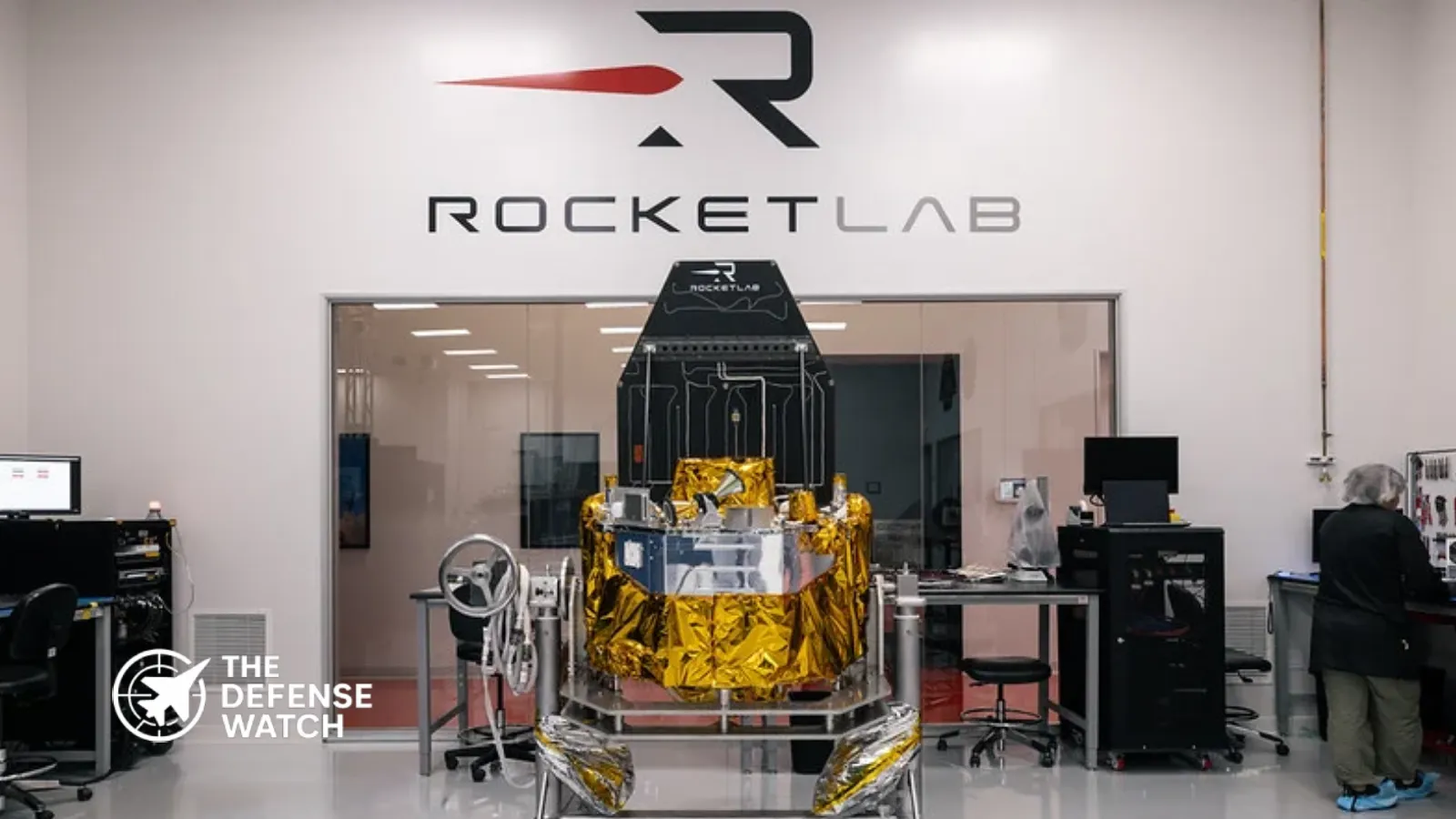
Rocket Lab suborbital launch contract
Image: Rocket Lab
SHARE

The agreement will provide rapid launch capability for U.S. military flight testing, hypersonic research, and advanced defense technology demonstrations through 2028.

Contents
Deep Technical & Strategic Context AnalysisContract OverviewMission ScopeLaunch LocationFundingCompetitionContract AdministrationGeographic Work BreakdownStrategic Significance
¦ Key Takeaways
  • Rocket Lab received a $266 million firm fixed price U.S. Space Force contract for 12 suborbital launches, with options for six additional missions.
  • Launch operations will be conducted from the Pacific Spaceport Complex in Alaska through December 2028.
  • The contract supports U.S. military research, development, testing, and evaluation activities, including hypersonic technology programs.
  • Space Systems Command awarded the contract after a competitive competition involving three industry proposals.
  • Initial fiscal 2025 RDT&E funding totals $112 million, demonstrating the Space Force’s continued investment in responsive launch capabilities.

The U.S. Space Force has awarded Rocket Lab USA Inc. a $266 million firm fixed price completion contract to provide suborbital launch services supporting military research, development, testing, and evaluation programs. The award was issued by Space Systems Command (SSC) at Kirtland Air Force Base, New Mexico, which manages many of the Department of Defense’s space acquisition and launch activities.

Under the agreement, Rocket Lab will deliver 12 suborbital launch vehicles, while the government retains options for six additional launches. All missions will be conducted from the Pacific Spaceport Complex in Kodiak, Alaska, with contract performance scheduled to conclude by December 31, 2028.

The contract was awarded following a competitive procurement that attracted three industry bids. At the time of award, the Space Force obligated $112 million in Fiscal Year 2025 Research, Development, Test and Evaluation (RDT&E) funding, reflecting the immediate start of launch campaign preparations.

- Advertisement -

Deep Technical & Strategic Context Analysis

The award strengthens Rocket Lab’s growing position within the U.S. national security launch market, particularly in the rapidly expanding niche for responsive suborbital testing. Unlike orbital launches that place satellites into space, suborbital missions provide a cost effective method of testing experimental payloads, missile technologies, hypersonic vehicles, sensors, guidance systems, and reentry technologies under realistic flight conditions before operational deployment.

Rocket Lab is expected to support these missions using its Hypersonic Accelerator Suborbital Test Electron (HASTE) vehicle, a modified version of its proven Electron rocket optimized for high speed defense testing. HASTE has emerged as one of the Department of Defense’s preferred commercial platforms because it offers relatively short launch preparation timelines, flexible trajectories, and the ability to carry classified experimental payloads. The vehicle has already supported multiple U.S. defense hypersonic flight campaigns for agencies including the Defense Innovation Unit and the Department of Defense’s Test Resource Management Center.

The contract also reflects a broader Pentagon strategy to expand partnerships with commercial launch providers as demand for hypersonic weapon development accelerates. The United States is simultaneously advancing several long range strike programs, including the Air Force’s Hypersonic Attack Cruise Missile (HACM), the Army’s Long Range Hypersonic Weapon (LRHW), and the Navy’s Conventional Prompt Strike program. Frequent, affordable flight testing has become increasingly important as these systems transition from development into operational capability.

From a procurement perspective, the award uses a firm fixed price completion contract, meaning Rocket Lab assumes much of the cost risk by agreeing to complete the specified launches for a predetermined value. This contract structure incentivizes schedule discipline and cost control while giving the government greater budget certainty compared with cost reimbursable contracts commonly used during early technology development.

Contract Breakdown & Details

Contract Overview

  • Contract Value: $266 million
  • Contract Type: Firm Fixed Price Completion
  • Award Recipient: Rocket Lab USA Inc.
  • Headquarters: Long Beach, California

Mission Scope

  • 12 guaranteed suborbital launches
  • Option for 6 additional launches
  • Supports military research, development, testing, and evaluation
  • Expected completion: December 31, 2028

Launch Location

  • Primary Launch Site: Pacific Spaceport Complex, Kodiak, Alaska

Funding

  • Initial Obligation: $112 million
  • Funding Source: Fiscal Year 2025 Research, Development, Test and Evaluation (RDT&E)

Competition

  • Procurement Method: Competitive acquisition
  • Number of Offers Received: Three

Contract Administration

  • Contracting Activity: Space Systems Command
  • Location: Kirtland Air Force Base, Albuquerque, New Mexico
  • Contract Number: FA8818-26-C-B003

Geographic Work Breakdown

The Department of Defense announcement identifies work at a single primary location:

  • Pacific Spaceport Complex, Alaska: 100%

Strategic Significance

This award demonstrates the Department of Defense’s continued shift toward leveraging commercial launch providers for high tempo testing rather than relying exclusively on government owned infrastructure. As hypersonic weapons, missile defense interceptors, advanced sensors, and autonomous systems become increasingly central to U.S. military modernization, responsive suborbital launch capacity is emerging as a critical enabling capability.

For Rocket Lab, the contract further expands its national security portfolio beyond satellite launch and spacecraft manufacturing, reinforcing its role as a strategic partner supporting U.S. defense innovation and rapid technology fielding.


TAGGED:Defense contractsRocket LabU.S. Space Force
Share This Article
Facebook Copy Link Print
BySamuel Drake | Defense Analyst
Follow:
Samuel Drake is a defense analyst at TheDefenseWatch.com covering naval warfare, military ordnance, maritime technology, fleet modernization, and defense procurement. His reporting focuses on documented capabilities, procurement programs, and military technology.
Leave a Comment

Leave a Reply Cancel reply

Your email address will not be published. Required fields are marked *

Search Defense Systems

Latest Defense Systems

  • TRML-4D Radar TRML-4D Radar
  • F-47A Fighter Jet F-47A Fighter Jet
  • China DF-61 Missile China DF-61 Missile
  • B61 Nuclear Bomb B61 Nuclear Bomb
  • Japan E-767 Airborne Japan E-767 Airborne
  • Remington 870 Shotgun Remington 870 Shotgun
  • RUTA B1 Cruise Missile RUTA B1 Cruise Missile
  • XQ-67A Drone XQ-67A Drone
  • B-25 Mitchell Bomber B-25 Mitchell Bomber

Recent Compares

  • J-10C vs JF-17 Thunder: Which Fighter Is More Capable? J-10C vs JF-17 Thunder: Which Fighter Is More Capable? View Comparison →
  • Tejas vs Gripen: Key Differences and Capabilities Tejas vs Gripen: Key Differences and Capabilities View Comparison →
  • Tejas vs MiG-21 Bison: How India Replaced Its Iconic Supersonic Fighter Tejas vs MiG-21 Bison: How India Replaced Its Iconic Supersonic Fighter View Comparison →
  • F-35 vs F-16: Stealth, Sensors and Combat Roles F-35 vs F-16: Stealth, Sensors and Combat Roles View Comparison →
  • Tejas Fighter Jet vs F-16 Fighting Falcon: Capability Compared Tejas Fighter Jet vs F-16 Fighting Falcon: Capability Compared View Comparison →
  • Rafale Fighter Jet vs F-16 Fighting Falcon : Which Fighter Has the Edge? Rafale Fighter Jet vs F-16 Fighting Falcon : Which Fighter Has the Edge? View Comparison →
  • Su-57 Fighter Jet vs J-20 Fighter Jet: Stealth and Air Combat Compared Su-57 Fighter Jet vs J-20 Fighter Jet: Stealth and Air Combat Compared View Comparison →
  • Mirage 2000 vs Tejas Mk1A: Legacy Combat Power vs Indigenous Modernization Mirage 2000 vs Tejas Mk1A: Legacy Combat Power vs Indigenous Modernization View Comparison →
  • Rafale Fighter Jet vs F-22 Raptor: Which Air Dominance Fighter Has the Edge? Rafale Fighter Jet vs F-22 Raptor: Which Air Dominance Fighter Has the Edge? View Comparison →
  • Tejas Fighter Jet vs. Rafale Fighter Jet: India’s Indigenous Fighter Meets France’s Proven Multirole Combat Aircraft Tejas Fighter Jet vs. Rafale Fighter Jet: India’s Indigenous Fighter Meets France’s Proven Multirole Combat Aircraft View Comparison →

Recent Posts

  • Raytheon JR3 Rocket: History, Design and Military Role
  • Raytheon Wins DARPA Contract to Develop All-Optical Signal Processing Technology
  • Lockheed Martin Delivers 100,000th GMLRS Rocket as Production Reaches 14,000 a Year
  • L3Harris CEO Sam Mehta Discusses Defense Spending and Missile Production on CNBC
  • L3Harris Demonstrates Multi-Domain Defense Network for Pacific Security

You Might Also Like

L3Harris Falcon tactical radio system deployed during a U.S. Army field communications exercise.
Defense Contracts

L3Harris Secures $495 Million Army Communications Contract Modification as Program Value Reaches $3.8 Billion

September 7, 2026
DLA industrial gas contract
Defense Contracts

Defense Logistics Agency Awards $210.4 Million Industrial Gas And Cylinders Contract To Hudson Technologies

August 6, 2026
Lockheed Martin CPS contract
Defense Contracts

Lockheed Martin Secures $1.36B Deal For Conventional Prompt Strike Hypersonic Weapons Program

September 17, 2026
General Dynamics Mission Systems supporting U.S. Navy Virginia-class submarine testing operations under new $66 million contract
Defense ContractsNaval Strategy & Maritime Security

General Dynamics Secures $66.1M Deal For Virginia-Class Submarine Test Systems

May 8, 2026

Logo

Copyright © 2026 TheDefenseWatch.com

Helpful Links

  • Home
  • About Us
  • Privacy Policy
  • Terms of Use / Disclaimer
  • U.S. Privacy Notice – CCPA Compliance

Defense Systems

  • Defense Systems
  • Comparisons 
  • Manufacturer
  • Tactical Calculators

Popuplar

Which 5 Air Forces Possess the Costliest Fighter Jet Fleets in the World
Evolving Strategic Value: Carrier Strike Groups in the Indo-Pacific’s Future Security Architecture
Autonomous Weapon Systems Spark U.S. Ethics Debate Amid Rapid Military AI Integration

We report on developments involving military forces, governments, defense companies, research organizations, and security institutions around the world. 

Welcome Back!

Sign in to your account

Username or Email Address
Password

Lost your password?