

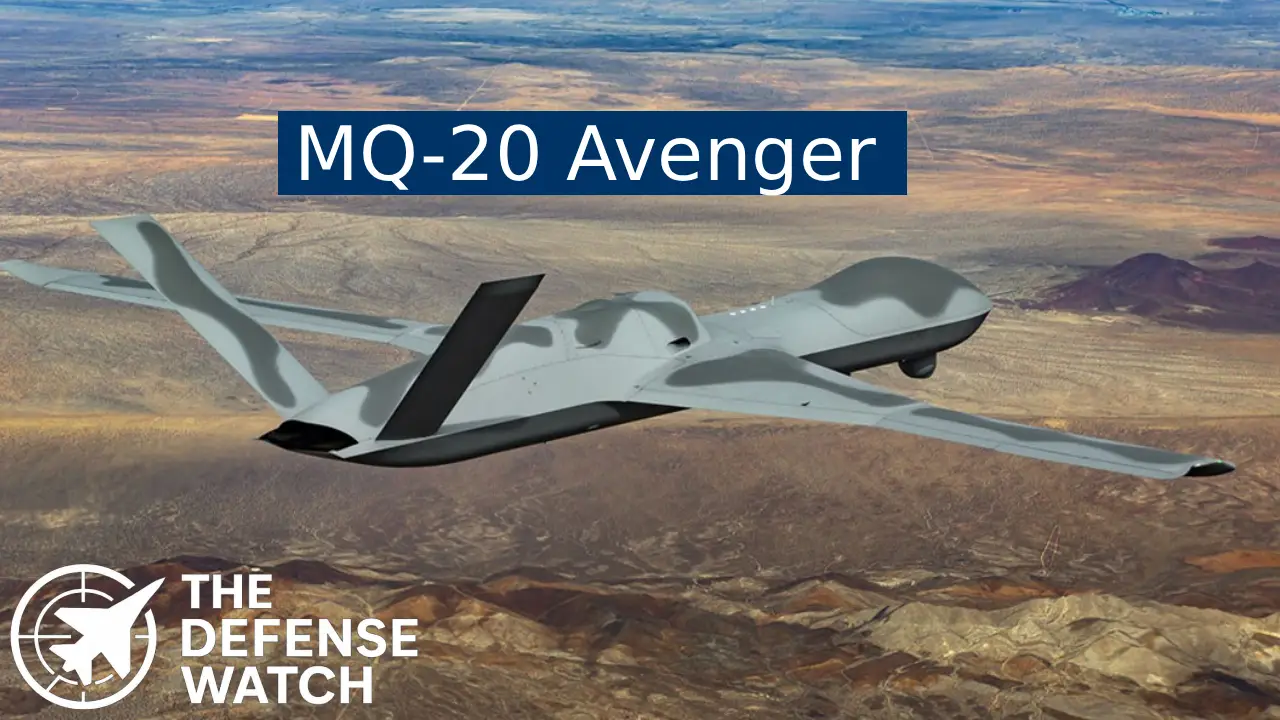
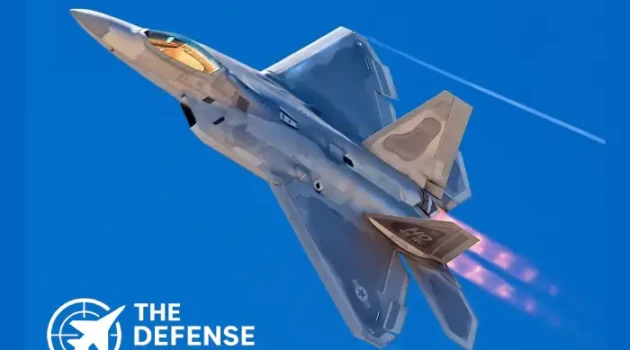
In a landmark demonstration on October 21, 2025, General Atomics Aeronautical Systems (GA-ASI), Lockheed Martin, and L3Harris successfully executed a cre wed-uncrewed teaming flight test in which an F-22 Raptor pilot commanded an MQ-20 Avenger drone integrated on board – a first of its kind. The exercise, carried out at the Nevada Test and Training Range, marks a significant step forward in the U.S. Air Force’s push toward Collaborative Combat Aircraft (CCA) and advanced manned-unmanned operations.
What Happened: The Flight Test Details
- The test involved installing two L3Harris software-defined radios (SDRs): one aboard the F-22, and another aboard the MQ-20.
- These radios used L3Harris’ BANSHEE advanced tactical datalinks and the Pantera SDR system integrated via Lockheed Martin’s open-radio architecture.
- From the cockpit, the F-22 pilot used a Pilot Vehicle Interface (PVI) tablet in conjunction with a new GRACE module (“Government Reference Architecture Compute Environment”) to send commands.
- GA-ASI characterized the communications chain as entirely non-proprietary and fully U.S. government-owned, built on Open Mission Systems principles.
Technical and Strategic Context
The MQ-20 Avenger is a stealthy, jet-powered unmanned combat aerial vehicle (UCAV) developed by GA-ASI. Unlike turboprop drones, it features a low-observable profile, internal weapons bays, and high speed/endurance.
Over the past year, the Avenger has been integrated with autonomy software, most notably Shield AI’s Hivemind, enabling it to conduct complex maneuvers like combat air patrols and simulated air-to-air engagements.
Moreover, this F-22/Avenger test follows previous milestones, such as the U.S. Navy’s live-control flight of the MQ-20 via a carrier-based ground station using Lockheed Martin’s MDCX platform.
Why This Matters: Analysis
Advancing the CCA Vision
This demonstration directly feeds into the U.S. Air Force’s Collaborative Combat Aircraft (CCA) strategy, which envisions manned fighters working alongside autonomous “drone wingmen” to enhance combat effectiveness, resilience, and flexibility.
By showing that a legacy platform like the F-22 can control an autonomous UCAV using open-architecture radios, the test proves that even older high-end assets can be rapidly modernized for future force structures.
All-Domain Connectivity and Interoperability
The use of non-proprietary, government-owned datalinks is particularly significant. It ensures greater resilience against supply-chain vulnerabilities, expands opportunities for allied interoperability, and reduces dependence on single-vendor systems.
Modular Autonomy in Action
Coupled with earlier tests of Shield AI’s Hivemind software, this trial underscores how modular autonomy (open architectures + reference software) can deliver agile, rapidly fieldable capabilities.
This model supports future scaling: additional drones, different fighter jets, or alternative autonomy stacks can be integrated without rearchitecting the entire system.
Implications for Force Multiplication and Cost Efficiency
If F-22s (and eventually other fighters) can reliably control UCAVs, it could dramatically expand the force’s reach. Pilots may direct more assets for strike, surveillance, or suppression missions, potentially reducing the number of manned sorties required and lowering risk to human pilots.
Challenges and Considerations
- Security & Jamming Risks: In contested electromagnetic environments, maintaining reliable datalink performance under jamming or cyberattacks remains a critical concern.
- Pilot Workload: Managing a high-performance fighter and simultaneously controlling a drone raises questions about cognitive load and ergonomic design.
- Certification & Safety: Extensive testing will be required to certify such systems for regular operational use, especially considering safety, autonomy fail-safes, and emergent behavior in contested airspace.
- Scalability: While this was a company-funded R&D demo, scaling to full operational deployment (across squadrons) will involve cost, logistics, training, and sustainment challenges.
Conclusion & Outlook
The F-22–MQ-20 Avenger teaming test represents a major milestone in the U.S. drive toward crewed-uncrewed collaborative warfare. By proving that a stealth fighter can directly command a stealth drone using open, government-owned datalinks, industry and the Air Force are laying the technical and doctrinal foundation for scalable Collaborative Combat Aircraft operations.
Looking ahead, we can expect further demonstrations involving other platforms (e.g., F-35, F-15), more sophisticated autonomy stacks, and perhaps even live-fire exercises. As the CCA vision matures, such teaming concepts could reshape how the U.S. projects airpower — blending human judgment with autonomous persistence, creating more flexible, resilient, and distributed mission architectures.

8 comments
[…] F-22 Raptor remains the world’s most capable air-superiority fighter. Designed for unmatched stealth, […]
[…] Risk-sharing on R&D, especially for advanced systems like autonomous drones. […]
[…] Team Control […]
[…] The initiative seeks to introduce an operational fleet of affordable, expendable, and highly autonomous drones that can support or augment piloted aircraft during combat missions. These systems are designed to […]
[…] used tablets to command several Collaborative Combat Aircraft simultaneously. These autonomous drones, equipped with artificial intelligence, act as “loyal wingmen,” coordinating strikes and […]
[…] for a Stinger successor includes offerings from Lockheed and rival companies, and further tests are expected from both teams as part of that […]
[…] overseas helped us confirm the fire control architecture and navigation under realistic field conditions,” said a Royal Artillery […]
[…] requirements, NASA modified two earlier F-15s with upgraded life support systems borrowed from F-22 Raptor technology. The positive-pressure breathing system, installed in 2022, prevents hypoxia during […]