• Home
  • About
  • Defense Systems
  • Manufacturer
  • Comparisons
  • Compare 
  • Tools
TheDefenseWatch.com
  • Aerospace & Aviation
  • Military & Ordnance
  • Naval & Maritime
  • Cyber & Space Defense
  • Policy & Strategy
  • Global News
  • Tools Library
    • Smart Calculator
    • Drone Flight Time Calculator
    • Drone Range Calculator
    • Counter-Drone Jammer Effective Range Calculator
    • Counter-Battery Radar Detection Calculator
    • Artillery Fire Correction Calculator
    • Thermal Camera Detection Range Calculator
    • Missile Range & Time-of-Flight Calculator
    • Radar Detection Range Calculator
    • FPV Strike Drone Payload vs Range Calculator
    • Loitering Munition Endurance Calculator
    • Sniper Ballistic Drop & Windage Calculator
    • Bullet Drop Calculator
    • U.S. Army Combat Fitness Test (ACFT) Calculator
    • Military Pension Calculator
    • Military Retirement Calculator
    • Military Pension Calculator
    • Large Number Calculator
Font ResizerAa

TheDefenseWatch.com

The Defense Watch | U.S. & Global Defense News, Analysis & Military Updates

Search
  • Home
  • About
  • Defense Systems
  • Manufacturer
  • Comparisons
  • Compare 
  • Tools

Stay Updated

Get the latest update

Subscribe

Explore

  • Drone
  • Fighter Jets & Military Aircraft
  • Hypersonic Weapons
  • Aircraft Carriers
  • Strategic History & Missions
  • Tools Library
Home » US Air Force Moves To Evaluate Alternative Engines For F-15EX And F-16 Fighter Fleets
Aerospace & AviationFighter Jets & Military Aircraft

US Air Force Moves To Evaluate Alternative Engines For F-15EX And F-16 Fighter Fleets

Daniel Mercer / Defense & Aerospace Analyst
Last updated: August 4, 2026 3:35 am
Daniel Mercer / Defense & Aerospace Analyst
Share
2 Min Read
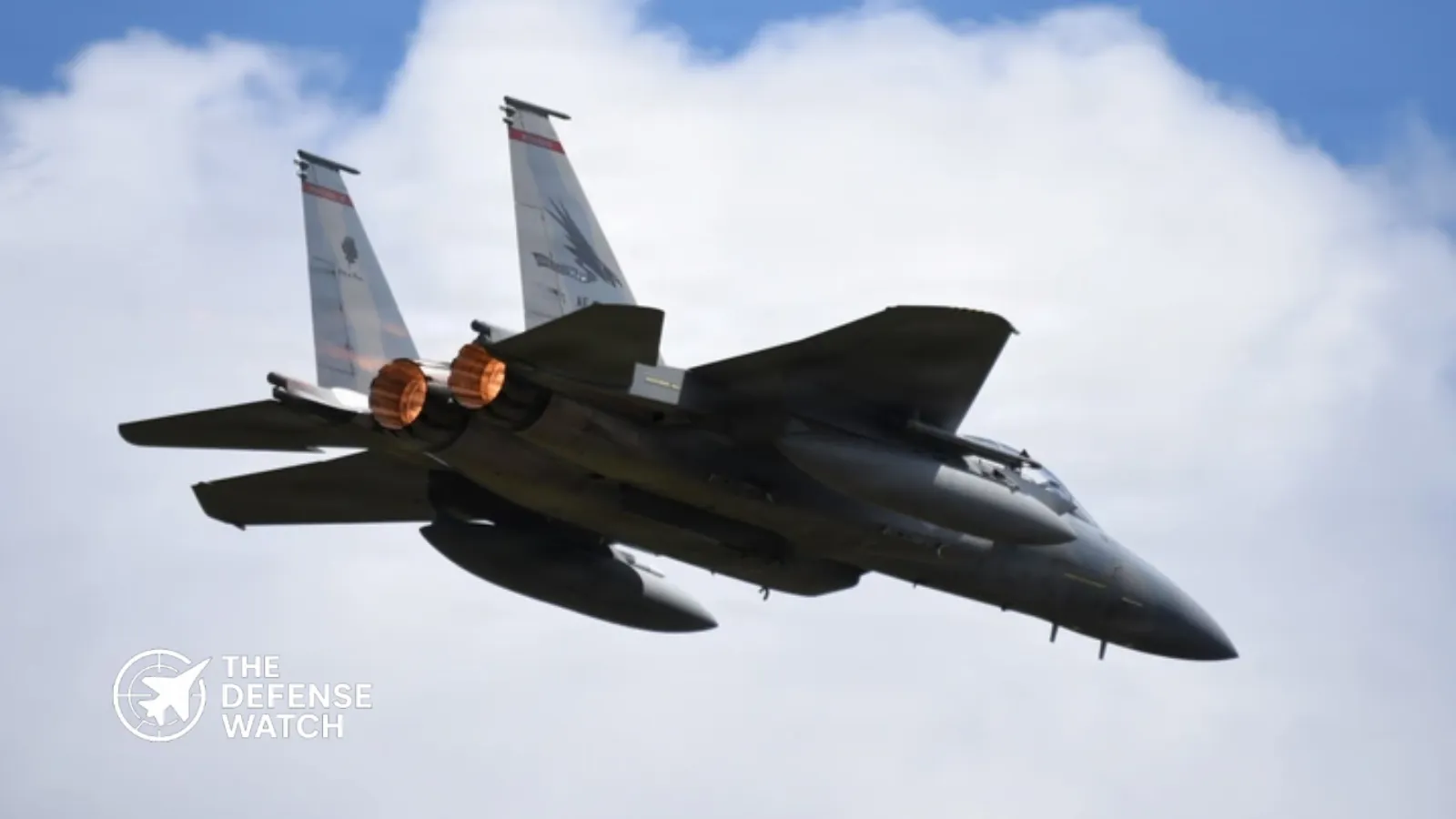
F-15EX alternative engines
SHARE

Executive Summary:

The U.S. Air Force is examining future propulsion options for its F-15EX Eagle II and F-16 Fighting Falcon fleets as part of a broader effort to strengthen long term competition and sustainment. The review comes as the service prepares for decades of continued operation of both fighter platforms while balancing readiness, affordability, and industrial base resilience.

US Air Force Studies Alternative Engines For F-15EX And F-16

The F-15EX alternative engines initiative signals a renewed Air Force interest in increasing competition for propulsion systems supporting two of its most important fourth generation fighter fleets. Air Force officials are evaluating whether additional engine options could reduce long term sustainment costs and improve operational flexibility.

Contents
US Air Force Studies Alternative Engines For F-15EX And F-16Why The Air Force Is Revisiting Fighter Engine CompetitionCurrent Engine ConfigurationStrategic Importance Beyond ProcurementTechnical Challenges Of Introducing A New EngineBroader Implications For U.S. Air PowerWhat Happens Next

The F-15EX currently flies with the GE Aerospace F110,GE,129 engine, while many F-16 variants operate either General Electric F110 engines or Pratt & Whitney F100 engines depending on aircraft block and operator. The Air Force’s review does not represent an immediate procurement decision but instead explores future pathways as fleet requirements evolve.

Why The Air Force Is Revisiting Fighter Engine Competition

Historically, engine competition has been viewed as a way to encourage innovation while providing leverage on pricing and sustainment.

The F-15EX program initially experienced debate over whether a sole source engine procurement or a competitive process would best support rapid fielding. Ultimately, the Air Force selected the GE F110 because it had already completed integration and certification with the aircraft’s digital fly by wire flight control system, minimizing schedule risk.

- Advertisement -
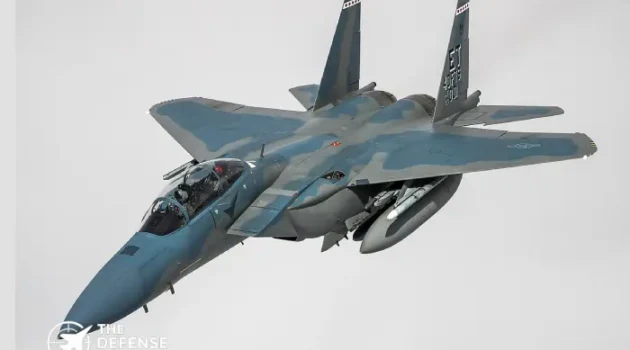
  • F-15EX Eagle II Fighter

    F-15EX Eagle II Fighter

    • Generation: 4.5th
    • Maximum Speed: Mach 2.5 class
    • No. of Engines: 2
    • Radar Range: 200 plus miles (estimate)
    • View Details →
    8.0

    For the F-16 fleet, both GE Aerospace and Pratt & Whitney engines have powered different production blocks for decades, providing the Air Force and international operators with experience supporting multiple propulsion options.

    Current Engine Configuration

    AircraftCurrent Primary EngineNotes
    F-15EX Eagle IIGE F110,GE,129Fully integrated and certified for the aircraft
    F-16 Fighting FalconGE F110 or Pratt & Whitney F100Depends on production block and operator

    Strategic Importance Beyond Procurement

    The engine review reflects more than a technical exercise.

    The Air Force expects both aircraft to remain operational well into the 2030s and beyond. The F-15EX continues replacing aging F-15C aircraft while assuming homeland defense and long range weapons carriage missions. Meanwhile, upgraded F-16s remain essential for homeland operations, training, and numerous overseas deployments.

    Because propulsion systems account for a significant portion of lifecycle operating costs, even modest improvements in maintenance requirements, fuel efficiency, spare parts availability, or reliability can produce substantial savings across hundreds of aircraft.

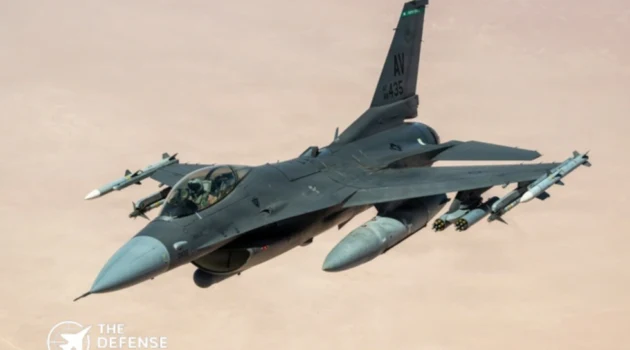
    • F-16 Fighting Falcon

      F-16 Fighting Falcon

      • Generation: 4th
      • Maximum Speed: Mach 2.0 (1,500 mph)
      • No. of Engines: 1
      • Radar Range: ~160 km (AESA)
      • View Details →
      8.0

      Technical Challenges Of Introducing A New Engine

      Although evaluating alternative engines appears straightforward, integrating a new propulsion system into an existing fighter is a complex engineering effort.

      Certification typically requires:

      • Flight testing across the aircraft’s operating envelope.
      • Software integration with flight control systems.
      • Validation of cooling, electrical, and hydraulic interfaces.
      • Structural analysis of engine mounts.
      • Logistics and maintenance qualification.
      • Airworthiness certification.

      For the F-15EX, these integration requirements were one of the principal reasons the Air Force previously favored the already qualified GE F110 rather than introducing another engine option.

      Broader Implications For U.S. Air Power

      The Air Force’s review also reflects broader concerns about maintaining a healthy defense industrial base.

      Maintaining multiple capable propulsion suppliers can strengthen supply chain resilience, reduce dependence on a single manufacturer, and preserve engineering expertise that could benefit future combat aircraft programs.

      At the same time, introducing competition must be balanced against integration costs and the operational risks associated with certifying new propulsion systems.

      As the Air Force modernizes its tactical aviation fleet alongside sixth generation development efforts, sustaining highly capable fourth generation fighters remains a critical element of overall force structure. Aircraft such as the F-15EX provide exceptional payload capacity, long range, and the ability to carry emerging long range air to air and strike weapons that complement stealth aircraft rather than replace them.

      What Happens Next

      Air Force officials have not announced a formal engine competition or acquisition timeline.

      Instead, the current effort appears focused on understanding available propulsion technologies, future sustainment strategies, and potential industrial benefits before any procurement decisions are made.

      If the study eventually leads to competitive engine procurement, it could influence sustainment planning for hundreds of fighters that are expected to remain in service for decades.
TAGGED:F-15EXF-16
Share This Article
Facebook Copy Link Print
ByDaniel Mercer / Defense & Aerospace Analyst
Follow:
Daniel Mercer is a defense and aerospace analyst at TheDefenseWatch.com covering military aviation, aerospace technology, unmanned systems, air warfare, and defense procurement. His reporting uses official documents, government and military statements, company announcements, and other public sources.
Leave a Comment

Leave a Reply Cancel reply

Your email address will not be published. Required fields are marked *

Search Defense Systems

Latest Defense Systems

  • TRML-4D Radar TRML-4D Radar
  • F-47A Fighter Jet F-47A Fighter Jet
  • China DF-61 Missile China DF-61 Missile
  • B61 Nuclear Bomb B61 Nuclear Bomb
  • Japan E-767 Airborne Japan E-767 Airborne
  • Remington 870 Shotgun Remington 870 Shotgun
  • RUTA B1 Cruise Missile RUTA B1 Cruise Missile
  • XQ-67A Drone XQ-67A Drone
  • B-25 Mitchell Bomber B-25 Mitchell Bomber

Recent Compares

  • J-10C vs JF-17 Thunder: Which Fighter Is More Capable? J-10C vs JF-17 Thunder: Which Fighter Is More Capable? View Comparison →
  • Tejas vs Gripen: Key Differences and Capabilities Tejas vs Gripen: Key Differences and Capabilities View Comparison →
  • Tejas vs MiG-21 Bison: How India Replaced Its Iconic Supersonic Fighter Tejas vs MiG-21 Bison: How India Replaced Its Iconic Supersonic Fighter View Comparison →
  • F-35 vs F-16: Stealth, Sensors and Combat Roles F-35 vs F-16: Stealth, Sensors and Combat Roles View Comparison →
  • Tejas Fighter Jet vs F-16 Fighting Falcon: Capability Compared Tejas Fighter Jet vs F-16 Fighting Falcon: Capability Compared View Comparison →
  • Rafale Fighter Jet vs F-16 Fighting Falcon : Which Fighter Has the Edge? Rafale Fighter Jet vs F-16 Fighting Falcon : Which Fighter Has the Edge? View Comparison →
  • Su-57 Fighter Jet vs J-20 Fighter Jet: Stealth and Air Combat Compared Su-57 Fighter Jet vs J-20 Fighter Jet: Stealth and Air Combat Compared View Comparison →
  • Mirage 2000 vs Tejas Mk1A: Legacy Combat Power vs Indigenous Modernization Mirage 2000 vs Tejas Mk1A: Legacy Combat Power vs Indigenous Modernization View Comparison →
  • Rafale Fighter Jet vs F-22 Raptor: Which Air Dominance Fighter Has the Edge? Rafale Fighter Jet vs F-22 Raptor: Which Air Dominance Fighter Has the Edge? View Comparison →
  • Tejas Fighter Jet vs. Rafale Fighter Jet: India’s Indigenous Fighter Meets France’s Proven Multirole Combat Aircraft Tejas Fighter Jet vs. Rafale Fighter Jet: India’s Indigenous Fighter Meets France’s Proven Multirole Combat Aircraft View Comparison →

Recent Posts

  • Raytheon Wins DARPA Contract to Develop All-Optical Signal Processing Technology
  • Lockheed Martin Delivers 100,000th GMLRS Rocket as Production Reaches 14,000 a Year
  • L3Harris CEO Sam Mehta Discusses Defense Spending and Missile Production on CNBC
  • L3Harris Demonstrates Multi-Domain Defense Network for Pacific Security
  • Saab Secures SEK 350 Million Danish Order for Combat Training Systems

You Might Also Like

U.S. Air Force F-35A Lightning II fighter jet during flight operations at a military airbase
Aerospace & AviationFighter Jets & Military Aircraft

Poland Moves To Deploy F-35A Husarz Fighters As NATO Strengthens Eastern Flank Defense

June 8, 2026
Turkish Aerospace Hürjet
Aerospace & AviationFighter Jets & Military Aircraft

Turkish Aerospace Moves To Position Hürjet As UK Seeks New Advanced Jet Trainer

September 12, 2026
Boeing F-15IA contract
Aerospace & AviationFighter Jets & Military Aircraft

Pentagon Awards Boeing $8.6 Billion Contract for F-15IA Jets for Israel, Strengthening U.S. Defense Ties

December 29, 2025
Automatic air-to-air refueling Singapore
Aerospace & AviationFighter Jets & Military Aircraft

Singapore, Airbus Secure Full Certification of Automatic Air-to-Air Refueling on A330 MRTT, World First

February 4, 2026

Logo

Copyright © 2026 TheDefenseWatch.com

Helpful Links

  • Home
  • About Us
  • Privacy Policy
  • Terms of Use / Disclaimer
  • U.S. Privacy Notice – CCPA Compliance

Defense Systems

  • Defense Systems
  • Comparisons 
  • Manufacturer
  • Tactical Calculators

Popuplar

Which 5 Air Forces Possess the Costliest Fighter Jet Fleets in the World
Evolving Strategic Value: Carrier Strike Groups in the Indo-Pacific’s Future Security Architecture
Autonomous Weapon Systems Spark U.S. Ethics Debate Amid Rapid Military AI Integration

We report on developments involving military forces, governments, defense companies, research organizations, and security institutions around the world. 

Welcome Back!

Sign in to your account

Username or Email Address
Password

Lost your password?