

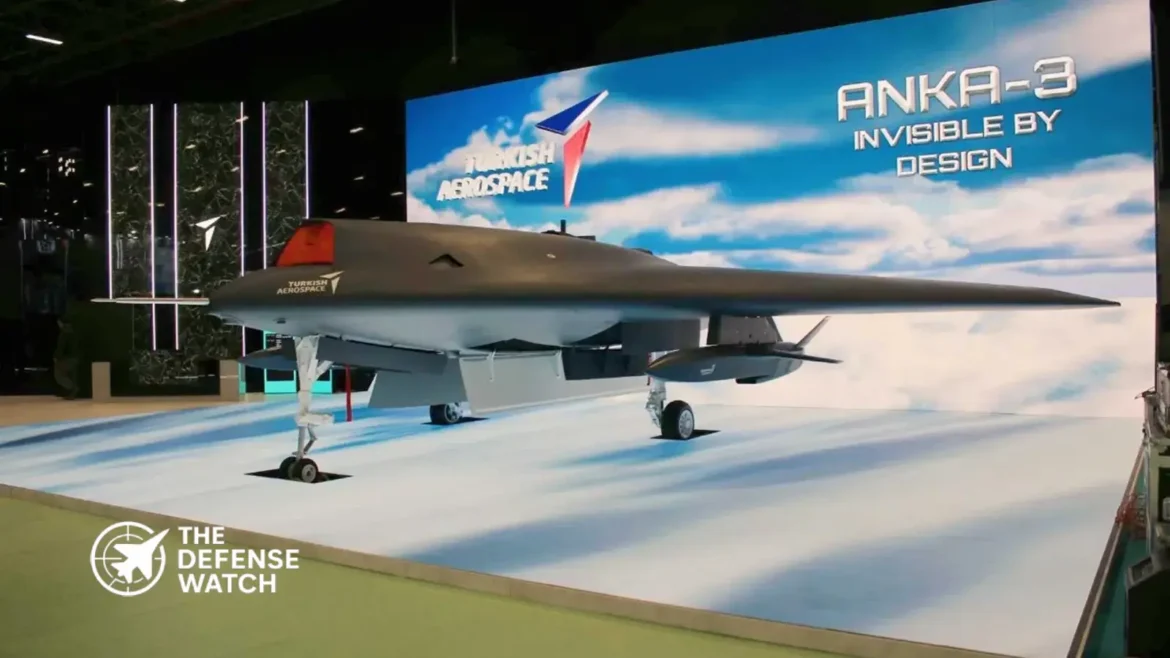
Executive Summary: Türkiye has presented the Anka-3 stealth unmanned combat aerial vehicle (UCAV) carrying two Süper Şimşek strike UAVs at SAHA Expo 2026. Turkish Aerospace Industries (TUSAŞ) showcased the configuration to demonstrate distributed strike capabilities in contested airspace. The system enables the stealthy mothership to remain outside high-threat zones while deploying expendable forward effectors for decoying, jamming, electronic warfare, and precision strikes.
Development and Exhibition Context
Turkish Aerospace Industries displayed a full-scale Anka-3 equipped with two Süper Şimşek UAVs under its wings during SAHA Expo 2026. This presentation highlights Türkiye’s shift toward low-observable, distributed unmanned operations designed for heavily defended airspace.
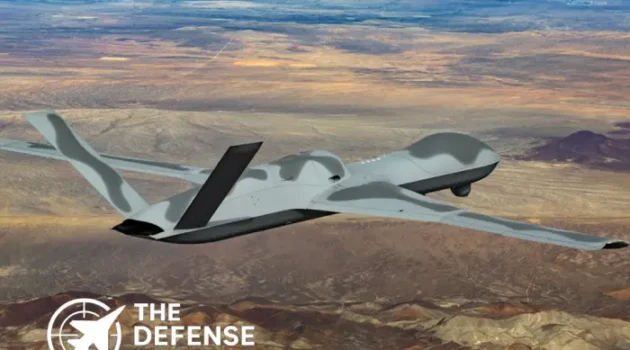
The Anka-3, a tailless flying-wing UCAV, serves as a mothership capable of launching smaller, expendable effectors. These forward-deployed UAVs can trigger enemy radars, conduct jamming, act as decoys, or execute kinetic strikes, preserving the higher-value Anka-3 platform at safer standoff distances.
This configuration aligns with Türkiye’s broader “Sadık Kanat” (loyal wingman) or OKU (Autonomous Wingman) concept, integrating with platforms such as the TF Kaan fighter and other Turkish UAVs like the Aksungur.
Anka-3 Technical Specifications and Capabilities
The Anka-3 features a low-observable flying-wing design with no vertical stabilizers, reducing radar cross-section while providing internal volume for fuel and weapons. Key specifications include:
- Dimensions: Approximately 7.9–8.9 m length, 12.5–13.1 m wingspan
- Maximum Takeoff Weight (MTOW): 6,500–7,250 kg
- Payload Capacity: 1,200–1,600 kg (internal bays plus external hardpoints)
- Propulsion: Single Ivchenko-Progress AI-322 turbofan (with indigenous TF6000/TF10000 development ongoing)
- Performance: Max speed Mach 0.7, cruise ~250 knots, endurance ~10 hours, service ceiling 40,000 ft (12,000 m)
The platform includes two internal weapon bays and five external hardpoints, allowing operators to balance stealth and payload. It supports ISR, electronic warfare, and strike missions, with satellite communications and autonomous teaming capabilities.
Süper Şimşek Strike UAV Characteristics
The Süper Şimşek evolved from the earlier Şimşek target drone into a multi-role tactical UAV. It is designed for high-subsonic operations as a decoy, jammer, or strike asset.
- Dimensions: ~4 m length, 1.75 m wingspan, 0.75 m height
- MTOW: 200 kg
- Payload: Up to 50 kg (warhead, jammers, signature enhancers, EO/IR sensors)
- Performance: Max speed ~Mach 0.85–0.9, service ceiling 35,000 ft, endurance ~80 minutes, range up to 700–900 km (air-launched)
Payload options include RF/IR signature augmentation to simulate larger aircraft (e.g., fighters), electronic attack modules, and precision seekers for air-to-surface or air-to-air engagements.
Comparison Table
System Range Payload Status Key Technology Anka-3 (with Süper Şimşek) ~700–900 km (effectors); carrier standoff 1,200–1,600 kg (carrier); 50 kg per effector Presented 2026 (prototype/advanced testing) Stealth flying-wing, loyal wingman teaming, distributed EW/strike Legacy Anka/Aksungur (MALE) Limited to permissive airspace Lower per platform, direct carriage Operational Conventional ISR/strike, non-stealth Typical Competitor MALE (e.g., MQ-9 class) Medium-altitude persistence ~1,000+ kg direct Operational Propeller-driven, vulnerable in contested airspace Technical Advantages
- Survivability: Anka-3 remains outside dense SAM engagement zones while effectors penetrate forward.
- Force Multiplication: Two (or more) expendable Süper Şimşek UAVs enable saturation, deception, and suppression of enemy air defenses (SEAD/DEAD).
- Mission Flexibility: Rapid reconfiguration of effector payloads for decoy, jamming, ISR, or kinetic roles.
- Autonomy and Teaming: Supports manned-unmanned teaming (MUM-T) with TF Kaan and other platforms; autonomous release and coordinated operations demonstrated.
- Attritable Cost: Lower-cost effectors preserve high-value stealth UCAV and manned assets.
Strategic Context
The Anka-3/Süper Şimşek combination addresses modern air defense challenges, including integrated air defense systems (IADS) with long-range SAMs, radars, and electronic warfare assets. By emphasizing distributed, attritable effects, Türkiye aligns with broader NATO and global trends toward massed unmanned systems that exhaust expensive interceptor inventories and complicate enemy targeting.
This development enhances Türkiye’s indigenous defense capabilities, reduces reliance on foreign systems, and positions it as a contributor to allied concepts in high-intensity conflict scenarios. Integration with future indigenous engines and advanced sensors will further strengthen operational effectiveness in regional security dynamics.
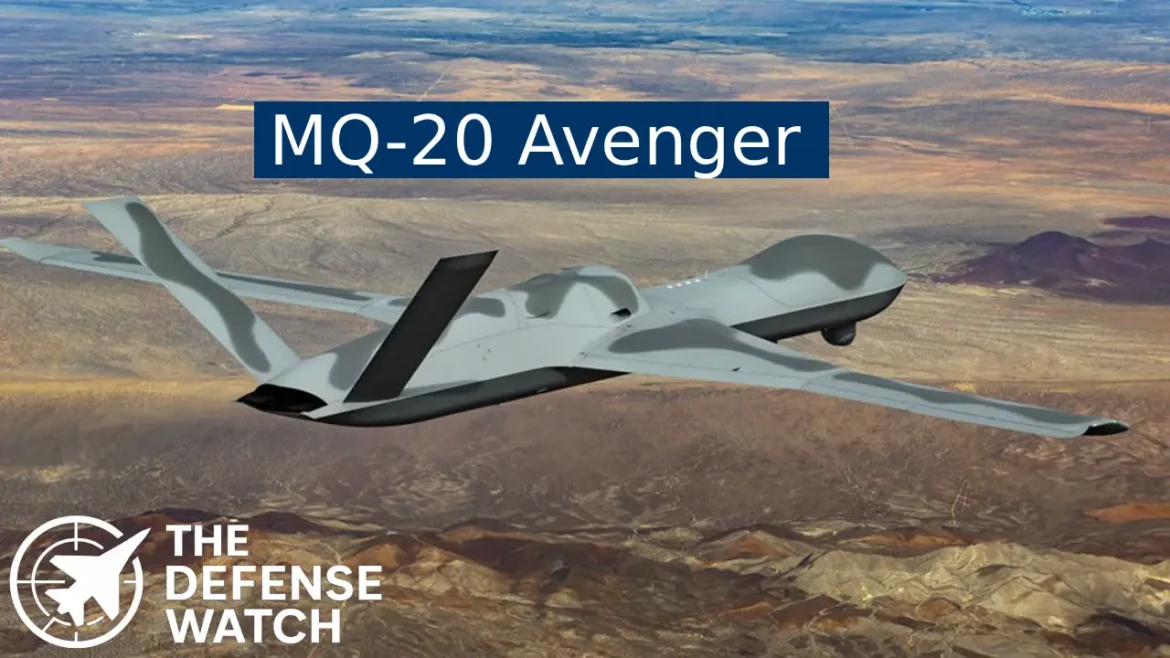
In a landmark demonstration on October 21, 2025, General Atomics Aeronautical Systems (GA-ASI), Lockheed Martin, and L3Harris successfully executed a cre wed-uncrewed teaming flight test in which an F-22 Raptor pilot commanded an MQ-20 Avenger drone integrated on board – a first of its kind. The exercise, carried out at the Nevada Test and Training Range, marks a significant step forward in the U.S. Air Force’s push toward Collaborative Combat Aircraft (CCA) and advanced manned-unmanned operations.
What Happened: The Flight Test Details
- The test involved installing two L3Harris software-defined radios (SDRs): one aboard the F-22, and another aboard the MQ-20.
- These radios used L3Harris’ BANSHEE advanced tactical datalinks and the Pantera SDR system integrated via Lockheed Martin’s open-radio architecture.
- From the cockpit, the F-22 pilot used a Pilot Vehicle Interface (PVI) tablet in conjunction with a new GRACE module (“Government Reference Architecture Compute Environment”) to send commands.
- GA-ASI characterized the communications chain as entirely non-proprietary and fully U.S. government-owned, built on Open Mission Systems principles.
Technical and Strategic Context
The MQ-20 Avenger is a stealthy, jet-powered unmanned combat aerial vehicle (UCAV) developed by GA-ASI. Unlike turboprop drones, it features a low-observable profile, internal weapons bays, and high speed/endurance.
Over the past year, the Avenger has been integrated with autonomy software, most notably Shield AI’s Hivemind, enabling it to conduct complex maneuvers like combat air patrols and simulated air-to-air engagements.
Moreover, this F-22/Avenger test follows previous milestones, such as the U.S. Navy’s live-control flight of the MQ-20 via a carrier-based ground station using Lockheed Martin’s MDCX platform.
Why This Matters: Analysis
Advancing the CCA Vision
This demonstration directly feeds into the U.S. Air Force’s Collaborative Combat Aircraft (CCA) strategy, which envisions manned fighters working alongside autonomous “drone wingmen” to enhance combat effectiveness, resilience, and flexibility.
By showing that a legacy platform like the F-22 can control an autonomous UCAV using open-architecture radios, the test proves that even older high-end assets can be rapidly modernized for future force structures.
All-Domain Connectivity and Interoperability
The use of non-proprietary, government-owned datalinks is particularly significant. It ensures greater resilience against supply-chain vulnerabilities, expands opportunities for allied interoperability, and reduces dependence on single-vendor systems.
Modular Autonomy in Action
Coupled with earlier tests of Shield AI’s Hivemind software, this trial underscores how modular autonomy (open architectures + reference software) can deliver agile, rapidly fieldable capabilities.
This model supports future scaling: additional drones, different fighter jets, or alternative autonomy stacks can be integrated without rearchitecting the entire system.
Implications for Force Multiplication and Cost Efficiency
If F-22s (and eventually other fighters) can reliably control UCAVs, it could dramatically expand the force’s reach. Pilots may direct more assets for strike, surveillance, or suppression missions, potentially reducing the number of manned sorties required and lowering risk to human pilots.
Challenges and Considerations
- Security & Jamming Risks: In contested electromagnetic environments, maintaining reliable datalink performance under jamming or cyberattacks remains a critical concern.
- Pilot Workload: Managing a high-performance fighter and simultaneously controlling a drone raises questions about cognitive load and ergonomic design.
- Certification & Safety: Extensive testing will be required to certify such systems for regular operational use, especially considering safety, autonomy fail-safes, and emergent behavior in contested airspace.
- Scalability: While this was a company-funded R&D demo, scaling to full operational deployment (across squadrons) will involve cost, logistics, training, and sustainment challenges.
Conclusion & Outlook
The F-22–MQ-20 Avenger teaming test represents a major milestone in the U.S. drive toward crewed-uncrewed collaborative warfare. By proving that a stealth fighter can directly command a stealth drone using open, government-owned datalinks, industry and the Air Force are laying the technical and doctrinal foundation for scalable Collaborative Combat Aircraft operations.
Looking ahead, we can expect further demonstrations involving other platforms (e.g., F-35, F-15), more sophisticated autonomy stacks, and perhaps even live-fire exercises. As the CCA vision matures, such teaming concepts could reshape how the U.S. projects airpower — blending human judgment with autonomous persistence, creating more flexible, resilient, and distributed mission architectures.
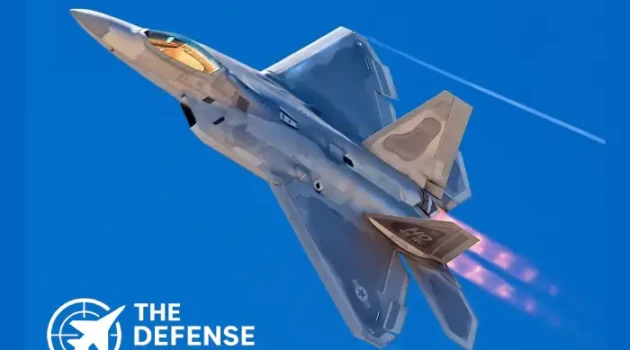

China’s Chengdu J-20 stealth fighter, dubbed the “Mighty Dragon,” continues to evolve—from a developmental prototype to a formidable contributor in People’s Liberation Army Air Force (PLAAF) doctrine. Recent upgrades, high-profile displays, and bold mission claims underscore Beijing’s ambitions to redefine airpower in the Indo-Pacific.
J-20S Two-Seat Variant Makes Historic Debut
At Beijing’s 80th Victory Day military parade, China unveiled the J-20S, the world’s first operational two-seat stealth fighter. Unlike conventional trainer variants, the J-20S is purpose-built for command-and-control roles, notably manned-unmanned teaming, coordinating drone swarms in contested environments.
Operational signs include a darker camouflage, new electro-optical sensors, and imagery suggesting it is already active in PLAAF units. This variant marks a leap in Chinese fifth-generation fighter design, emphasizing networked warfare capabilities.
Stealth Patrols Challenge Island-Chain Strategy
In a strategic move, Chinese state media claimed a J-20 stealth flight traversed the heavily monitored Tsushima Strait—a critical link in the U.S. “first island chain” containment strategy—without detection. Though unconfirmed by Japan or South Korea, the assertion signals Beijing’s intent to project stealth-enabled reach and challenge regional surveillance architectures.
Technical Evolution: Engines and Airframe Upgrades
The J-20 program has undergone extensive modernization. Early variants relied on underpowered Russian engines, but successive integration of the WS-10C and domestically produced WS-15 turbofan engines has dramatically enhanced performance, supercruise capability, and reliability. Other refinements include a low-profile blended canopy, thrust-vectoring nozzles, upgraded avionics, and improved weapon-carry capacity.
These enhancements yield better aerial maneuverability, reduced radar cross-section, and seamless sensor fusion—moving China closer to parity with Western fifth-generation fighters like the F-22 and F-35.
Strategic Context and Implications
China’s J-20 upgrades and visibility reflect evolving PLAAF doctrine. The J-20S, with its networked command role, signals a shift toward distributed, drone-centric air combat systems. Claims of stealth patrols deepen U.S. and allied concerns over surveillance gaps in the first island chain.
Furthermore, the parade showcased China’s broader military arsenal—hypersonic missiles, nuclear triad systems, and advanced unmanned platforms—a display aimed at reinforcing deterrence narratives amid Taiwan tensions
FAQs
The J-20S is a two-seat variant of the Chengdu J-20, designed for manned-unmanned teaming, enabling the second crew member to coordinate drone assets and manage complex mission data—beyond mere pilot training
Chinese state media claim the J-20 flew through the highly monitored Tsushima Strait undetected, but this has not been independently verified by Japan or South Korea.
The J-20 has transitioned from Russian engines to domestic WS-10C and now the advanced WS-15 turbofan, improving thrust, supercruise, range, and reliability.
Enhancements in stealth, sensors, avionics, and networked warfare capabilities make the J-20 a central asset in China’s modern air warfare doctrine—challenging Western dominance and reinforcing regional power projection.