Key Facts at a Glance
| Specification | F-22 Raptor |
|---|---|
| Manufacturer | Lockheed Martin, Boeing |
| Generation | 5th generation |
| Primary Mission | Air dominance, air superiority, multirole combat |
| Maximum Speed | Mach 2 class |
| Supercruise | Above Mach 1.5 without afterburner |
| Combat Radius | Approximately 410 nautical miles, depending on mission configuration |
| Ceiling | Above 50,000 ft |
| Engines | 2 × Pratt & Whitney F119-PW-100 |
| Thrust | Approximately 35,000 lb class per engine |
| Radar | AN/APG-77 AESA |
| Electronic Warfare | AN/ALR-94 integrated electronic support system |
| Primary Air-to-Air Weapons | AIM-120 AMRAAM, AIM-9 Sidewinder |
| Internal Cannon | M61A2 20 mm |
| Production | 195 aircraft delivered |
| Current Inventory | About 184 aircraft in the U.S. Air Force fleet |
Executive Summary
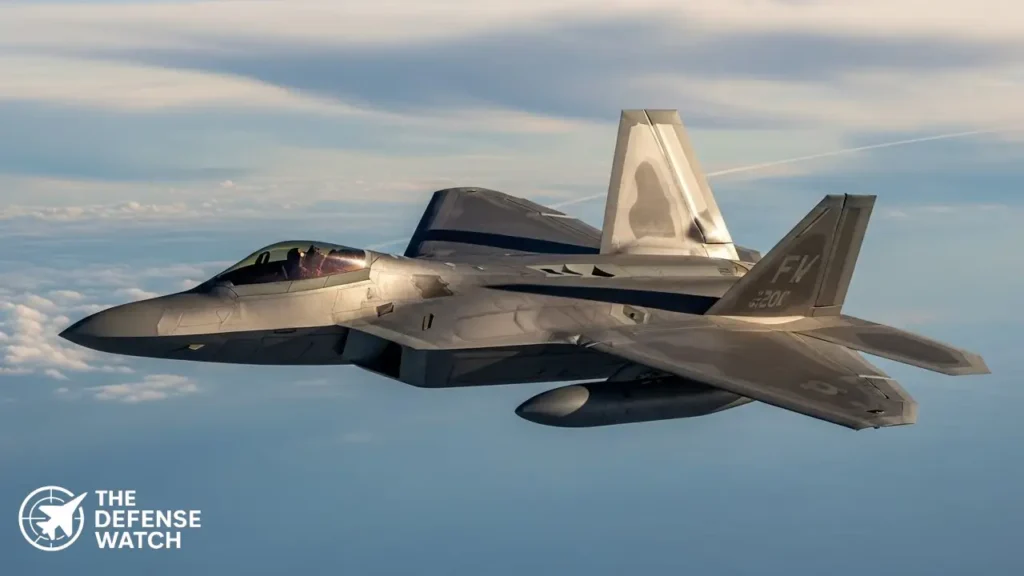
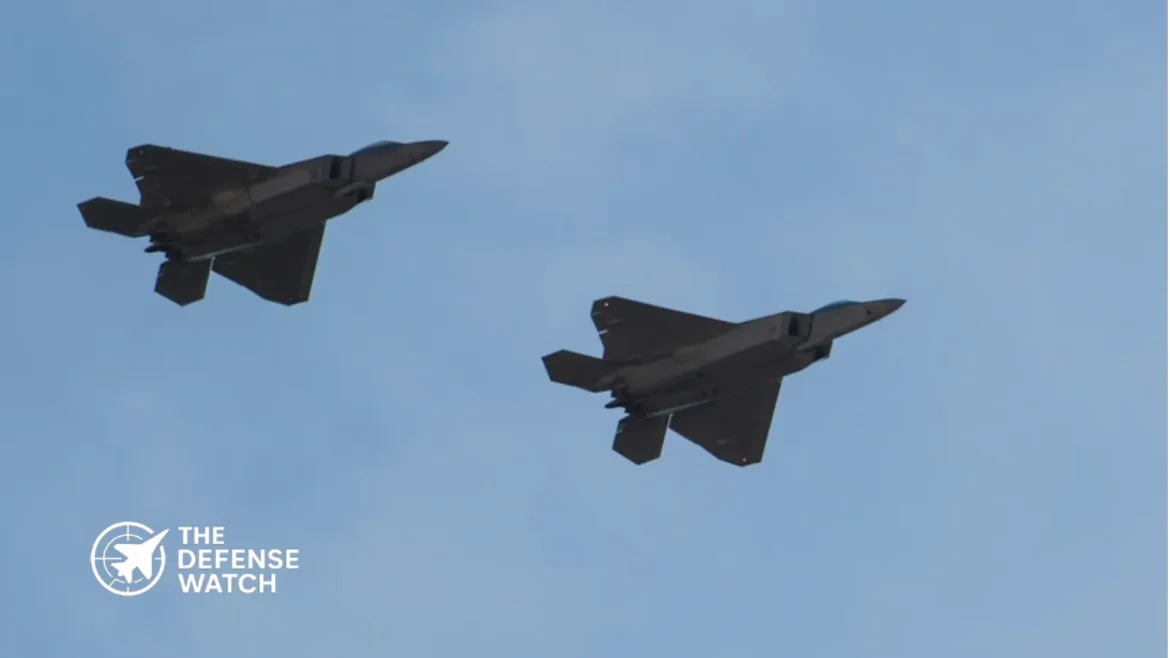
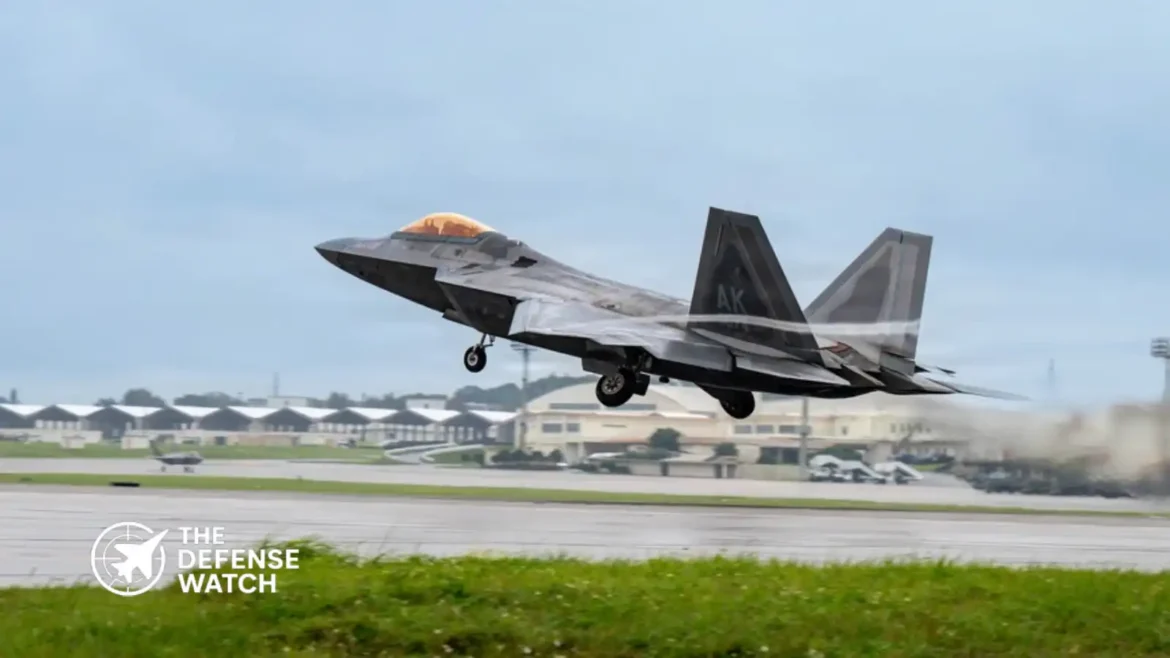
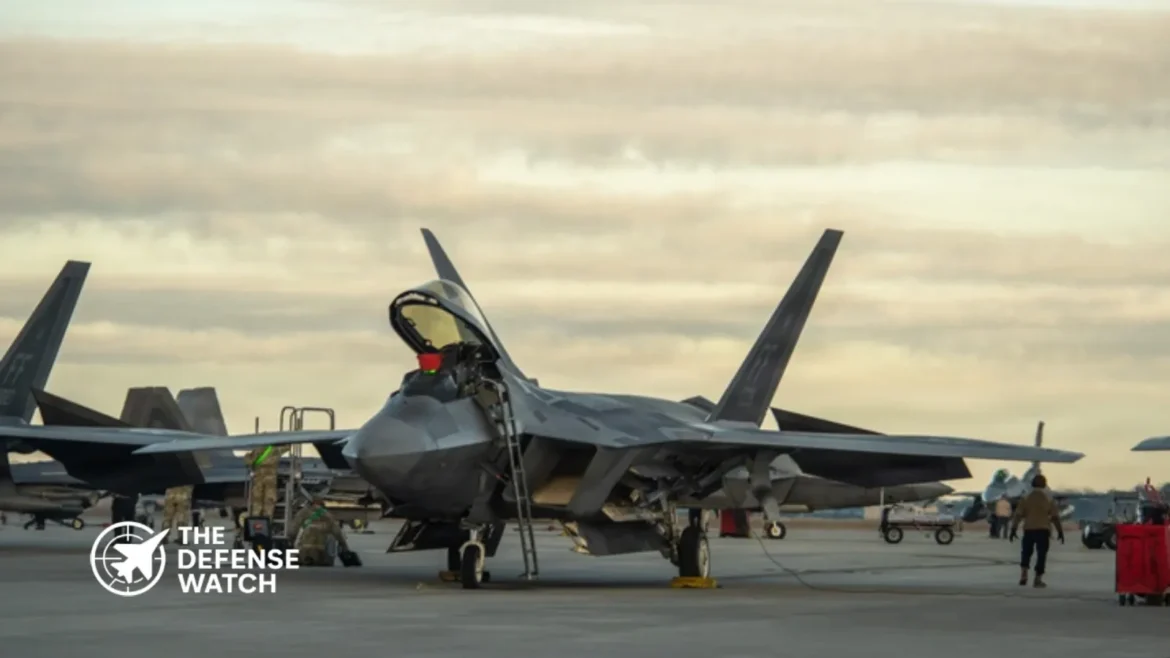
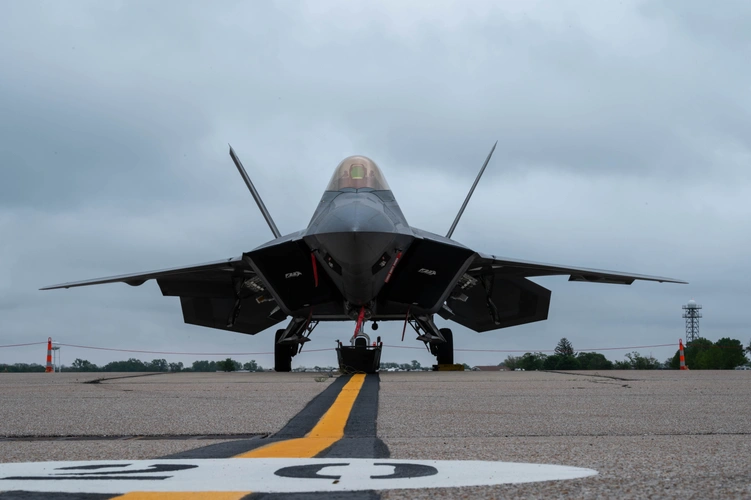
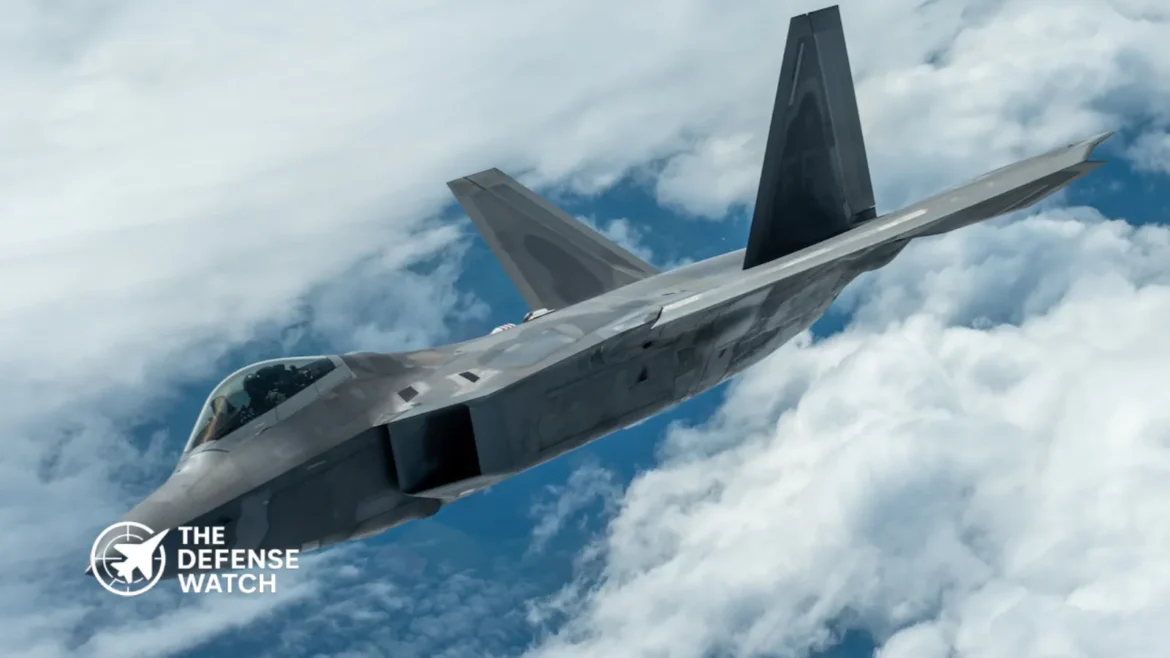
The F-22 Raptor remains one of the most capable air-superiority fighters ever fielded by the United States. Designed around stealth, supercruise, advanced sensors, high maneuverability and internal weapons carriage, the aircraft was built to establish air dominance against sophisticated fighter and air-defense threats.
The central question behind searches such as how many F-22s does the U.S. have has a relatively clear answer, although inventory figures can vary according to accounting year and aircraft status. The U.S. Air Force has about 184 F-22s in its fleet in 2026, while 195 aircraft were produced and delivered during the program. Nine aircraft were used as test aircraft, according to Lockheed Martin’s production history, leaving the operational fleet smaller than the total production figure.
The F-22 has also been used in combat, beginning with strikes against ISIS targets in Syria in 2014. Despite combat deployments, no F-22 has been confirmed shot down in combat.

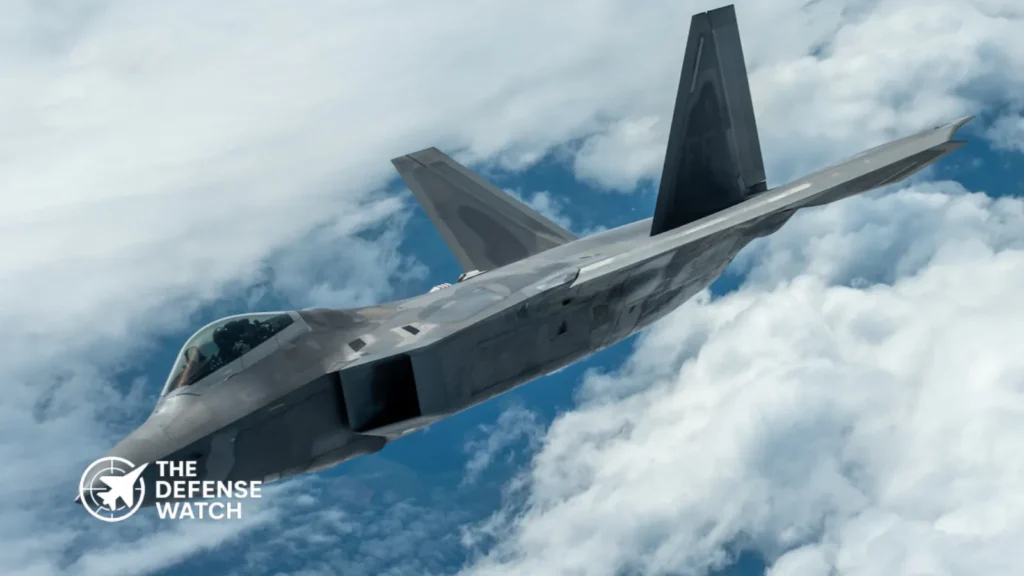
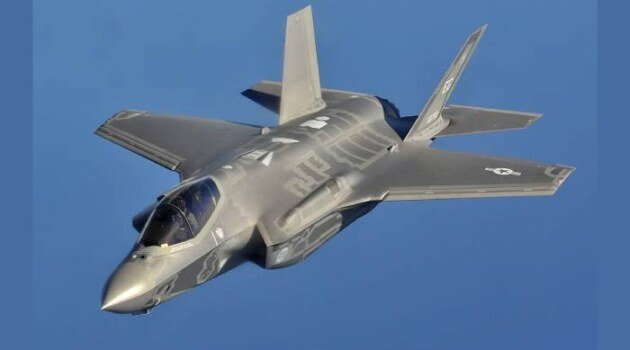
Image: U.S. Air Force. How Many F-22s Does the U.S. Have?
For the question how many f-22s does the us have, the most useful current figure is approximately 184 aircraft.
Air & Space Forces Magazine’s 2026 weapons-platform data lists the F-22 inventory at 184 aircraft. A June 2026 congressional development was particularly significant because the House Armed Services Committee approved an amendment that would keep all 184 Raptors in service until at least the end of fiscal 2032.
This figure should not be confused with the number originally manufactured.
The F-22 production program ended in 2011, with the final aircraft delivered to the Air Force in May 2012. Lockheed Martin states that 195 F-22s were delivered, including aircraft used for testing.
Therefore:
Question Answer How many F-22s were built? 195 How many F-22s does the U.S. have? About 184 in the 2026 inventory How many F-22s are operationally combat coded? Fewer than the total inventory because some aircraft are assigned to test, training or other roles How many F-22s have been shot down? No confirmed combat losses The difference between production and current inventory reflects aircraft attrition, testing, accidents and fleet accounting rather than exports. The F-22 has never been offered as a conventional foreign military sales fighter.
How Many F-22s Were Built?
The answer to how many f 22s were built is 195 aircraft.
Production began after years of development and testing, with the first F-22 flight taking place in 1997. The Air Force declared the aircraft operational in December 2005. The final Raptor was delivered on May 2, 2012.
Of the 195 aircraft delivered, Lockheed Martin identified 187 as operational fleet aircraft and eight as test aircraft at the time of final delivery.
The relatively small production run is strategically important. Unlike the F-35, which was designed for large-scale international production and operation, the F-22 was developed primarily as a high-end U.S. air-superiority platform.
How Many F-22s Are There?
The question how many f-22s are there can produce different answers depending on whether the question concerns aircraft ever produced, current inventory or combat-capable aircraft.
The most useful distinction is:
195 F-22s were produced and delivered, while about 184 remain in the U.S. Air Force inventory in 2026.
Not every aircraft in the inventory should be treated as immediately available for combat. Maintenance, modernization, training, testing and aircraft availability affect the number that can be generated for operational missions at any particular time.
The fleet also includes different modernization configurations. Earlier Block 20 aircraft have significantly less combat capability than the more heavily upgraded Block 30 and Block 35 Raptors.
F-22s Airframe and Stealth Design
The F-22s design combines stealth with aerodynamic performance rather than treating low observability as a separate feature.
Its airframe uses carefully aligned edges, internal weapon bays, shielded engine faces and extensive radar-absorbent materials to reduce radar returns. The exact radar cross section of the Raptor is classified, so publicly available numerical RCS claims should be treated cautiously.
The internal weapons arrangement is particularly important. Keeping missiles and bombs inside the fuselage reduces external stores that would otherwise increase radar signature and aerodynamic drag.
The aircraft also uses serrated or carefully shaped access panels and doors, while its engine exhaust and inlet design contribute to its low-observable characteristics.
Avionics and Sensor Fusion
The F-22’s core advantage is not simply its radar.
The AN/APG-77 AESA radar provides long-range detection and tracking while supporting low-probability-of-intercept operations. The aircraft also incorporates the AN/ALR-94 electronic support system, which provides passive detection and characterization of electromagnetic emissions.
Together with the aircraft’s mission computers and other sensors, these systems create a highly integrated tactical picture for the pilot.
The original F-22 configuration did not include a conventional internal IRST sensor comparable to systems developed for some newer fighters. However, current modernization efforts are adding new infrared sensing capabilities. In 2026, the Air Force is continuing development and testing of infrared search and track targeting systems, alongside defensive infrared missile-warning improvements.
F-22s Propulsion and Performance
The F-22 is powered by two Pratt & Whitney F119-PW-100 afterburning turbofan engines, each producing approximately 35,000 pounds of thrust in the thrust class identified by the Air Force.
The engines incorporate two-dimensional thrust-vectoring nozzles, allowing the aircraft to control pitch through exhaust-vectoring authority in addition to aerodynamic control surfaces.
The aircraft is rated at Mach 2 class speed and can supercruise at speeds above Mach 1.5 without afterburners. Supercruise allows the Raptor to maintain supersonic flight with lower fuel consumption and a smaller infrared signature than sustained afterburner operation.
How Many F-22s Have Been Shot Down?
The answer to how many f 22s have been shot down is zero confirmed combat losses.
The F-22 has conducted combat operations. Its first combat use came in September 2014, when Raptors participated in U.S.-led strikes against ISIS targets in Syria. F-22s later supported operations in the region, including protection missions during the April 2018 strikes against Syrian chemical-weapons facilities.
In February 2023, an F-22 also gained a highly publicized air-to-air kill when it fired an AIM-9X against a Chinese high-altitude surveillance balloon off the South Carolina coast. That was not a fighter-versus-fighter engagement, but it demonstrated the aircraft’s ability to conduct an unusual high-altitude intercept.
No F-22 has been confirmed destroyed by an enemy aircraft or surface-to-air missile in combat.
Modernization and Strategic Outlook
The F-22 is now entering a different phase of its service life. The aircraft remains strategically important, but the fleet is aging and the Air Force is simultaneously developing the F-47 and next-generation air-dominance architecture.
Current modernization includes Increment 3.2B, sensor enhancements, improved electronic warfare capabilities, infrared defensive systems, Link 16 networking and new range-extension concepts. Low-drag external fuel tanks and pylons are also being tested to increase range while limiting the impact on the aircraft’s aerodynamic and stealth characteristics.
The Air Force previously sought to retire 32 older Block 20 aircraft, but congressional opposition has repeatedly complicated that plan. In June 2026, the House Armed Services Committee moved to prohibit F-22 retirements through fiscal 2032, potentially preserving the entire 184-aircraft fleet for longer than earlier Air Force planning anticipated.
Unlike some modern fighters, the F-22 has no international customer roadmap. U.S. law and policy have prevented its export, making international F-22 operators nonexistent.
Conclusion
The F-22s Raptor remains a uniquely important U.S. air-superiority asset despite its relatively small fleet.
The clearest answers to the major questions are straightforward: 195 F-22s were built, about 184 remain in the U.S. Air Force inventory, and no F-22 has been confirmed shot down in combat. The aircraft has nevertheless seen real combat, including operations over Syria and the 2023 high-altitude balloon intercept.
Its combination of stealth, supercruise, thrust vectoring, AESA radar, electronic warfare and internal weapons carriage continues to give the F-22 a powerful role in contested airspace.
The central challenge is now fleet age. The Air Force is investing in upgrades while preparing for the next generation of air dominance. The result is a fighter that remains highly relevant, but one whose long-term future depends on modernization decisions, fleet availability and the arrival of its successor.

F-35C And F-22 Train Against Complex Air Defenses
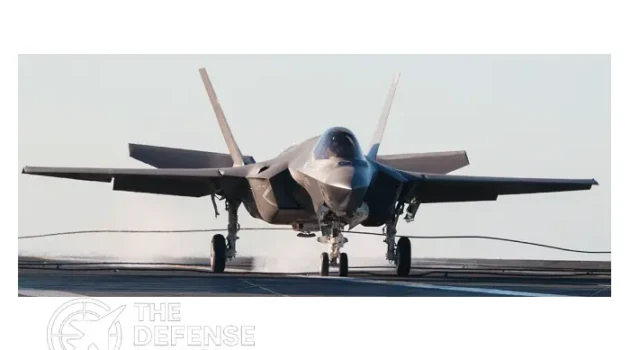
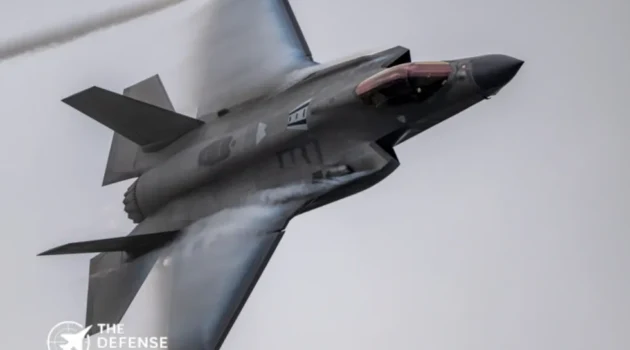
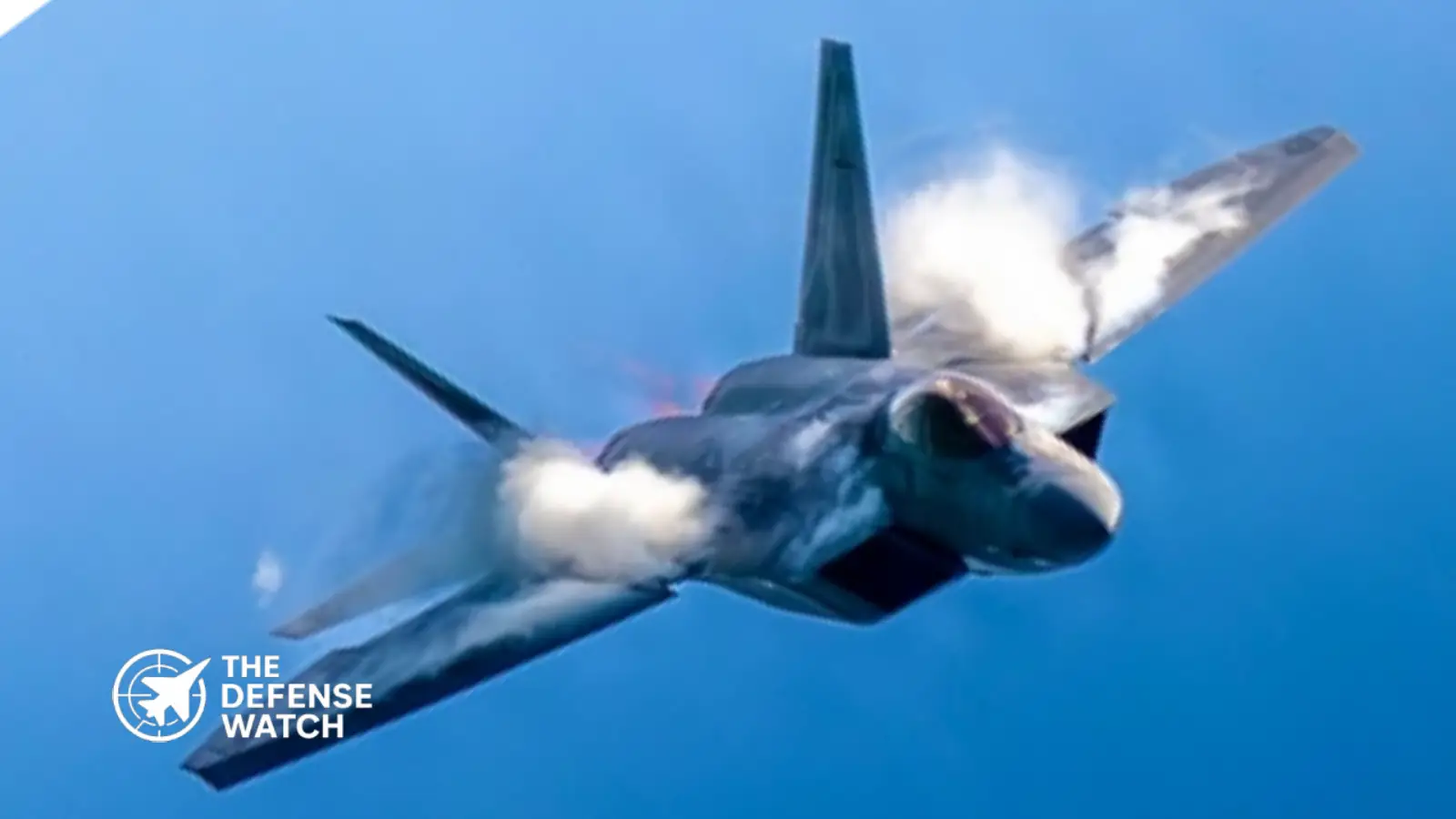
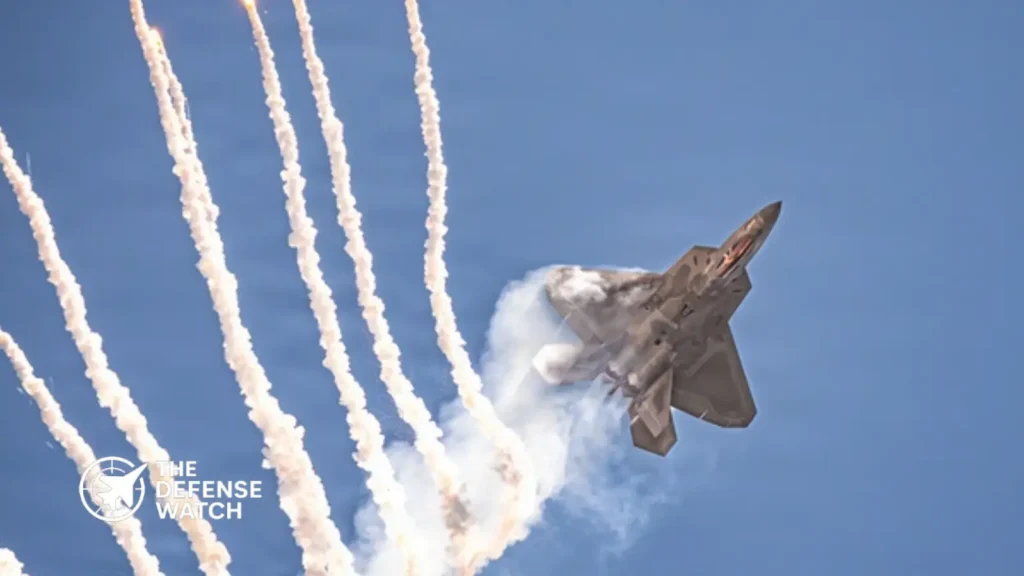
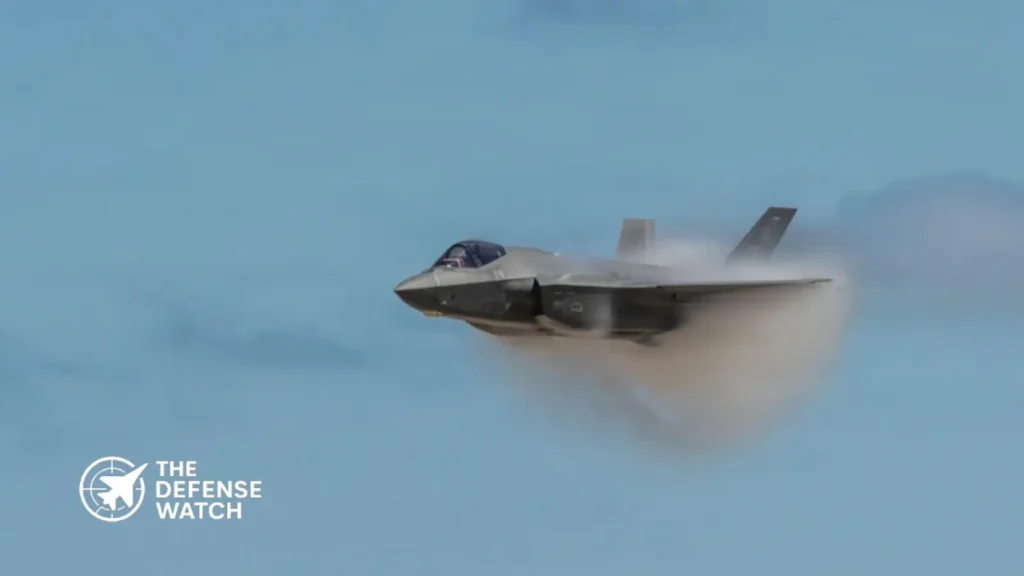
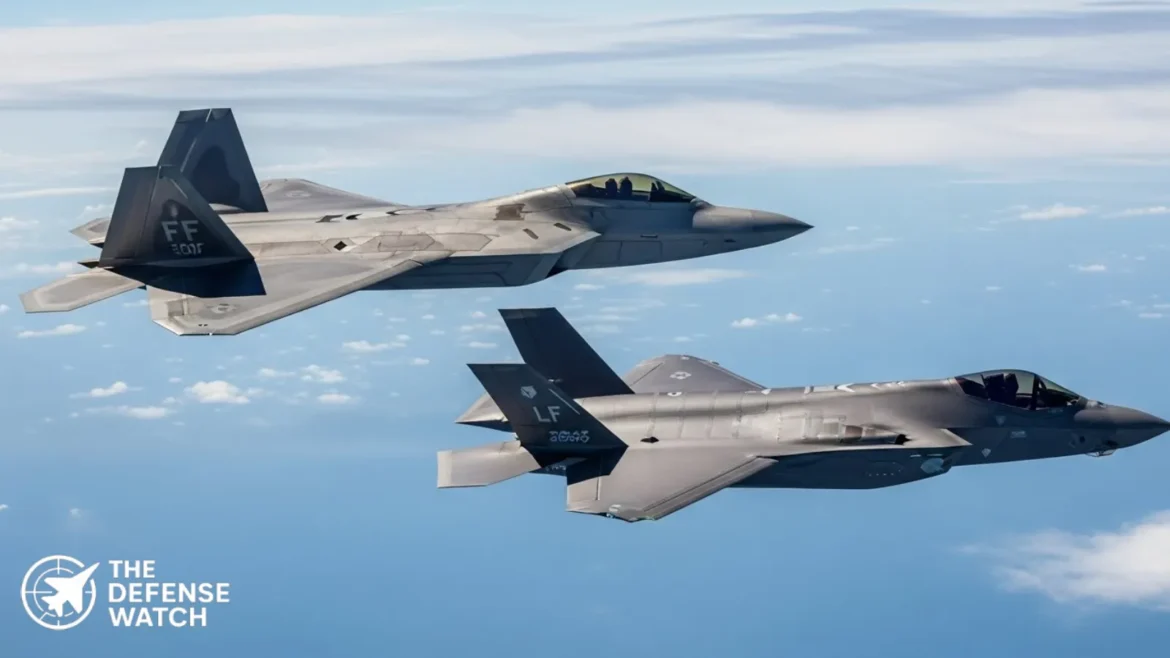
The F-35C Lightning II and F-22 Raptor operated together during Red Flag Alaska 26-3, where U.S. forces trained against simulated peer and near-peer threats, complex air defenses and battlefield disruptions. The exercise ran from Aug. 14 to Aug. 18 and represented the third and final Red Flag Alaska iteration of 2026.
Takeaways
F-35C Lightning II and F-22 Raptor fighters trained together against simulated peer threats and complex air defenses during Red Flag Alaska 26-3.
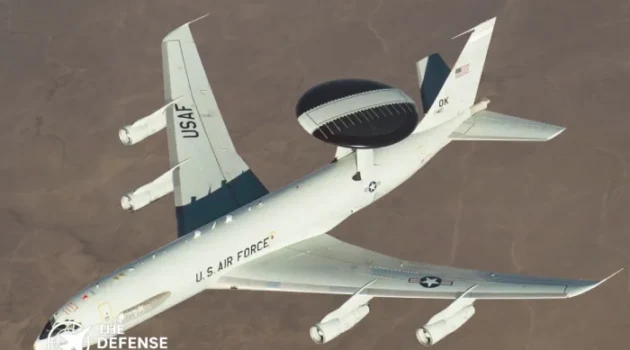
The fighter force included F-35Cs from Marine Fighter Attack Squadron 251 at Marine Corps Air Station Cherry Point, North Carolina, and F-22s from the Air Force’s 3rd Wing at Joint Base Elmendorf-Richardson, Alaska. An E-3 Sentry from the 961st Airborne Air Control Squadron at Kadena Air Base, Japan, also participated.
The combination placed two different fifth-generation fighter types within a larger air battle framework supported by airborne command and control. The training was designed to move beyond individual aircraft proficiency toward coordinated operations in a contested environment.
Why Red Flag Alaska Matters
Red Flag Alaska uses the Joint Pacific Alaska Range Complex, which covers approximately 120,000 square miles of airspace. The range allows U.S. and partner forces to progress from individual tactical skills to large-scale engagements involving multiple aircraft and mission areas.
The size of the training area is particularly important for air combat exercises because it allows forces to practice operations across greater distances rather than limiting engagements to a small training box.
The Air Force said Red Flag Alaska 26-3 brought together 79 aircraft from 10 units across the Joint Pacific Alaska Range Complex. The exercise concluded Aug. 28 after two weeks of realistic combat training, although the F-35C and F-22 activity highlighted in this report took place Aug. 14 to Aug. 18.
F-35C And F-22 Bring Different Strengths
The F-35C is the carrier-capable variant of the F-35 family. The U.S. Navy describes the F-35C as a fifth-generation aircraft with stealth, enhanced lethality and survivability, a robust communications suite and the ability to employ internal or external weapons.
The F-22, meanwhile, was developed primarily around air dominance. The Air Force identifies stealth, supercruise, maneuverability and integrated avionics as core characteristics of the Raptor. Its sensor and avionics architecture is designed to provide pilots with a high level of situational awareness while operating against advanced air threats.
That difference is important when considering the value of combined training.
The exercise was not simply about placing two stealth fighters in the same formation. It provided an opportunity to practice how different aircraft, sensors, weapons and command-and-control systems function together when the battlespace becomes increasingly difficult to manage.
Aircraft Primary Service Key Training Relevance F-35C Lightning II U.S. Marine Corps Stealth, sensing, networking and carrier-capable multirole operations F-22 Raptor U.S. Air Force Air dominance, stealth, supercruise and advanced air combat E-3 Sentry U.S. Air Force Airborne command and control Training Included Battlefield Disruptions
One of the more significant elements of Red Flag Alaska 26-3 was its designation as a Special Technical Operation exercise.
According to the exercise organizers, scenarios introduced operational disruptions intended to replicate conditions associated with peer and near-peer conflicts. These included non-kinetic effects designed to disrupt coordination and complicate operations.
That matters because modern air warfare is not limited to aircraft engaging aircraft or missiles engaging targets.
A major air operation depends on communications, data exchange, command networks, navigation, sensors and decision-making. If those functions become degraded or disrupted, pilots and commanders must continue operating with incomplete or delayed information.
The exercise therefore tested an important part of modern air combat readiness: the ability of a force to maintain coordinated operations when its normal information flow is under pressure.
The Role Of The E-3 Sentry
The participation of an E-3 Sentry added another layer to the training.
The E-3 is an airborne command-and-control platform that can support the broader air picture. Its presence alongside F-35Cs and F-22s reflects the reality that air dominance operations normally depend on more than fighter aircraft alone.
The operational value comes from connecting different capabilities into a functioning force. Fighters provide combat power, while airborne command and control can help coordinate the wider engagement.
This type of integration becomes increasingly important as forces operate across larger areas and against opponents equipped with advanced sensors, aircraft, electronic warfare systems and air-defense networks.
Complex Air Defenses Remain A Major Challenge
Red Flag Alaska 26-3 specifically required participants to coordinate joint and coalition operations against complex air-defense systems. The exercise combined multiple effects to train forces to overcome those threats in a contested environment.
For fifth-generation aircraft, the challenge is not simply achieving low observability.
Stealth can reduce an aircraft’s detectability, but modern air-defense networks can combine multiple sensors, communications links and weapons systems. Training therefore has to account for the wider system rather than treating an air-defense battery as an isolated target.
This makes large-force exercises valuable. Pilots can practice the interaction between aircraft, command-and-control assets and other supporting capabilities while facing simulated disruptions.
The F-22’s air-dominance role is particularly relevant in this context. The Air Force says the aircraft combines stealth, integrated avionics and supercruise to support operations against advanced air threats.
The F-35C brings a different set of capabilities, including stealth, advanced sensing and networking. The Marine Corps aircraft therefore contributes to the broader force rather than functioning only as a conventional strike platform.
What The Exercise Says About Joint Air Operations
The most important lesson from the training is the emphasis on integration.
The F-35C and F-22 are operated by different U.S. military services and were designed around different primary missions. Yet a real contingency would require them to function as parts of the same air campaign.
Red Flag Alaska creates a controlled environment where those relationships can be tested repeatedly.
The exercise also included allied and partner participation across its broader 2026 schedule. Red Flag Alaska 26-2, for example, involved more than 70 aircraft and approximately 2,100 personnel from U.S. and partner nations.
That multinational element matters for Pacific operations, where U.S. forces could be required to operate alongside allied aircraft and other joint capabilities across large distances.
The Broader Pacific Relevance
Alaska’s geography gives the training environment particular relevance to Pacific air operations.
The Joint Pacific Alaska Range Complex provides a large overland training area where forces can practice operations at a scale that is difficult to reproduce at smaller ranges. Pacific Air Forces describes Red Flag Alaska as a venue for realistic deployed-environment training, interoperability and contingency response.
For the United States, that supports a broader readiness requirement: maintaining the ability to generate and coordinate combat airpower under contested conditions.
The exercise does not prove how the aircraft would perform in an actual conflict. Instead, its value lies in giving crews and supporting units the opportunity to identify problems, refine procedures and improve coordination before those capabilities are required operationally.
What Comes Next For Fifth-Generation Integration
The U.S. Air Force is also moving toward a future force in which fifth-generation fighters operate alongside newer systems and autonomous aircraft.
In June 2026, the Department of the Air Force announced contracts connected with development and production of its first-generation Collaborative Combat Aircraft, while also establishing a competitive market for mission-autonomy software.
That development increases the importance of exercises that test not only individual aircraft but the ability of different platforms to share information and perform complementary missions.
Red Flag Alaska 26-3 provides a current example of that approach. F-35Cs, F-22s and an E-3 operated within a scenario that included simulated advanced air defenses and disrupted battlefield conditions.
For U.S. air forces, the objective is increasingly broader than mastering a single aircraft. It is building the ability to operate a connected force when an adversary is actively trying to disrupt that force.
Bottom Line
The F-35C and F-22 training during Red Flag Alaska 26-3 demonstrated the continuing U.S. emphasis on integrated air operations against sophisticated threats.
The exercise combined fifth-generation fighters, airborne command and control, complex simulated air defenses and Special Technical Operations effects inside one large training environment.
Its significance is less about a particular simulated engagement and more about the operational problem being addressed: how to maintain air combat effectiveness when advanced defenses and battlefield disruptions make coordination harder.
That remains a central requirement for U.S. airpower in the Indo-Pacific and other contested theaters.
(adsbygoogle = window.adsbygoogle || []).push({});Executive Summary: The question of which fighter jet rules the sky in 2026 is no longer purely about raw speed or payload — it is about stealth depth, sensor fusion, and the ability to command unmanned wingmen. The F-22 Raptor holds the technical crown with a radar cross-section the size of a marble and supercruise above Mach 1.8, but its 178-aircraft fleet and $85,325-per-flight-hour operating cost expose a strategic liability that its replacement — Boeing’s F-47 — is being built to correct. Meanwhile, China is producing J-20s at roughly 120 per year, a production velocity that forces a rethinking of what “best” actually means in a large-scale peer conflict.
The $334 Million Question Nobody Answers Straight
The F-22 Raptor costs $334 million per aircraft — once you account for the $67.3 billion total program spend spread across just 195 airframes. Its hourly flight cost sits at $85,325. The Air Force currently requires up to 30 maintenance hours for every single hour it flies. And yet, across every serious defense ranking published in 2025 and 2026, the F-22 still holds the number one slot.
F-22 Demonstration Team performs at Air Dot Show Tour Fort Lauderdale 2026 That tension — between singular technical dominance and catastrophic operational economics — defines the modern air superiority debate. The best fighter jet in the world is not the one with the highest speed or the longest missile range. It is the one that can enter denied airspace, kill without being seen, and survive to fly again. By that standard, the answer changes depending on whether you are asking about today, 2030, or the decade after that.
Here is the 2026 definitive breakdown.
Technical Analysis: The Five Contenders That Matter
1. Lockheed Martin F-22 Raptor — The Untouchable Benchmark
The F-22 is the only operational fighter with a radar cross-section estimated at 0.0001 square meters — comparable to a metal marble. It supercruises at Mach 1.8 without afterburners, outrunning adversary missile envelopes before a targeting solution is even possible. Its AN/APG-77 AESA radar can track 28 air targets and engage six simultaneously.
Production ended in 2012 at 195 aircraft. Today, approximately 178 remain in inventory, with only 150 combat-coded. An ongoing “Raptor 2.0” upgrade program worth $11 billion addresses the platform’s two biggest weaknesses: range and sensor modernization. New stealth-compatible conformal fuel tanks add 850 nautical miles of range without degrading the aircraft’s low-observable signature — critical for Pacific scenarios involving distances that previously made the Raptor tactically marginal.
(adsbygoogle = window.adsbygoogle || []).push({});The F-22 is also conducting live testing of Collaborative Combat Aircraft (CCA) integration. An F-22 pilot has already commanded a General Atomics MQ-20 Avenger drone from the cockpit in flight testing, making it the first manned fighter to achieve this. Boeing’s F-47 NGAD — selected in March 2025 — will replace it, with first flight targeted for 2028 and initial operational capability in the early 2030s.
Verdict: Technically unmatched, strategically constrained by fleet size and cost.
2. Lockheed Martin F-35 Lightning II — The Network Warfare Machine
The F-35 is not the F-22’s equal in pure air-to-air combat. It is something different and arguably more consequential at the coalition level. Its AN/APG-81 AESA radar and the Distributed Aperture System give pilots 360-degree spherical situational awareness. Block 4 upgrades, fully rolling out by 2026, integrate AI-assisted targeting and enhanced electronic warfare.
Laughlin inspires youth and showcases heritage at Fiesta of Flight 2026 Where the F-22 is a sovereign weapon, the F-35 is a force multiplier. Over 1,000 airframes are now in active service across more than 20 air forces. Israel has conducted real-world intercepts with it. Japan has used it to respond to Chinese incursions. Australia is integrating it as the backbone of its air denial posture. At approximately $80 million per unit — down from early program highs due to economies of scale — it delivers genuine fifth-generation capability at a price allied nations can actually sustain.
(adsbygoogle = window.adsbygoogle || []).push({});Each F-22 and F-35 is also being configured to quarterback up to five autonomous drones, fundamentally changing the force-ratio math in any peer conflict.
Verdict: The world’s most operationally relevant fighter. The best for allied air forces. A flying intelligence platform that reshapes entire battle networks.
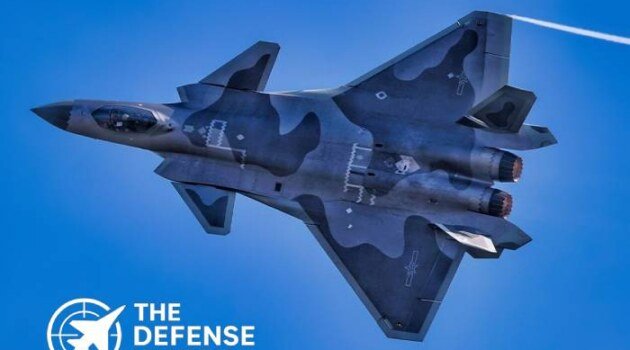
3. Chengdu J-20 Mighty Dragon — The Production Threat
The J-20 entered service in 2017 and China is building roughly 120 per year. By 2030, the People’s Liberation Army Air Force could field as many as 1,000 of them. No Western or Russian platform comes close to that production velocity.
Estimated at $100 million per aircraft, the J-20 carries a massive 24,000-pound weapons payload — much of it internal — preserving its low-observable signature. Its WS-15 turbofan, now entering wider service, resolves earlier engine reliability concerns that undermined its performance claims. The PLAAF has also developed the J-35A as a carrier-capable variant and is flight-testing the J-36, a flying-wing design whose planform suggests sixth-generation intent.
The J-20’s stealth is generally assessed as inferior to the F-22 in front-aspect RCS, but its sheer volume of production means that any attrition-based conflict calculus shifts dramatically in China’s favor. Quality vs. quantity is not a new debate in air warfare. In a Taiwan Strait scenario spanning 30 days, fleet depth matters as much as individual aircraft performance.
(adsbygoogle = window.adsbygoogle || []).push({});Verdict: A genuine peer-level stealth fighter with a production scale that forces Western planners to rethink force structure entirely.
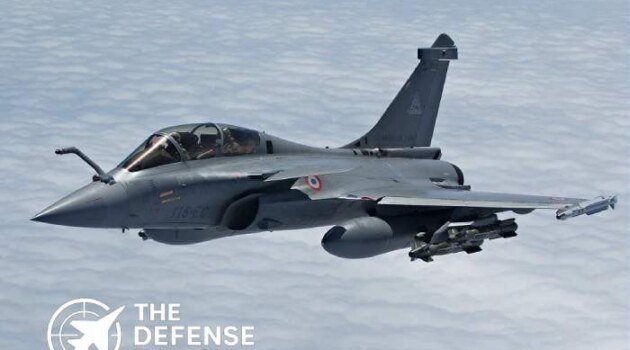
4. Dassault Rafale — Europe’s Most Lethal Export
The Rafale does not make every top-five list, but defense professionals who have worked with it rarely argue against its inclusion. It is the only Western fighter besides the F-35 with a validated carrier-capable and land-based variant in simultaneous service. France has deployed it in combat over Libya, Mali, Syria, and Iraq.
At approximately $100–120 million per unit (F3-R variant), it is not cheap. But its SPECTRA electronic warfare suite is genuinely world-class, capable of jamming, decoying, and direction-finding simultaneously. The RBE2-AA AESA radar and MBDA METEOR beyond-visual-range missile combination gives it a kill chain that analysts consistently rate as dangerous against any fourth-generation opponent and competitive against fifth-generation ones in contested electromagnetic environments.
India, Egypt, Greece, the UAE, Indonesia, and Croatia have all signed Rafale contracts in recent years. The aircraft’s export track record — and its combat operational record — distinguish it from the Su-57, which claims similar tier status but has deployed in far more limited numbers.
Verdict: The most combat-proven and diplomatically versatile high-end fighter outside the U.S.-Chinese duopoly.
5. Sukhoi Su-57 Felon — The Sanctioned Wild Card
Russia’s only operational fifth-generation fighter is genuinely fast — approximately Mach 2 — and its 3D thrust-vectoring nozzles produce supermaneuverability that the F-35 cannot match in a turning fight. Its Sh121 radar complex is architecturally interesting, combining a main AESA array with side-facing and L-band wing-leading-edge arrays for multi-band situational awareness.
The problem is production. As of early 2026, Russia has reportedly produced roughly 30 Su-57s. Sanctions resulting from the Ukraine war and industrial strain have constrained the program severely. Stealth quality assessments — based on platform geometry and coating analysis — consistently rate the Su-57 as the least capable low-observable design among the current fifth-generation cohort. Some analysts decline to classify it as a true stealth aircraft at all.
(adsbygoogle = window.adsbygoogle || []).push({});At an estimated $35–50 million per unit, it offers significant cost efficiency. But a 30-aircraft fleet has no strategic mass.
Verdict: Technically interesting, operationally marginal. The gap between design ambition and production reality is the Su-57’s defining characteristic in 2026.
Fighter Jet Comparison: Key Metrics at a Glance
Aircraft Country Unit Cost (est.) Max Speed Combat Radius Fleet Size (2026) Generation F-22 Raptor USA $143M (flyaway) / $334M (program) Mach 2.25 ~590 nm ~178 5th F-35A Lightning II USA/Allies ~$80M Mach 1.6 ~590 nm 1,000+ 5th J-20 Mighty Dragon China ~$100M Mach 2.0 ~680 nm 200–300+ (rising) 5th Dassault Rafale F3-R France/Export ~$110M Mach 1.8 ~1,000 nm 220+ (multi-nation) 4.5th Su-57 Felon Russia ~$35–50M Mach 2.0 ~930 nm ~30 5th (contested) Boeing F-47 (NGAD) USA ~$300M Classified Classified IOC ~2032 6th The Strategic Crossover: What Gaming Theory Gets Right About Air Dominance
The best fighter jet debate mirrors a dynamic competitive gamers understand intuitively: the difference between a “carry” character and a “meta” pick. In competitive strategy titles, the carry is the highest individual-skill ceiling unit — devastating in the right hands, but fragile if misused or under-supported. The meta pick is slightly less peak-capable but wins consistently across more map states and team compositions.
(adsbygoogle = window.adsbygoogle || []).push({});The F-22 is the carry. Its individual performance ceiling is unmatched. But with only 150 combat-coded airframes and $85,000 burned every hour it flies, the USAF cannot field it at scale, cannot export it, and cannot absorb attrition. A single squadron of F-22s is a first-strike or air-supremacy asset, not a sustained campaign workhorse.
The F-35 is the meta pick. It is slightly less dominant in a one-versus-one engagement, but it operates across every mission type — strike, ISR, electronic warfare, coalition networking — and its operator base of 20 nations creates an information-sharing architecture no adversary can replicate. In a real conflict, the side with 1,000 networked F-35s coordinating targeting data in real time holds a decisive advantage over the side with 178 technically superior jets that cannot communicate at scale.
This is the logic China is also applying, in reverse. The J-20 is not the world’s best individual fighter. But 1,000 J-20s operating under a unified command, data-linked, and supported by long-range anti-access missiles changes the strategic equation entirely.
The F-47’s design concept addresses exactly this gap. Boeing’s sixth-generation platform is being engineered from the ground up for CCA integration, meaning a single F-47 pilot may direct four to five autonomous wingmen simultaneously. That shifts the force multiplication math in ways that raw aircraft count alone cannot capture.
“Air superiority is no longer about which jet wins the knife fight. It’s about which network denies the adversary the option of getting to knife-fight range at all.” — Composite analytical assessment, USAF Air Force Research Laboratory doctrinal publications
The Sixth-Generation Horizon: Why the Answer Is About to Change
Boeing won the F-47 Engineering and Manufacturing Development (EMD) contract in March 2025, beating Lockheed Martin for the NGAD program after over a decade of concept refinement. The selection was unexpected — Lockheed has dominated U.S. fighter procurement since the F-16 era. Boeing’s win reflects both the F-47’s technical maturity and a deliberate Pentagon diversification strategy.
(adsbygoogle = window.adsbygoogle || []).push({});The F-47 will cost approximately $300 million per aircraft at full production. The Air Force plans roughly 185 units — mirroring the F-22 production run, a number critics argue is already too low given China’s J-20 ramp rate. First flight is targeted for 2028. Initial operational capability sits in the early 2030s.
Until the F-47 flies in anger, the F-22 retains its title. But the $11 billion Raptor upgrade program currently underway — adding conformal fuel tanks, infrared search-and-track, and CCA command capability — is not a platform extension. It is a bridge program. The Air Force is keeping its best fighter alive long enough to hand the baton to something it believes will be generationally superior to anything currently flying.
Final Assessment
The best fighter jet in the world in 2026 is the F-22 Raptor — in raw technical terms, at the individual platform level, in any scenario that rewards stealth depth, kinematic performance, and sensor dominance over everything else.
But the most strategically significant fighter in the world is the F-35. It is reshaping alliance air power on five continents, generating shared targeting data at a scale no adversary can match, and doing so at a unit cost that allows mass deployment.
The most dangerous trend in global air power is the J-20 production curve. Not because any single J-20 outperforms a Raptor — it does not. But because 1,000 peer-level stealth fighters, produced and sustained at industrial scale, represent a force structure challenge that unit-for-unit performance comparisons do not capture.
(adsbygoogle = window.adsbygoogle || []).push({});And the most consequential development over the next decade is the F-47. If Boeing delivers on its timeline and the Air Force funds it adequately, the sixth generation will reset the competitive baseline entirely — pairing a human pilot with five autonomous wingmen, operating at ranges and stealth depths that current Chinese and Russian platforms cannot contest.
The question is not which jet is best. The question is whether the West produces enough of what it needs, fast enough, to matter when it counts.
Executive Summary:
The United States is repositioning F-22 stealth fighters closer to China to improve response times in a potential Taiwan crisis. The move underscores growing tensions and a renewed focus on air superiority in the Indo-Pacific.US Moves F-22 Stealth Fighters Closer To China
The F-22 stealth fighters deployment marks a significant step in U.S. efforts to strengthen rapid-response capabilities near Taiwan, as tensions with China continue to shape regional military planning.
The U.S. Air Force has moved F-22 Raptors closer to the western Pacific theater, reducing operational distance to potential hotspots around the Taiwan Strait. This forward positioning is designed to enable faster sortie generation and immediate air dominance in the early stages of a conflict.
The F-22 Raptor, developed by Lockheed Martin, remains the U.S. military’s premier air superiority fighter. Its low observable design, advanced avionics, and supercruise capability allow it to penetrate contested airspace and engage high-end threats, including advanced Chinese fighters and integrated air defense systems.
Strategic Context: Taiwan And The Indo-Pacific Balance
The F-22 stealth fighters deployment comes amid increasing military activity by China around Taiwan, including large-scale air and naval exercises. Beijing continues to assert sovereignty over the island, while Washington maintains a policy of strategic ambiguity backed by growing military presence in the region.
Forward deployment of fifth-generation fighters reflects a broader U.S. shift toward distributed and resilient force posture across the Indo-Pacific. By positioning assets closer to potential flashpoints, the Pentagon aims to complicate adversary planning and ensure rapid escalation control.
From an operational perspective, reducing transit time for high-value assets like the F-22 can significantly impact early-phase combat effectiveness. In a Taiwan contingency, the first 24 to 72 hours are widely assessed by defense analysts as critical for establishing air superiority.
Operational Advantages Of Forward-Deployed F-22s
The F-22 stealth fighters deployment enhances several key operational capabilities:
- Reduced Response Time: Aircraft can reach contested zones faster, improving reaction speed to emerging threats.
- Increased Sortie Rates: Shorter distances allow for more frequent missions per aircraft.
- Enhanced Deterrence: Visible presence of advanced stealth fighters signals readiness and capability.
- Survivability In Contested airspace: The F-22’s stealth and electronic warfare suite provide a decisive edge against modern air defenses.
In addition, forward basing supports integration with allied forces, including Japan and other regional partners, enabling joint operations and interoperability in complex scenarios.
U.S. Airpower Strategy Against China
The F-22 stealth fighters deployment aligns with the Pentagon’s broader modernization and deterrence strategy focused on peer competition with China. While newer platforms like the F-35 are more widely distributed, the F-22 remains unmatched in pure air-to-air combat performance.
China, for its part, continues to field advanced systems such as the J-20 stealth fighter and long-range surface-to-air missile networks. This evolving threat environment has driven the U.S. to prioritize survivable, high-end capabilities in forward positions.
Defense analysts note that positioning F-22s closer to China also supports the concept of agile combat employment (ACE), which emphasizes dispersal, mobility, and rapid redeployment across multiple bases to reduce vulnerability.
Analysis: Speed, Deterrence, And Escalation Risks
The F-22 stealth fighters deployment reflects a calculated balance between deterrence and escalation management. On one hand, forward positioning strengthens U.S. credibility and reassures regional allies. On the other, it increases the proximity of high-end military assets between competing powers.
From a strategic standpoint, this move signals that the U.S. is prioritizing readiness for high-intensity conflict scenarios, particularly in the Taiwan Strait. It also highlights the importance of air superiority as a foundational element of any potential operation.
However, closer deployments may also heighten risks of miscalculation, especially during periods of increased military activity. Encounters between U.S. and Chinese aircraft have become more frequent, raising concerns among policymakers and military leaders.
Conclusion
The F-22 stealth fighters deployment closer to China underscores a clear shift toward faster, more responsive U.S. airpower in the Indo-Pacific. As tensions over Taiwan persist, the ability to rapidly project advanced combat capability will remain central to deterrence and crisis response.
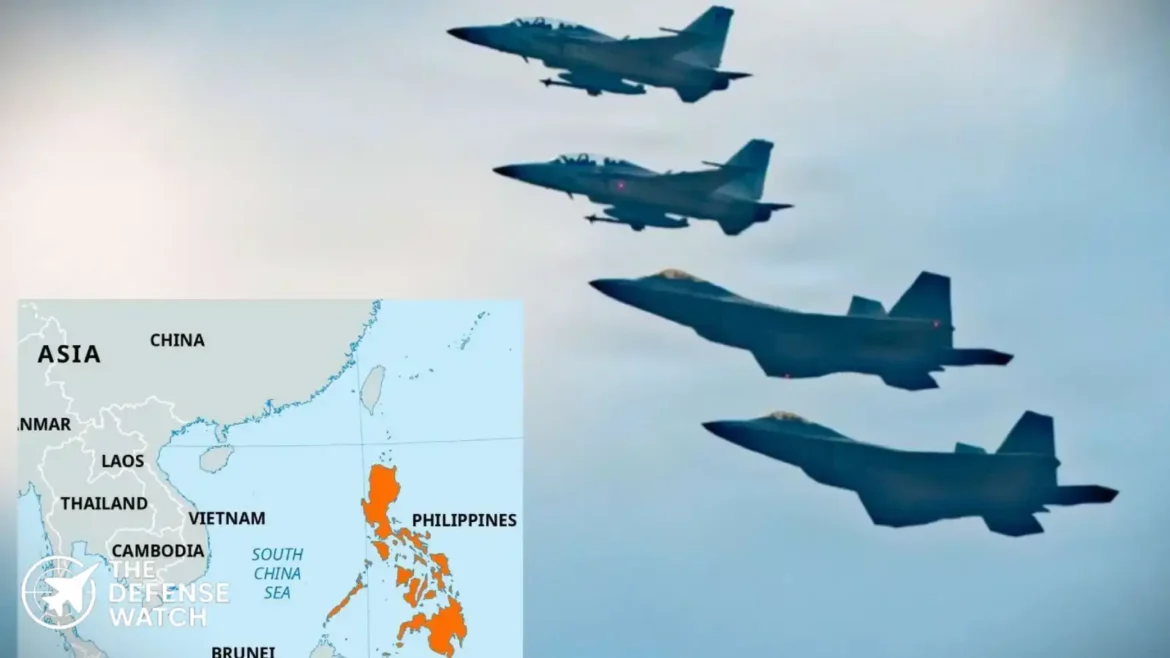
U.S. F-22 Raptors Deepen Indo-Pacific Interoperability With Philippine FA-50PHs
U.S. F-22 Raptors have conducted joint air combat interoperability training with Philippine Air Force FA-50PH fighter aircraft, marking another step in expanding allied airpower cooperation across the Indo-Pacific. The exercise underscores Washington and Manila’s growing focus on readiness, deterrence, and combined operations.
¦ KEY FACTS AT A GLANCE- U.S. F-22 Raptors trained alongside Philippine Air Force FA-50PH fighters in new bilateral air combat exercises.
- The drills focused on interoperability, tactical coordination, and joint mission execution.
- F-22 Raptors bring stealth, sensor fusion, and air dominance capabilities to allied operations.
- Philippine FA-50PH aircraft provide multirole combat capability and rapid-response flexibility.
- The exercise highlights growing U.S.-Philippine defense cooperation in the Indo-Pacific.
The training comes as regional security concerns continue to shape military planning across the South China Sea and wider Pacific theater. For both countries, practical integration between air forces is increasingly valuable.
Why The Drill Matters Now
Joint training between fifth-generation U.S. fighters and regional partner aircraft offers more than symbolic value. It creates real-world familiarity between pilots, mission planners, maintainers, and command structures.
The U.S. F-22 Raptors remain one of the world’s premier air superiority platforms. Combining stealth shaping, high-end sensors, supercruise speed, and advanced data awareness, the aircraft is designed to dominate contested airspace.
For the Philippines, operating alongside the F-22 helps expose crews to advanced tactical procedures that can improve national air defense operations. Even limited interactions with such aircraft can raise standards in mission planning, communications discipline, and air battle management.
FA-50PH Role In Philippine Defense Strategy
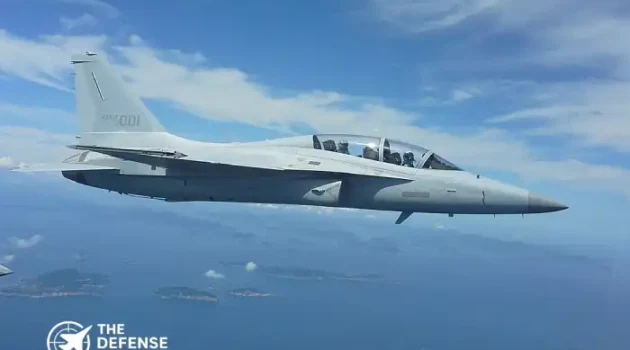
The Philippine Air Force’s FA-50PH fleet has become a central part of Manila’s modern combat aviation capability. Derived from the South Korean FA-50 platform, the aircraft can perform air defense, strike, training, and patrol missions.
While it is not in the same class as stealth fighters, the FA-50PH gives the Philippines a flexible and cost-effective fast jet fleet that can respond quickly to security events.
Its participation in exercises with U.S. F-22 Raptors also reflects a broader strategy, pairing national assets with allied high-end systems to improve layered deterrence.
Strategic Message Across The Indo-Pacific
The timing of such exercises matters. U.S.-Philippine military ties have accelerated in recent years through expanded base access, rotational deployments, maritime patrols, and combined exercises.
Airpower cooperation sends a visible signal that alliance commitments are backed by operational activity, not only policy statements.
For regional observers, the presence of F-22 aircraft in exercises suggests the U.S. is willing to deploy premier combat assets forward when required. That can shape deterrence calculations among competitors and reassure partners.
What Interoperability Really Means
Interoperability is often used as a broad term, but in military aviation it has direct operational meaning:
- Shared radio procedures
- Common tactical language
- Coordinated target identification
- Deconflicted airspace management
- Faster mission handoff between aircraft types
- Better response during crises or natural disasters
These foundations become critical during real contingencies, when reaction time is limited.
Outlook For Future U.S.-Philippine Air Cooperation
As the Philippines continues military modernization, future exercises could expand into maritime strike coordination, integrated air defense drills, and larger multinational events.
The U.S. F-22 Raptors training with Philippine FA-50PHs indicates a maturing defense relationship centered on practical readiness. In a region where distance, speed, and air control matter, that cooperation carries growing strategic weight.
NOVA Group Secures F-22 Fuel Infrastructure Contract
The F-22 fuel infrastructure contract awarded to NOVA Group Inc. marks a significant investment in sustaining U.S. fifth-generation air dominance in the Arctic region. The $57.9 million firm-fixed-price award will fund the construction of petroleum, oil, and lubricant infrastructure at Joint Base Elmendorf-Richardson.
¦ KEY FACTS AT A GLANCE- NOVA Group awarded $57.9 million contract for F-22 fuel infrastructure in Alaska.
- Project supports operations at Joint Base Elmendorf-Richardson in Anchorage.
- Total contract value reaches $62 million with completion set for July 2029.
- U.S. Army Corps of Engineers Alaska District is the contracting authority.
- Funding sourced from Fiscal 2025 military construction defense-wide budget.
The project directly supports operations of the F-22 Raptor, one of the U.S. Air Force’s most advanced air superiority platforms. Work will be carried out in Anchorage, Alaska, with completion scheduled for July 25, 2029.
The contract was issued by the U.S. Army Corps of Engineers Alaska District following a competitive process that drew four bids via online solicitation.
Strategic Importance Of Arctic Airpower Infrastructure
This F-22 fuel infrastructure contract reflects a broader Pentagon effort to reinforce logistics and sustainment capabilities in Alaska, a region increasingly central to U.S. defense posture.
Joint Base Elmendorf-Richardson serves as a critical hub for air operations across the Indo-Pacific and Arctic theaters. Its proximity to potential flashpoints in the Pacific and access to polar routes makes it a strategic asset for rapid deployment and air defense missions.
Fuel infrastructure, while less visible than aircraft procurement, plays a decisive role in operational readiness. Without reliable storage, distribution, and refueling systems, even advanced platforms like the F-22 cannot sustain high sortie rates during extended operations.
By expanding petroleum, oil, and lubricant capacity, the project ensures that F-22 units can operate at full tempo in harsh Arctic conditions where logistics are inherently challenging.
Contract Scope And Funding Details
The base contract value stands at $57,956,500, with a total cumulative value of $62,005,000 when accounting for additional elements. Funding was obligated at the time of award using Fiscal 2025 military construction, defense-wide appropriations.
The firm-fixed-price structure places cost control responsibility on the contractor, a common approach in U.S. military construction projects aimed at minimizing budget overruns.

Image : U.S. Air Force From an acquisition perspective, the relatively limited number of bids suggests a specialized requirement. Fuel infrastructure projects in extreme climates demand technical expertise in environmental protection, cold-weather engineering, and compliance with stringent military standards.
Operational Impact On F-22 Readiness
The F-22 fuel infrastructure contract will directly enhance sortie generation capability at Elmendorf. Increased fuel storage and improved distribution systems reduce turnaround times between missions, a critical factor in both peacetime deterrence and wartime operations.
For the F-22 fleet, which relies on high-performance engines and precision logistics, consistent fuel availability is essential. The aircraft’s role in air superiority, including counter-air missions and integrated air defense suppression, depends on rapid response capability.
This infrastructure upgrade also supports joint operations. Elmendorf hosts multiple units across the Air Force and Army, and improved fuel systems can benefit a broader range of aircraft and support assets.
Broader Defense Context
The timing of the contract aligns with growing U.S. focus on the Arctic as a contested domain. As climate change opens new maritime routes and increases accessibility, competition among major powers is expected to intensify.
Defense planners have increasingly emphasized resilient basing and logistics in remote regions. Investments like this F-22 fuel infrastructure contract indicate a shift toward strengthening foundational capabilities rather than solely prioritizing new platforms.
According to U.S. Department of Defense strategy documents and USACE project data, infrastructure modernization is a key pillar in maintaining long-term readiness, particularly in geographically challenging areas like Alaska.
Industry Perspective
For NOVA Group, the award reinforces its position in the military construction sector, particularly in complex infrastructure projects. Delivering on this contract will require coordination with federal agencies, adherence to strict environmental standards, and execution under demanding climatic conditions.
The project also highlights the role of private contractors in enabling U.S. military capabilities beyond traditional defense manufacturing. Infrastructure, logistics, and sustainment remain essential components of overall combat effectiveness.
■ KEY FACTS AT A GLANCE- ► The United States has deployed 12 F-22 Raptor fighter jets to southern Israel.
- ► The F-22 is the U.S. Air Force’s primary air superiority and stealth fighter platform.
- ► Export of the aircraft is prohibited under U.S. federal law, making overseas deployments highly sensitive.
- ► The move signals elevated deterrence and operational readiness amid regional tensions.
- ► The deployment represents one of the most visible U.S. airpower signals in the region in recent years.
U.S. Deploys 12 F-22 Raptors To Southern Israel In Strategic Signal Of Air Dominance
The United States has deployed 12 F-22 Raptors to southern Israel, marking a rare and strategically significant forward positioning of its most advanced air superiority fighter.
According to U.S. defense officials, the aircraft were repositioned as part of broader force posture adjustments aimed at reinforcing deterrence and maintaining rapid response capability in the region. The move comes amid elevated tensions across the Middle East.
The F-22 Raptor, developed by Lockheed Martin for the United States Air Force, remains the cornerstone of American air dominance strategy. Designed for stealth, high-end air combat, and precision strike missions, it combines low observable characteristics with advanced avionics and sensor fusion.
Why The F-22 Deployment Matters
Forward basing F-22 aircraft outside the continental United States is always deliberate. The platform was built primarily to counter near-peer air threats and establish uncontested control of contested airspace.
Its deployment to southern Israel signals three clear objectives:
First, it enhances regional air superiority coverage. The F-22’s advanced radar, electronic warfare suite, and beyond visual range missile capability allow it to detect and engage adversaries before being detected.
Second, it strengthens deterrence. The visible presence of fifth-generation fighters complicates adversary planning and raises the operational threshold for escalation.
Third, it reassures regional partners. Forward positioning high-end assets demonstrates sustained U.S. commitment to allied defense arrangements.
The F-22 is also unique in one key respect. Unlike the F-35 Lightning II, it has never been exported. Congress banned foreign sales of the aircraft in 1998 to protect sensitive technologies. As a result, every overseas deployment carries strategic weight.
Operational Capabilities
The F-22 was designed during the Cold War to defeat advanced Soviet aircraft. It combines stealth shaping, supercruise capability, thrust vectoring, and an advanced AN/APG-77 radar system.
It can carry AIM-120 AMRAAM air to air missiles internally, preserving its low observable profile. Its ability to operate without afterburners at supersonic speed gives it extended reach and faster response time compared to legacy fighters.
While originally optimized for air dominance, the platform has also evolved to support limited precision ground attack missions.
Regional Context
The Middle East has seen recurring periods of escalation involving state and non state actors, missile threats, and drone operations. U.S. air assets routinely rotate through regional bases, but the deployment of 12 F-22s represents a notable concentration of top tier capability.
The United States maintains a longstanding security partnership with Israel, including integrated air and missile defense cooperation. U.S. Central Command regularly coordinates with Israeli defense forces on regional contingency planning.
Though officials have not detailed specific mission sets, analysts assess that the deployment primarily serves a deterrent and contingency response function rather than signaling imminent offensive operations.
Strategic Signaling And Deterrence
In modern force posture strategy, presence is policy. Deploying the F-22 communicates readiness without issuing formal ultimatums.
Unlike carrier strike groups, which are highly visible symbols of naval power, stealth fighters operate with strategic ambiguity. Their survivability and first strike capacity make them particularly effective for crisis stabilization and escalation management.
At the same time, forward deployments carry logistical and sustainment demands. The F-22 fleet is relatively small, with approximately 180 operational aircraft in the inventory. Committing 12 aircraft overseas represents a meaningful allocation of high end air combat power.
What Comes Next
Defense officials have not specified the duration of the deployment. Historically, F-22 rotations to Europe and the Pacific have lasted several weeks to months, depending on regional conditions.
The presence of the F-22 in southern Israel underscores a broader U.S. objective: maintaining air dominance as the foundation of deterrence strategy in contested regions.
As tensions evolve, the forward deployment of America’s premier stealth fighter will remain a closely watched indicator of Washington’s strategic posture in the Middle East.
■ KEY FACTS AT A GLANCE- ► US F-22 Raptors were recently sighted operating from RAF Lakenheath in the United Kingdom.
- ► The deployment comes amid ongoing U.S. force posture adjustments linked to Middle East security concerns.
- ► F-22 Raptors provide air dominance, stealth penetration, and advanced sensor fusion capabilities.
- ► The United Kingdom remains a critical forward operating hub for U.S. Air Force deployments into Europe and beyond.
- ► Movement underscores Washington’s emphasis on flexible, rapid-response airpower positioning.
US F-22 Raptors Sighted In UK Amid Middle East Force Posture Review
US F-22 Raptors operating from the United Kingdom are drawing attention as Washington reviews its Middle East airpower posture.
Recent imagery and reporting indicate that F-22 aircraft have been sighted at RAF Lakenheath, a long-standing U.S. Air Force hub in Britain. While U.S. officials have not publicly detailed the mission profile, the timing aligns with broader Pentagon adjustments to regional force deployments.
(adsbygoogle = window.adsbygoogle || []).push({});The presence of the aircraft may signal preparations for reinforcement or contingency options tied to Middle East security dynamics. The U.S. Department of Defense has repeatedly emphasized that it retains the ability to surge advanced air assets where needed.
Strategic Value Of The F-22 Raptor
The F-22 Raptor remains the U.S. Air Force’s premier air superiority fighter. Developed by Lockheed Martin, the platform combines low observability, supercruise capability, and advanced avionics.
Unlike multirole fighters, the F-22 is optimized for air dominance missions. It can penetrate contested airspace, conduct beyond-visual-range engagements, and coordinate targeting data across joint forces. Its AN APG-77 radar and sensor fusion architecture allow pilots to detect and track threats at extended distances.
Although the aircraft is not permanently based in Europe, RAF Lakenheath frequently hosts rotational deployments. The base also supports the F-35A fleet assigned to U.S. Air Forces in Europe, making it a logical staging point for advanced fighter operations.
(adsbygoogle = window.adsbygoogle || []).push({});From a force posture standpoint, forward positioning F-22 Raptors in the UK provides geographic flexibility. Aircraft can rapidly deploy eastward toward the Middle East or operate across the European theater in support of NATO commitments.
Middle East Airpower Context
The Middle East remains a priority theater for U.S. Central Command. In recent months, Washington has adjusted air and naval deployments in response to regional tensions, threats to maritime traffic, and risks to U.S. personnel.
The U.S. Department of Defense has not formally confirmed that the F-22 Raptors sighted in the UK are earmarked specifically for Middle East operations. However, such deployments are consistent with established U.S. practice of maintaining strategic ambiguity while ensuring credible deterrence.
Historically, the F-22 has been deployed to the Middle East to counter advanced air defense systems and provide air superiority coverage. Its presence serves both operational and signaling purposes. The aircraft’s stealth profile complicates adversary planning and reinforces U.S. escalation control options.
Why The UK Matters In U.S. Force Projection
RAF Lakenheath plays a central role in U.S. transatlantic air operations. The base offers hardened infrastructure, munitions storage, and established logistics pipelines.
In practical terms, stationing F-22 Raptors in the UK reduces transit time to multiple theaters. Aircraft can move south toward the Middle East, east toward Eastern Europe, or remain in the North Atlantic area.
(adsbygoogle = window.adsbygoogle || []).push({});This flexibility aligns with the Pentagon’s shift toward dynamic force employment. Rather than maintaining large, static footprints, the U.S. military increasingly relies on rotational deployments and rapid repositioning.
For allies, visible F-22 operations reinforce collective defense commitments. For potential adversaries, they signal readiness without requiring permanent basing changes.
Operational And Strategic Implications
The sighting of US F-22 Raptors in the UK should be viewed within a broader pattern of calibrated force adjustments. It does not automatically indicate imminent military action.
Instead, it reflects layered deterrence. By moving high-end assets closer to potential flashpoints, the U.S. preserves response options while maintaining strategic depth.
There is also an interoperability dimension. Operating from the UK allows F-22 units to integrate with NATO air forces and conduct joint training. Such coordination improves readiness for both European and Middle Eastern contingencies.
(adsbygoogle = window.adsbygoogle || []).push({});At the same time, the limited fleet size of the F-22 makes each deployment notable. With fewer than 200 aircraft built and a smaller number mission-capable at any given time, any forward positioning signals deliberate planning.
Looking Ahead
As of now, U.S. officials have not announced a permanent redeployment. The situation underscores how quickly airpower assets can shift in response to evolving security conditions.
The presence of US F-22 Raptors in the UK reinforces Washington’s emphasis on flexibility, deterrence, and alliance coordination. Whether tied directly to Middle East contingencies or broader NATO considerations, the move reflects a force posture designed for rapid adaptation.
- (adsbygoogle = window.adsbygoogle || []).push({});
For defense planners, the key takeaway is clear. Advanced air dominance assets remain central to U.S. strategy, and their movement often speaks as loudly as formal policy statements.
- (adsbygoogle = window.adsbygoogle || []).push({});
F-22 and F-35 Airpower at the Center of Venezuela Operation
F-22 Raptor and F-35 Lightning II fighter jets reportedly played a central role in a US led airpower operation that enabled the capture of Venezuelan leader Nicolas Maduro, according to a report published by Defence Industry Europe. The account highlights how advanced US stealth aircraft were used to establish air dominance and suppress Venezuelan military responses during the operation.
While US officials have not publicly confirmed the details, the report underscores how fifth generation airpower remains a key tool for Washington in high risk contingency operations. The focus keyword F-22 and F-35 airpower operation has emerged prominently in coverage of the incident, reflecting the aircraft’s strategic value.
Establishing Air Superiority with Stealth Fighters
According to the report, F-22 Raptors were deployed to secure air superiority early in the operation. Designed primarily for air dominance, the F-22’s stealth profile, high speed, and advanced sensors reportedly allowed US forces to neutralize potential aerial threats before they could react.
The F-35 Lightning II complemented this role by conducting precision strikes, electronic warfare tasks, and intelligence gathering. With its sensor fusion and networked warfare capabilities, the F-35 is described as providing real time targeting data to US and allied forces involved in the operation.
Together, the F-22 and F-35 formed a layered airpower approach that limited Venezuela’s ability to respond militarily.
Role of US Airpower in Ground Operations
The report suggests that US airpower over Venezuela was not limited to combat aircraft alone. Airborne early warning platforms, aerial refueling tankers, and intelligence assets reportedly supported sustained operations across Venezuelan airspace.
By controlling the air domain, US forces were able to support ground elements tasked with securing key locations. The capture of Maduro, as described in the report, was made possible by the absence of effective Venezuelan air or air defense resistance during the critical phases of the mission.
This approach aligns with longstanding US doctrine, where air dominance is achieved first to reduce risk to personnel on the ground.
Venezuela’s Air Defenses and Regional Implications
Venezuela operates a mix of Russian supplied air defense systems and combat aircraft, including older generation fighters. However, analysts have long questioned their effectiveness against US stealth platforms such as the F-22 and F-35.
If the report is accurate, the operation highlights the widening airpower gap between the United States and regional militaries in Latin America. The ability to deploy stealth aircraft with minimal warning reinforces Washington’s freedom of action in contested environments.
Analysis, What This Means for US Airpower Strategy
The reported use of F-22 and F-35 jets in Venezuela underscores how fifth generation fighters are increasingly central to US crisis response options. Rather than relying on large scale troop deployments, Washington appears to favor precision airpower combined with limited ground action.
This model reduces political risk while maintaining decisive military advantage. It also sends a clear signal to adversaries that advanced air defenses alone may not be sufficient to deter US intervention.
At the same time, the lack of official confirmation means the full scope of the operation remains unclear. Future disclosures may refine or challenge the current narrative.
Broader Geopolitical Context
The reported operation comes amid ongoing instability in Venezuela and heightened US focus on maintaining influence in the Western Hemisphere. Control of airspace through platforms like the F-22 Raptor and F-35 Lightning II remains a cornerstone of that strategy.
As global competition intensifies, US airpower capabilities continue to shape outcomes far beyond traditional conflict zones.
FAQs
Did the US officially confirm the use of F-22 and F-35 jets in Venezuela?No official confirmation has been issued. Details are based on external reporting.
Why are F-22 and F-35 aircraft important in modern operations?They offer stealth, advanced sensors, and the ability to operate in contested airspace.
Does Venezuela have defenses against stealth aircraft?Venezuela operates legacy air defenses that are generally considered ineffective against fifth generation fighters.
What does this mean for regional airpower balance?It highlights the significant technological gap between US forces and most Latin American militaries.
The F-22 Raptor remains central to U.S. air superiority doctrine — and under the newly elevated “F-22 Super” upgrade plan, the Raptor is being readied with enhanced sensors, stealth refinements and extended-range capabilities that seek to preserve its dominance until the next generation arrives. The “F-22 Super” upgrade — the focus of growing congressional and service support — reflects an emerging consensus that modernization of existing stealth assets is essential to sustain “first look, first shot, first kill” advantage in contested airspaces.
With the Next Generation Air Dominance (NGAD) family of systems still several years from full deployment, upgrading the F-22 is viewed by many as a cost-effective and prudent way to maintain edge amid evolving threats from near-peer competitors.
What Is the “F-22 Super” Upgrade
Upgrade Scope and Key Technologies
Under the proposed FY 2026 budget, the U.S. Air Force has earmarked approximately $90 million to begin what it calls a “viability package” for the F-22.
Key components of the upgrade package include:
- A new Infrared Defensive System (IRDS), to improve missile-launch detection and warning.
- Provision for pod-mounted Infrared Search and Track (IRST), enhancing passive detection of threats — especially valuable in contested electromagnetic (EW) environments.
- Sensor and avionics refresh: updated radar, open-architecture data fusion, cryptographic upgrades and other “future-proofing” to allow better integration with other platforms (e.g., NGAD, F-35 Lightning II).
- Improved electronic warfare capabilities and updated threat-warning receivers, under what the Air Force refers to as “Project Keystone.”
- Extended-range fuel tanks and low-drag pylons (the “Low Drag Tanks and Pylons,” LDTP), enabling longer missions — including potentially supersonic ferry or deployment flights — while minimizing radar signature when tanks are mounted.
- A helmet-mounted display (HMD) for pilots, a long-requested capability that provides off-boresight weapon cueing and improved situational awareness.
Together, these improvements are intended to transform the F-22 into a more resilient, networked, and flexible sensor-shooter — sometimes described as a “fifth generation plus” or “F-22 Super” configuration.
Why the Upgrades Are Gaining Renewed Support
NGAD Delays and Capability Gap Risk
The overarching driver behind the push for the F-22 upgrade is the reality that NGAD — slated to succeed the Raptor — remains years away from full operational deployment. Recent public reporting notes that the older jets of the fleet have begun to show their age, and reactivating non-combat-coded airframes requires substantial investment.
By investing in upgrades now, the U.S. Air Force hedges against a capability gap should NGAD face further delays, or if the initial NGAD fleet is limited in size. Maintaining a credible stealth-air superiority force with F-22 “Super” modifications buys critical time.
Evolving Threat Environment
Advances in adversary air-to-air missiles, infrared search-and-track systems, and radar/infrared hybrid detection platforms — particularly by near-peer competitors — have heightened the risk to legacy stealth aircraft which rely primarily on low observable radar signature and limited passive threat detection tools. The F-22’s planned IRDS/IRST and EW upgrades directly address those vulnerabilities.
In addition, range limitations have long hampered Raptor deployments in theaters such as the vast Indo-Pacific region, where long-range reach is critical. The LDTP initiative addresses those concerns, extending the Raptor’s reach while preserving stealth and speed advantages.
Cost-Effectiveness Compared to New-Build Programs
Restarting production of F-22 airframes or accelerating NGAD procurement comes with high cost and risk. By contrast, upgrading existing airframes draws on established maintenance/logistics chains, and avoids the industrial, training, and supply-chain burdens of fielding a completely new fleet. This makes the “Super” upgrade a more economical bridge strategy until NGAD matures.
The Role of “F-22 Super” in the NGAD Era and U.S. Air Dominance
Bridging to NGAD
With the NGAD program still in development, the F-22 Super acts as a “bridge” — preserving critical stealth-air superiority capability while NGAD’s manned sixth-generation fighters, loyal-wingman drones, and sensor-shooter architectures are finalized.
By integrating NGAD-derived technologies (sensors, data fusion, EW, avionics) into the F-22, the Air Force aims to ensure interoperability across legacy and future platforms — a key consideration for joint operations.
Enhancing Force Flexibility and Deterrence Posture
A modernized F-22 fleet — refreshed, sensor-upgraded, and extended in range — supports rapid response, long-range deployment, and forward-deployed deterrence concepts. Some reports describe a “Rapid Raptor” model: a small group of F-22 Supers capable of deploying globally within 24 hours, carrying advanced missiles or even hypersonics, with integrated links to joint force networks.
This flexibility remains valuable even once NGAD becomes operational: a mixed force of NGAD fighters, loyal-wingman drones, and upgraded F-22s would maximize coverage, offering both quantity and quality across different mission sets.
Challenges & Constraints
While the F-22 Super plan offers clear advantages, it is not without hurdles:
- Fleet size constraints: The legacy fleet is limited — only a fraction of the original ~185 Raptors remain combat-coded, and some older Block-20 jets are slated for retirement or reactivation only with major investment.
- Maintenance and sustainment burden: Stealth coatings, low observable materials, and complex avionics make sustainment resource-intensive — reactivation and upgrade of older airframes will require careful logistics and parts supply.
- Budget and prioritization pressure: With NGAD and other modernization programs consuming significant funding, balancing investment between upgrading legacy platforms and funding next-generation systems remains politically and strategically challenging.
- Technological limits: Even upgraded, the F-22 will remain a 5th-generation airframe. Some envisioned NGAD capabilities — such as optionally crewed operations, integrated loyal-wingman drone control, advanced sensor-to-shooter kill chains — may be beyond retrofit scope.
Analysis: What “F-22 Super” Means for U.S. Air Dominance
The renewed push for “F-22 Super” upgrades reflects a pragmatic recalibration of U.S. air dominance strategy. Rather than banking solely on generations-ahead platforms like NGAD, the Air Force seems increasingly focused on maintaining — and optimizing — existing capabilities to reduce risk and cost.
In the near to mid-term, the upgraded Raptor fleet can provide credible deterrence and warfighting capability in contested zones, especially in regions like the Indo-Pacific or Europe where adversaries field improving stealth, IRST, and long-range missile threats.
In the longer term, pairing a modernized F-22 with NGAD and other new systems offers a layered force architecture — combining proven fighters with next-gen platforms and drone-enabled mass. That architecture could offer both flexibility and formidable redundancy: if NGAD faces delays, cost overruns, or initial limited basing, the F-22 Super ensures the core air-superiority mission remains covered.
Still, this approach is not a substitute for NGAD’s ambition. The F-22 Super should be seen as a bridge — but a strategically vital one.
FAQs
Will the F-22 production ever restart?There is no public indication that full-scale F-22 production will restart. The current “Super” upgrades focus on existing airframes. Restarting production would be costly, and past cost estimates for hundreds of new Raptors ran into tens of billions of dollars.
How long will upgraded F-22s remain in service?With the Super upgrades, F-22s could remain relevant well into the 2030s and even 2040s — effectively bridging the gap until NGAD and other future platforms are fully operational.
Does the upgrade include new weapons or just sensors/avionics?The upgrade package emphasizes sensors, avionics, defense systems and endurance enhancements. However, the new open-architecture avionics could facilitate integration of modern weapons, long-range missiles, and future munitions.
How does the F-22 Super compare to NGAD capabilities?NGAD is expected to deliver a fundamentally new generation of capabilities — optionally crewed aircraft, loyal-wingman drones, advanced networking and sensor-fusion architecture. The F-22 Super is not a replacement, but a bridging upgrade: a 5th-generation “plus” that borrows NGAD-derived sensors and avionics to remain effective until the new generation arrives.
Why not simply rely on the F-35 fleet instead of upgrading the F-22?The F-35 serves a complementary but different role: multi-role strike, close air support, and networked operations. The F-22’s unique combination of stealth, supercruise, maneuverability and range — particularly after Super upgrades — is irreplaceable for dedicated air superiority and first-look, first-shot engagements in contested environments.
Conclusion
The “F-22 Super” upgrade is gaining traction not as a nostalgic effort to preserve Cold War-era airframes, but as a deliberate, strategic investment in sustaining U.S. air superiority through a complex transition period. As NGAD and associated sixth-gen programs press forward — but remain years away from full deployment — the Air Force appears to be hedging its bets: modernizing and extending the life of proven platforms while simultaneously preparing for the future.
In an era of rapidly evolving air and missile threats, contested electromagnetic environments and near-peer adversaries fielding advanced stealth, IRST and long-range missiles, that dual-track strategy may be the most realistic path to preserving U.S. global air dominance.
Newer Posts