Iranian Assertion on Kowsar in Kuwait Strike
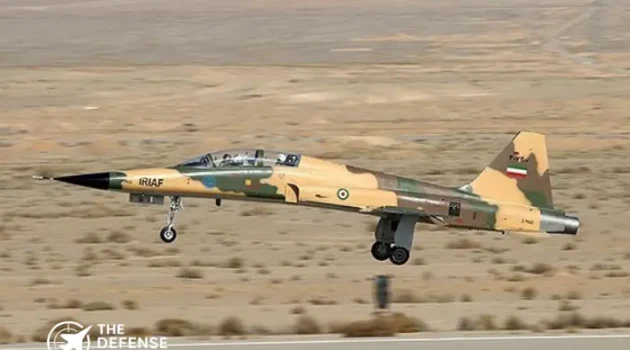
Iran has asserted that the aircraft involved in the reported bombing of Camp Buehring, a major U.S. military installation in Kuwait, was not a vintage F-5 Tiger II but a Kowsar fighter of its own production. According to Iranian statements, the operation demonstrated the capabilities of its indigenous aerospace industry and the skill of a trained pilot who executed a low-altitude strike despite layered air defenses.
- NBC News reported in April 2026 that an Iranian F-5-type fighter jet bombed Camp Buehring in Kuwait during the opening phase of the 2026 conflict.
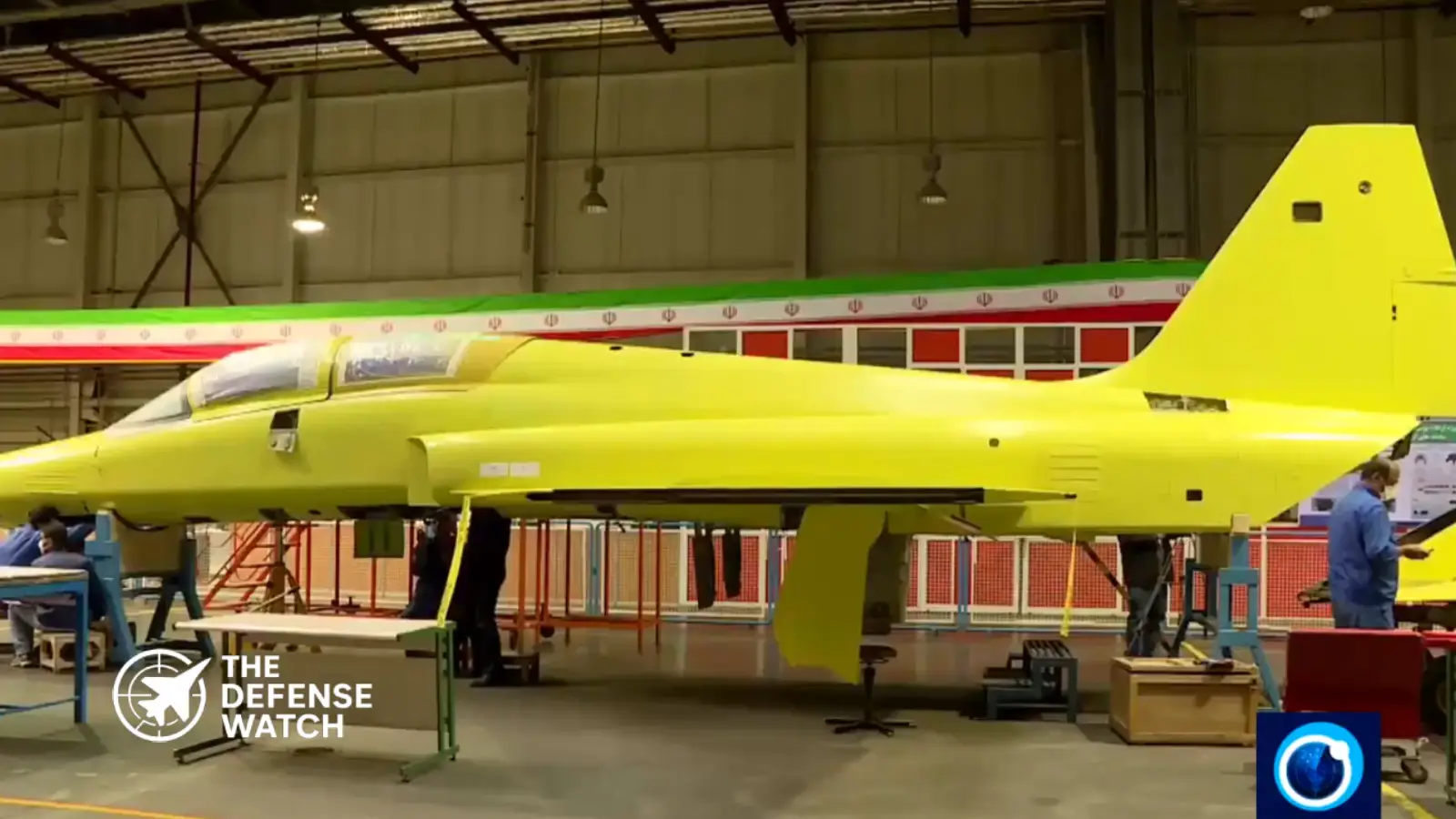
- Iran claims the aircraft was not an old F-5 but a domestically produced Kowsar fighter, which it has been manufacturing in series since 2018.
- The Kowsar is a reverse-engineered and upgraded version of the pre-1979 Northrop F-5 Tiger II, featuring Iranian-developed avionics.
- The reported low-altitude strike used unguided munitions and reportedly penetrated U.S. air defenses around the base.
- The incident highlights Iran’s efforts to maintain and modernize its aging fighter fleet under long-term international sanctions.
U.S. reporting, primarily from an April 2026 NBC News investigation, described an Iranian F-5-type fighter conducting a rare manned aircraft attack on the base in the initial days of the 2026 hostilities between Iran, the United States, and Israel. The strike formed part of broader Iranian retaliation involving missiles and drones targeting U.S. facilities across seven countries. Details on damage, casualties, and exact tactics remain limited and rely on unnamed officials.
Background on the HESA Kowsar Program
The HESA Kowsar is Iran’s domestically developed single- and twin-seat fighter based on the Northrop F-5 airframe. Iran received F-5s prior to the 1979 Islamic Revolution and has since maintained and modified the fleet through reverse-engineering efforts, including variants such as the Azarakhsh and Saeqeh.
Iran inaugurated a Kowsar assembly line in November 2018, describing the aircraft as featuring “advanced avionics,” a multipurpose radar, and 100% indigenous manufacturing. State media portrayed it as a fourth-generation platform suited for short-range air support and precision targeting missions. Deliveries of small numbers—reportedly three additional aircraft in 2020—have been publicized, but independent assessments indicate production remains constrained by sanctions, component availability, and technical limitations.
Western analysts have consistently noted that the Kowsar retains the core aerodynamic design of the 1960s-era F-5 Tiger II while incorporating Iranian-upgraded cockpit systems and sensors. Its combat radius, payload, and survivability against modern threats are generally assessed as modest compared to contemporary Western or Russian fighters.
Context of the Reported Strike
According to available reporting, the incident at Camp Buehring occurred amid intense opening exchanges following U.S.-Israeli strikes on Iranian targets around late February 2026. Iran launched coordinated attacks using ballistic missiles, cruise missiles, drones, and—at least in this claimed instance—a manned fighter.
U.S. officials cited in media accounts indicated the aircraft approached at low altitude and released unguided (“dumb”) bombs, potentially exploiting temporary gaps or saturation in air defense coverage that included Patriot batteries and shorter-range systems. Such low-level tactics have historically been used to defeat or complicate radar-guided intercepts optimized for higher-altitude or faster threats.
If confirmed as a Kowsar or modified F-5 derivative, the mission would represent an operational validation of Iran’s ability to sustain and employ legacy airframes under sanctions. However, success in a single sortie does not equate to broader force-wide capability against integrated, contested airspace defended by fifth-generation fighters, airborne early warning, and electronic warfare assets.
Analysis: Technical and Operational Realities
From a defense technology perspective, the Kowsar reflects Iran’s long-standing strategy of self-reliance through reverse-engineering and incremental upgrades. Under decades of international sanctions, Tehran has invested in maintaining its pre-revolution F-5 inventory and developing parallel production lines. This approach prioritizes affordability, local maintenance, and numbers over cutting-edge performance.
Key limitations persist: the F-5/Kowsar family lacks modern stealth, advanced sensor fusion, or supercruise capability. Its radar cross-section and infrared signature remain relatively large by today’s standards. Effective employment in contested airspace would likely depend on careful mission planning, terrain masking, coordination with distracting missile and drone salvos, and pilot proficiency in low-level navigation and attack profiles.
The reported low-altitude ingress aligns with classic fighter-bomber tactics designed to minimize exposure time to medium- and long-range surface-to-air missiles. Saturation attacks—combining multiple threat types—can temporarily overwhelm command-and-control networks, creating brief windows for penetration. Whether this occurred at Camp Buehring remains subject to further verification beyond initial reporting.
Iran’s claim emphasizes “serial production since 2018” and attributes success to engineering and pilot heroism. Independent verification of fleet numbers and readiness is challenging due to limited transparency from Tehran. Publicly available imagery and statements suggest modest output rather than large-scale fielding.
Broader Implications for Regional Air Power
The episode underscores ongoing challenges in defending forward bases against diverse, low-technology threats in a high-threat environment. U.S. and allied air defenses in the Gulf are sophisticated but not infallible against massed, multi-axis attacks that include low-flying manned aircraft.
For the Islamic Republic of Iran Air Force (IRIAF), any successful strike bolsters domestic narratives of resilience. However, sustaining such operations against a peer adversary with air superiority would face severe attrition risks given Iran’s limited number of modernized fighters and tanker support.
The incident also occurs against a backdrop of deepening Iran-Russia military ties. A reported December 2025 agreement for Russian Verba MANPADS and associated missiles aims to replenish Iranian short-range air defenses after losses in prior fighting with Israel. This cooperation spans platforms from ground-based systems to potential aviation support.
U.S. Perspective and Force Protection Lessons
From a U.S. standpoint, the reported breach—however limited—highlights the need for persistent, multi-domain surveillance and rapid adaptation of air defense architectures. Layered systems must address not only ballistic and cruise missiles but also low-and-slow threats, including legacy fighters employing visual or basic inertial attack methods.
Pentagon assessments of base resilience, dispersal tactics, and electronic warfare integration will likely inform future posture in the CENTCOM area of responsibility. The dispersal of personnel prior to hostilities reportedly reduced casualties, though infrastructure damage assessments vary between public statements and later reporting.