

PD-8 Engine Advances Russian Aviation Self-Reliance
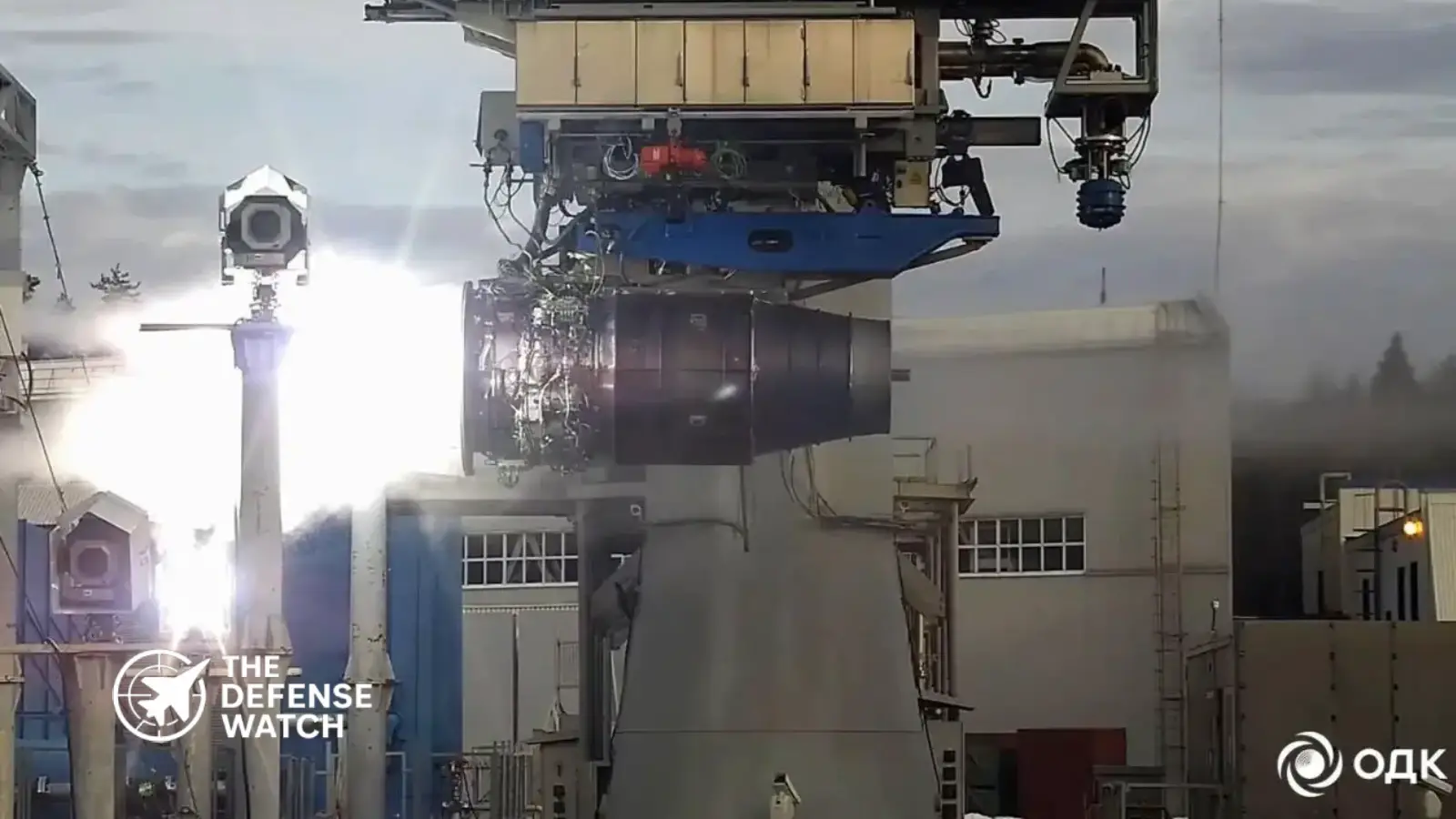
The PD-8 engine has demonstrated robustness in demanding hail ingestion tests conducted by Russia’s United Engine Corporation (UEC), a Rostec subsidiary. Engineers fired more than 220 kg of 16 mm ice pellets at velocities reaching 240 m/s into the running powerplant on a specialized open-air test rig, replicating severe hailstorm encounters across varied altitudes, ambient temperatures, and throttle settings.
- United Engine Corporation successfully tested the PD-8 engine against heavy hail on a specialized open rig.
- The engine was subjected to over 220 kg of 16 mm ice pellets fired at 240 m/s, simulating extreme hailstorm conditions.
- The PD-8 remained fully stable and continued normal operation throughout the test.
- Tests verified mechanical strength of fan blades, components, and overall engine controllability.
- This hail ingestion test is part of the final certification campaign for the PD-8, intended for the import-substituted Yakovlev SJ-100 regional jet.
The engine maintained full operational stability throughout the trials, according to UEC statements. This latest evaluation adds to an extensive certification campaign that already includes natural icing flights in the Arkhangelsk region, water ingestion, bird strike, and other foreign object damage scenarios.
Context Within Russia’s Import Substitution Drive
Russia accelerated development of the PD-8 turbofan following Western sanctions that restricted access to foreign components for civil aircraft programs. The engine, derived from technologies in the larger PD-14 powering the MC-21 narrowbody, is designed to deliver approximately 8 tons of thrust and serve as the primary powerplant for the Yakovlev SJ-100 (formerly Sukhoi Superjet 100) regional jet, with potential applications on the Be-200 amphibian.
Earlier SJ-100 variants relied on the PowerJet SaM146, a joint Franco-Russian design. Full localization efforts intensified after 2022, with the first SJ-100 prototype equipped with PD-8 engines completing its maiden flight in March 2025. As of April 2026, cumulative testing across ground benches and flight trials surpassed 6,100 hours.
Recent milestones include successful natural icing trials in March 2026 from Talagi Airport, where the SJ-100 prototype (tail number 97023) conducted nine flights in conditions that produced 8-10 mm ice accretion on surfaces. UEC-Saturn reported the PD-8 performed reliably, validating analytical models against real-world data.
Technical Scope of the Hail Tests
Hail ingestion represents one of the more severe certification requirements for turbofan engines, as high-velocity ice impacts can damage fan blades, distort airflow, or cause compressor stalls. The UEC test regimen used a calibrated open rig to propel precise quantities of 16 mm ice pellets at 240 m/s—conditions chosen to exceed typical certification thresholds for “heavy hail.”
The trials evaluated engine parameters including thrust output, gas-dynamic stability, vibration levels, and controllability before, during, and after ice ingestion. UEC confirmed the PD-8 sustained operation without surge, flameout, or structural compromise across the tested envelope. Prior related tests covered bird ingestion (small and medium birds) and water/rain ingestion, all of which the engine also cleared.
These ground-based simulations complement flight trials in natural icing environments, providing engineers with controlled, repeatable data on component resilience.
Certification Status and Production Outlook
As of early April 2026, UEC indicated it had completed the main set of certification tests for the PD-8, including icing, crosswind, acoustic, and high-power endurance runs. Full type certification by Russian authorities is expected to enable series production and entry into commercial service for the SJ-100.
The program forms a cornerstone of Russia’s broader effort to field fully domestic commercial aircraft. Aeroflot Group has placed orders for dozens of SJ-100s, while parallel work continues on the MC-21 with PD-14 engines and the Il-114-300 turboprop.
Analysis
While hail ingestion tests are standard in engine certification, the scale described—over 220 kg of ice at high velocity—reflects a methodical approach to proving margins in a resource-constrained environment. Russia’s parallel testing of PD-8, PD-14, and TV7-117ST-01 engines in Arctic natural icing conditions during March 2026 demonstrates coordinated industrial effort across multiple platforms.
This reduces single-point vulnerabilities in the certification chain. For operators, validated robustness in extreme weather directly translates to higher dispatch reliability in regions with frequent convective activity or winter operations. However, sustained series production and long-term in-service reliability data will ultimately determine commercial success beyond initial certification. The PD-8 program underscores that propulsion localization is not merely a political response but a technically intensive endeavor requiring years of iterative ground and flight validation.
Strategic Implications for Russian Aerospace
Successful completion of these demanding environmental and ingestion tests strengthens confidence in the PD-8’s design margins. For an industry operating under sustained export controls, demonstrating that domestically developed engines can meet or exceed international-standard certification criteria is critical for both operational safety and potential future export markets.
The PD-8 effort draws on experience from the PD-14 program and benefits from shared test infrastructure at facilities such as UEC-Saturn in Rybinsk and the Central Institute of Aviation Motors (TsIAM). Cumulative hours logged provide a substantial dataset for reliability projections.
From a U.S. perspective, Russia’s progress in localized propulsion technology highlights the challenges sanctions pose while also illustrating the investments required to close capability gaps in civil aviation. The SJ-100 with PD-8 is positioned primarily for domestic and CIS routes, where shorter runways and varied climates are common operational demands.
