Executive Summary:
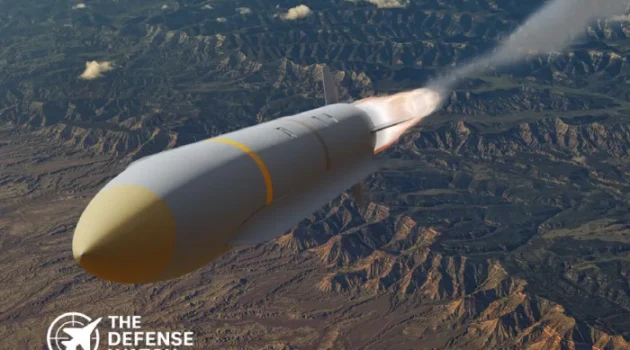
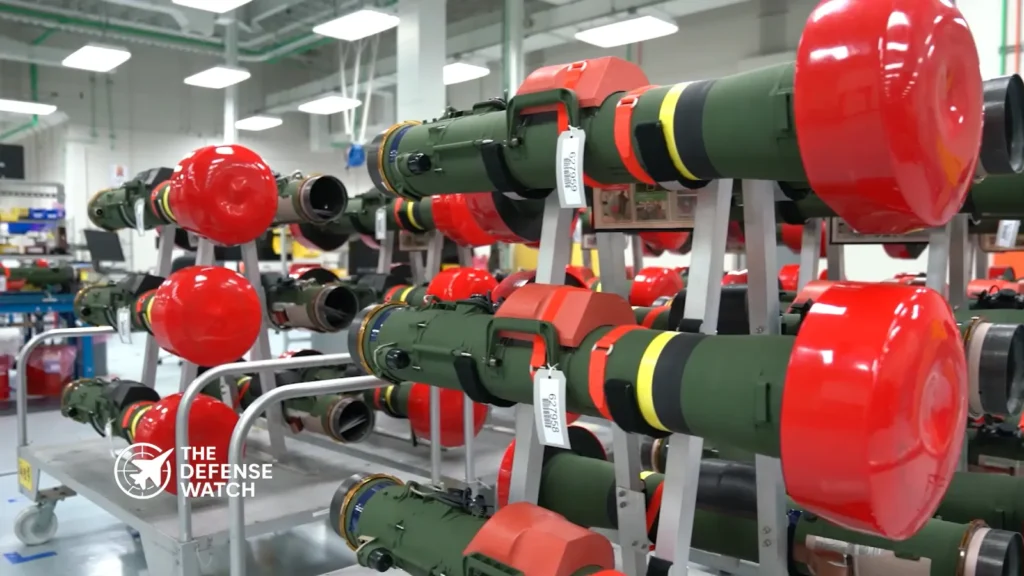
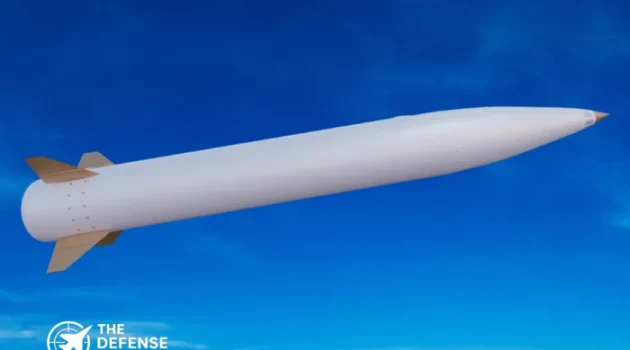
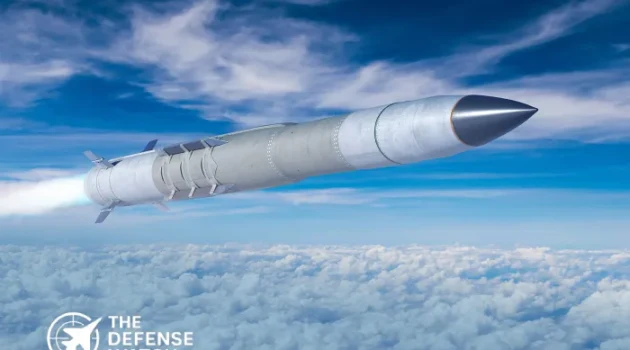
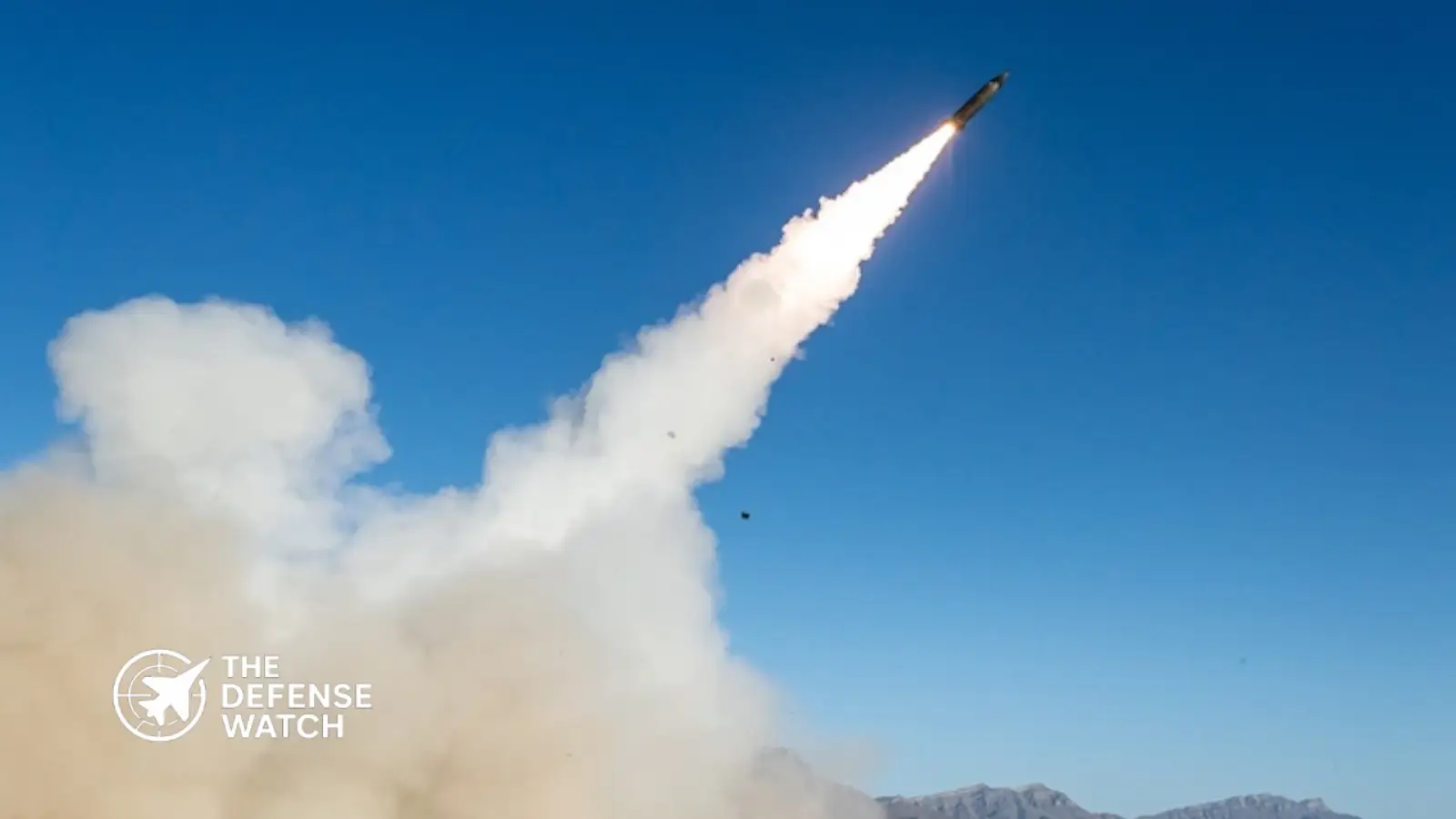
Lockheed Martin has announced plans to invest up to $9 billion through 2030 to expand missile production across more than 20 manufacturing facilities in the United States. The investment supports higher production rates for critical missile programs, including THAAD, PAC-3, Precision Strike Missile (PrSM), and other strategic systems as the Pentagon seeks to strengthen the U.S. defense industrial base and replenish munitions inventories.
Lockheed Martin Expands U.S. Missile Production Capacity
Lockheed Martin’s $9 billion missile production investment represents one of the company’s largest industrial expansion efforts in recent years, reflecting growing demand for advanced missile systems from both the U.S. military and allied nations. According to the company’s official announcements, the investment will modernize and expand more than 20 facilities nationwide through 2030.
The initiative supports the Department of War’s broader effort to increase production of critical precision weapons and missile defense interceptors following sustained demand generated by recent global conflicts and the need to rebuild strategic stockpiles.
Investment Targets More Than 20 Manufacturing Sites
Lockheed Martin said the funding will be directed toward new construction, factory modernization, automation, workforce expansion, and advanced manufacturing technologies.
Key states benefiting from the investment include:
| State | Planned Focus |
|---|---|
| Alabama | THAAD interceptors, Next Generation Interceptor support |
| Arkansas | Munitions acceleration facilities |
| Florida | Missile assembly and production modernization |
| Massachusetts | Advanced missile manufacturing |
| Texas | Production expansion and manufacturing upgrades |
The company says the investment includes:
- New manufacturing buildings
- Expanded production lines
- Digital manufacturing systems
- Robotics and automation
- Advanced testing capabilities
- Supply chain improvements
- Workforce growth
These improvements are intended to reduce production bottlenecks while increasing annual output across several major missile programs.
Missile Programs Receiving Additional Capacity
The expanded industrial network will support several of the Pentagon’s highest-priority missile programs.
Among the principal systems are:
- Terminal High Altitude Area Defense (THAAD)
- Patriot PAC-3 interceptors
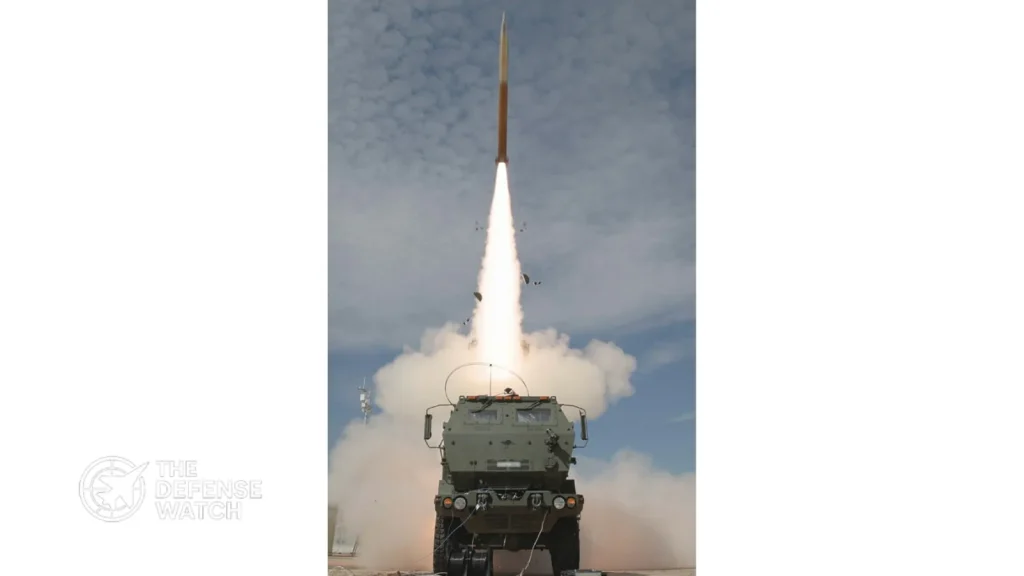
- Precision Strike Missile (PrSM)
- AGM-158 family
- Next Generation Interceptor (NGI)
- Apache fire control systems and related components
Recent framework agreements between the Department of War and Lockheed Martin also call for significant increases in THAAD and PrSM production, complementing the company’s infrastructure investments.
New Facilities Already Under Construction
Several expansion projects are already underway.
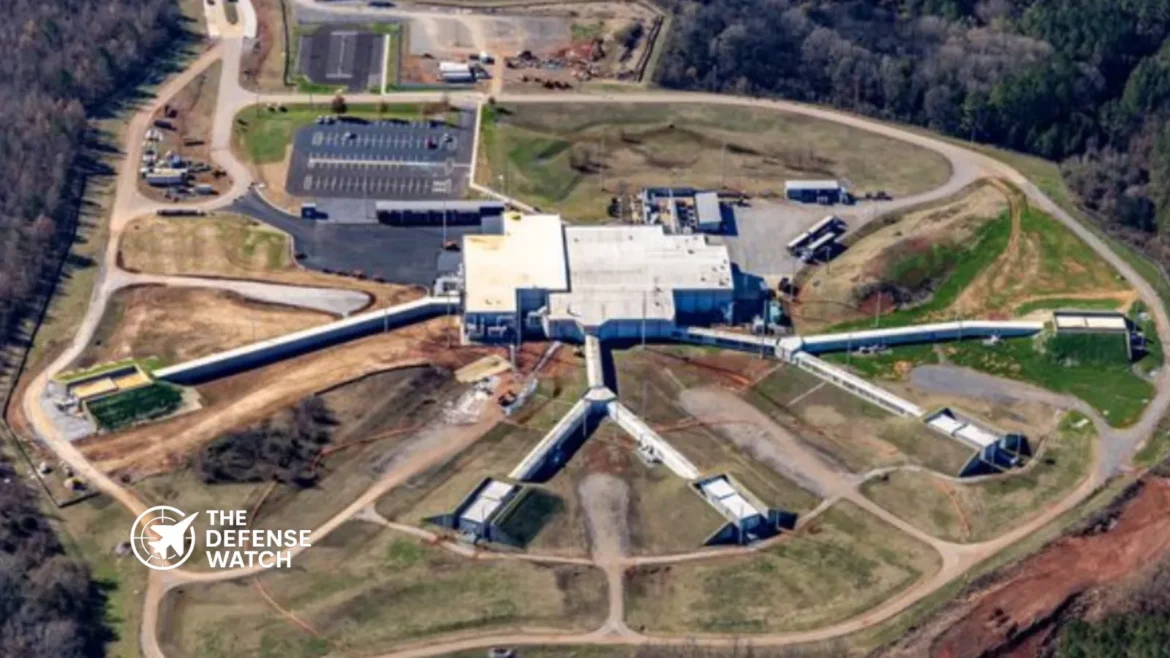
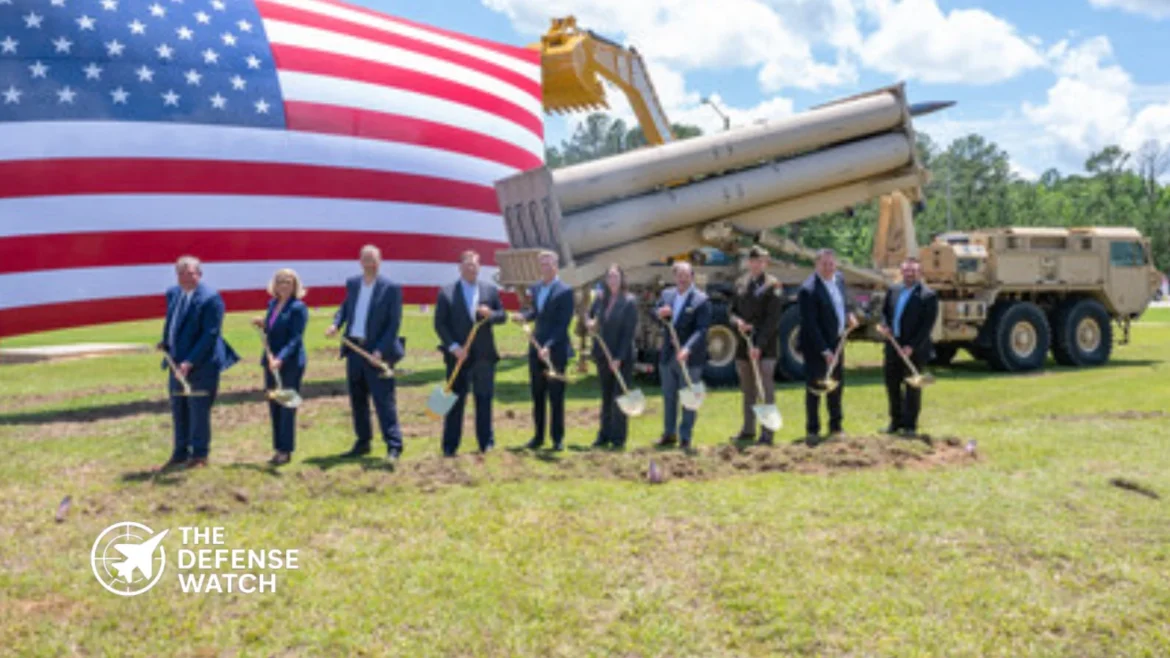
In Troy, Alabama, Lockheed Martin recently broke ground on Building 47, an 87,000 square foot Munitions Production Center that will nearly double production space dedicated to THAAD interceptors while supporting future Next Generation Interceptor work.
The company has also announced:
- A 150,000 square foot cable and harness manufacturing facility in Jessup, Pennsylvania.
- A redesigned missile paint facility in Orlando, Florida.
- A new smart assembly line in Ocala, Florida that reportedly cuts production hours by roughly half for certain missile subassemblies.
These projects incorporate digital twin technology, modular assembly systems, automation, and advanced quality control designed to increase throughput while maintaining manufacturing standards.
Why This Matters For U.S. Defense Strategy
Beyond expanding factory space, the investment addresses one of the Pentagon’s most persistent challenges: rebuilding the defense industrial base after years of relatively low missile production rates.
Recent operations in Europe and the Middle East have demonstrated how quickly inventories of advanced interceptors and precision weapons can be consumed during sustained military operations. At the same time, U.S. defense planners continue emphasizing readiness for potential high intensity conflicts in the Indo-Pacific.
Producing sophisticated interceptors such as THAAD or PAC-3 is considerably more complex than increasing output of conventional munitions. These systems require advanced seekers, precision electronics, propulsion systems, specialized materials, and extensive testing. Expanding production therefore depends as much on manufacturing infrastructure and supplier capacity as on final assembly lines.
Lockheed Martin’s investment reflects an industry-wide shift toward long-term industrial resilience rather than temporary production surges. Modernized facilities equipped with digital manufacturing, robotics, and modular production layouts can scale output more efficiently while reducing delays caused by labor shortages or legacy manufacturing processes.
For allied nations that rely on U.S.-built missile systems, additional production capacity could also improve future delivery timelines as international demand continues to grow.
Growing Pentagon Push To Increase Missile Output
The announcement comes alongside broader Department of War initiatives to expand production across the U.S. missile industrial base.
Earlier this month, the Pentagon signed framework agreements exceeding $3 billion with Lockheed Martin and Northrop Grumman aimed at significantly increasing production of Patriot and THAAD interceptor components. The agreements are intended to triple Patriot-related production capacity while quadrupling THAAD output over the coming years.
Separately, Lockheed Martin recently received a multiyear THAAD procurement contract valued at up to $35 billion, providing long-term production stability that supports continued investment in manufacturing infrastructure.
Looking Ahead
Although many of the new facilities will become operational over the next several years, the investment establishes a long-term manufacturing foundation extending through 2030.
Rather than representing a single program expansion, the initiative strengthens the broader U.S. missile production ecosystem across multiple strategic weapon systems. As demand for integrated air and missile defense, long-range precision fires, and next-generation interceptors continues to increase, industrial capacity has become an increasingly important element of national defense planning alongside weapon performance itself.

atOptions = { ‘key’ : ‘3d48d603f906e3fe9f205be3c4433835’, ‘format’ : ‘iframe’, ‘height’ : 250, ‘width’ : 300, ‘params’ : {} };Executive Summary:
Australia has designated domestic guided weapons and explosive ordnance production as one of seven Sovereign Defence Industrial Priorities in its 2026 Defence Industry Development Strategy. The move accelerates existing efforts under the Guided Weapons and Explosive Ordnance (GWEO) Enterprise, including local assembly and component manufacturing of GMLRS rockets and Naval Strike Missiles. The initiative aims to reduce reliance on distant supply chains, deepen stockpiles, and enhance interoperability with allies for sustained operations in the Indo-Pacific.
Australia’s Push for Sovereign Missile Capability
Australia is making guided missile and munitions production a central pillar of its 2026 defence industry policy to support long-range strike and maritime denial capabilities essential for Indo-Pacific deterrence. The 2026 Defence Industry Development Strategy explicitly lists guided weapons and explosive ordnance among the nation’s sovereign industrial priorities for the next two to five years.
This policy builds directly on the Guided Weapons and Explosive Ordnance (GWEO) Enterprise, backed by investments of A$26-36 billion over the decade according to the 2026 Integrated Investment Program. It reflects lessons from ongoing conflicts regarding the critical need for resilient munitions supply in high-intensity scenarios.
(adsbygoogle = window.adsbygoogle || []).push({});Technical and Industrial Developments
Two major programs anchor Australia’s current efforts. Lockheed Martin Australia has established production at Port Wakefield in South Australia, the first facility outside the United States capable of producing Guided Multiple Launch Rocket System (GMLRS) munitions. Australian engineers, trained in the U.S., have begun final assembly of GMLRS all-up rounds and launch pod containers, with live-fire demonstrations already conducted.
Key GMLRS/HIMARS Elements in Australian Service:
- GMLRS: Precision-guided rocket with ranges exceeding 70 km standard, extended variants beyond 150 km.
- PrSM (Precision Strike Missile): Longer-range ballistic option up to 500+ km, compatible with HIMARS launchers.
- Production Goal: Scaling toward high-rate capacity of up to 4,000 GMLRS per year by 2029 at dedicated facilities.
Complementing this, Kongsberg Defence Australia is constructing a missile factory near Williamtown, New South Wales. The facility will manufacture and maintain Naval Strike Missile (NSM) and Joint Strike Missile (JSM) systems, with production slated to commence in 2027. The NSM offers high-subsonic sea-skimming anti-ship and land-attack capability with a range exceeding 300 km, while the JSM variant integrates with the F-35A internal weapons bay.
Operational and Strategic Context
Australia’s geography demands robust long-range fires to control maritime approaches and support denial operations. HIMARS-equipped units, accelerated under recent investments including A$1.6 billion for additional launchers, provide mobile, precision strike options. Domestic production capacity allows for faster replenishment and potential customization while maintaining allied certification standards.
Analysis: Implications for U.S. and Allied Strategy
From a U.S. perspective, Australia’s GWEO progress strengthens the integrated deterrence network in the Indo-Pacific. By developing local component manufacturing—such as Moog Australia’s work on GMLRS control actuation systems and AW Bell’s production of canards and housings—Australia diversifies supply chains vulnerable to disruption in a Taiwan or South China Sea contingency.
This reduces the burden on U.S. production lines during simultaneous demands. It also enhances interoperability: Australian-produced munitions must integrate seamlessly with U.S. HIMARS, F-35 fleets, and naval systems. Success here could serve as a model for other allies, fostering a more distributed and resilient Western munitions industrial base.
Technical hurdles remain significant. Full sovereign production requires mastering rocket motors, advanced seekers, secure software, and rigorous testing regimes under Australian environmental conditions. Export controls and technology transfer agreements with the U.S. and Norway continue to shape the pace of indigenization. Nevertheless, the 2026 strategy signals sustained political commitment, with workforce development and grants totaling additional hundreds of millions of dollars.
(adsbygoogle = window.adsbygoogle || []).push({});The emphasis on certification ensures that locally produced weapons contribute meaningfully to coalition operations rather than creating parallel, incompatible inventories. In a prolonged conflict, the ability to surge production and perform in-country maintenance could prove decisive for ADF sustainment.
Broader Defence Industry Framework
The 2026 Defence Industry Development Strategy sets targets for primes to expand the defence workforce, prioritizes apprenticeships, and provides A$80 million in new grants through 2030. It promotes stronger international partnerships while building domestic resilience, aligning with the National Defence Strategy’s focus on self-reliance within an alliance framework.
This approach positions Australia not only as a consumer but as a potential contributor to regional security, including through future exports to partners.

(adsbygoogle = window.adsbygoogle || []).push({});Executive Summary: L3Harris Technologies has expanded its Advanced Manufacturing Facility-South (AMF-South) in Huntsville, Alabama, through a $25 million investment that adds 130,000 square feet of manufacturing space. The expansion increases the company’s Huntsville footprint to approximately 670,000 square feet and is intended to support rising U.S. Department of Defense demand for accelerated missile and munitions production. The investment reflects broader efforts across the U.S. defense industrial base to increase manufacturing capacity for critical weapon systems.
L3Harris Expands Huntsville Manufacturing Capacity
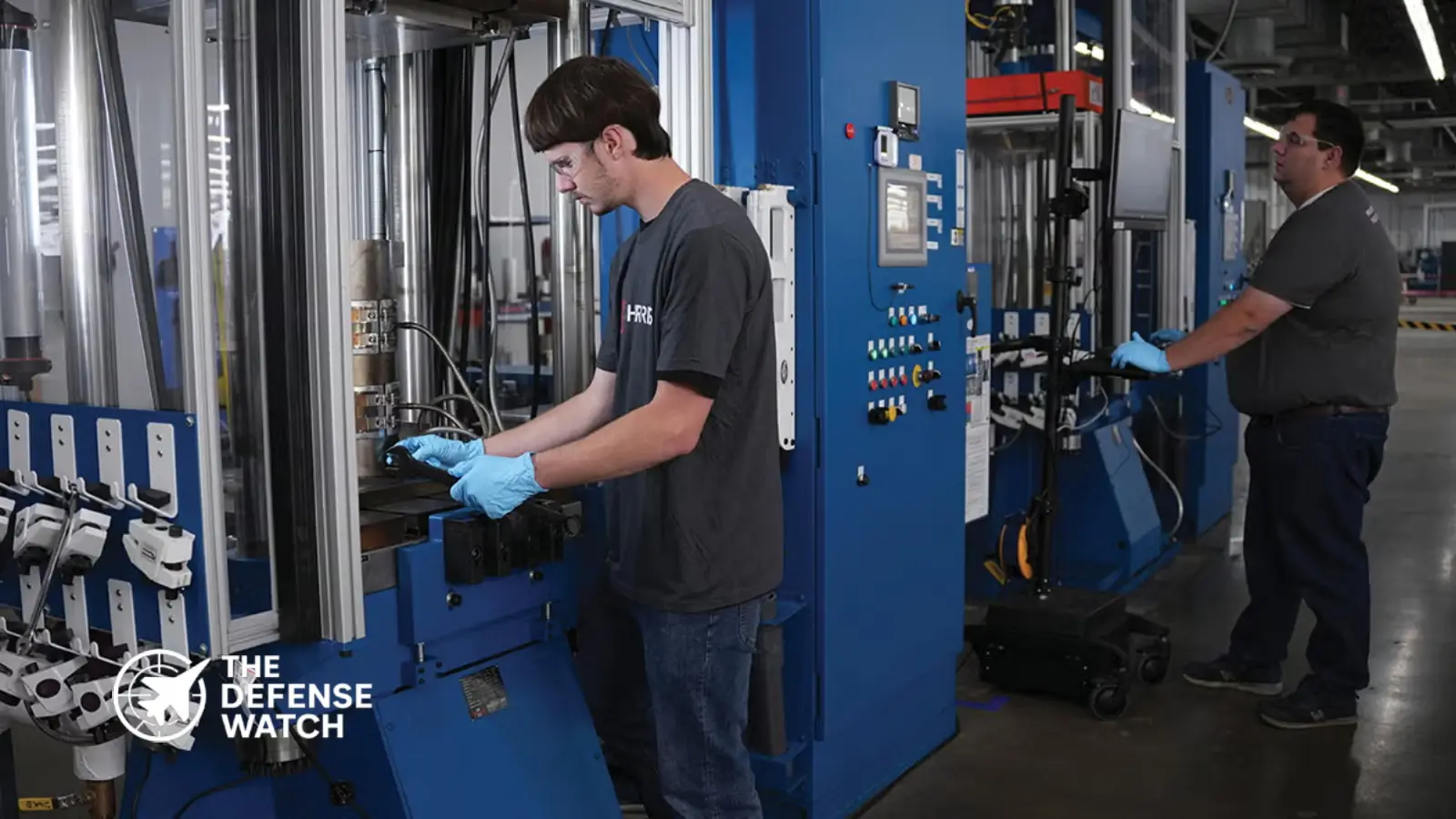
L3Harris Technologies has announced a significant expansion of its Advanced Manufacturing Facility-South (AMF-South) in Huntsville, Alabama, adding 130,000 square feet of manufacturing space through a $25 million investment.
According to the company’s June 1 announcement, the expansion increases L3Harris’ total operational footprint in Huntsville to approximately 670,000 square feet spread across three facilities. The additional manufacturing area is designed to rapidly scale production by leveraging existing industrial infrastructure already available at the site.
The expansion comes as the U.S. Department of Defense continues to emphasize increased production rates for missiles, munitions, and other critical defense systems amid growing global security challenges and sustained demand from both U.S. and allied military customers.
Ken Bedingfield, President of Missile Solutions at L3Harris, said the investment will allow the company to increase production capacity while maintaining flexibility to respond to changing defense requirements.
The additional space allows us to lean forward and surge capacity in a way that directly aligns with the Department of War’s demand for critical munition acceleration,” Bedingfield stated.
Huntsville’s Growing Role In U.S. Missile Manufacturing
Huntsville has become one of the most important centers of the American missile and space industry. Often referred to as “Rocket City,” the Alabama city hosts major defense contractors, missile manufacturers, Army modernization programs, and missile defense organizations.
L3Harris has steadily increased its investment in the region. The company reported that its capital spending in Huntsville tripled between 2024 and 2025, reflecting a broader industry trend toward expanding domestic production capacity.
(adsbygoogle = window.adsbygoogle || []).push({});The company noted that Huntsville operations currently support more than half of its solid rocket motor programs through the production of inert components, with manufacturing output continuing to increase annually.
Key Expansion Figures
| Category | Details |
|---|---|
| Investment Value | $25 million |
| New Manufacturing Space | 130,000 square feet |
| Total Huntsville Footprint | Approximately 670,000 square feet |
| Number of Huntsville Sites | 3 |
| Focus Area | Missile and defense manufacturing |
| Location | Huntsville, Alabama |
Why The Expansion Matters
The facility expansion reflects a larger shift underway across the U.S. defense industrial base.
Since 2022, Pentagon officials have repeatedly highlighted the need to expand production capacity for precision-guided weapons, missile interceptors, solid rocket motors, and other critical munitions. Operational lessons from conflicts in Ukraine and the Middle East have demonstrated that modern warfare can rapidly consume missile inventories, placing pressure on manufacturers to increase output.
For companies such as L3Harris, expanding existing facilities often provides a faster path to increased production than constructing entirely new manufacturing complexes. By utilizing industrial space with existing utilities, logistics infrastructure, and workforce access, manufacturers can accelerate production ramp-ups while reducing construction timelines.
This approach has become increasingly important as the Department of Defense seeks to shorten procurement timelines and improve supply chain resilience.
Impact On Missile And Munitions Programs
Although L3Harris did not identify specific missile programs that will benefit from the expansion, the company’s Missile Solutions business supports a broad portfolio of defense systems, including propulsion technologies, missile components, seekers, electronic systems, and related manufacturing activities.
The company’s growing involvement in solid rocket motor production is particularly noteworthy.
Solid rocket motors remain a critical component for numerous U.S. military systems, including:
- Surface-to-air missile interceptors
- Tactical ballistic missiles
- Air-launched precision weapons
- Rocket artillery systems
- Hypersonic weapon development programs
- Missile defense interceptors
Industry analysts have repeatedly identified solid rocket motor production as one of the most constrained segments of the U.S. defense supply chain. Additional manufacturing capacity therefore has implications that extend beyond a single weapons program.
(adsbygoogle = window.adsbygoogle || []).push({});Strengthening The Defense Industrial Base
The Huntsville investment aligns with broader Pentagon objectives aimed at strengthening domestic manufacturing capacity and reducing production bottlenecks.
Over the past several years, defense contractors have expanded facilities across multiple states to meet increasing demand generated by U.S. modernization programs and international security assistance efforts.
Key priorities include:
- Expanding missile production capacity
- Increasing solid rocket motor output
- Improving supply chain resilience
- Accelerating delivery timelines
- Supporting allied and partner nation requirements
- Enhancing surge production capability during crises
The ability to rapidly increase output has become a central requirement for both industry and government planners as military inventories face sustained operational demand.
Workforce Expansion Accompanies Facility Growth
L3Harris also announced that AMF-South is actively recruiting personnel across several technical and manufacturing disciplines.
Current hiring priorities include:
- Mechanical Engineers
- Manufacturing Engineers
- Project Engineers
- Quality Engineers
- Machinists
- Composite Technicians
The workforce expansion underscores another critical challenge facing the defense industrial base: securing and retaining skilled labor capable of supporting advanced weapons manufacturing.
Many defense manufacturers have identified workforce development as a key factor influencing future production growth, particularly in specialized areas such as precision machining, composites manufacturing, propulsion systems, and advanced materials processing.
Strategic Outlook
The expansion of L3Harris’ Advanced Manufacturing Facility-South represents another step in the ongoing effort to rebuild and modernize U.S. defense manufacturing capacity.
While the $25 million investment is modest compared with some large-scale defense industrial projects, its operational significance lies in its ability to rapidly increase production throughput using existing infrastructure. As demand for missiles, munitions, and propulsion systems continues to grow, facilities such as AMF-South are expected to play an increasingly important role in supporting Pentagon modernization priorities and sustaining long-term defense readiness.

Executive Summary: Northrop Grumman has opened a state-of-the-art 113,000-square-foot Missile Integration Facility (MIF) at the Allegany Ballistics Laboratory in Rocket Center, West Virginia, designed to produce up to 300 advanced strike missiles annually. The facility is the latest component of the company’s $1 billion-plus investment in U.S. manufacturing since 2018, directly supporting the production of the U.S. Navy’s AGM-88G AARGM-ER — a next-generation radar-killing missile critical to suppressing advanced enemy air defenses. The opening comes as global weapons stockpiles face sustained depletion pressure and as Washington races to modernize key strike capabilities before operational timelines slip further.
Key Facts At A Glance
- Facility: Missile Integration Facility (MIF), Allegany Ballistics Laboratory, Rocket Center, WV
- Size: 113,000 square feet (roughly the area of two football fields)
- Production capacity: Up to 300 strike missiles per year; scalable to 600
- Primary product: AGM-88G AARGM-ER anti-radiation guided missile
- Opening date: September 25, 2025
- Northrop Grumman WV investment since 2018: Over $1 billion
- Total new/renovated WV manufacturing space: Over 1 million square feet
- ABL direct employment: More than 1,600 workers
- Total WV jobs supported: Up to 3,000
- WV economic activity generated: Over $1 billion annually
Northrop Grumman Cuts Ribbon On Next-Generation Missile Factory In West Virginia
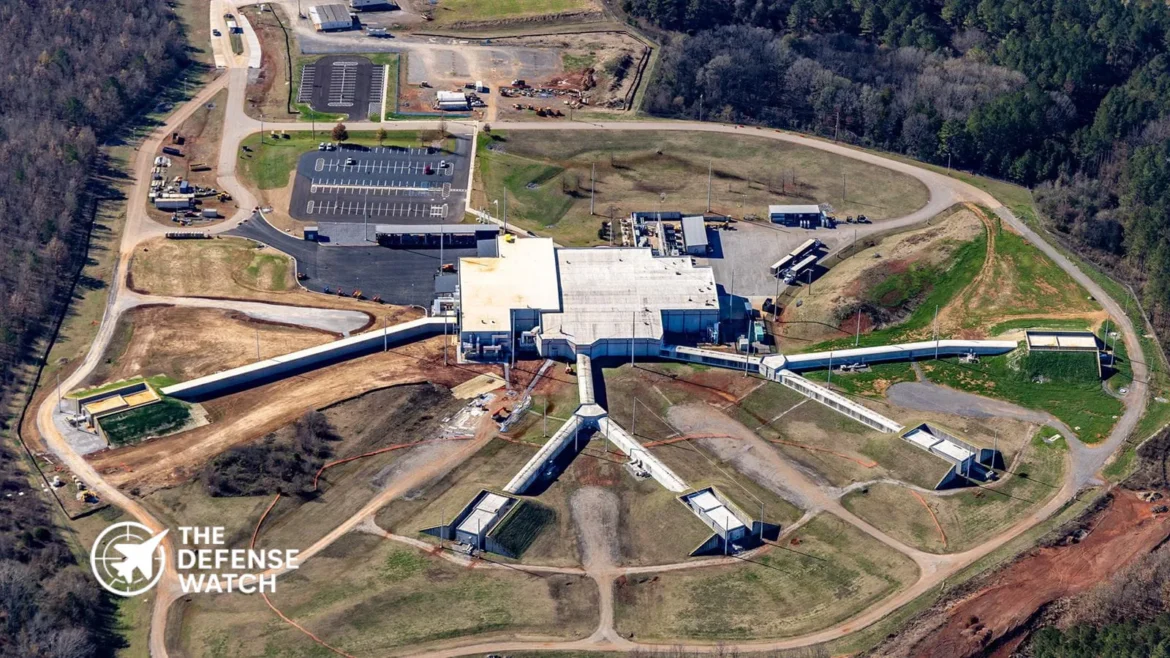
Northrop Grumman Corporation has inaugurated a major new production center in Rocket Center, West Virginia, marking one of the most significant expansions of the U.S. strike missile manufacturing base in recent years. The new Missile Integration Facility (MIF) — a 113,000-square-foot complex at the Naval Industrial Reserve Ordnance Plant within the Allegany Ballistics Laboratory (ABL) — is designed to produce up to 300 advanced strike missiles per year and consolidate the full production chain under a single roof for the first time.
The September 2025 ribbon-cutting, attended by West Virginia Senator Shelley Moore Capito, Representative Riley Moore, and Northrop Grumman Vice President Frank DeMauro, signals a deliberate push by the defense industry to scale domestic weapons output at a time when U.S. and allied stockpiles are under sustained demand pressure.
“Northrop Grumman is delivering advanced weapons capabilities at scale today,” said DeMauro, VP and general manager of weapons systems. “The cutting-edge Missile Integration Facility expands manufacturing capacity and our team’s ability to deliver for our customers at a critical time.”
What The New Facility Does — And Why It Matters
The MIF is designed around a key principle that has historically slowed missile production: consolidation. Previously, rocket motors and other components manufactured at ABL were shipped to separate locations for final assembly into complete weapons. That logistical gap added lead time, cost, and supply chain vulnerability.
The new facility collapses that process. Rocket motor production, warhead assembly, final missile integration, testing, and shipping now all occur under one roof at ABL — using digital manufacturing technologies and advanced automation to enforce consistent quality controls throughout the production cycle.
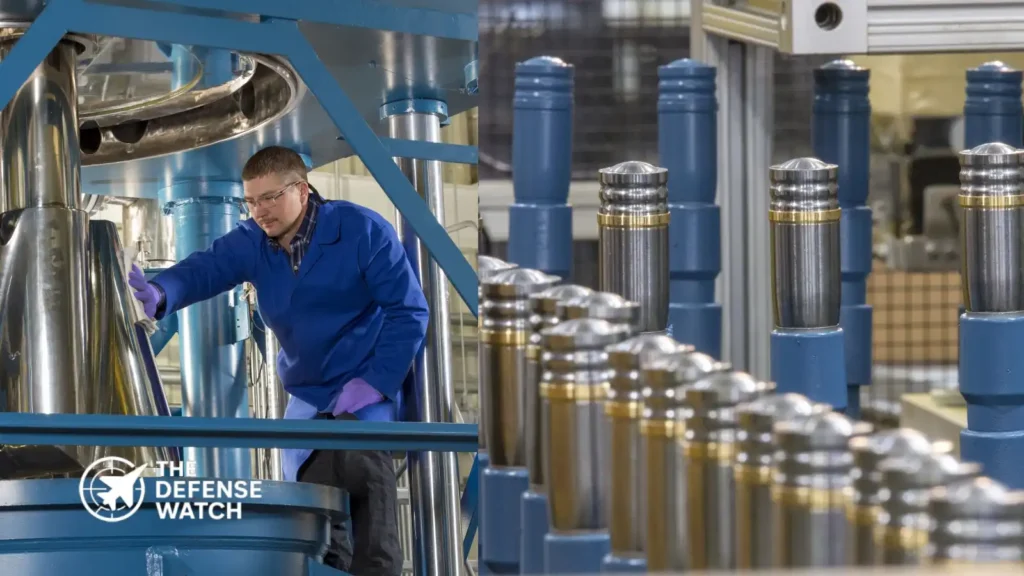
The primary platform this facility supports is the AGM-88G Advanced Anti-Radiation Guided Missile — Extended Range (AARGM-ER), a high-speed, extended-range, air-to-ground weapon designed to suppress or destroy enemy Integrated Air Defense Systems (IADS). The AARGM-ER targets radar emitters, command nodes, and surface-to-air missile batteries — giving U.S. and allied strike aircraft a critical edge in contested airspace before threats can even detect them.
“When flying in contested airspace, you want to destroy the threat before the threat detects you,” said Brad Russell, a former Naval Aviator now serving as a Northrop Grumman business development director. “That’s the capability AARGM-ER delivers.”
The weapon is designed for integration on the F/A-18E/F Super Hornet, EA-18G Growler, and all three variants of the F-35 Lightning II — making it one of the most broadly compatible anti-radiation missiles in the U.S. inventory.
A $1 Billion Investment In U.S. Weapons Manufacturing
The MIF is not a standalone project. It represents the latest milestone in what Northrop Grumman describes as a $1 billion-plus manufacturing investment at ABL since 2018, encompassing new facilities, renovated production lines, and expanded workforce capabilities.
With the addition of the MIF and a new Plant 4 at the Naval Industrial Reserve Ordnance Plant, Northrop Grumman has brought more than 1 million square feet of new and renovated manufacturing space online in West Virginia over the past seven years.
ABL currently employs more than 1,600 people directly, with the company’s broader activities in West Virginia supporting up to 3,000 additional jobs and generating over $1 billion in regional economic activity. Northrop Grumman is the state’s largest manufacturing industry employer.
The MIF is also designed with scalability in mind. According to company documentation, the facility’s production architecture can accommodate expansion to 600 strike missiles per year — double the initial rated output — giving the U.S. government surge capacity should strategic demands escalate rapidly.
AARGM-ER: A Critical Capability Navigating Real-World Headwinds
The timing of the facility’s opening underscores both the strategic importance of AARGM-ER and the challenges the program has faced in reaching the fleet.
As of May 2026, the U.S. Navy has reaffirmed a September 2026 target for Initial Operational Capability (IOC) on the AGM-88G, though independent watchdogs have flagged continued technical risk. A June 2025 Government Accountability Office (GAO) report cited deficiencies in the rocket motor, structural components, and software performance — alongside supply chain constraints and construction delays at the new production facility — as contributors to a schedule that has already slipped roughly two years from its original 2024 IOC target.
The Pentagon’s Office of the Director of Operational Test and Evaluation (DOT&E) warned in March 2026 that the IOC could potentially slip to the first quarter of FY2027 if unresolved test discrepancies persist. Of three integrated weapon employment tests conducted using F/A-18F aircraft at the China Lake Range in FY2025, only one fully met performance criteria. A successful live-fire event was conducted in January 2026 at the Point Mugu Sea Range — a progress marker the Navy highlighted publicly — but the program continues under close scrutiny.
Complicating matters further, the Navy’s FY2027 budget request allocates only $24 million for AGM-88G procurement — a reduction of roughly $200 million from FY2026 levels — in what officials describe as a “strategic pause” in domestic buying. As of FY2026, the Navy had ordered a total of 435 AARGM-ER rounds, representing approximately $2.43 billion in committed procurement. The service plans to restart domestic purchasing in FY2028, albeit at lower initial rates of around 40 missiles.
Critically, foreign military sales (FMS) procurement continues uninterrupted. Norway announced acquisition of AARGM-ER for its F-35A fleet in March 2026, joining Italy as an international operator. An earlier Honeywell contract valued at $30.8 million covers 1,890 inertial measurement units distributed across U.S. Navy, Air Force, Italian, and additional FMS customers — reflecting sustained allied demand even as the Navy pauses domestic buys.
Broader Industrial Context: Racing Against Stockpile Depletion
The opening of the MIF cannot be evaluated in isolation from the wider strategic context driving U.S. weapons production decisions. Sustained high-intensity conflict in Ukraine and persistent demand for precision munitions from allied partners have accelerated the drawdown of Western weapons inventories at a pace that production lines were not originally designed to match.
The U.S. defense industrial base has come under consistent bipartisan criticism for being too slow, too fragile, and too dependent on single-source suppliers for critical munitions. Northrop Grumman’s West Virginia investment — combining propulsion, warhead, and integration capabilities at a single government-owned, contractor-operated (GOCO) facility — represents one answer to that structural concern.
The Allegany Ballistics Laboratory has been a pillar of U.S. missile propulsion since the 1940s. What has changed is scale, pace, and technological sophistication. The new MIF deploys digital process controls, advanced automation, and integrated test-and-ship workflows that older production lines at ABL did not have. That matters not only for cost and throughput but for the quality assurance demands of a program like AARGM-ER, where defect rates in guidance and propulsion components have directly contributed to test failures.
Meanwhile, the Navy is already looking beyond AARGM-ER. In February 2026, the service issued a market research notice for the Advanced Emission Suppression Missile (AESM) — a longer-range anti-radiation weapon capable of engaging both ground and airborne targets, with forecasted production demand of up to 300 rounds per year and a stated requirement to be the most capable standoff radar-killing weapon in U.S. Naval aviation history. Northrop Grumman’s new West Virginia infrastructure would position the company well to compete for that future contract.
Analysis: Manufacturing Capacity As A Strategic Asset
The MIF opening reflects a broader recognition — increasingly shared by Pentagon planners, Congress, and industry — that production capacity itself is a deterrence asset, not just a logistics concern.
A missile that exists on paper or in small-lot quantities cannot fulfill its deterrent role if adversaries assess they can outlast or outproduce it. For advanced suppression weapons like AARGM-ER, credibility depends on the ability to field sufficient numbers across the fleet — on Super Hornets, Growlers, and eventually F-35s — quickly and in depth.
Northrop Grumman’s $1 billion investment in West Virginia over seven years, capped by the 113,000-square-foot MIF, is a tangible demonstration of commitment to that requirement. Whether the AARGM-ER itself achieves IOC on schedule in September 2026 will depend on resolving the remaining technical challenges — but the production infrastructure to deliver at scale is now in place.
For policymakers, the more pressing question is whether the Navy’s FY2027 “strategic pause” on procurement will delay the full fielding timeline or whether the service can use the interlude to resolve remaining qualification issues and emerge with a clean, fully validated weapon ready for high-rate production in FY2028.
The factory is ready. Now the missile has to meet it.

Executive Summary:
Belgium has emerged as a leading candidate for the co-production of the AIM-120 AMRAAM missile in Europe, reflecting NATO’s push to strengthen regional defense manufacturing. The move aims to reduce reliance on U.S.-based production and improve supply chain resilience amid rising demand. This development underscores growing transatlantic cooperation in advanced air-to-air missile systems.Belgium Emerges in AMRAAM Co-Production Talks
Belgium is increasingly viewed as a strong contender to host European co-production of the AIM-120 Advanced Medium-Range Air-to-Air Missile (AMRAAM), a cornerstone of NATO’s air combat capability. The initiative comes as alliance members seek to expand production capacity in response to sustained demand driven by geopolitical tensions and ongoing military modernization programs.
The proposed arrangement would involve collaboration with U.S. defense firms, most notably RTX (Raytheon Technologies), the primary manufacturer of the AMRAAM system. Belgium’s advanced industrial base and central geographic position within Europe are seen as key advantages.
Strategic Drivers Behind European Production Expansion
The push for localized missile production reflects several operational and strategic priorities:
- Supply chain resilience amid high operational consumption rates
- Reduced dependency on transatlantic logistics during crisis scenarios
- Faster replenishment cycles for NATO air forces
- Strengthened European defense industrial autonomy
The war in Ukraine and increased NATO readiness levels have accelerated the urgency to expand missile stockpiles, particularly beyond U.S. production lines.
Technical Overview of AIM-120 AMRAAM
The AIM-120 AMRAAM remains one of the most widely deployed beyond-visual-range (BVR) air-to-air missiles globally. Its latest variants incorporate advanced guidance and electronic counter-countermeasure capabilities.
Key Capabilities
- Active radar homing guidance for autonomous terminal engagement
- Fire-and-forget capability, reducing pilot workload
- Compatibility with a wide range of NATO aircraft, including F-16, F-35, and Eurofighter
- Continuous upgrades under the AMRAAM Extended Range (ER) and AIM-120D programs
Comparison: AMRAAM vs Legacy AIM-7 Sparrow
Feature AIM-120 AMRAAM AIM-7 Sparrow Range ~160 km (AIM-120D) ~70 km Payload High-explosive fragmentation High-explosive Status Active service Largely retired Key Technology Active radar homing Semi-active radar Industrial and Economic Implications
Belgium’s potential selection would bring significant economic and technological benefits:
- Integration into high-value NATO defense supply chains
- Job creation in advanced manufacturing and electronics sectors
- Increased defense exports and industrial partnerships
Belgian firms already participate in multinational defense programs, strengthening their candidacy for such a role.
Strategic Context: NATO Readiness and Deterrence
The expansion of AMRAAM production capacity in Europe aligns with NATO’s broader deterrence strategy. With increased air policing missions along the alliance’s eastern flank, maintaining sufficient stocks of advanced air-to-air munitions has become a priority.
The initiative also reflects a shift toward distributed production models, ensuring that critical defense capabilities remain operational even in contested logistics environments.
Outlook
If finalized, Belgium’s role in AMRAAM co-production would mark a significant step in NATO’s effort to balance industrial capacity between North America and Europe. It would also reinforce long-term interoperability and readiness across allied air forces, particularly as demand for precision-guided munitions continues to rise.
Australia Test Fires First Locally Made GMLRS Missiles
Australia has test fired its first locally made Guided Multiple Launch Rocket System (GMLRS) missiles, a key milestone in building sovereign long-range strike capability and defence industrial capacity.
The test launch was conducted on 13 April 2026 at the Woomera Test Range in South Australia using the Australian Army’s Lockheed Martin M142 High Mobility Artillery Rocket System (HIMARS).
Canberra’s Department of Defence said the successful firing expands the Army’s precision strike range and demonstrates progress toward local production of advanced munitions.
¦ KEY FACTS AT A GLANCE- Australia test fired its first locally made Illustrated GMLRS missiles from a HIMARS launcher at Woomera Test Range, South Australia on 13 April 2026. :contentReference[oaicite:0]{index=0}
- The missiles were produced through the new Port Wakefield facility opened in December 2025, advancing sovereign defence production. :contentReference[oaicite:1]{index=1}
- Minister for Defence Industry Pat Conroy said Australia is now the only country outside the United States to make GMLRS missiles. :contentReference[oaicite:2]{index=2}
- GMLRS missiles give precision surface-to-surface fires beyond traditional artillery range when fired from HIMARS. :contentReference[oaicite:3]{index=3}
- Australian suppliers are being integrated into the GMLRS supply chain under a $320 million industrial uplift plan. :contentReference[oaicite:4]{index=4}
A Milestone For Sovereign Missile Production
Australia’s first locally made GMLRS missiles were built at a new dedicated facility in Port Wakefield, South Australia, which opened in December 2025.
The government has linked the milestone to broader aims of boosting national resilience and defence industrial capacity. According to Defence Minister Pat Conroy, Canberra is now the only country outside the United States manufacturing GMLRS missiles, creating opportunities for Australian industry to join global supply chains.
Under a government plan, about $320 million will help domestic suppliers enter the GMLRS supply chain, gradually increasing local content in missile production.

Image : Defence Australia This achievement comes after planned production of the first batch of missiles earlier in 2026 and the introduction of HIMARS launchers under the Army’s long-range fires program.
What GMLRS Brings To Australian Forces
GMLRS rockets are GPS-guided surface-to-surface missiles that can engage targets at extended ranges with precision accuracy, extending beyond traditional artillery limits.
Fired from HIMARS launchers, these missiles offer mobile, high-precision long-range firepower. The Army’s acquisition of HIMARS and associated munitions forms a central pillar of its strike capability modernization.
Australian authorities have emphasized that local production strengthens supply chain resilience, reduces reliance on foreign sources, and lays groundwork for manufacturing more advanced weapons such as Precision Strike Missiles in future.
Industrial And Strategic Implications
Establishing a domestic missile production base represents a major step for Australia’s defence industry. Beyond initial assembly, Canberra aims to increase Australian supplier participation in guided weapons manufacturing, enhancing skills and infrastructure.
The local GMLRS production project aligns with the broader Guided Weapons and Explosive Ordnance (GWEO) plan, which envisages facilities capable of producing thousands of missiles annually by the end of the decade.
Analysts note that full end-to-end manufacturing remains a long-term goal. Early stages involve assembling imported components, with deeper localisation planned over time.
What Comes Next
Australia’s next steps include boosting local supply chain integration, increasing production rates, and expanding guided weapons manufacturing capability. Officials have said GMLRS success will support future work on longer-range systems and strengthen industrial ties with allies.
The momentum underlines Canberra’s push for strategic autonomy in defence production and contributes to broader Indo-Pacific deterrence efforts as regional military competition grows.
¦ KEY FACTS AT A GLANCE- Raytheon completed a $115 million expansion of its Alabama missile integration facility.
- The facility supports integration and assembly of advanced precision-guided missiles.
- Expansion strengthens U.S. and allied missile supply chains amid rising global demand.
- Investment reflects long-term Pentagon focus on industrial base resilience and surge capacity.
- Facility enhances production scalability for high-demand systems like air defense and strike missiles.
Raytheon Alabama Missile Integration Facility Expansion
The Raytheon Alabama missile integration facility expansion marks a significant step in strengthening U.S. missile production capacity, with a $115 million investment aimed at accelerating assembly and delivery of advanced weapons systems.
The Big Picture
The United States is actively rebuilding its defense industrial base to meet sustained demand for precision weapons. High consumption rates in recent conflicts, combined with rising tensions in the Indo-Pacific and Europe, have exposed limits in existing production capacity.
Missile systems such as air defense interceptors, precision strike munitions, and long-range weapons now sit at the center of U.S. deterrence strategy. The Department of Defense has prioritized expanding manufacturing throughput, reducing bottlenecks, and ensuring rapid replenishment capability.
Raytheon, a business unit of RTX Corporation, plays a central role in this effort. Its investment in Alabama reflects a broader industry shift toward scalable, high-rate production.
What’s Happening
Raytheon has completed a $115 million expansion of its missile integration facility in Alabama, according to an official company announcement released in March 2026.
The upgraded site focuses on the integration phase of missile production, where key components such as guidance systems, propulsion units, and warheads are assembled into operational weapons. This stage is often the most complex and time-sensitive part of the manufacturing process.
The expansion adds new production lines, advanced tooling, and modernized workflows designed to increase throughput and improve efficiency. The facility supports a range of missile programs used by the U.S. military and allied partners.
Raytheon officials stated the investment will help meet growing demand while improving delivery timelines for critical systems.
Why It Matters
Missile demand has surged across multiple theaters. The U.S. has transferred large quantities of air defense and precision strike systems to allies while maintaining its own readiness requirements.
Production constraints have become a strategic concern. Integration facilities like the one in Alabama often determine how quickly finished systems can reach operational units.
The Raytheon Alabama missile integration facility expansion directly addresses this bottleneck. By increasing integration capacity, the company can move partially completed components into deployable systems at a faster rate.
This capability is especially important for systems that rely on complex electronics and multi-domain integration, where delays can ripple across the entire supply chain.
Strategic Implications
The expansion strengthens U.S. military readiness by enabling faster replenishment of key missile inventories. It also improves surge capacity in the event of a prolonged conflict.
A more resilient industrial base supports deterrence by signaling that the United States can sustain high-intensity operations over time. This has direct implications for both NATO commitments and Indo-Pacific force posture.
The investment also reinforces domestic manufacturing. By expanding production within the United States, Raytheon reduces reliance on external suppliers and mitigates supply chain vulnerabilities.
For allied nations, increased U.S. production capacity translates into more reliable access to advanced weapons systems, particularly in air defense and precision strike roles.
Competitor View
China has placed heavy emphasis on scaling its own missile production capabilities, particularly for long-range precision strike systems and anti-access strategies. Beijing is likely to view U.S. industrial expansion as part of a broader effort to sustain military advantage.
Russia, facing constraints from sanctions and wartime attrition, may interpret the expansion as evidence of Western industrial depth. Increased U.S. production capacity highlights the gap between NATO and Russian defense manufacturing output.
Regional actors such as Iran also monitor U.S. missile production trends, particularly in relation to air defense systems that could counter their missile and drone capabilities.
What To Watch Next
Raytheon’s next steps will likely focus on ramping up production rates and integrating additional missile programs into the expanded facility.
Key indicators include:
Production output increases over the next 12 to 24 months
New contracts from the U.S. Department of Defense and allied customers
Integration of emerging missile technologies into the facilityThe Pentagon’s continued funding for munitions production will also shape how quickly facilities like this reach full operational capacity.
Capability Gap
The expansion addresses a critical gap in U.S. defense manufacturing, limited integration capacity for complex missile systems.
While the U.S. maintains advanced design and development capabilities, scaling production has proven more difficult. Integration facilities require specialized infrastructure and skilled labor, which cannot be expanded overnight.
However, the investment does not fully eliminate constraints. Supply chain dependencies, particularly in electronics and propulsion components, remain potential limiting factors.
The Bottom Line
Raytheon’s Alabama expansion strengthens the backbone of U.S. missile production, improving readiness and ensuring the ability to sustain high-demand operations.
KEY FACTS AT A GLANCE- The Javelin Joint Venture — a partnership between Lockheed Martin and Raytheon — is executing a structured production ramp targeted for completion later in 2026, following 8–10 months of coordinated supplier preparation.
- The Javelin supply chain spans nearly 100 part-level suppliers and 25 major subcontractors, covering propulsion, guidance electronics, and critical subcomponents.
- AI-driven demand forecasting tools are being deployed across key suppliers, shifting planning from reactive order management to a shared demand horizon model.
- The program is pursuing dual-source qualification for high-risk components to guard against single-point supply failures tied to export restrictions or raw material scarcity.
- Lead-time targets aim to keep all essential parts under 52 weeks, with on-hand stock of energetic and high-value items maintained as a buffer against supplier capacity fluctuations.
Javelin Missile Production Ramp Targets Full-Rate Output as Demand Strains Western Arsenal Capacity
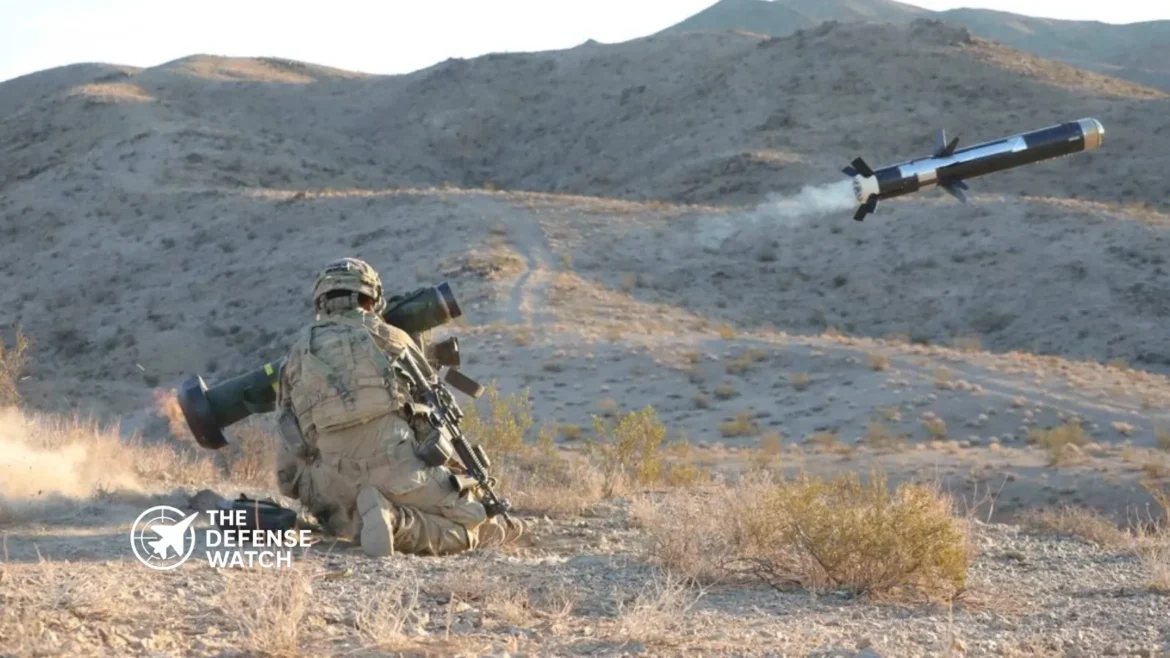
The Javelin missile production ramp is entering its most critical phase, with Lockheed Martin and Raytheon completing the foundational supplier investment needed to sustain accelerated manufacturing output later in 2026. The effort, disclosed by the Javelin Joint Venture (JJV) on March 26, reflects a deliberate, multi-year industrial campaign to transform a mature but conservatively scaled production base into one capable of meeting persistent wartime-level demand.
The Big Picture
Russia’s invasion of Ukraine shattered long-held assumptions about Western munitions stockpiles and production capacity. The Javelin — the premier man-portable, fire-and-forget anti-tank guided missile in the U.S. and allied arsenals — emerged as a signature weapon of the conflict. Thousands of systems were transferred to Ukraine, drawing down U.S. Army and allied inventories far faster than existing production lines could replenish them.
Image : Lockheed Martin That inventory depletion triggered urgent calls from the Pentagon and Capitol Hill to accelerate missile production across the board. The Javelin ramp is part of that broader push, one that spans dozens of programs and reflects a fundamental reckoning: the U.S. defense industrial base had optimized for cost efficiency and steady-state procurement, not the surge demands of peer or near-peer conflict.
What’s Happening
Lockheed Martin announced on March 26, 2026, that the Javelin supply chain has completed its non-recurring engineering (NRE) work, including additional tooling, test sets, and in some cases expanded floor space, creating the foundation for a full production ramp expected to begin later this year.
The effort engaged nearly 100 part-level suppliers and 25 major subcontractors, each spending eight to ten months completing required updates to achieve the increased production output.
Rich Liccion, vice president and Lockheed Martin Javelin program director, stated that early supplier engagement and strategic capacity investment allowed the program to increase production while maintaining the quality standards expected by global customers.
Jenna Hunt Frazier, JJV president and Javelin program director at Raytheon, noted that the program is adopting advanced technologies including automation and AI-driven forecasting to enhance efficiency and build a future-ready supply chain.
The ramp applies across the full Javelin industrial ecosystem — from propulsion hardware suppliers to guidance electronics manufacturers to smaller component vendors. Each element of that chain had to grow in parallel, since a bottleneck at any tier can halt final assembly regardless of how much capacity exists elsewhere.
Why It Matters
The Javelin production ramp represents more than a manufacturing milestone. It signals that the U.S. defense industrial base is beginning to execute — not just plan — the transition to higher-rate production that senior Pentagon officials have been demanding since 2022.
AI forecasting tools deployed across key suppliers now give those vendors real-time insight into the program’s demand profile, shifting planning discussions from reactive order management to a shared demand horizon model. That shift is strategically significant. Traditional defense procurement often kept suppliers operating in information silos, receiving purchase orders with little forward visibility. Moving to a shared demand horizon enables suppliers to plan capital expenditures, workforce hiring, and material procurement months earlier — compressing lead times and reducing the risk of cascading delays.
The ramp has also generated interest in automation upgrades across the supplier base, with capital funding being routed into staging facilities and refined production line layouts to lift throughput while improving yield.
These investments point toward a structural improvement in production efficiency, not just a temporary surge. That distinction matters: temporary surges are vulnerable to reversal when budget pressures return, while structural improvements alter the baseline capacity of the industrial base.
Strategic Implications
The Javelin is fielded by more than 20 nations and remains the dominant close-combat anti-armor system in NATO and allied arsenals. Its production rate directly affects the readiness posture of U.S. ground forces and the capacity to support partner nations in contested environments.
Sustaining a credible Javelin stockpile is not merely a logistics question — it is a deterrence signal. Adversaries planning armored offensives factor in the availability of effective anti-armor munitions when assessing the cost of military action. A demonstrated U.S. and allied ability to produce and sustain Javelin inventories at high rates degrades that calculus.
To guard against supply chain fragility, the JJV is pursuing dual-source qualification for higher-risk components, which guards against single-point failures triggered by export limitations or raw material scarcity. This is a direct response to the supply chain lessons of recent years, when over-reliance on single suppliers — sometimes in geopolitically sensitive locations — proved to be an operational liability.
The lead-time target of under 52 weeks for all essential parts is equally important. A 12-month or longer lead time on a critical component effectively means that today’s procurement decisions determine production output a year from now. Compressing that window gives program managers and DoD planners significantly more flexibility to respond to emerging demand.
Competitor View
Russia and China have closely monitored the degradation of Western munitions stockpiles since 2022. Russian military planners, in particular, observed that sustained high-intensity conflict rapidly exhausted anti-tank guided missile reserves that NATO planners had considered adequate. That observation reinforced a Russian assumption that Western democracies lack the industrial endurance for prolonged high-tempo conflict.
The Javelin production ramp directly challenges that assumption. A demonstrated capacity to surge missile output and replenish inventories at scale narrows the window in which an adversary could exploit a munitions deficit. China’s defense planners, watching closely as they model potential contingencies in the Indo-Pacific, will note whether the U.S. industrial base can actually deliver on announced production increases — or whether those announcements remain aspirational.
Iran and its regional proxies, which have faced Javelin-equipped adversaries and supported forces engaged by Javelin users, also track Western missile production capacity as an input to their own operational planning.
What to Watch Next
The JJV has indicated that the accelerated production rate is targeted for achievement later in 2026. Several milestones will determine whether that target is met on schedule.
First, the transition from NRE completion to sustained rate production requires that all 100-plus suppliers begin delivering subcomponents at increased volumes without quality escapes or schedule slippage. Any tier-two or tier-three supplier bottleneck could ripple upstream and compress final assembly throughput.
Second, the effectiveness of AI-driven demand forecasting tools will be tested as actual orders flow against projected demand profiles. If those tools perform as intended, they should reduce the order-versus-forecast friction that has historically caused inefficiency and reactive procurement across the defense supply base.
Third, dual-source qualification for high-risk components — a critical resilience measure — requires time, testing, and investment. Progress on that effort will be a key indicator of the JJV’s long-term supply chain health.
Finally, future Javelin model variants will stress the supply chain in new ways. A production base configured for a current variant may require additional NRE investment to accommodate design changes. How the JJV manages that transition will test whether the current ramp investment has built genuine adaptability or simply expanded capacity for a fixed configuration.
Capability Gap
The Javelin ramp addresses a documented and publicly acknowledged shortfall in U.S. and allied anti-armor munitions inventories. Beyond replenishing stocks depleted by Ukraine transfers, it also fills a longer-term gap: the U.S. defense industrial base had not designed its missile production infrastructure for sustained high-tempo conflict.
Realistic limitations remain. Even with the ramp, Javelin production competes for supplier capacity with other high-volume programs, as the JJV itself acknowledged. Suppliers supporting multiple defense programs simultaneously face collective bandwidth constraints that no single program can fully resolve. The broader challenge — rationalizing and expanding the defense industrial base across dozens of programs — exceeds what any individual production ramp can accomplish.
Additionally, raw material availability and export control dynamics for certain electronic components remain structural risks. Dual-sourcing mitigates but does not eliminate those vulnerabilities, particularly for advanced guidance components that depend on specialized materials or manufacturing processes with limited global supply.
The Bottom Line
The Javelin Joint Venture’s supply chain overhaul represents the most concrete evidence yet that the U.S. defense industrial base is translating post-Ukraine urgency into actual production capacity — a development with direct implications for NATO readiness, allied deterrence, and adversary planning calculations.
¦ KEY FACTS AT A GLANCE- Lockheed Martin is increasing Precision Strike Missile production to meet U.S. Army demand.
- PrSM replaces ATACMS with extended range and improved targeting capability.
- Expansion supports U.S. long range fires modernization and multi domain operations.
- Production ramp up aligns with planned fielding timelines later this decade.
- Program strengthens deep strike deterrence against near peer adversaries.
Precision Strike Missile Production Expands To Meet U.S. Army Demand
Precision Strike Missile production is increasing as Lockheed Martin moves to scale output in response to growing U.S. Army requirements for long range precision fires. The expansion reflects sustained demand for next generation surface to surface strike capabilities as the Army accelerates modernization efforts.
The move follows continued investment in the Precision Strike Missile program, widely known as PrSM, which is set to replace the legacy Army Tactical Missile System.
The Big Picture
The U.S. Army has prioritized long range precision fires as one of its top modernization pillars. This shift reflects lessons from recent conflicts and evolving operational concepts focused on contested environments.
Future battlefields will likely involve denied access zones, advanced air defenses, and dispersed forces. In that context, ground launched long range missiles provide a critical capability to strike high value targets without relying solely on airpower.
PrSM sits at the center of this transformation. It supports multi domain operations by enabling deep strikes against command nodes, air defenses, logistics hubs, and mobile targets.
What’s Happening
Lockheed Martin is increasing Precision Strike Missile production capacity to meet rising demand from the U.S. Army. The company is scaling manufacturing processes and supply chains to support higher output rates.
The PrSM is designed to replace the ATACMS system, offering improved range, accuracy, and flexibility. It is compatible with existing launch platforms, including the M270 Multiple Launch Rocket System and the M142 HIMARS.
The missile has already progressed through testing phases, and the Army has begun initial fielding efforts. Production increases aim to support both U.S. inventory requirements and potential future foreign military sales.
Why It Matters
The Precision Strike Missile production ramp up directly supports the Army’s ability to conduct long range precision fires at scale.
PrSM delivers several operational advantages:
It increases engagement range, allowing forces to strike targets deeper behind enemy lines.
It improves targeting flexibility with modern guidance systems.
It enables higher missile loadouts per launcher compared to ATACMS.These improvements translate into greater battlefield effectiveness, particularly in high intensity conflicts where rapid targeting and strike density are critical.
Strategic Implications
Expanding Precision Strike Missile production strengthens U.S. deterrence posture by enhancing deep strike capability.
The system allows ground forces to hold adversary assets at risk across extended distances. This reduces reliance on air superiority in early phases of conflict and complicates enemy planning.
In the Indo Pacific, long range fires are especially important due to vast distances and contested maritime zones. In Europe, they reinforce NATO’s ability to counter advanced anti access and area denial systems.
Higher production rates also ensure stockpile resilience, a key factor highlighted by recent conflicts where munitions consumption exceeded peacetime expectations.
Competitor View
China and Russia are likely to view increased Precision Strike Missile production as part of a broader U.S. effort to enhance long range strike capabilities.
Both countries have invested heavily in their own ground based missile systems, particularly those designed to target logistics hubs, airfields, and command infrastructure.
From their perspective, PrSM adds another layer to U.S. strike options, particularly when integrated with joint and allied systems.
This development reinforces an ongoing trend where long range precision fires play a central role in great power competition.
What To Watch Next
The next phase of the Precision Strike Missile program will focus on continued testing, incremental capability upgrades, and expanded procurement.
Future variants are expected to include enhanced seekers for maritime targets, enabling the missile to engage moving ships. This would significantly expand its operational role.
Observers should also watch for increased international interest, as allied nations look to acquire similar capabilities.
Production scaling will remain a key factor, especially as the Army seeks to build sufficient inventory levels for sustained operations.
Capability Gap
The Precision Strike Missile addresses a critical gap left by the aging ATACMS system.
ATACMS offers limited range and fewer missiles per launcher, constraining operational flexibility. PrSM improves both factors, enabling more efficient use of launch platforms and greater strike depth.
However, limitations remain. The system still depends on targeting data from external sensors, including satellites and reconnaissance platforms. This reliance highlights the importance of resilient command and control networks.
The Bottom Line
The Precision Strike Missile production increase signals a decisive U.S. Army shift toward scalable, long range strike power designed for high intensity conflict against advanced adversaries.
KEY FACTS AT A GLANCE- Raytheon has completed expansion of its missile integration facility in Huntsville, Alabama.
- The $115 million project added about 26,000 square feet of production and integration space.
- The facility supports U.S. missile defense programs including the Standard Missile family and Glide Phase Interceptor.
- The expansion increases production capacity by more than 50 percent and adds roughly 185 jobs.
- The project strengthens U.S. missile defense manufacturing amid rising demand for advanced interceptors.
Raytheon Alabama Missile Integration Facility Expansion
The Raytheon Alabama missile integration facility expansion marks a significant step in strengthening the United States’ missile production capacity as demand for advanced air and missile defense systems continues to grow.
Raytheon, a business unit of RTX, completed the expansion of its Redstone Missile Integration Facility in Huntsville, Alabama, adding roughly 26,000 square feet of new production space and increasing the site’s integration capacity by more than 50 percent. The $115 million investment aims to accelerate delivery of critical missile defense systems for the U.S. military and allied partners.
The Huntsville facility serves as a final integration hub for several major U.S. missile programs operated by the U.S. Navy, the Missile Defense Agency, and other defense customers.
The Big Picture
U.S. defense planners have increasingly emphasized expanding the industrial base that supports missile production. Rising demand for interceptors and air defense systems has exposed capacity constraints across the U.S. defense manufacturing sector.
Recent conflicts and emerging threats, particularly hypersonic weapons and advanced cruise missiles, have pushed the Pentagon to accelerate missile procurement programs. These trends have forced defense contractors to expand production infrastructure to meet both U.S. and allied demand.
The Raytheon Alabama missile integration facility expansion reflects a broader effort by the U.S. Department of Defense to scale up missile defense manufacturing. Huntsville has become one of the most important hubs in this ecosystem, often called the center of U.S. missile defense development.
Multiple government agencies and contractors operate major programs in the region, including the Missile Defense Agency, NASA’s Marshall Space Flight Center, and several large defense contractors.
What’s Happening
Raytheon originally opened the Redstone Missile Integration Facility in 2012. The site integrates multiple missile systems before delivery to military customers.
The newly completed expansion increases production floor space by more than half and adds approximately 185 new jobs, bringing Raytheon’s workforce in Alabama to more than 2,200 employees.
The facility integrates multiple variants of the Standard Missile family, including:
- Standard Missile 3
- Standard Missile 6
These interceptors form a core component of U.S. naval missile defense architecture. They support missions ranging from ballistic missile interception to advanced air defense.
The facility will also support development and integration work for the Glide Phase Interceptor program, a next generation system designed to defeat hypersonic glide vehicles.
The Glide Phase Interceptor is expected to become one of the most important future missile defense capabilities for the United States and its allies.
Why It Matters
Expanding missile integration capacity directly addresses one of the Pentagon’s biggest challenges, scaling production of complex missile systems.
Missile defense programs require sophisticated integration work that combines guidance systems, propulsion units, warheads, and sensor packages into operational interceptors. Integration facilities like the one in Huntsville represent the final step before systems are delivered to military units.
Increasing this capacity allows Raytheon to shorten production timelines and deliver more systems to operational forces.
This matters at a time when the United States is replenishing interceptor inventories while simultaneously developing new systems designed to counter emerging threats.
The expansion also strengthens supply chain resilience. The defense industrial base has struggled in recent years with production bottlenecks and limited manufacturing capacity for advanced weapons.
By expanding integration infrastructure, Raytheon is positioning itself to support larger procurement orders expected from the U.S. Navy and Missile Defense Agency.
Strategic Implications
Missile defense remains a central element of U.S. deterrence strategy.
Standard Missile interceptors deployed aboard Aegis destroyers and cruisers provide a layered defense against ballistic missiles, cruise missiles, and aircraft. Increasing the rate at which these interceptors can be produced improves fleet readiness.
The addition of Glide Phase Interceptor production capability also signals a shift toward counter hypersonic defense.
Hypersonic glide vehicles travel at extreme speeds while maneuvering unpredictably during flight. Traditional missile defense systems struggle to intercept these weapons during the boost or terminal phases.
The Glide Phase Interceptor aims to engage these threats during their glide phase, a critical but technically challenging window.
By expanding the Huntsville facility, Raytheon is aligning its production capacity with this next generation mission set.
Competitor View
Strategic competitors such as China and Russia closely monitor U.S. missile defense infrastructure developments.
Both countries are rapidly expanding their own missile arsenals, including hypersonic weapons and advanced ballistic missile systems.
In response, U.S. missile defense modernization aims to maintain credible deterrence by improving interception capabilities and increasing available interceptor inventories.
Expanded manufacturing capacity signals to competitors that the United States intends to sustain large scale missile defense deployments while developing new technologies to counter emerging threats.
What To Watch Next
Several developments will determine how the expanded facility shapes future missile defense capabilities.
First, the Glide Phase Interceptor program remains in early development. Testing and design validation over the next several years will determine production timelines.
Second, procurement decisions by the U.S. Navy and Missile Defense Agency will influence how quickly interceptor production ramps up.
Third, allied demand for missile defense systems is increasing. Many U.S. partners rely on American produced interceptors for integrated air and missile defense architectures.
As a result, the Huntsville facility may play an increasingly important role in supporting both U.S. and allied missile defense networks.
Capability Gap
The Raytheon Alabama missile integration facility expansion addresses a clear operational gap.
The U.S. military requires larger inventories of missile interceptors to counter expanding missile threats from peer and regional adversaries.
However, missile production has historically been constrained by limited industrial capacity and complex manufacturing requirements.
Expanding integration infrastructure helps close this gap by enabling faster assembly, testing, and delivery of advanced missile systems.
That said, scaling missile production still depends on broader supply chain performance, including propulsion systems, guidance electronics, and specialized materials.
Integration capacity alone cannot fully eliminate production bottlenecks across the defense industrial base.
The Bottom Line
Raytheon’s expanded Huntsville facility strengthens the U.S. missile defense industrial base and supports the next generation of interceptor programs.
Newer Posts