

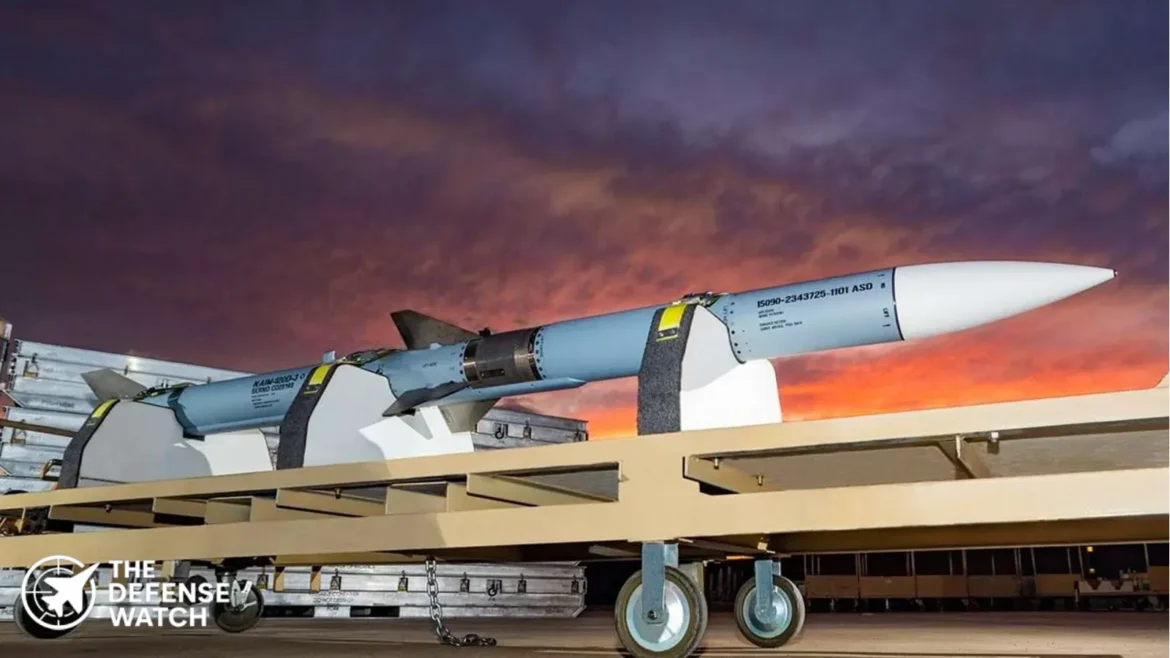
Finland Selects AIM-120D-3 Missile for F-35A Program
Finland has selected the AIM-120D-3 missile to arm its incoming F-35A fighter jets, marking a key step in the country’s largest defense modernization effort. The decision was confirmed in 2025 and aligns with Finland’s plan to fully equip its future fifth generation fighters with advanced beyond visual range air to air weapons.
The missile selection supports Finland’s HX Fighter Program, under which the Finnish Air Force will replace its aging F A 18 Hornet fleet with 64 Lockheed Martin F-35A Lightning II aircraft. Deliveries of the jets are scheduled to begin later this decade, with full operational capability expected in the early 2030s.
Strengthening Long Range Air Combat Capability
The AIM-120D-3 missile is the latest variant of the Advanced Medium Range Air to Air Missile family, widely known as AMRAAM. It offers extended range, improved guidance, and enhanced resistance to electronic countermeasures compared to earlier versions.
By choosing the AIM-120D-3 missile, Finland ensures that its F-35A fleet will be capable of engaging hostile aircraft at long distances while operating in contested airspace. The missile uses active radar homing and advanced data link features, allowing it to receive mid course updates from the launching aircraft or other networked platforms.
The AIM-120D-3 missile is already in service with the United States Air Force and several allied nations, making it a standard weapon within NATO air forces.
Background on Finland’s F-35A Acquisition
Finland selected the F-35A in 2021 after a multi year competition involving several advanced fighter aircraft. The decision was driven by the F-35’s stealth design, sensor fusion, and ability to operate as part of a wider network of air and ground assets.
As a NATO member sharing a long border with Russia, Finland places strong emphasis on air defense, rapid response, and deterrence. The combination of the F-35A and the AIM-120D-3 missile supports these goals by providing high survivability and strong first shot capability.
Weapons integration is a critical part of the F-35 program, and the AIM-120 family has long been considered the backbone of Western beyond visual range air combat.
Technical Overview of the AIM-120D-3 Missile
The AIM-120D-3 missile builds on earlier AMRAAM variants with several upgrades. These include improved kinematics for longer engagement ranges, more accurate navigation, and software updates that enhance performance against maneuvering targets.
The missile is designed to operate in high threat environments, including those with heavy jamming. When paired with the F-35’s advanced sensors and low observable profile, the AIM-120D-3 missile can be launched without alerting enemy radar systems until late in the engagement.
This capability allows pilots to detect, track, and engage threats while remaining difficult to detect themselves.
Interoperability With NATO and Allied Forces
One of the key advantages of selecting the AIM-120D-3 missile is interoperability. Many NATO members operate both the F-35 and earlier fighter aircraft armed with AMRAAM missiles. This allows allied air forces to share targeting data and coordinate engagements during joint operations.

Finland’s choice supports seamless integration with allied air policing missions, joint exercises, and collective defense operations. It also simplifies logistics, training, and sustainment over the long term.
The AIM-120D-3 missile can be carried internally by the F-35A, preserving the aircraft’s stealth profile, or externally when stealth is less critical.
Industrial and Program Considerations
The AIM-120D-3 missile is produced by RTX, formerly known as Raytheon Technologies. Production and sustainment are supported through U.S. government managed foreign military sales frameworks, which Finland already uses for other defense acquisitions.
While specific contract values for the missile purchase were not disclosed, the selection is consistent with previously approved U.S. export clearances for advanced AMRAAM variants to Finland.
The missile procurement is expected to progress alongside aircraft deliveries to ensure the Finnish Air Force can reach initial operational capability without delays.
What Comes Next for the Finnish Air Force
As F-35A deliveries approach, Finland will continue to finalize its weapons mix, training pipelines, and basing infrastructure. Alongside the AIM-120D-3 missile, the F-35A is expected to carry a range of air to ground munitions and short range air to air missiles.
The integration of the AIM-120D-3 missile marks another milestone in Finland’s transition to a fifth generation air combat force. Once operational, the new fleet will significantly enhance national air defense and contribute to regional security in Northern Europe.
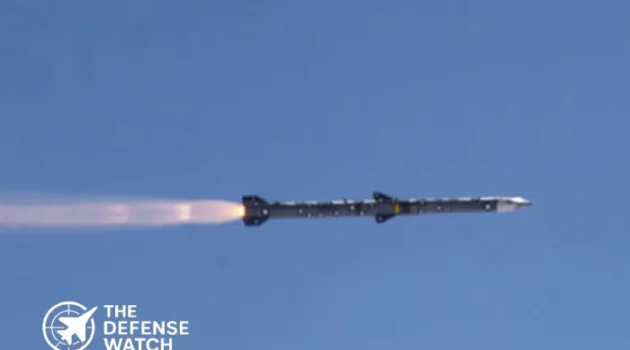
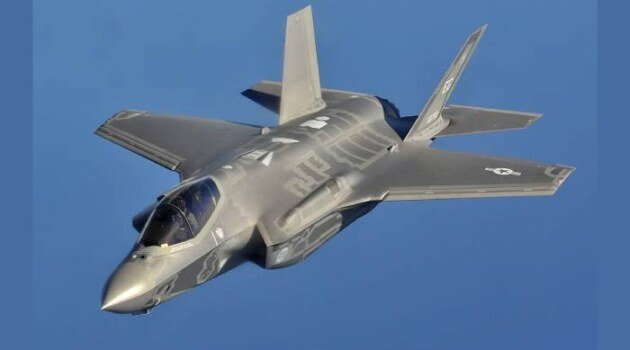
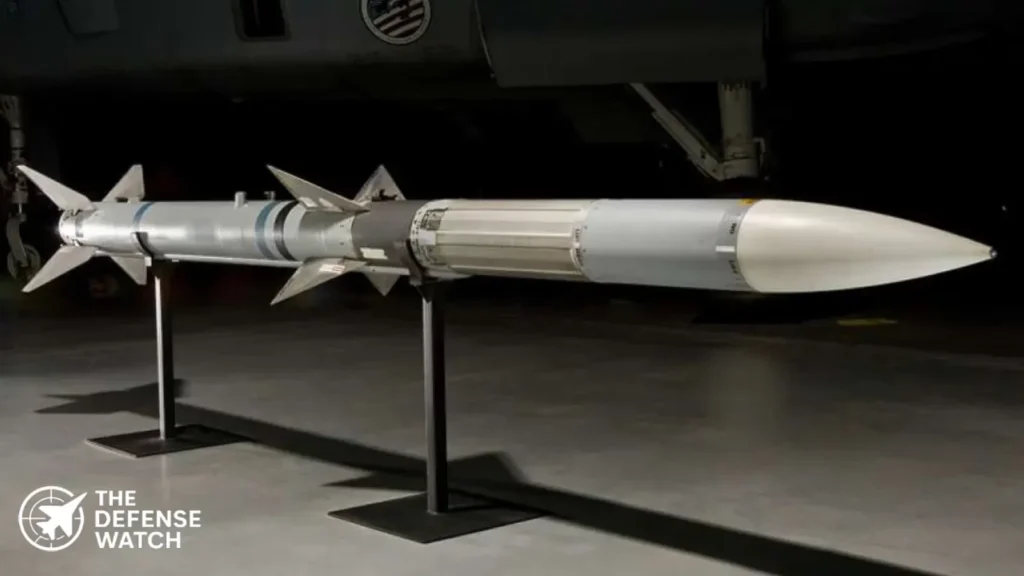
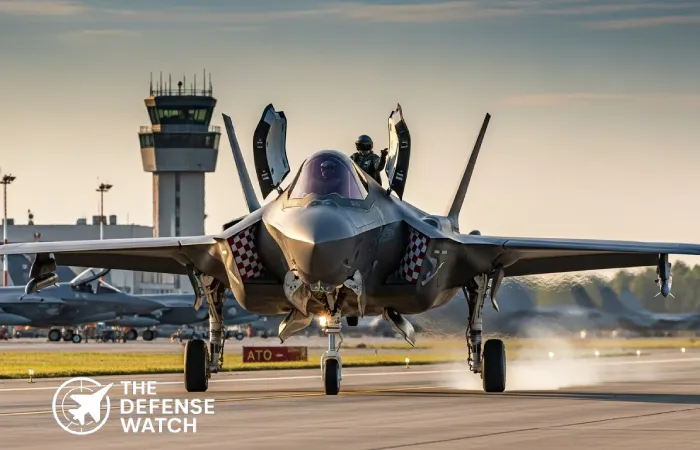
Poland has signed a deal worth approximately US$500 million to acquire the latest variant of the AIM-120D-3 AMRAAM air-to-air missiles for use with its upcoming fleet of F-35A Lightning II stealth fighters.
The agreement — formally approved via the Defense Security Cooperation Agency (DSCA) notification to Congress on April 29, 2025 — will see Poland receive missiles, associated guidance equipment, test hardware, and support infrastructure.
Polish officials have confirmed the missiles are earmarked for integration into the future F-35A fleet, set to begin deliveries in 2026 under Warsaw’s modernization plan.
Background: Why it matters
The AIM-120 AMRAAM (Advanced Medium-Range Air-to-Air Missile) family has long been a backbone of Western air-to-air capability, offering active-radar, fire-and-forget engagement.
The D-3 variant — part of the “Form, Fit, Function Refresh” (F3R) upgrade — provides significant enhancements: a two-way data link enabling mid-course updates, inertial navigation augmented by encrypted GPS, and upgraded electronics that bolster resistance to electronic countermeasures.
Performance parameters commonly cited for the AIM-120D-3 include speeds up to Mach 4 and an estimated maximum engagement range of 160–180 km, depending on launch conditions.
This increased range and networked guidance significantly extend Poland’s beyond-visual-range (BVR) air-to-air reach — a key capability in modern high-threat environments where advanced enemy aircraft, cruise missiles or UAVs may pose a threat.
Poland’s air force already operates earlier AMRAAM variants, and integration of D-3 is seen as compatible with existing infrastructure.
Details of the Deal
What Poland Gets
- Up to 400 AIM-120D-3 missiles.
- 16 associated guidance sections — equipped with Selective Availability Anti-Spoofing Module (SAASM) or M-Code GPS encryption hardware.
- One instrumented AIM-120 test vehicle for evaluation and certification.
- A full package of spare parts, containers, maintenance/test gear (e.g., ADU-891, CMBRE), encryption devices (KGV-135A), plus technical documentation, software, logistical support, and transport.
Prime contractor responsibilities lie with RTX Corporation (formerly Raytheon), based in Tucson, AZ.
The total FMS package is valued at roughly $1.33 billion — though the publicly announced figure for the missile tranche itself is about $500 million.
Deployment Path
Initially, Poland plans to integrate the missiles with existing fourth-generation fighters (e.g., F-16C/D Block 52+), before transitioning to full deployment on F-35A jets once deliveries begin in 2026.
The D-3 missiles could also be incorporated into layered air-defense architectures (e.g., ground-based systems such as NASAMS), offering flexibility beyond just fighter employment.
Strategic Implications for Poland and NATO
Bolstering Eastern Flank Air Defense
For Poland — bordering Belarus and Ukraine, with proximity to Russia’s Western Military District — the acquisition deepens Warsaw’s ability to counter advanced aerial threats. The extended range and networked guidance of the AIM-120D-3 translate into robust beyond-visual-range intercept capability, which is critical given the region’s growing aerial and missile threat environment.
The integration of these missiles into F-35As enhances the survivability and lethality of Poland’s stealth fleet, allowing Warsaw to field a credible air-combat force capable of contributing to air superiority and NATO collective defense missions.
Interoperability and NATO Cohesion
By aligning with U.S.-standard missiles, Poland enhances interoperability with NATO allies — particularly in joint air patrols, integrated air defense, and coalition operations. The two-way data link and modern guidance suite also make Polish interceptors more capable in network-centric warfare environments where shared sensor data and third-party targeting are the norm.
Additionally, the deal signals the U.S. commitment to reinforcing NATO’s eastern flank. Supplying advanced air-to-air missiles to frontline allies like Poland strengthens collective deterrence and addresses alliance concerns over air-space security in the face of hybrid and asymmetric threats.
Expert Perspective: What This Move Indicates
Poland’s selection of the AIM-120D-3 — the top-tier exportable AMRAAM — suggests a strategic calculation that air superiority remains central to future conflict scenarios in Europe. The choice reflects growing recognition that legacy short-range missiles and outdated air-defense hardware may not suffice against modern threats like high-performance fighters, cruise missiles, and armed UAVs.
With the D-3, Poland multiplexes value: retaining compatibility with its existing fleet (F-16s), while future-proofing for the incoming F-35As. The support package — including test hardware, encryption, and maintenance tools — ensures Warsaw can sustain a reliable supply chain without immediate reliance on U.S. personnel or on-site infrastructure.
Moreover, this procurement may stimulate further upgrades — including integration of advanced radars, sensor fusion, and networked combat systems — as Poland transforms toward a truly modern, survivable air force capable of defensive and offensive operations in contested airspace.
What’s Next
Poland is set to receive the first AIM-120D-3 missiles in the coming years, likely timed to coincide with or precede the arrival of its first F-35A fighters in 2026. Operational trials and integration with both legacy F-16s and new F-35As will be critical, followed by readiness certification.
Analysts and NATO planners will monitor how Warsaw integrates the missiles — whether purely for air-to-air intercept, or also via ground-based platforms to reinforce a layered air-defense umbrella. Poland’s modernization drive may also spur neighboring NATO members to follow suit, leading to wider adoption of D-3 technology across the alliance’s eastern flank.