

Executive Summary:
North Korea has initiated significant construction at the Rinsan (Nuchon-ni) air base in North Hwanghae Province, roughly 30 miles from the inter-Korean border. Satellite imagery shows demolition of existing structures, removal of legacy aircraft, and establishment of a worker camp. The activity forms part of Pyongyang’s broader push to revitalize its aging air force through infrastructure upgrades and unmanned systems development.
Rinsan Air Base Activity Signals Air Force Overhaul
North Korea has begun construction work at a key air base located about 30 miles from the South Korean border, according to detailed satellite imagery analysis.
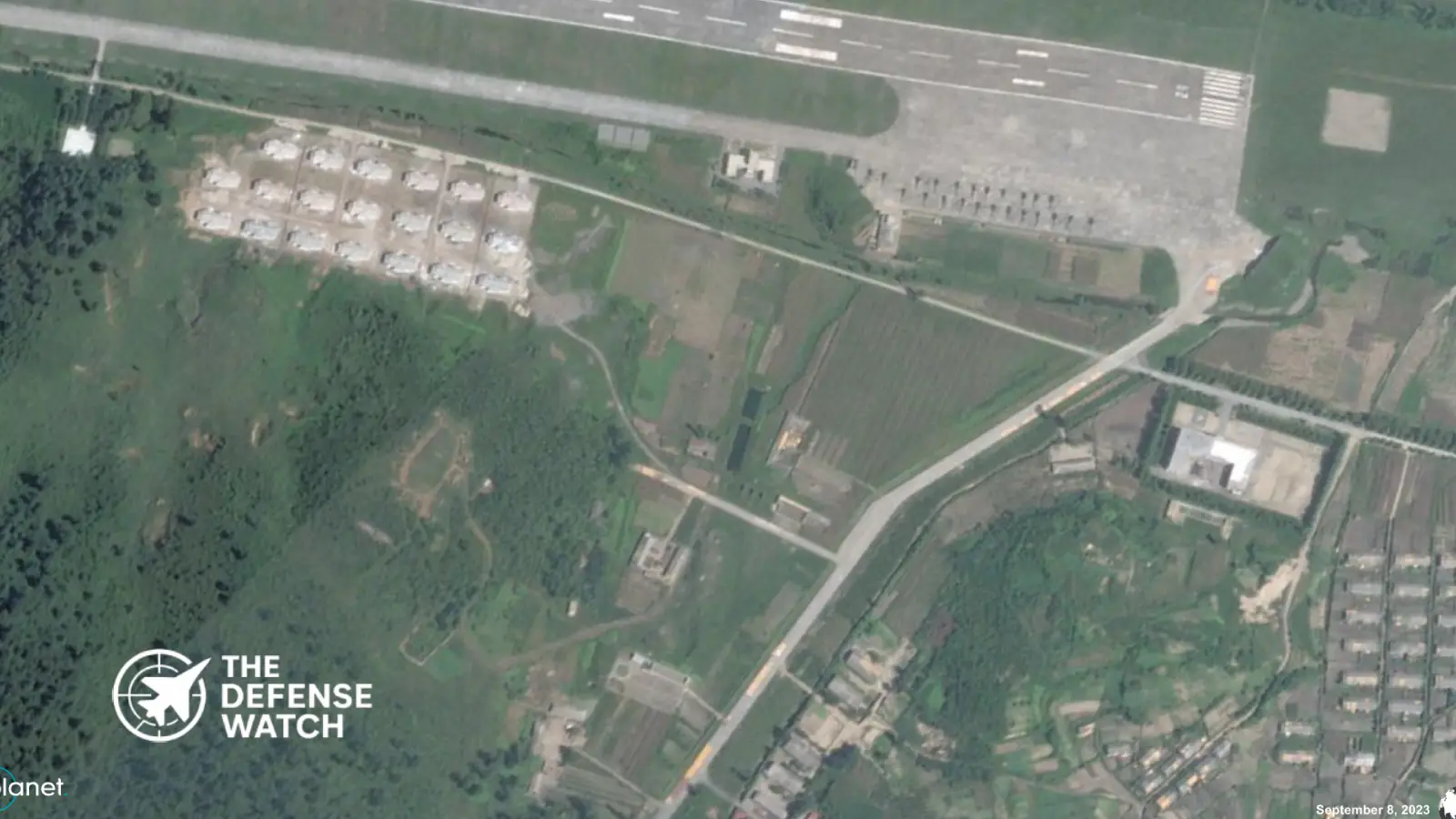
Planet Labs imagery shows that Soviet-era aircraft previously stationed at the Rinsan County facility in North Hwanghae Province disappeared by late March 2026. Blue-roofed structures indicative of a construction worker camp appeared southwest of the runway between April 15 and 18. Subsequent images document widespread demolition of buildings along the 2,500-meter runway, adjacent support structures, and even a village of about 20 houses constructed just three years earlier. Digging operations have also commenced along a nearby river.
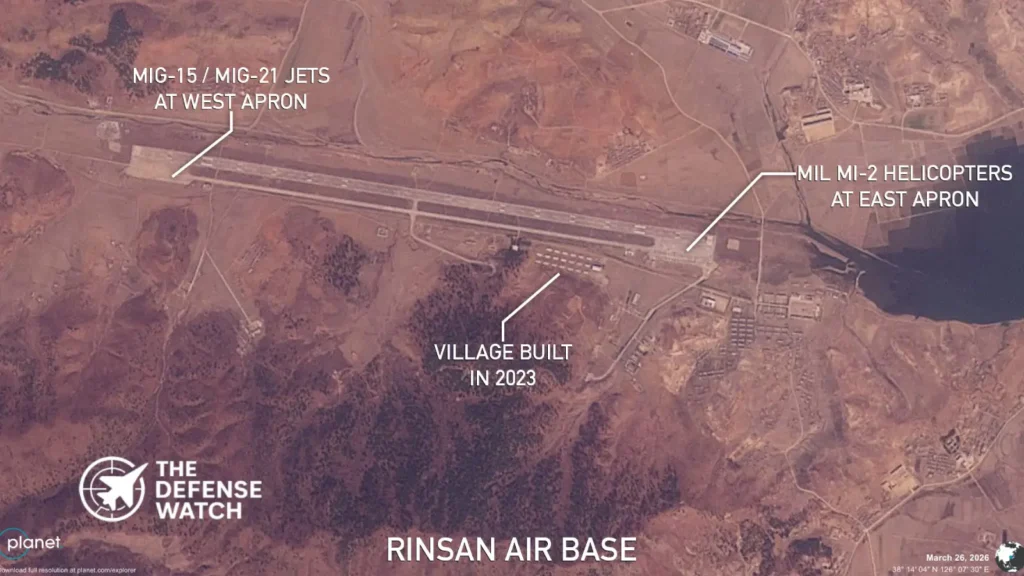
The base, sometimes referred to unofficially as Nuchon-ni, previously supported Mil Mi-2 helicopter training with up to two dozen rotary-wing aircraft and a small number of aging MiG-15 and MiG-21 fighter jets. Its proximity to the border places it among North Korea’s forward aviation positions capable of rapid response to events on the Korean Peninsula.
Context Within North Korean Air Force Modernization
This development occurs against the backdrop of sustained efforts by Kim Jong Un to address the obsolescence of the Korean People’s Army Air Force. In late 2022, Kim publicly acknowledged the limitations of the aging fleet. Subsequent activities have emphasized uncrewed systems, including reconnaissance and combat drones.
Major upgrades have already taken place at other facilities, such as Sunchon air base in 2023 and ongoing work at Pukchang. New drone hangars and support facilities are under construction at Panghyon air base, the primary hub for North Korea’s UAV programs. Pyongyang has also converted one Il-76 transport into a prototype airborne early warning and control (AEW&C) aircraft, though its operational status remains limited.
Analysis: The decision to clear legacy infrastructure at Rinsan, including recently built housing, indicates a deliberate shift rather than incremental maintenance. Forward bases like Rinsan offer geographic advantages for quick-reaction forces or drone operations targeting South Korean airspace or ground assets. However, the absence of confirmed new aircraft deliveries or major runway extensions in current imagery leaves the precise end-state unclear. Planners may be preparing hardened facilities for drone dispersal, improved maintenance for remaining manned assets, or entirely new capabilities aligned with observed investments in unmanned aerial vehicles.
Unlike past conversions of airfields into greenhouse complexes in more populated areas, Rinsan’s remote valley location makes agricultural repurposing unlikely. This reinforces the assessment that the project serves military purposes.
Strategic Implications for Regional Security
The activity at Rinsan fits into a pattern of North Korean conventional force adjustments amid heightened inter-Korean tensions. South Korea and the United States maintain robust airpower in the region, with advanced fighters and integrated air and missile defense systems. North Korea’s approach—focusing on drones, potential standoff munitions, and infrastructure resilience—represents an asymmetric effort to complicate adversary air superiority.
Analysts note Pyongyang’s interest in Russian technology and platforms, though no large-scale fighter transfers have been confirmed. Public displays, including exhibitions of new aerial assets in late 2025, underscore leadership emphasis on elevating air capabilities within the overall deterrence posture.
Operational Context: A modernized forward base could support faster sortie generation for drones or surviving manned aircraft, potentially challenging South Korean and U.S. forces in a crisis. However, legacy aircraft limitations and sanctions-constrained sustainment suggest any gains will remain incremental rather than transformative in the near term. U.S. and ROK forces continue routine training and posture adjustments, including at bases like Osan and Kunsan, to maintain qualitative edges.
Uncertainties and Monitoring Needs
The exact purpose of the Rinsan project remains unconfirmed. Possibilities include runway and facility upgrades to support newer platforms, dedicated drone infrastructure, or broader force posture realignment. Continued satellite monitoring will be essential to identify incoming equipment, new construction details, or changes in aircraft parking patterns.
This latest development highlights the persistent challenge of tracking North Korea’s military modernization under limited transparency. Professional open-source analysis of commercial satellite imagery provides critical visibility into these activities.
