

Russia Advances Launch Capabilities with Successful Soyuz-5 Debut
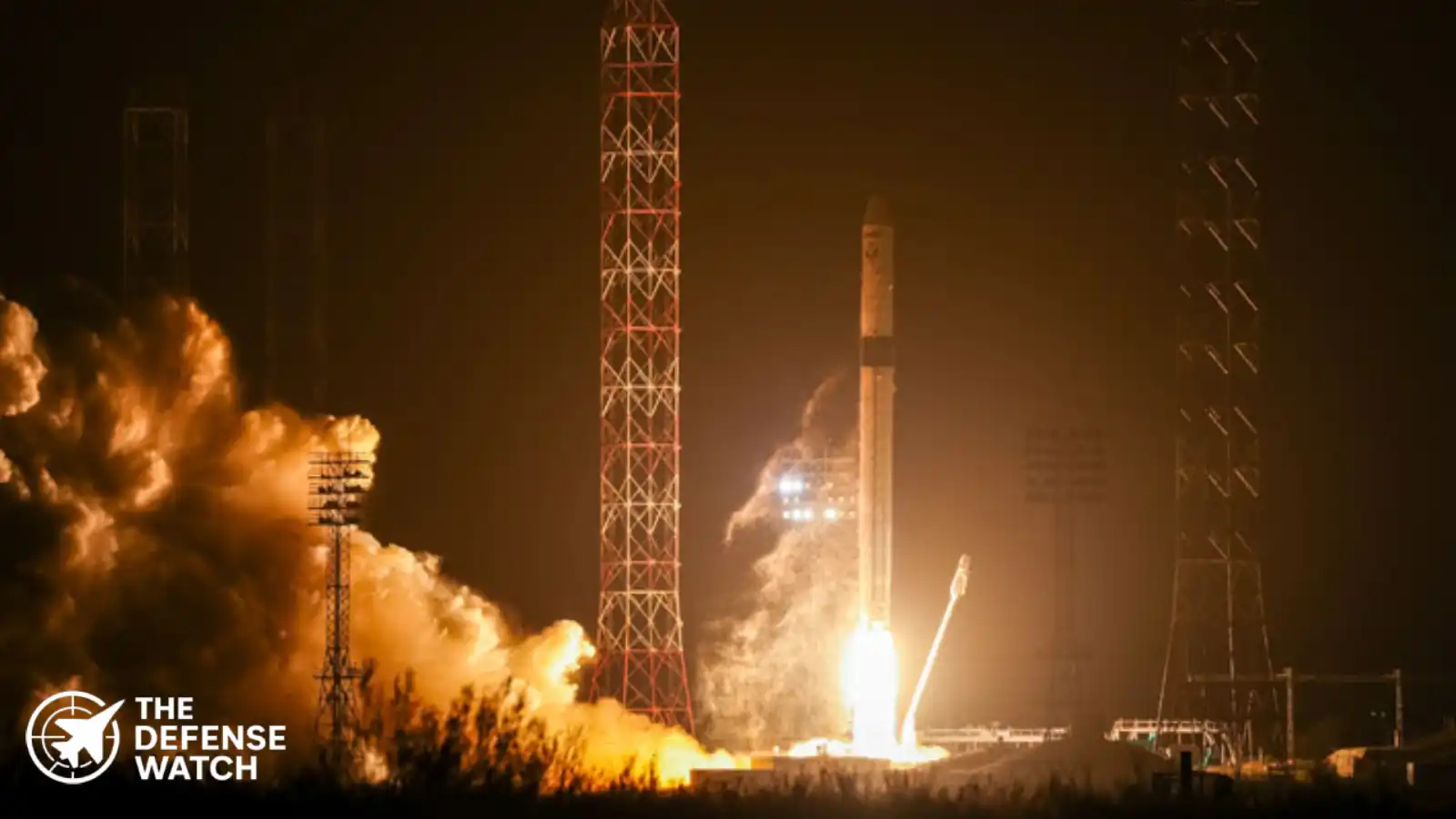
Russia’s Soyuz-5 rocket completed its first test flight on April 30, 2026, lifting off from Site 45 at the Baikonur Cosmodrome in Kazakhstan.
Roscosmos reported that both the first and second stages operated as planned during the suborbital mission, which carried a mass-dimensional mockup. The simulator followed its intended trajectory, ultimately impacting in a designated area of the Pacific Ocean.
- Russia conducted the first test launch of the Soyuz-5 medium-lift rocket from Baikonur Cosmodrome’s Site 45 on April 30, 2026.
- The suborbital flight carried an inseparable mass simulator instead of a functional payload.
- The rocket is powered by the RD-171MV, the world’s most powerful liquid-fuel rocket engine, producing over 7,200 kN of thrust.
- Soyuz-5 is designed to deliver up to 17 metric tons to low Earth orbit — nearly double the capacity of the Soyuz-2.
- The launch is part of the Russia-Kazakhstan Baiterek project and utilizes upgraded infrastructure from the former Zenit pad.
The two-stage vehicle lifted off at 21:00 Moscow Time. The first stage, powered by the RD-171MV engine, burned for approximately 179 seconds before separation. The payload fairing jettisoned shortly afterward, and the second stage, equipped with RD-0124MS engines, continued the flight before cutoff just short of orbital velocity. A separation simulation of the mockup occurred near the trajectory’s peak.
Design and Technical Specifications
Soyuz-5, also known as Irtysh or Sunkar in Kazakh, represents a new medium-lift class launcher developed primarily by the Progress Rocket Space Centre. It builds on Zenit heritage but incorporates significant Russian upgrades to eliminate dependency on Ukrainian components following geopolitical shifts.
The first stage features a single four-chamber RD-171MV engine, an evolution of the RD-170/171 family originally used on the Energia and Zenit rockets. This engine delivers the highest thrust of any operational liquid-propellant rocket engine, using RP-1 kerosene and liquid oxygen (kerolox). The stage has a diameter of 4.1 meters and increased propellant capacity compared to its Zenit predecessor.
The second stage uses two RD-0124MS engines, derived from those flown on the Soyuz-2.1b third stage. Overall launch mass is approximately 530 tons, with the vehicle standing roughly 65 meters tall depending on the fairing configuration. Planned payload capacity reaches about 17 metric tons to low Earth orbit from Baikonur, positioning it between the lighter Soyuz-2 and heavier Proton-class vehicles.
Use of kerolox propellant addresses environmental concerns raised by Kazakhstan regarding hypergolic fuels previously used by Proton rockets at Baikonur. The design reuses existing pad infrastructure at Site 45 with modifications, supporting the joint Baiterek project.
Development Context and Delays
Development of Soyuz-5 dates back to the mid-2010s as part of efforts to create a new family of launch vehicles. Early concepts evolved from the Feniks and Rus-M programs, with the current configuration focused on replacing the Zenit while offering improved performance and cost efficiency.
The program faced multiple delays. Initial plans targeted earlier flights, but technical challenges, funding, and preparation at Baikonur pushed the debut into 2026. Vehicle delivery to the cosmodrome occurred in late 2025, followed by repeated rollout and launch date adjustments in March and April 2026. A launch attempt on April 29 was scrubbed before the successful April 30 liftoff.
Roscosmos officials described the rocket as “absolutely ready” in mid-April briefings, emphasizing its role in future space projects. The successful debut provides critical data for refining flight performance, stage separation, and engine behavior under real conditions.
Strategic and Operational Implications
The Soyuz-5 program supports Russia’s broader goal of modernizing its space launch infrastructure amid sanctions and the need for greater self-reliance. By doubling the payload capacity of the Soyuz-2 to low Earth orbit while targeting lower specific launch costs, the vehicle could expand options for satellite deployment, including potential military, scientific, and commercial missions.
Its development under the Baiterek framework strengthens bilateral ties with Kazakhstan, which seeks to develop domestic space capabilities and transition Baikonur toward more environmentally acceptable operations. Kazakh officials hailed the launch as opening “a new era for Kazakh cosmonautics.”
From a defense and aerospace perspective, reliable medium-lift capacity remains relevant for rapid deployment of reconnaissance, communications, and navigation satellites. While the test flight was suborbital and carried no operational payload, subsequent missions will validate orbital insertion accuracy and compatibility with various upper stages, such as Fregat or Blok-DM variants, for higher-energy orbits.
Analysis: The maiden flight success is noteworthy given the program’s history of delays and the challenging industrial environment under Western sanctions. Russia has demonstrated the ability to complete a new rocket’s first stage and engine integration using largely domestic supply chains. However, transitioning from a single suborbital test to routine operational flights will require additional launches to build statistical reliability—typically four or more flight-design tests for new vehicles.
Compared to Western counterparts, Soyuz-5 offers competitive medium-lift performance without relying on reusable technology at this stage. Its kerolox architecture aligns with global trends favoring reduced environmental impact, though it lacks the partial reusability featured in systems like SpaceX’s Falcon 9. Long-term viability will depend on achieving consistent launch cadence and cost targets while competing in an increasingly commercialized global launch market.
Future test flights planned for 2026–2027 will provide further insight into vehicle margins and potential growth variants. Full operational status is anticipated toward the end of the decade.
