

Japanese Defense Minister Shinjiro Koizumi confirmed that plans are underway to deploy medium-range surface-to-air missiles (SAMs) on Yonaguni Island — Japan’s westernmost territory, located roughly 70 miles (about 110 kilometres) east of Taiwan.
Yonaguni already hosts radar and electronic-surveillance facilities. The deployment aims to enhance Japan’s defensive posture as regional tensions escalate.
Background: Why Yonaguni Matters
Yonaguni occupies a critical position along the so-called “First Island Chain” — a string of islands stretching from Japan down toward Taiwan and the Philippines. Historically, this chain has been viewed as a strategic buffer zone. Recent years have seen increasing military activity, including maritime, airborne, and electronic surveillance operations, in the East China Sea and Taiwan Strait region.
In addition, Tokyo has already expanded missile deployments on other southern islands — such as Ishigaki Island — as part of a broader effort to reinforce its southwestern defenses..
Yonaguni’s proximity to Taiwan means that any conflict involving the island would place Yonaguni near the frontlines. In that context, adding SAM systems significantly alters the strategic calculations for any operations near the Taiwan Strait.
The Plan: Details of the SAM Deployment
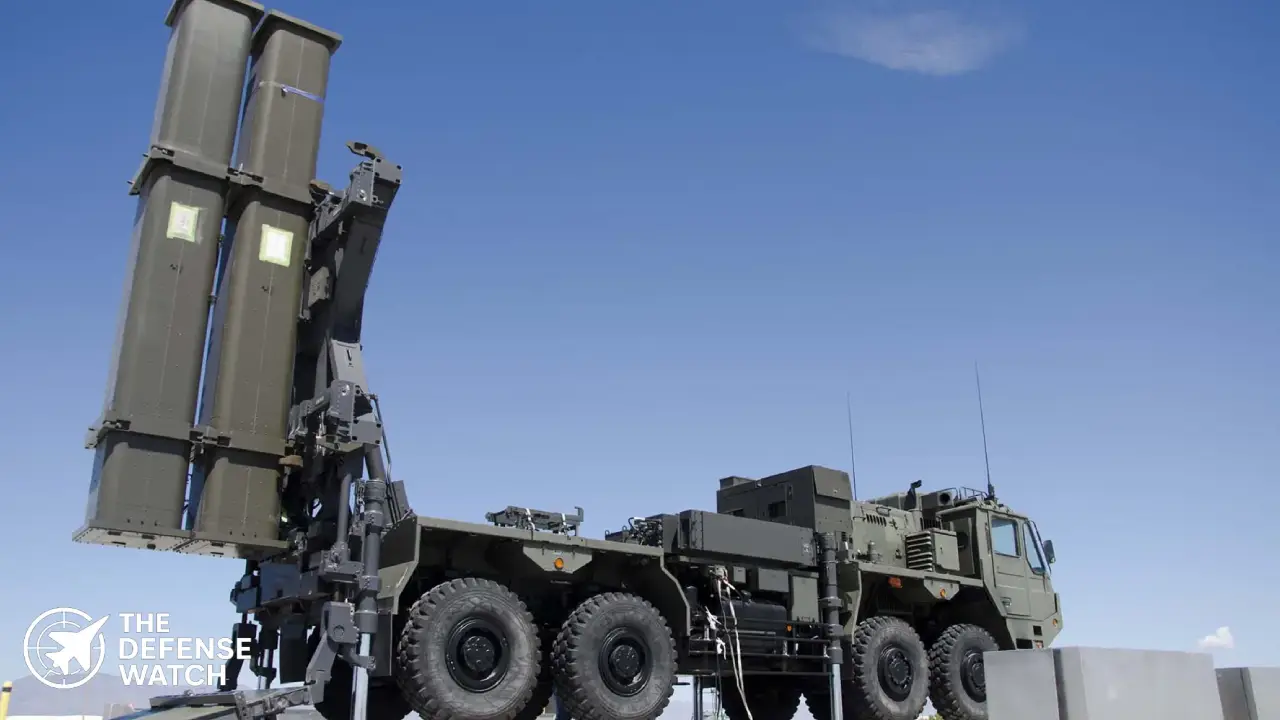
The missile system to be deployed on Yonaguni is the domestically developed Type 03 Chū-SAM — a medium-range surface-to-air missile system operated by the Japan Ground Self‑Defense Force (JGSDF).
Key characteristics of the Type 03 Chu-SAM:
- Mobility: launchers are truck-mounted, enabling quick repositioning.
- Radar: uses an active electronically scanned array (AESA) radar capable of tracking many aerial targets.
- Capability: designed to intercept aircraft, helicopters, and cruise missiles at medium altitude and ranges typically cited around 48 km (approximately 30 miles).
According to Okinawa-area media and defense-ministry statements, the deployment constitutes a full missile battery, though Tokyo has not yet published a firm timetable.
During his visit, Koizumi said the deployment intends to bolster deterrence and help reduce the risk of an armed attack on Japan. He also dismissed suggestions that the move would escalate regional tensions.
Strategic and Regional Implications
Enhancing Air Defense in the South
By adding Type 03 Chu-SAM to Yonaguni, Japan establishes a forward-looking air-defense node — extending surveillance and interception capabilities deep into the southwestern archipelago. This strengthens airspace control over critical sea lanes and islands in the East China Sea. Experts say the move complicates the planning of any adversary attempting to operate aircraft or drones near the First Island Chain.
Further, a missile battery on Yonaguni could protect other assets placed there in a crisis — including radars, maritime sensors, or refuelling/storage points used by Japanese or allied forces.
Impact on Regional Dynamics
The deployment inevitably adds another layer of strategic significance to what has traditionally been a quiet, remote island. Local populations in Yonaguni and surrounding Ishigaki have voiced concerns that their communities could become frontline areas if conflict breaks out.
From a broader geopolitical standpoint, Japan’s south-island missile build-up signals a deepening shift in Tokyo’s security posture — reflecting growing concern over possible conflict in the Taiwan Strait.
Reaction and Regional Response
Unsurprisingly, the missile deployment plan has drawn sharp criticism from Beijing. The People’s Republic of China Ministry of Foreign Affairs denounced the move as reckless and provocative, accusing Tokyo of exacerbating regional tensions and undermining stability in East Asia.
On the other hand, officials in Taipei have signalled that Tokyo’s efforts to bolster island defenses could contribute to broader security in the Taiwan Strait — and stressed that Japan’s deployment does not imply territorial ambitions toward Taiwan. Taipei Times+1
In Tokyo, government statements emphasize that the deployment aims solely at defensive deterrence, countering potential threats and safeguarding Japanese territory.
What Comes Next
As Japan proceeds with the Type 03 Chu-SAM deployment on Yonaguni, attention now turns to timing, force structure, and potential further enhancements. Observers will watch for:
- The number of batteries deployed and their exact configuration (radar coverage, launcher density, integration with other air-defense assets).
- Whether additional missile types — such as long-range or anti-ship systems — are brought to the southern islands in future phases.
- How China responds militarily or diplomatically, particularly if Japan continues to expand its southern perimeter.
- The extent of cooperation between Japan and allies (notably the United States Marine Corps) in coordinating defence posture across the First Island Chain.
With Yonaguni now evolving from a distant surveillance outpost into a fortified forward base, the strategic balance around the Taiwan Strait and East China Sea is shifting — in ways that may reshape regional deterrence calculations for years to come.

4 comments
[…] given East Asia’s already tense security environment. With overlapping maritime and air claims — around the East China Sea and the contested Senkaku/Diaoyu islands — such incidents risk triggering unintended […]
[…] and improved ability to patrol strategic areas such as the Mediterranean, Aegean, and Black Seas — without the need to surface frequently. This could afford Türkiye more secrecy and flexibility in […]
[…] and Russia. On Tuesday, strategic bombers from both countries conducted a joint flight from the East China Sea into the western Pacific, prompting Japan to scramble fighter jets to monitor the […]
[…] operations and scheduled exercises across the Western Pacific, including areas near the Philippine Sea and waters east of Taiwan. US defense officials described the deployment as consistent with long standing US commitments to […]