(adsbygoogle = window.adsbygoogle || []).push({});Executive Summary:
China’s People’s Liberation Army has conducted the first publicly disclosed live-fire test of a previously unseen air defense system believed to be derived from the HQ-16 surface-to-air missile family. The exercise, conducted in northwestern China, demonstrates Beijing’s continued effort to improve medium-range air defense capabilities against diverse aerial threats while enhancing survivability in electronically contested environments.
China Conducts First Live-Fire Test Of New HQ-16-Derived Air Defense System
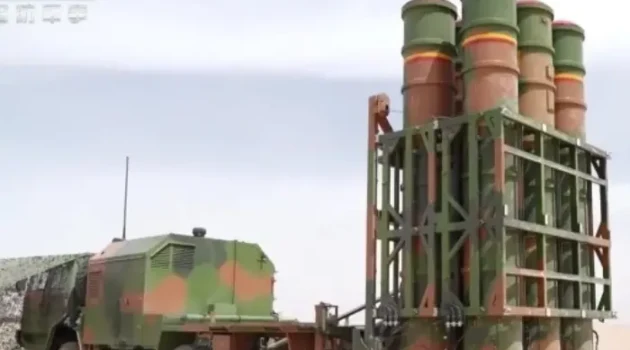
China has carried out the first known live-fire exercise of a new HQ-16-derived air defense system, according to footage released by state broadcaster CCTV and subsequently analyzed by defense intelligence specialists.
The exercise was reportedly conducted by a brigade assigned to the People’s Liberation Army’s (PLA) 73rd Group Army under the Eastern Theater Command. The test took place in the Gobi Desert and involved engagements under challenging terrain and simulated electromagnetic interference conditions.
Chinese state media stated that the system successfully intercepted multiple target types at ranges of up to 50 kilometers. Beijing did not disclose the official designation, technical specifications, or deployment timeline of the system.
System Appears To Be A New Variant Of The HQ-16 Family
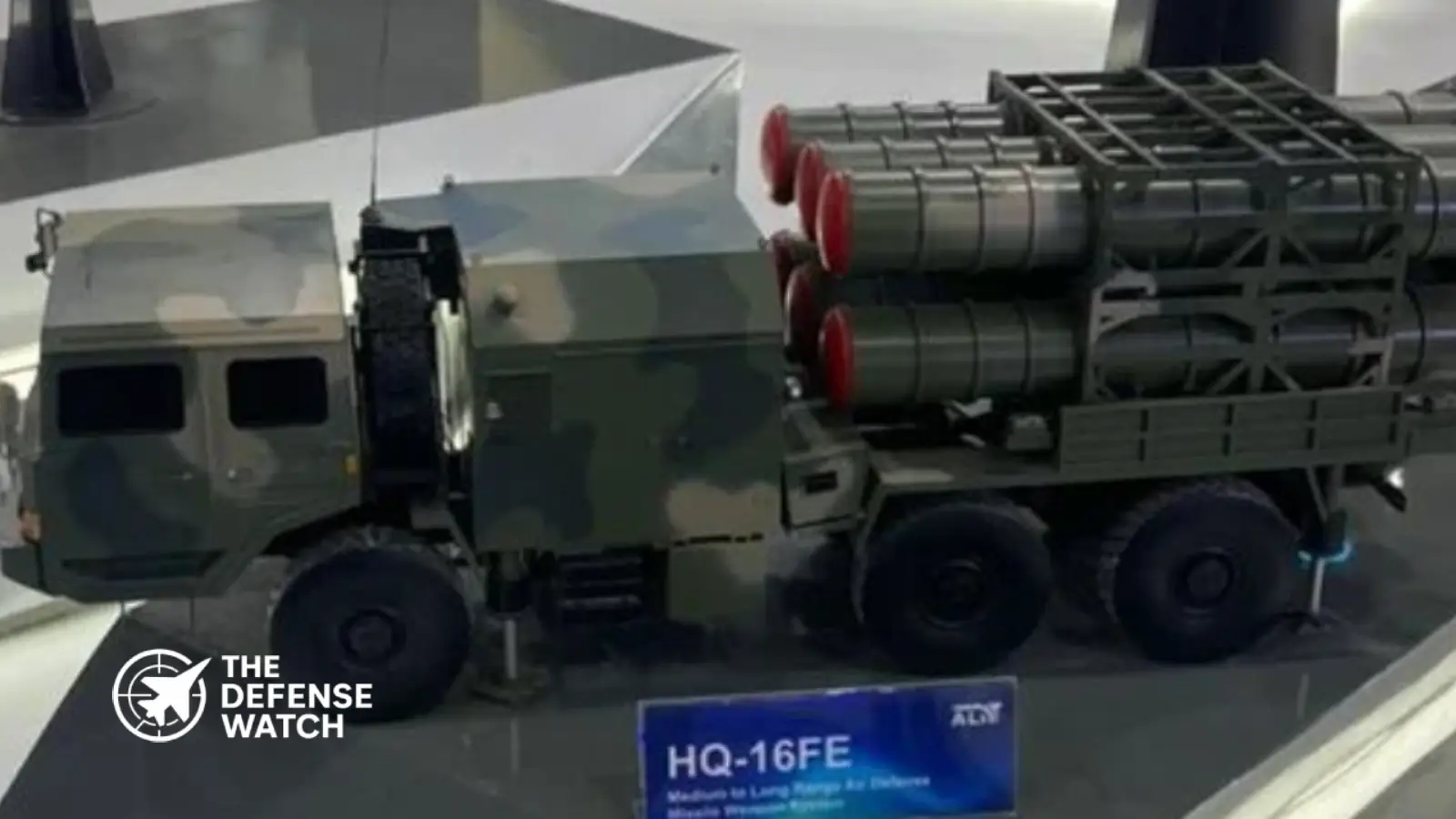
Analysis of publicly released imagery suggests the new system belongs to the HQ-16 family of medium-range surface-to-air missile systems.
The launcher configuration differs from earlier variants. Footage shows a six-cell vertical launch arrangement mounted on a 6×6 tactical truck chassis and supported by dedicated radar and command vehicles.
One notable feature is the use of fully vertical launch cells. This configuration enables 360-degree engagement capability without requiring launcher reorientation, improving reaction times against rapidly approaching threats. The design also suggests compatibility with naval vertical launch technologies used across several Chinese warship classes.
Known Characteristics Of The HQ-16 Family
Capability Reported Characteristics Mission Medium-range air defense Launch Method Vertical launch Platform Mobile truck-mounted system Typical Launcher Load Six missiles Engagement Coverage 360-degree engagement Primary Targets Aircraft, helicopters, cruise missiles, UAVs Existing HQ-16 variants reportedly offer engagement ranges between approximately 40 km and 70 km depending on configuration.
(adsbygoogle = window.adsbygoogle || []).push({});Part Of China’s Broader Air Defense Modernization Effort
The test comes amid a broader modernization effort across China’s integrated air defense network.
Over the past decade, the PLA has expanded deployment of layered air defense systems that combine long-range, medium-range, and short-range interceptors. Systems such as the HQ-9, HQ-22, HQ-17, and HQ-16 families are intended to create overlapping defensive coverage against aircraft, cruise missiles, precision-guided munitions, and increasingly, unmanned aerial systems.
The HQ-16 occupies a particularly important role within this architecture. It serves as the medium-range layer between strategic long-range systems and short-range point-defense assets. Recent PLA deliveries of upgraded HQ-16 variants indicate that the system remains a core component of China’s ground-based air defense force structure.
Why The New System Matters
Beyond the missile itself, the operational conditions highlighted during the exercise are noteworthy.
Chinese media emphasized operations under electromagnetic interference conditions, reflecting a growing recognition that future conflicts will involve extensive electronic warfare. Modern air defense systems must maintain target tracking, communications, and engagement capabilities despite jamming and electronic attack efforts.
The ability to engage multiple target types is equally significant. Modern battlefields increasingly feature mixed threat environments involving crewed aircraft, cruise missiles, loitering munitions, and large numbers of drones. Air defense systems are therefore expected to conduct simultaneous engagements against diverse targets approaching from different directions.
- (adsbygoogle = window.adsbygoogle || []).push({});
The vertical-launch architecture displayed during the test supports this requirement by reducing launcher response times and expanding engagement flexibility.
Implications For Regional Security
The appearance of a new HQ-16-derived system also has implications for regional military planning.
The 73rd Group Army is assigned to the Eastern Theater Command, the PLA command responsible for operations facing Taiwan and the East China Sea. While Chinese authorities have not linked the system to any specific contingency, deployment within this theater would contribute to stronger protection of maneuver forces, logistics hubs, and command infrastructure.
From a U.S. and allied perspective, continued improvements in Chinese medium-range air defense systems complicate air operations near contested areas. Enhanced air defense coverage can increase the resources required for suppression and penetration missions while strengthening China’s anti-access and area-denial posture.
The emphasis on mobility further improves survivability. Truck-mounted systems can rapidly relocate after launch, reducing vulnerability to counterstrikes and precision-guided weapons.
Technical Questions Remain
Several key details remain unknown.
China has not released information regarding:
- Missile guidance method
- Maximum engagement altitude
- Radar performance characteristics
- Number of simultaneous target engagements
- Operational deployment status
- Integration with wider PLA air defense networks
Future imagery or official disclosures may provide greater insight into whether the system represents a modest HQ-16 upgrade or a substantially new capability within the family.
Assessment
The live-fire demonstration provides another indication of China’s steady investment in layered air and missile defense capabilities. While the system’s official designation remains undisclosed, available evidence suggests an advanced member of the HQ-16 family optimized for modern multi-domain operations.
The focus on mobility, vertical launch technology, multi-target engagement, and electronic warfare resilience aligns with broader PLA modernization priorities. As China continues refining its integrated air defense architecture, medium-range systems such as this new HQ-16-derived variant are likely to remain central to protecting maneuver forces and critical military infrastructure.
- (adsbygoogle = window.adsbygoogle || []).push({});