Boeing Secures $51.9M AH-6 Support Contract For Saudi Arabia
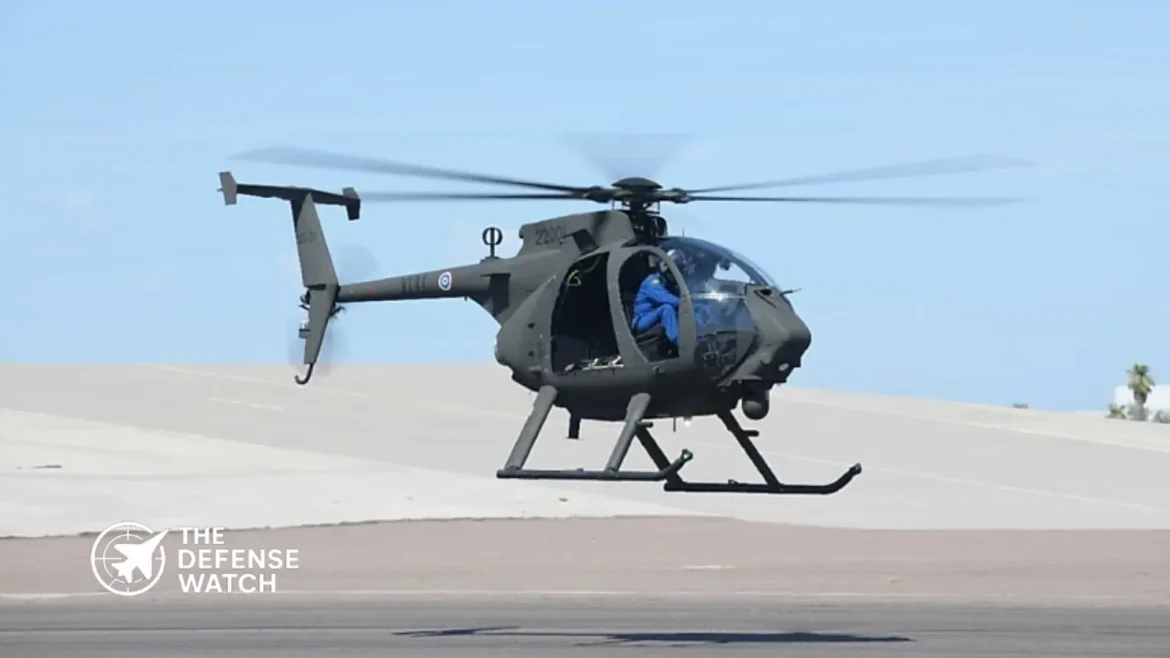
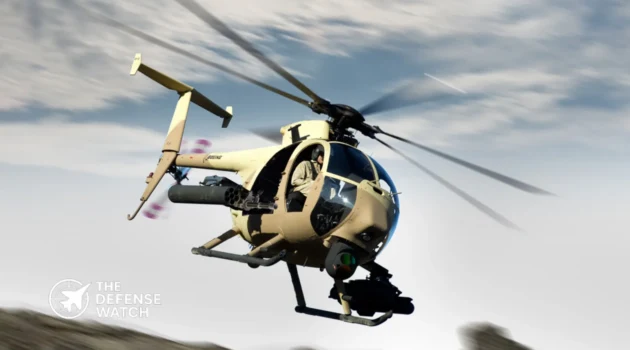
AH-6 support contract Saudi Arabia activity expanded this week as Boeing secured a $51.9 million U.S. Army contract modification to provide postproduction sustainment services for the Saudi Arabia Ministry of National Guard’s light attack helicopter fleet.
The award, announced by the U.S. Department of Defense, modifies an existing agreement and brings the total cumulative value of the contract to $76.8 million. The work will be carried out in Mesa, Arizona, with completion scheduled for May 31, 2028.
- Boeing awarded $51.9 million contract modification for AH-6 postproduction support services.
- Contract supports Saudi Arabia Ministry of National Guard under Foreign Military Sales program.
- Total contract value rises to $76.8 million following latest modification.
- Work will be performed in Mesa, Arizona, through May 31, 2028.
- U.S. Army Contracting Command at Redstone Arsenal is the contracting authority.
Funded through Fiscal 2025 Foreign Military Sales allocations, the contract reflects continued U.S. support for allied rotary-wing capabilities in the Middle East.
Sustaining Saudi Arabia’s Light Attack Capability
The AH-6 support contract Saudi Arabia centers on postproduction services, a critical phase that ensures operational readiness beyond initial procurement. These services typically include maintenance planning, logistics support, spare parts management, and system upgrades.
The AH-6, a light attack and reconnaissance helicopter derived from the proven MH-6 Little Bird platform, is designed for rapid deployment, close air support, and urban operations. Its small footprint and agility make it particularly effective in counterinsurgency and internal security missions, roles that align closely with the operational needs of the Saudi National Guard.
By extending sustainment support through 2028, the contract ensures that Saudi-operated AH-6 platforms remain mission-ready amid evolving regional security dynamics.
Strategic Role Of Foreign Military Sales
This AH-6 support contract Saudi Arabia deal falls under the U.S. Foreign Military Sales framework, a key instrument of American defense policy that enables partner nations to acquire and sustain U.S.-made military systems.
The FMS model provides several advantages. It standardizes training and logistics, ensures interoperability with U.S. forces, and strengthens long-term defense relationships. In this case, the continued investment in AH-6 sustainment reinforces operational alignment between U.S. and Saudi forces, particularly in areas such as counterterrorism and rapid response operations.

Image : Boeing According to the U.S. Army Contracting Command at Redstone Arsenal, Alabama, the funds were fully obligated at the time of award, indicating immediate execution without incremental funding delays.
Mesa, Arizona As A Sustainment Hub
Boeing’s Mesa, Arizona facility plays a central role in rotary-wing production and sustainment. The site has long served as a hub for Apache and light helicopter programs, offering integrated engineering, manufacturing, and lifecycle support capabilities.
For the AH-6 support contract Saudi Arabia, concentrating work in Mesa ensures access to specialized expertise and established supply chains. This approach reduces logistical friction and helps maintain consistent service quality over the contract’s multi-year duration.
The choice of a single primary location also reflects a broader trend in defense sustainment, where centralized hubs improve efficiency while maintaining global reach through deployed support teams.
Operational And Regional Implications
From an operational perspective, the AH-6 support contract Saudi Arabia enhances the Saudi National Guard’s ability to maintain a high readiness posture. Light attack helicopters like the AH-6 are often used in time-sensitive missions where reliability and rapid turnaround are critical.
Regionally, the contract underscores continued U.S. engagement in Middle East defense partnerships. While the agreement itself is focused on sustainment rather than new capability acquisition, its impact is significant. Sustainment contracts extend the effective lifespan of existing platforms, often delivering greater operational value than new purchases in the short term.
Moreover, the timing aligns with ongoing efforts by Gulf states to modernize and maintain agile, cost-effective air capabilities in response to asymmetric threats.
Analysis: Why Sustainment Contracts Matter More Than Ever
A key takeaway from the AH-6 support contract Saudi Arabia is the growing importance of lifecycle support in modern defense planning. Procurement often attracts attention, but sustainment determines real-world effectiveness.
In recent years, defense budgets globally have shifted toward maintaining readiness rather than expanding fleets. This reflects lessons learned from high-tempo operations, where availability rates and maintenance cycles directly influence mission success.
For platforms like the AH-6, which operate in demanding environments, sustained investment in support infrastructure ensures reliability and reduces long-term costs. It also allows incremental upgrades, keeping older systems relevant without the need for full replacement.
From Boeing’s perspective, contracts like this provide stable revenue streams while reinforcing long-term customer relationships. For the U.S. government, they strengthen allied capabilities without introducing new systems that require extensive training or integration.
Contracting Authority And Timeline
The contract modification was issued by the U.S. Army Contracting Command at Redstone Arsenal, a central hub for aviation and missile procurement.
Originally awarded under contract W58RGZ-24-C-0002, the agreement now reflects an expanded scope aligned with Saudi operational requirements. The April 6, 2025 award date marks the latest step in what appears to be a phased sustainment strategy.
With completion set for mid-2028, the contract provides a multi-year window for continuous support, aligning with typical maintenance cycles for light rotary-wing platforms.
NOVA Group Secures F-22 Fuel Infrastructure Contract
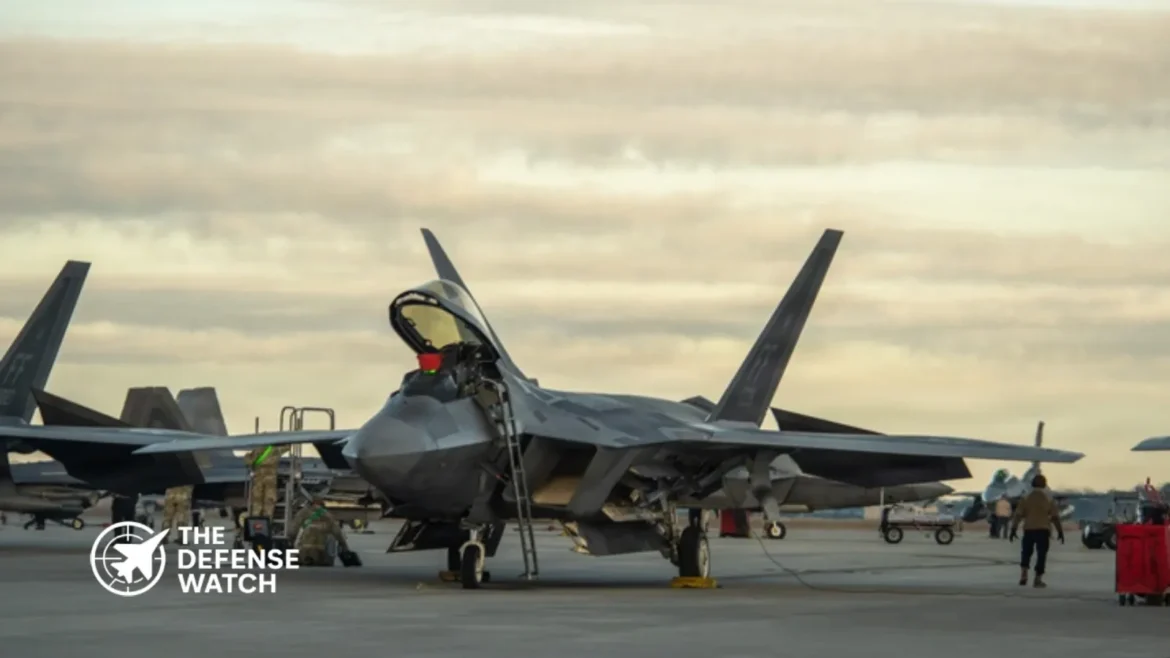
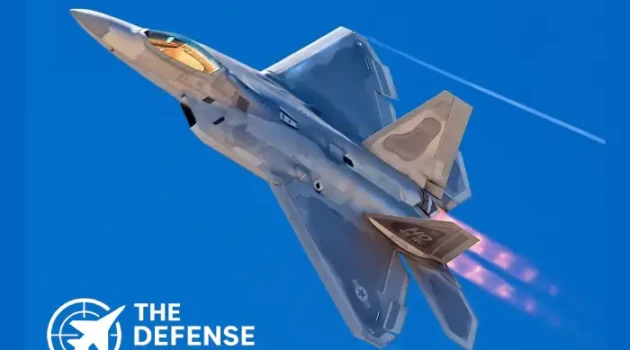
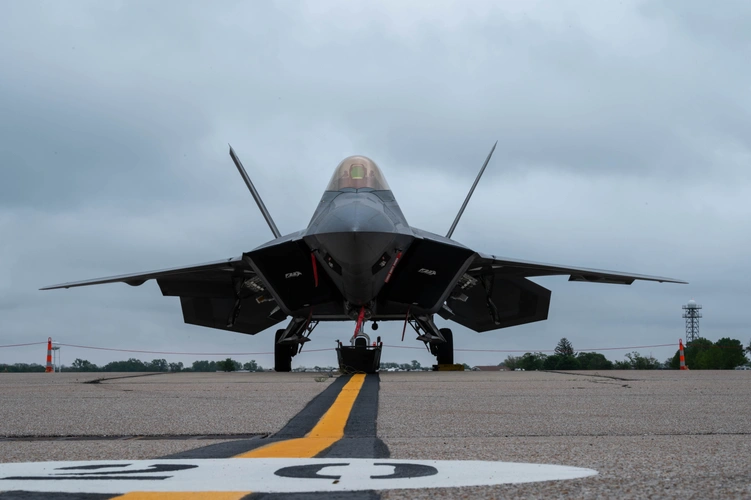
The F-22 fuel infrastructure contract awarded to NOVA Group Inc. marks a significant investment in sustaining U.S. fifth-generation air dominance in the Arctic region. The $57.9 million firm-fixed-price award will fund the construction of petroleum, oil, and lubricant infrastructure at Joint Base Elmendorf-Richardson.
- NOVA Group awarded $57.9 million contract for F-22 fuel infrastructure in Alaska.
- Project supports operations at Joint Base Elmendorf-Richardson in Anchorage.
- Total contract value reaches $62 million with completion set for July 2029.
- U.S. Army Corps of Engineers Alaska District is the contracting authority.
- Funding sourced from Fiscal 2025 military construction defense-wide budget.
The project directly supports operations of the F-22 Raptor, one of the U.S. Air Force’s most advanced air superiority platforms. Work will be carried out in Anchorage, Alaska, with completion scheduled for July 25, 2029.
The contract was issued by the U.S. Army Corps of Engineers Alaska District following a competitive process that drew four bids via online solicitation.
Strategic Importance Of Arctic Airpower Infrastructure
This F-22 fuel infrastructure contract reflects a broader Pentagon effort to reinforce logistics and sustainment capabilities in Alaska, a region increasingly central to U.S. defense posture.
Joint Base Elmendorf-Richardson serves as a critical hub for air operations across the Indo-Pacific and Arctic theaters. Its proximity to potential flashpoints in the Pacific and access to polar routes makes it a strategic asset for rapid deployment and air defense missions.
Fuel infrastructure, while less visible than aircraft procurement, plays a decisive role in operational readiness. Without reliable storage, distribution, and refueling systems, even advanced platforms like the F-22 cannot sustain high sortie rates during extended operations.
By expanding petroleum, oil, and lubricant capacity, the project ensures that F-22 units can operate at full tempo in harsh Arctic conditions where logistics are inherently challenging.
Contract Scope And Funding Details
The base contract value stands at $57,956,500, with a total cumulative value of $62,005,000 when accounting for additional elements. Funding was obligated at the time of award using Fiscal 2025 military construction, defense-wide appropriations.
The firm-fixed-price structure places cost control responsibility on the contractor, a common approach in U.S. military construction projects aimed at minimizing budget overruns.

Image : U.S. Air Force From an acquisition perspective, the relatively limited number of bids suggests a specialized requirement. Fuel infrastructure projects in extreme climates demand technical expertise in environmental protection, cold-weather engineering, and compliance with stringent military standards.
Operational Impact On F-22 Readiness
The F-22 fuel infrastructure contract will directly enhance sortie generation capability at Elmendorf. Increased fuel storage and improved distribution systems reduce turnaround times between missions, a critical factor in both peacetime deterrence and wartime operations.
For the F-22 fleet, which relies on high-performance engines and precision logistics, consistent fuel availability is essential. The aircraft’s role in air superiority, including counter-air missions and integrated air defense suppression, depends on rapid response capability.
This infrastructure upgrade also supports joint operations. Elmendorf hosts multiple units across the Air Force and Army, and improved fuel systems can benefit a broader range of aircraft and support assets.
Broader Defense Context
The timing of the contract aligns with growing U.S. focus on the Arctic as a contested domain. As climate change opens new maritime routes and increases accessibility, competition among major powers is expected to intensify.
Defense planners have increasingly emphasized resilient basing and logistics in remote regions. Investments like this F-22 fuel infrastructure contract indicate a shift toward strengthening foundational capabilities rather than solely prioritizing new platforms.
According to U.S. Department of Defense strategy documents and USACE project data, infrastructure modernization is a key pillar in maintaining long-term readiness, particularly in geographically challenging areas like Alaska.
Industry Perspective
For NOVA Group, the award reinforces its position in the military construction sector, particularly in complex infrastructure projects. Delivering on this contract will require coordination with federal agencies, adherence to strict environmental standards, and execution under demanding climatic conditions.
The project also highlights the role of private contractors in enabling U.S. military capabilities beyond traditional defense manufacturing. Infrastructure, logistics, and sustainment remain essential components of overall combat effectiveness.

Israel Ceasefire Lebanon Exclusion Clarified
The Israel ceasefire Lebanon exclusion has emerged as a key point of contention following the announcement of a two-week truce involving the United States and Iran. In its first official response, the office of Benjamin Netanyahu stated clearly that Lebanon is not part of the agreement.
According to the statement, Israel supports the decision by Donald Trump to suspend strikes against Iran for a limited period. However, this pause is conditional. Tehran must reopen strategic maritime routes and halt attacks against the United States, Israel, and regional partners.
- Israel confirmed Lebanon is not included in the two-week ceasefire involving the US and Iran.
- The ceasefire is conditional on Iran reopening key maritime routes and halting attacks.
- Pakistan’s Prime Minister previously stated Lebanon was part of the agreement.
- US President Donald Trump did not mention Lebanon in his official statement.
- The clarification highlights ongoing ambiguity in regional ceasefire terms.
The clarification directly contradicts earlier remarks by Shehbaz Sharif, who had suggested that Lebanon was included in the ceasefire framework. That discrepancy now raises questions about the scope and coordination behind the agreement.
Conflicting Narratives Around Ceasefire Scope
The divergence in statements reflects broader uncertainty surrounding the Israel ceasefire Lebanon exclusion and the structure of the deal itself. While Washington and Tehran appear aligned on a temporary de-escalation, regional actors interpret the terms differently.
Notably, President Trump’s public statement announcing the ceasefire made no reference to Lebanon. This omission aligns with Israel’s position but contrasts with Pakistan’s claims of a broader regional arrangement.
From a policy standpoint, this gap highlights the lack of a unified communication channel among stakeholders. In high-risk environments, such inconsistencies can quickly translate into operational confusion, especially in multi-front theaters like the Middle East.
Strategic Implications For Regional Security
The Israel ceasefire Lebanon exclusion carries immediate operational implications. By excluding Lebanon, Israel retains freedom of action against threats emanating from its northern border, particularly those linked to Iran-backed groups.
This suggests that the ceasefire is narrowly tailored to reduce direct US–Iran confrontation rather than address the full spectrum of regional hostilities. In practical terms, it creates a partial pause rather than a comprehensive de-escalation.
Military planners will likely view this as a controlled reset rather than a durable peace measure. The conditional nature of the truce also introduces fragility. Any perceived violation, such as disruptions in maritime traffic or proxy attacks, could quickly collapse the agreement.
Operational Context And Military Posture
Israel’s clarification indicates that its rules of engagement remain unchanged outside the Iran-specific framework. This is critical in understanding the real-world impact of the ceasefire.
For defense analysts, the Israel ceasefire Lebanon exclusion underscores a layered conflict environment. While one axis of confrontation may pause, others remain active. This complicates command decisions, force allocation, and escalation management.
The exclusion of Lebanon also signals that Israel does not consider the current agreement sufficient to address threats from that front. As a result, surveillance, air defense readiness, and strike capabilities in northern sectors are expected to remain elevated.
Analysis: Limited Ceasefire, Broader Risks
At least 30 percent of the implications of this development lie in what the ceasefire does not cover. The Israel ceasefire Lebanon exclusion reveals a fragmented approach to conflict management in the region.
Rather than a comprehensive diplomatic breakthrough, the agreement appears to be a tactical pause focused on immediate US–Iran tensions. This leaves multiple flashpoints unresolved.
Such partial arrangements often carry inherent risks. They can reduce pressure in one area while allowing escalation in another. In this case, excluding Lebanon may prevent broader consensus and prolong instability along Israel’s northern frontier.
From a strategic perspective, the situation reflects competing priorities. The United States may seek to avoid direct confrontation with Iran, while Israel maintains a wider threat perception that includes proxy actors.
Outlook
The durability of the ceasefire will depend heavily on compliance with its conditions and clarity in its scope. As it stands, the Israel ceasefire Lebanon exclusion introduces ambiguity that could undermine confidence in the agreement.
Further official statements from Washington and Tehran will be critical in determining whether additional clarifications or expansions of the ceasefire are forthcoming.
For now, the region remains in a state of controlled tension rather than genuine de-escalation.

Trump Iran Ceasefire Halts Six-Week War — Strait of Hormuz to Reopen as Diplomacy Enters Critical Phase
The Trump Iran ceasefire announced on April 7, 2026, marks the most significant diplomatic development in a conflict that has already reshaped global energy markets and threatened to trigger a broader Middle East war. President Trump agreed to suspend U.S. bombing operations against Iran for two weeks — conditioned on Tehran fully reopening the Strait of Hormuz — following direct mediation by Pakistani Prime Minister Shehbaz Sharif.
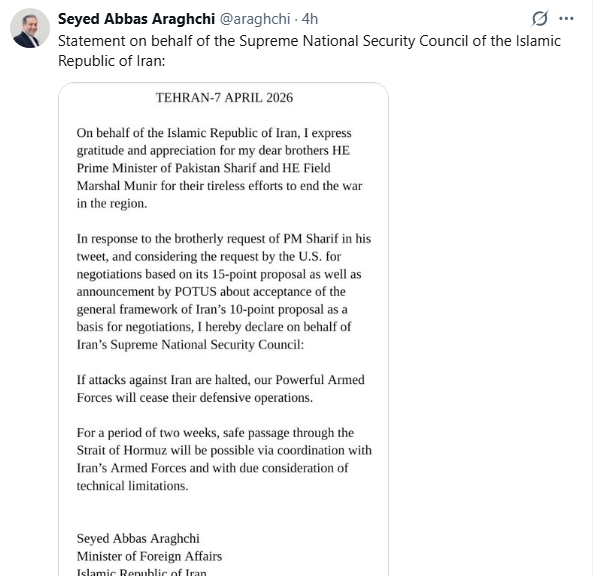
Iran’s Supreme National Security Council confirmed acceptance of the ceasefire. Iranian Foreign Minister Abbas Araghchi stated that safe passage through the strait would be permitted for two weeks in coordination with Iran’s armed forces.
- President Trump announced a two-week ceasefire with Iran on April 7, 2026, suspending U.S. and Israeli strikes in exchange for Iran fully reopening the Strait of Hormuz.
- Pakistan served as the primary mediator, with Prime Minister Shehbaz Sharif proposing the pause and Vice President JD Vance leading the U.S. negotiating delegation.
- Iran submitted a 10-point peace proposal that Trump called a “workable basis” for a larger agreement, with formal talks scheduled for Friday in Islamabad.
- The six-week war has caused Gulf states to collectively shut in an estimated 7.5–9.1 million barrels per day of crude output, triggering a global energy crisis and projected U.S. gas prices of $4.30 per gallon.
- Iran retains over 450 kg of 60% enriched uranium — sufficient for an estimated nine to eleven nuclear weapons — making the nuclear dimension the most critical unresolved issue in any final agreement.
The Big Picture
The conflict began on February 28, 2026, when the United States and Israel launched coordinated military operations targeting Iran’s nuclear infrastructure, military leadership, and key military installations. Iran closed the Strait of Hormuz in response, triggering a historic global oil supply shock that sent energy prices soaring.
The Energy Information Administration sharply raised its oil, gasoline, and diesel price forecasts for 2026 and 2027, projecting U.S. gas prices to peak near $4.30 per gallon this month. Gulf states including Saudi Arabia, Kuwait, the UAE, Qatar, and Bahrain collectively shut in an estimated 7.5 million barrels per day of crude production in March, a figure the EIA projected would rise to 9.1 million barrels per day in April.
The economic fallout escalated pressure on both Washington and Tehran to pursue a diplomatic exit. The ceasefire, however fragile, represents the first operational pause in a war that has already reshaped the strategic balance in the Persian Gulf.
What’s Happening
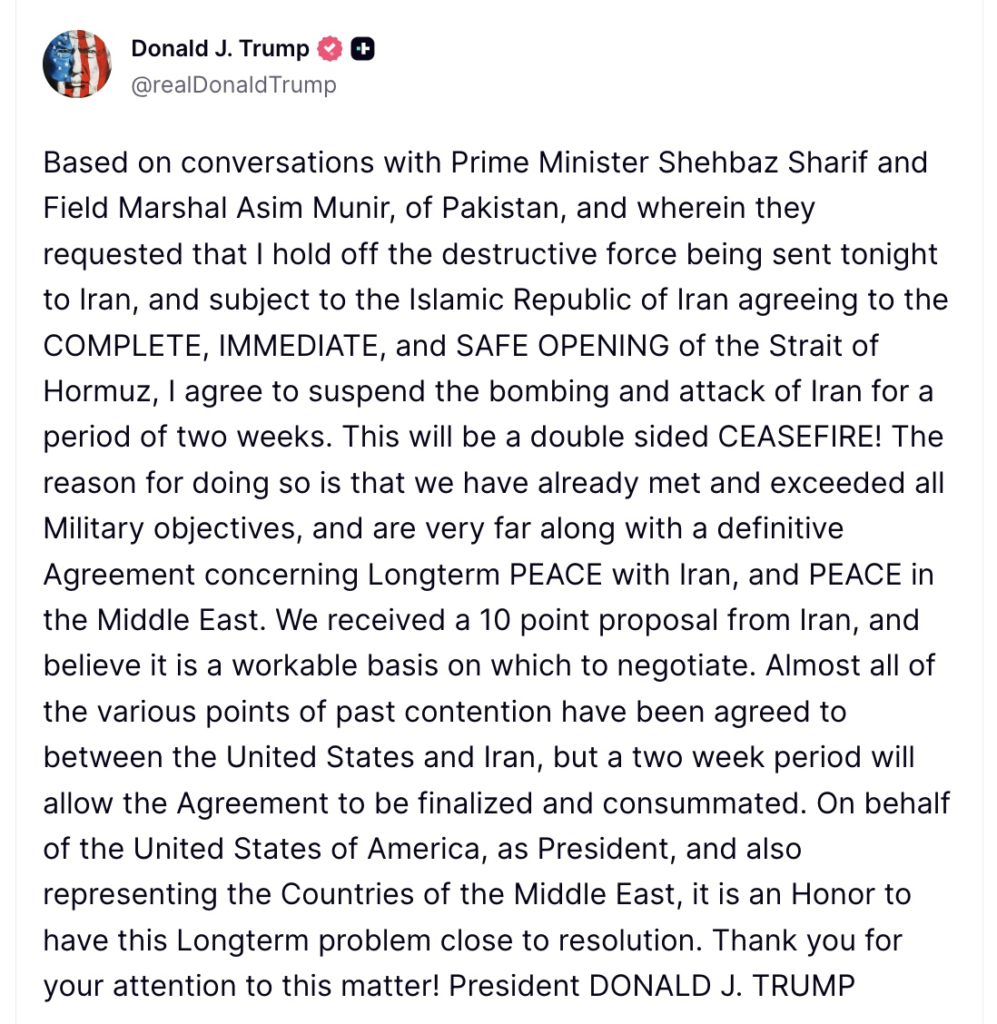
Trump posted on Truth Social that he would “suspend the bombing and attack of Iran for a period of two weeks,” subject to Iran agreeing to the “complete, immediate, and safe opening of the Strait of Hormuz.” He stated that the U.S. had “already met and exceeded all military objectives” and was “very far along” with a definitive longer-term agreement.
Iran submitted a 10-point peace proposal that Trump described as a “workable basis on which to negotiate,” adding that “almost all of the various points of past contention” had been agreed to.
Pakistan’s ceasefire proposal was mediated by Prime Minister Shehbaz Sharif, and a Pakistani government source confirmed that Vice President JD Vance is serving as the U.S. interlocutor in the talks. Formal peace negotiations are expected to begin Friday in Islamabad.
Israel agreed to the ceasefire and will also suspend its strikes. Pakistan’s prime minister indicated the ceasefire would extend to Lebanon, where Israel has been conducting military operations — a provision that could present political difficulties for Israeli Prime Minister Benjamin Netanyahu.
Why It Matters
The ceasefire temporarily removes the immediate threat of large-scale strikes on Iranian civilian infrastructure, including power plants and bridges — attacks that international legal experts warned could constitute war crimes under the laws of armed conflict.
More critically, the diplomatic pause creates a window to address the core strategic driver of the conflict: Iran’s nuclear program.
According to March 2026 intelligence assessments referenced in open-source reporting, Iran possesses over 450 kg of 60% enriched uranium — sufficient material for an estimated nine to eleven nuclear weapons — with a breakout timeline now measured in days rather than months or years.
This figure represents the central challenge for any durable agreement. A ceasefire that does not produce verifiable constraints on Iran’s enrichment program simply defers the most dangerous dimension of the crisis. The two-week window is operationally tight for resolving a dispute of this complexity.
Strategic Implications
The ceasefire carries significant implications across multiple strategic dimensions.
Energy security. The EIA projects that Middle East oil production shut-ins will not return close to pre-conflict levels until late 2026, even if the strait reopens promptly. Two weeks of diplomatic progress will not immediately reverse the supply shock. The U.S. military and its allies face pressure to prevent any resumption of hostilities that would re-close the waterway.
Nuclear deterrence. The Trump administration previously demanded that Iran completely dismantle its nuclear and missile programs — a position Iran explicitly rejected. During earlier nuclear negotiations, the Trump administration pressed Iran to completely dismantle its nuclear and missile programs, a demand that Iran refused. Whether Iran’s 10-point proposal includes verifiable enrichment restrictions or a dismantlement pathway remains undisclosed. This ambiguity is the central fault line in the Islamabad talks.
Regional stability. Iran has threatened to ask its Houthi allies in Yemen to block the Bab el-Mandeb waterway if the situation escalates further. A failed negotiation would risk both the Strait of Hormuz closing again and a secondary chokepoint blockade — a combination that would effectively sever global energy supply chains through the Red Sea and the Persian Gulf simultaneously.
U.S. force posture. The ceasefire buys U.S. Central Command operational breathing room. Six weeks of sustained strike operations have placed significant demands on carrier strike groups, long-range bomber assets, and logistics infrastructure in the region. A diplomatic pause allows the U.S. military to consolidate, assess battle damage, and prepare contingency options if talks collapse.
Competitor View
China and Russia have actively complicated U.S. diplomatic objectives throughout the conflict. China and Russia vetoed a UN Security Council resolution aimed at reopening the Strait of Hormuz. Both powers have strategic interests in prolonging a conflict that ties down U.S. military assets, disrupts Western energy supplies, and demonstrates the limits of American power projection in the Middle East.
Beijing, in particular, benefits from any outcome that weakens U.S. credibility as a regional security guarantor. Gulf Arab states that depend on U.S. security commitments are watching the Iran negotiations closely. A failed deal that allows Iran to retain a near-nuclear status while the war ends would represent a significant strategic setback for American deterrence architecture in the Indo-Pacific as well — signaling that the U.S. can be deterred from enforcing non-proliferation red lines.
Russia’s calculus is similarly opportunistic. Any prolonged diplomatic engagement that distracts Washington from European security and NATO reinforcement directly serves Moscow’s interests in Ukraine and Eastern Europe.
What To Watch Next
The Islamabad talks beginning Friday represent the first structured direct negotiation between Washington and Tehran since the war began. Several operational milestones will determine whether the ceasefire holds or collapses.
The most immediate test is whether the Strait of Hormuz remains fully open for the duration of the two-week period. Any incident — whether an Iranian naval provocation, a Houthi strike on a tanker, or a unilateral Israeli action — could rapidly unravel the agreement.
The substance of Iran’s 10-point proposal will be the decisive variable at the table. If Tehran’s terms include a suspension of enrichment above 20% and access for IAEA inspectors, a framework agreement is achievable. If Iran insists on retaining its current enrichment infrastructure while demanding sanctions relief and reconstruction guarantees, the gap will prove unbridgeable in two weeks.
The Trump administration has maintained that its position requires Iran to halt all uranium enrichment — a stance the White House had not consistently maintained during earlier rounds of negotiations. Whether this remains a firm red line or a negotiating position will define the Islamabad outcome.
Capability Gap
The ceasefire exposes a persistent gap in U.S. strategic planning: the absence of a viable coercive framework that can simultaneously degrade an adversary’s military capabilities, sustain allied cohesion, manage global economic blowback, and produce a verifiable diplomatic resolution — all within a compressed timeline.
The six-week campaign successfully targeted Iran’s nuclear infrastructure, military leadership, and key military installations. Trump has acknowledged that despite Iran’s military being heavily degraded, Tehran still controls ship traffic through the strait — demonstrating that kinetic superiority does not automatically translate into strategic leverage over critical chokepoints.
The broader lesson for U.S. defense planners is operational: military pressure alone cannot reopen a maritime chokepoint controlled by a state willing to accept substantial military punishment. Economic coercion and energy market disruption proved to be Iran’s most effective asymmetric tool, more consequential in the short term than its direct military capabilities.
The Bottom Line
The Trump Iran ceasefire buys two weeks to determine whether a militarily degraded but diplomatically resolute Tehran will trade its nuclear leverage for reconstruction and sanctions relief — or whether this pause simply delays a more dangerous second phase of a war with no clear endgame.
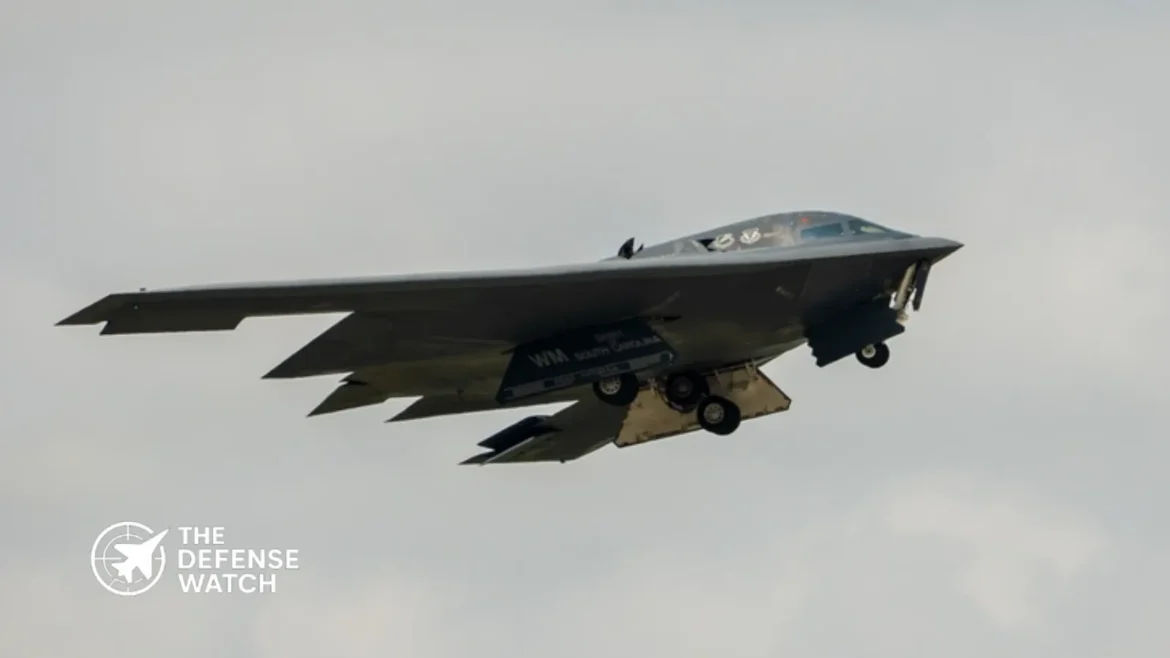
B-2 Spirit Drops GBU-57 Bunker Busters On IRGC Command Compound In Tehran During Operation Epic Fury
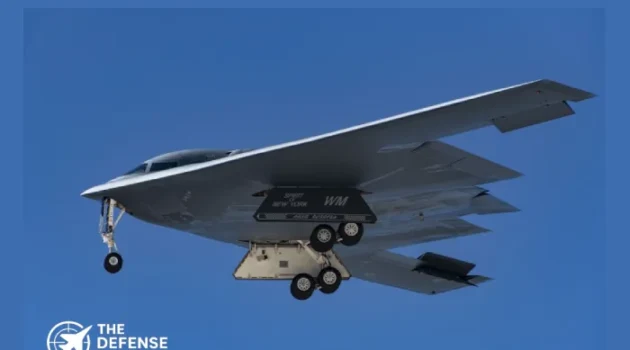
U.S. B-2 Spirit stealth bombers struck an underground Islamic Revolutionary Guard Corps command bunker near Tehran on April 7, 2026, using GBU-57 Massive Ordnance Penetrator bombs, The Wall Street Journal reported. The strike was executed as part of Operation Epic Fury — an active U.S. campaign that simultaneously included the combat recovery of a downed American airman inside Iranian territory, one of the most complex concurrent operations in recent American military history.
- U.S. B-2 Spirit stealth bombers struck a hardened underground IRGC command compound in Tehran on April 7, 2026, according to The Wall Street Journal.
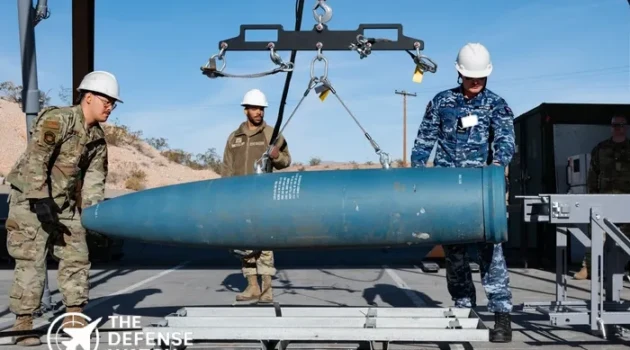
- The aircraft reportedly employed the GBU-57 Massive Ordnance Penetrator — a 30,000-pound precision hard-target defeat weapon engineered specifically to destroy deeply buried, reinforced facilities.
- The mission was ordered by CENTCOM commander Admiral Brad Cooper after intelligence reportedly identified a high concentration of senior IRGC leaders inside the bunker — indicating a dynamic, time-sensitive targeting decision rather than a pre-planned strike.
- The B-2 sortie launched from Whiteman Air Force Base, Missouri, requiring intercontinental range, aerial refueling support, and a round-trip penetration of Iranian airspace — demonstrating the full reach of U.S. homeland-based power projection.
- The strike formed part of Operation Epic Fury, which simultaneously included the rescue of a downed U.S. F-15E airman inside Iran and supporting interdiction strikes to suppress Iranian ground forces in the recovery corridor.
The Big Picture
Washington’s willingness to apply strategic long-range bombers against hardened leadership targets deep inside Iran reflects a fundamental shift in how U.S. CENTCOM has approached Iranian military infrastructure. For years, deterrence against Iran rested primarily on regional air presence, carrier strike groups, and the implicit threat of escalation. Operation Epic Fury suggests a posture that has moved beyond deterrence by denial and toward active, kinetic suppression of Iran’s most protected command architecture — including deeply buried sites within the capital.
That shift carries meaning well beyond the immediate tactical outcome. The B-2 Spirit remains the sole operational platform capable of combining low-observable penetration of advanced air defense environments with the carriage and precision delivery of the GBU-57 MOP. When Washington deploys that specific combination against targets near Tehran, it signals a willingness to match the most demanding aimpoints in the Iranian target set with the most capable conventional weapons in the American inventory.
B-2 Spirit and GBU-57 in Operation Midnight Hammer, June 2025
What’s Happening
CENTCOM commander Admiral Brad Cooper ordered B-2 bombers to conduct a round-trip strike mission from Whiteman Air Force Base in Missouri after intelligence reportedly pinpointed a significant gathering of senior IRGC commanders inside a hardened underground compound in Tehran. According to The Wall Street Journal, the decision was driven by time-sensitive targeting data — meaning the window to strike the leadership concentration was narrow and required rapid command authorization, rapid aircraft tasking, and sustained aerial refueling support across intercontinental distance.
Each B-2 released GBU-57 Massive Ordnance Penetrators against the bunker. The GBU-57 is a 30,000-pound GPS-guided weapon with a hardened steel casing and a delayed fuze designed to penetrate multiple meters of earth and reinforced concrete before detonating. It is not a general-purpose munition. Its development was driven explicitly by the requirement to defeat the type of deeply buried, purpose-built command and weapons facilities that Iran, North Korea, and other adversaries have invested in for decades.
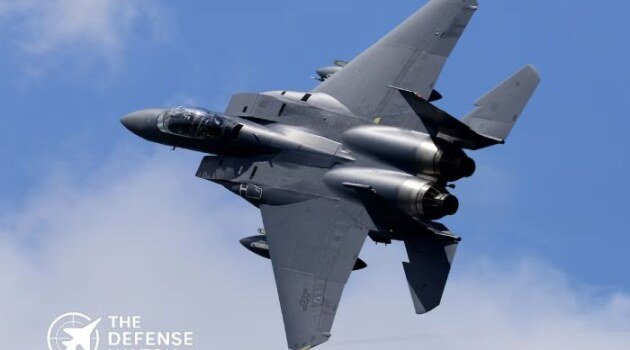
The mission unfolded while separate U.S. forces were executing a combat search and rescue operation to recover a downed F-15E Strike Eagle aircrew member inside Iran — a personnel recovery mission that itself required American bombers to drop approximately one hundred 2,000-pound bombs to suppress Iranian forces attempting to intercept the rescue corridor.
Why It Matters
The operational significance of this strike rests on three converging elements: what was targeted, what was used, and when it happened.
Targeting an IRGC command bunker near Tehran during an active personnel recovery operation means U.S. forces were simultaneously managing at least two high-risk, high-complexity mission threads inside Iranian territory at the same moment. That level of concurrent joint-force integration — dynamic leadership targeting layered on top of combat rescue — reflects the maturity and responsiveness of the American kill chain in a contested, rapidly evolving operational environment.
The selection of the GBU-57 confirms that the target was assessed as deeply hardened. Standard 2,000-pound penetrating bombs are capable against moderate protection, but the IRGC has constructed facilities specifically designed to survive conventional bombardment. Only the MOP — carried exclusively by the B-2 — provides the combination of mass, penetration geometry, and fuze delay necessary to defeat such structures with conventional ordnance.
The launch from Whiteman AFB rather than a forward theater base is equally deliberate. It demonstrates that the United States can generate power projection directly from the continental homeland without requiring in-region basing that could be denied, threatened, or politically complicated. For planners in Tehran, that removes one of the key assumptions behind Iranian A2/AD strategy: that U.S. airpower depends on vulnerable regional airfields to generate sustained strike sorties.
Strategic Implications
This mission accelerates the erosion of a core Iranian strategic assumption — that underground military architecture provides meaningful sanctuary for senior leadership and command nodes.
Iran has invested heavily in buried facilities over decades. The logic was straightforward: depth and reinforced construction would preserve regime command continuity under air attack, effectively holding a critical element of Iranian military capacity beyond the reach of conventional American airpower. The June 2025 Operation Midnight Hammer already challenged that assumption by marking the first confirmed combat employment of the GBU-57 against hardened Iranian nuclear facilities. The April 2026 strike against the IRGC command bunker near Tehran extends that logic directly to protected leadership infrastructure.
The implications for Iranian force posture are significant. If the IRGC can no longer rely on fixed underground compounds as secure command centers during a conflict, it must adapt — dispersing leadership more widely, shifting to mobile command platforms, reducing the concentration of senior officers in any single location, and accepting the degraded coordination that comes with that dispersal. None of these adaptations are costless. Greater dispersion reduces coherence. Mobile command platforms are harder to secure and easier to detect. The tradeoff between survivability and command effectiveness becomes a permanent operational tension.
For U.S. deterrence signaling, the strike delivers a message that is precise, concrete, and unmistakable: the combination of B-2 Spirit penetration and GBU-57 hard-target defeat capability can be applied against deeply buried command sites in the Iranian capital on compressed timelines, driven by real-time intelligence, and executed from the American homeland.
Competitor View
For China and Russia, both of which maintain extensive hardened underground military facilities — including leadership bunkers and nuclear command infrastructure — the B-2 and GBU-57 pairing carries a sobering deterrent signal. The demonstrated willingness of the United States to employ its deepest-penetrating conventional ordnance against protected command sites in a real operational context, rather than in exercise scenarios, sharpens the credibility of American hard-target defeat capability in any future high-end contingency.
Beijing’s People’s Liberation Army operates numerous deeply buried strategic facilities, and Chinese defense planners will have noted both the weapon employed and the dynamic, intelligence-driven targeting cycle that preceded the strike. Moscow similarly maintains Cold War-era and more recent deep underground command complexes. Both capitals now have updated empirical evidence that U.S. conventional hard-target defeat capability has moved from validated testing into active combat use against a non-nuclear regional adversary.
For Iran specifically, the strike against an IRGC command node — not merely nuclear or missile infrastructure — indicates that Washington views the IRGC’s protected command architecture as a legitimate conventional target set during active hostilities. That broadens the perceived target menu and further compresses Iranian confidence in the survivability of command-and-control during a sustained U.S. air campaign.
What To Watch Next
The immediate follow-on questions center on battle damage assessment and Iranian operational response. Independent confirmation of the physical damage inflicted on the IRGC bunker will take time, and the U.S. government has not issued a formal official statement as of this publication. Commercial satellite imagery of the affected area near Tehran will likely provide initial indicators.
Strategically, the pace of subsequent U.S. strike activity within Operation Epic Fury — and whether Washington signals any pause linked to diplomatic signaling — will indicate whether the current campaign posture is oriented toward coercive pressure or toward sustained degradation of Iranian military capability. The U.S. has also not publicly defined the operational boundaries or stated objectives of Epic Fury, leaving Iranian and regional interlocutors to assess U.S. intentions based primarily on the actions observed.
Capability Gap
The GBU-57 Massive Ordnance Penetrator was developed because no previous conventional weapon in the American inventory could reliably defeat the class of hardened and deeply buried facilities that Iran, North Korea, and other actors have constructed specifically to survive standard munitions. The B-2 was already the only aircraft large enough and stealthy enough to carry the MOP into contested airspace, but the weapon languished as a contingency asset through most of the previous decade.
Operation Midnight Hammer in June 2025 closed the gap between validated capability and operational credibility. The April 2026 IRGC bunker strike confirms that GBU-57 employment is now an established tool in the active U.S. operational playbook — not a threshold reserved exclusively for existential scenarios.
The realistic limitation is inventory depth. The GBU-57 is a specialized, expensive, and low-volume munition. Sustained employment in a prolonged campaign would draw down available stocks. The degree to which the United States has expanded MOP production or pre-positioned additional units since Midnight Hammer remains classified, but inventory management will be a real planning constraint in any extended hardened-target campaign.
The Bottom Line
The reported B-2 Spirit strike against a hardened IRGC command bunker near Tehran with GBU-57 Massive Ordnance Penetrators confirms that the United States has integrated deep-strike hard-target defeat into active, time-sensitive, concurrent operations — fundamentally undermining the strategic logic that underground military architecture provides durable sanctuary for Iranian leadership.

Thailand Indra Lanza 3D Radar Strengthens Counter-Drone Defense
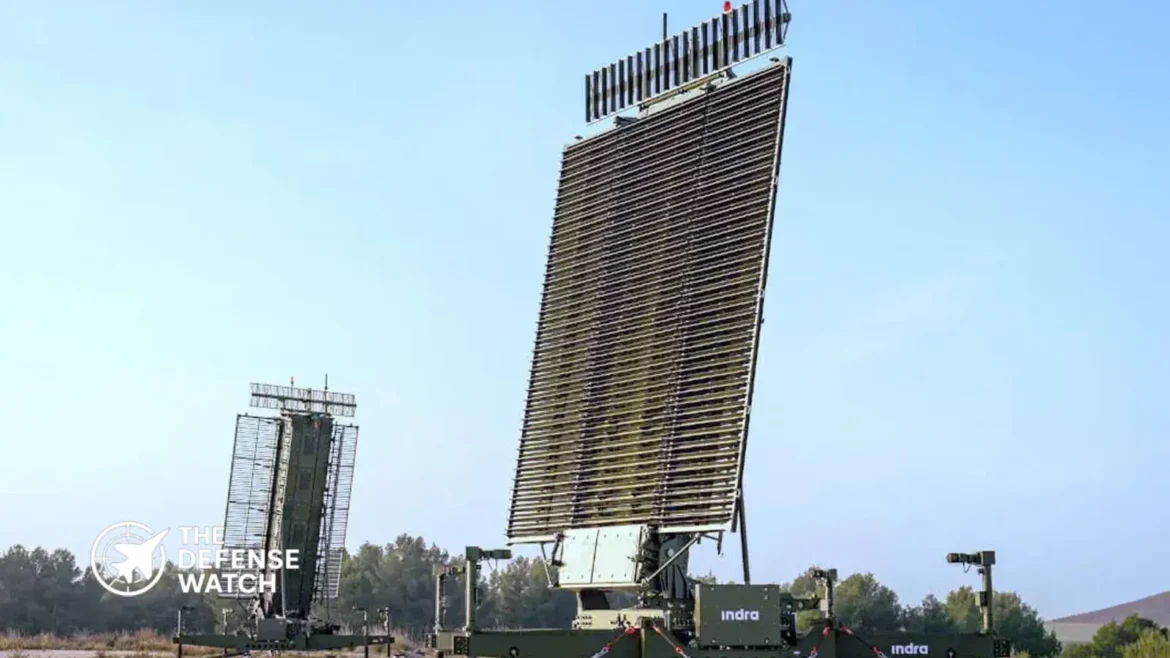
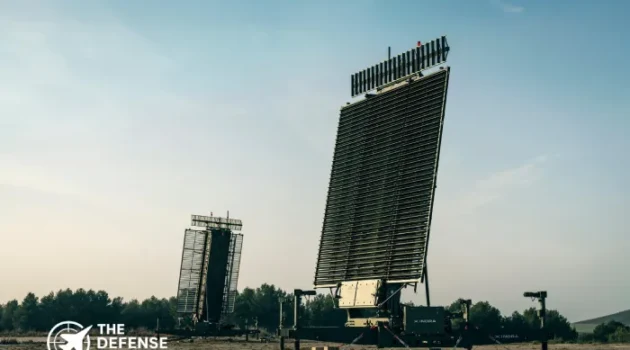
Thailand’s selection of the Indra Lanza 3D radar marks a significant step in improving its counter-drone defense posture, particularly at the strategically important Sattahip naval base. The decision reflects a broader shift toward modern air surveillance systems capable of detecting low-signature threats such as unmanned aerial vehicles.
¦ KEY FACTS AT A GLANCE- Thailand has selected the Indra Lanza 3D radar to enhance counter-drone detection at Sattahip naval base.
- The radar system provides long-range 3D surveillance with advanced tracking of low-altitude aerial threats.
- The move reflects growing concern over unmanned aerial system threats in Southeast Asia.
- The system is developed by Spain’s Indra, a major defense electronics provider.
- Deployment at Sattahip strengthens protection of a key Royal Thai Navy installation.
The Royal Thai Armed Forces have opted for the Spanish-built system to enhance early warning and tracking capabilities against drones and other low-altitude targets. The Sattahip base, located along Thailand’s eastern seaboard, is a critical hub for naval operations and logistics, making it a high-value asset for layered air defense.
Why The Indra Lanza 3D Radar Matters
The Indra Lanza 3D radar is designed to provide long-range surveillance with high accuracy in tracking multiple aerial targets simultaneously. Unlike legacy radar systems, it offers enhanced detection of small, low-flying objects, including commercial drones and loitering munitions.
This capability is increasingly important. Modern conflicts have shown that drones can bypass traditional air defense networks, especially when flying at low altitudes or using terrain masking. Systems like the Indra Lanza aim to close that gap by combining 3D tracking with advanced signal processing.
From an operational standpoint, the radar supports:
- Real-time situational awareness
- Integration with command and control networks
- Improved response time for air defense units
These features align with current trends in air defense modernization, where detection speed and accuracy are as critical as interception capability.
Rising Drone Threats Drive Regional Upgrades
Thailand’s move comes amid growing concern over drone proliferation across Southeast Asia. Both state and non-state actors are increasingly adopting unmanned systems for surveillance and potential strike roles.
While Thailand has not faced large-scale drone attacks, regional developments and global conflict lessons have prompted preemptive investments. The use of drones in conflicts in Eastern Europe and the Middle East has demonstrated their effectiveness against both military and infrastructure targets.
This has pushed many countries to prioritize counter-drone technologies, including:
- Advanced radar systems
- Electronic warfare solutions
- Integrated air defense networks
In this context, the Indra Lanza 3D radar serves as a foundational layer in detecting threats before they reach critical assets.
Strategic Importance Of Sattahip Base
The deployment of the Indra Lanza 3D radar at Sattahip underscores the base’s strategic importance. As one of Thailand’s primary naval facilities, Sattahip supports fleet operations, maintenance, and regional maritime security missions.
Protecting such installations requires a multi-layered defense approach. Radar systems form the first line of defense by identifying incoming threats early enough to allow interception or mitigation.
By enhancing surveillance coverage at Sattahip, Thailand is effectively strengthening its maritime security posture, particularly in the Gulf of Thailand and surrounding waters.
Analysis: A Shift Toward Integrated Air Defense
Thailand’s investment in the Indra Lanza 3D radar reflects a broader shift toward integrated and networked air defense systems. Rather than relying solely on interceptors or point-defense systems, modern militaries are focusing on building comprehensive detection and tracking networks.
This approach offers several advantages:
First, it improves threat classification. Not all aerial objects pose the same level of risk, and advanced radar systems help distinguish between benign and hostile targets.
Second, it enhances interoperability. Systems like the Indra Lanza can be integrated into larger defense architectures, enabling coordination across air, land, and naval forces.
Third, it future-proofs defense capabilities. As drone technology evolves, detection systems must adapt to smaller, faster, and more autonomous threats.
Thailand’s decision suggests a recognition that counter-drone defense is no longer optional but essential. By deploying a modern 3D radar system, the country is positioning itself to better respond to evolving aerial threats.
Iran’s Ceasefire Rejection and the Hormuz Chokehold
Iran’s rejection of the U.S.-Pakistan ceasefire proposal marks a critical inflection point in what has become the most consequential military confrontation in the Middle East in decades. Tehran did not offer silence — it responded with substance. The Iranian counter-proposal, reported by state media agency IRNA, included 10 conditions: among them an end to all regional hostilities, a formal safe-passage protocol for the Strait of Hormuz, the lifting of U.S. sanctions, and binding commitments on reconstruction financing.
▮ KEY FACTS AT A GLANCE- Trump set a midnight EDT Wednesday deadline for Iran to accept a ceasefire and reopen the Strait of Hormuz, threatening to destroy power plants and bridges if Tehran refuses.
- Iran rejected a U.S. proposal brokered by Pakistan and issued a 10-clause counter-offer, including regional conflict resolution, safe passage protocols, sanctions relief, and reconstruction guarantees.
- Iran’s ambassador to Pakistan described Islamabad’s mediation as “approaching a critical, sensitive stage,” signaling cautious diplomatic progress.
- Brent crude rose to $111.53 per barrel — up more than 50% since the conflict began on February 28 — as the Strait closure disrupts roughly 20% of global oil and gas supply.
- At least 3,546 Iranians have been killed per rights group HRANA, alongside nearly 1,500 in Lebanon and 13 U.S. service members since hostilities began.
- Saudi Arabia, Bahrain, and the UAE issued simultaneous public safety alerts amid cross-border missile fire; the Saudi-Bahrain causeway was briefly closed as a precaution.
The Strait of Hormuz remains the central pressure point. Effectively closed by Iran since the conflict escalated, the waterway channels roughly one-fifth of the world’s oil and natural gas supply. Tehran’s willingness to keep the strait shut — even under the threat of large-scale U.S. strikes — underscores just how powerful a bargaining chip it represents. Reopening Hormuz without binding security guarantees would surrender Iran’s strongest negotiating lever before any talks begin.
Trump’s Ultimatum: Infrastructure Strikes by Midnight
President Donald Trump escalated his rhetoric sharply on Monday, warning that Iran’s power plants and bridges would be destroyed before midnight EDT Wednesday if Tehran did not agree to his terms. “Every bridge in Iran will be decimated,” Trump said. Every power plant in Iran will be out of business, burning, exploding, and never to be used again.” He dismissed concerns that targeting civilian infrastructure could constitute a war crime, saying he was “not at all” concerned.
Iran’s UN envoy pushed back forcefully, calling Trump’s statements “direct incitement to terrorism” and evidence of intent to commit war crimes under international law. Iran’s senior military leadership described Trump as “delusional.” Deputy Sports Minister Alireza Rahimi called on athletes and artists to form human chains around power plants across the country on Tuesday in a show of civil resistance.
Israel Strikes Tehran; Saudi Arabia Under Fire
The Israeli military reported completing a fresh wave of airstrikes against Iranian government infrastructure in Tehran and surrounding areas in the early hours of Tuesday. Israel simultaneously operated air defense systems to intercept incoming Iranian missiles. An Israeli advisory — posted in Persian on platform X — urged Iranian civilians to avoid rail networks until Tuesday evening, citing danger to life near railway lines. This targeting of transportation infrastructure signals a deliberate expansion of Israel’s pressure campaign beyond military installations.
The regional fallout continued to widen. Saudi Arabia’s defense ministry confirmed it intercepted ballistic missiles directed at its eastern region, with debris falling in the vicinity of energy facilities. The kingdom has reportedly faced hundreds of Iranian missile and drone attacks since the conflict began on February 28. Bahrain’s causeway linking it to Saudi Arabia was briefly shut as a precautionary measure, while Bahrain, Saudi Arabia, and the UAE simultaneously issued public safety alerts — a coordinated signal of the threat environment across the Gulf.
Pakistan’s Mediation: A Window Opening?
Amid the military exchanges, there are faint but notable diplomatic signals. Iran’s ambassador to Pakistan stated that Islamabad’s efforts to mediate an end to the conflict were “approaching a critical, sensitive stage” — language that implies active back-channel discussions are ongoing, even as public postures remain hardened.
Pakistan occupies a rare position of trust: it maintains diplomatic relations with Iran, has longstanding ties to Gulf Arab states, and is not a party to the conflict. The U.S. proposal it helped broker — an immediate ceasefire, Hormuz reopening, and broader peace talks within 15 to 20 days — was rejected in its current form, but Tehran’s 10-clause counter-proposal suggests Iran is engaged in the negotiation process, not simply stonewalling. Whether the two sides can close the gap before Trump’s deadline is the defining question of the next 24 hours.
Economic and Humanitarian Costs Mount
Brent crude futures climbed to $111.53 per barrel on Tuesday — a rise of more than 50% since the war began — with U.S. West Texas Intermediate crude trading at $113.31. The Hormuz closure has driven inflation fears across oil-importing economies globally, from Europe to South and Southeast Asia.
On the human cost, U.S.-based rights group HRANA reports at least 3,546 Iranians killed since the conflict began. Lebanon has suffered nearly 1,500 deaths as Israel has targeted Iran-backed Hezbollah militia positions there in parallel operations. Thirteen U.S. service members have been killed. On Friday, a U.S. F-15E fighter jet was shot down over Iranian territory, with one crew member stranded deep inside the country before a commando rescue mission successfully extracted him — averting what officials described as a potentially severe political and military escalation for the Trump administration.
Analysis: A Standoff With No Clean Exit
President Trump entered this conflict predicting a swift outcome. Instead, Iran has demonstrated greater resilience than anticipated — surviving sustained airstrikes, sustaining its Hormuz blockade, and forcing the U.S. into a politically uncomfortable position with mounting casualties and a stranded airman requiring a special operations rescue. With 13 service members dead and a credible threat of expanded strikes on civilian infrastructure, Trump faces growing pressure from Congress, international partners, and public opinion.
Iran, for its part, is playing a long game. Its 10-clause counter-proposal is not a capitulation — it is a comprehensive opening bid that would require the U.S. to acknowledge Iranian security interests, lift sanctions, and commit to reconstruction funding. Whether Washington views these terms as a foundation for negotiation or a diplomatic stall tactic will shape what happens at midnight.
Pakistan’s role as intermediary may be the most consequential diplomatic development of the crisis. If Islamabad can bridge the gap between Tehran’s counter-offer and Washington’s ceasefire framework, it would represent an extraordinary diplomatic achievement — and a potential off-ramp from a conflict that has already reshaped global energy markets and regional security architecture.
Iran Ceasefire Deadline Crisis Intensifies Ahead Of US Ultimatum
The Iran ceasefire deadline crisis has entered a critical phase as Iran signaled defiance ahead of a ceasefire ultimatum issued by the United States under Donald Trump.
Tehran’s stance suggests it is unwilling to accept terms perceived as externally imposed, raising the likelihood of further escalation in an already volatile regional security environment. The development comes amid heightened tensions linked to ongoing proxy conflicts and recent military exchanges involving Iranian-aligned groups.
¦ KEY FACTS AT A GLANCE- Iran and Russia reportedly signed a secret €500 million missile deal in December 2025, according to the Financial Times.
- The pact covers delivery of 500 Verba man portable air defense launch units and 2,500 9M336 missiles through 2027 to 2029.
- The Verba systems are infrared guided MANPADS designed to target low altitude threats including drones and cruise missiles.
- The deal follows damage to Iran’s air defense network during the 2025 conflict with Israel.
- The agreement reflects deepening military cooperation between Tehran and Moscow.
Strategic Context: Pressure, Deterrence, And Timing
The Iran ceasefire deadline crisis reflects a broader strategic contest between Washington and Tehran, where timing and signaling are central.
US officials have framed the deadline as a mechanism to de-escalate conflict and stabilize regional security corridors. However, Iranian leadership appears to view the move as coercive diplomacy, potentially undermining its deterrence posture.
From a defense perspective, this standoff highlights three key dynamics:
- Deterrence signaling: Iran’s refusal to concede quickly reinforces its image of strategic resilience.
- Operational ambiguity: Tehran often uses calibrated responses to avoid direct large-scale confrontation while maintaining pressure.
- Escalation management: Washington must balance enforcement credibility with the risk of triggering wider conflict.
Military Posture And Capability Implications
The Iran ceasefire deadline crisis is not only political. It has direct implications for military readiness and force posture across the region.
Iran has spent years developing layered defense capabilities, including:
- Integrated air defense systems, partly rebuilt after recent strikes
- Expanding drone and missile inventories
- Distributed command structures designed for survivability
The reported acquisition of advanced MANPADS systems from Russia, as noted in financial reporting, points to a continued effort to close air defense gaps exposed during previous conflicts.
For US and allied planners, this raises operational considerations:
- Increased risk to low-altitude air operations
- Greater complexity in suppressing enemy air defenses
- Expanded threat envelope for drones and cruise missiles
Regional Security Risks And Spillover Potential
The Iran ceasefire deadline crisis carries significant implications beyond bilateral US-Iran relations.
Key regional actors, including Israel and Gulf states, are closely monitoring developments. Any breakdown in ceasefire efforts could trigger:
- Expanded proxy engagements across multiple theaters
- Disruptions to maritime security in critical waterways
- Increased missile and drone activity targeting strategic infrastructure
This environment complicates force protection measures for US assets deployed across the Middle East.
Diplomatic Deadlock And Limited Off-Ramps
Diplomatic pathways remain constrained. Iran’s leadership has historically resisted deadlines tied to external pressure, preferring negotiated frameworks that preserve strategic autonomy.
At the same time, the US faces credibility challenges. Failure to enforce the deadline could weaken deterrence messaging, while enforcement actions risk escalation.
This creates a narrow decision window where:
- Diplomatic engagement must be rapid and credible
- Military signaling must remain controlled and precise
- Miscalculation risks remain elevated on both sides
Analysis: Why This Crisis Matters Now
At its core, the Iran ceasefire deadline crisis underscores a shift toward more rigid confrontation cycles.
Unlike previous periods of indirect engagement, current dynamics show:
- Reduced tolerance for ambiguity in US policy signaling
- Greater Iranian emphasis on resilience and deterrence
- Faster escalation timelines driven by modern ISR and strike capabilities
This combination increases the risk of rapid escalation from localized incidents.
From a defense and aerospace perspective, the crisis also highlights the growing importance of:
- Air defense modernization
- Counter-drone systems
- Precision strike deterrence
These capabilities are increasingly central to both sides’ operational planning.
Outlook
As the deadline approaches, the trajectory of the Iran ceasefire deadline crisis will depend on whether either side adjusts its position.
Short-term scenarios include:
- Limited de-escalation through backchannel diplomacy
- Controlled escalation involving proxy forces
- Direct enforcement actions by the US
Each path carries distinct operational and geopolitical risks.
Japan Tomahawk Missile Delays Reflect US Wartime Priorities
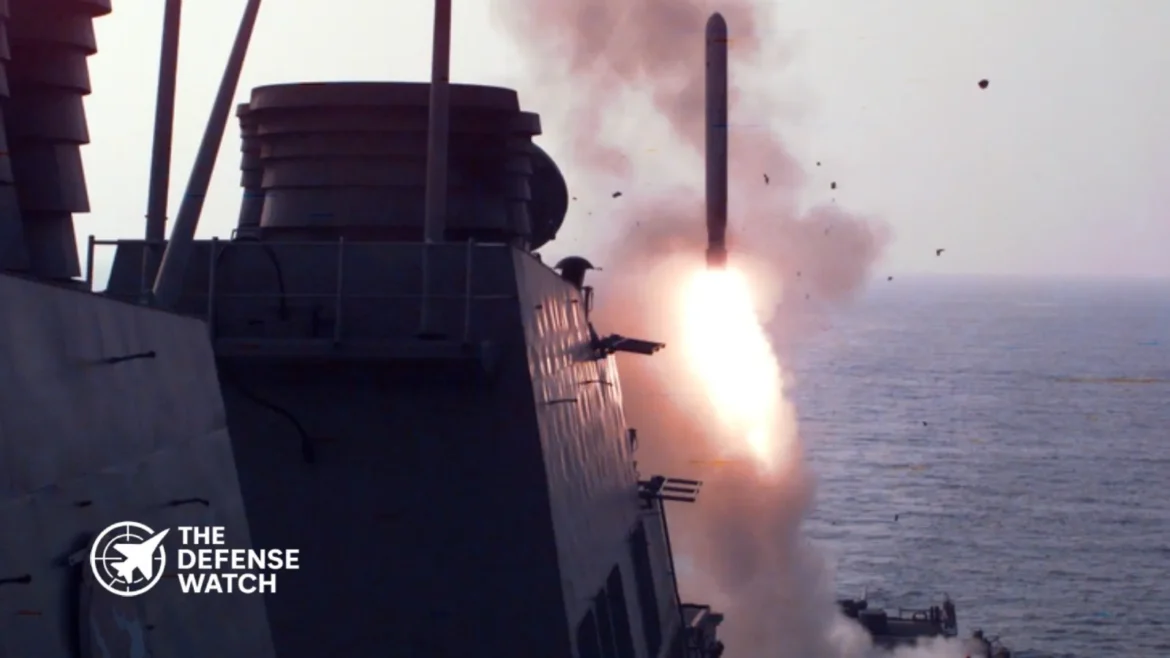
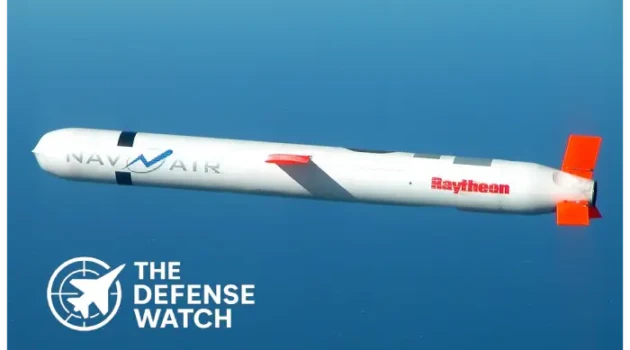
Japan Tomahawk missile delays are emerging as a direct consequence of shifting US defense priorities, with Washington reportedly redirecting supply toward immediate operational needs tied to tensions involving Iran. According to reporting cited by Bloomberg and published via Defence Industry Europe, delivery timelines for Tokyo’s planned acquisition of the long-range cruise missiles are now under pressure.
The Tomahawk missile, a cornerstone of US long-range strike capability, has become increasingly critical amid rising geopolitical instability. As demand surges in potential conflict scenarios, the US is prioritizing its own stockpile readiness over scheduled foreign deliveries.
For Japan, this development presents a significant challenge at a time when Tokyo is accelerating efforts to enhance its deterrence posture.
¦ KEY FACTS AT A GLANCE- Japan is facing delays in delivery of US-made Tomahawk cruise missiles due to shifting US wartime priorities.
- The delays are linked to increased US demand amid ongoing tensions involving Iran, according to Bloomberg reporting.
- Tokyo had planned to deploy the missiles as part of its new counterstrike capability strategy.
- The US is prioritizing its own operational needs, straining production and delivery schedules for allies.
- The situation highlights growing pressure on Western defense industrial capacity amid global conflicts.
Strategic Importance Of Japan’s Tomahawk Acquisition
Japan’s planned acquisition of Tomahawk missiles is central to its evolving defense doctrine, particularly its move toward a counterstrike capability. This shift marks a major policy evolution for Tokyo, allowing it to hold adversary targets at risk beyond its immediate territory.
The missiles were expected to provide Japan with a near-term solution while domestic long-range strike systems are still under development. Any delay therefore risks creating a temporary capability gap.
Tokyo has already committed to strengthening its defense posture in response to regional threats, including North Korea’s missile program and China’s expanding military reach. The introduction of Tomahawk missiles was intended to accelerate this transition.
Delays now complicate those timelines and may force Japan to reassess interim solutions.
US Defense Production Under Strain
The Japan Tomahawk missile delays also underscore a broader issue, the growing strain on US defense industrial capacity. Multiple concurrent demands, including support for allies and replenishment of US stockpiles, are stretching production lines.
The reported prioritization linked to Iran-related contingencies reflects how quickly supply chains can shift under wartime conditions. This is not an isolated case. Similar pressures have been observed in munitions supply for Ukraine and other theaters.
The US defense sector is working to expand output, but scaling production of complex systems like cruise missiles takes time. Manufacturing constraints, workforce limitations, and supply chain dependencies all contribute to slower ramp-up rates.
As a result, allied nations relying on US systems may face increasing uncertainty in delivery schedules.
Operational And Regional Implications
From an operational standpoint, the delay in Japan Tomahawk missile deliveries could affect the pace at which Tokyo integrates long-range strike capabilities into its force structure.
This has implications for deterrence in the Indo-Pacific. A fully operational counterstrike capability is seen by Japanese planners as essential to offset evolving threats.
Any delay, even temporary, may influence strategic calculations across the region. Adversaries closely monitor such developments, particularly when they relate to alliance capabilities and readiness.
At the same time, the situation highlights the interconnected nature of global defense supply chains. A conflict or contingency in one region can directly impact military planning in another.
Broader Strategic Takeaways
The Japan Tomahawk missile delays offer a clear example of how global demand for advanced munitions is reshaping defense planning. For the United States, balancing immediate operational needs with alliance commitments is becoming increasingly complex.
For allies like Japan, the lesson is equally clear. Diversification of supply, investment in domestic production, and long-term planning are becoming critical components of national defense strategies.
The evolving situation reinforces a central reality of modern defense planning. Industrial capacity is now as important as technological capability in determining military readiness.
Ukraine’s Fire Point Targets $1M Ballistic Missile Kill Cost With New Air Defense System
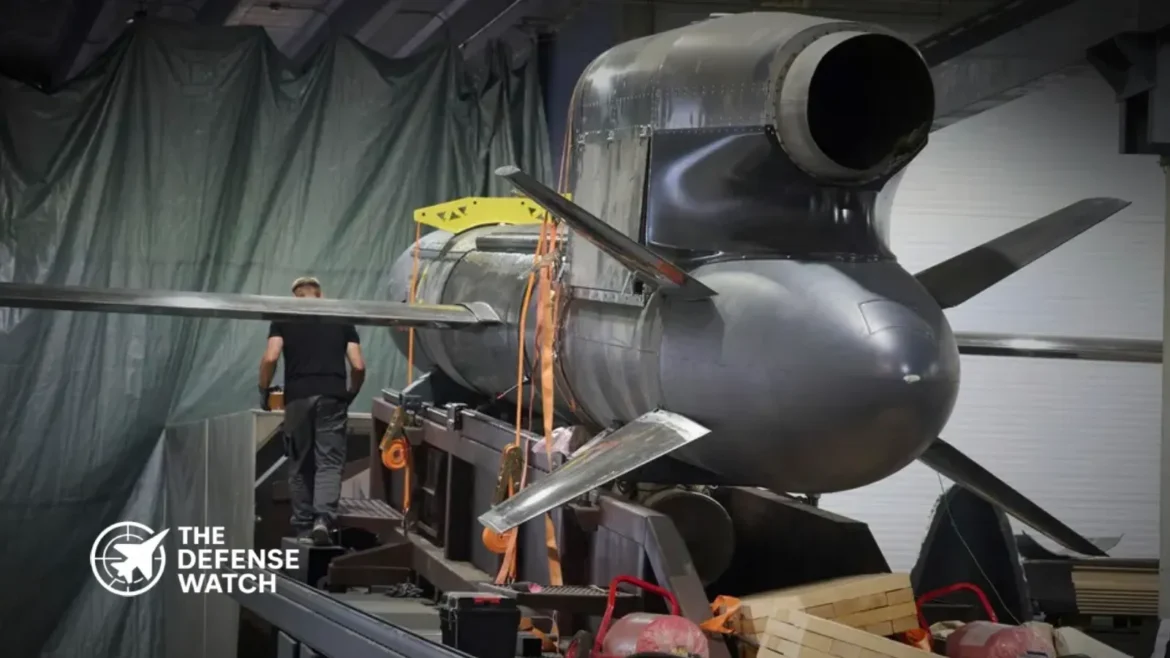
Ukraine’s Fire Point, maker of the Flamingo cruise missile, is in active talks with European defense companies to launch a new air defense system by 2027 — one that its co-founder says could fundamentally disrupt the economics of ballistic missile defense.
Fire Point co-founder and chief designer Denys Shtilierman told Reuters the company aims to cut the cost of intercepting a ballistic missile to below $1 million — a benchmark that, if achieved, would represent a significant departure from current Western air defense cost structures.
¦ KEY FACTS AT A GLANCE- Ukraine’s Fire Point — maker of the Flamingo cruise missile — is developing a new low-cost air defense system targeting a sub-$1 million cost per ballistic missile intercept.
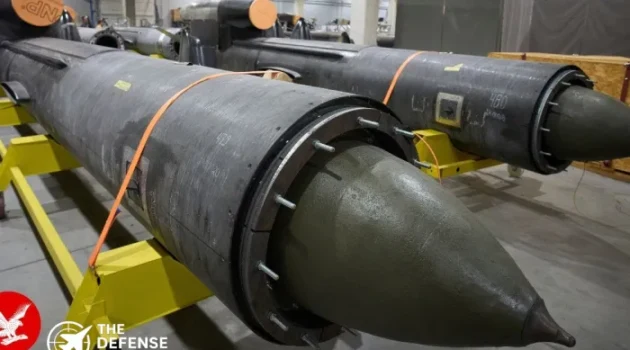
- The system will use Fire Point’s FP-7 short-range ballistic missile as its interceptor; a first live intercept attempt is planned for late 2027.
- A Middle Eastern conglomerate — widely identified in Ukrainian media as Emirati defense firm Edge Group — has proposed a $760 million acquisition of a 30% stake in Fire Point, valuing the company at $2.5 billion.
- Fire Point is also developing two supersonic ballistic missiles: the FP-7 (300 km range) and the FP-9 (850 km range, 800 kg warhead) — the latter placing Moscow within reach.
- The company currently produces hundreds of long-range strike drones daily and three Flamingo cruise missiles per day, with export capacity of up to 2,500 drones monthly pending Ukrainian government approval.
The Big Picture
Western air defense architecture faces a compounding supply crisis. Patriot missiles are in increasingly short supply amid extensive deployment in the Gulf against Iranian attacks, and Europe’s only anti-ballistic system, the Italo-French SAMP/T, is produced in relatively small numbers.
That scarcity has created a strategic opening. Nations seeking to protect their airspace — particularly smaller NATO partners, Indo-Pacific allies, and Gulf states — are actively searching for credible, affordable alternatives to a U.S. system whose production cannot currently meet global demand.
Fire Point’s emergence as a serious contender in this space is not accidental. Years of know-how gained on the battlefield fighting Russian forces have made Ukraine a leading innovator in low-cost defense tech. With the outbreak of war in the Gulf, Kyiv has leveraged that expertise to sign security agreements with governments across the region.
What’s Happening
Fire Point — founded after Moscow’s 2022 invasion — is Ukraine’s biggest maker of the long-range drones used in the majority of strikes deep inside Russia. The company has since expanded well beyond drone production.
Its FP-5 long-range cruise missile, commonly known as the Flamingo, has been used to hit Russian military facilities and arms factories, including a ballistic missile plant nearly 1,400 kilometers inside Russian territory.
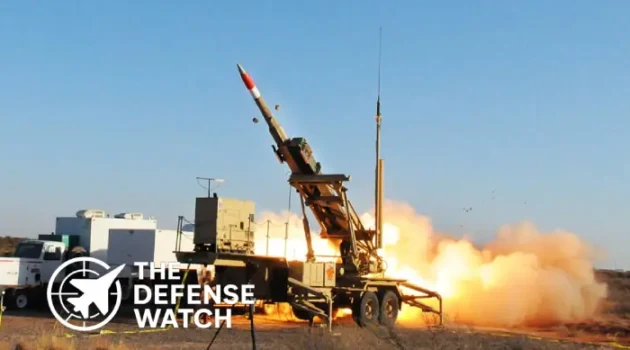
Now, Shtilierman says Fire Point is targeting the intercept mission. The Patriot system — manufactured by Raytheon and Lockheed Martin — often requires two or three air defense missiles, each costing several million dollars, to bring down a ballistic projectile.
“If we can decrease it to less than $1 million, it will be a game changer in air defense solutions,” Shtilierman said. We plan to intercept the first ballistic missile at the end of 2027.
Shtilierman declined to name the European companies involved in the discussions but said Fire Point is “deeply interested” in collaboration on radar, missile target-seeking, and communications systems — areas where it lacks expertise. He noted that European companies including Weibel, Hensoldt, SAAB, and Thales have capable radar solutions.
Why It Matters
The cost asymmetry in modern air defense has emerged as one of the defining vulnerabilities of Western military posture. Adversaries have learned to exploit it directly: Russia, Iran, and their proxies fire salvos of inexpensive ballistic and cruise missiles, forcing defenders to expend interceptors worth multiples more than the incoming rounds.
If Fire Point can demonstrate a reliable intercept at under $1 million per kill, it addresses one of the most critical tactical and economic imbalances in contemporary warfare. Even a system with somewhat lower kill probability than the Patriot could justify deployment purely on cost-exchange-ratio grounds.
Fabian Hoffmann, a missile expert and senior researcher at the Norwegian Defence University College, acknowledged Fire Point’s 2027 target was “ambitious.” However, he said that beyond Ukraine’s own military needs, there would be strong demand from governments even if its kill rates per missile were less effective than the Patriot’s.
That analysis carries considerable weight. In markets where Patriot is unavailable or unaffordable, a lower-cost system with a lower — but not negligible — intercept probability still provides meaningful deterrence value.
The Offensive Arsenal Expanding in Parallel
Fire Point is not limiting its ambitions to defense. Shtilierman said the company is now in the final stages of developing two supersonic ballistic missiles.
The smaller FP-7, with a range of around 300 kilometers, will have its first military deployment “in the close future,” Shtilierman described it as similar to Lockheed Martin’s ATACMS short-range ballistic system.
The larger FP-9, capable of carrying an 800 kg warhead up to 850 kilometers, is about to enter testing and would place Moscow within range of Ukraine’s ballistic arsenal.
Shtilierman said strikes on Moscow — which is ringed by some of the world’s most formidable air defenses — would cause a “mass shift in the Russian mind and the mind of top guys in Russia.
Separately, Hoffmann noted that while Russia has experience successfully downing ATACMS, more widespread use of ballistic missiles could stretch Russian air defenses, already degraded by Ukrainian strikes.
Strategic Implications
Fire Point’s trajectory reveals a broader strategic shift: Ukraine is transitioning from a nation consuming Western defense capabilities to one producing and exporting them.
Many Ukrainian defense firms are now seeking to export their excess capacity and cash in on a global boom in military spending. While the government recently loosened wartime export restrictions, each proposed deal is still subject to stringent checks and state approval.
This matters for NATO allies. A credible, low-cost Ukrainian air defense system could fill capability gaps in Eastern European nations that cannot afford Patriot batteries, while simultaneously reducing their dependence on U.S. systems that Washington may need to retain for other theaters.
The potential UAE investment adds another dimension. Ukraine’s anti-monopoly authority has until around October to decide on the proposed $760 million acquisition of a 30% stake in Fire Point by the Middle Eastern investor. Ukrainian media have identified the suitor as Emirati defense firm Edge Group.
The investment would be the first step in a project to build a space launch terminal in the UAE, with the aim of eventually establishing a constellation of low-orbit European satellites. That represents a significant expansion of Fire Point’s strategic footprint — from a battlefield supplier to a multi-domain technology enterprise.
Competitor View
Russia’s military planners will be watching Fire Point’s ballistic missile development with close attention. The FP-9’s 850-kilometer range directly threatens Russian territory and command infrastructure in ways that current Ukrainian drone strikes — while disruptive — do not replicate with the same speed and penetration probability of a ballistic trajectory.
From Moscow’s perspective, the weaponization of Ukrainian industrial capacity represents a compounding problem. Every month the war continues, Ukraine’s defense-industrial base gains experience, scales production, and attracts foreign capital. The proposed Emirati investment, if approved, would substantially accelerate that trajectory.
For Iran, a Ukrainian air defense system exported to Gulf states could directly complicate the ballistic missile attack doctrine Tehran has relied upon in the current Gulf conflict. A low-cost intercept solution positioned in the UAE or Saudi Arabia would reduce the cost-exchange advantage Iran has partially exploited against Patriot-equipped defenders.
What To Watch Next
Several near-term milestones will determine whether Fire Point’s air defense ambitions materialize on schedule.
Ukraine’s anti-monopoly authority is expected to rule on the Edge Group investment by October 2026. Approval would unlock substantial capital and open Gulf export channels. Rejection — or prolonged delay — could constrain the company’s ability to fund radar integration with European partners.
Fire Point will increase production of the Flamingo when a new in-house engine goes into mass production in October and a rocket fuel plant in Denmark comes online later this year — pending two final approvals from Danish authorities.
The FP-7’s first military deployment — expected “in the close future” — will serve as a technical proof point for the broader air defense system concept, since the same missile is intended to function as the interceptor in the new system.
Capability Gap
The core gap Fire Point is targeting is straightforward: the world does not have enough affordable ballistic missile interceptors.
Ukraine and many other Western-allied nations rely heavily on the U.S.-made Patriot system to stop ballistic missiles. But Patriot battery production is constrained by U.S. industrial capacity, and the interceptor missiles themselves remain expensive and prioritized for NATO’s most exposed frontlines and critical Gulf deployments.
The realistic limitations of Fire Point’s approach remain significant. Developing a guidance and seeker package capable of engaging a ballistic missile in terminal phase — particularly against maneuvering warheads — is a technically demanding challenge that Ukraine has not previously solved at scale. Radar integration with European partners will be essential, and those partnerships have not yet been formalized.
The 2027 intercept demonstration target, while ambitious, is also a minimum viable proof of concept — not a fielded operational system. Full production, export certification, and integration with customer fire control systems would extend timelines considerably beyond that initial demonstration.
The Bottom Line
Fire Point’s drive toward a sub-$1 million ballistic missile intercept solution directly addresses one of the most consequential economic imbalances in modern air warfare — and if successful, it will reshape the global market for affordable missile defense at a moment when demand far outpaces Western supply.