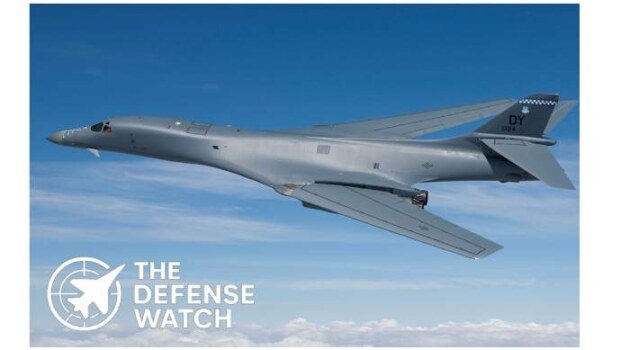
- U.S. Air Force deployed three B-52H Stratofortress bombers to RAF Fairford in the United Kingdom on March 9, 2026.
- The aircraft can carry large payloads including AGM-158 JASSM cruise missiles and precision guided bombs.
- Deployment strengthens the U.S. long-range strike posture as operations against Iranian military targets intensify.
- RAF Fairford now hosts a concentration of U.S. strategic bombers including B-1B and B-52H aircraft.
- Forward basing significantly reduces mission duration compared with bomber sorties launched from the continental United States.
U.S. Deploys B-52H Stratofortress Bombers To UK
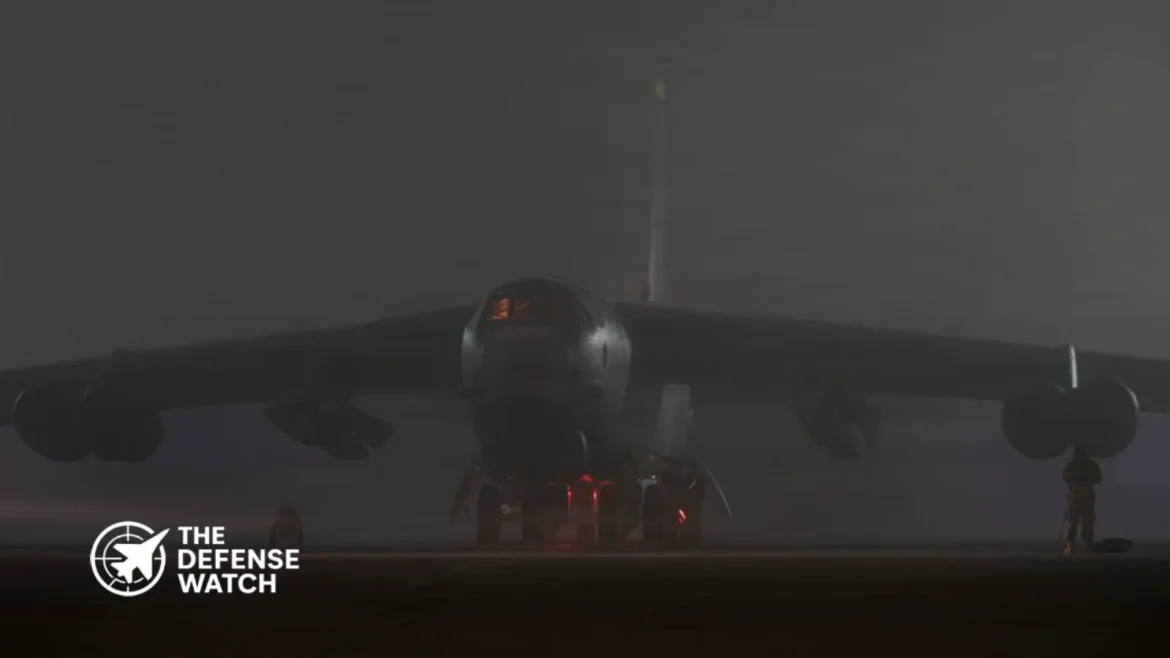
The B-52H Stratofortress bomber deployment to the United Kingdom marks a significant expansion of U.S. long-range strike capability as Washington increases pressure on Iranian military infrastructure. Three U.S. Air Force B-52H bombers arrived at Royal Air Force Fairford on March 9, 2026, reinforcing a growing concentration of American strategic aircraft in Europe supporting ongoing operations targeting Iran.
(adsbygoogle = window.adsbygoogle || []).push({});The deployment follows earlier arrivals of B-1B Lancer bombers to the same base, creating one of the largest U.S. bomber task force groupings in Europe in recent years.
The Big Picture
The United States increasingly relies on forward-deployed strategic bombers to provide rapid long-range strike options during regional crises. Heavy bombers such as the B-52H, B-1B Lancer, and B-2 Spirit form the backbone of America’s conventional global strike capability.
Positioning these aircraft in Europe allows the United States to project power into the Middle East, Eastern Europe, and North Africa without relying solely on bases inside the immediate conflict zone.
RAF Fairford in the United Kingdom has long served as a key staging location for U.S. bomber operations in Europe. The base supports Bomber Task Force rotations and offers the infrastructure required for sustained heavy bomber deployments, including long runways, maintenance facilities, and access to aerial refueling support.
(adsbygoogle = window.adsbygoogle || []).push({});The current deployment underscores how NATO territory continues to play a critical role in enabling U.S. military operations beyond Europe.
What’s Happening
Three B-52H Stratofortress bombers arrived at RAF Fairford after flying from Minot Air Force Base in North Dakota. The aircraft were tracked crossing the Atlantic before landing at the Gloucestershire base on March 9.
Their arrival follows the earlier deployment of eight B-1B Lancer bombers, bringing the total number of U.S. strategic bombers at the base to roughly eleven aircraft.
These bombers form part of the expanding U.S. air campaign targeting Iranian ballistic missile infrastructure and command facilities as part of the ongoing operation known as Operation Epic Fury.
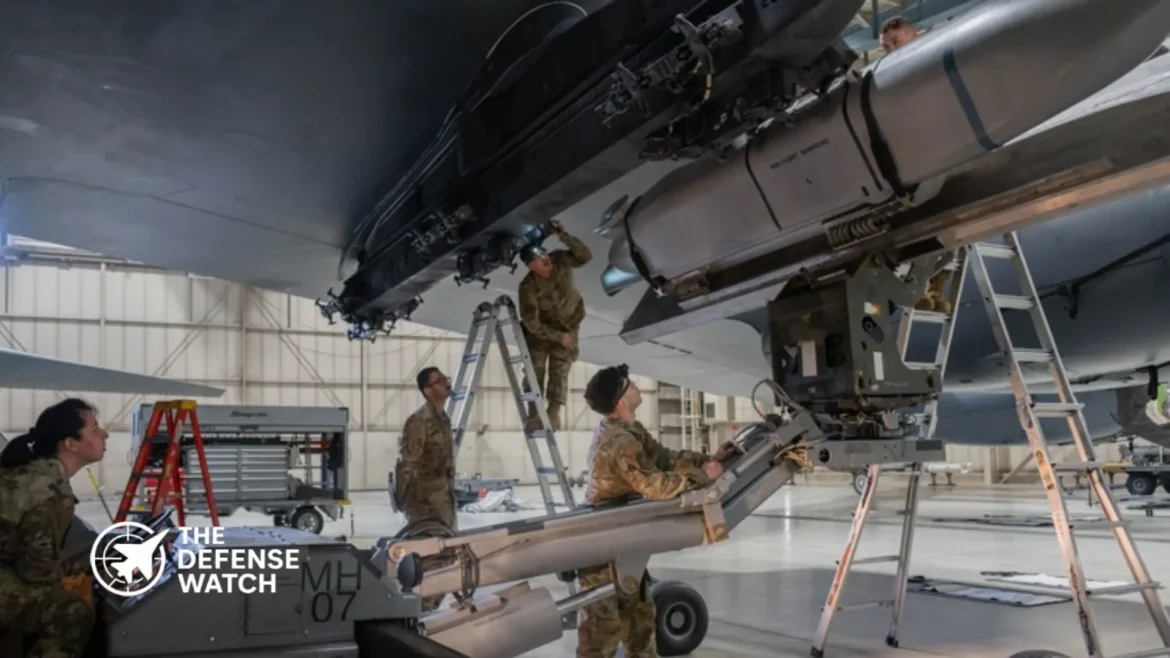
According to open-source imagery and flight tracking data, the B-52H bombers involved in the deployment are capable of carrying multiple AGM-158 Joint Air-to-Surface Standoff Missiles (JASSM). Each aircraft can reportedly carry up to twenty of these precision-guided cruise missiles when combining external pylons with internal rotary launchers.
This weapons configuration allows the aircraft to strike heavily defended targets from outside advanced air defense systems.
Why It Matters
Heavy bomber deployments provide the United States with several operational advantages during high-intensity conflicts.
First, the B-52H offers exceptional payload capacity. The aircraft can deliver large volumes of precision-guided munitions in a single sortie, making it well suited for sustained strike campaigns against infrastructure such as missile launch sites, command centers, and hardened facilities.
(adsbygoogle = window.adsbygoogle || []).push({});Second, the bomber’s long range allows it to operate from secure bases outside the immediate conflict zone. This reduces vulnerability to enemy missile attacks while still maintaining access to regional targets.
Forward basing in the United Kingdom significantly shortens flight times compared with launching missions from the continental United States. A round-trip strike from North America to the Middle East can exceed thirty hours, whereas operations from RAF Fairford are considerably shorter and allow faster sortie generation.
This improvement in operational tempo can become decisive during prolonged air campaigns.
Strategic Implications
The B-52H bomber deployment to the United Kingdom strengthens the United States’ deterrence posture while signaling the ability to sustain large-scale strike operations if necessary.
Concentrating multiple bomber types in Europe creates a flexible strike package. B-1B bombers provide high payload capacity for conventional precision weapons, B-2 aircraft offer stealth penetration against heavily defended targets, and B-52H bombers deliver high-volume standoff missile attacks.
Together, these aircraft form a layered strike architecture capable of targeting a wide range of objectives.
The deployment also highlights the growing role of NATO infrastructure in supporting U.S. operations beyond Europe. Allied bases provide logistical depth, secure basing, and access to critical aerial refueling networks that enable global strike missions.
For U.S. planners, maintaining this network remains essential for rapid crisis response.
(adsbygoogle = window.adsbygoogle || []).push({});Competitor View
Iran is likely to interpret the B-52H deployment as a signal that Washington is preparing to maintain a sustained strike capability rather than limited or symbolic operations.
Strategic bombers represent some of the most visible elemen
ts of American military power. Their deployment often serves both operational and signaling purposes.
From Tehran’s perspective, the presence of B-52H and B-1B bombers in Europe suggests that the United States can maintain continuous strike operations while rotating aircraft and crews to sustain pressure on Iranian military infrastructure.
Russia and China may also view the deployment as part of a broader demonstration of U.S. global strike capability. Both countries closely monitor bomber task force deployments because they reveal how quickly the United States can shift strategic assets between theaters.
What To Watch Next
Several developments will likely determine how the situation evolves in the coming weeks.
One factor will be whether additional bomber aircraft join the deployment. The United States frequently rotates bomber task force elements during active operations to maintain readiness and distribute operational load across multiple units.
Another indicator will be the type of weapons employed in upcoming missions. Long-range cruise missiles such as JASSM enable stand-off attacks, while heavier precision bombs may indicate operations against hardened facilities.
Satellite imagery, flight tracking data, and official military announcements will continue to provide clues about the scale and tempo of ongoing operations.
Capability Gap
The deployment addresses a key operational challenge facing long-range strike missions: distance.
Launching heavy bomber missions from the continental United States to targets in the Middle East requires complex aerial refueling chains and extremely long flight durations. Such missions place strain on aircraft crews and reduce the number of sorties that can be generated.
Forward basing bombers in Europe closes this gap. Aircraft can reach operational areas more quickly while maintaining high payload capacity and stand-off strike capability.
(adsbygoogle = window.adsbygoogle || []).push({});However, strategic bombers still rely heavily on aerial refueling, intelligence support, and secure airspace access to conduct sustained operations.
The Bottom Line
The B-52H Stratofortress bomber deployment to the United Kingdom significantly strengthens the United States’ ability to conduct sustained long-range strike operations against Iranian military targets.
 ■ KEY FACTS AT A GLANCE
- ► Hermeus flew Quarterhorse Mk 2.1 on March 2, 2026 at Spaceport America, New Mexico — its second aircraft first flight in less than nine months.
- ► Mk 2.1 is roughly the size of an F-16, powered by a Pratt & Whitney F100 engine — approximately three times larger and four times heavier than the Mk 1.
- ► The Mk 2.1 flight kicks off a test campaign aimed at reaching supersonic speeds; the follow-on Mk 2.2 is projected to become the world’s fastest unmanned aircraft.
- ► The U.S. Air Force has backed Hermeus with a $60 million STRATFI contract; the Defense Innovation Unit selected Hermeus for its HyCAT hypersonic flight test program.
- ► The Congressional Research Service has warned that the U.S. is unlikely to field an operational hypersonic weapon system before FY2027 at the earliest.
- ► A former Pentagon senior official has noted China has tested hypersonic flight at roughly ten times the rate of the United States since the late 1960s.
- ► Hermeus CEO AJ Piplica has stated the company expects Quarterhorse to begin supporting Department of Defense test events in 2026, around when its Mk 3 vehicle rolls out.
Hermeus Quarterhorse Mk 2.1 Takes Flight, Pushing U.S. Toward Reusable Supersonic Drone Capability
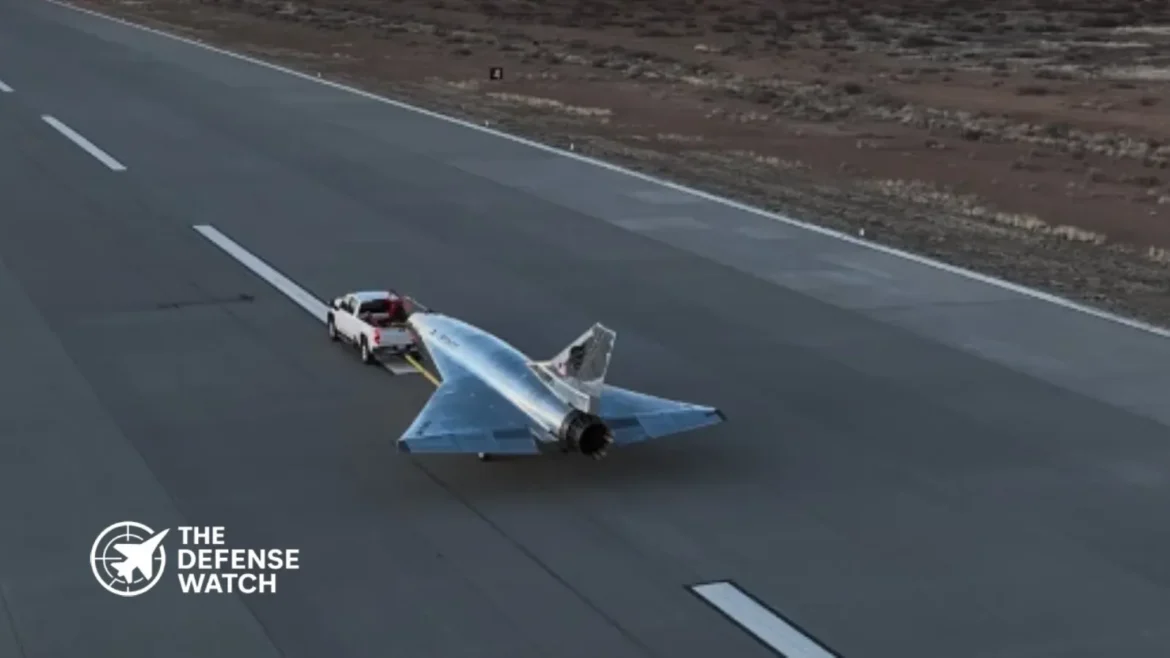
The Hermeus Quarterhorse Mk 2.1 supersonic drone completed its first flight on March 2, 2026, at Spaceport America over White Sands Missile Range airspace in New Mexico — a milestone that marks the Atlanta-based startup’s second aircraft first flight in under nine months. While the event generated predictable industry applause, the strategic importance of this test runs deeper than any single flight.
(adsbygoogle = window.adsbygoogle || []).push({});For the United States, this flight is less about one company’s momentum and more about whether commercial-pace innovation can solve a systemic problem: America’s chronic inability to generate enough reusable high-speed test capacity to keep pace with China and Russia in the hypersonic domain.
What Actually Flew — and What Comes Next
The Quarterhorse Mk 2.1 is powered by a Pratt & Whitney F100 engine — the same powerplant used in the F-15 and F-16 — and is nearly three times larger and four times heavier than its predecessor, the Mk 1. It was flown remotely from a ground-based flight deck, validating aircraft systems, handling qualities, and operational procedures.
The Mk 1 flew first in May 2025 at Edwards Air Force Base. That initial flight focused on validating Quarterhorse’s ability to take off and land at high speeds — a particular engineering challenge unique to future hypersonic aircraft. Mk 2.1 builds on that foundation by entering what Hermeus describes as its Mk 2 phase: a multi-aircraft series focused on achieving and expanding supersonic flight.
Following Mk 2.1, the next aircraft in the series — Mk 2.2 — is expected to become the world’s fastest unmanned aircraft. Subsequent phases will push toward the company’s ultimate objective: sustained ramjet-powered flight, the propulsion breakthrough required for true hypersonic cruise capability at Mach 5 and beyond.
This matters because the road from supersonic to hypersonic is not linear. Crossing Mach 1 is a precondition, but the engineering leap to Mach 5 involves fundamentally different physics — extreme aerodynamic heating, inlet design, fuel chemistry, and propulsion transitions that cannot be solved on paper or in wind tunnels alone. Real flight data at each speed regime is irreplaceable.
Why the Pentagon Is Watching Closely
The Defense Innovation Unit selected Hermeus under its Hypersonic and High-Cadence Airborne Testing Capabilities program — known as HyCAT — which is designed to leverage commercial technology to increase the Pentagon’s hypersonic flight-testing capacity.
That program exists because the United States has a testing bottleneck problem. The Pentagon’s Test Resource Management Center has begun modernizing facilities and exploring the use of commercial space assets for more frequent hypersonic flight testing, but according to former Pentagon hypersonics official Michael White, progress has been too slow. White, who co-authored a 2025 Atlantic Council report with former Air Force Secretary Deborah Lee James and former Army Secretary Ryan McCarthy, argued that the U.S. needs to leverage commercial innovation more aggressively to break the testing bottleneck.
(adsbygoogle = window.adsbygoogle || []).push({});That bottleneck is not just an inconvenience. A former Pentagon senior official has noted that since the late 1960s, China has tested hypersonic flight at approximately ten times the rate of the United States. In a field where proficiency is earned through accumulated flight hours and failure analysis, that testing disparity compounds over time.
Hermeus CEO AJ Piplica has said the company expects Quarterhorse to begin supporting Department of Defense test events in 2026, around when its Mk 3 vehicle rolls off the line. That timeline, if met, would position Quarterhorse as a commercially operated, reusable hypersonic test bed available to AFRL, DIU, and other defense customers — exactly the kind of infrastructure the Pentagon’s test enterprise currently lacks at scale.
The Industrial Logic: Speed as a Strategic Asset
The most consequential aspect of Hermeus’ program is not any single aircraft — it is the company’s development cadence. Hermeus flew Mk 2.1 within a year of its previous flight campaign, compressing timelines that traditionally take decades into a single development cycle.
This approach runs counter to the dominant model in U.S. defense aviation. Legacy programs — even agile ones — routinely spend five to ten years between major prototype milestones. The causes are familiar: cost-plus contracting incentives, requirements volatility, congressional budget cycles, and industrial base constraints. Hermeus operates outside most of those constraints, using venture capital and fixed-price government partnerships to maintain velocity.
The company’s goal is to build one test vehicle per year, and CEO AJ Piplica has emphasized that refining rapid build-and-fly processes is just as important as the capability demonstrated in any single flight. That philosophy — hardware richness over risk aversion — deliberately mirrors what SpaceX demonstrated in the launch vehicle sector: iterating through failures faster than competitors can iterate through planning cycles.
Hermeus has stated it could manufacture roughly a dozen Mk 2 drones per year in its current Atlanta facility, with the ability to expand if there is a clear demand signal from the Defense Department. That production capacity, modest by legacy standards, is nonetheless significant in the context of reusable high-speed aircraft — a category where operational numbers have historically been measured in single digits.
(adsbygoogle = window.adsbygoogle || []).push({});RTX’s venture capital arm has invested in Hermeus, linking Pratt & Whitney’s F100 engine supply chain directly to the program’s growth. The $60 million AFWERX STRATFI contract, awarded in 2021, was described at the time as one of the most valuable startup contracts of its type ever awarded — a signal that AFRL and the Air Force Life Cycle Management Center viewed the company’s technical approach as credible, not speculative.
Competitive Landscape: Hermeus Is Not Alone
Hermeus is the most publicly visible player in the commercial reusable high-speed aircraft race, but it is not operating in a vacuum. Stratolaunch’s Talon-A vehicle, backed by Ursa Major propulsion, has already demonstrated Mach 5 flight, becoming the first reusable hypersonic test aircraft to reach that threshold in over five decades. The Talon-A flights, conducted in December 2024 and March 2025, were carried aloft by Stratolaunch’s Roc carrier aircraft over the Pacific — marking the United States’ first return to reusable hypersonic flight trials since the X-15 program ended nearly 60 years ago. NewsNation
The two companies occupy different portions of the speed-altitude envelope and serve complementary roles. Talon-A focuses on Mach 5+ regime testing, delivered via air launch. Quarterhorse’s roadmap emphasizes ground-launched, runway-independent operations that more closely replicate the operational profile of future military hypersonic aircraft. The Pentagon benefits from having both approaches in parallel, particularly given the acknowledged weakness in domestic high-speed test infrastructure.
What neither program has yet demonstrated is the full propulsion transition central to hypersonic cruise: the turbine-based combined cycle (TBCC) handoff from turbojet to ramjet operation at speed. That remains Hermeus’ most technically ambitious goal — and the achievement that, if realized, would most directly validate the propulsion architecture for future operational vehicles like the Darkhorse multi-mission drone.
Strategic Assessment
The Testing Bottleneck Is the Real Problem
The United States does not lack hypersonic ambition. The Pentagon has dedicated approximately $1 billion to hypersonic facility modernization from FY2015 to FY2024, and the FY2026 budget request included roughly $3.9 billion for hypersonics research and development. What it lacks is the test cadence to convert that investment into fielded capability at competitive speed.
The Congressional Research Service, in its August 2025 update, noted that U.S. hypersonic weapons programs are unlikely to field operational systems before FY2027 at the earliest — and that limitation stems partly from infrastructure constraints, particularly for simulating Mach 8 and above flight conditions. Hermeus and Stratolaunch both address the lower end of that envelope; the upper range remains dependent on government-owned facilities that are oversubscribed.
Who Benefits
The Air Force Research Laboratory gains a commercially operated, reusable high-speed test bed — reducing per-test costs and increasing test frequency without requiring congressional appropriations for each flight. The Defense Innovation Unit validates its HyCAT investment thesis. Pratt & Whitney secures a development and production relationship in an emerging high-speed aircraft sector. And the broader U.S. defense industrial base gets proof that iterative, commercial development timelines can apply to high-speed aviation, not just satellites and launch vehicles.
Who Is Under Pressure
Legacy prime contractors operating in the hypersonic space face a structural challenge from companies like Hermeus. If a venture-backed startup can build and fly an F-16-class unmanned supersonic aircraft in under a year — at a fraction of traditional program costs — the argument for decade-long, cost-plus hypersonic development programs becomes harder to sustain in congressional budget hearings.
(adsbygoogle = window.adsbygoogle || []).push({});China, meanwhile, is the underlying strategic driver of this entire investment surge. In late September 2025, China conducted a hypersonic ICBM test featuring boost-glide technology and a depressed trajectory, combining maneuverability with stealthy approach vectors that reduce detection windows and complicate interception. Against that threat environment, every additional month of U.S. testing delay carries real strategic cost.
What Happens Next
The Quarterhorse Mk 2.1 test campaign will now push toward supersonic speeds. If successful, the data feeds directly into Mk 2.2 — the aircraft Hermeus says will push toward world record unmanned speed. Mk 3, with the full Chimera II turbine-based combined cycle propulsion system installed, is expected around 2026-2027 and will represent the first attempt to validate the propulsion architecture most critical to operational hypersonic aircraft.
The more important near-term question is whether the Pentagon will issue a program of record for Quarterhorse — or a derivative operational system like Darkhorse. The Department of Defense has not publicly revealed a program of record for a hypersonic aircraft, though it has made several investments in Hermeus as the company develops the Quarterhorse. Without a clear acquisition signal, Hermeus must continue balancing commercial investor expectations against the long acquisition lead times inherent to Pentagon procurement.
The flight on March 2 advances the technical case. The programmatic case still needs to be made — and that argument will be decided not at Spaceport America, but on Capitol Hill and in the Pentagon’s E-Ring.
■ KEY FACTS AT A GLANCE- ► The United States has deployed 12 F-22 Raptor fighter jets to southern Israel.
- ► The F-22 is the U.S. Air Force’s primary air superiority and stealth fighter platform.
- ► Export of the aircraft is prohibited under U.S. federal law, making overseas deployments highly sensitive.
- ► The move signals elevated deterrence and operational readiness amid regional tensions.
- ► The deployment represents one of the most visible U.S. airpower signals in the region in recent years.
U.S. Deploys 12 F-22 Raptors To Southern Israel In Strategic Signal Of Air Dominance
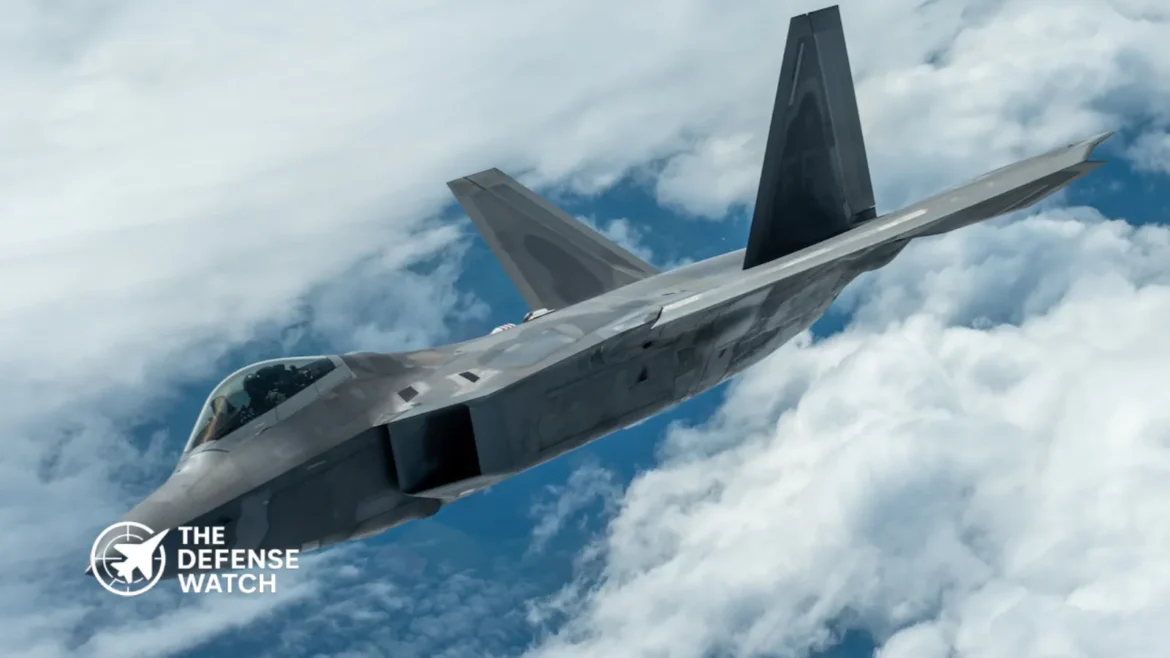
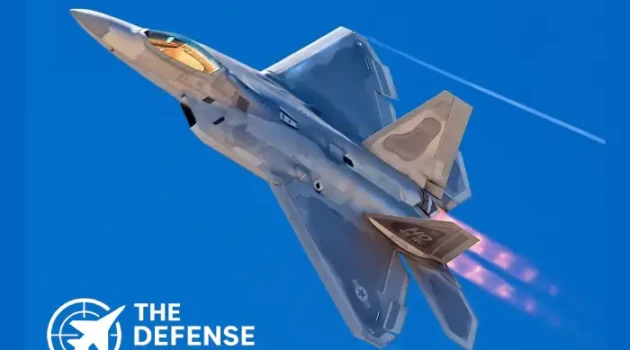
The United States has deployed 12 F-22 Raptors to southern Israel, marking a rare and strategically significant forward positioning of its most advanced air superiority fighter.
According to U.S. defense officials, the aircraft were repositioned as part of broader force posture adjustments aimed at reinforcing deterrence and maintaining rapid response capability in the region. The move comes amid elevated tensions across the Middle East.
The F-22 Raptor, developed by Lockheed Martin for the United States Air Force, remains the cornerstone of American air dominance strategy. Designed for stealth, high-end air combat, and precision strike missions, it combines low observable characteristics with advanced avionics and sensor fusion.
Why The F-22 Deployment Matters
Forward basing F-22 aircraft outside the continental United States is always deliberate. The platform was built primarily to counter near-peer air threats and establish uncontested control of contested airspace.
Its deployment to southern Israel signals three clear objectives:
First, it enhances regional air superiority coverage. The F-22’s advanced radar, electronic warfare suite, and beyond visual range missile capability allow it to detect and engage adversaries before being detected.
Second, it strengthens deterrence. The visible presence of fifth-generation fighters complicates adversary planning and raises the operational threshold for escalation.
Third, it reassures regional partners. Forward positioning high-end assets demonstrates sustained U.S. commitment to allied defense arrangements.
The F-22 is also unique in one key respect. Unlike the F-35 Lightning II, it has never been exported. Congress banned foreign sales of the aircraft in 1998 to protect sensitive technologies. As a result, every overseas deployment carries strategic weight.
Operational Capabilities
The F-22 was designed during the Cold War to defeat advanced Soviet aircraft. It combines stealth shaping, supercruise capability, thrust vectoring, and an advanced AN/APG-77 radar system.
It can carry AIM-120 AMRAAM air to air missiles internally, preserving its low observable profile. Its ability to operate without afterburners at supersonic speed gives it extended reach and faster response time compared to legacy fighters.
While originally optimized for air dominance, the platform has also evolved to support limited precision ground attack missions.
Regional Context
The Middle East has seen recurring periods of escalation involving state and non state actors, missile threats, and drone operations. U.S. air assets routinely rotate through regional bases, but the deployment of 12 F-22s represents a notable concentration of top tier capability.
The United States maintains a longstanding security partnership with Israel, including integrated air and missile defense cooperation. U.S. Central Command regularly coordinates with Israeli defense forces on regional contingency planning.
Though officials have not detailed specific mission sets, analysts assess that the deployment primarily serves a deterrent and contingency response function rather than signaling imminent offensive operations.
Strategic Signaling And Deterrence
In modern force posture strategy, presence is policy. Deploying the F-22 communicates readiness without issuing formal ultimatums.
Unlike carrier strike groups, which are highly visible symbols of naval power, stealth fighters operate with strategic ambiguity. Their survivability and first strike capacity make them particularly effective for crisis stabilization and escalation management.
At the same time, forward deployments carry logistical and sustainment demands. The F-22 fleet is relatively small, with approximately 180 operational aircraft in the inventory. Committing 12 aircraft overseas represents a meaningful allocation of high end air combat power.
What Comes Next
Defense officials have not specified the duration of the deployment. Historically, F-22 rotations to Europe and the Pacific have lasted several weeks to months, depending on regional conditions.
The presence of the F-22 in southern Israel underscores a broader U.S. objective: maintaining air dominance as the foundation of deterrence strategy in contested regions.
As tensions evolve, the forward deployment of America’s premier stealth fighter will remain a closely watched indicator of Washington’s strategic posture in the Middle East.
■ KEY FACTS AT A GLANCE- ► The U.S. Air Force and Northrop Grumman signed a deal on February 23, 2026 at the AFA Warfare Symposium to increase B-21 Raider annual production by 25%.
- ► The acceleration is backed by $4.5 billion in reconciliation funding approved by Congress as part of the “One Big Beautiful Bill” signed in 2025.
- ► Northrop Grumman has invested more than $5 billion in digital engineering and manufacturing infrastructure to support faster production cycles.
- ► The first operational B-21 Raider is scheduled to arrive at Ellsworth Air Force Base, South Dakota, in 2027.
- ► At least two B-21 aircraft are currently conducting flight testing at Edwards Air Force Base, California, with performance reported to exceed digital model predictions.
- ► Northrop’s Palmdale facility currently produces an estimated seven to eight aircraft annually; the exact accelerated rate remains classified.
- ► The B-21 program employs more than 8,000 personnel and over 400 suppliers across 40 U.S. states, making it one of the most broadly distributed defense industrial programs in the country.
B-21 Raider Production Acceleration Marks a Strategic Inflection Point for U.S. Airpower
The B-21 Raider production acceleration, formalized at the Air & Space Forces Association Warfare Symposium on February 23, 2026, is not simply a procurement contract milestone. It reflects a deliberate choice by Pentagon leadership to close what it perceives as a widening window of strategic vulnerability — one defined by an aging bomber fleet, accelerating Chinese and Russian air defense modernization, and the operational lessons drawn from 2025’s Operation Midnight Hammer.
(adsbygoogle = window.adsbygoogle || []).push({});The deal pairs $4.5 billion in already-appropriated reconciliation funding with a new production agreement raising Northrop Grumman’s annual B-21 output by 25 percent. The practical result: the Air Force’s nuclear-capable, penetrating long-range strike capacity reaches operational units faster. The strategic result is more complex — and worth examining carefully.
The Industrial Foundation Behind the Deal
Northrop Grumman’s willingness to commit to faster production is not corporate optimism. It rests on a documented infrastructure investment that, by the company’s own accounting, exceeds $5 billion in digital engineering and advanced manufacturing tools at its Plant 42 facility in Palmdale, California.
The company reports that its digital environment supports flight test planning and real-time performance analysis, enabling increased test cadence — with maintainers able to service aircraft for another test flight the following day. That kind of rapid turnaround in testing is significant because it translates directly to what the Air Force can expect from operational sorties. If the combined test force can regenerate a B-21 overnight under test conditions, the operational maintenance model should track closely with that performance baseline.
(adsbygoogle = window.adsbygoogle || []).push({});Northrop has also reduced software certification time by 50 percent, using advanced manufacturing tools including digital and augmented reality technologies to improve efficiency and scale production across facilities nationwide.
This is not small-batch artisan production. The program involves more than 400 suppliers across 40 states, a supply chain architecture deliberately designed to build political durability into the program budget line — and to reduce single-point-of-failure risk in the production base.
Why the Timing Matters
The Pentagon currently fields only 20 Northrop Grumman B-2 Spirit bombers — the Western world’s only low-observable, nuclear-capable heavy bomber — a fleet that played a central role in 2025’s Operation Midnight Hammer, the U.S. operation to destroy Iran’s underground nuclear enrichment sites.
That mission exposed both the B-2’s irreplaceable value and the acute danger of depending on a 20-aircraft fleet for the nation’s most demanding strike missions. The B-2 is aging, difficult to sustain, and expensive to fly. Its stealth coatings require intensive maintenance. Its radar cross-section management systems, while still effective, were designed against threat environments that have since evolved considerably.
(adsbygoogle = window.adsbygoogle || []).push({});The B-21 Raider program was built with those realities in mind. Its design incorporates modernized low-observable materials and manufacturing processes intended to reduce maintenance burden compared to the B-2. The open-systems architecture allows avionics and mission system upgrades without major airframe modifications — a lesson learned the hard way across the B-2’s operational life. The aircraft can carry both conventional and nuclear payloads, and is designed for manned or optionally unmanned operation, providing flexibility that no current U.S. bomber offers.
Air Force Secretary Troy Meink, speaking at the symposium, stated that “the B-21 is foundational to our long-range strike capability and to credible deterrence,” and that accelerating production ensures delivery to combatant commanders faster, strengthening the ability to “outpace, deter, and, if necessary, defeat emerging threats.”
That language is deliberate. Deterrence credibility in the nuclear domain depends not only on capability but on demonstrated capacity — adversaries need to believe the United States can field sufficient penetrating strike assets to hold their highest-value, hardened targets at risk. Twenty B-2s do not provide that assurance at scale. One hundred or more B-21s, delivered on a compressed timeline, begins to rebuild it.
The Financial Architecture of Acceleration
The $4.5 billion reconciliation injection is not discretionary — it was specifically designated by Congress for B-21 production capacity expansion. Northrop CEO Kathy Warden indicated that Northrop plans to invest between $2 to $3 billion over multiple years in facility upgrades to support the acceleration. That private industrial investment, layered on top of the government funding, suggests both parties have committed to a production rate increase that cannot easily be unwound by future budget volatility.
(adsbygoogle = window.adsbygoogle || []).push({});That said, the financial trajectory has not been smooth. As of early 2026, Northrop had absorbed roughly a $2 billion hit trying to accelerate the program and cover material costs — a reminder that fixed-price contracts in development-phase programs carry real risk for the prime contractor. The new deal should provide more favorable terms for the accelerated lots, though the Pentagon has not disclosed pricing details.
The per-unit cost of the B-21 currently sits near $700 million per aircraft at current production rates. Increased volume should drive per-unit costs down through learning-curve economics, though stealth manufacturing is labor-intensive enough that cost reduction will be gradual rather than dramatic.
Comparing the Industrial Baseline to Competitors
It is worth placing this production decision in comparative context. China’s H-20 stealth bomber has been in development for years but has not entered series production or been confirmed as operationally deployed. Russia’s PAK DA program remains mired in development, with no credible timeline for fielding. Neither adversary currently operates a penetrating stealth bomber comparable to the B-2, and neither is likely to field one on a timeline that matches the B-21’s accelerated delivery schedule.
This matters because the accelerated B-21 production is not a symmetric arms race response — it is an effort to lock in an asymmetric advantage before competitors can close the gap. Long-range strike penetration capability is among the hardest military attributes to replicate quickly. The industrial knowledge, materials science, and systems integration experience required cannot be acquired on short notice.
(adsbygoogle = window.adsbygoogle || []).push({});The United Kingdom and Australia, both close intelligence partners operating within AUKUS, have no equivalent penetrating bomber program. The B-21 effectively makes the United States the sole Western power with this capability for at least the next two decades, reinforcing Washington’s role as the alliance’s indispensable long-range strike backstop.
Program of Record and the 100-Aircraft Question
The current B-21 program of record calls for a minimum of 100 aircraft. Some officials have called for expanding the program of record beyond that number, though Air Force Secretary Meink did not address whether the overall buy would change.
The case for expanding the buy is straightforward: with a fleet of 100, accounting for depot maintenance cycles, training aircraft, testing attrition, and forward deployment requirements, actual mission-capable aircraft available at any given time could be well under 70. For a force designed to hold at-risk a large and geographically dispersed set of hardened targets across China or Russia, that may prove insufficient.
(adsbygoogle = window.adsbygoogle || []).push({});Conversely, at $700 million per aircraft and with the Air Force simultaneously funding the B-52J re-engine program, the Sentinel ICBM (itself under significant cost pressure), and LRSO cruise missile development, budget competition is fierce. The reconciliation funding provides short-term relief, but sustained production acceleration beyond 100 aircraft would require additional appropriations that are not yet committed.
KEY FACTS AT A GLANCE■ KEY FACTS AT A GLANCE- ► $10,282,459 cost-plus-fixed-fee contract modification awarded
- ► Supports JASSM Increased Inventory Integrated Production Team tooling and test equipment
- ► Total contract value rises to $409,832,456
- ► Work performed in Orlando, Florida
- ► Completion expected by Aug. 29, 2029
- ► Contracting activity: Air Force Life Cycle Management Center, Eglin AFB
Lockheed Martin JASSM Contract Modification Expands Production Capacity
The Lockheed Martin JASSM contract modification is adding $10.3 million to support production tooling and test equipment for the Joint Air-to-Surface Standoff Missile, according to a U.S. Department of Defense contract announcement.
(adsbygoogle = window.adsbygoogle || []).push({});The award, issued to Lockheed Martin Missiles and Fire Control in Orlando, Florida, modifies a previously awarded contract tied to the JASSM Increased Inventory Integrated Production Team, or IPT. The cost-plus-fixed-fee modification, identified as P00027, raises the cumulative contract value to $409,832,456, up from $399,549,997.
The contracting activity is the Air Force Life Cycle Management Center at Eglin Air Force Base.
Contract Details
The $10,282,459 modification supports tooling and test equipment required to sustain and expand production of the Joint Air-to-Surface Standoff Missile. Work will be performed in Orlando, Florida, and is expected to conclude by Aug. 29, 2029.
The contract falls under FA8682-19-C-0008, a long-running effort to increase missile inventory levels in response to sustained operational demand and evolving force structure requirements.
The Joint Air-to-Surface Standoff Missile, commonly known as JASSM, is a long-range, precision-guided cruise missile designed to strike high-value, well-defended targets. Developed by Lockheed Martin, the missile is a core element of U.S. Air Force deep strike capability.
According to the U.S. Air Force, JASSM provides a low-observable, fire-and-forget capability with a range exceeding 200 nautical miles in its baseline form. The extended-range variant, JASSM-ER, significantly increases that reach and is integrated across multiple U.S. aircraft platforms.
Supporting Increased Inventory Requirements
The Lockheed Martin JASSM contract modification aligns with broader Department of Defense efforts to expand precision munition stockpiles. Recent conflicts and global contingency planning have underscored the importance of maintaining sufficient inventories of long-range strike weapons.
(adsbygoogle = window.adsbygoogle || []).push({});The Increased Inventory IPT framework focuses on production scalability, industrial base resilience, and delivery timelines. Tooling and test equipment upgrades are critical to ensuring consistent output rates and quality control as production volumes rise.
The U.S. Air Force has identified long-range precision strike as a key component of its operational concepts, including Agile Combat Employment and distributed operations. JASSM is integrated on aircraft such as the F-15E Strike Eagle, F-16 Fighting Falcon, B-1B Lancer, and B-52H Stratofortress, according to official Air Force fact sheets.
Expanding production infrastructure now supports projected procurement profiles through the end of the decade.
Industrial Base And Strategic Context
The Lockheed Martin JASSM contract modification also reflects sustained investment in the U.S. defense industrial base. By funding tooling and testing capabilities, the Air Force is addressing potential bottlenecks that could slow missile deliveries in future surge scenarios.
(adsbygoogle = window.adsbygoogle || []).push({});Orlando, Florida, remains a major hub for Lockheed Martin Missiles and Fire Control operations. The site supports multiple precision strike and missile defense programs, contributing to both domestic and international customer requirements.
The Air Force Life Cycle Management Center at Eglin Air Force Base oversees cradle-to-grave management of numerous air-delivered weapons programs. Its role includes contracting, sustainment planning, modernization, and capability upgrades.
As global demand for stand-off precision weapons continues, maintaining reliable production lines is viewed as essential to deterrence and operational readiness.
BAE Systems Wins $145M Counter Unmanned Aerial Systems Contract
BAE Systems has secured a $145 million Counter Unmanned Aerial Systems contract from the U.S. Air Force to develop, manufacture, and deliver advanced C-UAS weapon systems.
According to a Department of Defense contract announcement released on Feb. 11, 2026, BAE Systems Inc., based in Nashua, New Hampshire, was awarded a cost-plus-fixed-fee indefinite-delivery/indefinite-quantity contract, designated FA8681-26-D-B001, with a ceiling value of $145,000,000.
The award also includes an initial delivery order, FA8681-26-F-B012, valued at $66,673,298.
Scope Of The Counter Unmanned Aerial Systems Contract
The Counter Unmanned Aerial systems contract covers the development, manufacturing, and delivery of C-UAS weapon systems. These systems are designed to detect, track, and defeat hostile or unauthorized unmanned aerial systems, a growing threat across operational theaters.
Work will be performed in Hudson, New Hampshire. The ordering period runs from Feb. 12, 2026, through Feb. 12, 2031. Completion of work tied to the initial delivery order is expected by July 31, 2027.
The contract was awarded by the Air Force Life Cycle Management Center at Eglin Air Force Base, Florida, which serves as the contracting activity. The center is responsible for managing a wide range of Air Force acquisition programs, including aircraft, munitions, and electronic warfare systems.
Sole Source Acquisition
The award was issued as a sole source acquisition under Federal Acquisition Regulation 6.302-1, titled Only One Responsible Source. Under this provision, the government may limit competition when only one contractor is capable of fulfilling the requirements.
Sole source awards are typically used when specific technical capabilities, proprietary technologies, or urgent operational needs limit viable alternatives. The Department of Defense announcement did not provide additional technical details on the C-UAS configuration.
Funding And Contract Structure
Fiscal Year 2026 research, development, test, and evaluation funds totaling $26,048,932 were obligated at the time of award. This initial funding supports ongoing development activities under the Counter Unmanned Aerial Systems contract.
The broader IDIQ structure allows the Air Force flexibility to issue additional task or delivery orders over the five-year ordering period, up to the contract ceiling of $145 million.
Cost-plus-fixed-fee contracts are commonly used for development programs where requirements may evolve and costs cannot be fully defined at the outset. This structure provides reimbursement of allowable costs plus a negotiated fee.
Growing Focus On Counter-UAS Capabilities
The Counter Unmanned Aerial Systems contract reflects the Air Force’s continued investment in layered defenses against unmanned threats.
Small drones and more advanced unmanned platforms have increasingly been used in reconnaissance, strike missions, and asymmetric operations. As a result, U.S. military services have accelerated efforts to field scalable C-UAS solutions capable of addressing both low-cost commercial drones and more sophisticated systems.
While specific system details were not disclosed, C-UAS weapon systems typically integrate sensors, command and control software, electronic warfare tools, and kinetic or non-kinetic defeat mechanisms.
BAE Systems has a broad portfolio in electronic warfare, precision guidance, and advanced munitions, positioning the company to support integrated counter-drone missions. The firm’s U.S. subsidiary operates across multiple domains, including air, land, and maritime systems.
Program Oversight
The Air Force Life Cycle Management Center at Eglin AFB oversees acquisition and sustainment for a wide range of Air Force weapon systems. Its responsibilities include program management, engineering, contracting, and lifecycle support.
By structuring the Counter Unmanned Aerial Systems contract as an IDIQ vehicle, the Air Force retains the ability to scale procurement based on operational needs and available funding.
The award date was officially recorded as Feb. 11, 2026.
Why This Counter Unmanned Aerial Systems Contract Matters
The $145 million ceiling value signals continued prioritization of counter-drone capabilities within the Air Force modernization portfolio.
As unmanned threats expand in number and capability, demand for adaptable C-UAS weapon systems continues to grow. Programs like this are intended to provide operational units with more effective tools to detect and neutralize aerial threats across multiple environments.
Further contract actions under this IDIQ may follow as requirements mature and funding becomes available.
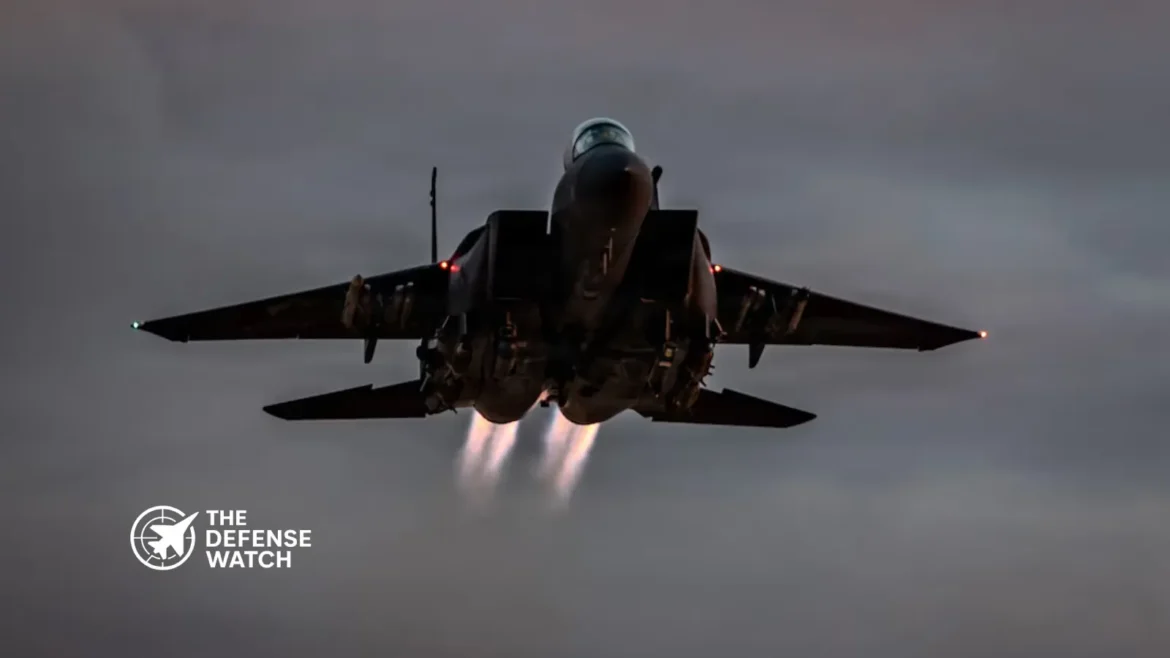
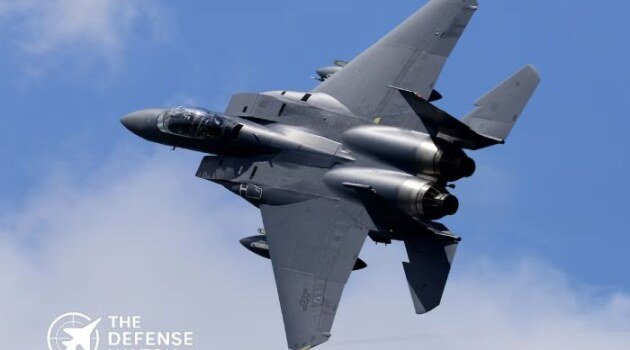
U.S. Deploys F-15E Strike Eagles To Undisclosed Middle East Base
U.S. Central Command says F-15E Strike Eagles have deployed to an undisclosed base in the Middle East to strengthen strike options against ISIS and support deterrence posture toward Iran, according to official statements and imagery released by U.S. military channels.
(adsbygoogle = window.adsbygoogle || []).push({});Short-range threats from militia drones, a persistent Islamic State insurgent footprint and rising pressure from Iranian proxy groups have shaped CENTCOM’s recent posture adjustments, officials said.
Deployment Details And Unit Involved
The aircraft involved are tied to the 494th Expeditionary Fighter Squadron, a Strike Eagle unit forward-deployed from RAF Lakenheath in the United Kingdom. Open-source flight tracking suggests a standard 12-aircraft detachment, supported by KC-135 aerial refueling assets to reach the CENTCOM area of responsibility without advanced notice.
CENTCOM framed the deployment as part of a readiness and stability measure, emphasizing that exact base locations and mission specifics remain restricted for operational security.
Why F-15E Strike Eagles
The F-15E Strike Eagle remains a mainstay for long-range multirole missions. Powered by twin Pratt & Whitney afterburning engines, the aircraft couples high speed and altitude capability with long range, especially when paired with aerial refueling. Its payload capacity and advanced sensors support both precision strike and air defense missions.
Strike Eagles carry a mix of air-to-air and air-to-ground munitions, including AIM-120 AMRAAM and AIM-9 Sidewinder missiles for air defense, guided bombs such as JDAM variants for precision strike, and targeting pods that support accurate delivery in complex environments.
- (adsbygoogle = window.adsbygoogle || []).push({});
The aircraft’s advanced electronic warfare suite (EPAWSS) helps detect and counter layered threats, a key factor in contested airspace where adversaries use surface-to-air systems and unmanned aerial systems.
Operational Context
This deployment aligns with a broader U.S. effort to reinforce airpower in the Middle East. The region has seen a mix of ISIS activity, militia threats and tensions tied to Iranian regional posture. U.S. air operations, including long-range precision strikes in Syria and Iraq against ISIS targets, remain ongoing.
In recent months, U.S. military activity has included aerial readiness exercises and deployments of other air assets, aiming to demonstrate rapid response capability and forward presence amid evolving security challenges.
Regional Deterrence And Strike Capability
Forward-deployed F-15Es enhance the U.S. ability to generate sorties quickly across sectors of the Middle East. Their presence signals that the Air Force can sustain both counterterrorism and high-end deterrence missions, bridging the gap between rotational forces and a larger permanent footprint.
- (adsbygoogle = window.adsbygoogle || []).push({});
These fighters offer commanders options from air defense to precision deep strike, complementing ISR and tanker support already operating in the region. Their range and payload help compress adversary decision cycles and support partner forces when stability threats rise.
Broader U.S. Airpower Posture
The deployment reflects the Pentagon’s continued emphasis on maintaining forward airpower in volatile environments. While exact operational details remain restricted by CENTCOM, the integration of F-15Es into Middle East operations underscores the role of tactical air assets in layered deterrence and counterterrorism efforts.
- (adsbygoogle = window.adsbygoogle || []).push({});
- (adsbygoogle = window.adsbygoogle || []).push({});
General Dynamics IT Expands Air Force DCGS Support Contract
The Distributed Common Ground System contract with General Dynamics Information Technology has been expanded under a new U.S. Air Force modification valued at $19.1 million, reinforcing continued investment in intelligence, surveillance, and reconnaissance infrastructure.
General Dynamics Information Technology, based in Falls Church, Virginia, has been awarded an option year seven modification to a previously awarded Air Force contract for the Distributed Common Ground System, or DCGS, network weapon system. The modification, identified as P00034 under contract FA489019FA022, increases the total cumulative contract value to $151.5 million, up from $132.4 million.
According to U.S. Department of Defense contract award data, the work will be carried out at Joint Base Langley Eustis in Virginia and at Beale Air Force Base in California. The effort is expected to be completed by Jan. 31, 2027.
Fiscal year 2026 operations and maintenance funding totaling $15.4 million is being obligated at the time of award. The Acquisition Management and Integration Center at Hampton, Virginia, is the contracting activity.
Sustaining the Air Force Distributed Common Ground System
The Distributed Common Ground System is the U.S. Air Force’s primary intelligence, surveillance, and reconnaissance processing and exploitation system. It integrates data from airborne, space-based, and ground sensors into a unified network that supports commanders with near real-time intelligence products.
DCGS enables the collection, processing, exploitation, and dissemination of intelligence across multiple domains. It supports missions ranging from air operations and targeting to global situational awareness and threat assessment. The system is a core component of the Air Force’s ISR enterprise and remains critical to joint and coalition operations.
Through this Distributed Common Ground System contract modification, GDIT will continue providing network weapon system support services. While the Department of Defense did not release detailed task descriptions, such contracts typically cover system sustainment, network operations, cybersecurity support, and technical integration to ensure high availability and performance.
Role of Joint Base Langley Eustis and Beale AFB
Joint Base Langley Eustis serves as a major hub for Air Force intelligence and combat airpower, hosting units central to ISR operations and command and control. Beale Air Force Base is home to key intelligence wings and has long been associated with high-altitude ISR platforms and DCGS operations.
Sustaining DCGS capabilities at these locations supports global Air Force intelligence operations, including data processing for remotely piloted aircraft, manned reconnaissance platforms, and space-based sensors.
The continuation of work at both sites reflects the Air Force’s emphasis on maintaining resilient and secure intelligence networks amid growing operational demands.
General Dynamics IT and Defense Intelligence Systems
General Dynamics Information Technology is a major provider of mission IT, cyber, and intelligence solutions to the U.S. Department of Defense and the broader federal government. The company has extensive experience supporting Air Force intelligence systems, enterprise networks, and classified environments.
This latest contract action builds on GDIT’s long-standing involvement in DCGS-related programs and broader defense information infrastructure. The increase in total contract value underscores the sustained nature of the program and the Air Force’s reliance on industry partners for complex ISR systems.
Defense analysts note that continued funding for DCGS reflects the enduring importance of intelligence dominance as the U.S. military adapts to evolving threat environments and peer competition.
Part of Broader Air Force Modernization Efforts
The Distributed Common Ground System contract aligns with ongoing Air Force modernization priorities focused on data integration, network resilience, and multi-domain operations. While newer concepts such as the Advanced Battle Management System aim to transform command and control, DCGS remains a foundational capability supporting intelligence workflows today.
By extending option year seven, the Air Force ensures continuity of operations while pursuing incremental upgrades and sustainment of existing systems. This approach reduces operational risk and preserves mission readiness across global theaters.
The contract modification also highlights the steady flow of operations and maintenance funding directed toward intelligence systems, even as procurement budgets shift toward next-generation platforms.
Contract Overview at a Glance
The $19.1 million modification brings the total value of the Distributed Common Ground System contract to more than $151 million since initial award. Work will continue through early 2027, funded through fiscal year 2026 operations and maintenance accounts.
As geopolitical competition intensifies and information advantage remains central to military effectiveness, sustained investment in systems like DCGS is expected to remain a priority for the U.S. Air Force.
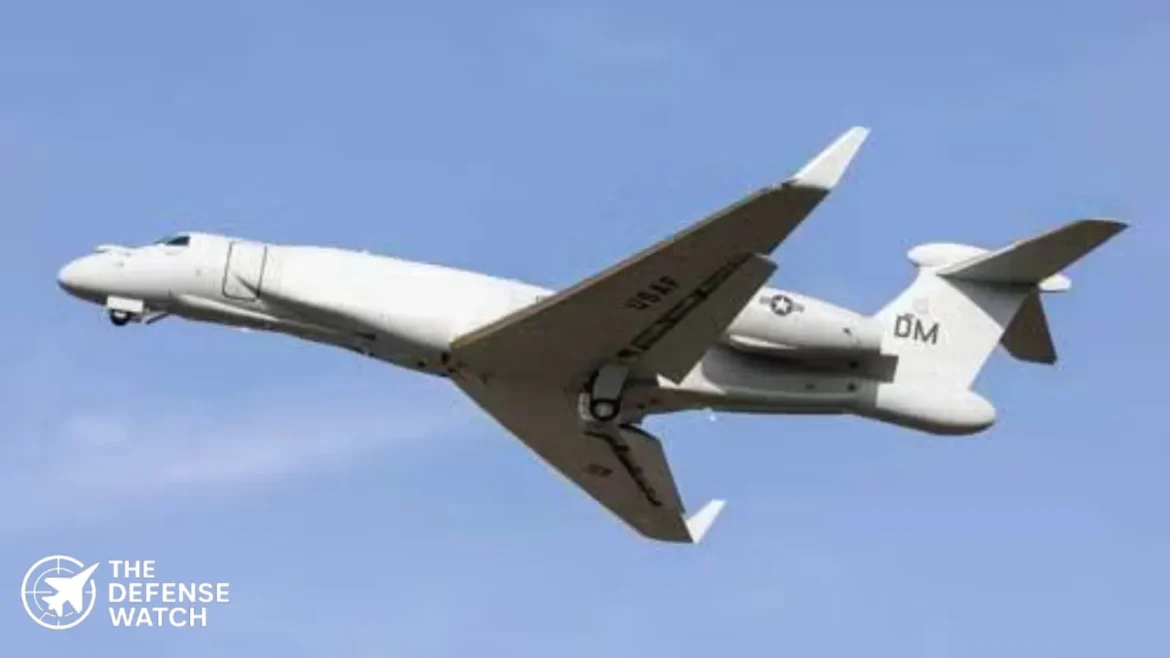
EA-37B Electronic Warfare Aircraft Relocation Signals Expanded U.S. Operational Reach
The EA-37B electronic warfare aircraft has been quietly relocated from Bermuda to Ramstein Air Base, Germany, according to defense observers tracking U.S. Air Force movements. The aircraft, which only entered operational service in 2024, represents the most advanced electronic attack platform currently fielded by the United States.
(adsbygoogle = window.adsbygoogle || []).push({});The relocation places the EA-37B at one of the U.S. military’s most critical logistics and airpower hubs in Europe, providing rapid access to multiple theaters without committing the aircraft to a forward combat zone.
A Strategic Move Without Public Announcement
The U.S. Air Force has not issued a formal statement explaining the relocation. However, Ramstein Air Base routinely supports high value intelligence, surveillance, reconnaissance, and electronic warfare operations across Europe, Africa, and the Middle East.
Defense analysts note that positioning the EA-37B in Germany provides operational flexibility while maintaining distance from contested airspace. The aircraft’s mission does not rely on proximity to targets, as its systems are designed to operate from high altitude and long standoff ranges.
What Makes the EA-37B Different
Unlike traditional strike aircraft, the EA-37B electronic warfare aircraft is not built to deliver kinetic weapons. Instead, it is designed to control and degrade the electromagnetic environment across large areas.
Built on the Gulfstream G550 business jet airframe, the EA-37B replaces the aging EC-130H Compass Call fleet. Its modern design allows for higher altitude operations, greater range, and significantly improved survivability.
According to U.S. Air Force program descriptions, the EA-37B is capable of:
- Disrupting and suppressing enemy air defense radars
- Jamming military communications and satellite navigation signals
- Degrading GPS dependent weapons and sensors
- Interfering with data links connecting sensors, command nodes, and missile launchers
Rather than destroying systems physically, the EA-37B aims to deny adversaries the ability to see, communicate, and coordinate.
Electronic Warfare as a First Line Capability
Modern conflicts increasingly rely on integrated air defense networks, digital command systems, and networked sensors. The EA-37B electronic warfare aircraft is designed to exploit these dependencies.
By targeting radar emissions, communications networks, and data links, the aircraft can effectively erase the operational picture an adversary relies on. Air defense operators may see false tracks, lose contact with friendly units, or fail to receive firing authorization altogether.
This approach reduces the need for early kinetic strikes and lowers risk to manned aircraft entering contested airspace.
Operational Service and Combat Readiness
The EA-37B reached initial operational capability in 2024, marking a major milestone in U.S. Air Force electronic warfare modernization. While the aircraft has participated in training and evaluation exercises, it has not yet been publicly confirmed in combat operations.
The move to Ramstein places the platform closer to real world contingencies, though U.S. officials have not indicated any imminent deployment to an active conflict zone.
(adsbygoogle = window.adsbygoogle || []).push({});The Air Force has emphasized that the EA-37B is intended to operate alongside fighters, bombers, naval forces, and space based assets, shaping the battlespace before and during joint operations.
Why Ramstein Matters
Ramstein Air Base serves as the backbone of U.S. air operations in Europe and beyond. It supports command and control, airlift, medical evacuation, and intelligence missions for U.S. European Command and U.S. Africa Command.
Stationing the EA-37B at Ramstein allows for:
- Rapid redeployment to multiple regions
- Integration with NATO planning and exercises
- Secure basing with robust logistics support
- Strategic signaling without direct escalation
The move reflects a broader trend of positioning advanced capabilities where they can be employed quickly, without public force buildups.
Electronic Warfare and Modern Deterrence
The EA-37B electronic warfare aircraft fits into a growing emphasis on non kinetic deterrence. By demonstrating the ability to disrupt sophisticated military systems, the U.S. can impose costs on adversaries without crossing traditional thresholds.
Electronic attack capabilities are increasingly viewed as essential in countering modern air defense systems, particularly those built around networked sensors and digital fire control.
U.S. defense planners have repeatedly highlighted the importance of electronic warfare in future conflicts, especially against near peer competitors with advanced integrated defenses.
What Comes Next
The U.S. Air Force plans to field a full fleet of EA-37B aircraft over the coming years, gradually replacing the EC-130H and expanding electronic attack capacity.
While the Air Force remains cautious about discussing operational details, the relocation to Germany underscores that the EA-37B is no longer just a developmental platform. It is now an active part of the U.S. military’s global force posture.
U.S. Air Force Cloud One Contract Awarded to Amazon
The U.S. Air Force has awarded Amazon Web Service Inc. a $581,318,585 contract to support the Air Force Cloud One program, reinforcing Amazon Web Services role in U.S. military cloud modernization.
The award, announced by the Department of Defense, covers the provision of cloud computing services in support of Cloud One and its Air Force mission customers. The contract was issued as a sole source acquisition and will run through Dec. 7, 2028.
Contract Overview and Scope
Amazon Web Service Inc., based in Seattle, Washington, received the firm fixed price contract from the Air Force Life Cycle Management Center at Hanscom Air Force Base in Massachusetts. The contract action is identified as FA8726 26 F B004.
Under the terms of the agreement, Amazon will deliver cloud services across contractor designated facilities throughout the contiguous United States. These services are intended to support a wide range of Air Force missions that rely on secure, scalable, and resilient cloud infrastructure.
At the time of award, fiscal year 2026 operations and maintenance funds totaling $3,497,937 were obligated. Additional funding is expected to be applied over the life of the contract as requirements are executed.
Role of Cloud One in Air Force Modernization
The Cloud One program is the U.S. Air Force enterprise cloud environment and serves as a core element of the service branch digital transformation strategy. Cloud One provides standardized cloud capabilities for weapons systems, command and control platforms, logistics networks, and business applications.
By using a centralized cloud environment, the Air Force aims to accelerate software deployment, improve cybersecurity, and reduce the cost and complexity of maintaining legacy information technology systems. Cloud One also supports the Department of Defense shift toward data driven operations and joint all domain command and control concepts.

Amazon Web Services has been a long standing provider within the Cloud One ecosystem, supporting classified and unclassified workloads and meeting Defense Department security and compliance requirements.
Why Amazon Web Services Was Selected
The Air Force cited a sole source acquisition approach for this award, reflecting the program office assessment that Amazon Web Services uniquely met the technical, security, and operational needs of Cloud One at this stage of the program.
AWS operates one of the largest and most mature cloud infrastructures used by U.S. government agencies, including the Defense Department, intelligence community, and federal civilian agencies. Its experience supporting sensitive defense workloads has positioned it as a key provider for large scale military cloud programs.
While the Air Force has pursued multi vendor strategies in other cloud initiatives, Cloud One has historically relied on AWS as its primary commercial cloud provider.
Strategic Importance for U.S. Defense Cloud
The Air Force Cloud One contract highlights the growing reliance of the U.S. military on commercial cloud providers to enable modern warfare capabilities. Cloud services underpin artificial intelligence tools, data analytics, mission planning software, and real time operational awareness.
As the Air Force continues to integrate digital capabilities into aircraft, space systems, and ground operations, the stability and security of its cloud infrastructure remains a top priority. Long term contracts such as this one provide continuity while allowing the service to adapt to evolving mission demands.
The award also reflects broader Pentagon efforts to modernize information technology while maintaining strict cybersecurity controls and compliance with federal standards.
Oversight and Contract Management
The Air Force Life Cycle Management Center at Hanscom Air Force Base serves as the contracting activity for this award. The center is responsible for managing major acquisition programs related to command and control, cyber systems, and enterprise IT for the Air Force.
Program oversight will focus on service availability, cybersecurity compliance, and performance benchmarks throughout the contract period.
What Comes Next
With performance extending through late 2028, the Cloud One contract will continue to shape how the Air Force delivers digital capabilities across its enterprise. The agreement ensures ongoing access to cloud services while the service evaluates future cloud strategies and potential competitive procurements.
For Amazon Web Services, the award reinforces its position as a central player in U.S. defense cloud computing and long term military IT modernization.