

Revolutionary Reusable Hypersonic Testing Takes Flight
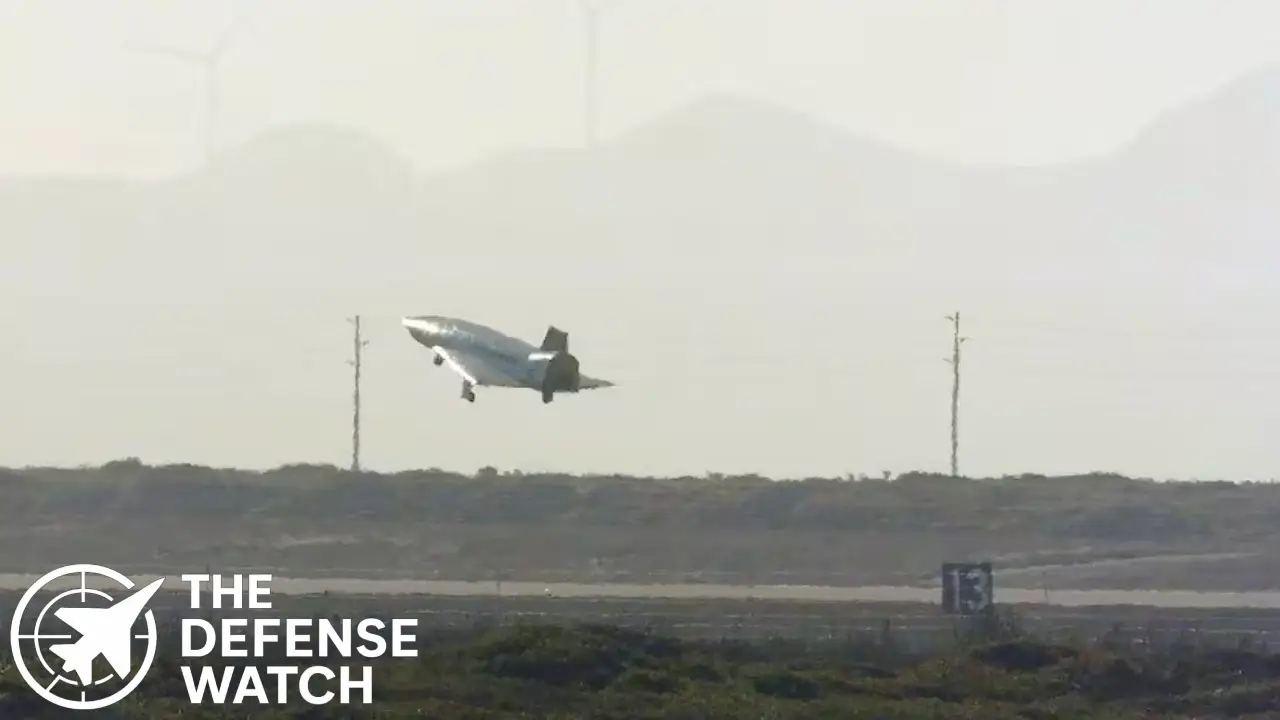
Stratolaunch has achieved a historic milestone in hypersonic technology, successfully completing two Talon-A hypersonic aircraft flights that exceeded Mach 5 speeds and featured full vehicle recovery. The California-based company’s Talon-A2 vehicle conducted flights in December 2024 and March 2025 as part of the Pentagon’s Multi-Service Advanced Capability Hypersonic Test Bed (MACH-TB) program, marking the first reusable hypersonic aircraft operations since the X-15 program ended in 1968.
Both flights met all Defense Department performance benchmarks within a one percent margin , demonstrating unprecedented precision in hypersonic testing. The March flight exceeded the December speed record, with the fully autonomous vehicle landing successfully at Vandenberg Space Force Base in California after each mission.
This achievement represents a fundamental shift in how the United States approaches hypersonic technology development. The ability to reuse the Talon-A will eventually make it a more affordable hypersonic testbed by orders of magnitude, addressing a critical bottleneck that has hampered U.S. hypersonic weapons development for decades.
Inside the Talon-A Hypersonic Aircraft
The Talon-A is a fully autonomous, rocket-powered hypersonic vehicle designed to serve as a reusable testbed for validating components, subsystems, and technologies under realistic flight conditions. The wedge-shaped unmanned aircraft features modular payload spaces to support high-speed flight test activities, allowing customers to rapidly iterate on hypersonic designs without the expense and complexity of full-scale weapon systems testing.
The air-launched Talon-A is ferried aloft by a captive-carry mother ship before accelerating to hypersonic speeds using a Hadley rocket engine developed by Colorado-based Ursa Major. While hypersonic speed is usually defined as anything above Mach 5, the Talon-A is expected to be able to reach speeds of at least Mach 6.
The vehicle’s autonomous capabilities eliminate the need for onboard pilots, reducing risk while enabling more aggressive test profiles. Stratolaunch’s Department of Defense customer, the Test Resource Management Center, can immediately recover and begin pulling data from the payloads flown on the vehicle following landing, dramatically accelerating the development cycle compared to expendable test vehicles.
Stratolaunch has conducted four Talon-A flights to date, with the company focused on expanding the vehicle’s flight envelope. Emphasis is on expanding its flight envelope, allowing it to fly faster, perform more maneuvers, and maintain hypersonic speeds for longer durations.
URSA Major’s Hadley Engine Powers Hypersonic Breakthrough
The propulsion system enabling Talon-A’s hypersonic performance is Ursa Major’s Hadley liquid rocket engine, a 5,000-pound-thrust liquid oxygen and kerosene, oxygen-rich staged combustion cycle reusable rocket engine for small vehicles or hypersonic applications.
Unlike historical rocket engines, Ursa Major uses metal additive manufacturing to speed up the production process, allowing the company to build engines in a matter of days. This advanced manufacturing approach represents a significant departure from traditional aerospace production methods, enabling rapid iteration and cost reduction.
The Hadley engine achieved a major milestone with the Talon-A flights. Both test flights exceeded flight and power objectives for Stratolaunch’s Talon-A2 testbed and featured the successful recovery of the hypersonic testbed vehicle post-landing for reuse Ursa Major CEO Dan Jablonsky stated the flights demonstrate the company is answering the call from military and government partners to innovate and meet the mission to provide critical national security capabilities.
The Hadley represents the first in a family of propulsion systems from Ursa Major. Hadley enables the U.S. Department of Defense to field new mission solutions faster and advances performance metrics of speed, range, and payload. The engine’s versatility has proven valuable across multiple applications, with Ursa Major delivering Hadley engines for both space launch and hypersonic missions.
In June 2025, Ursa Major was awarded a $32.9 million contract to develop and deliver 16 upgraded Hadley H13 engines to Stratolaunch. The Hadley H13 is a mission-upgraded variant that increases engine reusability with additional starts, driving down cost per flight while supporting new test objectives and mission profiles.
The Roc: World’s Largest Aircraft Serves as Launch Platform
Enabling Talon-A’s hypersonic missions is the Stratolaunch Roc, the world’s largest aircraft by wingspan. The aircraft features a twin-fuselage design and the longest wingspan ever flown, at 385 feet, surpassing even the legendary Hughes H-4 Hercules “Spruce Goose.”
Stratolaunch is powered by six Pratt & Whitney PW4056 engines positioned on pylons outboard of each fuselage, providing 56,750 pounds-force of thrust per engine. Many of the aircraft systems have been adopted from the Boeing 747-400, including the engines, avionics, flight deck, landing gear and other systems, reducing development costs.
The massive carrier aircraft serves as a mobile launch platform, carrying Talon-A vehicles to altitude before releasing them for powered hypersonic flight. Stretching over a football field long, Roc supports a robust payload capacity of over 500,000 pounds. The dual-fuselage configuration allows payloads to be carried between the fuselages and released from the center wing, providing optimal aerodynamic conditions for separation.
Roc has completed 24 flights to date, progressively expanding its operational envelope to support increasingly demanding hypersonic test missions. The aircraft requires specialized facilities, with the aircraft requiring 12,000 feet of runway to lift off.
Expanding Global Operations with Spirit of Mojave
Recognizing operational limitations imposed by Roc’s massive size, Stratolaunch is modifying its carrier aircraft to support test flights of its hypersonic Talon-A vehicle around the globe through a nearly $25 million contract from the Missile Defense Agency. The company will modify a Boeing 747-400 platform dubbed Spirit of Mojave to support hypersonic missions.
Through the Missile Defense Agency contract, the company will modify one of its launch platforms to fly from any airport that can support an aircraft the size of a 747 jetliner. Stratolaunch hopes to have the modifications complete to support testing by the fourth quarter of 2025.
The modifications will include installing Stratolaunch’s release mechanism on Spirit of Mojave, along with upgraded electrical interfaces and configured onboard displays for Talon-A operations. Having two test platforms equipped to fly Talon-A gives Stratolaunch flexibility to support multiple Department of Defense customers whose testing needs extend beyond the West Coast, which is where Roc has conducted Talon-A testing to date.
For the Missile Defense Agency, flexibility means it can test and calibrate the performance of its sensors to detect missiles launched from different locations around the world. This capability is critical for developing the Hypersonic and Ballistic Tracking Space Sensor experimentation effort and other advanced missile defense programs.
MACH-TB Program Accelerates U.S. Hypersonic Development
The Talon-A flights directly support the Pentagon’s Multi-Service Advanced Capability Hypersonic Test Bed program, a critical initiative designed to overcome infrastructure limitations that have constrained U.S. hypersonic development. MACH-TB was created in 2022 as part of efforts to help improve the Defense Department’s lagging hypersonic test infrastructure, which has slowed U.S. hypersonic weapons development.
The effort is led by the Pentagon’s Test Resource Management Center and the Naval Surface Warfare Center’s Crane Division. The program’s flying testbed is designed to validate hypersonic subsystems, advanced materials and other technologies as a system is being developed.
To address testing challenges, Department of Defense leaders have been on a path since 2022 to increase the department’s hypersonic flight cadence to around one test per week, and MACH-TB is a big part of that initiative. The program uses systems like Talon-A, which is powered by Ursa Major’s Hadley engine, as well as Rocket Lab’s HASTE rocket and Kratos’ Erinyes to test components and subsystems in a realistic flight environment that mimics the harsh conditions hypersonic vehicles face.
Program achievements have been significant. Scott Wilson, MACH-TB Program Manager, stated the data collected from the experiments flown on the initial Talon-A flight has been analyzed and the results are extremely positive. George Rumford, Director of the Department of Defense Test Resource Management Center, emphasized demonstrating the reuse of fully recoverable hypersonic test vehicles is an important milestone for MACH-TB, with lessons learned from this test campaign helping reduce vehicle turnaround time from months down to weeks.
Stratolaunch is on contract for five MACH-TB flights and will support a Missile Defense Agency test campaign later in 2025 . The company has a full flight manifest through 2025 and has started booking Talon-A missions for 2026.
MACH-TB continues evolving with MACH-TB 2.0, which transitions the program from concept demonstration to full-flight test capacity. After conducting over 25 flight tests and creating a hypersonic boost glide testbed under MACH-TB 1.0, the Pentagon is now moving to transition that technology from design and concept demonstration to full-flight test capacity in fiscal 2025 under the follow-on MACH-TB 2.0 effort. In January 2025, the Defense Department tapped Kratos to develop a testbed for hypersonic vehicles under the Multi-Service Advanced Capability Hypersonic Test Bed 2.0 program, with an agreement worth $1.45 billion if all options are exercised.
Analysis: Strategic Implications for U.S. Hypersonic Capabilities
Stratolaunch’s successful demonstration of reusable hypersonic flight testing capabilities arrives at a critical juncture for U.S. defense strategy. China and Russia have made substantial progress in hypersonic weapons development, with both nations fielding operational systems. The ability to conduct frequent, affordable hypersonic tests represents a potential game-changer for the United States as it seeks to close capability gaps with peer competitors.
The economics of reusable hypersonic testing cannot be overstated. Traditional hypersonic development has been constrained by the high cost and limited availability of test opportunities. Most major programs conduct only a handful of tests annually, with each expendable flight representing millions of dollars and months of preparation. By demonstrating vehicle recovery and reuse within months, Stratolaunch has validated a model that could enable weekly testing cadences envisioned by Pentagon planners.
The rapid turnaround demonstrated by Talon-A—flying twice in three months—suggests the potential for dramatically accelerated development cycles. This capability allows engineers to test incremental design changes and validate technologies under realistic flight conditions far more frequently than previously possible. The modular payload architecture enables multiple customers to leverage the same testbed platform, sharing costs while advancing diverse technology areas simultaneously.
URSA Major’s role as a commercially-focused propulsion provider represents another strategic advantage. The company’s use of advanced manufacturing techniques and oxygen-rich staged combustion cycle technology—previously the exclusive domain of Russian engine manufacturers—demonstrates growing U.S. industrial base capabilities in critical propulsion technologies. The Hadley engine’s versatility across both hypersonic and space launch applications provides economies of scale that reduce per-unit costs while maintaining high performance.
The expansion to Spirit of Mojave operations addresses a key operational limitation: geographic flexibility. Hypersonic threats can originate from any vector, and sensor systems designed to detect and track these weapons must be validated against realistic flight profiles from multiple launch points. A 747-based launch platform can operate from dozens of airfields globally, enabling test campaigns that more accurately replicate operational scenarios the U.S. and allied forces would face in conflict.
However, challenges remain. The United States still lacks fielded operational hypersonic weapons systems, despite years of development and billions in investment. While improved test infrastructure addresses one bottleneck, translating test data into deployable weapons requires sustained focus on systems integration, manufacturing scale-up, and operational doctrine development. The Government Accountability Office has noted concerns about program transparency and cost-effectiveness, issues that will require continued attention as programs transition from testing to production.
The competitive landscape also continues evolving. China’s hypersonic anti-ship ballistic missiles and Russia’s Kinzhal and Avangard systems represent operational capabilities against which U.S. systems must be measured. While test infrastructure improvements are essential, they must be accompanied by parallel progress in propulsion technologies, guidance systems, and hypersonic-capable air defense platforms.
Stratolaunch’s achievement demonstrates that private industry innovation can deliver critical capabilities for national security missions. The company’s transition from space launch to hypersonic testing—following founder Paul Allen’s death and subsequent acquisition by Cerberus Capital Management—illustrates how specialized aerospace firms can adapt to evolving defense priorities. This model of leveraging commercial innovation for defense applications aligns with broader Department of Defense initiatives to accelerate technology development through non-traditional partnerships.
Looking ahead, the key question is whether this testing capability translates into fielded systems that provide meaningful military advantage. With a goal of one flight test per month in 2025, Stratolaunch is positioning itself as a critical enabler for multiple Pentagon hypersonic programs. Success will ultimately be measured not just by test flights completed, but by whether those tests accelerate deployment of operational capabilities that enhance U.S. and allied deterrence and warfighting capacity in contested environments.
FAQs
What makes the Talon-A hypersonic aircraft unique compared to previous test vehicles?The Talon-A is the first fully autonomous, reusable hypersonic vehicle capable of landing on a runway after achieving Mach 5+ speeds. Unlike expendable test vehicles, it can be recovered, refurbished, and reflown within months, dramatically reducing testing costs and enabling rapid iteration.
How does the URSA Major Hadley engine enable hypersonic flight?The Hadley is a 5,000-pound-thrust liquid rocket engine using liquid oxygen and kerosene in an oxygen-rich staged combustion cycle. Built with advanced additive manufacturing, it can propel vehicles to speeds exceeding Mach 6 while remaining reusable across multiple flights.
Why is the MACH-TB program important for U.S. national security?MACH-TB addresses critical testing infrastructure limitations that have slowed hypersonic weapons development. By providing affordable, high-cadence testing of components and subsystems under realistic flight conditions, it accelerates the transition from ground testing to operational systems.
What advantages does air-launching from Roc provide over ground-based launches?Air-launching from Roc’s 35,000-foot altitude provides flexibility to test from multiple geographic locations, avoids weather delays and range conflicts, reduces fuel requirements by starting at altitude, and enables safer payload separation compared to ground launches.
How does Talon-A support both military and commercial hypersonic development?Talon-A’s modular payload architecture allows government and commercial customers to test various components, materials, and technologies in authentic hypersonic flight environments. This shared testbed approach reduces individual program costs while building a comprehensive hypersonic technology knowledge base.


1 comment
[…] The most visible operational difference between the two carrier classes involves how they launch and recover aircraft. […]