Executive Summary:
Iron Dome is Israel’s short-range air defense system, built by Rafael and Israel Aerospace Industries to shoot down rockets, mortars, and drones before they hit populated areas. Since 2011 it has fired thousands of Tamir interceptors at a claimed success rate above 90%, but the math has always been brutal: each interceptor can cost more than a hundred times what the rocket it destroys costs to build. In 2026, cheap fiber-optic FPV drones are exposing the one gap that math never accounted for.
The $100,000 Answer to a $300 Problem
A Qassam rocket costs Hamas roughly $300 to $800 to build. The Tamir interceptor Israel fires to stop it costs somewhere between $40,000 and $100,000, and batteries frequently fire two per target to guarantee a kill, given Tamir interceptor costs ranging from $40,000 to $100,000 depending on production batch and variant, against Hamas rockets costing as little as $300. That’s not a rounding error in a defense budget. It’s a structural weakness written into the system on day one, and it’s the central tension that defines everything Iron Dome does.
Since its first live intercept on April 7, 2011, near Beersheba, Iron Dome has become the busiest missile defense system on Earth, having engaged and destroyed thousands of incoming rockets, mortar rounds, and short-range missiles since that first intercept, fundamentally changing the calculus of the Israeli-Palestinian conflict. It was never built to stop an army. It was built to buy Israeli civilians fifteen seconds of warning and a fighting chance.
Key Facts at a Glance
- Built by: Rafael Advanced Defense Systems and Israel Aerospace Industries, with Raytheon co-production support
- Operational since: March 27, 2011 (first intercept April 7, 2011)
- Interceptor: Tamir missile, ~3m long, 90kg at launch
- Engagement range: 4 to 70 km
- Interceptor cost: ~$40,000–$100,000 per unit
- Battery cost: ~$100 million (2012/13 estimate)
- Claimed success rate: Above 90% against threats heading for populated areas

The Deep Dive: How Iron Dome Actually Works
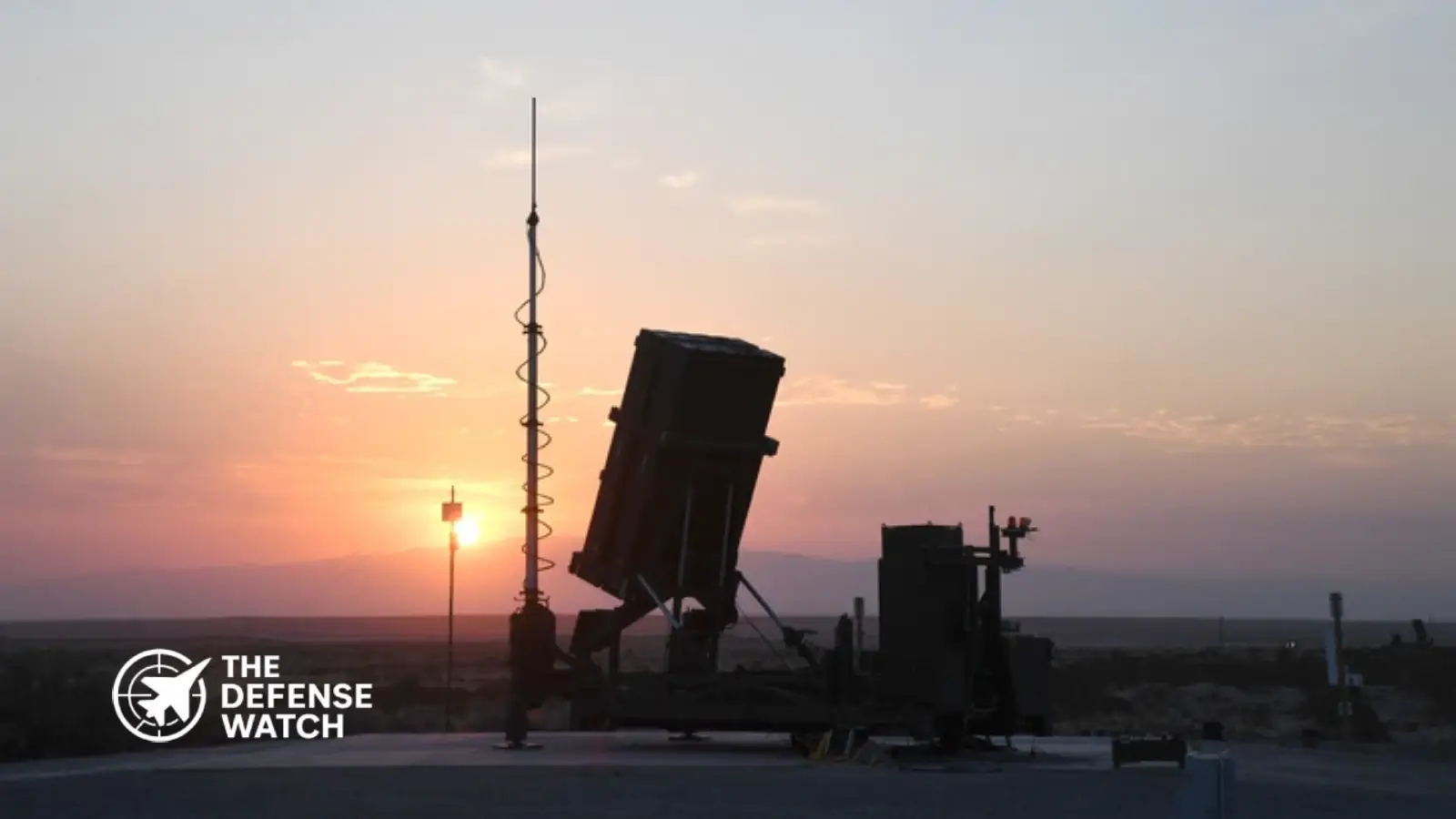
Every Iron Dome battery runs on three components working in sequence. First, the EL/M-2084 radar — an S-band active electronically scanned array built by Elta — picks up a launch and starts tracking it, detecting incoming targets and providing midcourse guidance for the Tamir interceptor. That radar can track threats out to 4 to 70 km, giving the system enough lead time to make a decision before the projectile becomes unstoppable.
That decision is the part competitors don’t talk about enough. A battle management computer — built for Rafael by mPrest Systems — takes the radar track and runs a trajectory projection, determining whether the incoming rocket or missile will land in an inhabited area, disregarding the projectile if it will not. Roughly a third to nearly half of all incoming fire gets ignored on purpose, because engaging it would waste a $50,000 missile on an empty field.
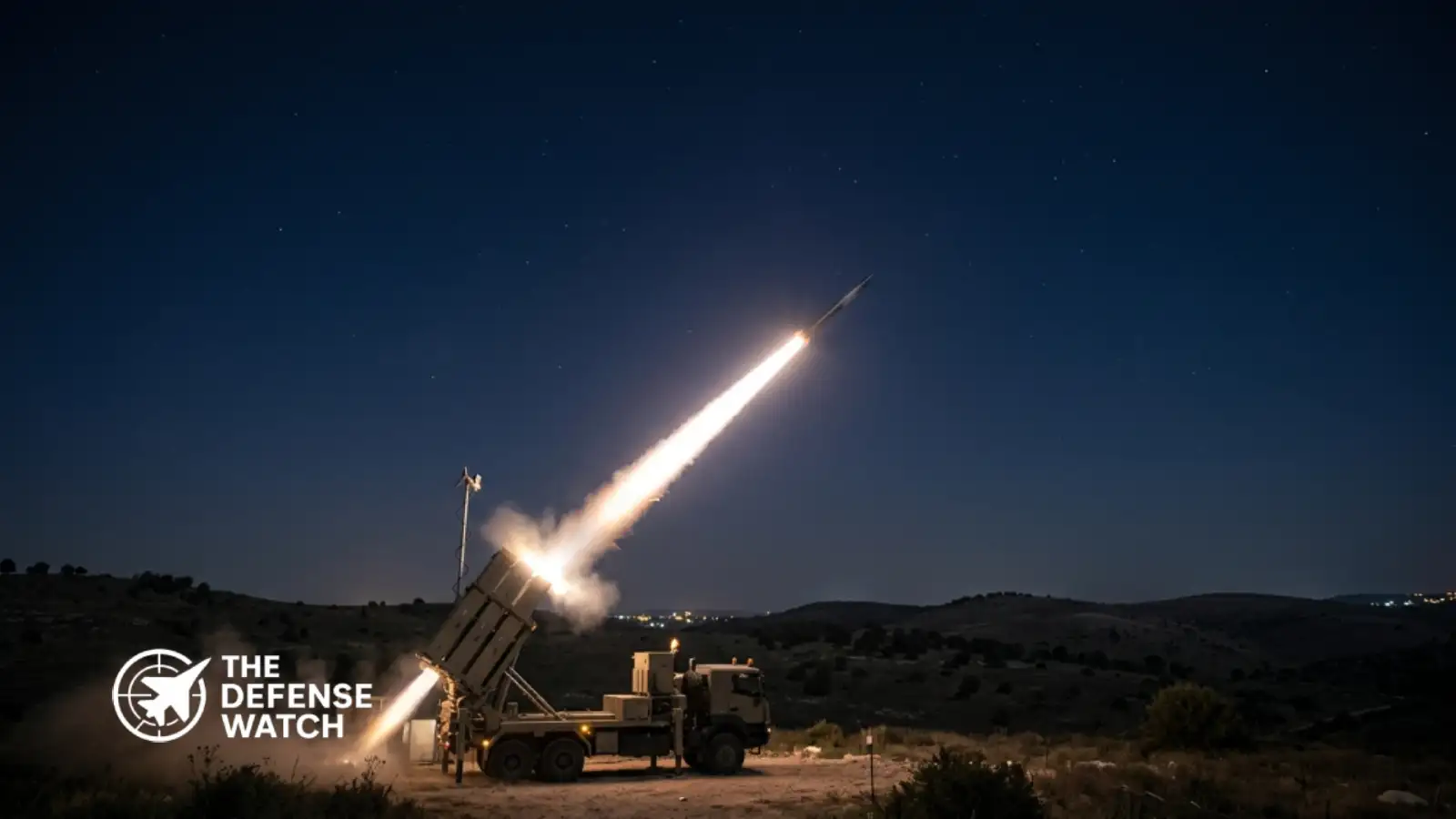
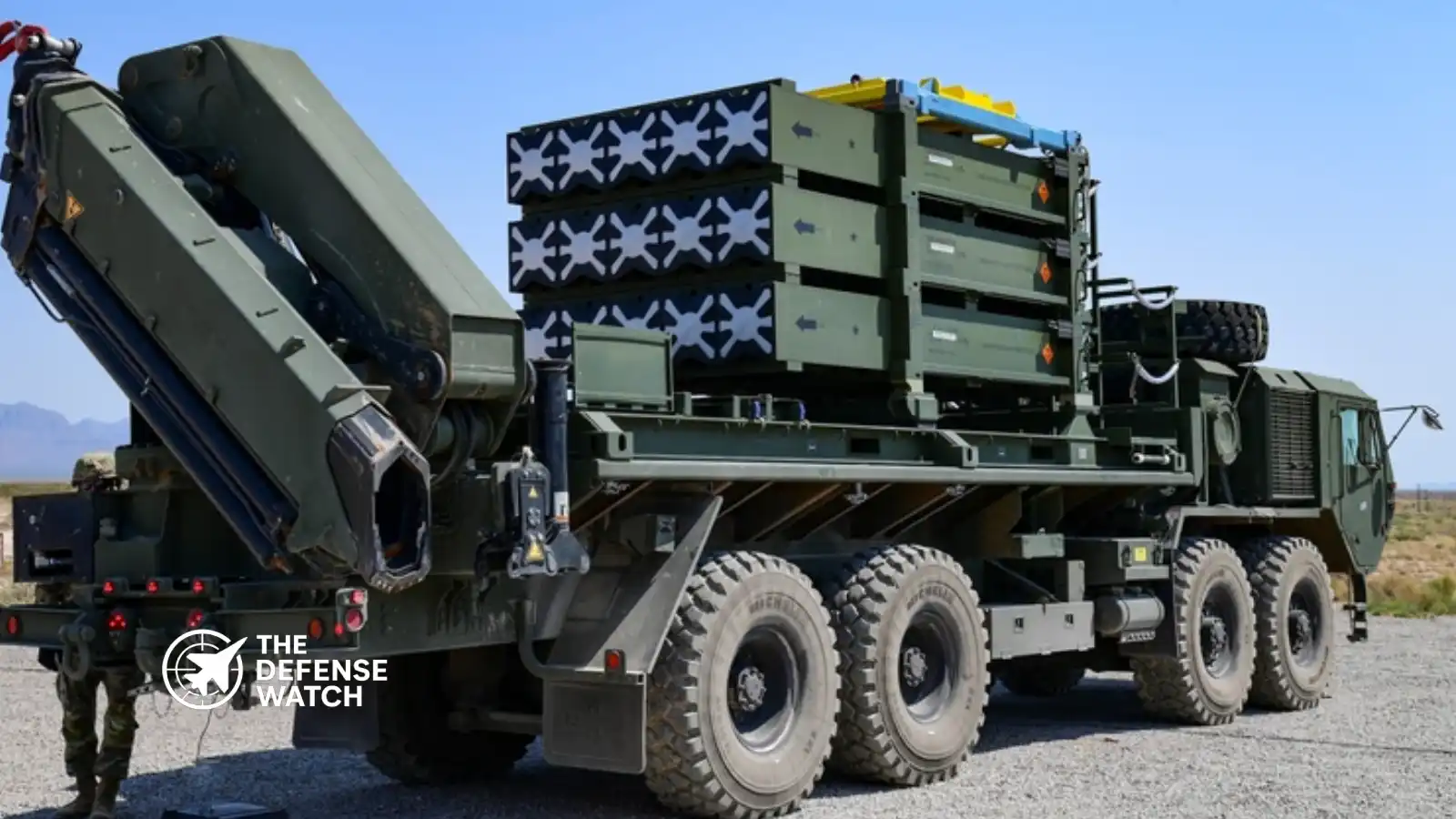
Only after that filter does a Tamir interceptor leave the launcher. Each launcher holds up to 20 Tamir missiles, and a full battery runs three to four launchers plus the radar and command post, with each Iron Dome battery covering up to 150 square kilometers against short-range missiles, mortars, and rockets. The Tamir itself closes using a datalink plus an onboard active radar seeker, detonating a blast-fragmentation warhead close enough to shred the incoming threat mid-air rather than needing a direct hit.
Cost has always shaped the design as much as physics has. Early Tamir estimates ran near $100,000 per unit; more recent figures from missile-defense trackers put it closer to $40,000 to $50,000 each, though estimates still vary by production batch, generally landing in the $40,000 to $100,000 range, compared with $2 million to $3 million for a Patriot interceptor. Either way, it’s the cheapest tier in Israel’s layered shield — Arrow 2 and Arrow 3 interceptors run into the millions of dollars apiece, reserved for genuine ballistic missile threats.
Data Block: Iron Dome vs. the Layer Above It
Metric Iron Dome (Tamir) Arrow 3 Primary role Rockets, mortars, short-range threats, drones Exo-atmospheric ballistic missile intercept Engagement range 4–70 km Hundreds of km, upper atmosphere/space Cost per interceptor ~$40,000–$100,000 ~$3–4 million Battery cost ~$100 million Significantly higher, program-classified Manufacturer Rafael / IAI, Raytheon co-production IAI, Boeing partnership Notable 2026 use UAE deployment, Iron Beam joint drills 12-Day War against Iranian ballistic salvos The layering matters more than either system alone. During the June 2025 12-Day War, Iran launched more than 500 ballistic missiles at Israel, and Arrow carried most of that load — but Iron Dome has since started doing work it was never designed for. Trackers posted footage of several possible Iron Dome missile interceptions during the day and night of March 11 in the 2026 conflict, suggesting the system has some ad hoc capability against ballistic debris and short-range missiles well outside its original spec sheet.
That improvisation is being stress-tested from a different direction, too. Half of Iran’s 2026 ballistic warheads reportedly carried cluster submunitions rather than a single payload, a tactic that exposed a vulnerability in Israeli defenses, forcing defenders to either ignore the dispersing bomblets or burn expensive interceptors engaging each one individually. Every workaround like this pulls Iron Dome further from its original job description — and further from its original economics.

Image : Iron Dome missile defense system The Insight: Iron Dome Plays the “Anchor” Role, and Anchors Get Flanked
In tactical shooters, the anchor doesn’t chase kills — they hold a chokepoint, deny an angle, and let everyone else play around that certainty. Iron Dome has been Israel’s anchor since 2011: a fixed, reliable stop on the most common threat vector, freeing Arrow and David’s Sling to specialize against harder targets. That division of labor is exactly why Israel’s air defense has functioned as a system instead of a single point of failure.
But anchors lose to flanks, not to frontal assault. Iron Dome’s radar and battle-management logic were built to read ballistic arcs — predictable parabolas from unguided rockets. Hezbollah’s fiber-optic FPV drones don’t fly that profile at all, flying low and connected via fiber-optic cable rather than radio, so jamming doesn’t disrupt them, and they don’t climb high enough to register on radar built for ballistic threats. It’s the exact same lesson competitive shooter rosters relearn every patch cycle: a strategy optimized to counter one threat pattern creates a blind spot for anything that refuses to move the way the model expects.
The results are already visible in northern Israel. The IDF has logged 645 Hezbollah FPV drone attacks on military and civilian targets in northern Israel and southern Lebanon since a partial ceasefire took effect in April 2026, and Hezbollah has circulated footage claiming direct hits on Iron Dome launchers. Independent visual analysis of some of that footage found the “hits” actually struck decoys, lacking the hydraulic struts and structural components a real launcher requires — which cuts both ways: Israel is fielding decoys because the drone threat is real enough to warrant them.
The lesson that matters: No air defense architecture is threat-agnostic. Iron Dome solved the ballistic-arc problem so completely that it became a symbol of Israeli technological superiority — and that same specialization is what an adversary studies to find the gap. The system that wins today’s meta gets flanked by tomorrow’s off-meta pick.
Why This Still Matters
Israel is already answering the flank. Iron Beam, the directed-energy laser system meant to kill drones for pennies instead of tens of thousands of dollars, completed a joint drill with Iron Dome in late June 2026, with the Defense Ministry running a multi-threat scenario combining the laser and interceptor-based systems, focused mainly on drones but also covering rockets and cruise missiles. Production of Tamir interceptors is also scaling internationally: a $1.25 billion Raytheon-Rafael joint venture began building Tamir interceptors in Arkansas in November 2025, and Rafael is now in early talks to add an Indian production line aimed at export markets, as global demand for the Iron Dome system continues to outpace existing manufacturing capacity in Israel and the US.
None of that fixes the underlying cost-exchange problem — a $40,000 interceptor against a $300 rocket was never sustainable at scale, and a laser only closes that gap if it can survive the same electronic and physical threats the radar-guided system struggles with. What Iron Dome proves, fifteen years and thousands of intercepts in, is that a defense built around one threat profile buys real time — right up until an adversary stops attacking the way you built your system to expect.
FAQ
What is the Iron Dome?Iron Dome is Israel’s short-range, mobile air defense system, designed to detect and shoot down rockets, artillery shells, mortars, and some drones before they reach populated areas.
How much does an Iron Dome interceptor cost?Each Tamir interceptor is generally estimated at $40,000 to $100,000, though batteries often fire two per target to raise kill probability.
What is Iron Dome’s success rate?Israel states a success rate above 90% against threats it classifies as heading for populated areas; independent estimates vary and tend to drop during large, saturated barrages.
Who makes the Iron Dome system?Rafael Advanced Defense Systems and Israel Aerospace Industries developed it, with Raytheon as a co-production partner on the Tamir interceptor.
Can Iron Dome stop drones?Yes, against drones flying at altitude on radar-visible profiles. Low-flying, fiber-optic-guided FPV drones have proven far harder to detect and intercept.
Executive Summary: On May 11, 2026, Rafael Advanced Defense Systems chairman Yuval Steinitz publicly confirmed that Israel’s Iron Dome missile defense system achieved an interception rate of approximately 98–99% against rockets fired by Hamas and Hezbollah since the October 2023 Hamas attack. Speaking at a Jerusalem security conference, Steinitz also disclosed that Iran fired roughly 1,500 ballistic missiles at Israel across two separate escalations since 2024, with only “several dozens” reaching their targets. The disclosure offers the most authoritative public accounting of Iron Dome’s wartime performance to date — and carries direct implications for U.S. defense planning and allied air defense procurement.
Iron Dome’s Near-Perfect Record: Rafael Chairman Puts Numbers on the System’s Wartime Performance
In the fog of an ongoing multi-front conflict, hard performance data from active defense systems is rare. On May 11, 2026, that changed. Yuval Steinitz, chairman of state-owned Israeli defense company Rafael Advanced Defense Systems — the manufacturer of the Iron Dome missile defense system — publicly disclosed a near-complete battlefield accounting of the system’s performance since October 2023.
Speaking at a conference hosted by the Jerusalem Center for Security and Foreign Affairs, Steinitz confirmed that since the Hamas raid of October 7, 2023, Hamas in Gaza and Hezbollah in Lebanon have collectively launched approximately 40,000 rockets toward Israel — and that Iron Dome intercepted the vast majority of them at a success rate of “around 98%, even 99%.
“It’s not perfect, but almost,” Steinitz said, according to Reuters.
That single figure — 99% — is not marketing language. Coming from the chairman of the system’s state-owned manufacturer, it represents the most authoritative public benchmark released on Iron Dome’s sustained combat performance across a multi-year, multi-front war.
What the Numbers Actually Mean
To understand the operational weight of a 99% intercept rate, consider the scale: 40,000 rockets fired by Hamas and Hezbollah since October 2023. A 1% failure rate across that volume still means roughly 400 projectiles were not intercepted. That number, while significant in human terms, represents an extraordinary outcome for any missile defense system operating under sustained, high-tempo saturation conditions.

Iron Dome is optimized for short-range threats — including unguided rockets, artillery shells, mortars, drones, and low-flying aircraft — precisely the categories of weapons used most extensively by Hamas and Hezbollah. The system’s architecture is purpose-built for this threat environment, and the performance data now confirms it is delivering at or near its theoretical maximum.
Rafael also confirmed there is no shortage of Tamir interceptor missiles — the munitions Iron Dome fires — despite a sustained high operational tempo across multiple active fronts. That supply-chain assurance is itself strategically significant, dispelling earlier concerns about interceptor depletion during extended conflict cycles.
Iran’s Ballistic Missile Campaigns: A Different Challenge
The Iran threat picture tells a more complex story. Steinitz disclosed that Iran has fired approximately 1,500 ballistic missiles at Israel across two rounds of direct military confrontation since 2024, with only “several dozens” not intercepted.
This outcome, however, was not Iron Dome’s achievement alone. Arrow — Israel’s highest-tier air defense layer, developed in cooperation with the U.S. Missile Defense Agency over more than four decades — is specifically designed to intercept ballistic threats at exo-atmospheric and upper-atmospheric altitudes, defending Israel against long-range strategic threats. Israel’s Ministry of Defense has separately confirmed that Arrow proved its capabilities by successfully intercepting numerous ballistic missiles launched from both Iran and Yemen.
Iron Dome, alongside David’s Sling, Arrow 3, and the newly operational Iron Beam laser system, forms a tiered national air defense architecture. During Iran’s direct ballistic missile campaigns, longer-range threats were primarily handled by Arrow 3 and David’s Sling, while Iron Dome focused on the short-range rocket threat from Hezbollah and Iranian proxies. AJC
Israel’s Layered Defense: Architecture Built for Volume
The layered structure of Israeli air defense is not incidental — it is the product of decades of iterative development shaped by real combat experience.
Iron Dome was developed by Rafael Advanced Defense Systems and the Israeli Ministry of Defense, with significant U.S. funding, and operates as part of Israel’s layered air defense network alongside Iron Beam (laser air defense), David’s Sling (medium-range threats), and Arrow (long-range ballistic missile defense).
Rafael Advanced Defense Systems produces both Iron Dome and David’s Sling, while Israel Aerospace Industries serves as the main contractor for the Arrow system. Israel’s multi-layered defenses now also include a laser air defense system, also produced by Rafael, which was supplied to the Israel Defense Forces in December 2025.
This integration is the key insight often lost in single-system performance discussions. No single platform accounts for the 99% figure Steinitz cited in isolation — the full architecture, functioning as a coordinated network, is what produces near-total coverage.
The U.S. Stake: Funding, Technology, and Strategic Interest
American policymakers and defense planners have a direct and material stake in these performance figures. Iron Dome was developed by Rafael Advanced Defense Systems and Israel Aerospace Industries with significant funding and technology sharing from the United States. The financial relationship between Washington and the Iron Dome program spans more than a decade of Congressional appropriations.
Systems such as Iron Dome, David’s Sling, and Arrow are jointly developed by Israel and the United States, with American companies working alongside Israeli firms to produce the interceptors. Even though the systems are Israeli, they incorporate substantial U.S. technology.
The FY2026 National Defense Authorization Act authorizes procurement of the Iron Dome short-range rocket defense system, the David’s Sling Weapon System, and the Arrow 3 Upper Tier Interceptor Program, reflecting continued Congressional commitment to the joint defense architecture.
For U.S. defense planners assessing homeland missile defense requirements — particularly as adversaries like China, Russia, North Korea, and Iran expand their long-range strike inventories — the Israeli experience offers the most relevant real-world data available on layered air defense performance under sustained combat conditions.
Analytical Context: What the 99% Figure Doesn’t Capture
Steinitz’s disclosure, while significant, does not exist in an analytical vacuum. Defense analysts have noted that saturation attack tactics — in which adversaries fire large simultaneous salvos to overwhelm defense systems — remain a persistent vulnerability that high intercept rates alone do not address.

Additionally, the 99% figure applies specifically to Iron Dome’s performance against short-range, unguided rockets — the system’s designed threat category. Precision-guided munitions, hypersonic glide vehicles, and multi-warhead ballistic missiles present fundamentally different interception challenges that require higher-tier systems and present greater difficulty even for advanced radar and fire-control architectures.
There is also the issue of physical vulnerability. Hezbollah drones have physically destroyed Iron Dome launchers on the ground, exposing a dimension of the system’s survivability that intercept rate statistics do not capture. Protecting the launchers themselves — not just the interceptors — is an operational requirement that the 99% figure does not address.
Global Implications: The Export Conversation
Iron Dome’s confirmed battlefield record at scale will accelerate existing international interest in the platform. The system has attracted international attention from countries including the United Kingdom, Romania, Turkey, South Korea, Canada, and the United States.
For allied nations facing short-range rocket threats — from state proxies in the Middle East to North Korean artillery systems in East Asia — the real-world performance data now available from Israel’s sustained multi-front conflict provides a procurement-grade evidence base that no test program could replicate.
Bottom Line
The Iron Dome missile defense system has now logged more sustained, high-tempo combat data against real adversaries than any comparable platform in history. Rafael chairman Yuval Steinitz’s May 11 disclosure puts the intercept rate at 98–99% against roughly 40,000 rockets, and confirms that interceptor supply constraints did not materialize despite years of active engagement.
For U.S. defense stakeholders — from Capitol Hill appropriators to Pacific Command planners — these are not merely Israeli numbers. They are the most current, credible benchmark available for what a layered, well-resourced air defense architecture can realistically achieve in sustained combat. The conversation about what that means for American missile defense investment has only begun.
Iron Dome Turns 15: 10,000 Intercepts & Counting
Iron Dome missile defense system has crossed a milestone that few weapons platforms in modern history can claim: fifteen uninterrupted years of combat-proven performance, more than 10,000 confirmed intercepts, and an operational record that has fundamentally altered how militaries worldwide think about short-to-medium-range air defense. On April 9, 2026, Rafael Advanced Defense Systems formally marked the anniversary, underscoring the system’s evolution from a domestic Israeli solution into one of the most replicated and studied air defense concepts on the planet.
- Iron Dome conducted its first successful operational intercept on April 7, 2011, neutralizing a rocket launched from the Gaza Strip.
- The system has surpassed 10,000 combat intercepts over 15 years of active service with a reported success rate exceeding 90 percent.
- Iron Dome was developed in approximately two and a half years and is capable of engaging rockets, cruise missiles, UAVs, and other aerial threats.
- The naval variant, C-Dome, became operational in 2017 and recorded its first at-sea intercept in April 2024 aboard an Israeli Sa’ar 6 corvette.
- The United States Marine Corps has selected Iron Dome to bolster its own ground-based short-range air defense capabilities.
The Shot That Changed Everything: April 7, 2011
The clock started on April 7, 2011, when an Iron Dome battery neutralized a rocket fired from the Gaza Strip — the system’s first confirmed operational intercept. The moment was more than a technical proof of concept. It signaled a deliberate shift in Israeli national security strategy: rather than relying solely on deterrence and ground operations to suppress rocket fire, Israel would field a persistent, high-volume intercept capability designed to protect its civilian population in near-real time.
That first intercept marked a shift in Israel’s defensive approach to countering aerial threats, and the system has since been deployed across multiple large-scale operations including Protective Edge, Guardian of the Walls, Breaking Dawn, Shield and Arrow, the Swords of Iron War, and Operation Roaring Lion.
The speed of development was equally remarkable. Iron Dome was built in approximately two and a half years — an extraordinarily compressed timeline for a platform of this complexity, reflecting both the urgency of the threat environment and the depth of Israeli defense-industrial capacity.
A System Built for the Modern Threat Landscape
Iron Dome is not a single-mission interceptor. It is a short- to medium-range system designed to engage a wide range of targets, including rockets, cruise missiles, unmanned aerial vehicles, and other aerial threats under various operational conditions — capable of functioning independently or as part of an integrated, layered air defense network.

Image : Iron Dome missile defense system That multi-threat adaptability has proven decisive. In today’s conflict environment, where adversaries routinely saturate defenses with mixed salvos of unguided rockets, precision cruise missiles, and low-cost kamikaze drones, a system that can discriminate between threat types and engage selectively represents a significant operational advantage. Iron Dome’s battle management component calculates probable impact points and prioritizes intercepts against threats aimed at populated or strategically critical areas — a feature that directly contributes to its cost efficiency in high-volume engagements.
Over 15 years of service, the system has maintained a reported success rate exceeding 90 percent across more than 10,000 combat intercepts.
Leadership Voices: Confidence Backed by Battlefield Data
Rafael’s leadership did not mince words when assessing the system’s legacy.
Yuval Steinitz, chairman of Rafael, framed Iron Dome’s significance in both strategic and economic terms. He described it as “the only system capable of engaging rockets and missiles across short and medium ranges — and doing so at a cost that makes large-scale deployment feasible,” adding that it reflects the scientific and technological superiority of Israel and of Rafael’s engineers in particular.
Yoav Tourgeman, Rafael’s chief executive, pointed to the system’s continuous performance improvement as its defining characteristic. He stated that ongoing upgrades have significantly enhanced capabilities, noting that what the system can do today across the full spectrum of threats it faces exceeds what it could do at initial delivery by “an order of magnitude.” Tourgeman also credited the system with saving tens of thousands of Israeli lives over the course of its operational service.
Both statements reflect a broader truth about Iron Dome: it is not the same system it was in 2011. Iterative upgrades based on operational feedback — a process conducted in close coordination with the Israel Air Force and the Directorate of Defense Research and Development — have kept the platform ahead of an evolving threat curve that now includes precision-guided rockets, loitering munitions, and salvo tactics designed to overwhelm point defenses.
Expanding to Sea: The C-Dome Naval Variant
One of the clearest indicators of Iron Dome’s strategic staying power is the decision to extend the platform into the maritime domain. The C-Dome naval variant became operational in 2017 and conducted its first combat intercept in April 2024, aboard an Israeli Sa’ar 6 corvette.
The significance of that intercept extends well beyond Israel’s territorial waters. Naval forces globally are grappling with a rapidly deteriorating threat environment driven by cheap, proliferating anti-ship missiles and drone swarms. C-Dome’s integration aboard surface combatants offers a potential model for navies seeking affordable, high-rate intercept capability without the footprint of larger shipborne air defense systems. Its operational debut in a live conflict environment will inevitably draw close scrutiny from allied naval planners.
U.S. Adoption and International Demand
Perhaps the most telling endorsement of Iron Dome’s standing is its adoption by the United States military. The U.S. Marine Corps selected Iron Dome to enhance its own short-range air defense capabilities — a choice that reflects both the system’s combat credibility and Washington’s broader effort to address gaps in ground-based air defense following years of neglect during the counter-insurgency era.
The USMC selection also carries significant implications for allied interoperability. Iron Dome batteries operating alongside U.S. forces in a contested theater would need to integrate with American command-and-control networks, a requirement that accelerates technical cooperation between Rafael and U.S. defense industry partners and potentially opens doors to further foreign military sales.
Analysis: What Iron Dome’s 15-Year Record Reveals About the Future of Air Defense
Iron Dome’s anniversary arrives at a moment when the global air defense market is experiencing its most significant surge in demand since the Cold War. The wars in Ukraine and the Middle East have demonstrated that aerial threats — from crude artillery rockets to sophisticated cruise missiles and drone swarms — are now a fixture of modern combined-arms warfare, not an exception.
Several lessons from Iron Dome’s operational history are already shaping procurement decisions worldwide. First, the value of layered defense architecture is now empirically validated rather than theoretically argued. Iron Dome was never designed to operate alone; it functions as the lower tier of a network that includes David’s Sling and the Arrow systems for medium and long-range threats. That integrated approach, once primarily an Israeli concept, is now being adopted as a template by NATO members accelerating their own air defense investments.
Second, the cost-per-intercept question — long a vulnerability in Iron Dome’s economic case — has become less acute as adversaries increasingly deploy more expensive offensive systems. When the incoming threat is a $50,000 precision rocket rather than a $500 unguided projectile, the calculus of using a multi-thousand-dollar interceptor becomes considerably more defensible. And as Rafael continues to reduce production costs through scale and manufacturing efficiency, the system’s economics improve further.
Third, Iron Dome’s journey from a domestic emergency response to a global export product underscores how battlefield validation accelerates international adoption. No amount of laboratory testing or simulation replicates the persuasive power of a 90-plus percent success rate accumulated over 15 years and across multiple high-intensity conflicts. That record is Rafael’s most effective sales tool — and the reason allied defense ministries continue to study it closely.
What comes next will likely involve deeper integration of artificial intelligence into threat discrimination and intercept sequencing, expanded cooperation with U.S. and European partners on next-generation interceptors, and continued development of the C-Dome naval platform as maritime air defense becomes a priority concern across multiple allied navies.
Iron Dome did not just defend a country. It helped define what effective short-range air defense looks like in the 21st century — and fifteen years on, that definition is still being written.
FAQs
How many intercepts has Iron Dome made in 15 years?Iron Dome has recorded more than 10,000 combat intercepts since its first operational engagement in April 2011, maintaining a reported success rate above 90 percent.
What types of threats can Iron Dome intercept?The system is designed to engage short- to medium-range rockets, cruise missiles, and unmanned aerial vehicles. It can operate across all weather conditions and in dense threat environments.
Has the U.S. military adopted Iron Dome?Yes. The United States Marine Corps selected Iron Dome to strengthen its short-range air defense capabilities, marking a significant international endorsement of the platform.
What is C-Dome?C-Dome is the naval variant of Iron Dome developed by Rafael. It became operational in 2017 and conducted its first live combat intercept in April 2024 aboard an Israeli Sa’ar 6 corvette.
How long did it take to develop Iron Dome?Rafael developed Iron Dome in approximately two and a half years, an unusually compressed timeline for a system of its complexity and capability.
Is Iron Dome still being upgraded?Yes. Rafael conducts continuous capability upgrades based on operational experience, and company leadership has stated that the system’s current performance substantially exceeds its original specifications at the time of delivery.
- â–º Iran claims launch of hypersonic capable Kheibar missile toward Israeli air defense targets.
- â–º Kheibar described as long range ballistic system with enhanced maneuverability.
- ► Israel maintains layered missile defense including Arrow and David’s Sling systems.
- â–º No independent confirmation yet of hypersonic glide vehicle capability.
- â–º Development underscores growing missile competition across the Middle East.
Iran Hypersonic Capable Kheibar Missile Launch Raises Air Defense Concerns
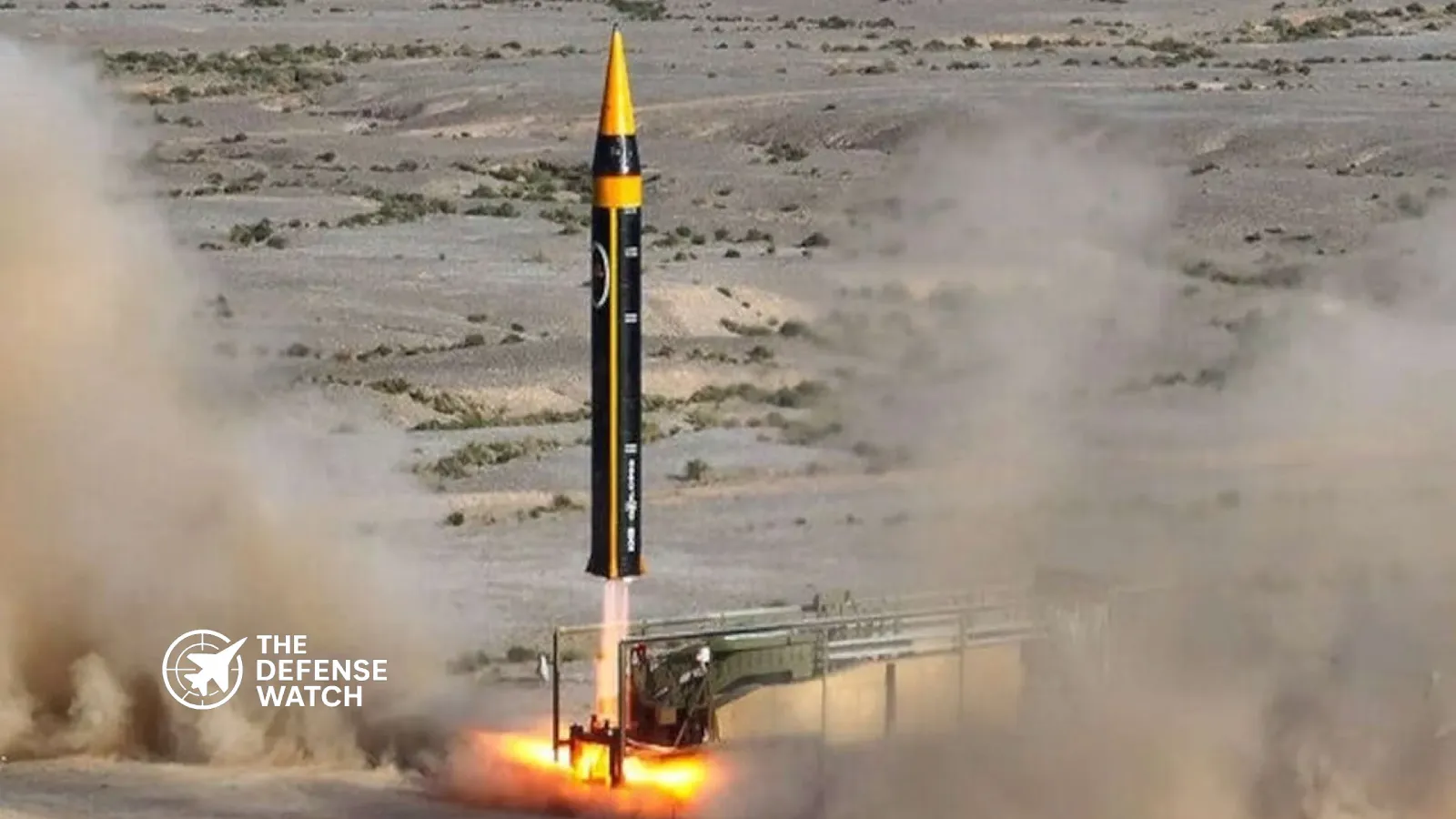
The Iran hypersonic capable Kheibar missile launch has drawn renewed scrutiny from defense analysts after Tehran claimed the weapon was fired toward Israeli air defense networks during ongoing hostilities.
Iranian authorities stated that the Kheibar missile was launched as part of a broader strike package aimed at overwhelming and penetrating Israeli missile defense systems. The claim, if confirmed, would mark another step in Iran’s effort to showcase longer range and potentially maneuverable ballistic missile capabilities.
Officials in Iran described the Kheibar as hypersonic capable, though no independent verification has yet confirmed whether the missile demonstrated sustained hypersonic glide characteristics or simply traveled at hypersonic speeds typical of ballistic trajectories.
Israel has not publicly confirmed the specific missile type used in the reported attack but has stated in recent briefings that its multi layered air defense architecture remains operational.
What Is The Kheibar Missile?
The Kheibar missile, sometimes referred to as Khorramshahr 4 in Iranian media, is part of Tehran’s expanding ballistic missile inventory. It is believed to be derived from earlier liquid fueled systems but reportedly features design refinements to improve range, payload flexibility, and survivability.
Iranian state media has previously claimed the missile can carry a large warhead over distances exceeding 1,000 miles. Analysts note that such range would allow coverage of targets across much of the Middle East.
The Iran hypersonic capable Kheibar missile launch claim centers on speed and maneuverability. All ballistic missiles reach hypersonic velocities during reentry, typically exceeding Mach 5. However, true hypersonic weapons often refer to systems equipped with maneuverable glide vehicles that can adjust trajectory during flight, complicating interception.
There is no open source evidence confirming that the Kheibar employs a hypersonic glide vehicle comparable to programs under development in the United States, China, or Russia. The distinction matters operationally. A maneuverable reentry vehicle presents a greater challenge to radar tracking and interceptor timing than a predictable ballistic arc.
Targeting Israeli Air Defenses
The stated objective of the Iran hypersonic capable Kheibar missile launch was to pressure air defense networks in Israel.
Israel fields a layered missile defense system that includes Arrow for long range ballistic threats, David’s Sling for medium range missiles, and Iron Dome for short range rockets. These systems are supported by advanced radar and battle management networks designed to prioritize high value targets and manage interceptor inventories.
In recent years, Israeli defense officials have emphasized upgrades to counter maneuverable and high speed threats. This includes software improvements and interceptor refinements intended to address emerging missile profiles from regional adversaries.
If the Kheibar demonstrated any terminal maneuvering capability, it would test those defenses. Even absent advanced glide features, a large payload ballistic missile can stress interception systems simply through volume and range.
Strategic Significance
The Iran hypersonic capable Kheibar missile launch reflects Tehran’s broader strategy of deterrence through missile force expansion. Iran continues to invest heavily in ballistic missile development under the oversight of the Islamic Revolutionary Guard Corps.
Ballistic missiles serve multiple purposes in Iranian doctrine. They provide long range strike options without reliance on an air force that faces modernization constraints due to sanctions. They also signal technological progress intended to bolster domestic and regional deterrence messaging.
From a regional security perspective, claims of hypersonic capability raise concerns among Gulf states and Israel alike. Even incremental improvements in accuracy, speed, or maneuverability can shift the balance between offense and defense.
Defense analysts caution, however, that official claims often exceed independently verified performance data. Without telemetry, debris analysis, or confirmation from third party intelligence sources, the true technical characteristics of the Kheibar remain difficult to assess.
Outlook
The Iran hypersonic capable Kheibar missile launch is likely to intensify scrutiny of missile defense readiness across the region. It may also accelerate further investment in early warning systems, interceptor stockpiles, and sensor integration.
For Israel and its partners, the core question is not only whether the Kheibar is genuinely hypersonic in the advanced sense, but whether Iran can produce and deploy it in meaningful numbers.
As missile technology spreads and evolves, the competition between offensive strike systems and defensive interception networks will remain a defining feature of Middle East security dynamics.