Executive Summary:
The global supply of Patriot interceptors is under growing pressure as Ukraine and Middle Eastern operators demand additional missiles for sustained air and missile defense operations. Reuters reported Aug. 7 that Patriot inventories have been significantly depleted worldwide, highlighting a production problem that the United States is already trying to address through a major expansion of PAC-3 MSE manufacturing.
Patriot Missile Shortage Highlights A Global Air Defense Capacity Problem
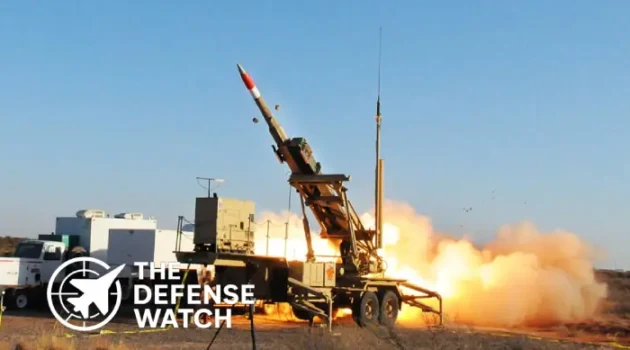
The Patriot missile system has become one of the world’s most important ground-based air and missile defense systems, but rising combat demand is exposing a significant constraint: interceptors can be consumed much faster than industry can manufacture them.
Reuters reported Aug. 7 that demand for Patriot interceptors has surged during 2026 as Ukraine continues defending against Russian missile attacks and conflicts in the Middle East place additional pressure on air defense inventories. The report said the United States has used about 65% of its Patriot interceptor stockpile this year.
The issue is not primarily a shortage of Patriot launchers or radars. The more immediate constraint is the availability of missiles needed to conduct repeated engagements.
That distinction is important because a Patriot battery is only as sustainable as its interceptor supply. A modern air defense network can have functioning radars, command systems and launchers, but its defensive capacity declines rapidly if replacement missiles cannot arrive at the same pace as combat consumption.
Why Patriot Is In Such High Demand
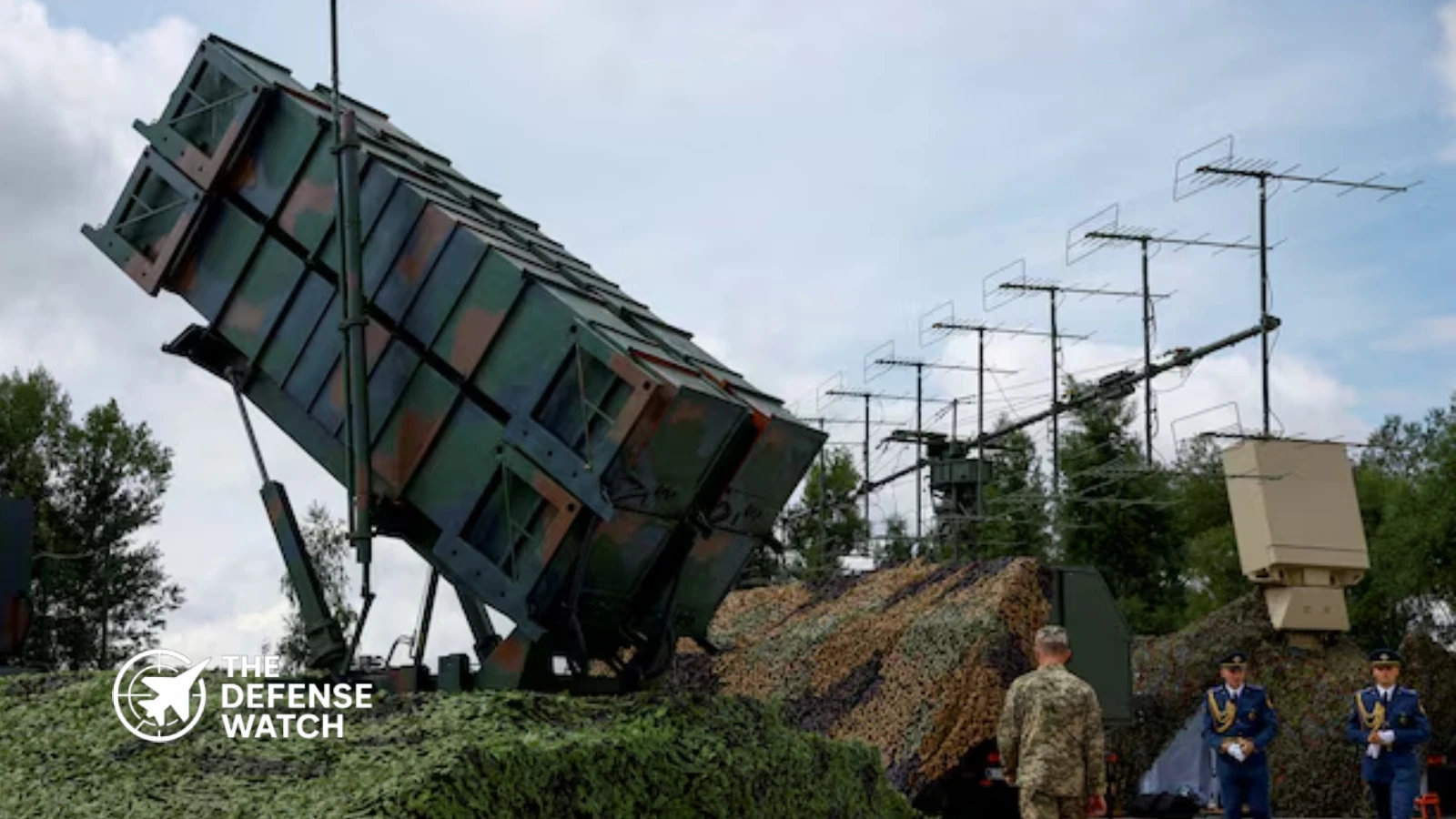
The Patriot is a mobile, long-range air and missile defense system designed to protect forces and critical infrastructure against aircraft, cruise missiles and tactical ballistic missiles.
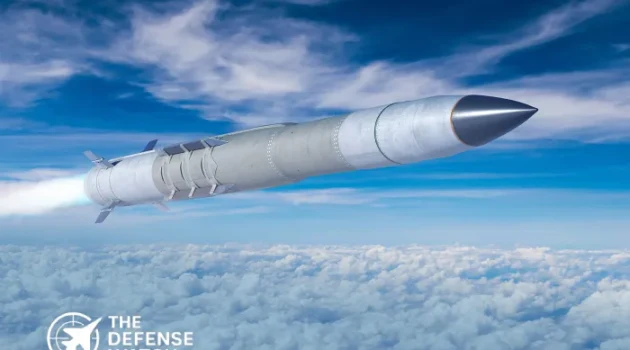
The U.S. Army describes PAC-3 and PAC-3 MSE as hit-to-kill interceptors that form a central part of its layered air and missile defense architecture. PAC-3 MSE provides increased range, altitude and maneuverability compared with earlier PAC-3 variants.
The system’s value has become particularly clear in Ukraine, where Patriot batteries provide a capability against ballistic missile threats that is difficult to replace with conventional short-range air defense systems.
That has created an unusual strategic situation. The United States and its allies need Patriot interceptors not only for their own air defense requirements, but also to sustain partners facing sustained missile attacks.
The demand is therefore global rather than confined to a single conflict.
Reuters reported that 19 countries operate Patriot systems or have acquired them, while several operators are seeking additional interceptors.
PAC-3 MSE Is The Critical Interceptor
Patriot is not a single missile. The system uses several interceptor families, including PAC-2 variants and the more advanced PAC-3 MSE.
PAC-3 MSE uses hit-to-kill technology, meaning the interceptor destroys its target primarily through direct kinetic impact rather than relying on a conventional explosive warhead. The U.S. Army identifies it as a key weapon against tactical ballistic missiles, cruise missiles and aircraft.
The interceptor’s importance has increased as the threat environment has become more demanding.
Ballistic missiles present a particularly difficult air defense problem because defenders have limited time to detect, track and engage an incoming weapon. A successful engagement therefore depends on the combined performance of sensors, command-and-control networks, fire-control software and the interceptor itself.
The Army is also integrating Patriot capabilities into broader architectures such as the Integrated Air and Missile Defense Battle Command System, allowing sensors and weapons to operate as part of a larger network.
Patriot Interceptor Production At A Glance
Item Current Status Primary system Patriot air and missile defense Key interceptor PAC-3 MSE Guidance approach Hit-to-kill Main threats Tactical ballistic missiles, cruise missiles, aircraft FY2024 to FY2026 PAC-3 MSE contract $9.8 billion Missiles covered by that contract 1,970 PAC-3 MSE missiles New accelerated production action $4.7 billion Planned annual PAC-3 MSE capacity Approximately 2,000 missiles Previous annual capacity Approximately 600 missiles The figures illustrate the scale of the industrial challenge. In September 2025, the Army awarded a $9.8 billion multiyear contract covering 1,970 PAC-3 MSE missiles and associated equipment for U.S. and international customers.
In April 2026, the Army announced a further $4.7 billion contract action intended to accelerate PAC-3 MSE production.
U.S. Production Is Expanding, But Capacity Takes Time
Lockheed Martin, the prime contractor for PAC-3 MSE, announced in January that a seven-year framework agreement would increase annual production capacity from approximately 600 interceptors to 2,000.
That represents more than a threefold increase in planned capacity. The company said it had already increased production by more than 60% over the preceding two years and delivered a record 620 missiles in 2025.
The expansion is significant, but it does not immediately solve the inventory problem.
Missile production depends on specialized components, qualified suppliers, trained workers, testing capacity and manufacturing equipment. Increasing output therefore requires more than simply adding shifts to an existing assembly line.
The industrial base also has to expand without compromising quality or reliability.
This is particularly important for PAC-3 MSE because the missile is a sophisticated guided interceptor that must meet demanding performance and safety requirements. The Army’s procurement documents identify continued requirements for missile testing, field surveillance, engineering and integration throughout the weapon’s service life.
The Industrial Base Is Becoming Part Of Air Defense Strategy
The Patriot shortage demonstrates a broader lesson for U.S. defense planning: air defense capacity is determined by industrial production as much as by the number of deployed batteries.
A battery can remain operational only if sufficient interceptors, reloads, spare components and maintenance support are available.
This creates a difficult balance for Washington. The United States must maintain enough missiles for homeland and overseas force protection while also supporting allies and partners.
The challenge becomes more complicated when several theaters require the same interceptor at the same time.
The Army has already taken steps to address this issue. In 2024, it awarded a $4.5 billion multiyear PAC-3 MSE production contract covering 870 missiles. A separate contracting action increased the maximum annual production rate from 550 to 650 missiles.
Those increases now look like intermediate steps toward a much larger expansion.
The January 2026 framework targeting approximately 2,000 missiles per year represents a fundamental change in the planned production scale.
Why More Missiles Matter More Than More Launchers
The Patriot shortage also exposes a basic problem in modern air defense economics.
An air defense system must defeat incoming weapons at a cost and rate that can be sustained over time. During a limited attack, an interceptor inventory may appear adequate. During repeated missile barrages, however, the number of available missiles becomes a critical operational constraint.
This is especially important when defenders face mixed attacks involving ballistic missiles, cruise missiles, drones and other threats.
A high-end interceptor such as PAC-3 MSE is valuable because of its ability to engage difficult targets. But using the most sophisticated interceptor against every threat is not necessarily an efficient long-term solution.
That is one reason the U.S. Army is pursuing lower-cost interceptor concepts alongside continued Patriot modernization. The Army held a Low-Cost Interceptor Industry Day in June 2026 specifically to accelerate development and fielding of new air defense solutions.
The underlying objective is to build a layered defense in which expensive interceptors are reserved for threats that require their specific capabilities, while less expensive weapons handle simpler targets when possible.
Patriot Modernization Is Continuing Alongside Production Expansion
The interceptor shortage should not be interpreted as evidence that the Patriot system itself is becoming obsolete.
The opposite is occurring. The U.S. Army continues to modernize the system’s radar, software, command architecture and interceptors.
The Army’s FY2026 budget documentation identifies continued Patriot product improvement work, including radar and software improvements intended to improve detection, tracking and discrimination of tactical ballistic missile threats.
The Army is also developing the Lower Tier Air and Missile Defense Sensor, or LTAMDS, as a next-generation radar intended to replace the Patriot radar. The system is designed to provide 360-degree coverage and support engagements against ballistic missiles, cruise missiles, drones and other advanced threats.
This modernization path means the United States is attempting to solve two problems simultaneously: improve the capability of each air defense engagement while increasing the number of interceptors available for sustained operations.
The Strategic Implication For The United States
The immediate Patriot shortage is ultimately a warning about magazine depth.
Modern militaries have invested heavily in sophisticated sensors and precision weapons, but recent conflicts have demonstrated that prolonged combat can consume high-end munitions at rates far beyond peacetime planning assumptions.
For the United States, that has direct implications for force planning in Europe, the Middle East and the Indo-Pacific.
Patriot is only one component of the broader U.S. integrated air and missile defense architecture, but its role against ballistic missile threats makes interceptor availability particularly important.
The solution therefore extends beyond buying additional missiles. It requires larger production capacity, resilient component suppliers, expanded testing infrastructure, trained personnel and a wider range of lower-cost defensive weapons.
The January PAC-3 MSE production agreement and the Army’s subsequent $4.7 billion acceleration action show that Washington is already moving in that direction.
The more difficult question is timing. Production capacity can be expanded, but rebuilding inventories after sustained combat consumption takes time.
For Patriot operators, that makes every additional interceptor produced today strategically important.
Bottom Line
The global Patriot interceptor shortage is a production and inventory problem created by an unusually high level of demand for one of the world’s most capable air and missile defense systems.
The United States is responding with a major expansion of PAC-3 MSE manufacturing, but the scale of the planned increase also shows how large the underlying challenge has become.
For U.S. and allied defense planners, the lesson extends beyond Patriot. Future air defense strategies will require not only advanced sensors and interceptors, but also sufficient stocks, diversified supply chains and production capacity capable of sustaining prolonged high-intensity combat.