Takeaways
The latest contract modification continues the U.S. large lot procurement strategy for JASSM and LRASM while supporting higher production capacity for two closely related long-range strike weapons.
Lockheed Martin Receives $825.98 Million JASSM and LRASM Contract Modification
Lockheed Martin Missiles and Fire Control has received an $825,975,480 contract modification for JASSM and LRASM large lot procurement, according to the U.S. Department of Defense contract announcement. The modification, designated P00020 under contract FA8682-24-C-B001, increases the cumulative face value of the contract to $10,480,052,550 from $9,654,077,070.
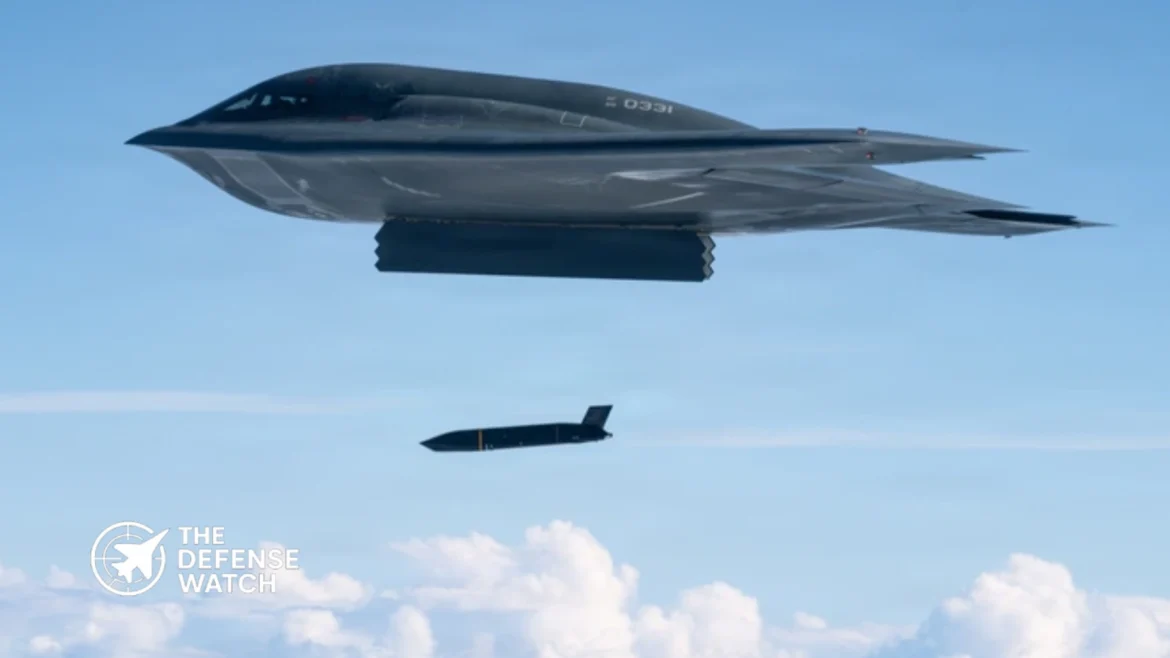
The award continues a U.S. procurement effort centered on the AGM-158 family of long-range cruise missiles, which includes the Joint Air-to-Surface Standoff Missile and the Long Range Anti-Ship Missile.
The contracting activity is the Air Force Life Cycle Management Center at Eglin Air Force Base, Florida. Work will be performed in Orlando, Florida, and is scheduled for completion on July 31, 2030.
Contract Modification and Funding
The latest modification represents roughly $826 million in additional contract value.
The award announcement identifies multiple funding sources, reflecting the joint-service and international demand associated with the JASSM and LRASM programs.
Funding Source Amount FY2024 missile procurement $2.15 million FY2024 Navy weapons procurement $1.45 million FY2025 Navy weapons procurement $219.51 million FY2025 missile procurement $0.38 million FY2026 missile procurement $72.77 million FY2026 Navy weapons procurement $49.22 million FY2026 research, development, test and evaluation $4.16 million FY2026 operations and maintenance $0.69 million Foreign Military Sales $11.07 million Total listed obligations $361.40 million The listed obligations therefore account for about $361.4 million at the time of award, while the full $825.98 million represents the value of the contract modification.
That distinction is important because contract face value and the amount obligated at award are not the same measure. The former reflects the modification’s contractual value, while the latter represents funding committed against the contract at that point.
JASSM and LRASM Share a Common Production Base
The procurement is significant because JASSM and LRASM are closely related weapons rather than independent missile programs.
The Air Force describes LRASM as being derived from the AGM-158B JASSM-ER and notes that the two weapons share more than 70% hardware commonality. They are also produced on the same assembly line.
This commonality allows procurement and manufacturing activities for the two missile families to be coordinated.
For the U.S. military, that arrangement has an important industrial-base advantage. Production resources, manufacturing equipment, suppliers and procurement planning can support both air-to-surface and anti-surface warfare requirements rather than being maintained as entirely separate production ecosystems.
The FY2026 Air Force procurement documentation specifically states that JASSM and LRASM are procured under the same large lot procurement contract. It identifies Lockheed Martin as the manufacturer and shows a combined FY2026 minimum sustained production rate of 396 missiles, although the allocation between JASSM and LRASM varies according to program requirements.
JASSM Provides Long-Range Air-to-Surface Strike
JASSM is designed to give U.S. and allied aircraft a standoff strike option against targets defended by sophisticated air-defense systems.
The weapon family includes multiple configurations, with the Air Force’s FY2026 procurement documentation identifying AGM-158B-2, AGM-158B-3 and AGM-158D variants within the program. The same documentation states that JASSM Lots 23 and 24 form part of the large lot procurement strategy.
Lockheed Martin identifies the AGM-158B-2 as incorporating upgrades including a modernized Missile Control Unit, updated software and the JASSM GPS Anti-Jam Receiver version 5.
The broader importance of the program is its role in providing aircraft with the ability to attack targets without relying on close approach to the target area.
That standoff function becomes increasingly important as the United States plans for operations against opponents equipped with layered integrated air-defense networks and long-range sensors.
LRASM Extends the Same Architecture Into Maritime Warfare
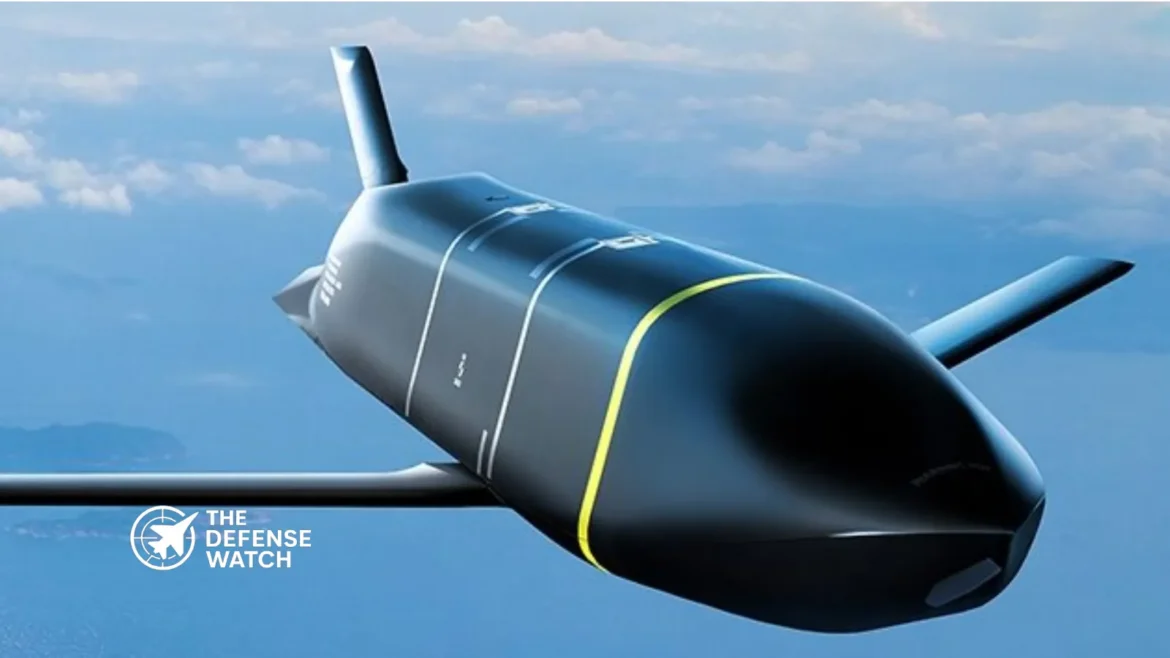
LRASM adapts the AGM-158 design lineage for a different operational problem: attacking high-value surface targets in contested maritime environments.
The Pentagon’s FY2026 weapons documentation describes LRASM as a Navy-led joint Navy and Air Force precision-guided anti-ship missile derived from JASSM-ER. It incorporates a multimodal sensor suite, weapons datalink, enhanced GPS anti-jam capabilities and a 1,000-pound penetrator/blast-fragmentation warhead.
LRASM achieved Early Operational Capability on the B-1B Lancer in December 2018 and on the F/A-18E/F Super Hornet in November 2019, according to the same Pentagon documentation.
The Navy is also procuring the LRASM C-3 Extended Range variant. The FY2026 budget documentation says C-3 includes rewritten software, an improved datalink and additional survivability features.
This gives the United States a weapon family capable of supporting both long-range land-attack and anti-surface missions while retaining significant commonality in production.
Why the Large Lot Strategy Matters
The latest award is part of a broader shift in U.S. weapons procurement toward increasing production capacity rather than treating individual missile lots as isolated purchases.
The Air Force’s FY2026 budget documents say the JASSM and LRASM multiyear procurement strategy was initiated under the Large Lot Procurement concept. The approach is intended to create efficiencies by coordinating production across related programs and using economic order quantities to buy materials in larger volumes.
That approach also addresses a less visible constraint on missile production: the supply chain.
The Air Force identifies long-lead materials, including microelectronics and rare-earth elements, as areas where advance procurement can reduce delivery risk and mitigate obsolescence.
This means a large contract is not simply a mechanism for ordering more completed missiles. It can also provide manufacturers and suppliers with the financial visibility needed to procure components, maintain tooling and expand manufacturing capacity.
Production Capacity Is Becoming a Strategic Requirement
Lockheed Martin has been expanding its manufacturing infrastructure for JASSM and LRASM as U.S. demand increases.
The company said in 2024 that it had added a 225,000-square-foot advanced manufacturing facility to support higher production quantities. The facility includes automated manufacturing processes, a robotic paint line and factory-model forecasting capabilities.
The company’s more recent production information also identifies continued investment in supply-chain capacity and manufacturing infrastructure for JASSM and LRASM.
The production challenge is not limited to the final assembly line. Modern cruise missiles depend on a network of specialized suppliers producing electronics, propulsion components, guidance hardware, structures, warheads and other components.
A sustained increase in procurement therefore requires capacity across the supply chain rather than simply adding more assembly workers.
Strategic Implications for U.S. Long-Range Strike
The contract comes as the United States is placing greater emphasis on the ability to conduct precision strikes from outside the engagement zones of sophisticated adversary defenses.
JASSM contributes to the air-to-surface portion of that requirement, while LRASM addresses the maritime dimension.
The combination is particularly relevant to a U.S. force expected to operate across large geographic areas where aircraft and naval forces may need to engage targets at extended distances while facing increasingly capable sensors, electronic warfare systems and air defenses.
The production architecture also matters. A missile that is highly capable but difficult to replace at scale presents a different operational problem from a weapon supported by a mature, expanding industrial base.
The Pentagon’s procurement documents indicate that the U.S. government is therefore using multiyear procurement, large lot purchases and advance procurement mechanisms to improve production stability for these weapons.
What the $10.48 Billion Contract Signals
The increase in cumulative contract value to $10.48 billion should not be interpreted as a single-year purchase of missiles.
Instead, it reflects the scale of the broader procurement framework supporting JASSM and LRASM over multiple fiscal years.
The latest modification extends that procurement effort through July 2030, providing a long planning horizon for production and associated program activities.
The combination of large lot procurement, common production infrastructure and multiyear funding is intended to give the U.S. military greater access to long-range precision weapons while giving industry a clearer basis for maintaining and expanding manufacturing capacity.
For JASSM and LRASM, the central issue is therefore not simply how many missiles are purchased in one contract action. It is whether the U.S. defense industrial base can sustain the production rates required for a prolonged high-demand environment.
The latest Lockheed Martin award represents another step in that effort.
Contract Details at a Glance
Item Details Contractor Lockheed Martin Missiles and Fire Control Location Orlando, Florida Contract FA8682-24-C-B001 Modification P00020 Modification Value $825,975,480 Previous Cumulative Value $9,654,077,070 New Cumulative Value $10,480,052,550 Programs JASSM and LRASM Contracting Activity Air Force Life Cycle Management Center Contracting Location Eglin Air Force Base, Florida Expected Completion July 31, 2030 Funding Missile procurement, Navy weapons procurement, RDT&E, O&M and FMS Bottom Line
The $825.98 million JASSM and LRASM contract modification reinforces a U.S. strategy focused on maintaining and expanding production of long-range precision weapons.
JASSM and LRASM benefit from substantial design and manufacturing commonality, allowing the Air Force and Navy to use a shared industrial base for complementary land-attack and anti-surface missions.
The larger significance of the award is its connection to the U.S. military’s broader effort to increase munition availability. By combining large lot procurement with multiyear planning, advance material purchases and expanded manufacturing capacity, the program is structured to support sustained production rather than short-term procurement spikes.
With the cumulative contract value now exceeding $10.48 billion and work extending through July 2030, JASSM and LRASM remain central elements of the U.S. long-range conventional strike and maritime strike inventory.
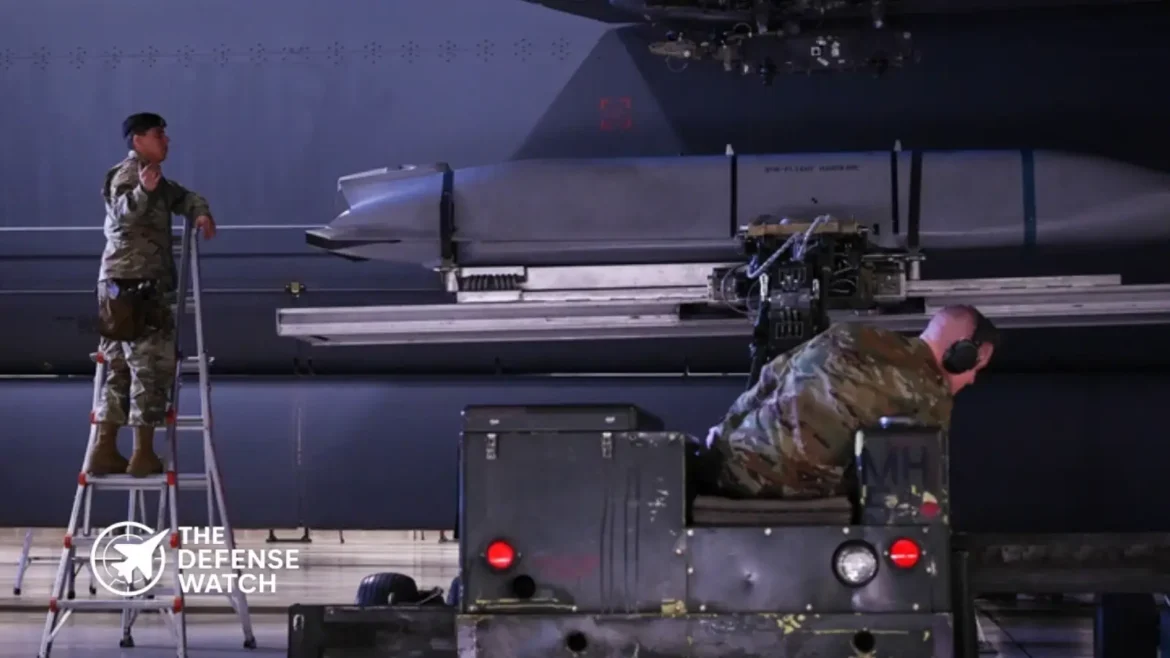
U.S. Air Force Expands JASSM Cruise Missile Procurement
The JASSM cruise missiles program is set for a major expansion after the U.S. Air Force disclosed plans to purchase nearly 4,300 additional weapons through fiscal year 2031, according to budget reporting and defense industry coverage. The move follows recent U.S. combat operations against Iran that reportedly placed heavy demand on long-range precision strike inventories.
- U.S. Air Force plans to acquire nearly 4,300 additional AGM-158 JASSM missiles through fiscal year 2031.
- FY2027 procurement request rises sharply to 821 missiles, up from far lower recent annual levels.
- Program value is projected at roughly $20 billion across the planning period.
- Recent strikes against Iran highlighted how quickly precision munition inventories can be consumed.
- JASSM remains central to U.S. plans for contested theaters including the Indo-Pacific.
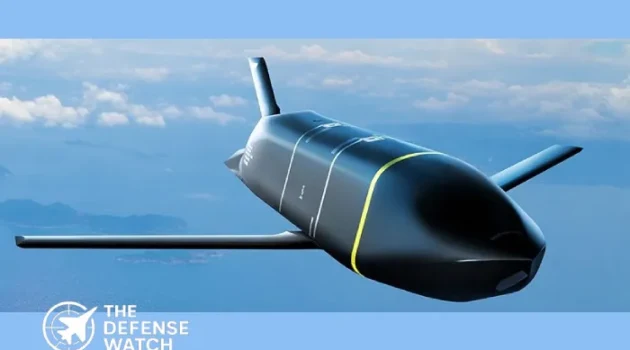
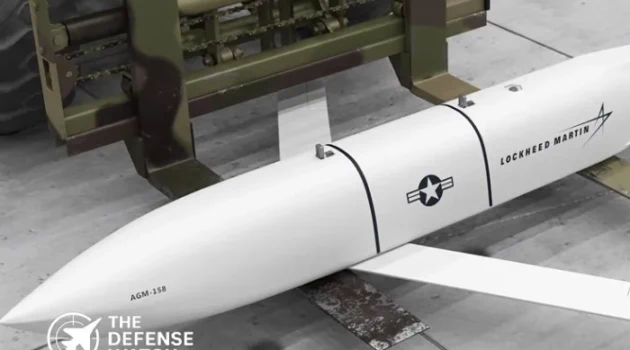
The missile involved is the AGM-158 Joint Air-to-Surface Standoff Missile, commonly known as JASSM. Built by Lockheed Martin, it is designed to strike defended targets from outside enemy air defense range. Its low observable design and precision guidance make it one of the U.S. military’s most important conventional deep-strike weapons.
Why The Pentagon Is Buying More JASSM Missiles Now
The timing matters. Recent reporting indicated the United States drew heavily on JASSM-ER inventories during operations tied to the Iran conflict, including redeployments from other theaters. That raised wider concerns about surge capacity if another crisis emerged in the Indo-Pacific or Europe.
This new procurement plan suggests the Pentagon is shifting from peacetime inventory management toward wartime replenishment logic.
That is strategically significant for three reasons:
- Modern wars consume precision weapons fast
Long-range missiles are often used in opening strikes against radar sites, command centers, air bases, and hardened targets. - Production takes time
Advanced cruise missiles require electronics, propulsion systems, seekers, and skilled labor. Output cannot be doubled overnight. - China contingency planning remains central
U.S. planners continue to view the Pacific as the pacing theater, where standoff strike weapons would be critical.
What Is JASSM And Why It Matters
The baseline AGM-158A has a range of roughly 230 miles, while the extended-range JASSM-ER can exceed 575 miles. The missile carries a 1,000-pound class penetrator warhead and uses GPS, inertial navigation, and terminal seekers for precision attack.
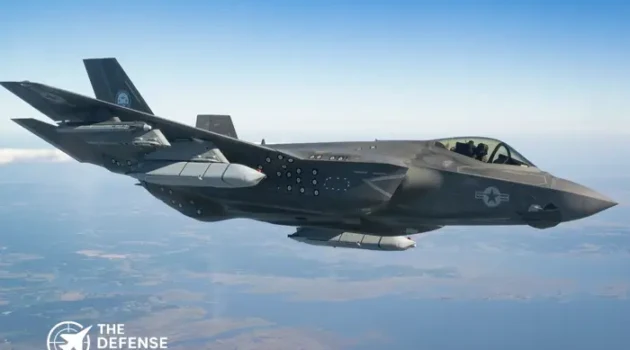
It can be launched by multiple aircraft, including:
That broad integration gives commanders flexible launch options across multiple bases and regions.
Industrial Base Challenge Still Remains
Even with more funding, missile production capacity remains a constraint. Expanding output depends on suppliers of rocket motors, microelectronics, guidance components, and final assembly lines.
This is one of the clearest lessons from the Ukraine war and Middle East operations: stockpiles matter, but so does the ability to replace losses quickly.
For Washington, the 4,300-missile buy is not just a weapons order. It is a signal that sustained conflict planning has returned.
Strategic Outlook
The planned JASSM buildup shows the U.S. Air Force expects future conflicts to require larger inventories of survivable, long-range munitions. Whether aimed at deterring Iran, Russia, or China, the message is clear: precision strike capacity is now a core measure of military readiness.
- Modern wars consume precision weapons fast
Standoff Missiles Would Likely Lead Any Strike Package
In any hypothetical U.S. military strike on Iran, the Joint Air-to-Surface Standoff Missile (JASSM) would be a likely weapon of choice, particularly in scenarios emphasizing standoff capabilities to minimize risks to American aircraft and personnel. Military analysts point to the weapon’s extended range and stealth characteristics as key factors that would make it central to operational planning.
The JASSM, especially its extended-range variant JASSM-ER, offers ranges exceeding 500 miles, allowing launches from well outside Iranian airspace. This capability avoids direct confrontation with Iran’s integrated air defenses, including systems like the Russian-supplied S-300 or indigenous equivalents that have been deployed around strategic sites.
According to defense industry analysis, JASSM is specifically designed for striking hardened, high-value targets like command centers, missile sites, nuclear facilities, and air defense radars. The weapon features stealth characteristics, GPS/INS guidance, and a penetrating warhead, making it effective against buried or protected installations.
Tomahawk Cruise Missiles Provide Naval Strike Option
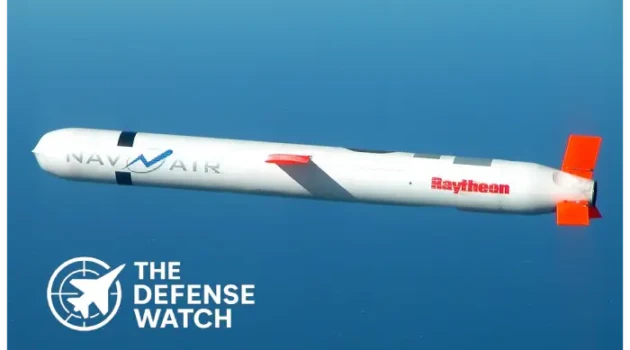
While JASSM would be prominent in any air campaign, it wouldn’t be used in isolation. Tomahawk cruise missiles, launched from Navy surface ships and submarines positioned in the Persian Gulf or Arabian Sea, would provide complementary strike capability from maritime platforms.
The Tomahawk Land Attack Missile (TLAM) offers similar standoff range to JASSM, with the latest Block V variants featuring enhanced navigation systems and the ability to retarget in flight. Navy assets could launch coordinated strikes from multiple vectors, complicating Iranian defensive responses and forcing air defense systems to engage threats from different directions simultaneously.
Defense News reporting indicates that U.S. Navy destroyers and cruisers routinely operate in the region with full Tomahawk loadouts, providing persistent strike capability without requiring aircraft deployment or basing negotiations with regional partners.
B-2 Stealth Bombers Could Strike Deep Underground Facilities
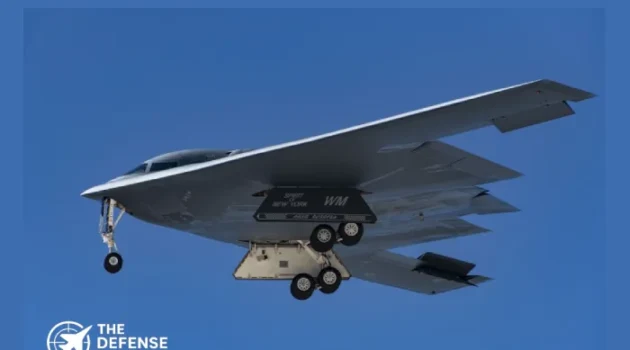
For specialized missions requiring penetration of deeply buried facilities—such as underground nuclear sites or hardened command bunkers—the B-2 Spirit stealth bomber armed with Massive Ordnance Penetrators (MOP) represents the ultimate bunker-defeat capability. The GBU-57 MOP weighs approximately 30,000 pounds and can penetrate up to 200 feet of reinforced concrete before detonation.
According to Aviation Week reporting, only the B-2’s combination of stealth, payload capacity, and precision delivery allows employment of these specialized munitions against the most heavily protected targets. The bomber’s low-observable characteristics enable penetration of defended airspace, while its internal weapons bay accommodates the oversized MOP.
Military planners could employ B-2s against Iran’s underground Fordow uranium enrichment facility or other strategic sites where conventional munitions would prove insufficient. The aircraft’s intercontinental range allows operations from U.S. bases, eliminating dependency on regional airbases.
Rapid Dragon System Converts Cargo Planes Into Strike Platforms
Recent innovation has introduced the Rapid Dragon palletized munition system, which allows JASSM-ER missiles to be launched from the rear cargo ramp of unmodified transport and cargo aircraft including C-130 and C-17 platforms.
The deployment sequence involves rolling pallets with missiles out of the aircraft, with parachutes deploying to orient them, and then missiles launching in sequence. While not the standard employment method, this capability was developed for distributed operations and to give transports strike potential in a crisis.
According to U.S. Air Force statements, Rapid Dragon reflects evolving concepts for distributed warfare, potentially converting large portions of the cargo fleet into improvised standoff strike platforms during major conflict scenarios. This dramatically expands the number of launch platforms available to commanders.
F-35 Stealth Fighters Provide Penetrating Strike Capability
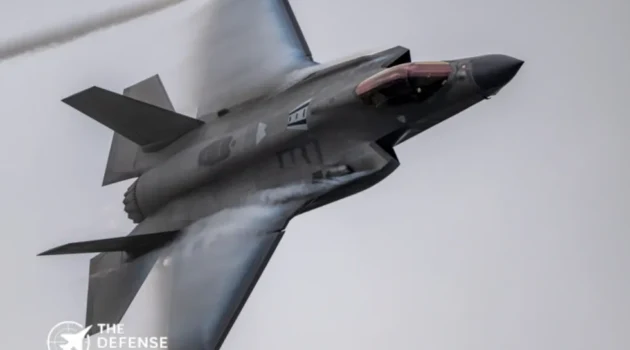
F-35A Lightning II stealth fighters stationed at regional bases or aboard aircraft carriers could conduct penetrating strikes against time-sensitive targets or air defense nodes. While the F-35’s internal weapons bay limits payload compared to legacy strike aircraft, the fighter’s stealth and sensor fusion capabilities enable operations in heavily defended environments.
The F-35 can carry 2,000-pound JDAM precision-guided bombs internally, or external munitions in lower-threat environments. Breaking Defense analysis notes that F-35s would likely operate in coordinated packages, using their advanced sensors to locate and target mobile threats while suppressing air defenses for follow-on strikes by less survivable platforms.
Legacy Strike Aircraft Carry Heavy Payloads
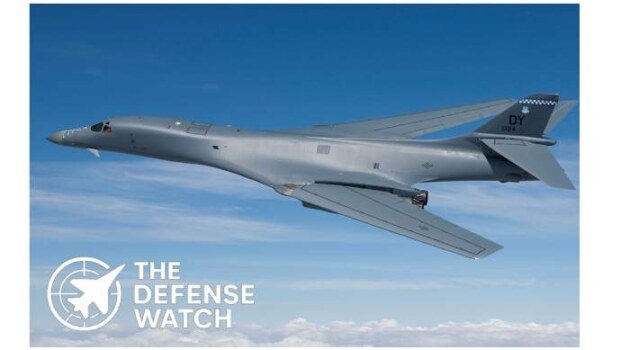
B-52H Stratofortress and B-1B Lancer heavy bombers, along with F-15E Strike Eagle fighters, provide substantial munitions capacity for mass strikes against multiple target sets. These aircraft can carry dozens of precision-guided weapons per sortie, though they would likely operate from standoff ranges rather than penetrating defended airspace.
The B-52 can carry 20 JASSM missiles externally, while the B-1B accommodates 24 JASSM internally. F-15E Strike Eagles, likely operating from regional bases, provide tactical flexibility with mixed loadouts of air-to-ground weapons and self-defense capabilities.
Jane’s Defence Weekly reporting indicates these platforms would form the backbone of any sustained air campaign, delivering the volume of precision strikes necessary to achieve operational objectives across distributed target sets.
Electromagnetic and Cyber Capabilities
Beyond kinetic weapons, U.S. forces possess electromagnetic warfare and cyber capabilities that could disrupt Iranian command and control, air defense networks, and communications infrastructure. While details remain classified, defense analysts note that integrated electronic attack would likely precede or accompany any kinetic strikes.
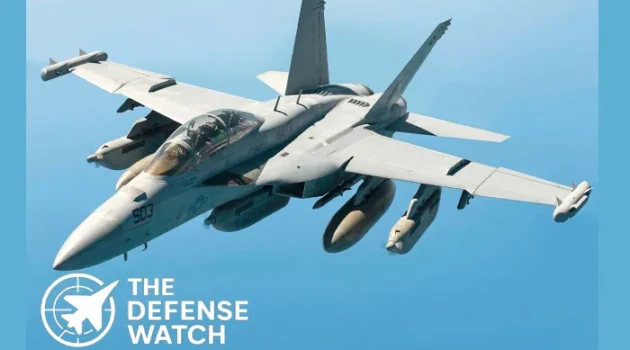
EA-18G Growler electronic attack aircraft could jam Iranian air defense radars, while cyber operations could target network infrastructure and weapon systems. These non-kinetic effects would degrade Iranian defensive responses and create windows for strike packages to reach their targets.
Strategic Implications of Standoff Strike Doctrine
The emphasis on standoff weapons reflects lessons learned from previous conflicts and the evolving threat environment. By enabling strikes from beyond the effective range of most surface-to-air missile systems, these weapons reduce attrition risk to aircraft and aircrew while maintaining the ability to hold strategic targets at risk.
In the context of potential operations against Iran, standoff strike capability provides both military effectiveness and strategic flexibility. Decision-makers can authorize proportional responses that demonstrate resolve while limiting escalation risks and avoiding the political complications associated with aircraft losses or pilot capture.
Military analysts emphasize that the diverse arsenal available to U.S. commanders allows tailored responses matching specific scenarios, from limited strikes against individual facilities to comprehensive campaigns against integrated target sets. The combination of stealth platforms, extended-range missiles, and enabling capabilities provides options across the spectrum of potential contingencies.