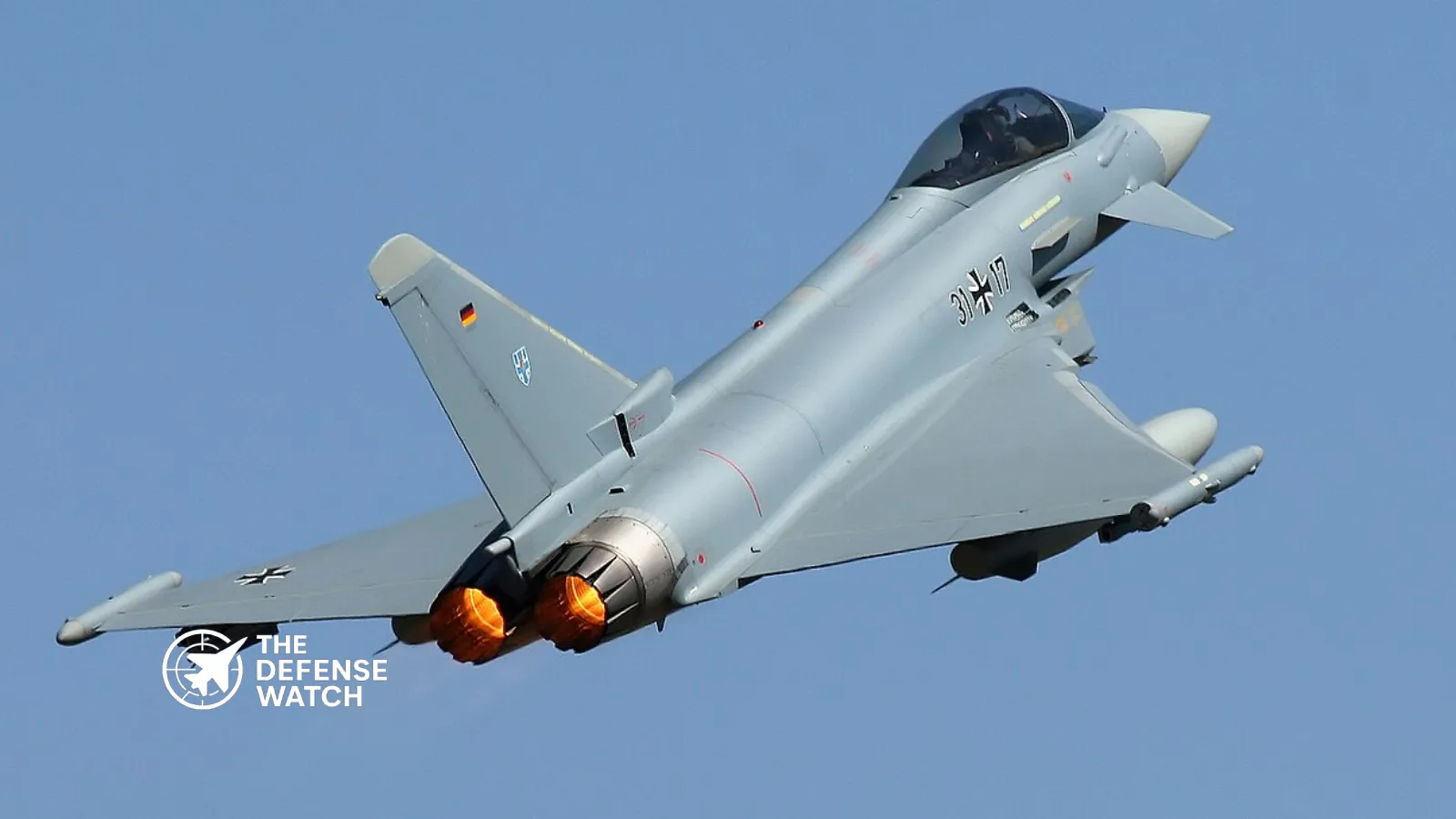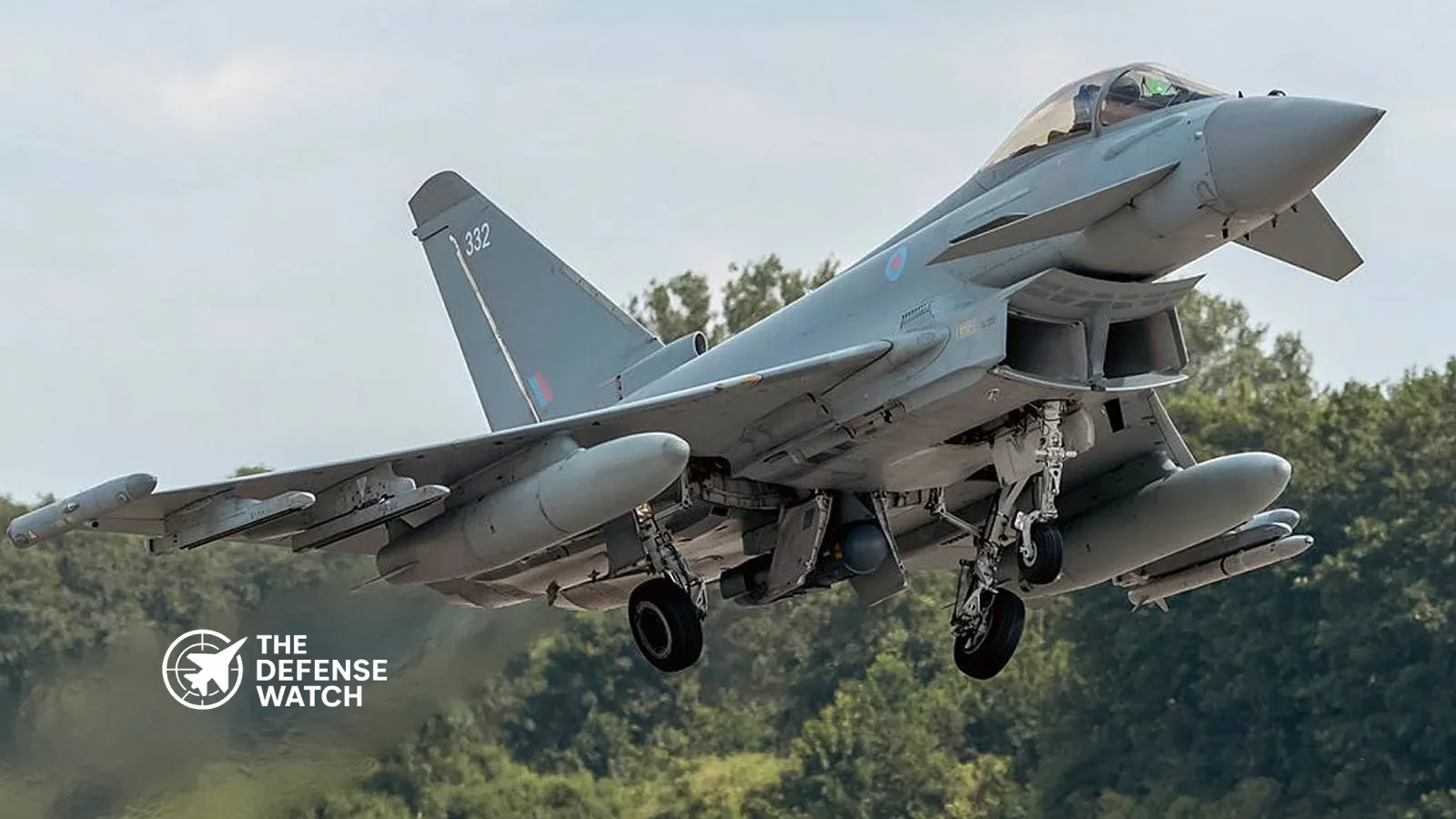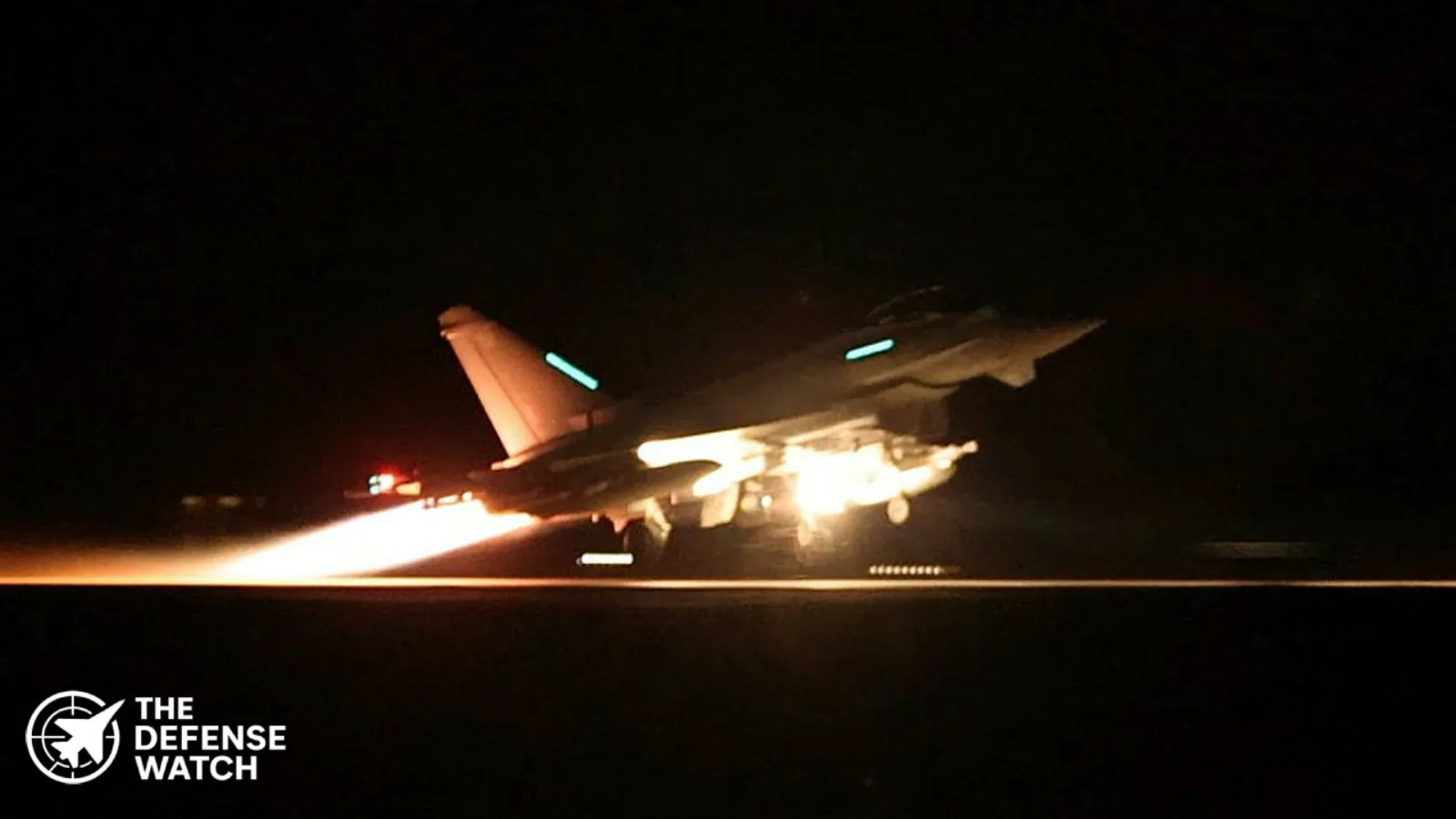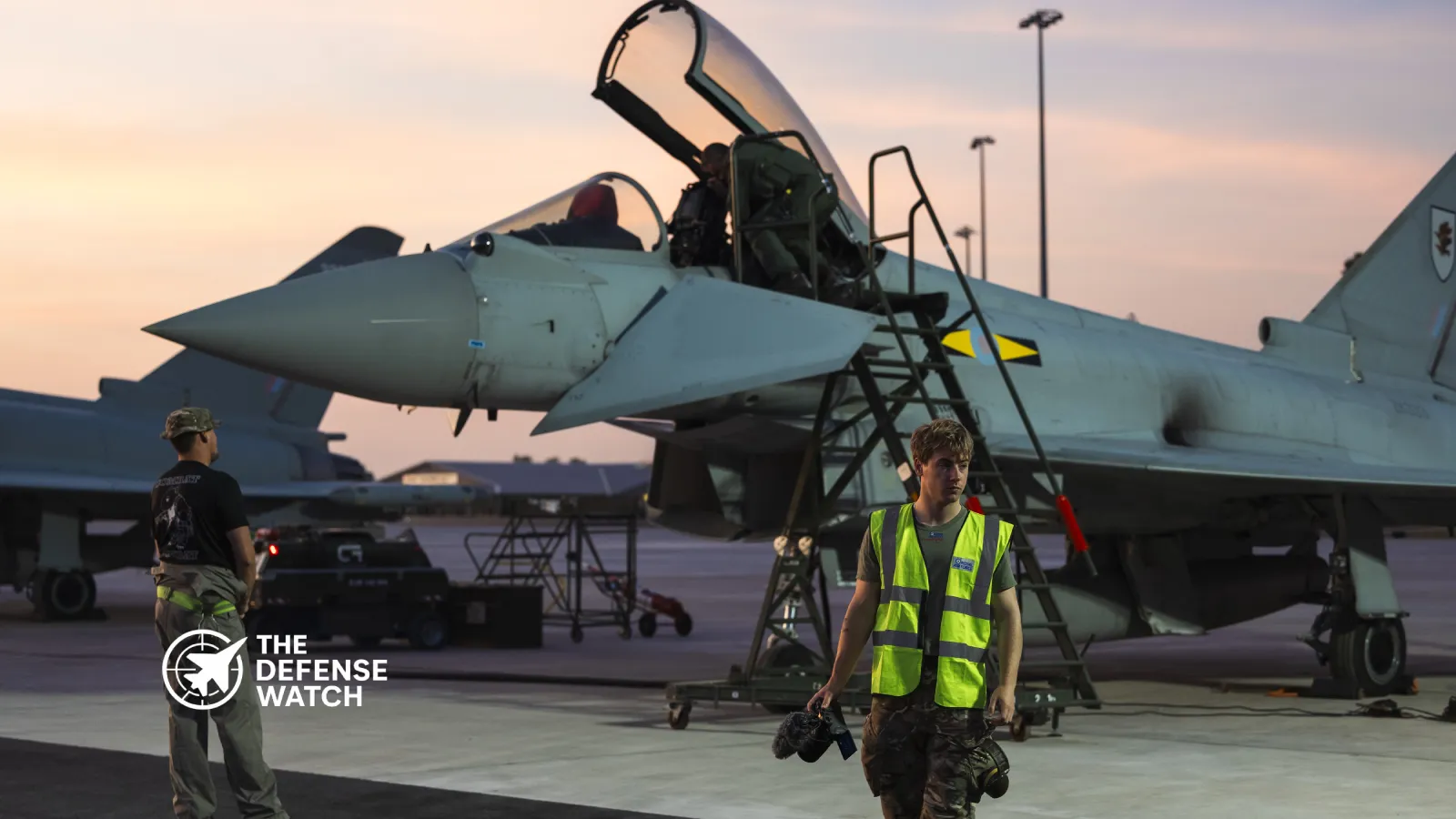
Executive Summary:
Britain’s frontline fighter fleet stands at 158 aircraft in mid-2026 — 111 Eurofighter Typhoons and 47 F-35B Lightning IIs — down from a peak Typhoon order of 137 jets as older Tranche 1 airframes get scrapped. The RAF’s next decade hinges on how fast a stalled second F-35 order and the 2035 Tempest program can replace that shrinking number.
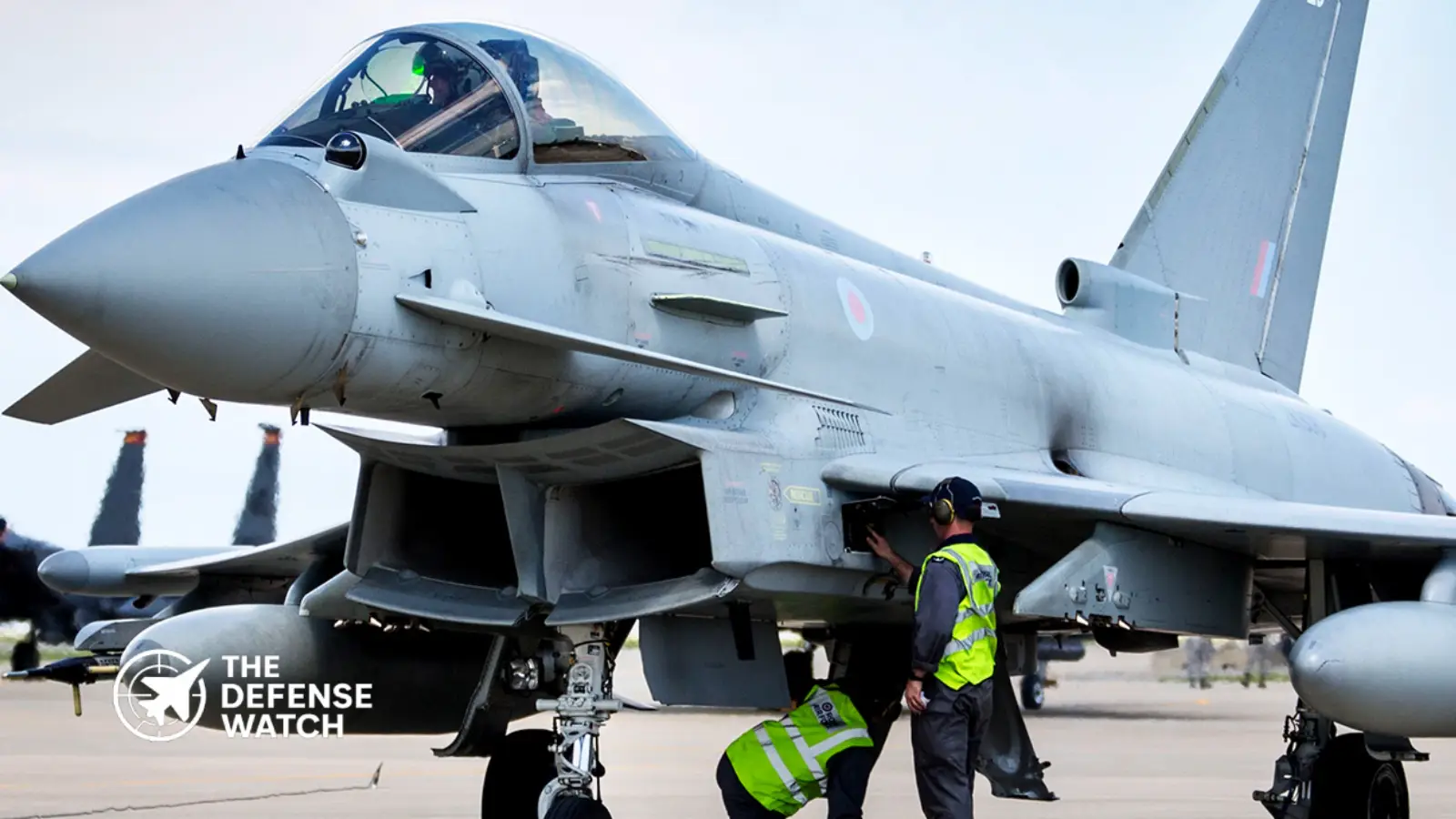
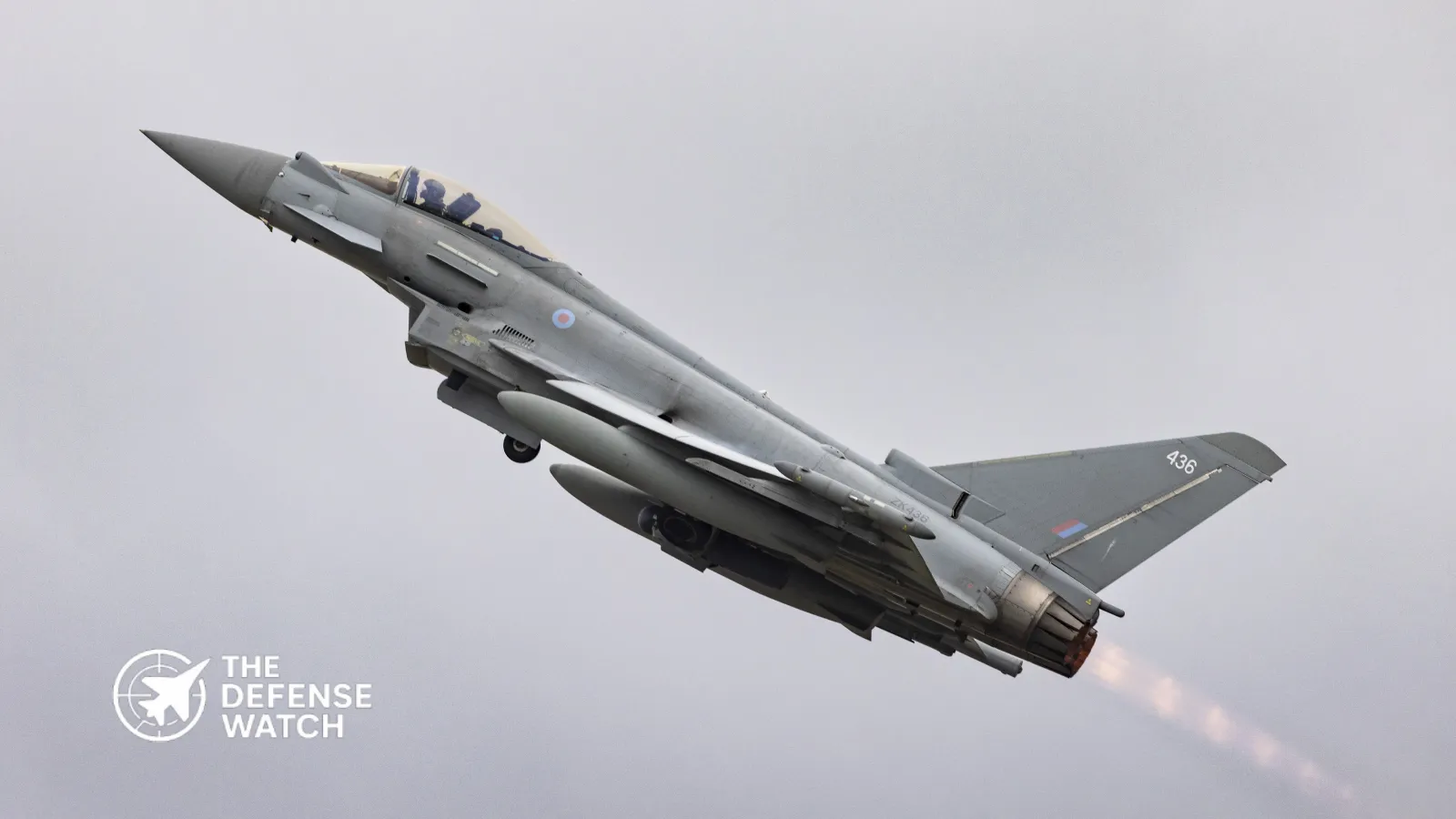
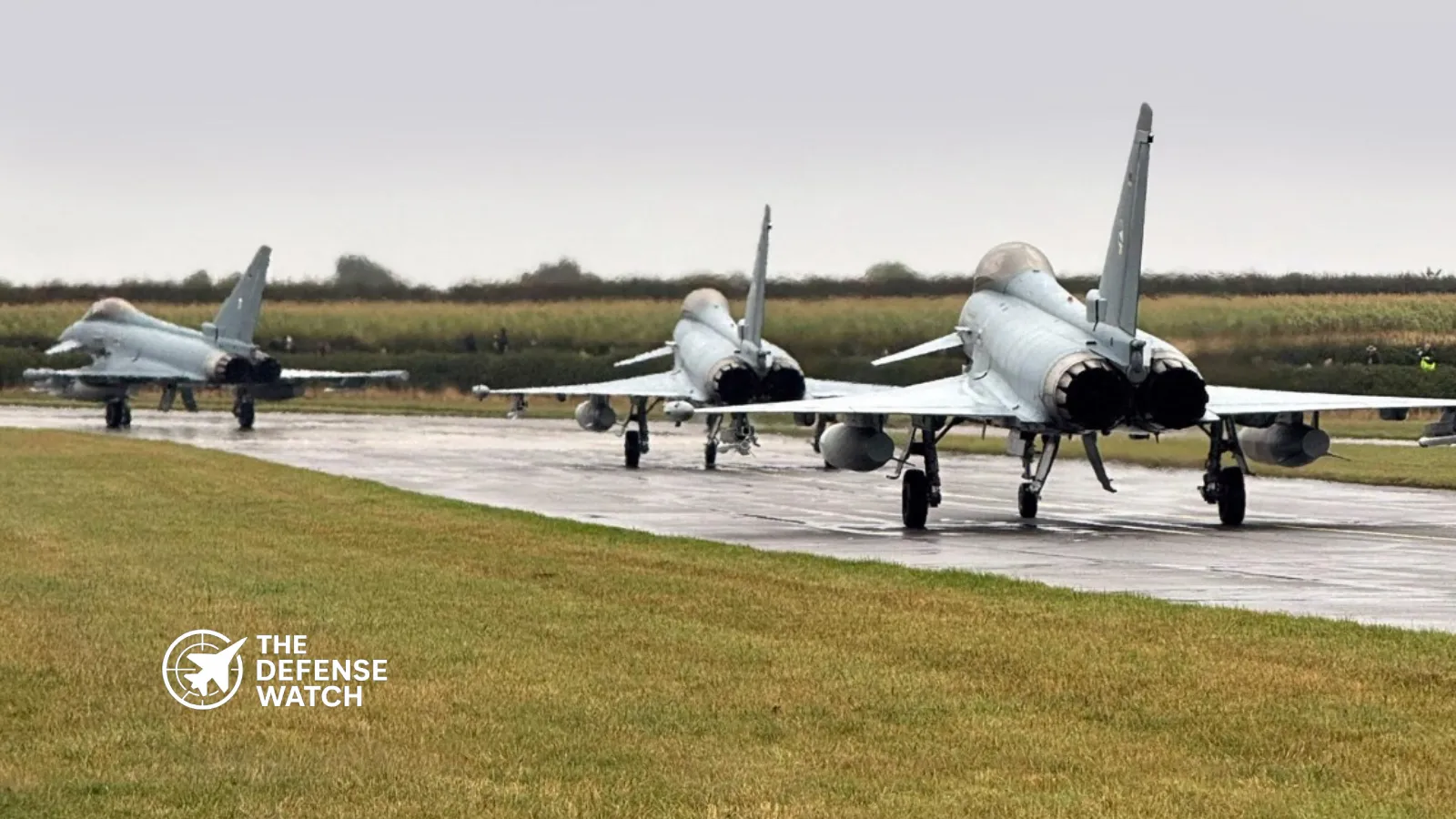
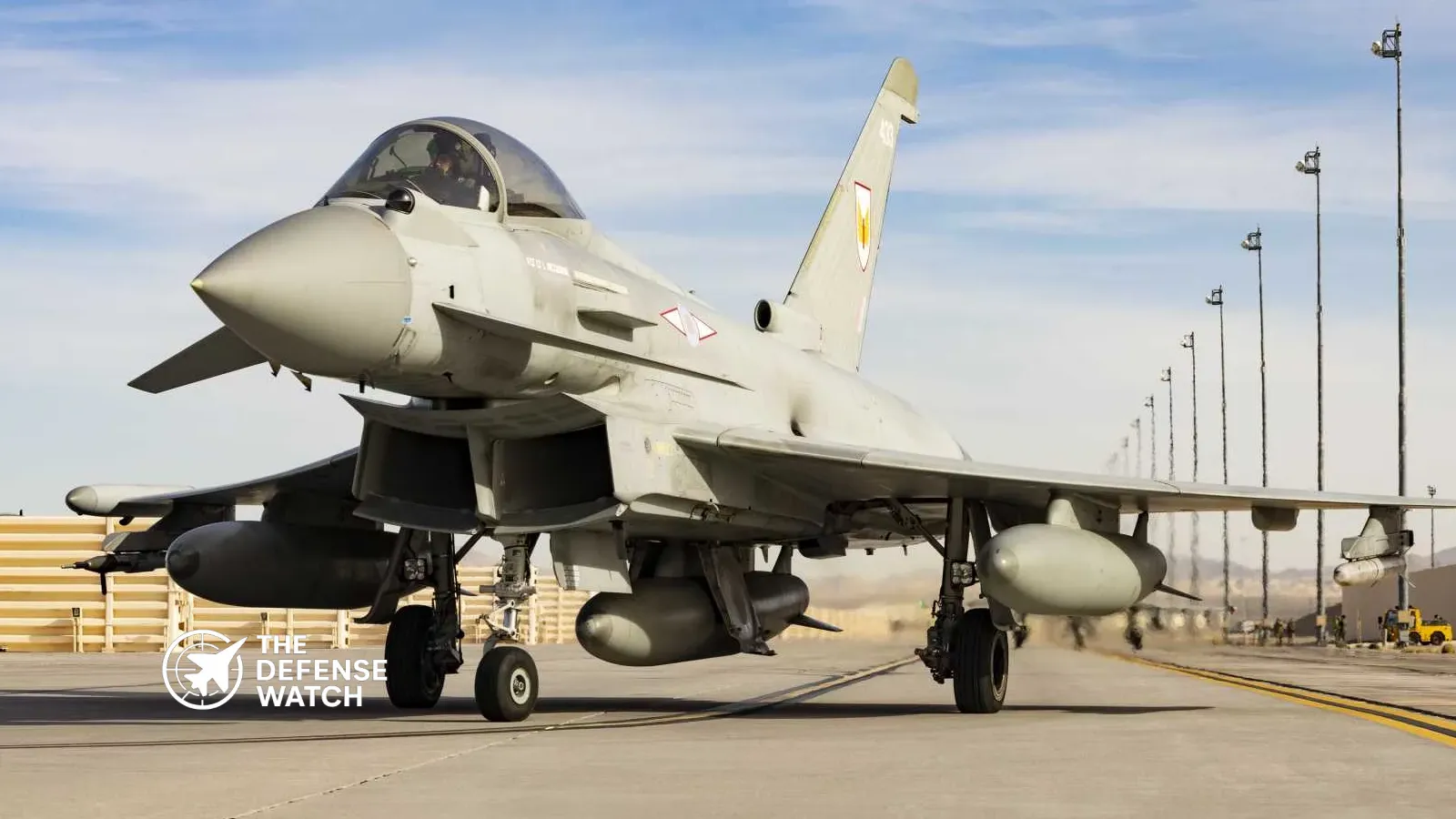
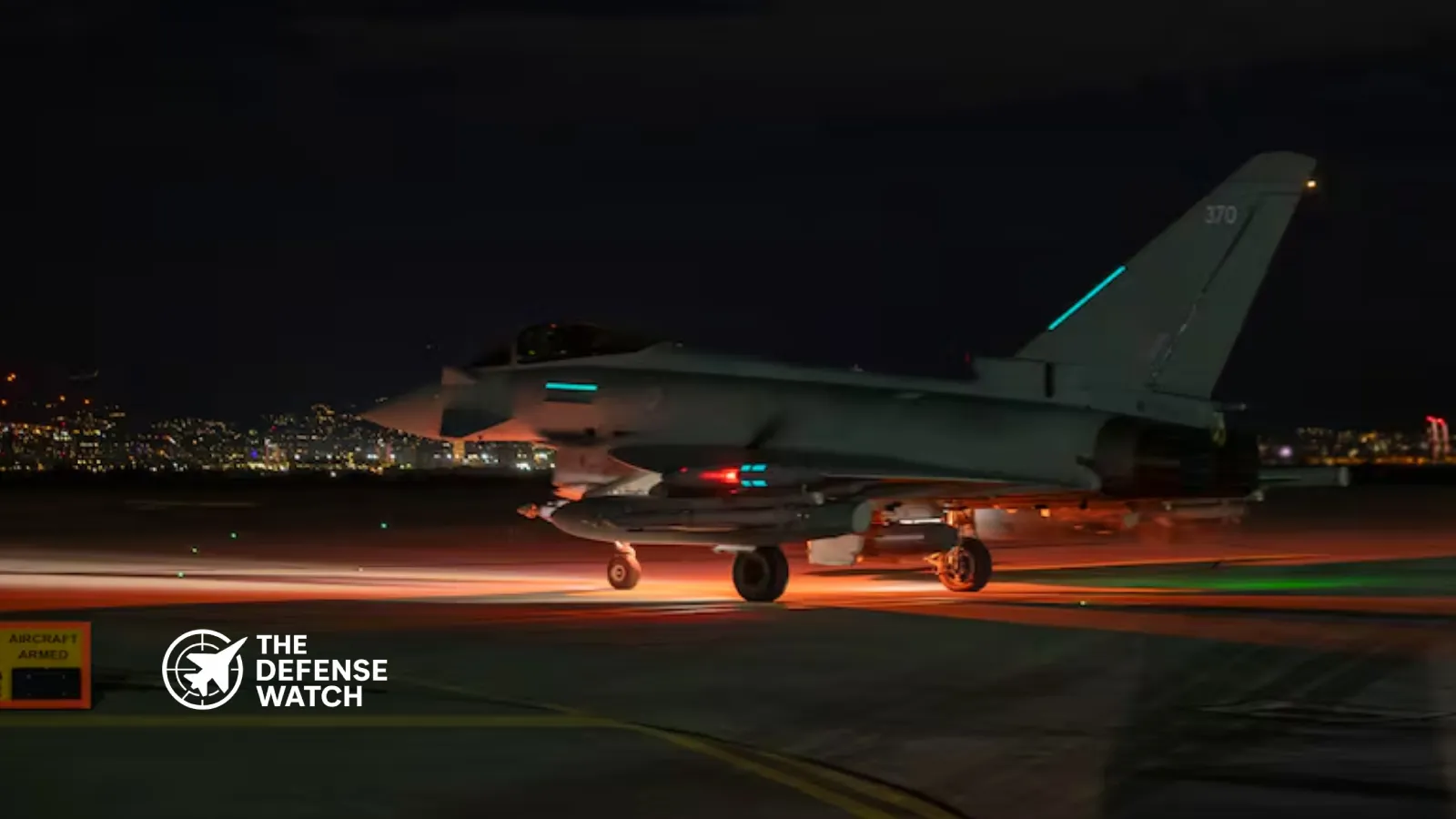
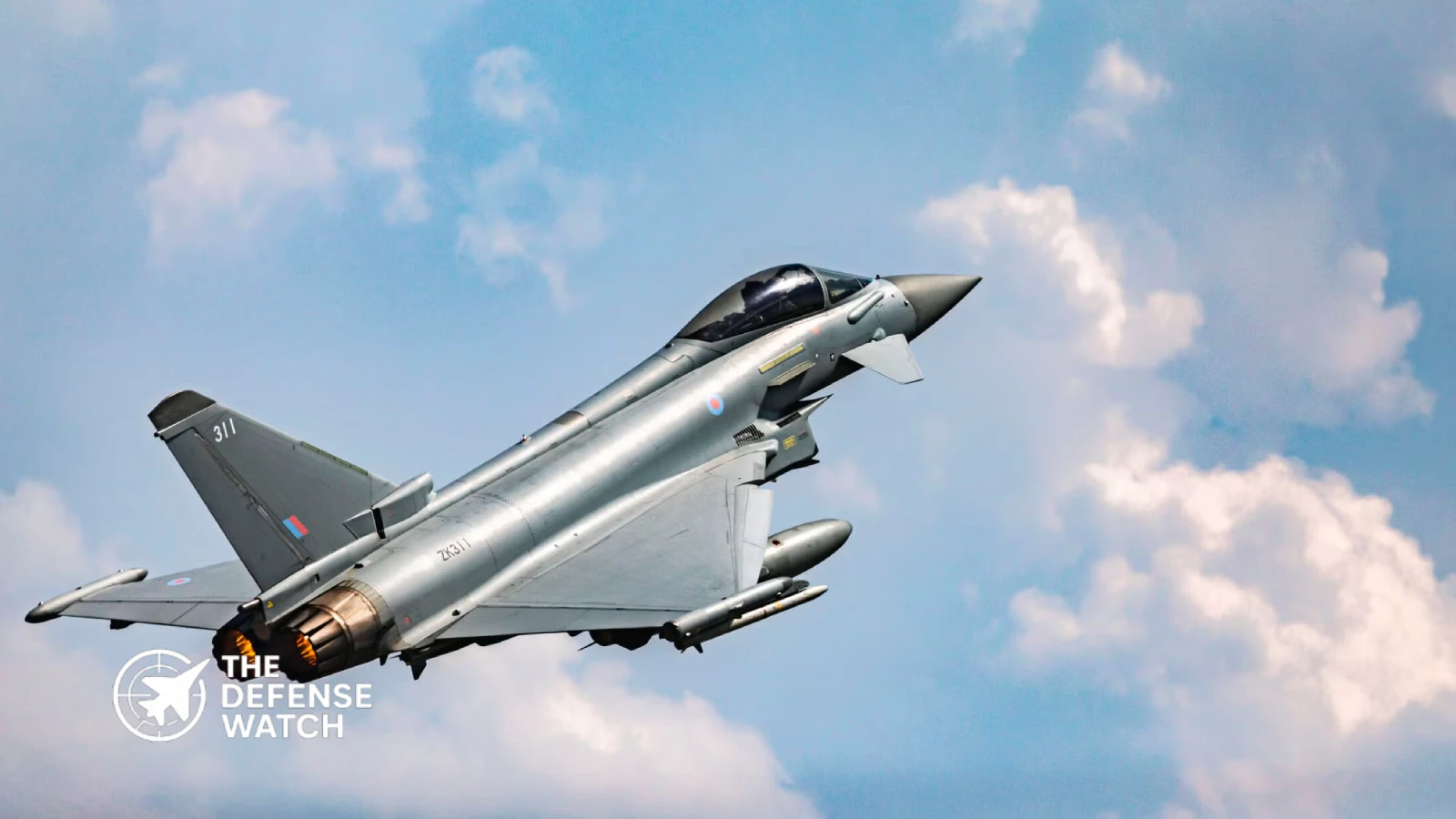
Britain’s entire frontline fighter force could fit inside two and a half US Air Force fighter wings. As of mid-2026, the Royal Air Force fields 158 fast jets — 111 Eurofighter Typhoons and 47 F-35B Lightning IIs. That’s the real number behind a question that gets asked constantly and answered inconsistently.
The confusion is understandable. Older figures still circulating online cite 137 Typhoons, which was the total fleet size before the Ministry of Defence began scrapping early-model aircraft in 2025. The current, accurate count is lower — and shrinking further before it grows again.
The Deep Dive: Typhoon and F-35B, By the Numbers
The Typhoon force was built across three procurement “tranches,” each representing a capability jump over the last. The original order totaled 160 aircraft for the UK, of which 137 were ultimately delivered and entered service: 30 Tranche 1, 67 Tranche 2, and 40 Tranche 3 airframes.
That number is now smaller. In September 2025, Defence Minister Maria Eagle told Parliament that 26 of the 30 Tranche 1 Typhoon aircraft have been scrapped as of that July, with the remaining four held back purely for Quick Reaction Alert duty defending the Falkland Islands until 2027. That leaves the RAF’s active Typhoon count at 111: four aging QRA jets, plus 67 Tranche 2 and 40 Tranche 3 aircraft slated to keep flying until 2040.
The F-35B side of the ledger is more straightforward. The UK’s first procurement batch of 48 Lightning IIs finished delivery in March 2026, eight years after the type first arrived at RAF Marham. One aircraft, BK18, was lost off HMS Queen Elizabeth in 2021, leaving an active fleet of 47. Those jets fly with 617 “Dambusters” Squadron, the Royal Navy’s 809 Naval Air Squadron, and the 207 Squadron training unit — all based at Marham.
A second F-35 order remains stuck in procurement limbo. London’s 2025 Strategic Defence Review confirmed plans for 27 more jets — 15 F-35Bs and, notably, 12 F-35As to restore Britain’s air-delivered nuclear strike role for the first time since the Cold War. None of those 27 have been contracted yet; they’re waiting on the long-delayed Defence Investment Plan.
UK Fast Jet Fleet at a Glance — Mid-2026
Metric Eurofighter Typhoon FGR4 F-35B Lightning II Active RAF fleet 111 aircraft 47 aircraft Generation 4.5 (non-stealth) 5th-gen, stealth Unit flyaway cost ~$90M–$120M (tranche-dependent) ~$109M (UK pays ~$115M incl. premiums) Top speed Mach 2.0 Mach 1.6 Flight-hour cost ~$20,000–$25,000 ~$33,000–$38,000 Primary role Air defense, QRA, strike Carrier strike, stealth ISR/strike Squadrons 7 frontline + OCU/OEU 617 Sqn, 809 NAS, 207 Sqn (OCU) Planned retirement 2040 Active into the 2040s/50s (Block 4 upgrades pending) Total UK programme costs put this in perspective. Defence Equipment & Support lists the Typhoon’s approved production and in-service support bill at £31.1 billion, with the UK covering roughly 37% of the four-nation Eurofighter consortium’s shared costs. The F-35B side has already cost the UK over $4 billion just for the first 35 jets, before sustainment.
The Crossover Angle: Why Numbers, Not Just Tech, Win Fights
Competitive shooter teams don’t win on raw aim alone — they win on role balance. An entry player pushes first, gathers information, and creates chaos before the enemy team can react. An anchor holds the position, absorbs the counterattack, and closes out the round with firepower the entry role was never built to carry.
That’s almost exactly how the RAF talks about its own fleet. Pilots nickname the F-35B the “Assassin” and the Typhoon the “Thug.” The F-35B goes in first — stealthy, sensor-fused, mapping the battlespace and taking the first quiet shot. The Typhoon follows with the missile capacity, the cannon, and the raw speed to finish what the F-35B started.
The parallel breaks down at scale, though, and that’s the real lesson. A five-person esports roster can field one entry and one anchor and still field a full team. An air force needs dozens of each role available simultaneously — for homeland QRA, NATO air policing, and two active carrier strike groups — or the doctrine collapses under its own math. Britain’s 158 jets are stretched thin precisely because there’s no bench depth behind them.
A fighter fleet’s real strength isn’t which single jet wins a one-on-one dogfight. It’s whether a country can sustain QRA, NATO commitments, and carrier strike group coverage at the same time, for months, without running out of available airframes.
Where the UK’s Jets Rank Globally
The “best fighter jet in the world” debate in 2026 usually comes down to four aircraft: the F-22 Raptor, F-35 Lightning II, J-20 Mighty Dragon, and Su-57 Felon. The UK operates none of the first and exactly one of the second — and that’s not an accident.
Aircraft Operator Est. Active Units (2026) Generation Export Status F-35 (all variants) US-led coalition, 20+ nations ~1,300 5th, stealth Widely exported F-22 Raptor United States ~185–195 5th, stealth Export banned J-20 Mighty Dragon China ~250–300 5th, stealth Export banned Su-57 Felon Russia ~30 5th (debated stealth) Limited interest Eurofighter Typhoon UK, Germany, Italy, Spain + export 600+ worldwide 4.5, non-stealth Widely exported The F-22 is generally judged the superior pure air-superiority dogfighter, but the United States has never sold a single one abroad. That makes the F-35 the practical ceiling for any US ally, the UK included — and explains why London bet its entire fifth-generation strategy on the Lightning II rather than waiting on a jet it could never legally buy.
China’s J-20 outnumbers Russia’s entire Su-57 program roughly tenfold, a gap that says more about industrial capacity than airframe design. Moscow’s struggles to scale Su-57 production past 30 aircraft despite years of development is the same constraint that shapes the UK’s own Typhoon-to-F-35 transition: building a great jet on paper means little if you can’t build enough of them.
The Takeaway
The UK’s fighter fleet sits at 158 jets today, with 111 Typhoons drawing down toward 2040 and 47 F-35Bs waiting on a stalled second order to bring real fifth-generation depth. The aircraft themselves are credible — the F-35B ranks among the world’s most capable fighters by most 2026 assessments, and the upgraded Typhoon still holds its own in regional air defense.
The open question isn’t capability. It’s whether Britain can field enough airframes to use that capability when it actually matters — across home defense, NATO commitments, and two aircraft carriers, all at once, with no real reserve left to call on.
RAF Scrambles Typhoon Jets After Russian Bomber Detected Near UK Airspace
The Royal Air Force executed a Quick Reaction Alert (QRA) intercept mission on April 14, 2026, launching two Eurofighter Typhoon FGR4 fighters from RAF Lossiemouth in northern Scotland after ground-based radar detected a contact assessed as a possible Russian long-range strategic bomber approaching the northern UK area of interest near the Shetland Islands.
The scramble, first reported by The Telegraph, marks the latest episode in an ongoing pattern of Russian long-range aviation activity near NATO’s northern flank — and underscores the persistent readiness demands placed on British and allied air defense forces.
- On April 14, 2026, the RAF launched a Quick Reaction Alert (QRA) sortie after detecting an unidentified radar track assessed as a possible Russian long-range strategic bomber approaching the Shetland sector.
- Two Eurofighter Typhoon FGR4 fighters were scrambled from RAF Lossiemouth — the designated QRA North base — alongside a Voyager KC2/KC3 tanker from RAF Brize Norton.
- The Russian aircraft remained outside the UK’s 12 nautical mile sovereign airspace boundary; no visual identification or ICAO intercept procedures were executed.
- NATO integrated radar networks supported tracking throughout; allied command centers shared real-time trajectory data on the contact.
- The incident fits a pattern of Russian multi-domain probing operations near UK and NATO northern approaches, including recent naval and submarine activity in the North Sea.
What Happened: The April 14 QRA Sortie
The sequence of events on April 14 followed well-established NATO protocols. Once a radar contact lacking a matched flight plan, transponder code, or recognized identification profile was detected along the northern approaches, the RAF’s Air Surveillance and Control System — including long-range radar assets such as Saxa Vord on Shetland — initiated continuous tracking.
The contact’s trajectory toward the Shetland sector triggered a scramble order at RAF Lossiemouth, the QRA North station responsible for covering Scotland and the North Sea. Two Typhoon FGR4 jets were launched, with a Voyager KC2/KC3 air-to-air refueling tanker departing simultaneously from RAF Brize Norton to provide aerial refueling support if the mission extended into a prolonged surveillance profile.
The Russian bomber remained outside the UK’s 12 nautical mile sovereign airspace boundary throughout the event. No visual identification phase was initiated, and no ICAO intercept procedures — such as wing rocking or radio calls on emergency frequencies — were executed. The operation remained in a radar surveillance and readiness posture, concluding once the track was assessed as no longer requiring active monitoring.
Force Package and Operational Significance
The deployment of both fighters and a tanker reflects deliberate mission planning rather than a minimal alert response.
The Typhoon FGR4 has a combat radius of under 1,400 kilometers without aerial refueling — a constraint that becomes operationally significant over the vast open stretches of the North Atlantic and North Sea. The inclusion of the Voyager tanker extended the mission’s potential duration, allowing the Typhoon crews to loiter on patrol without returning to base, and enabling rapid repositioning should the track have altered course.
That the Voyager was included at all signals that UK planners assessed a non-trivial possibility that the situation could evolve. It reflects an operational planning philosophy that prioritizes endurance and flexibility in QRA responses, particularly in northern sectors where on-station distances from base are measured in hundreds of nautical miles.
RAF Lossiemouth maintains aircraft on Operational Readiness Platforms (ORPs) 24 hours a day, with takeoff required within a timeframe generally below 15 minutes from scramble order — a standard that the April 14 sortie appears to have met.
Russia’s Long-Range Bomber Operations: A Persistent Pattern
The April 14 sortie is not an isolated event. Russia has conducted long-range aviation patrols near NATO airspace consistently since at least 2007, using aircraft such as the Tu-95MS “Bear”, the Tu-160 “Blackjack”, and maritime patrol variants like the Tu-142 to probe allied air defense reaction times, assess radar coverage, and signal strategic reach.
These missions typically operate without active transponders or civilian air traffic coordination, creating the deliberate ambiguity that necessitates a QRA response. By remaining outside the 12 nautical mile threshold, Russian aircraft avoid triggering legal thresholds under international aviation law that would permit coercive intercept measures — while still generating significant monitoring demands on allied forces.
In a 2020 QRA event, the RAF scrambled six Typhoon fighters and progressed to visual identification and escort phases, indicating the Russian aircraft had closed to within visual confirmation range. The April 2026 event remained well short of that threshold — a single two-ship flight supported by a tanker, with no identification maneuvers executed. The difference in scale reflects a difference in assessed risk, not a reduction in Russian intent.
Multi-Domain Context: Not Just An Air Threat
The April 14 air intercept does not exist in isolation. It tracks alongside a broader pattern of Russian multi-domain operations near the United Kingdom that has intensified over recent years.
Russian naval vessels have conducted repeated transits through the English Channel under monitoring by the Royal Navy. More significantly, Russian submarine activity in the North Sea — including reported tracking of what was assessed as an Akula-class boat and associated deep-sea assets near subsea infrastructure — has generated sustained surveillance taskings for both British and allied forces.
The overlap of these air, surface, and subsurface activities increases the operational burden on UK and NATO command-and-control nodes. Managing simultaneous monitoring requirements across multiple domains stresses intelligence fusion, coordination capacity, and aircraft availability. Analysts assess this multi-domain overlap as deliberate — designed to test detection and response mechanisms under conditions that approximate, without crossing, thresholds that would trigger formal escalatory responses.
Analysis: What This Event Tells Us About NATO’s Northern Flank
From a strategic standpoint, the April 14 QRA reflects the enduring tension on NATO’s northern flank between Russian probing activity and allied deterrence signaling.
Russia’s use of long-range aviation as an instrument of strategic messaging is well-documented. These flights serve multiple purposes simultaneously: they generate intelligence on allied sensor coverage and reaction timelines; they demonstrate Russia’s ability to approach NATO territory without direct confrontation; and they sustain operational proficiency for aircrews conducting long-range missions under realistic conditions.
For the UK, the response was calibrated and measured. Deploying a two-ship Typhoon formation with tanker support demonstrates readiness without escalation — a proportional reply to what remained a surveillance-phase event. The decision not to execute visual identification procedures confirms that British and NATO controllers assessed the track did not require escalation to enforcement geometry.
What the April 2026 event does demonstrate is the continuing operational relevance of RAF Lossiemouth as NATO’s northern QRA anchor — and the Typhoon force’s capacity to sustain rapid response across northern approaches in coordination with allied radar and intelligence networks.
As Russian activity across maritime, subsurface, and aerial domains continues near UK and NATO peripheries, the demand on Quick Reaction Alert forces will remain high. Sustaining QRA readiness — in personnel, aircraft serviceability, and integrated sensor networks — remains one of the RAF’s most operationally consequential ongoing commitments.
- ► British fighter jets have deployed to Romania as part of NATO’s enhanced air policing mission.
- ► RAF Typhoon aircraft will conduct quick reaction alert duties and joint training operations.
- ► Deployment reinforces NATO’s eastern flank amid continued regional security tensions.
- ► UK forces will operate alongside Romanian and allied air units to improve interoperability.
- ► The mission highlights sustained allied commitment to deterrence and collective defense.
British Fighter Jets Deploy To Romania Under NATO Mission
British fighter jets deploying to Romania mark the latest step in NATO’s effort to strengthen air defense along its eastern flank, as regional security concerns remain elevated.
The United Kingdom has deployed Royal Air Force Typhoon fighter aircraft to Romania to support NATO’s enhanced Air Policing mission. The deployment places advanced multi-role fighters closer to the alliance’s southeastern frontier, enabling faster response times and improved situational awareness.
The mission is part of NATO’s long-standing rotational air policing framework, designed to safeguard the airspace of member states and deter potential incursions.
RAF Typhoons Take On Air Policing And Deterrence Role
The deployed aircraft are Eurofighter Typhoon jets operated by the Royal Air Force, one of NATO’s most capable quick reaction alert platforms.
These jets are tasked with intercepting unidentified aircraft, conducting patrols, and maintaining constant readiness. Operating from Romanian airbases, they will integrate with local and allied air defense networks.
Air policing missions typically involve round-the-clock alert status, ensuring aircraft can scramble within minutes if required. This rapid response capability is central to NATO’s deterrence posture, particularly in regions close to contested airspace.
Strategic Importance Of Romania In NATO’s Eastern Flank
Romania has become a critical hub for NATO operations in Eastern Europe. Its geographic position near the Black Sea places it at the intersection of key strategic corridors.
The deployment of British fighter jets to Romania underscores the growing importance of the region in alliance planning. NATO has steadily increased its presence across Eastern Europe since 2014, with air, land, and maritime forces rotating through frontline states.
From a strategic perspective, Romania offers several advantages:
- Proximity to potential flashpoints
- Established NATO infrastructure
- Access to Black Sea operational areas
This makes it a natural location for forward-deployed air assets.
Interoperability And Joint Training With Allies
Beyond air policing, the deployment also supports joint training with Romanian and other NATO forces. These exercises are designed to improve interoperability, a key requirement for multinational operations.
Pilots and ground crews will operate in integrated environments, sharing data, tactics, and procedures. This ensures that forces from different nations can function seamlessly during real-world contingencies.
Such training also enhances readiness across the alliance, reducing response times and improving coordination in complex scenarios.
Analysis: Reinforcing Deterrence Through Forward Presence
The British fighter jets deployment to Romania reflects a broader shift in NATO’s operational posture toward persistent forward presence.
Rather than relying solely on reinforcement from Western Europe, NATO is positioning high-end capabilities closer to potential areas of concern. This approach shortens decision cycles and strengthens deterrence by demonstrating immediate readiness.
From a military standpoint, deploying Typhoon aircraft provides several advantages:
- High-performance air superiority capability
- Advanced radar and sensor integration
- Flexibility for both defensive and offensive roles
At the same time, the rotational nature of these deployments allows NATO to distribute operational burden among member states while maintaining a continuous presence.
The move also signals political commitment. By deploying frontline assets, the UK reinforces its role as a leading contributor to NATO operations and underscores alliance cohesion.
Broader Geopolitical Context
The deployment comes amid ongoing tensions in Eastern Europe and increased military activity in the Black Sea region. NATO has responded by expanding its air policing missions and increasing the frequency of multinational exercises.
British participation in these missions aligns with broader alliance objectives, including deterrence, reassurance of member states, and maintaining stability in contested regions.
While air policing is defensive in nature, its visibility plays a significant role in signaling resolve. Regular patrols and rapid intercept capabilities serve as a clear message of readiness.
Operational Outlook
The British fighter jets in Romania are expected to remain on rotation for a defined period, during which they will conduct patrols, training sorties, and joint exercises.
Future deployments are likely to continue as part of NATO’s rotational model, ensuring sustained coverage of the alliance’s eastern airspace.
As NATO adapts to evolving threats, forward deployments like this are expected to remain a central component of its defense strategy.
- The United Kingdom is deploying four additional RAF Typhoon fighter jets to Qatar to strengthen regional air defense operations.
- The aircraft will reinforce an existing UK–Qatar joint Typhoon squadron already operating in the Gulf.
- The move follows a drone attack on the RAF base at Akrotiri in Cyprus amid escalating regional tensions.
- RAF Typhoon and F-35B fighters have recently intercepted Iranian drones over Jordan and the Gulf region.
- The deployment expands the UK’s layered air defense posture across the Eastern Mediterranean and Gulf.
UK Deploys Additional Typhoon Fighters To Qatar
The United Kingdom is deploying additional RAF Typhoon fighters to Qatar following a drone attack on a British military base in Cyprus, expanding its air defense presence across the Middle East. British Prime Minister Keir Starmer confirmed that four additional Typhoon combat aircraft will join the existing Royal Air Force contingent operating from Qatar to reinforce defensive operations across the region.
The move comes amid rising tensions linked to the ongoing regional conflict involving Iran and its partners. The UK government says the deployment aims to protect British forces, allied installations, and regional partners from missile and drone threats.
The Big Picture
European air forces are increasing their presence across the Middle East as drone warfare and missile strikes expand across multiple fronts.
The United Kingdom has long maintained a rotational air presence in the Gulf through joint deployments with Qatar and NATO partners. The current escalation has pushed London to expand its defensive posture across several locations including Qatar, Cyprus, Jordan, and the Eastern Mediterranean.
The rapid deployment of additional fighter aircraft reflects a broader shift among Western militaries toward persistent air defense coverage in regions where drones, cruise missiles, and loitering munitions now represent the primary threat to military bases and infrastructure.
What’s Happening
British officials confirmed that four additional Eurofighter Typhoon FGR4 fighters will deploy to Qatar to reinforce the existing RAF presence in the country. The aircraft will support defensive air operations and protect allied assets across the Gulf region.
The fighters will operate alongside aircraft from the joint UK–Qatar No. 12 Squadron, which has been stationed in the region as part of ongoing defense cooperation between London and Doha.
The decision follows a drone strike on the RAF base at Akrotiri in Cyprus earlier in the week. The attack caused limited damage but highlighted the growing risk posed by long-range drones targeting Western military infrastructure.
British officials also confirmed that RAF aircraft recently intercepted several unmanned aerial vehicles operating in the region, including Iranian drones shot down over Jordan and near Qatar during defensive patrol missions.
Alongside the fighter deployment, the United Kingdom has also ordered additional defensive assets to the region, including Wildcat helicopters equipped with anti-drone missiles and the Type 45 air defense destroyer HMS Dragon.
Why It Matters
Drone warfare is rapidly changing how air forces protect overseas bases.
Relatively inexpensive one-way attack drones can travel hundreds of kilometers and threaten major military installations. These weapons have become a common feature of conflicts across the Middle East, from Yemen to Iraq and Syria.
Advanced fighters like the Typhoon provide a flexible air defense layer capable of detecting and intercepting drones before they reach their targets. Equipped with advanced radar and air-to-air missiles, the aircraft can conduct continuous combat air patrols and rapidly respond to emerging threats.
For the United Kingdom, maintaining such air patrols is critical to protecting forces stationed at key regional bases including RAF Akrotiri in Cyprus and joint coalition facilities across the Gulf.
Strategic Implications
The deployment expands the United Kingdom’s regional air defense network across multiple operational theaters.
With Typhoon fighters operating from Qatar and Cyprus, British forces now maintain overlapping air coverage stretching from the Eastern Mediterranean to the Persian Gulf. This distributed posture improves response time against missile or drone launches targeting allied bases.
The deployment also reinforces the UK–Qatar defense partnership, which has deepened in recent years through joint training, arms procurement programs, and combined operational units.
Maintaining a credible fighter presence in the Gulf allows London to support coalition air defense efforts while also protecting British nationals and military personnel stationed across the region.
Competitor View
Regional adversaries will likely view the deployment as part of a broader Western effort to strengthen air defense coverage around key military infrastructure.
Iran and its regional partners have increasingly relied on drones and precision missiles to challenge Western military positions without triggering direct conventional conflict. Expanding fighter patrols complicates those tactics by increasing interception capability across key operational corridors.
The presence of additional RAF fighters in Qatar also signals continued Western willingness to protect Gulf partners against aerial threats.
What To Watch Next
Several developments could shape how the UK deployment evolves in the coming weeks.
Military planners will monitor whether drone or missile attacks against coalition facilities continue to increase. Sustained attacks could lead to additional fighter deployments or expanded air defense assets in the region.
Naval deployments may also expand as Western countries increase maritime air defense capabilities in the Eastern Mediterranean and Gulf.
Operational tempo for RAF fighters will remain high as long as combat air patrol missions are required to defend regional airspace.
Capability Gap
The recent drone attack in Cyprus exposed the vulnerability of fixed overseas bases to low-cost aerial threats.
Traditional air defense systems often struggle to intercept large numbers of small drones launched simultaneously. Fighter aircraft help close this gap by providing rapid response capability and persistent surveillance across wide operational areas.
However, fighter patrols alone cannot provide complete protection. Effective defense against drone swarms requires layered systems including ground-based air defenses, electronic warfare capabilities, and naval radar platforms.
The UK’s current deployments suggest London is attempting to build precisely that kind of layered defense architecture across the region.
The Bottom Line
The United Kingdom’s deployment of additional Typhoon fighters to Qatar strengthens allied air defenses in a region where drones and missiles are increasingly shaping the battlefield.
RAF Typhoon Upgrades Receive £650 Million Investment
The UK Ministry of Defence has committed more than £650 million to upgrade the Royal Air Force Typhoon fleet, securing over 1,500 skilled jobs across the country. The investment reinforces the Typhoon’s role as the backbone of UK air defense and aligns with the Strategic Defence Review’s modernization plans.
Defence Secretary John Healey confirmed a £453 million contract for Leonardo UK to produce advanced radar systems at the company’s Edinburgh site. The deal will safeguard 300 jobs in Edinburgh, 120 in Lancashire, and over 100 in Luton, while supporting up to 1,300 additional roles across the UK supply chain.
The program will equip RAF Typhoons with the new European Common Radar System Mk2, developed in partnership with BAE Systems and Parker Meggitt. The wider Typhoon program currently supports more than 20,000 jobs across 330 UK companies, including apprentices and specialist engineers in Scotland.
Earlier this week, a separate £205 million contract was awarded to QinetiQ for long-term engineering support, preserving around 250 UK jobs. Together, the contracts highlight the government’s focus on maintaining skilled employment while enhancing national security capabilities.
“Our Typhoon fleet is the backbone of UK and NATO air defense,” Healey said. “As threats increase, including Russian drone activity over Ukraine, these cutting-edge radar systems will keep Britain secure and our allies strong.”
Scottish Secretary Douglas Alexander emphasized the importance of Scottish expertise, noting the contract demonstrates why the country is a global center of defense excellence. Leonardo and BAE Systems confirmed that the projects would protect hundreds of high-skilled positions while maximizing the UK’s investment in the Typhoon fleet.
The upgrades come as the UK plans to raise defense spending to 2.6 percent of GDP from 2027, reinforcing its commitment to modernizing air defense and maintaining industrial capability in critical aerospace sectors.
UK Orders 40 ECRS Mk2 AESA Radars for RAF Typhoon
The United Kingdom Ministry of Defence has awarded a £453.5 million contract for the production of 40 ECRS Mk2 active electronically scanned array (AESA) radars for the Royal Air Force’s Eurofighter Typhoon fleet, the UK Defence Equipment and Support agency confirmed January 22 2026.
The radar order is part of a long-running effort to modernize Typhoon’s sensor suite and electronic warfare abilities under the European Common Radar System (ECRS) programme. Deliveries are scheduled to begin later this decade with installation on Tranche 3 standard aircraft.
New Radar Contract Approved
The full production contract was awarded to a team led by BAE Systems in partnership with Leonardo UK and Parker Meggitt. Manufacturing of the AESA radar hardware will take place at Leonardo’s facilities in Edinburgh and Luton with integration onto Typhoon aircraft at BAE Systems’ Lancashire site.
Defence officials described the radar as a key capability enhancement that will strengthen the Typhoon’s ability to detect, track, and engage multiple threats in increasingly complex air environments. The ECRS Mk2’s design combines advanced search and tracking with embedded electronic attack and suppression functions.
Enhanced Detection and Electronic Warfare
The ECRS Mk2 AESA radar represents a significant step up from the legacy Captor-M mechanically scanned radar. AESA sensors use an electronically steered array of transmit/receive modules to provide rapid beam steering, improved target discrimination, and resilience against electronic countermeasures.
In addition to longer detection range and multirole tracking capabilities, the radar’s electronic warfare functions will enable Typhoons to conduct high-power jamming and support suppression of enemy air defenses missions without dedicated external pods. That marks a shift toward more autonomous electronic attack capability for frontline fighters.
Strategic and Industrial Impact
Defence Secretary John Healey highlighted the radar contract as vital to maintaining the RAF’s air defence strength in the face of evolving threats along NATO’s eastern flank. The investment also supports skilled jobs across the UK defence industrial base, with an estimated 1,300 highly skilled positions tied to radar production, integration and sustainment over the coming decade.
The radar upgrade comes as the UK also seeks to sustain and grow its export footprint for Typhoon and associated systems. Other Typhoon operators have adopted or are considering variants of the ECRS radar family, which includes Mk0 and Mk1 versions for international users.
Programme Background
The ECRS Mk2 radar is being developed under a broader phased enhancement programme that the UK MoD values at several billion pounds. Prototype radars have already flown on test aircraft and have undergone ground validation over recent years. Earlier contracts under the overall radar programme have included design, testing, and early production commitments.
The modernized radar is expected to keep the Typhoon competitive against near-peer threats into the 2030s while the UK pursues future combat aircraft technologies through the Tempest/GCAP programme.
UK Deploys Typhoon Jets to Qatar for Regional Security Mission
The UK deploys Typhoon jets to Qatar as part of a new Royal Air Force mission aimed at reinforcing Gulf security and strengthening defense cooperation with Doha, according to official announcements from the UK Ministry of Defence and reporting by UK Defence Journal.
The deployment involves RAF 12 Squadron, the joint UK-Qatar Typhoon unit, and is being conducted at the invitation of the Qatari government under the long-standing UK-Qatar Defence Assurance Agreement.
UK officials describe the move as a defensive deployment designed to support regional stability and maintain a visible allied air presence in the Middle East amid ongoing security challenges.
Joint UK-Qatar Squadron Leads Deployment
The Typhoon jets are being deployed by No. 12 Squadron RAF, a unique joint squadron composed of both Royal Air Force and Qatar Emiri Air Force personnel. The unit operates from RAF Coningsby in the United Kingdom and routinely conducts combined operations and training with Qatar.
According to the UK Ministry of Defence, the squadron’s deployment reflects the deep military partnership between London and Doha, built around shared training, operational integration, and long-term defense cooperation.
The joint structure allows British and Qatari pilots and engineers to fly and maintain the aircraft together, enhancing interoperability and operational readiness.
Defensive Mission Under UK-Qatar Defence Assurance Agreement
The UK government confirmed the mission is being carried out under the UK-Qatar Defence Assurance Agreement, which provides a formal framework for bilateral defense cooperation and mutual support.
UK Defence Secretary John Healey stated that the deployment is part of ongoing efforts to strengthen collective security in the Gulf region.
British officials emphasized that the Typhoon deployment is defensive in nature and intended to support Qatar’s air defense posture while reinforcing broader regional stability objectives.
Strategic Context: Heightened Middle East Tensions
The deployment comes amid heightened regional tensions in the Middle East, where allied nations have increased military presence to deter potential threats and reassure regional partners.
While the UK Ministry of Defence did not link the deployment to any specific incident, defense analysts note that allied air deployments are commonly used to signal commitment to regional security and to maintain rapid-response capabilities.
The Gulf region remains strategically important for global energy security, trade routes, and broader Western security interests.
Role of the Eurofighter Typhoon in Gulf Operations
The Eurofighter Typhoon is a multirole, fourth-generation combat aircraft that forms the backbone of the Royal Air Force’s air combat fleet. The aircraft is capable of air-to-air superiority, air policing, and precision strike missions.
RAF Typhoons have been routinely deployed to the Middle East under long-standing UK operations, including air defense, coalition support missions, and regional reassurance deployments.
The Typhoon’s advanced radar, air combat systems, and multirole flexibility make it a key asset for forward deployments and rapid regional response.
Longstanding UK-Qatar Defense Partnership
The UK and Qatar have maintained close defense ties for decades, including joint pilot training, shared basing, and collaborative operational deployments.
The partnership was expanded in recent years following Qatar’s purchase of Eurofighter Typhoon aircraft from the UK, leading to the creation of the joint 12 Squadron.
The unit gained international visibility during major security operations, including air security support during major international events hosted by Qatar.
UK Commitment to Gulf Security
The Typhoon deployment aligns with the UK’s broader military presence in the region under long-running operations supporting maritime and air security in the Gulf.
British forces routinely operate from Gulf bases to support air policing, intelligence, surveillance, and regional defense missions.
The Ministry of Defence has stated that these deployments are part of the UK’s commitment to maintaining freedom of navigation, protecting trade routes, and supporting allied partners.
What This Means for Regional Air Power
The arrival of RAF Typhoons in Qatar adds to allied air power in the region and enhances integrated air defense capabilities between the UK and Qatar.
For Qatar, the deployment provides additional operational depth and reinforces its air defense posture.
For the UK, it demonstrates continued engagement in Gulf security and strengthens defense ties with a key regional partner.
UK Awards 205M Pound Contract to Support RAF Typhoon Fleet
The UK Ministry of Defence has signed a 205M pound, five-year contract extension with British defence firm QinetiQ for ongoing technical and engineering support to the Royal Air Force’s Typhoon fleet, the service announced. This contract extension aims to keep the fighter jets mission ready and secure hundreds of skilled jobs across the UK.
The deal will supply specialist technical, airworthiness, and safety support for the Typhoon fleet, the RAF’s primary combat air asset. Work includes engineering tasks tied to the integration of the European Common Radar System Mk2, a next-generation sensor set for improved detection and tracking.
Support Work and Jobs Across the UK
The five-year agreement secures around 250 high–skilled jobs at QinetiQ, MOD facilities, and RAF stations in locations such as Farnborough, Boscombe Down, Malvern, Lincoln, Bristol, Coningsby, and Warton. The contract reflects the UK government’s wider push to invest in defence industry capability and sustain critical skills.
Defence Minister for Readiness and Industry Luke Pollard said the Typhoon fleet is central to UK air defence and essential for supporting NATO allies. He framed the investment as part of a broader strategy to make defence a contributor to economic growth and national security.
Typhoon Role and Operational Context
The Eurofighter Typhoon remains a key multirole combat aircraft for the RAF. It provides round-the-clock air policing over the UK, supports NATO missions such as Operation Eastern Sentry on the alliance’s eastern flank, and has been used in combat operations against Daesh targets in the Middle East.
The support contract builds on existing long-term industrial partnerships. QinetiQ has worked with the MoD on Typhoon engineering since the program’s early years. Continued support is aimed at maintaining aircraft readiness while embedding newer tools and methods, including digital engineering, to improve efficiency.
British and French Jets Strike ISIS Weapons Facility in Syria
British and French jets struck a suspected Islamic State weapons facility in Syria, using precision guided bombs to hit underground access tunnels near Palmyra, the UK Ministry of Defence said.
Royal Air Force Typhoon FGR4 fighters, supported by a Voyager refueling tanker, joined French combat aircraft in the Saturday evening mission. Intelligence had identified the site as an underground arms and explosives storage facility in mountainous terrain north of the historic city.
Target and Munitions
Aircraft deployed Paveway IV guided bombs to engage multiple access points leading into the underground complex. Initial assessments from London indicated successful engagement of the objective with no reported civilian presence in the strike area.
The British Defence Secretary said the operation underscored the United Kingdoms commitment to work with allies to prevent any resurgence of Islamic State.
Mission Context
The UK and French air operation forms part of ongoing Western efforts to degrade remaining Islamic State infrastructure across Syria following the group’s territorial defeat in 2019. Coalition forces have maintained periodic strikes against identified arms caches, training sites, and leadership networks.
All aircraft involved returned safely to base, and detailed poststrike assessments are underway.