RTX Announces Historic Production Expansion Under Pentagon Framework Agreements
Raytheon, an RTX business, entered into five landmark framework agreements with the U.S. Department of War to significantly increase production capacity and speed deliveries of critical precision munitions, the company announced February 4, 2026.
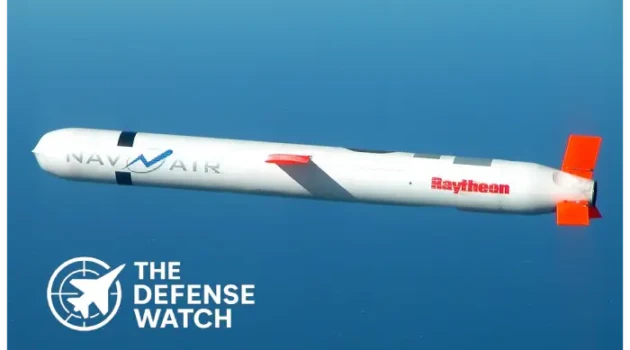
(adsbygoogle = window.adsbygoogle || []).push({});The defense contractor will substantially expand manufacturing of Land Attack and Maritime Strike variants of Tomahawk cruise missiles, AMRAAM air-to-air missiles, and multiple Standard Missile interceptor variants under agreements spanning up to seven years. RTX will increase annual production of Tomahawks to more than 1,000, AMRAAMs to at least 1,900, and SM-6 to more than 500, representing two-to-four-fold increases over current production rates for several munitions.
The agreements cover production of five weapon systems: Tomahawk cruise missiles, AMRAAM missiles, Standard Missile-3 Block IB interceptors, Standard Missile-3 Block IIA interceptors, and Standard Missile-6 missiles. Production will occur at Raytheon facilities in Tucson, Arizona; Huntsville, Alabama; and Andover, Massachusetts.
Strategic Significance of Production Expansion
The framework agreements represent a significant shift in defense-industrial collaboration, according to company leadership. RTX CEO and Chairman Chris Calio stated the deals “redefine how government and industry can partner to speed the delivery of critical technologies” and align with the administration’s Acquisition Transformation Strategy.
The expansion addresses sustained growth in global demand for precision munitions as U.S. forces and allied militaries increase stockpile requirements. The Tomahawk missile system has been flight-tested over 550 times and used operationally more than 2,300 times since its introduction, establishing itself as a primary long-range strike option for U.S. naval forces.
AMRAAM missiles serve as the principal air-to-air weapon for U.S. fighter aircraft and have been deployed by more than 40 allied nations. The Standard Missile family provides layered air and missile defense capabilities for naval vessels and ground-based systems, with the SM-3 variants specifically designed for ballistic missile intercept missions.
Production Facilities and Investment Strategy
Manufacturing under the new agreements will leverage existing Raytheon infrastructure while incorporating significant facility upgrades and workforce expansion. The company has committed to continued investment in production capacity and acceleration projects beyond previous expenditure levels.
(adsbygoogle = window.adsbygoogle || []).push({});The long-term agreements incorporate a collaborative funding approach designed to preserve upfront free cash flow, allowing RTX to invest confidently to meet long-term demand, according to the company statement. The financial commitments associated with these frameworks have been incorporated into RTX’s 2026 financial outlook, which projects capital expenditures exceeding $3 billion.
The Tucson facility will serve as the primary production site for several missile variants, while Huntsville operations will support advanced interceptor manufacturing. The Andover location will contribute to component production and integration activities across multiple programs.
Weapon System Capabilities and Performance
The Tomahawk cruise missile provides precision strike capability from standoff ranges exceeding 1,000 miles, enabling attacks against heavily defended targets while keeping launch platforms outside enemy engagement zones. Both land-attack and maritime strike variants will see production increases under the new agreements.
AMRAAM missiles provide beyond-visual-range air-to-air engagement capability with active radar guidance and all-weather performance. The weapon serves as the primary air-to-air armament for F-15, F-16, F-18, and F-22 fighter aircraft across U.S. and allied air forces.
The Standard Missile-3 Block IB and Block IIA variants provide exoatmospheric intercept capability against short-to-intermediate-range ballistic missiles. The SM-3 IIA, developed in partnership with Japan, extends intercept range and altitude compared to earlier variants. Standard Missile-6 provides multi-mission capability including anti-air warfare, ballistic missile defense, and anti-surface warfare from a single weapon system.
Defense Industrial Base Implications
The production expansion represents a significant commitment to strengthening U.S. defense manufacturing infrastructure. The agreements formalize long-term production commitments that enable contractors to make facility and workforce investments with greater financial certainty.
Industry observers note the framework approach provides stability for supply chain partners and enables more efficient procurement of long-lead materials and components. The seven-year agreement duration allows for phased capacity expansion rather than rapid scaling that can strain quality control and supplier relationships.
The increased production rates will require workforce expansion across multiple facilities and skill sets, from precision machining and electronics assembly to quality assurance and systems integration. RTX has indicated the agreements support the Department of War’s objectives for industrial base strengthening and American job creation.
Strategic Context and Global Demand
The munition production expansion occurs amid heightened global tensions and increased defense spending among U.S. allies. Multiple allied nations have requested increased deliveries of American-made precision weapons to modernize their forces and replenish stocks.
Recent conflicts have demonstrated the high consumption rates of precision munitions in modern combat operations. U.S. forces and coalition partners have utilized Tomahawk cruise missiles, AMRAAM air-to-air weapons, and Standard Missile interceptors extensively in recent operations, driving requirements for expanded production capacity.
(adsbygoogle = window.adsbygoogle || []).push({});The Standard Missile family has seen particular demand growth as allied navies invest in ballistic missile defense capabilities. Japan, Australia, and several European nations operate or have ordered destroyers and frigates equipped with Aegis combat systems that utilize Standard Missile interceptors.
Naval forces globally have increased requirements for Tomahawk missiles as more platforms gain launch capability. The weapon has been integrated with Virginia-class submarines, Zumwalt-class destroyers, and multiple cruiser and destroyer classes. Allied nations including the United Kingdom and Australia have procured Tomahawk systems for their naval forces.
Program Timeline and Production Ramp
RTX has not disclosed specific timelines for reaching peak production rates under the new agreements, though the company indicated manufacturing will begin in accordance with existing facility capabilities and planned expansion activities. The seven-year framework duration suggests a multi-year ramp to full production capacity.
Industry analysts note that missile production scaling requires careful coordination of complex supply chains involving hundreds of components and subassemblies. Critical long-lead items such as rocket motors, guidance systems, and specialized electronics require their own capacity expansion to support higher production rates.
The company’s 2026 capital expenditure budget includes funding for production line expansions, equipment procurement, and facility modifications necessary to achieve target production rates. Additional workforce hiring and training will occur as production lines scale toward full capacity.
Financial and Market Impact
RTX stock has performed strongly in recent months, with shares trading near 52-week highs. The company reported fourth-quarter revenue of $24.24 billion, exceeding analyst estimates, with earnings per share of $1.55 beating consensus forecasts of $1.47.
The defense contractor maintains a diversified business portfolio spanning commercial and military aviation, missile systems, and aerospace components through its Pratt & Whitney, Collins Aerospace, and Raytheon divisions. Defense systems account for approximately 33% of total company revenue.
(adsbygoogle = window.adsbygoogle || []).push({});Analyst firms have maintained generally positive ratings on RTX shares following the munition production announcement, with price targets ranging from recent lows around $168 to highs approaching $227. The long-term framework agreements provide revenue visibility and support projections for sustained defense systems growth.
Conclusion
The five framework agreements between RTX’s Raytheon division and the U.S. Department of War represent one of the most significant defense production expansions in recent years. The commitment to more than double production of critical precision munitions addresses urgent requirements from U.S. forces and allied militaries while strengthening American defense manufacturing infrastructure.
Successful execution of the production expansion will require sustained investment in facilities, equipment, and workforce over the coming years. The agreements provide a foundation for long-term industrial base stability and position RTX as a key supplier of precision weapons to U.S. and allied forces through the next decade.


Pentagon Secures Full-Year Funding After Brief Shutdown
The U.S. Congress officially approved the fiscal year 2026 defense spending bill on February 3, delivering $839 billion in Pentagon funding and ending a brief partial government shutdown that affected federal operations. The House of Representatives passed the defense appropriations package in a narrow 217-214 vote, sending the legislation to President Donald Trump for his signature.
(adsbygoogle = window.adsbygoogle || []).push({});The approved defense budget 2026 represents an $8 billion increase over the Pentagon’s original budget request, providing critical resources for military modernization efforts across all service branches. The passage marks a significant milestone as the Department of Defense receives its first full-year appropriations since fiscal year 2024, ending months of uncertainty that hampered long-term planning and procurement activities.
According to the Senate Appropriations Committee, the funding package forms part of a larger “minibus” appropriations bill that includes full-year funding for five additional federal agencies. The legislation’s approval brings relief to defense officials and military planners who had operated under continuing resolutions that restricted new program starts and limited operational flexibility.
Navigating Political Hurdles and Shutdown Concerns
The path to approval encountered significant obstacles in recent weeks. While the House initially passed the spending package on January 23 to meet a January 30 deadline, controversy surrounding Department of Homeland Security funding delayed Senate action. The final version included a two-week continuing resolution for DHS, requiring a second House vote that didn’t occur until the chamber reconvened in early February.
This procedural requirement forced several agencies to operate through a four-day shutdown starting January 31. Though disruptive, the temporary pause proved considerably shorter than the record-breaking 43-day shutdown that occurred last fall, during which the Pentagon furloughed 334,000 civilian employees. The quick resolution demonstrated congressional commitment to maintaining defense readiness despite broader appropriations disputes.
Defense officials expressed relief at avoiding extended operational disruptions. Full-year funding enables the Pentagon to execute procurement contracts, initiate new development programs, and provide predictable resources to military installations and personnel worldwide. The stability proves particularly important as global security challenges demand sustained attention and investment.
Air Force Receives Substantial Modernization Funding
The approved defense budget allocates billions toward key Air Force modernization priorities, addressing critical capability gaps across multiple domains. Major investments target next-generation platforms essential for maintaining air superiority against peer competitors.
The F-35 Joint Strike Fighter program receives $440 million specifically designated for spare parts to support the aircraft and its F135 engine. This funding addresses persistent maintenance challenges that have limited F-35 availability rates across the Air Force, Navy, and Marine Corps fleets. Improved parts availability directly enhances operational readiness and sortie generation capability.
- (adsbygoogle = window.adsbygoogle || []).push({});
Electronic warfare capabilities gain significant attention with $474 million allocated for the Air Force to purchase two additional EC-37B Compass Call aircraft. These specialized platforms provide critical airborne electronic attack capabilities, jamming enemy communications and radar systems to protect friendly forces and create operational advantages during contested operations.
Airlift capacity receives a notable boost with $976 million designated for six C-130J Super Hercules tactical transports for the Air National Guard. The versatile C-130J serves as the backbone of tactical airlift operations, supporting everything from disaster relief to combat missions. Adding these aircraft strengthens the Guard’s ability to respond to both state emergencies and federal mobilizations.
The legislation also provides continued funding for advanced platforms including the B-21 Raider stealth bomber and the F-47 Next-Generation Air Dominance fighter, though some nuclear modernization programs faced modest reductions. The E-7 Wedgetail airborne early warning aircraft received an additional $900 million to prevent program cancellation, ensuring the Air Force can replace aging E-3 Sentry AWACS platforms.
The Sentinel intercontinental ballistic missile program continues receiving support despite ongoing cost growth concerns. Congressional appropriators emphasized the strategic importance of modernizing the land-based leg of the nuclear triad while demanding improved program management and cost controls.
Space Force Budget Bolsters Satellite and Defense Systems
Space Force funding priorities reflect growing recognition of space as a contested warfighting domain requiring sustained investment. The approved budget provides $4 billion for continued development of missile warning and tracking satellites and sensors, critical capabilities for detecting and characterizing ballistic missile threats globally.
The legislation funds 11 National Security Space Launch missions, maintaining the cadence necessary to deploy military satellites and ensure access to space remains available for national security purposes. These launches support everything from communications satellites to reconnaissance platforms that provide commanders with essential intelligence and surveillance capabilities.
A significant portion of Space Force funding addresses the Golden Dome integrated air and missile defense architecture. The final appropriations deal includes $13.4 billion to “augment and integrate” space and missile defense systems under this initiative. Interestingly, the Pentagon excluded Golden Dome funding from its base budget request, planning instead to rely on $25 billion in reconciliation funding that Congress approved last year.
Congressional appropriators questioned this funding approach during recent hearings, expressing concern about budget transparency and long-term sustainability. Lawmakers requested additional details about how the Defense Department plans to allocate Golden Dome resources and integrate various systems into a coherent defensive architecture.
Space domain awareness programs receive continued support, enabling the Space Force to track objects in orbit, detect potential threats, and coordinate defensive actions. As adversaries develop anti-satellite weapons and other counter-space capabilities, these monitoring systems become increasingly vital for protecting American space assets.
Strategic Implications and Future Defense Planning
The approved $839 billion defense budget signals continued congressional commitment to military modernization despite fiscal pressures and competing domestic priorities. The funding level exceeds the Pentagon’s request, suggesting bipartisan recognition of growing global threats requiring sustained defense investment.
China’s military expansion and technological advancement feature prominently in defense planning documents justifying budget increases. The Air Force and Space Force investments specifically target capabilities needed to deter or, if necessary, defeat Chinese aggression in the Indo-Pacific region. Advanced fighters, stealth bombers, long-range missiles, and space-based sensors all contribute to maintaining technological advantages critical for deterrence.
The budget also reflects lessons from the conflict in Ukraine, where precision munitions, electronic warfare, and integrated air defenses proved decisive. American military planners studied these operations closely, identifying capability gaps and accelerating programs that address vulnerabilities exposed by modern combat.
Nuclear modernization remains a budget priority despite some congressional trims. The simultaneous recapitalization of all three legs of the nuclear triad—land-based missiles, submarine-launched missiles, and strategic bombers—represents the most extensive nuclear modernization effort since the Cold War. While expensive, defense officials argue these systems provide the ultimate deterrent against existential threats.
(adsbygoogle = window.adsbygoogle || []).push({});The legislation’s passage provides stability for defense contractors and the broader defense industrial base. Full-year funding enables companies to hire workers, invest in facilities, and execute multi-year contracts with confidence. This predictability proves essential for complex weapons systems requiring years of development and production.
Industry Response and Economic Impact
Defense contractors welcomed the budget approval after months of operating under continuing resolution constraints. Major aerospace companies like Lockheed Martin, Northrop Grumman, Boeing, and Raytheon Technologies rely on predictable Pentagon funding to maintain production lines and development programs.
The F-35 spare parts funding specifically addresses supply chain challenges that have plagued the program. Manufacturers can now order long-lead components and invest in production capacity improvements that enhance aircraft availability across the fleet. Better parts availability translates directly into more aircraft available for training and operational missions.
The C-130J procurement benefits Lockheed Martin’s Marietta, Georgia production facility, sustaining jobs and industrial capability for tactical airlift. The National Guard aircraft orders maintain production momentum while the Air Force evaluates future tactical transport requirements and potential C-130J replacement programs.
Smaller suppliers and subcontractors throughout the defense industrial base also benefit from full-year funding certainty. These companies manufacture everything from electronic components to specialized materials, forming a complex supply chain that supports major weapons platforms. Funding stability enables them to plan investments and maintain skilled workforces essential for defense production.
Regional economies hosting military installations and defense contractors see significant benefits from the approved budget. States with substantial Air Force and Space Force presence, including Colorado, California, Florida, and others, receive economic stimulus from defense spending that supports local jobs and tax revenues.
Congressional Oversight and Accountability Measures
While approving substantial defense funding, congressional appropriators included numerous oversight provisions and reporting requirements. Lawmakers demanded detailed justifications for major programs, regular progress updates, and explanations for any significant cost increases or schedule delays.
The Golden Dome initiative faces particularly close scrutiny, with appropriators requiring the Pentagon to provide comprehensive spending plans and integration strategies. Congress wants assurance that the $13.4 billion appropriation plus previous reconciliation funding achieves stated objectives without wasteful duplication or inefficient program management.
(adsbygoogle = window.adsbygoogle || []).push({});Nuclear modernization programs including Sentinel and the Long-Range Standoff weapon received funding with strings attached. The Pentagon must demonstrate improved cost controls and program management before accessing certain funds. Congressional skepticism about nuclear program execution reflects concern over historical cost overruns and schedule delays.
Appropriators also emphasized workforce development, noting that skilled personnel shortages threaten defense acquisition and sustainment programs. The budget includes provisions encouraging Pentagon investment in training, retention, and recruitment of acquisition professionals, engineers, and technical specialists essential for managing complex weapons programs.
Transparency requirements mandate regular reporting on program health, financial management, and performance metrics. These oversight mechanisms help Congress make informed decisions about future budgets while holding defense officials accountable for efficient resource utilization.
Looking Ahead: Fiscal 2027 and Beyond
Even as fiscal 2026 funding takes effect, attention shifts toward fiscal year 2027 budget development. The Trump administration’s stated goal of increasing defense spending toward $1.5 trillion annually suggests continued budget growth, though congressional approval remains uncertain given deficit concerns and competing priorities.
Defense officials must balance modernization needs against readiness requirements and force structure decisions. The Air Force continues grappling with aging aircraft fleets requiring expensive maintenance while simultaneously funding next-generation replacement platforms. Similar tensions affect the Space Force as satellite constellations require both sustainment and modernization.
Emerging threats including hypersonic weapons, artificial intelligence applications, cyber capabilities, and autonomous systems demand investment that strains defense budgets despite overall increases. Pentagon leaders must prioritize among competing requirements while maintaining technological advantages over peer competitors.
The defense industrial base faces capacity constraints that money alone cannot immediately resolve. Expanding production of missiles, munitions, and complex platforms requires years of investment in facilities, equipment, and workforce development. Budget increases must align with realistic industrial capabilities to avoid wasteful spending on unachievable production targets.
(adsbygoogle = window.adsbygoogle || []).push({});International partnerships and burden-sharing discussions will influence future budget debates. Allies and partners in Europe and the Indo-Pacific face pressure to increase defense spending, potentially reducing demands on American resources. However, U.S. forces maintain unique capabilities that allies cannot replicate, ensuring substantial American investment regardless of allied contributions.
The approved fiscal 2026 defense budget provides essential resources for current military needs while advancing modernization programs crucial for future readiness. As global security challenges intensify and technology evolves, sustained congressional commitment to adequate defense funding remains vital for protecting American interests and maintaining peace through strength.

Industry Shock as White House Escalates Aerospace Trade War
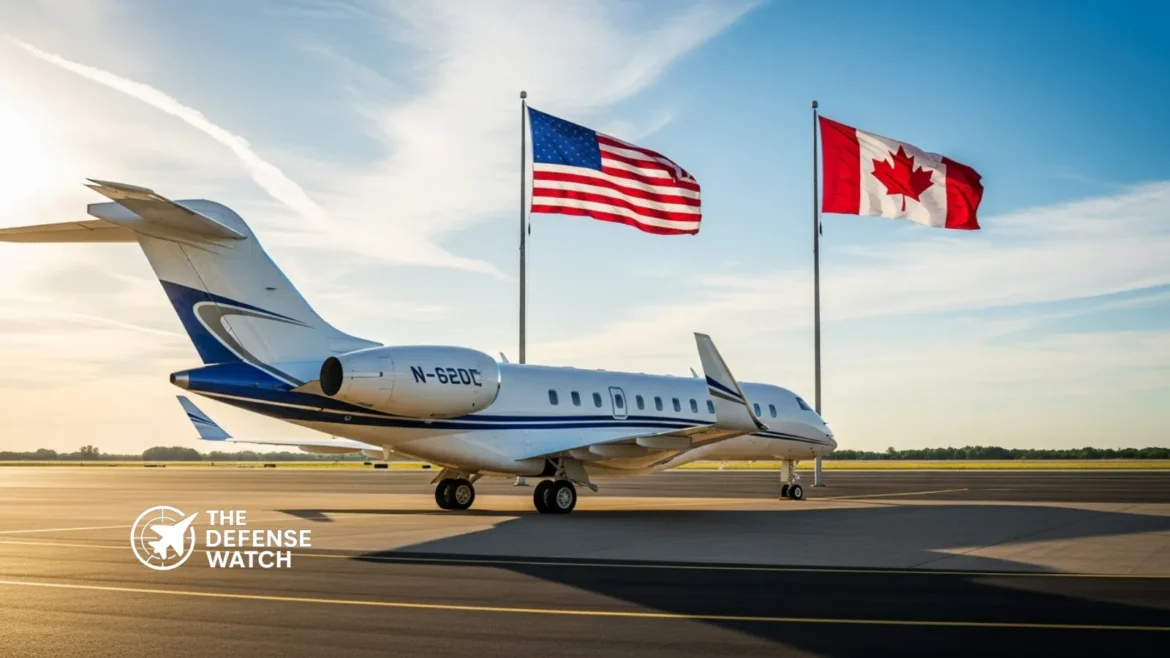
President Donald Trump threatened to impose 50% tariffs on Canadian-made aircraft and decertify Bombardier business jets on January 29, 2026, triggering immediate market volatility and raising serious questions about U.S. aviation operations.
Bombardier shares plunged 9% in Friday morning trading following the late Thursday announcement, which aviation industry experts describe as an unprecedented use of safety certification as a trade weapon.
The President’s declaration on Truth Social accused Canada of refusing to approve several Gulfstream aircraft models, claiming Ottawa had “wrongfully, illegally, and steadfastly refused to certify the Gulfstream 500, 600, 700, and 800 Jets.” In response, Trump stated he was “hereby decertifying their Bombardier Global Expresses, and all Aircraft made in Canada.
Technical Dispute Over Fuel System Testing
The certification dispute centers on fuel system icing tests for Gulfstream’s G700 and G800 models, which received FAA approval through a temporary exemption valid through December 2026. The exemption allows Gulfstream to deliver aircraft while completing full-scale testing to ensure fuel systems can operate safely when ice forms from water droplets in cold temperatures.
Transport Canada has not granted a similar exemption, requiring Gulfstream to complete the testing before certification. Aviation industry sources note this follows a global trend of increased regulatory scrutiny after the Boeing 737 MAX crisis, with international authorities demanding more independent verification.
Canada has already certified the Gulfstream G500 and G600 models, contradicting Trump’s claim that all four aircraft types have been blocked. The G700 and G800 certification reviews remain pending as Gulfstream works to meet updated fuel system icing standards.
Market Impact and Industry Response
Montreal-based Bombardier issued a measured statement acknowledging the President’s comments and confirming contact with the Canadian government. “Our aircraft, facilities and technicians are fully certified to FAA standards and renowned around the world,” the company stated, emphasizing its U.S. operations expansion.
More than half of Bombardier’s global fleet of approximately 5,200 aircraft operate in the United States, with 64% of the company’s 2024 sales coming from the U.S. market. The threatened tariffs would severely impact Bombardier’s access to its largest customer base.
Aviation data firm Cirium reports 150 Bombardier Global Express aircraft currently operate in U.S. airspace, flown by 115 operators. Across all Canadian manufacturers, approximately 5,425 aircraft registered in the United States could potentially face operational restrictions.
Defense and Commercial Aviation at Risk
The decertification threat extends beyond business aviation. The U.S. military operates modified Bombardier Global Express jets known as E-11A BACN aircraft, with one currently deployed to the Middle East for battlefield communications relay missions.
Major U.S. commercial carriers would also face disruptions. Delta Air Lines operates 46 Airbus A220 aircraft built in Canada, while JetBlue flies 10 of the type. Regional carriers using Bombardier CRJ jets for mainline operations would encounter significant operational challenges if new aircraft deliveries were blocked.
General Dynamics, which owns Gulfstream, would stand to benefit competitively if its primary rival faces trade barriers. However, industry analysts warn the precedent of using safety certification for economic leverage could invite retaliatory measures globally.
Broader Trade War Context
The aircraft dispute represents the latest escalation in deteriorating U.S.-Canada relations since Trump’s January 2025 inauguration. The President previously threatened 100% tariffs on Canadian goods if Ottawa proceeded with trade agreements involving China.
Tensions intensified after Canadian Prime Minister Mark Carney’s speech at the World Economic Forum in Davos, where he warned nations to prepare for the end of the rules-based global order, comments widely interpreted as criticism of U.S. trade policy. Treasury Secretary Scott Bessent subsequently warned Carney that such statements could backfire during the upcoming USMCA trade agreement review.
Aviation industry executives expressed alarm at mixing trade disputes with safety certification processes. Mixing safety issues with politics and grievances is an incredibly bad idea,” stated Richard Aboulafia, managing director of AeroDynamic Advisory, a U.S. aerospace consulting firm.
Economic Implications for Both Nations
Bombardier employs more than 3,000 people across nine U.S. facilities and maintains relationships with 2,800 American suppliers across 47 states. The company estimates over 40% of its aircraft content originates from U.S. manufacturers, with wings produced in Texas, avionics in Iowa, and engines in Indiana.
The United States maintains a significant trade surplus with Canada in aerospace products, making the sector an unusual target for tariff threats typically justified by trade imbalances. Industry observers note aircraft and aerospace components had largely escaped previous trade war measures under the USMCA agreement.
White House officials later clarified that existing Canadian-built aircraft would not be grounded, with decertification applying only to new deliveries. However, aviation law specialists report the announcement triggered immediate inquiries from corporate aircraft owners and potential buyers seeking clarification on their Bombardier fleet operations.
Regulatory Authority Questions
Aviation experts questioned whether the President possesses legal authority to decertify aircraft approved by the Federal Aviation Administration. The FAA, an independent regulatory body within the Department of Transportation, bases certification decisions on safety criteria rather than economic or political considerations.
The agency can only revoke certifications for safety-related deficiencies, not trade disputes. Trump’s declaration would require FAA implementation, but the legal framework for such action remains unclear. Previous presidential directives on aviation matters have typically been executed by relevant agencies with modifications to comply with statutory requirements.
Transport Canada declined immediate comment on the certification timeline for Gulfstream models. Canadian Industry Minister Mélanie Joly told media that certification processes are underway and should not be politicized, expressing confidence the situation could be resolved through normal regulatory channels.
Industry Outlook and Strategic Considerations
Bombardier’s Global 8000, which received FAA certification in December 2025, is the fastest civilian aircraft since the Concorde, with a top speed of Mach 0.95. The aircraft directly competes with Gulfstream’s G800 in the ultra-long-range business jet market, a segment dominated by North American manufacturers.
RBC Capital Markets analysts noted that sustained decertification threats could create near-term uncertainty around U.S. customer commitments for Bombardier, potentially affecting order books and delivery schedules even if the threats are not fully implemented.
The aerospace industry operates on global supply chains and reciprocal certification agreements that have functioned for decades. Unilateral actions by major aviation markets could destabilize the international regulatory framework, according to industry trade groups.
Canadian officials emphasized the country’s aviation safety record and certification standards meet or exceed international benchmarks. The standoff highlights growing fragmentation in global aviation regulation following increased scrutiny of manufacturer-regulator relationships after high-profile safety failures.
Political Ramifications
The timing of Trump’s aircraft threats coincides with Canada’s approach to upcoming USMCA negotiations scheduled for formal review. Prime Minister Carney has publicly committed to diversifying Canadian trade relationships away from overwhelming U.S. dependence, which currently accounts for approximately 70% of Canadian exports.
Carney rejected suggestions he walked back his Davos comments during subsequent conversations with Trump, stating he meant what he said about global order shifts and confirmed plans to pursue a dozen new trade agreements. The Prime Minister’s defiant stance marks a significant departure from previous Canadian governments’ careful management of U.S. relations.
Both nations face potential economic damage from sustained aerospace trade conflicts. The interconnected nature of North American aerospace manufacturing means tariffs and certification barriers would disrupt production networks on both sides of the border.
Next Steps and Resolution Prospects
Industry observers expect the situation to evolve through back-channel negotiations between government officials and company executives. Trump’s trade threats have historically served as opening positions for bargaining, with eventual implementation featuring modifications and exemptions.
Aviation regulators in both countries maintain technical working relationships independent of political leadership, providing potential channels for addressing the underlying certification issues. Gulfstream’s compliance deadline of December 31, 2026 for full fuel system icing certification may factor into resolution timelines.
Bombardier’s response strategy will likely emphasize its substantial U.S. economic footprint and the potential for retaliatory measures affecting American aerospace exports. The company faces a delicate balance between defending its market position and avoiding further escalation that could damage customer confidence.
The aerospace industry will closely monitor whether other countries interpret the U.S. actions as precedent for using safety certification as trade leverage, potentially fragmenting the global aviation regulatory system built on bilateral and multilateral agreements.

Europe Might Use 500 Billion Euro Crisis Fund for Defense
Europe could tap a crisis finance vehicle with capacity above 430 billion euros to help fund military spending, the head of the European Stability Mechanism said on Friday, in comments highlighting shifting fiscal tools for defense in the face of geopolitical pressure.
The European Stability Mechanism, or ESM, was created in the euro zone debt crisis to provide emergency loans to struggling economies. Its mandate does not explicitly cover defense. But Pierre Gramegna, managing director of the ESM, told Reuters that euro area members should consider using unused credit lines to support defense budgets in countries with solid finances but tight spending plans.
ESM’s Traditional Role and the Defense Pitch
The ESM holds more than 430 billion euros in lending capacity. It has been largely dormant in recent years, with limited use since the euro debt crisis eased. Gramegna said opening credit lines for defense could be done without the kinds of heavy economic reform demands that typically accompany ESM support.
In his comments, Gramegna said the fund’s full potential should be used in “these times of geopolitical turmoil,” a reference to persistent regional security pressures in Europe.
What Would Change
Under the proposal, euro zone members could tap precautionary credit lines to ease budget stress tied to military spending. These lines are usually offered to countries with strong finances as a form of insurance against future shocks. Adapting them for defense would shift the fund’s use beyond its core financial stability role.
Any move to repurpose the ESM would need unanimous approval from the 21 euro-area countries that back it. Nations that do not use the euro, such as Poland, would be ineligible for support. Neutral EU members, including Austria, Cyprus, Malta and Ireland, may pose political resistance.
Strategic Context
European states have significantly raised defense spending since Russia’s full-scale invasion of Ukraine in 2022, especially in the Baltic region. Those countries have seen budget strains as they aim to reach or maintain high defense spending levels relative to national output.
Gramegna’s remarks also revive discussion of a so-called “defense support line” concept, which would offer low-cost credit for defense at up to roughly 2 percent of GDP. Deployment of such a line would mirror a COVID-related support mechanism that was never tapped.
Political and Structural Hurdles
The ESM’s founding treaties do not foresee routine defense lending, and any change would require legal and political work. Voices in Brussels and member capitals have differed on how Europe should fund defense more broadly, including whether the continent should rely on pooled financing, new EU mechanisms, or national commitments.
Some analysts note this discussion is part of a broader debate across the EU about reducing reliance on external security guarantees while strengthening collective capabilities.
Implications for U.S.-Europe Defense Relations
Gramegna’s comments come amid persistent debate over burden sharing between the United States and European allies. In recent years U.S. policymakers have pressed for greater European defense investment, while some European leaders have explored ways to increase fiscal space for military spending within EU frameworks.
For the U.S. defense community, shifts in European defense finance structures could influence alliance planning, procurement cooperation, and interoperability initiatives.
What’s Next
Before the ESM can be used for defense, detailed discussions among euro area finance and defense officials will be needed. Legal adjustments, political buy-in from member states, and clarity on terms of credit lines for defense will shape whether this proposal moves beyond talk.
Lockheed Martin Exceeds Wall Street Expectations with 2026 Financial Outlook
Lockheed Martin Corporation announced its 2026 financial guidance on Thursday, January 29, projecting revenue between $77.5 billion and $80 billion, surpassing analyst expectations amid heightened global defense demand. The Maryland-based defense contractor reported fourth-quarter 2025 sales of $20.32 billion, representing a significant increase from $18.62 billion in the same period the previous year.
(adsbygoogle = window.adsbygoogle || []).push({});The company’s 2026 earnings per share guidance of $29.35 to $30.25 also exceeded Wall Street estimates of $29.28, according to data compiled by LSEG. Lockheed Martin’s stock rose 6.7 percent following the announcement, adding approximately $9.26 billion to the company’s market valuation.
“This notable start to 2026 reinforces our confidence in Lockheed Martin’s continued operational and financial growth in the year ahead,” the company stated in its earnings release. The forecast anticipates approximately 5 percent sales growth and 25 percent segment operating profit growth year-over-year.
Record Backlog Positions Company for Sustained Growth
Lockheed Martin reported a record backlog of $194 billion at the end of 2025, reflecting unprecedented demand for its defense systems. The company delivered $75 billion in sales during 2025, a 6 percent increase from the previous year, with net earnings reaching $5 billion.
Free cash flow for 2025 totaled $6.9 billion, exceeding previous expectations. For 2026, the company projects free cash flow between $6.5 billion and $6.8 billion, maintaining strong cash generation capabilities to support shareholder returns and capital investments.
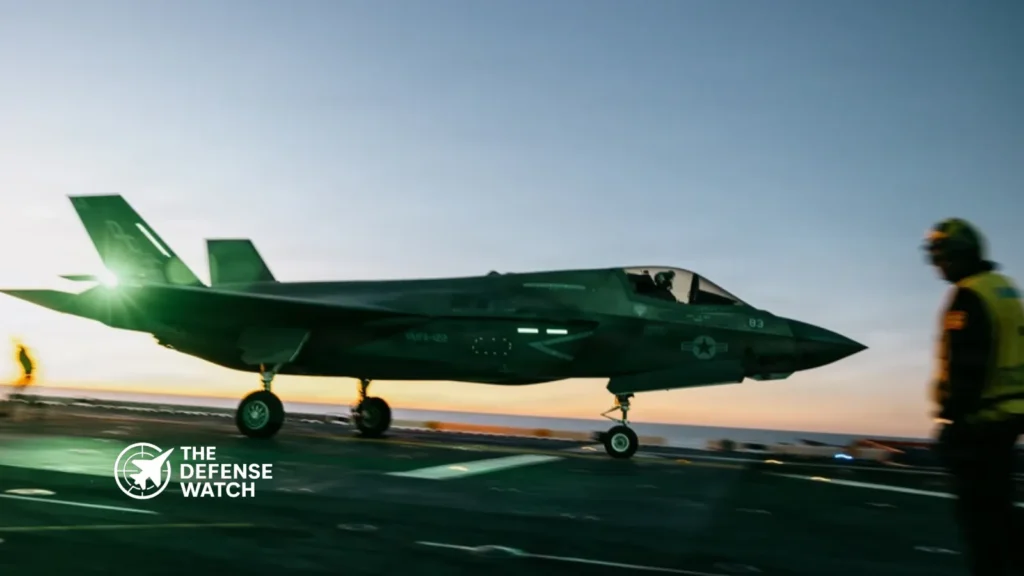
The defense contractor paid $3.13 billion in dividends during 2025, up from $3.06 billion the previous year. Unlike competitor Northrop Grumman, which announced it would pause stock buybacks beyond January, Lockheed Martin continues its commitment to returning value to shareholders.
Geopolitical Tensions Drive Fighter Jet and Missile Demand
Rising geopolitical uncertainty continues to fuel demand for Lockheed Martin’s premier weapon systems. Ongoing conflicts in the Middle East and the protracted Russia-Ukraine war have created sustained requirements for advanced fighter aircraft and air defense systems.
(adsbygoogle = window.adsbygoogle || []).push({});According to CEO Jim Taiclet, Lockheed Martin’s F-35 and F-22 fighter jets, RQ-170 stealth drones, and Sikorsky Black Hawk helicopters were deployed in recent U.S. military operations, including the capture of the Venezuelan president by American forces. The operational employment of these platforms demonstrates their continued relevance to national security missions.
The company’s Missiles and Fire Control division posted the strongest quarterly growth, with sales increasing 17.8 percent year-over-year during the fourth quarter. This segment manufactures the Patriot Advanced Capability-3 (PAC-3) Missile Segment Enhancement interceptor, which has seen exceptional demand from both U.S. forces and international partners.
Historic Patriot Missile Production Agreement Supports Forecast
Earlier in January 2026, Lockheed Martin finalized a landmark seven-year framework agreement with the Department of Defense to dramatically expand PAC-3 interceptor production. The deal calls for increasing annual production capacity from approximately 600 units to 2,000 units by the end of 2030.
This production ramp represents more than a tripling of current manufacturing rates and reflects the massive global demand for advanced air and missile defense capabilities. Seventeen partner nations currently operate the Patriot system, with additional countries expressing interest in acquiring the technology.
The PAC-3 Missile Segment Enhancement is a hit-to-kill interceptor designed to destroy incoming tactical ballistic missiles, cruise missiles, hypersonic weapons, and aircraft through direct impact rather than blast fragmentation. Its proven combat performance in recent conflicts has solidified its position as a critical capability for allied militaries.
According to missile defense expert Tom Karako of the Center for Strategic and International Studies, the production increase to 2,000 units annually is not excessive relative to demand. “The demand signal is massive among multiple US services, the other 17 nations globally that operate Patriot, and a handful more who want to,” Karako noted.
Production Expansion Strengthens Defense Industrial Base
The PAC-3 production agreement represents a significant shift in Pentagon acquisition strategy. The framework deal provides long-term demand certainty, enabling industry investment while incorporating provisions for inflation adjustments and cost-sharing mechanisms.
Lockheed Martin delivered more than 24,000 Missiles and Fire Control products to the United States and allied nations in 2025, demonstrating the scale of current demand. The company increased PAC-3 production by more than 60 percent over the past two years, delivering 620 interceptors in 2025 alone.
(adsbygoogle = window.adsbygoogle || []).push({});CEO Taiclet indicated that the production expansion would be accomplished using existing floor space while adding workers, advanced tooling, and automation. The agreement includes collaborative financing approaches designed to preserve cash neutrality while enabling necessary capital investments.
F-35 Program Maintains Strong Sales Momentum
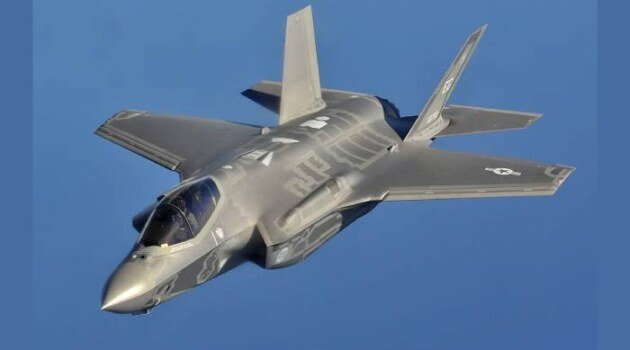
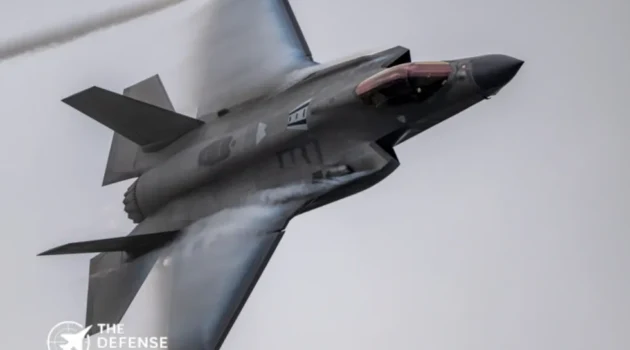
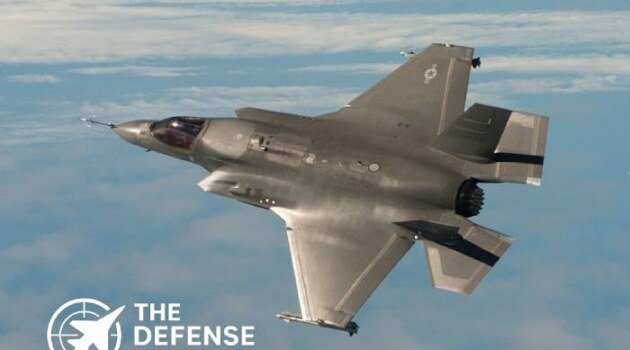
The F-35 Lightning II joint strike fighter program continues to represent a substantial portion of Lockheed Martin’s revenue base. As the world’s most advanced multirole stealth fighter, the F-35 serves as the cornerstone of air combat capabilities for the United States and numerous allied nations.
International demand for the F-35 remains robust, with partner nations continuing to place orders as they modernize their air forces. The aircraft’s advanced sensor fusion, stealth characteristics, and networked warfare capabilities make it essential for maintaining air superiority against peer and near-peer adversaries.
Lockheed Martin operates through four primary business segments: Aeronautics, Missiles and Fire Control, Rotary and Mission Systems, and Space. The Aeronautics segment, which produces the F-35, F-22, and other combat aircraft, represents a significant driver of company performance.
Industry Context and Competitive Landscape
Lockheed Martin’s strong forecast comes as defense contractors broadly anticipate continued growth driven by elevated geopolitical tensions and increased allied defense spending. Competitors RTX Corporation and Northrop Grumman have similarly reaffirmed their commitment to dividends, though investment strategies vary across the sector.
The company’s guidance excludes potential impacts from government shutdowns or other uncertain factors. As the largest defense contractor by revenue, Lockheed Martin derives approximately 80 percent of its income from U.S. government contracts, with the remainder from international sales and foreign military sales programs.
The defense industrial base faces ongoing challenges in scaling production to meet unprecedented demand while managing supply chain constraints and workforce availability. Lockheed Martin’s ability to expand PAC-3 production represents a test case for broader Pentagon acquisition reform efforts aimed at accelerating defense manufacturing.
Looking Ahead: Strategic Priorities for 2026
Lockheed Martin emphasized operational performance and alignment with customer national defense priorities as key focus areas for 2026. The company aims to deliver reliable capabilities that strengthen deterrence and provide combat advantage to U.S. and allied militaries.
With sales growth projected at approximately 5 percent and free cash flow expected between $6.5 billion and $6.8 billion, Lockheed Martin appears well-positioned to execute its strategic objectives while maintaining shareholder returns. The record backlog provides visibility into future revenue streams and supports continued investment in advanced technologies.
(adsbygoogle = window.adsbygoogle || []).push({});The company faces headwinds from classified program losses that affected 2025 results, including a $950 million loss in the Aeronautics segment. Management indicated these losses materially impacted quarterly and annual operating profit comparisons but expressed confidence in improved performance going forward.
As global security challenges persist and allied defense budgets expand, Lockheed Martin’s portfolio of advanced weapon systems positions the company for sustained demand. The successful execution of production ramp plans for the PAC-3 missile and continued F-35 deliveries will be critical to achieving the optimistic 2026 forecast.
Lockheed Martin Accelerates Defense Production with Record Q4 Performance
Lockheed Martin concluded 2025 with a transformative fourth quarter that demonstrated the defense contractor’s expanding production capabilities and technological innovation across multiple domains. The company announced January 29, 2026 that its Q4 achievements included record fighter jet deliveries, a historic missile production agreement, and breakthrough autonomous platform developments.
(adsbygoogle = window.adsbygoogle || []).push({});The Maryland-based defense giant’s fourth quarter accomplishments signal significant capacity expansion at a time when global defense demands continue to escalate. From air superiority platforms to missile defense systems and autonomous capabilities, Lockheed Martin’s Q4 performance established new benchmarks for the defense industrial base.
Historic PAC-3 Missile Production Agreement Transforms Air Defense Capacity
Lockheed Martin and the U.S. government finalized a seven-year partnership that will increase PAC-3 Missile Segment Enhancement (MSE) annual production from approximately 600 to 2,000 units. This more than threefold capacity increase represents one of the most significant defense production expansions in recent years.
The PAC-3 MSE system provides advanced air and missile defense capabilities against tactical ballistic missiles, cruise missiles, and aircraft threats. According to Lockheed Martin’s announcement, the expanded production will benefit U.S. forces, allied nations, and partner countries facing evolving aerial threats.
The production increase will create thousands of additional jobs across the PAC-3 program supply chain. The agreement comes as allied nations seek to strengthen integrated air and missile defense architectures amid global security challenges.
Record F-35 Deliveries Strengthen Allied Air Power
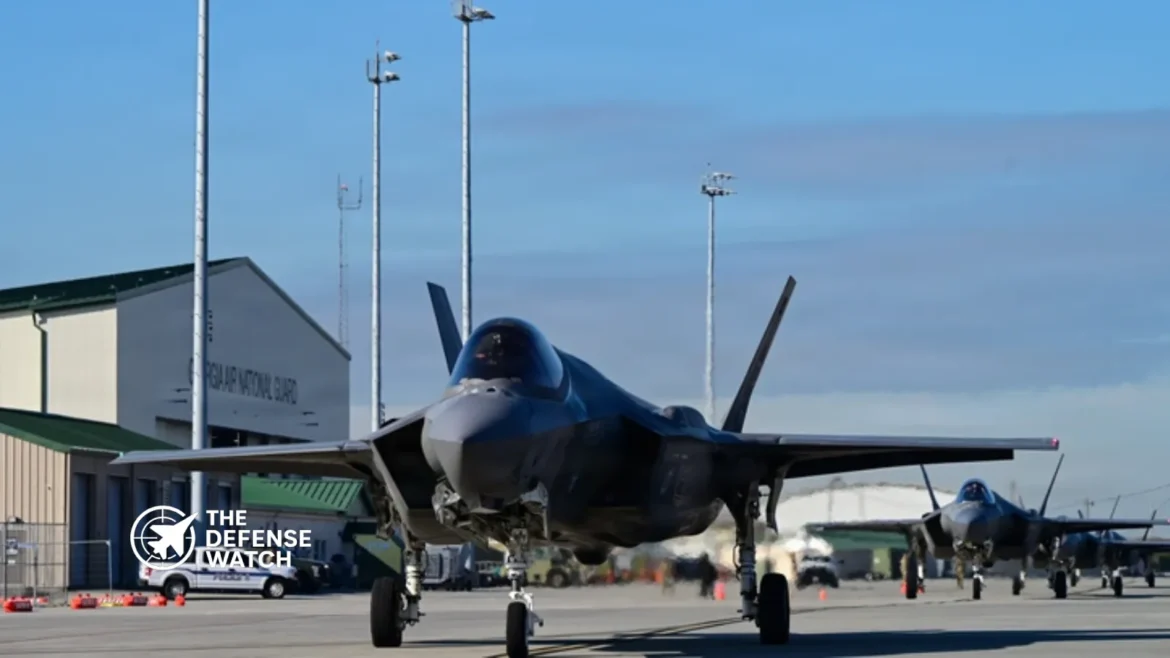
Lockheed Martin delivered 191 F-35 Lightning II fighter jets throughout 2025, marking a record annual total for the fifth-generation stealth fighter program. The company handed over 48 F-35s during the fourth quarter alone, demonstrating sustained production momentum.
Finland received its first F-35A aircraft in December 2025, expanding the growing international F-35 user community. The Nordic nation’s F-35 acquisition strengthens NATO’s northern flank air defense capabilities and represents continued international confidence in the platform’s advanced capabilities.
The F-35 program now includes nine partner nations and several foreign military sales customers. The aircraft’s advanced sensors, stealth characteristics, and networked capabilities continue to define modern air superiority requirements for allied air forces.
U-Hawk Autonomous Helicopter Advances Unmanned Aviation
Sikorsky, Lockheed Martin’s rotary-wing division, unveiled the S-70UAS U-Hawk, a fully autonomous helicopter derived from the proven BLACK HAWK platform. The U-Hawk eliminates the cockpit in favor of 25 percent additional cargo space and autonomous operational capabilities.
Development teams progressed from initial concept to prototype in just 10 months, with first flight scheduled for 2026. The U-Hawk is designed to operate independently, in coordination with other U-Hawks, or as part of manned-unmanned teaming with piloted BLACK HAWK aircraft.
The autonomous platform provides ground commanders with enhanced logistics and tactical flexibility in contested environments. The U-Hawk’s rapid development timeline demonstrates Lockheed Martin’s accelerated approach to autonomous systems integration.
X-59 First Flight Initiates Quiet Supersonic Research
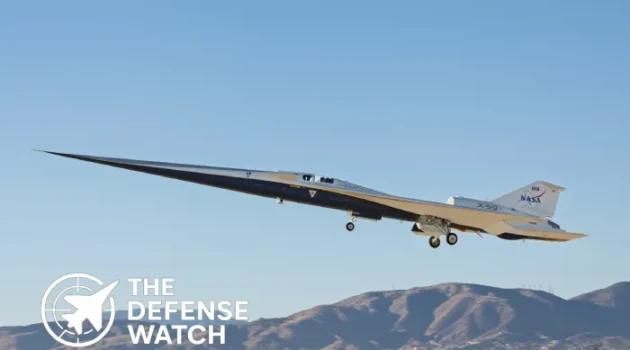
The X-59 experimental aircraft completed its inaugural flight in October 2025, launching NASA’s Quesst mission to demonstrate quiet supersonic flight technology. Developed through a partnership between Lockheed Martin’s Skunk Works and NASA, the X-59 aims to reduce sonic booms to a quiet “thump” rather than traditional disruptive sonic boom signatures.
The X-59 program could enable future commercial supersonic flight over land by addressing regulatory restrictions based on noise concerns. Flight testing will gather acoustic data to inform potential changes to supersonic flight regulations.
Lockheed Martin and NASA plan extensive testing to measure community response to the X-59’s reduced sonic signature during overland supersonic operations.
F-22 Demonstrates Unmanned Teaming Capability
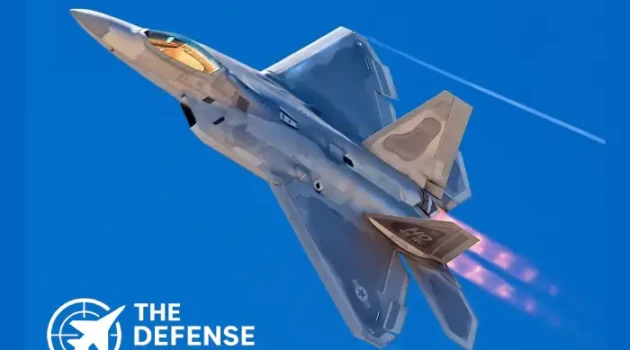
Lockheed Martin successfully demonstrated real-time command and control of an unmanned aerial system from an F-22 Raptor cockpit in November 2025. The in-flight demonstration showcased fifth-generation fighter aircraft integration with autonomous systems for enhanced mission effectiveness.
The manned-unmanned teaming capability expands what individual pilots can accomplish during single missions by extending their operational reach and sensor coverage. The technology aligns with U.S. Air Force concepts for Collaborative Combat Aircraft that will operate alongside crewed fighters.
Fifth-generation fighters serving as command nodes for autonomous systems represent an emerging operational paradigm across multiple allied air forces. The demonstrated capability builds on Lockheed Martin’s broader autonomous systems integration efforts.
Nomad VTOL UAS Combines Helicopter and Fixed-Wing Capabilities
Sikorsky introduced the Nomad family of vertical takeoff and landing unmanned aerial systems featuring twin tiltrotor configuration. The Nomad design combines fixed-wing efficiency for extended endurance with helicopter-like vertical takeoff and landing capabilities.
The runway-independent platform addresses operational requirements for long-endurance missions in austere environments without traditional airfield infrastructure. Nomad’s tiltrotor design enables efficient cruise flight while retaining the tactical flexibility of vertical flight operations.
(adsbygoogle = window.adsbygoogle || []).push({});Sikorsky’s Nomad development follows successful tiltrotor experience from the company’s S-97 Raider program and demonstrates continued innovation in vertical lift aviation.
Strategic Investment Accelerates Maritime Unmanned Capabilities
Lockheed Martin invested $50 million in Saildrone during October 2025 to accelerate unmanned surface vessel development for maritime defense applications. The strategic collaboration pairs Saildrone’s autonomous vessel platforms with Lockheed Martin’s defense systems integration expertise.
The partnership aims to deliver operationally ready unmanned surface vessels to the U.S. Navy more rapidly by combining established autonomous maritime platforms with combat-proven sensors and mission systems. Unmanned surface vessels provide persistent maritime domain awareness and contribute to distributed maritime operations concepts.
The investment reflects growing U.S. Navy emphasis on autonomous systems across surface, subsurface, and aerial domains for enhanced fleet capabilities.
Counter-UAS Technology Partnership with Microsoft
Lockheed Martin and Microsoft announced collaboration on next-generation counter-unmanned aerial system technologies leveraging Microsoft Azure cloud infrastructure. The partnership combines Lockheed Martin’s modular counter-UAS architecture with cloud-enabled artificial intelligence capabilities for enhanced threat detection and response.
The integrated system enables rapid innovation through cloud-based model training while maintaining edge processing for real-time operations. The architecture supports continuous adaptation as unmanned aerial threats evolve.
Counter-UAS capabilities have become critical requirements across military services as adversary drone proliferation continues globally. The Microsoft partnership accelerates Lockheed Martin’s counter-UAS technology development through advanced computing capabilities.
Orion Spacecraft Testing Advances Artemis Program
NASA’s Orion spacecraft undergoes comprehensive testing at Lockheed Martin’s Integrated Test Lab, a full-scale spacecraft replica used for system validation before launch. Engineers and astronauts conduct mission simulations testing every system, display, and software line prior to Artemis missions.
The Integrated Test Lab enables thorough spacecraft verification in ground environments before committing hardware to space operations. Orion serves as NASA’s deep space exploration vehicle for Artemis lunar missions.
Lockheed Martin serves as prime contractor for Orion development and production. The spacecraft will carry astronauts to lunar orbit as part of NASA’s sustained lunar exploration program.
Corporate Leadership Engagement with Veteran Community
Lockheed Martin’s executive leadership team participated in veteran community service activities during November 2025 in partnership with Rebuilding Together Atlanta. The volunteer effort restored community facilities supporting local veterans and their families.
The corporate engagement reflects Lockheed Martin’s continued emphasis on veteran employment and community support. The company employs thousands of military veterans across its operations.
(adsbygoogle = window.adsbygoogle || []).push({});Lockheed Martin maintains multiple programs supporting military service members, veterans, and their families through employment initiatives and community partnerships.
Defense Industrial Base Implications
Lockheed Martin’s fourth quarter achievements demonstrate accelerated production capacity and technology development across the defense industrial base. The PAC-3 production expansion, record F-35 deliveries, and rapid autonomous systems development signal the company’s response to increased global defense requirements.
The announced programs span air dominance, missile defense, autonomous systems, and space exploration capabilities. Lockheed Martin’s integrated approach addresses multiple defense priorities simultaneously while expanding production infrastructure.
As allied nations increase defense investments and modernization programs, Lockheed Martin’s expanded capacity positions the company to support growing international demand for advanced defense systems. The fourth quarter results establish momentum entering 2026 across the company’s diverse portfolio.

Lockheed Martin Achieves Strong 2025 Performance Amid Defense Modernization Surge
BETHESDA, Md. – January 29, 2026 – Lockheed Martin Corporation reported fourth-quarter 2025 sales of $20.3 billion and full-year revenue of $75.0 billion, representing 6% year-over-year growth, the company announced today. The defense contractor’s backlog reached a record $194 billion, driven by sustained global demand for signature platforms including the F-35 fighter jet and integrated air defense systems.
(adsbygoogle = window.adsbygoogle || []).push({});The Bethesda-based aerospace and defense manufacturer posted net earnings of $5.0 billion for 2025, or $21.49 per share, which included a $479 million pension settlement charge. Excluding this charge, earnings totaled $5.4 billion. Free cash flow reached $6.9 billion for the year, exceeding prior company guidance, despite an $860 million pension contribution that satisfied 2026 obligations.
“With a record $194 billion backlog, 6% year-over-year sales growth, and free cash flow generation above our prior expectation, 2025 marked a year of unprecedented demand for Lockheed Martin capabilities,” said Chairman, President and CEO Jim Taiclet during the earnings call. “This escalating demand for our signature programs and systems has been driven by combat-proven performance over recent years.”
Fourth Quarter Performance Highlights Strong Momentum
Fourth-quarter sales of $20.3 billion represented a 9% increase compared to $18.6 billion in Q4 2024. Net earnings for the quarter totaled $1.3 billion, or $5.80 per share, compared to $527 million in the year-ago period. The quarter’s performance reflected recovery from classified program losses recognized in 2024, which had impacted $1.7 billion in operating profit.
Cash from operations reached $3.2 billion in Q4 2025, up from $1.0 billion in Q4 2024, with free cash flow of $2.8 billion compared to $441 million in the prior-year quarter. The company attributed improved cash generation to favorable working capital timing, particularly in accounts payable and contract liabilities at its Rotary and Mission Systems division.
Business Segment Performance Demonstrates Mixed Results
Aeronautics Division: The division posted sales of $30.3 billion for 2025, up 6% from $28.6 billion in 2024, driven primarily by F-35 program growth. Fourth-quarter sales reached $8.5 billion, a 6% increase year-over-year. However, operating profit for the year declined 17% to $2.1 billion due to a $950 million loss on a classified program recognized in Q2 2025 and $140 million in unfavorable adjustments on the C-130 program. Operating margin for 2025 stood at 6.9%, down from 8.8% in 2024.
Missiles and Fire Control: This segment delivered the strongest performance with 14% sales growth to $14.5 billion in 2025, up from $12.7 billion in 2024. Operating profit surged 382% to $2.0 billion from $413 million in 2024, reflecting recovery from a $1.4 billion classified program loss in the prior year. The segment benefited from production ramp-up on tactical and strike missile programs including JASSM, LRASM, and precision fires, as well as increased PAC-3 missile production. Operating margin reached 13.8% compared to 3.3% in 2024.
Rotary and Mission Systems: Sales remained relatively flat at $17.3 billion compared to $17.3 billion in 2024. Operating profit decreased 31% to $1.3 billion from $1.9 billion, primarily due to $665 million in combined losses on the Canadian Maritime Helicopter Program (CMHP) and Turkish Utility Helicopter Program (TUHP) recognized in Q2 2025. Operating margin declined to 7.6% from 11.1% in 2024. Despite program challenges, the segment saw increased Black Hawk helicopter production and growth in the River Class Destroyer program.
Space Division: Sales increased 4% to $13.0 billion from $12.5 billion in 2024, driven by Next Generation Interceptor (NGI), Fleet Ballistic Missile (FBM), and Orion programs. Operating profit grew 10% to $1.3 billion, with operating margin improving to 10.3% from 9.8% in 2024. The segment’s joint venture, United Launch Alliance, contributed minimal equity earnings compared to $45 million in 2024.
F-35 Production Acceleration Drives Aeronautics Growth
The F-35 Joint Strike Fighter program remained a significant revenue driver for Lockheed Martin in 2025. The company delivered 191 F-35 aircraft during the year, a substantial increase from 110 deliveries in 2024. Fourth-quarter deliveries totaled 48 aircraft, down from 62 in Q4 2024, reflecting normal quarterly production variations.
(adsbygoogle = window.adsbygoogle || []).push({});F-35 sales contributed approximately $1.9 billion in increased revenue for the Aeronautics segment in 2025, attributed to higher production volume and sustainment contract activity. The program accounted for the majority of Aeronautics’ 6% year-over-year sales growth despite headwinds from classified program performance.
PAC-3 Framework Agreement Signals Acquisition Reform Alignment
Taiclet highlighted the company’s landmark seven-year framework agreement for PAC-3 missiles as evidence of alignment with the Department of War’s Acquisition Transformation Strategy. We are well positioned to perform under the Department of War’s Acquisition Transformation Strategy, as evidenced by our landmark, seven-year framework agreement for PAC-3 missiles early in the first quarter,” Taiclet stated.
The framework agreement represents a departure from traditional year-by-year contracting approaches, potentially enabling more efficient production planning and economies of scale. However, the company noted the agreement has not yet been definitized into a firm contract. PAC-3 missile production contributed $450 million to the Missiles and Fire Control segment’s 14% revenue growth in 2025.
Industry analysts view multi-year framework agreements as a potential catalyst for improved defense industrial base efficiency, though execution risks remain until contracts are fully negotiated. The agreement’s structure may serve as a template for future large-scale weapons acquisitions if successfully implemented.
Program Losses Impact Profitability Metrics
Lockheed Martin’s 2025 financial performance was significantly affected by $1.6 billion in program losses recognized during the second quarter. The losses included:
- $950 million on an undisclosed classified program at Aeronautics
- $570 million on the Canadian Maritime Helicopter Program (CMHP) at Rotary and Mission Systems
- $95 million on the Turkish Utility Helicopter Program (TUHP) at Rotary and Mission Systems
- $140 million in unfavorable adjustments on C-130 programs
These charges reduced diluted earnings per share by approximately $7.03 for the full year. The company also recorded a $479 million non-operational pension settlement charge in Q4 2025 related to transferring $943 million in gross defined benefit pension obligations to insurance companies, reducing earnings per share by an additional $1.63.
Excluding program losses and one-time charges, the company’s underlying operational performance showed improvement, with business segment operating profit increasing 11% to $6.7 billion from $6.1 billion in 2024.
Capital Allocation Prioritizes Shareholder Returns and Capacity Investment
Lockheed Martin returned $6.1 billion to shareholders during 2025 through $3.1 billion in dividends and $3.0 billion in share repurchases. The company repurchased 6.6 million shares at an average price of approximately $455 per share, reducing outstanding shares to 229 million from 234 million at year-end 2024.
Capital expenditures totaled $1.6 billion in 2025, down slightly from $1.7 billion in 2024. The company emphasized that total investment in production capacity and next-generation technologies exceeded $3.5 billion during the year when including research and development spending of $2.0 billion.
The capital allocation strategy reflects confidence in sustained defense spending and positions the company to meet growing international and domestic demand for advanced weapons systems. Management indicated 2026 capital expenditures will increase to $2.5-$2.8 billion to support production expansion.
2026 Financial Outlook Projects Continued Growth
Lockheed Martin provided 2026 financial guidance projecting continued revenue and earnings growth:
- Sales: $77.5 billion to $80.0 billion (approximately 5% midpoint growth)
- Business segment operating profit: $8.4 billion to $8.7 billion (approximately 25% midpoint growth)
- Diluted earnings per share: $29.35 to $30.25 (approximately 38% midpoint growth)
- Free cash flow: $6.5 billion to $6.8 billion
- Capital expenditures: $2.5 billion to $2.8 billion
The significant projected increase in operating profit and earnings per share reflects the absence of 2025’s $1.6 billion in program losses and improved operational performance across all business segments. Management emphasized the guidance does not incorporate potential impacts from government shutdowns or recently issued executive orders.
The 2026 outlook assumes approximately $1.4 billion in total FAS/CAS pension adjustments and benefits from tax provisions in the “One Big Beautiful Bill Act” passed in late 2025. The company expects effective tax rates to remain in the mid-teens percentage range.
Backlog Growth Indicates Strong Future Revenue Pipeline
Lockheed Martin’s total backlog increased 10% to $193.6 billion at December 31, 2025, compared to $176.0 billion at year-end 2024. Backlog growth was distributed across all four business segments:
- Aeronautics: $59.4 billion (down from $62.8 billion, reflecting F-35 production execution)
- Missiles and Fire Control: $46.7 billion (up 20% from $38.8 billion)
- Rotary and Mission Systems: $47.7 billion (up 25% from $38.1 billion)
- Space: $39.8 billion (up 9% from $36.4 billion)
The Missiles and Fire Control backlog increase reflects strong international and domestic orders for air defense systems, tactical missiles, and precision munitions. Rotary and Mission Systems backlog growth was driven by multi-year helicopter contracts and increased sensor and radar program awards.
(adsbygoogle = window.adsbygoogle || []).push({});Management expects the backlog to continue growing in 2026 as allied nations accelerate defense modernization efforts in response to evolving global security threats. The record backlog provides revenue visibility extending multiple years into the future for most major programs.
Operational Excellence Initiatives Target Cost Efficiency
During the earnings call, management emphasized ongoing initiatives to improve operational efficiency and product affordability across all business segments. The company’s digital transformation efforts aim to reduce production costs and accelerate delivery timelines for key platforms.
Lockheed Martin invested heavily in advanced manufacturing technologies during 2025, including expanded use of automation, additive manufacturing, and digital twin capabilities. These investments are expected to yield cost savings and quality improvements as production volumes increase on programs like F-35, PAC-3, and Black Hawk helicopters.
The company also highlighted supply chain resilience efforts, working with suppliers to secure critical components and materials needed for increased production rates. Raw material availability, particularly for rare earth minerals used in advanced electronics, remains a focus area for risk mitigation.
International Sales Remain Strong Revenue Component
International military sales contributed significantly to Lockheed Martin’s 2025 performance, though the company does not break out specific percentages. F-35 Foreign Military Sales (FMS) and direct commercial sales to partner nations accounted for a substantial portion of the 191 aircraft delivered in 2025.
The company delivered 16 F-16 Fighting Falcon aircraft during 2025, primarily to international customers including several Middle Eastern nations. Black Hawk international deliveries totaled 17 helicopters, while the company delivered 2 C-130J Super Hercules airlifters for the year, down from 21 in 2024 due to production sequencing.
International demand for integrated air and missile defense systems, particularly PAC-3 missiles, contributed to the Missiles and Fire Control segment’s strong backlog growth. European nations have significantly increased orders for air defense capabilities following escalating regional security concerns.
Defense Industry Implications and Market Position
Lockheed Martin’s strong 2025 performance and record backlog underscore the company’s dominant position in the U.S. defense industrial base. The company remains the world’s largest defense contractor by revenue, maintaining leadership positions in tactical aircraft, rotorcraft, missile systems, and space technologies.
The financial results reflect broader trends in global defense spending, with allied nations prioritizing modernization of air defense, precision strike, and advanced aircraft capabilities. Lockheed Martin’s portfolio directly addresses these priority areas, positioning the company to capture significant share of increased defense budgets.
Competition remains intense in most market segments, with companies like RTX Corporation, Northrop Grumman, and Boeing competing for major program awards. However, Lockheed Martin’s incumbency on flagship programs like F-35, PAC-3, and Sikorsky helicopters provides competitive advantages in sustainment and follow-on orders.
Forward-Looking Considerations and Risk Factors
While Lockheed Martin’s 2025 results demonstrated strong underlying business performance, several factors could impact future financial outcomes:
Program Execution Risk: The $1.6 billion in losses on classified and international helicopter programs in 2025 illustrates ongoing risks in fixed-price development contracts. Management emphasized improved risk management processes, but complex programs inherently carry execution uncertainty.
Government Budget Environment: The 2026 outlook does not incorporate potential impacts from government shutdowns or changing administration priorities. Extended continuing resolutions or budget cuts could delay program funding and affect revenue timing.
Acquisition Reform Implementation: The Department of War’s Acquisition Transformation Strategy and framework contracting approach present both opportunities and risks. Successful implementation could improve margins and cash flow, but transitional challenges may arise as new processes are adopted.
Supply Chain Constraints: Accelerating production rates on multiple programs simultaneously could strain supplier capacity for critical components. The company’s ability to meet delivery commitments depends partly on supply chain health beyond its direct control.
International Trade Policy: Changes in export controls, foreign military sales approval processes, or trade restrictions could affect international order flow and revenue mix. The company’s global customer base provides diversification but also exposes it to geopolitical uncertainties.
Industry Expert Analysis
Defense industry analysts generally viewed Lockheed Martin’s 2025 results positively, noting the company’s ability to generate strong cash flow despite significant program charges. The record backlog and 2026 guidance suggesting 25% operating profit growth were cited as indicators of improving business fundamentals.
Analysts emphasized that absent the discrete $1.6 billion in program losses, Lockheed Martin’s underlying earnings growth would have been substantially higher in 2025. The projected 2026 earnings per share of $29.35-$30.25 represents approximately 38% growth from 2025’s $21.49, primarily reflecting absence of prior-year charges rather than pure operational improvement.
(adsbygoogle = window.adsbygoogle || []).push({});The company’s share repurchase activity during 2025 was characterized as prudent capital allocation given the strong backlog visibility and cash generation capability. With $4.1 billion in cash and cash equivalents at year-end and $20.5 billion in long-term debt, the balance sheet was assessed as appropriately leveraged for the defense sector.
About Lockheed Martin Corporation
Lockheed Martin Corporation is a global aerospace and defense technology company headquartered in Bethesda, Maryland. The company operates through four business segments: Aeronautics, Missiles and Fire Control, Rotary and Mission Systems, and Space. Major products and programs include the F-35 Lightning II, F-16 Fighting Falcon, C-130 Hercules, Sikorsky helicopters, PAC-3 missiles, THAAD missile defense, and numerous classified space and intelligence systems.
The company employs approximately 122,000 people worldwide and derives the majority of revenue from contracts with the U.S. Department of Defense and allied foreign governments. Lockheed Martin stock trades on the New York Stock Exchange under ticker symbol LMT.
Pentagon Accelerates Defense Innovation with Record Small Business Investment
The War Department’s Accelerate the Procurement and Fielding of Innovative Technologies (APFIT) program has surpassed $1 billion in total awards to small businesses and non-traditional defense contractors, marking a significant expansion in the Pentagon’s effort to rapidly field cutting-edge military capabilities.
The milestone announcement, made December 22, 2025, includes the first round of Fiscal Year 2026 project selections valued at approximately $400 million across 14 unclassified programs spanning autonomous systems, space technologies, communications networks, and advanced munitions.
“Crossing the billion-dollar threshold underscores APFIT’s commitment to America’s small business innovators,” stated Emil Michael, Under Secretary of War for Research and Engineering, emphasizing the program’s role in accelerating critical capabilities to warfighters.
Scaling Innovation from Development to Production
The FY 2026 selections demonstrate the program’s growing maturity and operational impact. Average project awards now exceed $30 million, reflecting APFIT’s transition from early-stage prototypes to production-scale deployments of mission-critical technologies.
The largest single award announced totals $49.7 million for the U.S. Army’s Real-Time Command and Control at the Tactical Edge project, approaching APFIT’s $50 million statutory maximum. This represents the highest individual contract in the program’s history and signals increasing confidence in rapid technology transition pathways.
According to the War Department, the FY 2026 portfolio emphasizes operational readiness through technologies already validated in development phases. The program continues expanding opportunities for small businesses across all U.S. regions, including traditionally underrepresented and remote states, strengthening the domestic defense industrial base.
Marine Corps Dominates Project Awards
The U.S. Marine Corps leads FY 2026 selections with seven projects totaling approximately $212 million, focusing heavily on autonomous systems and unmanned platforms. Notable Marine Corps projects include:
The Gremlin Low-Cost Munition receives $35 million to provide affordable precision strike capabilities. The autonomous Unmanned Ground Vehicle for Ground Based Air Defense garners $20 million to enhance expeditionary air defense posture.
Maritime autonomy represents another Marine Corps priority, with the Whaleshark Autonomous Low-Profile Vessel awarded $29.49 million and Small Uncrewed Maritime Vessels receiving $24 million in joint funding with the Navy. The Trolling Uncrewed Navigation Assistant (TUNA) Seeker secures $35 million for advanced maritime guidance systems.
Additional Marine Corps investments include a $20 million Miniaturized Gyroscope for Resilient Navigation and a $10 million Tactical High-Bandwidth, Low-Latency data network project, addressing critical gaps in denied-environment operations.
Space Force Pursues Orbital Superiority
The U.S. Space Force received two substantial awards addressing critical space domain challenges. The Augmented Maneuver Vehicle for Satellites project secures $48.5 million, the second-largest award announced, to enhance on-orbit operations and satellite maneuverability.
Deployable, Attritable Optical Systems receives $22.15 million to develop cost-effective space-based surveillance and tracking capabilities. These investments align with broader Pentagon efforts to maintain space superiority amid growing threats to orbital assets.
Navy and Air Force Technology Priorities
The U.S. Navy’s selection of Domestic High Performance UAS Batteries for $28 million addresses critical supply chain vulnerabilities in unmanned aerial systems. The service also allocated $33 million for the Kraken 18 Communications Pod, enhancing maritime communications capabilities.
The U.S. Air Force focuses on logistics innovation with a $25 million award for Mobile Smart Manufacturing for Airframe Spares. This project aims to revolutionize maintenance operations through additive manufacturing and distributed production capabilities at forward locations.
Army Invests in Electronic Warfare and Network Command
Beyond the flagship $49.7 million command and control project, the U.S. Army awarded $21.66 million for the High Frequency Intercept Direction Finding and Exploitation (HIDES) system. This electronic warfare capability addresses emerging threats in contested electromagnetic environments.
The Real-Time Command and Control at the Tactical Edge project represents the Army’s commitment to network-centric warfare, enabling faster decision-making cycles and improved battlefield awareness at the lowest echelons.
Strategic Implications for Defense Industrial Base
The APFIT program serves as a cornerstone of the War Department’s innovation strategy, designed to circumvent traditional acquisition timelines that often span decades. By focusing on small businesses and non-traditional contractors, APFIT aims to access commercial technologies and innovative approaches typically outside conventional defense channels.
Industry analysts note the program’s emphasis on dual-use technologies, particularly in autonomy, communications, and advanced manufacturing. These sectors attract significant commercial investment, allowing the Pentagon to leverage private sector innovation while maintaining operational requirements.
The $1 billion milestone also reflects broader Pentagon efforts to distribute defense spending beyond traditional prime contractors. Small business participation strengthens regional economies and cultivates a diverse supplier base less vulnerable to single points of failure.
Program Structure and Future Outlook
APFIT operates under specific statutory authorities enabling rapid prototyping and fielding of technologies demonstrating high operational value. The $50 million per-project ceiling encourages focused development while maintaining agility compared to major acquisition programs.
The War Department indicated additional FY 2026 projects will be announced throughout the fiscal year as selections are finalized. Classified projects were excluded from the December announcement but represent a significant portion of total APFIT funding.
Program officials emphasize that awards target technologies at higher technology readiness levels, typically between TRL 6 and 8, where systems have been validated in relevant environments but require final engineering and production scaling. This approach minimizes technical risk while maximizing fielding speed.
Technology Trends and Operational Priorities
The FY 2026 selections reveal clear operational priorities across the services. Autonomous systems dominate the portfolio, with seven of 14 unclassified projects involving unmanned platforms or autonomous capabilities. This reflects ongoing Pentagon emphasis on distributed operations, attrition-resistant forces, and human-machine teaming.
Maritime autonomy receives particular attention, with multiple projects addressing surface and subsurface unmanned vessels. These investments support distributed maritime operations concepts and counter-maritime strategies in contested environments.
Communications and networking technologies represent another focus area, addressing persistent challenges in denied and degraded environments. Projects emphasize resilience, bandwidth, and low-latency requirements for modern multi-domain operations.
Space technologies expand APFIT’s traditional focus on terrestrial systems, reflecting the domain’s growing importance and the Space Force’s integration into rapid acquisition pathways. Emphasis on attritable and maneuverable systems suggests preparations for potential orbital conflicts.
Congressional and Industry Reaction
While official congressional responses have not yet been issued, APFIT enjoys bipartisan support as a mechanism to accelerate innovation while supporting small business development. The program aligns with legislative priorities to strengthen the defense industrial base and reduce acquisition timelines.
Defense industry associations have previously praised APFIT for lowering barriers to entry for non-traditional contractors. However, some traditional defense firms express concern about program scale relative to major acquisition programs and potential gaps in long-term sustainment planning.
Small business advocacy groups welcome the funding expansion but note that $1 billion across multiple years represents a fraction of total defense procurement spending, which exceeds $140 billion annually.
Additional FY 2026 Announcements Expected
The War Department indicated the December announcement represents only the initial round of FY 2026 selections. Additional projects will be revealed as they complete evaluation and approval processes throughout the fiscal year.
Historical patterns suggest subsequent announcements may include projects currently under security review or pending final contract negotiations. The program typically announces 20-30 projects per fiscal year across classified and unclassified portfolios.
APFIT remains a key element of the Pentagon’s broader technology modernization strategy, working alongside other innovation initiatives such as the Defense Innovation Unit, Strategic Capabilities Office, and service-specific rapid capabilities offices. Together, these programs aim to maintain U.S. technological advantage against near-peer competitors while adapting to evolving threats.
The program’s success in reaching the $1 billion milestone demonstrates sustained institutional commitment to alternative acquisition pathways and recognition that traditional procurement cycles cannot adequately address the pace of technological change in modern warfare.
UK MOD Launches Defence Office for Small Business Growth to Boost SME Contract Wins
The UK Ministry of Defence has established a new Defence Office for Small Business Growth to help small and medium-sized enterprises win more defence contracts and expand their role in the national security supply chain, UK officials announced.
New SME Support Office Targets Contract Access Challenges
The Defence Office for Small Business Growth (OfSBG) is designed to ease longstanding barriers for small firms in defence procurement, including slow, complex bidding processes and limited transparency, according to UK Government reporting.
Defence Readiness and Industry Minister Luke Pollard made the announcement as part of a broader push to raise Ministry of Defence (MOD) spending with SMEs. Under current plans, the UK Government aims to increase annual SME defence spending from about £5 billion to £7.5 billion by 2028.
The new office will employ policy and commercial specialists tasked with advising small businesses on bidding, improving contract outcomes and simplifying access to defence opportunities. A public-facing portal and contact centre will provide guidance on procurement and tendering processes.
Officials said the initiative responds to industry feedback that defence contracting can be difficult for smaller firms to navigate, particularly around complex requirements and fragmented information.
Support for SMEs Is Part of Broader Industrial Strategy
The Defence Office for Small Business Growth is part of recent UK defence sector reforms that aim to strengthen industrial resilience and economic impact. The UK Strategic Defence Review and Defence Industrial Strategy both emphasize greater inclusion of SMEs in defence supply chains and improved market access.
A revised SME Commercial Pathway is intended to break larger procurements into smaller contracts, improve payment terms and reserve some opportunities specifically for smaller companies.
The initial phase of the office will support around 30 pathfinder SMEs across sectors including cyber, engineering and aeronautics. Officials say that pilot group will help refine processes before wider rollout.
Geographical and Sector Impact
Minister Pollard highlighted that the move benefits firms across the UK, with a focus on spreading defence opportunity beyond traditional defence hubs. The office’s outreach includes businesses in Scotland, Wales, Northern Ireland and England.
Scottish Secretary Douglas Alexander noted the potential for the office to bolster regional economies where defence spending already supports thousands of jobs.
The office’s work aligns with other Government measures to stimulate smaller business growth within defence, such as the “Back British” industry initiative that aims to leverage defence investment to boost UK jobs and supply chains.
Why It Matters
SMEs have historically struggled to compete for defence contracts against larger primes due to complexity of requirements and lack of dedicated support. Improving SME access is seen as a way to increase competition, enhance innovation, and diversify the defence industrial base, while contributing to wider economic and security goals.
This initiative also fits within the UK’s broader defence investment planning, which seeks to balance military capability with industrial growth and job creation across sectors that include aerospace, cyber, and advanced manufacturing.
Former UK defence secretary Sir Grant Shapps defended his approach to handling the Afghan data breach, saying that keeping information restricted early in the crisis was about protecting lives, not avoiding scrutiny. In testimony to the House of Commons Defence Committee, Shapps said wider early briefings could have increased risk to Afghan nationals and British personnel.
What Shapps Told MPs
In a Defence Committee session, Shapps acknowledged he delayed briefing senior parliamentarians for roughly a month after the Ministry of Defence discovered a major data breach involving Afghan relocation records. He told MPs the priority was confirming facts before widening awareness of the breach.
Shapps said the choice was about “risk management,” arguing that even a small increase in the number of people aware of the breach could lead to lives being lost. He told committee members that extending disclosure to shadow ministers and committee chairs too early might have exposed at-risk Afghan allies and British forces.
Pushback from Parliamentary Oversight
Committees pressed Shapps on democratic accountability, noting that journalists and activists had already made some breach details public and that Afghan nationals were aware of the issue. The Defence Committee chair described withholding information from elected parliamentarians as a significant breakdown in oversight.
Shapps rejected the criticism, saying there are instances where executive authority must take precedence under extreme circumstances. He cited other classified information routinely withheld from MPs for operational security, including submarine movements and some intelligence details.
Broader Context of the Afghan Data Breach
The breach originated in early 2022 when a Ministry of Defence official erroneously released a dataset containing personal information linked to thousands of Afghan applicants under the Afghan Relocations and Assistance Policy. Portions of the data later surfaced online in 2023, prompting concern about potential reprisals against those named.
In response, the UK government obtained a high court superinjunction in September 2023, preventing public reporting on the breach and the existence of the order itself. That injunction remained in place until July 2025. Critics have questioned the duration and transparency of the legal order.
The breach led to the creation of the Afghanistan Response Route, a relocation initiative for at-risk Afghan nationals. Estimates suggest billions in costs tied to resettlement efforts, and the National Audit Office has raised doubts about the completeness of official cost reporting.
Inquiry and Political Fallout
The Defence Committee launched a wide-ranging inquiry into the data breach and resettlement schemes, seeking written evidence and testimony from officials involved. The inquiry reflects ongoing concern among MPs about how and when information was shared with Parliament.
Shapps appeared alongside former defence secretary Ben Wallace and former armed forces minister James Heappey. Committee members indicated that restricting early briefings worsened political and institutional fallout.
What Comes Next
The Defence Committee is continuing its review of the breach and government responses, with its eventual report expected to influence debates on parliamentary oversight and crisis management. The inquiry aims to draw lessons for future handling of sensitive defence and security incidents.