Top 5 Russian Fighter Jets in 2026: Su-57 to MiG-35 Ranked
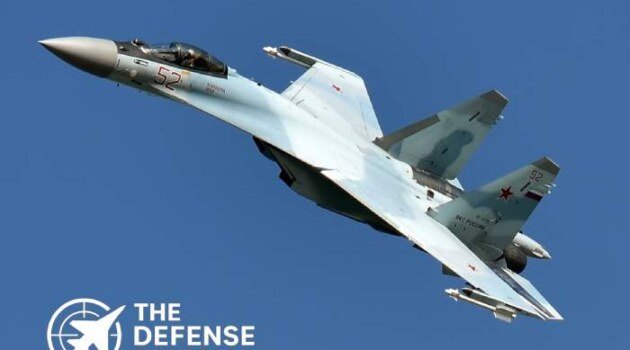
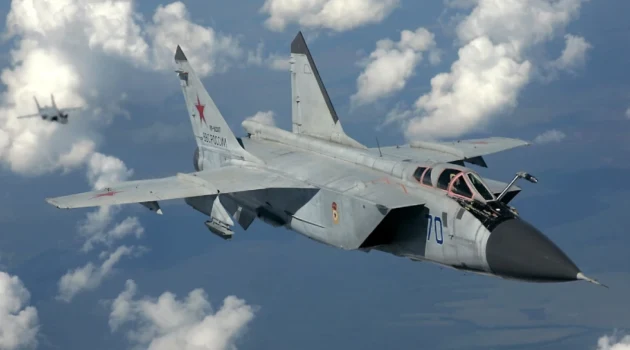
Russian fighter jets remain a central pillar of Moscow’s airpower strategy in 2026, as wartime attrition, sanctions pressure, and a renewed export push reshape the Russian Aerospace Forces (VKS) fleet. From the fifth-generation Su-57 Felon to the Mach-capable MiG-31BM interceptor, this technical ranking breaks down the five most significant Russian fighter jets currently in production or frontline service.
KEY FACTS AT A GLANCE
| Aircraft | Manufacturer | Generation | Max Speed | Combat Radius | Key Sensors | Primary Armament |
|---|---|---|---|---|---|---|
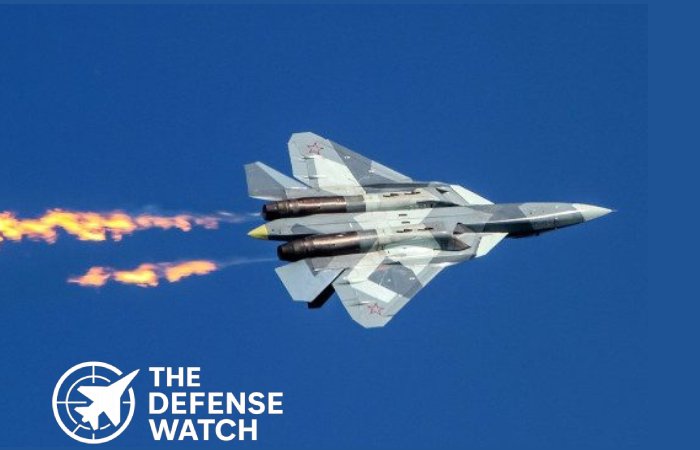
| Su-57 Felon | Sukhoi / UAC | 5th Gen | Mach 2.0 | ~1,500 km | N036 Byelka AESA, 101KS Atoll IRST | R-77M, R-37M, RVV-SDM |
| Su-35S Flanker-E | Sukhoi / UAC | 4++ Gen | Mach 2.25 | ~1,600 km | Irbis-E PESA radar, OLS-35 IRST | R-77-1, R-37M, R-73 |
| Su-34M Fullback | Sukhoi / UAC | 4+ Gen (strike) | Mach 1.8 | ~1,100 km | Sh-141 radar suite, Khibiny EW | Kh-38, Kh-59MK2, FAB-series glide bombs |
| MiG-31BM Foxhound | MiG / UAC | 4th Gen (interceptor) | Mach 2.83 | ~1,450 km | Zaslon-M PESA radar | R-37M, Kh-47M2 Kinzhal |
| MiG-35 Fulcrum-F | MiG / UAC | 4++ Gen | Mach 2.25 | ~1,000 km | Zhuk-AME AESA radar, OLS-UEM IRST | R-77-1, R-74M, Kh-31 |
Executive Summary:
Russia’s fighter fleet in 2026 reflects a dual reality: a slow-maturing fifth-generation program and a battle-hardened 4th/4.5-generation core sustaining wartime operations. The Su-57 has begun limited export deliveries to Algeria and secured new contracts at DSA-2026 in Kuala Lumpur, even as a fire at the Komsomolsk-on-Amur plant briefly disrupted output. Meanwhile, the Su-35S and Su-34M continue rolling off the same production line at a steady wartime tempo, with the MiG-31BM still flying Kinzhal-armed strike missions and the MiG-35 awaiting broader fleet integration. Together these five platforms define Russia’s current and near-term airpower posture.
Technical Deep-Dive
Airframe & Stealth
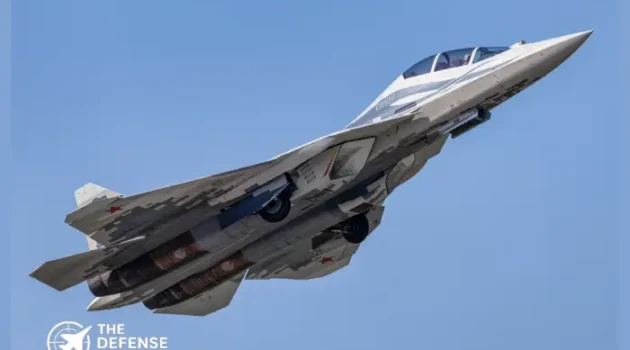
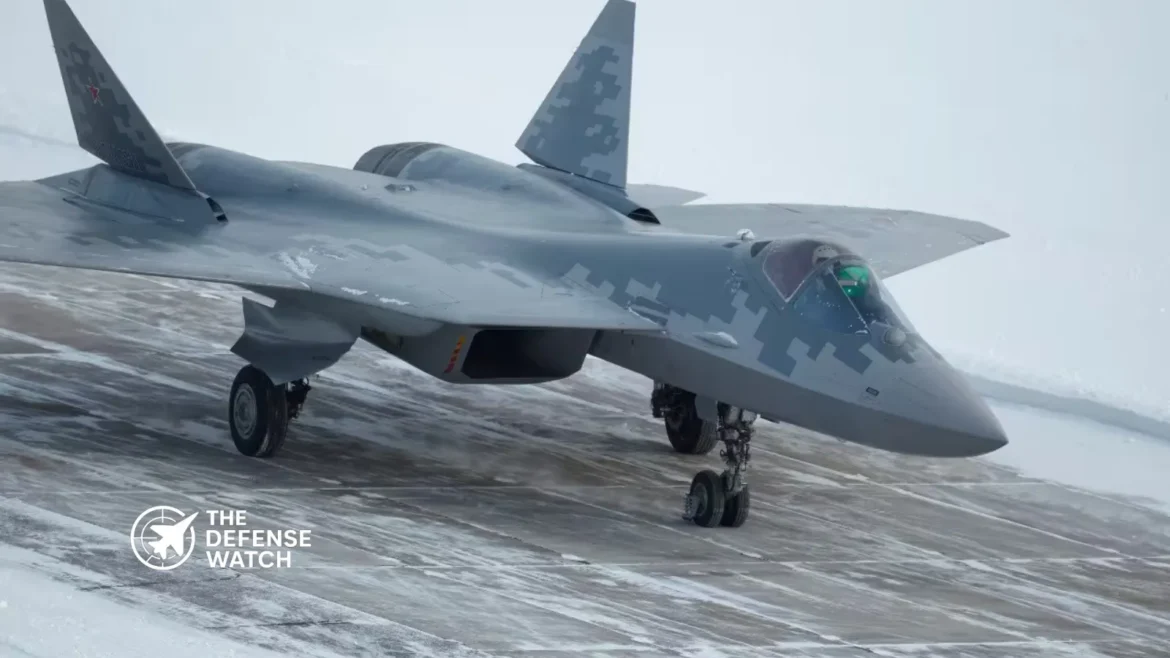
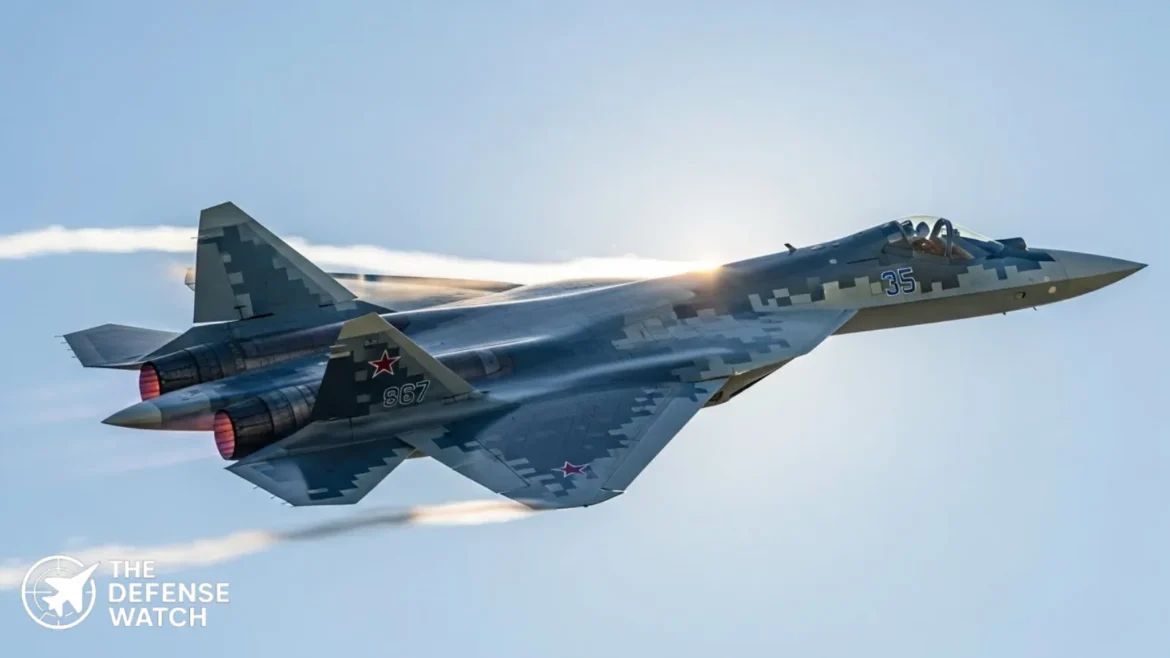
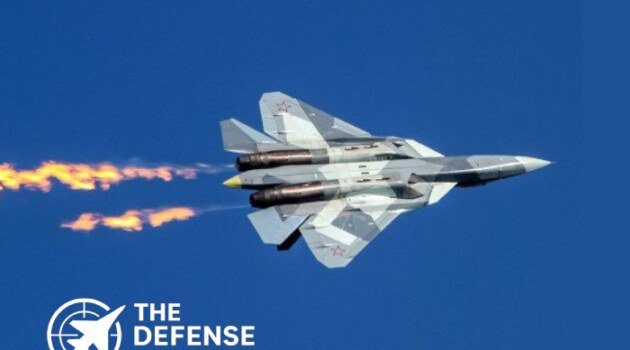
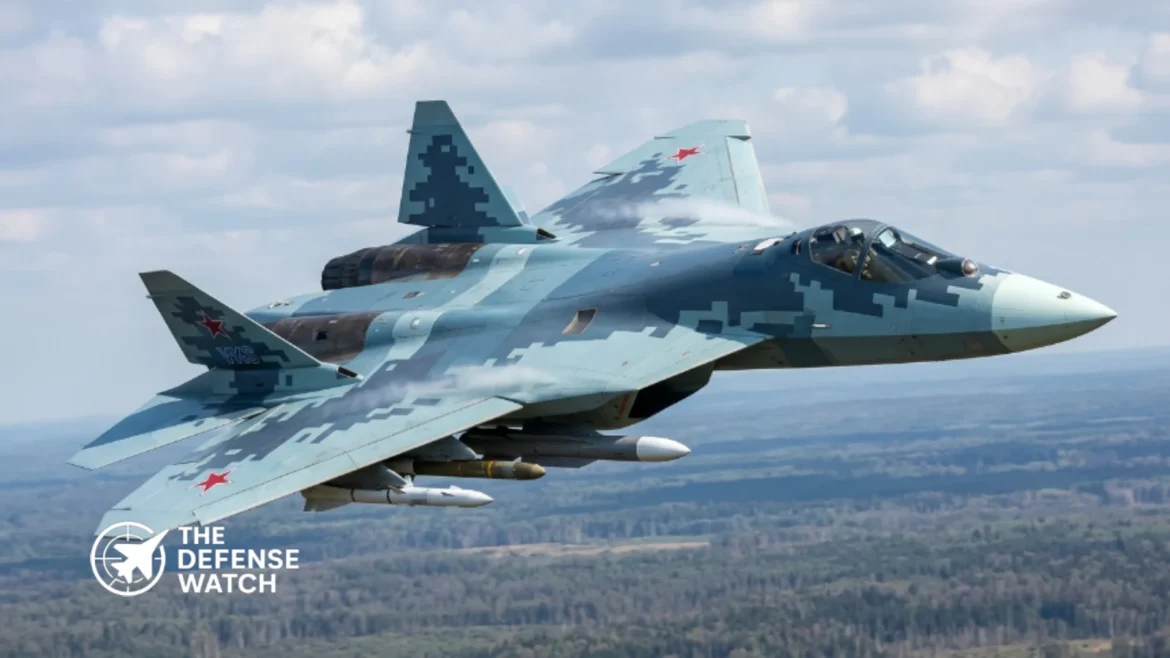
The Su-57 is Russia’s only true low-observable design, using semi-recessed weapon bays, faceted intake ducting, and composite/RAM (Radar Absorbent Material) coatings to reduce frontal RCS (Radar Cross Section), though its rear-aspect signature is widely assessed as less stealthy than Western fifth-gen peers. The Su-35S, Su-34M, MiG-31BM, and MiG-35 are non-stealth designs relying on speed, payload, and electronic warfare for survivability rather than signature reduction — the Su-34M’s armored cockpit “bathtub” being a notable structural feature for the strike role.
Avionics & Sensor Fusion
Sensor fusion is the clearest generational divide in this lineup. The Su-57’s N036 Byelka AESA radar array (with side-facing panels for wide-angle coverage) is paired with the 101KS Atoll IRST/EW suite for a genuinely fused targeting picture. The Su-35S instead uses the powerful but mechanically-scanned Irbis-E PESA radar, giving strong detection range without true AESA agility. The MiG-35 fields Russia’s newest Zhuk-AME AESA radar, positioning it as an avionics testbed for future upgrades, while the MiG-31BM’s Zaslon-M remains a legacy PESA optimized for long-range, high-altitude intercepts rather than fusion.
Propulsion
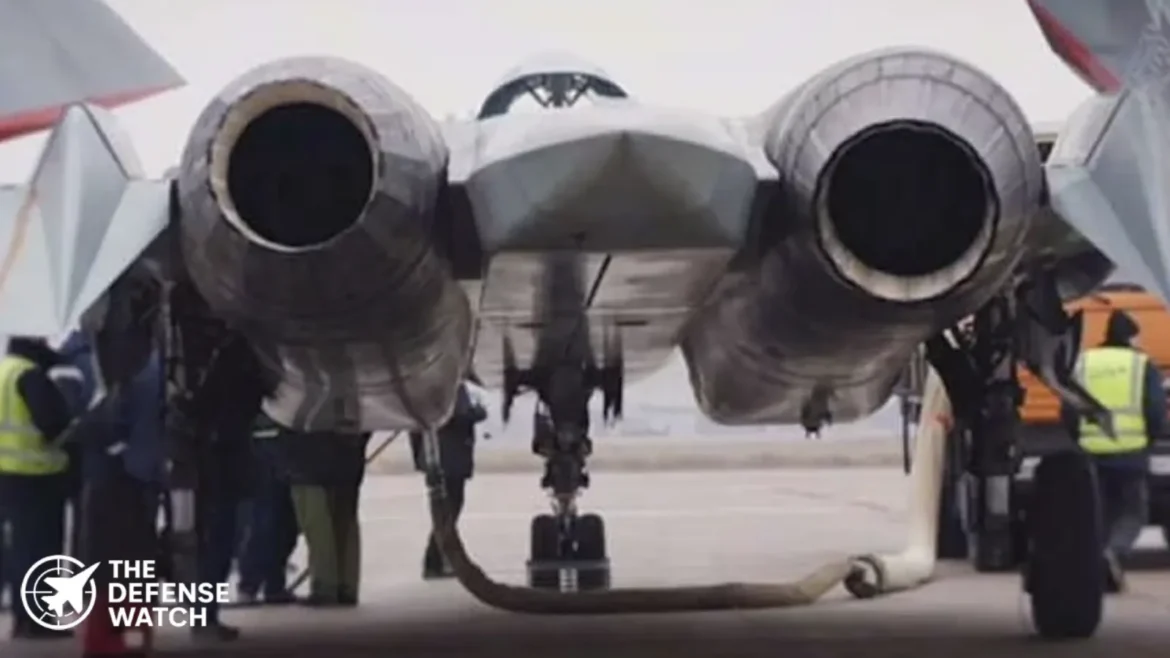
The Su-57 currently flies primarily on AL-41F1 “izdeliye 117” engines, with the definitive izdeliye 30 engine still in staged rollout for full supercruise performance. The Su-35S and MiG-35 both use variants of the AL-41F1S/RD-33MK family for thrust-vectoring agility, while the MiG-31BM’s twin D-30F6 turbofans remain unmatched among this group for sustained high-Mach interception, enabling its signature Kh-47M2 Kinzhal launch profile.
Strategic & Export Outlook
Russia’s export strategy centers on the Su-57E, marketed through Rosoboronexport with an active Block-style capability roadmap — baseline aircraft, followed by upgraded avionics, AESA integration, and eventual two-seat variants pitched to India for potential licensed production. Algeria remains the only confirmed foreign Su-57 operator, with Middle Eastern and Southeast Asian buyers cited as active prospects following the DSA-2026 exhibition. The Su-35S export line, heavily weighted toward Iran, is absorbing a growing share of Komsomolsk-on-Amur capacity, directly constraining how many airframes reach the VKS domestically.
Gaming & Esports Crossover: Flanker Firepower in Digital Skies
For strategy and combat-sim audiences, this lineup reads like a tech tree: the MiG-31BM is the glass-cannon interceptor built for alpha-strike Kinzhal runs, the Su-35S is the balanced all-rounder favored in dogfight-heavy loadouts, and the Su-57 is the late-game unlock — powerful but bottlenecked by production, mirroring how sim titles gate fifth-gen stealth platforms behind steep resource costs.
FAQs
Is the Su-57 a true fifth-generation fighter?It has stealth shaping and an internal weapons bay, but its rear RCS and engine maturity trail the F-22 and F-35, leading most analysts to call it a “4.5-to-5th-gen” transitional design.
Which Russian fighter has seen the most combat use?The Su-34M and Su-35S have flown the highest sortie counts in the Ukraine conflict, primarily in strike and escort roles.
Has Russia exported the Su-57?Algeria is the only confirmed foreign operator as of 2026, with additional Rosoboronexport contracts announced but customers undisclosed.
Conclusion
The Su-57, Su-35S, Su-34M, MiG-31BM, and MiG-35 collectively illustrate a fleet in transition — wartime demand keeps 4th/4.5-generation production lines running hot, while fifth-generation ambitions advance unevenly under sanctions and industrial strain. Until Su-57 output scales meaningfully, Russia’s regional air balance will continue to rest on these proven, non-stealth workhorses.

(adsbygoogle = window.adsbygoogle || []).push({});Executive Summary:
Russian President Vladimir Putin has said Moscow remains open to supplying and jointly developing the Su-57 fighter aircraft with India. His remarks revive discussion of a potential India-Russia fifth-generation fighter partnership years after New Delhi withdrew from the original joint development effort. The statement comes as India evaluates future combat aviation requirements and seeks to expand its indigenous aerospace capabilities.
Putin Reopens Door To Su-57 Cooperation With India
Su-57 fighter jet cooperation between Russia and India has returned to the spotlight after Russian President Vladimir Putin publicly stated that Moscow remains prepared to work with New Delhi on the aircraft’s future development and procurement.
Speaking about the history of the program, Putin noted that Russia had previously proposed a joint effort with India to develop fifth-generation fighter technology. According to his remarks, India chose not to participate at that stage, preferring to observe the aircraft’s development before making a future decision.
As far as the Su-57 goes, at one point we proposed to our Indian friends to work together on this technology,” Putin said. “The aircraft could have been our joint project. We built it independently, but we are ready to work with India in this field, to supply this aircraft and to keep developing it.”
Putin also emphasized that Russia sees no restrictions preventing expanded cooperation with India on advanced military aviation or air defense technologies.
(adsbygoogle = window.adsbygoogle || []).push({});Background Of The India-Russia Fifth-Generation Fighter Program
The comments reference the long-running Fifth Generation Fighter Aircraft (FGFA) initiative, which emerged from cooperation between India and Russia during the late 2000s.
The project was based on technology derived from Russia’s Su-57 stealth fighter, formerly known as the PAK FA program. India was expected to contribute funding and participate in development activities while gaining access to advanced fighter technologies.
However, concerns regarding cost, technology transfer, aircraft performance requirements, and program timelines led India to gradually distance itself from the initiative. By 2018, reports indicated that New Delhi had effectively suspended participation while continuing to monitor the platform’s progress.
Since then, Russia has continued development and production of the Su-57 independently.
Why The Timing Matters
Putin’s remarks come at a notable moment for India’s military aviation modernization efforts.
The Indian Air Force continues to face pressure to maintain combat squadron strength while simultaneously pursuing indigenous aerospace programs. New Delhi is investing heavily in the Advanced Medium Combat Aircraft (AMCA), an indigenous stealth fighter designed to provide India with a domestically developed fifth-generation capability.
(adsbygoogle = window.adsbygoogle || []).push({});At the same time, India continues to evaluate options for bridging future capability gaps as older aircraft retire and regional military competition intensifies.
Russia’s renewed offer appears aimed at positioning the Su-57 fighter jet as a potential option within that broader modernization landscape.
While Putin characterized the aircraft as the world’s best fifth-generation fighter, such assessments remain subjective and are often debated among defense analysts. Independent evaluations typically compare the Su-57 against other fifth-generation platforms based on stealth characteristics, sensor integration, networking capabilities, weapons integration, survivability, and operational maturity.
Su-57 Program Continues To Expand
The Russian stealth fighter remains one of Moscow’s flagship aerospace programs.
Russia has continued deliveries of serial-production Su-57 aircraft to its Aerospace Forces while promoting the platform to international customers. The aircraft is designed to combine reduced radar observability, advanced avionics, high maneuverability, long-range weapons employment, and multi-role mission capabilities.
Moscow has increasingly highlighted export opportunities for the platform as part of its broader defense industry strategy.
Potential cooperation with India would represent a significant development due to the scale of India’s defense market, its longstanding military relationship with Russia, and the possibility of industrial participation beyond simple aircraft procurement.
(adsbygoogle = window.adsbygoogle || []).push({});Strategic Implications For India And Russia
Putin’s comments underscore Russia’s continued interest in maintaining deep defense-industrial ties with India despite New Delhi’s efforts to diversify military suppliers over the past decade.
For Moscow, a renewed partnership involving the Su-57 fighter jet could strengthen one of its most important defense relationships and potentially support future aircraft production and development efforts.
For India, any decision involving advanced fighter acquisition would need to balance immediate operational requirements, domestic aerospace ambitions, technology transfer considerations, long-term sustainment costs, and strategic autonomy objectives.
(adsbygoogle = window.adsbygoogle || []).push({});No new agreement, negotiations, or procurement decision was announced alongside Putin’s remarks. However, the statement clearly signals that Russia remains willing to reopen discussions surrounding the fifth-generation fighter program should India choose to pursue them.
Defense Analysis
Putin’s statement is significant less because it announces a new deal and more because it publicly reopens a pathway that many observers considered dormant.
The timing suggests Russia is actively seeking opportunities to expand defense cooperation with key partners while promoting the Su-57 fighter jet internationally. For India, the proposal arrives as the country balances near-term fighter requirements against long-term indigenous development goals.
Whether New Delhi revisits the concept will likely depend on how decision-makers assess the aircraft’s operational maturity, technology-sharing prospects, industrial benefits, and compatibility with India’s broader defense modernization strategy.
At present, Putin’s remarks should be viewed as a renewed offer rather than evidence of an imminent procurement decision.

Executive Summary:
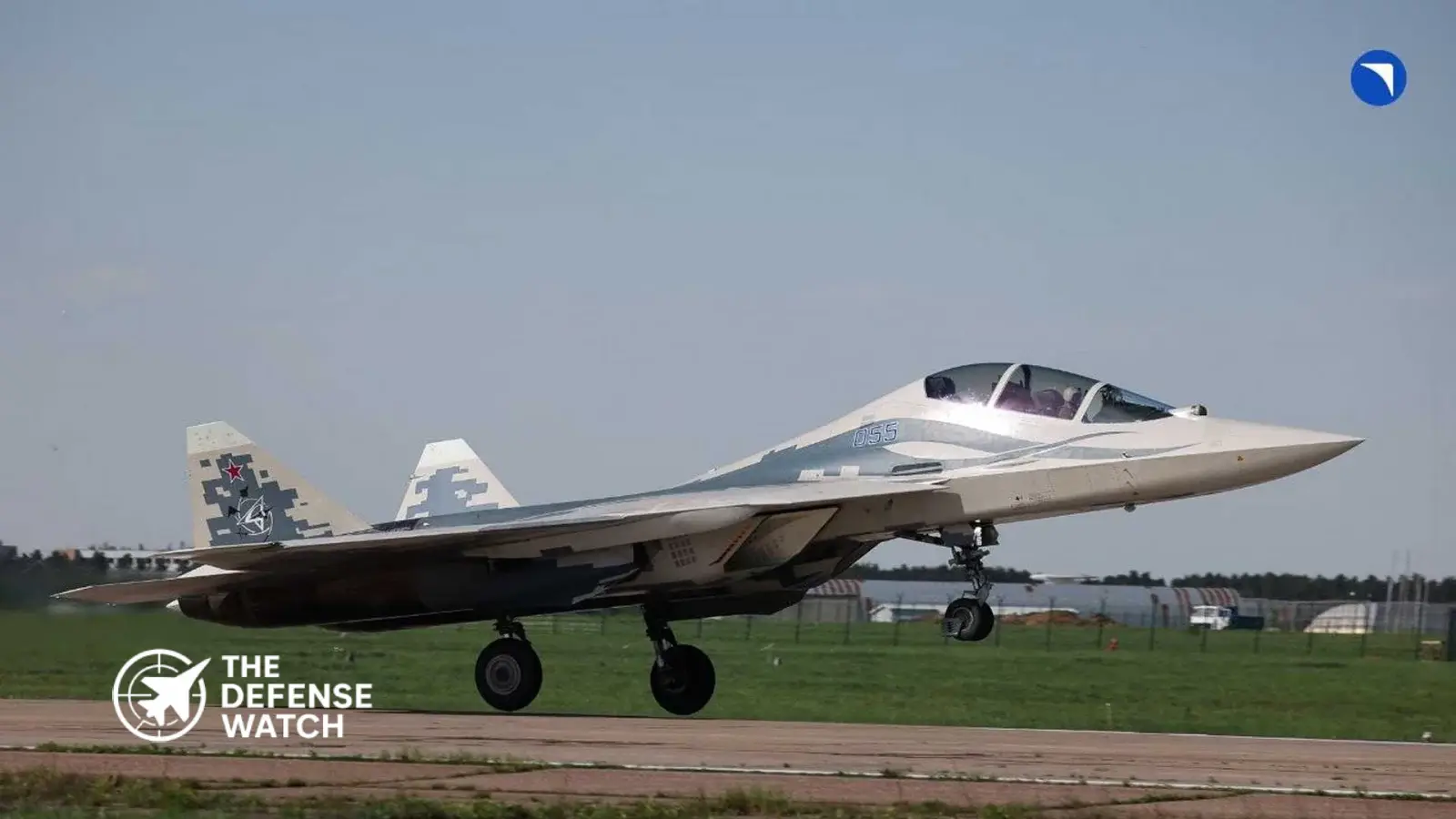
Russia has revealed the Su-57D, a new twin-seat variant of its Su-57 stealth fighter reportedly designed to coordinate unmanned combat aerial systems during future operations. The development reflects Moscow’s increasing focus on manned-unmanned teaming, long-range strike coordination, and next-generation aerial warfare concepts.Su-57D Twin-Seat Stealth Fighter Marks New Phase In Russian Air Combat Development
The Su-57D twin-seat stealth fighter represents a significant evolution of Russia’s fifth-generation combat aircraft program. The aircraft completed its first flight and is expected to support future drone coordination missions alongside traditional fighter operations.
The new configuration introduces a second cockpit seat to the existing Su-57 platform, a move that could improve mission management during complex operations involving multiple unmanned aerial systems. Russian defense planners have increasingly emphasized manned-unmanned teaming as modern air warfare shifts toward networked combat environments.
The Su-57D appears intended to support that transition.
Russia Expands Focus On Drone-Controlled Air Operations
Russian military modernization efforts have accelerated since the widespread operational use of drones in conflicts across Eastern Europe and the Middle East. Combat experience has demonstrated the growing importance of unmanned systems for reconnaissance, electronic warfare, strike coordination, and decoy missions.
The Su-57D twin-seat stealth fighter may serve as a command-and-control platform capable of directing loyal wingman drones or coordinating multiple unmanned aircraft during combat missions.
Russian state defense industry officials have previously discussed integrating advanced artificial intelligence, sensor fusion, and unmanned teaming technologies into future tactical aviation programs. The addition of a second crew member aligns with approaches already explored by other major aerospace powers.
The United States, for example, is advancing Collaborative Combat Aircraft programs designed to operate alongside crewed fighters such as the F-35 Lightning II and F-22 Raptor.
China has also increased investment in manned-unmanned teaming concepts tied to next-generation air dominance initiatives.
Twin-Seat Design Could Improve Mission Coordination
The original Su-57 was designed primarily as a single-seat stealth multirole fighter focused on air superiority and strike operations. Adding a second operator may reduce pilot workload during missions involving large amounts of sensor data and drone coordination tasks.
Modern combat aircraft increasingly function as airborne command nodes rather than traditional standalone fighters. In these environments, pilots must manage radar systems, electronic warfare suites, targeting data, communication networks, and unmanned assets simultaneously.
A dedicated weapons systems officer or mission operator can improve operational effectiveness during high-intensity engagements.
The Su-57D twin-seat stealth fighter could therefore provide Russia with a platform optimized for future distributed air operations.
While Russian officials have not released full technical details, analysts expect the aircraft to retain many of the baseline Su-57’s characteristics, including low observable shaping, supercruise capability, and advanced avionics.
Su-57 Program Continues Amid Production Challenges
The broader Su-57 program has faced delays and production limitations since its inception. Russia originally intended the aircraft to compete directly with Western fifth-generation fighters, but serial production has progressed more slowly than anticipated.
Sanctions, supply chain restrictions, and the operational demands of the war in Ukraine have complicated procurement timelines for multiple Russian aerospace programs.
Despite these constraints, Moscow continues investing in advanced combat aviation technologies viewed as strategically important for long-term force modernization.
The unveiling of the Su-57D suggests Russia remains committed to evolving the platform beyond its original air superiority role.
Russian industry has also promoted the aircraft for export, although international sales remain limited compared to competing Western and Chinese systems.
Manned-Unmanned Teaming Becoming Central To Air Warfare
The development of the Su-57D reflects a broader global trend reshaping military aviation doctrine. Air forces increasingly see unmanned systems as force multipliers capable of extending operational reach while reducing risks to human pilots.
Future combat aircraft are expected to operate within interconnected ecosystems that combine crewed fighters, autonomous drones, electronic warfare assets, and space-based intelligence systems.
In this environment, stealth fighters may function as tactical commanders directing distributed networks of unmanned platforms.
The Su-57D twin-seat stealth fighter appears designed with that operational model in mind.
Its emergence also highlights how rapidly drone warfare lessons are influencing next-generation aerospace development worldwide.
Strategic Implications For Regional Air Power
Russia’s continued investment in advanced tactical aviation comes as NATO members expand their own fifth-generation fleets and drone integration programs. European states are also accelerating sixth-generation fighter initiatives, including multinational future combat air system projects.
The Su-57D could help Russia maintain relevance in future air combat competition by improving interoperability between crewed and unmanned systems.
However, questions remain regarding production scale, operational readiness, and the maturity of supporting drone technologies tied to the aircraft.
Without large-scale deployment of advanced loyal wingman drones, the Su-57D’s full operational concept may remain limited in the near term.
Still, the program signals an important doctrinal shift within Russian aerospace strategy.
Su-57: From Fighter Jet to Tactical Aviation Complex
The Russian Su-57 has entered a new phase of operational capability, evolving from a traditional fighter aircraft into a comprehensive tactical aviation complex, according to Hero of Russia and Major General Sergey Lipovoy.
(adsbygoogle = window.adsbygoogle || []).push({});Lipovoy, head of the presidium of the All-Russian organization Officers of Russia, emphasized that the Su-57 now integrates advanced weaponry and onboard systems, making it capable of engaging land, air, and naval targets with unprecedented efficiency. He stated, “The Su-57 is no longer even classified as just an aircraft in official documents. It is an aviation tactical complex equipped with the most advanced and necessary weaponry.”
The Major General highlighted the Russian defense industry’s adaptability, noting that continuous upgrades and rapid modifications are applied to the Su-57 based on operational feedback. These enhancements ensure the platform remains flexible and highly responsive to evolving combat requirements.
Modernization and Operational Flexibility
The United Aircraft Corporation (UAC) recently delivered a batch of Su-57s featuring upgraded combat systems and weapon complexes. These updates reinforce the aircraft’s multi-role capabilities, improving both offensive and defensive performance. This modernization aligns with broader Russian military aviation objectives to maintain strategic air superiority.
Multi-Domain Combat Potential
With its new technical configuration, the Su-57 can perform precision strikes against ground installations, counter enemy aircraft, and engage surface vessels effectively. Lipovoy’s assessment underscores a shift in doctrine, positioning the Su-57 not just as a fighter but as an integrated combat tool capable of complex mission profiles.
(adsbygoogle = window.adsbygoogle || []).push({});The platform’s enhancements reflect lessons learned from testing and operational deployments, emphasizing the role of feedback-driven development in sustaining combat effectiveness.
Looking Ahead
The evolution of the Su-57 demonstrates Russia’s focus on producing aircraft that operate as full tactical complexes rather than standalone fighters. Analysts suggest this approach may influence future fifth-generation aircraft design globally, where multi-role adaptability and rapid system upgrades become increasingly important.
The Product 117 and Product 177 engine programs are shaping the present and future of Russia’s Su-57 fifth generation fighter, as Moscow seeks to close long standing gaps in propulsion, reliability, and combat performance. Product 117 currently powers early production Su-57 aircraft, while the more advanced Product 177 engine is intended to deliver the full performance originally envisioned for the platform.
The dual track approach highlights Russia’s effort to field operational aircraft quickly while continuing work on a next generation powerplant that supports sustained supercruise, reduced maintenance burden, and improved thermal management. According to reporting by FlightGlobal, Russia has now begun flight testing of Product 177 powered Su-57 test aircraft, marking a significant milestone for the program.
Product 117 Engine, Interim Power for an Operational Fighter
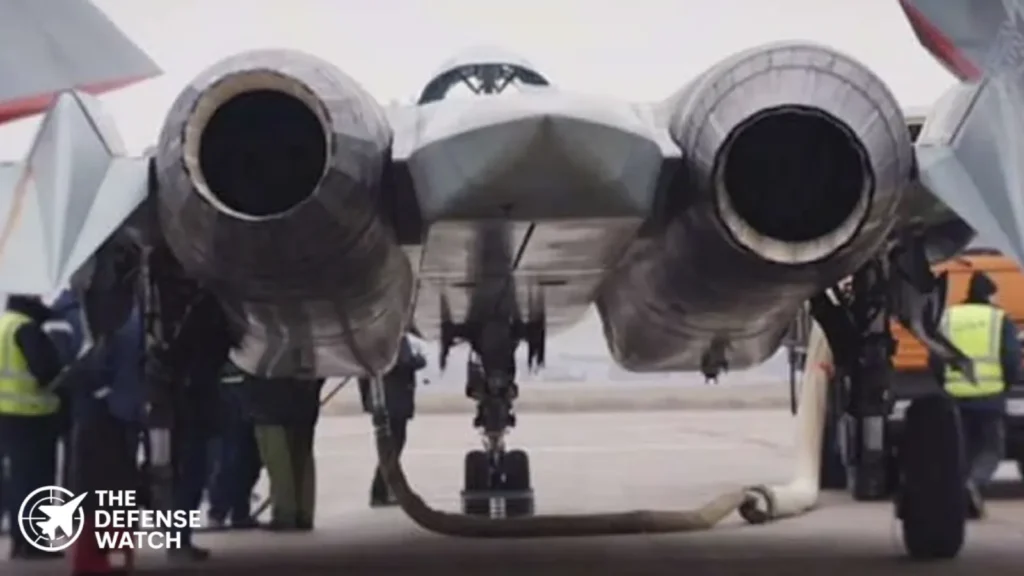
Product 117, also known as AL-41F1, serves as the interim engine for the Su-57 fleet currently in Russian Aerospace Forces service. Developed by United Engine Corporation, the Product 117 builds on legacy Flanker series engines but incorporates digital controls, improved thrust, and better fuel efficiency.

The engine provides the Su-57 with credible performance for air defense and strike missions, allowing Russia to deploy the aircraft while Product 177 development continues. However, analysts note that Product 117 does not fully meet fifth generation benchmarks in areas such as sustained supercruise without afterburner and long term lifecycle efficiency.
Despite these limits, Product 117 has enabled Russia to conduct operational testing, weapons integration, and pilot training, keeping the Su-57 program alive during a challenging period marked by sanctions and industrial constraints.
Product 177 Engine, Designed for Full Fifth Generation Capability
Product 177, often referred to as the Su-57’s definitive engine, represents a more ambitious leap in propulsion technology. The engine is designed to deliver higher thrust, improved fuel economy, and lower infrared and radar signatures compared to Product 117.
Russian officials have stated that Product 177 will enable sustained supercruise, a critical feature for fifth generation fighters seeking to engage or disengage without relying on fuel intensive afterburners. The engine also incorporates advanced materials and cooling systems intended to support high power sensors and future upgrades.
Flight testing of Product 177 is a critical step toward certification, with engineers expected to focus on vibration, thermal stability, and integration with the Su-57’s flight control systems. Full scale production is still expected to take several years, depending on test results and funding stability.
Why Russia Is Running Two Engine Programs
The decision to field the Su-57 with Product 117 while continuing Product 177 development reflects both strategic urgency and industrial reality. Russia has prioritized maintaining a fifth generation fighter presence, even if early aircraft fall short of advertised performance.
This approach mirrors strategies used in other defense programs, where interim systems bridge capability gaps until more advanced technology matures. In the case of Product 117 and Product 177, the tradeoff allows Russia to gain operational experience while refining its most advanced engine design.
However, this strategy also creates logistical complexity, as mixed engine fleets require separate maintenance pipelines, training, and spare parts inventories.
Implications for the Su-57 and Export Prospects
The success of the Product 177 engine will have a direct impact on the Su-57’s long term viability and export appeal. Potential foreign buyers have shown caution, often citing engine maturity as a key concern.
A certified Product 177 could significantly improve the aircraft’s competitiveness against Western fighters such as the F-35, particularly in speed, range, and high altitude performance. Without it, the Su-57 risks remaining a limited production platform optimized mainly for domestic use.
For Russia, the engine also has broader implications, as Product 177 technologies could inform future aircraft, including unmanned combat systems and next generation interceptors.
Strategic Context and Industry Challenges
The Product 117 and Product 177 programs are unfolding against a backdrop of sanctions, supply chain pressure, and wartime demand. Russia’s aerospace industry faces constraints in accessing advanced manufacturing equipment and materials, increasing the stakes for domestic engine development.
At the same time, propulsion remains one of the most difficult aspects of modern fighter design. Even established aerospace powers struggle with timelines and costs, making Product 177’s progress notable regardless of eventual outcomes.
Analysis, What Product 177 Really Means for Russian Airpower
From a strategic perspective, Product 177 is less about incremental upgrades and more about credibility. A fully operational fifth generation engine would signal that Russia can independently sustain high end combat aviation despite external pressure.
If delays persist, the Su-57 may continue to rely on Product 117 longer than planned, limiting its ability to challenge peer competitors in contested airspace. The next few years of testing will therefore be decisive, not only for the Su-57 but for Russia’s broader aerospace ambitions.
FAQs
What is the difference between Product 117 and Product 177 engines?Product 117 is an interim engine used on early Su-57 aircraft, while Product 177 is a more advanced engine designed to deliver full fifth generation performance.
Is Product 177 currently operational?No. Product 177 is undergoing flight testing and has not yet entered operational service.
Why did Russia deploy the Su-57 without Product 177?To field the aircraft sooner and gain operational experience while the advanced engine continues development.
Will Product 177 improve export potential?Yes. A mature Product 177 engine could make the Su-57 more attractive to foreign buyers.
Russia’s state aircraft and engine makers have begun flight testing a new powerplant for the Su-57 fifth-generation fighter jet, marking the first reported sortie of the aircraft equipped with the advanced Product 177 turbofan. The maiden flight took place on December 22, 2025, as part of a joint program between United Engine Corporation and United Aircraft Corporation.
Flight Test Phase Begins
According to Rostec, the Product 177 engine completed its initial flight on the Su-57 without issues, performing reliably and meeting the mission’s requirements. The aircraft used for the test, serial number 052, carried the new engine in place of the current AL-41F1 (Product 117) unit. Honored test pilot Roman Kondratyev flew the jet during the test sortie.
Product 177 is being positioned as a next-generation turbofan for the Su-57, offering higher thrust, better fuel efficiency and longer service life compared with earlier Russian fighter engines. Rostec says increased performance will support further development of the aircraft.
Technical Details
The new engine’s afterburner thrust is reported at about 16,000 kilogram force (roughly 157 kilonewtons), a figure slightly above the output of the Pratt & Whitney F119 that powers the U.S. F-22. Russian sources say the powerplant also shows reduced fuel consumption and improved durability.
Su-57 Fighter with Project 177 Engine Preceding First Flight Product 177 incorporates modern materials and design changes meant to raise performance across operating modes. It also retains advanced electronic controls and thrust vectoring capabilities seen in previous engine efforts.
Context of Upgrade
The Su-57 has flown to date with the AL-41F1, a derivative of older engine designs that served as an interim solution. The introduction of Product 177 represents a planned shift toward purpose-built propulsion for Russia’s top-tier fighter.
Rostec and UAC have displayed the engine and related technologies at recent air shows, highlighting the program as a cornerstone of ongoing upgrades to the Su-57 platform. The manufacturer has tied development work to broader efforts to boost production and expand export opportunities for the aircraft.
What’s Next
Flight testing will continue as engineers gather data on the new engine’s performance across conditions. If Product 177 progresses as planned, it could enter service on later Su-57 production batches and potentially support other Russian combat aircraft in future upgrades.
Internal Bay Reveal Signals New Role
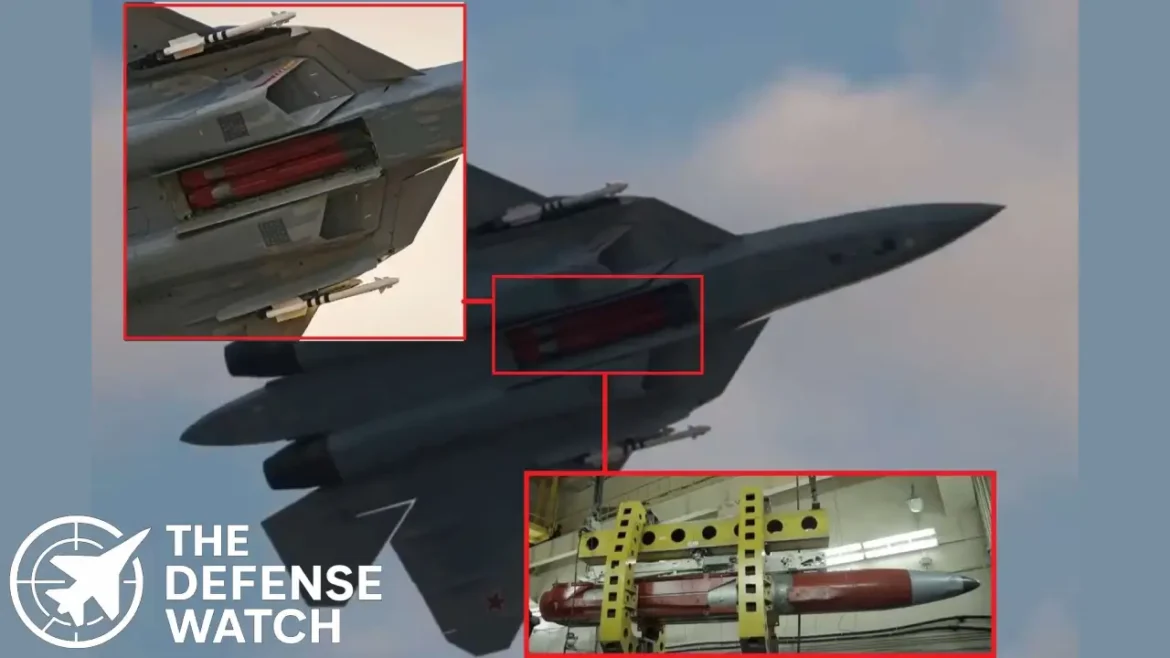
New promotional footage released by United Aircraft Corporation (UAC), a subsidiary of Rostec, on 9 November 2025 shows the Russian fifth-generation fighter Su‑57 in flight with its forward internal weapons bay open and carrying two large anti-radiation missiles of the Kh‑58 (AS-11 “Kilter”) family.
The footage highlights that this isn’t just an air‐show demonstration: the aircraft, test airframe T-50-9 (“509”), was shown performing dynamic passes with bay doors cracked open while the two anti-radiation missiles were visible inside the compartment.
This marking of an internal SEAD (suppression‐of‐enemy‐air‐defenses) load-out represents a significant signal about how Moscow envisions the Su-57’s role going forward.Technical Architecture: What the Bay Setup Means
Analysts note that the forward bay imagery shows the Kh-58UShK variant on fold-out surfaces, mated to ejector units of the UVKU-50 family — established launchers for heavy internal stores on the Su-57.
According to publicly available technical data, the Su‐57 main internal bays are approximately 4.4 m long by 0.9 m wide and use UVKU-50L for weapons up to about 300 kg and UVKU-50U for heavier ordnance.
The external display also included a pair of R-74/R-74M2 short-range air-to-air missiles mounted externally, signaling a mixed load-out: internal large anti‐radiation missiles plus external short‐range AAMs for self-defense.
In other words: the Su-57 is being showcased not only as an air‐superiority fighter, but as a stealth shaped strike platform capable of first‐wave radar target engagement.Strategic Timing & Export Aspirations
The choice to release this footage now is strategic. The UAC video comes just ahead of the Dubai Airshow 2025, where Russia is seeking foreign orders for the Su-57 despite sanctions and supply-chain challenges.
Leaks attributed to the “Black Mirror” group suggest export discussions with countries such as Iran, Algeria and Ethiopia — and the display is tailored to customers facing dense, modern SAM environments.
By emphasizing internal carriage of anti‐radiation missiles, Moscow aims to pitch the Su-57 as a stealth platform capable of suppressing advanced air-defense networks — a capability attractive to states confronting layered integrated air-defence systems (IADS).Analysis: Implications for U.S. Defence and Global Security
For U.S. defence planners, the visible internal SEAD capability of the Su-57 warrants attention. The combination of low-observable shaping (internal bays) and anti-radiation missiles challenges the assumption that advanced stealth fighters are always purely air-to-air platforms. If exported, such a package could complicate regional air‐defence postures and raise the cost of operations for U.S. and allied air forces.
Globally, this development echoes a broader trend: fifth-generation fighters are increasingly being tasked with strike and SEAD roles — not just air‐superiority. The integration of heavy anti-radiation missiles suggests an evolving threat vector: stealth‐equipped fighters opening corridors through IADS to enable follow‐on strike aircraft.
From a technology standpoint, the demonstration of internal carriage and launch of heavy store (as shown by Kh-58s) confirms maturation of one of the more challenging aspects of stealth‐fighter design: weapons integration without sacrificing signature discipline. The U.S. may need to reassess its own SEAD/DEAD (destruction‐of‐enemy‐air‐defences) approaches given the potential for adversaries to field more capable stealth strike platforms.Conclusion: What Comes Next?
Russia’s decision to showcase the Su-57 carrying two Kh-58 anti-radiation missiles internally signals its intention to operationalize a stealth‐shaped SEAD/strike role and to market that capability abroad. The next steps will likely include further demonstration flights, export offers, and potential combat employment signals. U.S. and allied S-team planners should monitor whether the Su-57 begins serial exports or enters wider service with this dual air‐to‐air/strike orientation — any of which would affect regional air‐defense dynamics and future procurement priorities.
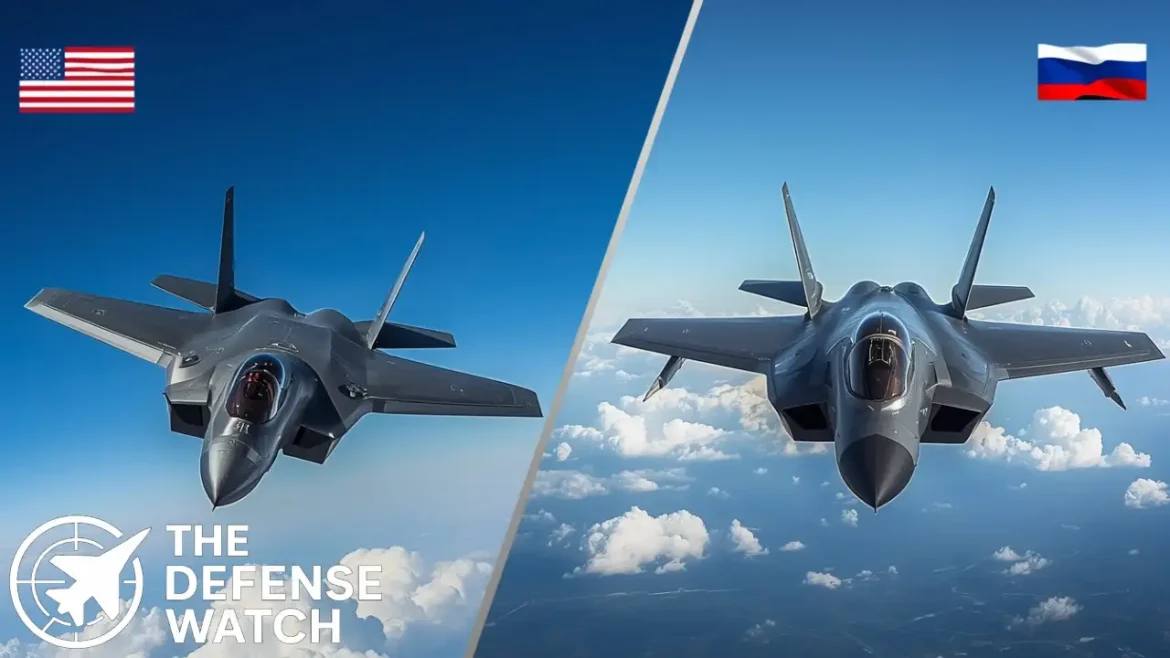
Few defense debates spark as much global attention as the comparison of the F-35 Lightning II and the Su-57 Felon. The U.S.-built F-35, developed by Lockheed Martin, is the most widely deployed fifth-generation stealth fighter in the world. Russia’s Su-57, designed by Sukhoi, is its answer to America’s dominance in stealth aviation.
This matchup carries geopolitical weight far beyond technology. For NATO allies, the F-35 is a cornerstone of future air power. For Russia, the Su-57 represents its ambition to counter Western air superiority. With rising tensions from Ukraine to the Pacific, understanding the differences between these two fighters isn’t just academic—it’s central to global security.
Specifications Table: F-35 vs Su-57 Specs
Specification Lockheed Martin F-35 Lightning II Sukhoi Su-57 Felon Role Multirole Stealth Fighter Multirole Stealth Fighter Top Speed Mach 1.6 (~1,930 km/h) Mach 2.0 (~2,470 km/h) Combat Radius ~1,100 km ~1,500 km Ferry Range ~2,200 km ~3,500 km Service Ceiling 50,000 ft (15,240 m) 65,000 ft (20,000 m) Payload Capacity ~8,160 kg ~10,000 kg Radar Cross Section (RCS) ~0.001 m² (frontal est.) ~0.1–1 m² (claimed) Avionics & Radar AN/APG-81 AESA, sensor fusion, EOTS, DAS N036 Byelka AESA, IRST, L-band radars Crew 1 1 Unit Cost (Est.) $78–90 million $35–50 million (limited data) Service Entry 2015 (USAF) 2020 (Russian Air Force) Design & Technology
F-35 Lightning II
The F-35 emphasizes stealth and sensor fusion. Its shape, advanced coatings, and internal weapons bay allow it to operate with an RCS smaller than a golf ball. The jet integrates multiple sensors into a single digital picture, enabling pilots to “see first, shoot first.” The U.S. and NATO emphasize interoperability, making the F-35 a networked node in modern combat.
Su-57 Felon
Russia’s Su-57 blends stealth with traditional fighter design. It has stealth shaping but retains exposed surfaces and gaps, making it less stealthy than the F-35. Instead, it focuses on Supermaneuverability, using 3D thrust-vectoring nozzles for extreme agility. Russian engineers also equipped it with multiple radars, including L-band wing radars, designed to detect stealth aircraft like the F-35.
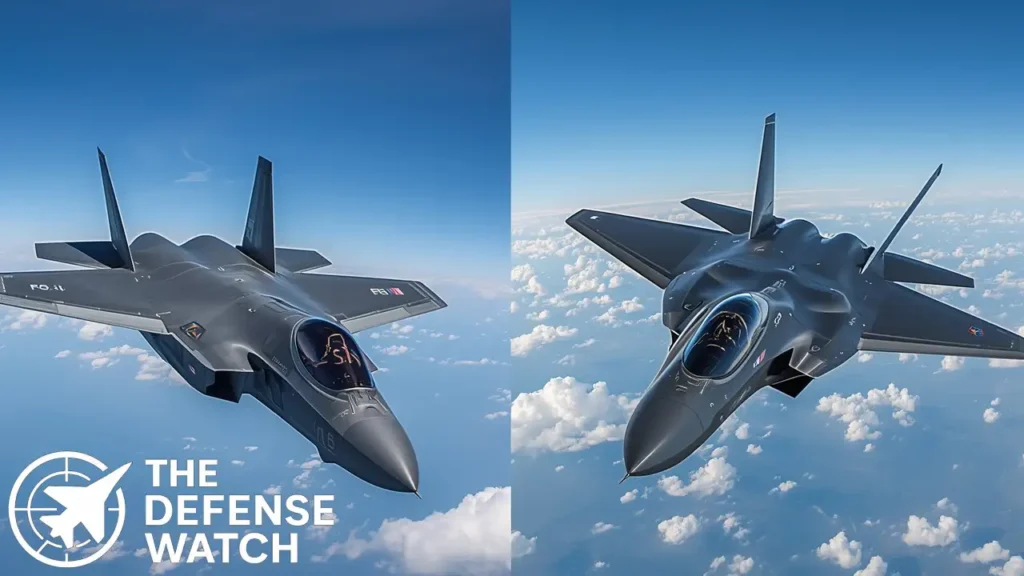
AI generated images Firepower & Performance
Weapons Loadout
- F-35: Can carry AIM-120 AMRAAM, AIM-9X Sidewinder, JDAMs, and small-diameter bombs internally for stealth missions, with external pylons for up to 22,000 lbs when stealth isn’t critical.
- Su-57: Designed for a wide range of Russian weapons, including R-77M and K-77M long-range air-to-air missiles, Kh-59 cruise missiles, and Kh-35 anti-ship missiles.
Guns
- F-35A: 25mm GAU-22/A internal cannon.
- Su-57: 30mm GSh-30-1 cannon.
While the Su-57 carries a heavier gun, the F-35’s precision-guided munitions and superior targeting systems give it an edge in modern beyond-visual-range (BVR) combat.
Operational Range & Mobility
The Su-57 has a longer ferry range and higher service ceiling, giving it better reach in wide theaters like Russia’s vast airspace. Its thrust-vectoring engines enable extreme dogfighting maneuvers.
The F-35, though slower and less maneuverable, is optimized for stealth penetration strikes, electronic warfare, and networked combat. In NATO doctrine, survivability comes from being unseen, not out-turning the enemy.
Combat Effectiveness
F-35
The F-35 has combat-proven credentials. U.S. and allied forces have used it in strikes against ISIS and in deterrence patrols in Europe and the Pacific. Its pilot training ecosystem and interoperability with NATO forces make it more effective in coalition warfare.
Su-57
The Su-57 has seen limited combat use in Syria and Ukraine, mainly in standoff strike roles. However, production remains slow, with fewer than 30 in service by 2025. Its real-world performance is still largely unproven, especially in contested environments against modern Western air defenses.
Cost & Export Value
- F-35: Despite initial criticism over cost overruns, production efficiency has lowered unit prices to under $80 million for the F-35A. It has become the backbone of U.S. and allied air power, with over 20 partner nations and customers worldwide.
- Su-57: Russia advertises the Su-57 at nearly half the price, but availability, sanctions, and reliability issues limit exports. India withdrew from a joint project, and only a few states, like Algeria, have shown interest.
Analysis: F-35 vs Su-57 Who Wins?
The F-35 and Su-57 represent different design philosophies.
- The F-35 prioritizes stealth, networked warfare, and coalition operations. It is proven in combat, widely exported, and integrated into NATO’s command structure.
- The Su-57 emphasizes maneuverability and multi-role versatility with less stealth. Its technology is promising, but low production numbers and limited combat data leave questions about reliability and sustainability.
From a U.S. defense perspective, the F-35 holds the edge in stealth, sensors, and combat readiness, while the Su-57 poses a potential threat in close-range or high-maneuver scenarios.
Conclusion
In the debate of F-35 vs Su-57, the verdict depends on the battlefield scenario. The F-35 is superior in stealth, situational awareness, and coalition warfare, making it the backbone of Western air power. The Su-57, while impressive on paper, still lags behind in production, stealth, and proven combat performance.
For U.S. readers, the key takeaway is clear: the F-35 is already shaping air dominance for decades to come, while the Su-57 remains an ambitious but limited challenger.
FAQ: F-35 vs Su-57
Which is faster, the F-35 or Su-57?The Su-57 is faster, reaching Mach 2, compared to the F-35’s Mach 1.6.
Which fighter is stealthier?The F-35 is significantly stealthier, with an estimated radar cross section of 0.001 m² versus the Su-57’s 0.1–1 m².
Has the Su-57 been used in combat?Yes, Russia has deployed the Su-57 in Syria and Ukraine, but its combat use has been limited.
Which fighter is more widely used?The F-35, with over 1,000 delivered and many NATO operators, is far more widely used than the Su-57.
F-35 vs Su-57 who wins in a dogfight?The Su-57’s agility may offer an edge in close combat, but the F-35 is designed to avoid dogfights by engaging enemies at long range with stealth and sensors.