
- Home
- Defense Systems
- Naval Destroyers (Warships)
- Liaowang-1 Spy Ship
Liaowang-1 Spy Ship

Defense Systems Full Specifications
1. General Information
| System Name | Liaowang-1 |
| Type / Role | Ocean Surveillance and Space Tracking Vessel |
| Manufacturer | Jiangnan Shipyard |
| Country of Origin | China |
| In Service | Yes |
| Year Introduced | Late 1970s (upgraded over time) |
| Unit Cost | Not publicly disclosed |
| Crew | ~300 |
2. Dimensions & Structure
| Length | ~190 m |
| Beam (Width) | ~22 m |
| Draft | ~9 m |
| Displacement | ~21,000 tons |
| Hull Material | Steel |
| Deck Configuration | Sensor and antenna heavy tracking deck |
3. Performance & Propulsion
| Propulsion Type | Diesel powered |
| Engine Model | Not publicly disclosed |
| Power Output | Classified |
| Maximum Speed | ~20 knots |
| Range | 10,000+ nautical miles (estimated) |
| Endurance | Several weeks at sea |
4. Sensors & Radar Systems
| Primary Radar | Space tracking radar arrays |
| Radar Range | Classified |
| Sonar System | None |
| Electro-Optical / IR System | Observation sensors |
| Electronic Warfare Suite | Electronic intelligence receivers |
| Fire Control Radar | Not applicable |
5. Weapons & Armament
| Main Gun | None |
| Vertical Launch System (VLS) Cells | None |
| Missiles | None |
| Anti-Ship Missiles | None |
| Anti-Submarine Torpedoes | None |
| Close-In Weapon System (CIWS) | Limited defensive mounts possible |
| Decoy Systems | Basic countermeasure systems |
6. Aviation & Support
| Helicopter Capability | Limited landing support |
| Hangar Capacity | None |
| UAV Operations | Possible |
| Flight Deck Size | Small support deck |
| Replenishment at Sea | Yes |
7. Defensive & Electronic Systems
| Countermeasures | Electronic decoy systems |
| ECM / ECCM | Electronic warfare receivers |
| Missile Defense System | Limited |
| Combat Management System | Sensor data integration system |
| Communication Systems | Satellite and long range encrypted links |
8. Operational Information
| Service Branch | People’s Liberation Army Navy |
| Primary Operator | China |
| Operational History | Space launch tracking and ocean surveillance missions |
| Notable Feature | Mobile telemetry platform for missile and satellite monitoring |
PROS
- Long endurance for global ocean monitoring missions
- Advanced radar and telemetry tracking capability
- Supports space launches and missile testing programs
- Large communications infrastructure for real time data transfer
- Can operate far from mainland sensor networks
CONS
- Limited combat capability and defensive armament
- Lower speed compared with modern destroyers
- Highly specialized mission profile
- Large radar structures increase visibility at sea
- Operational details and sensor performance remain classified
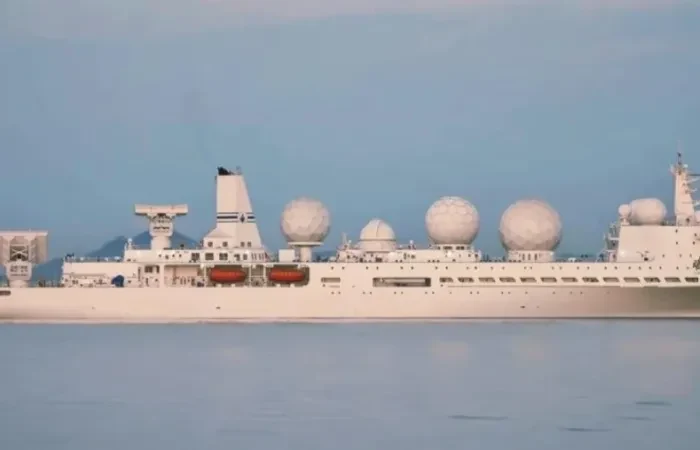
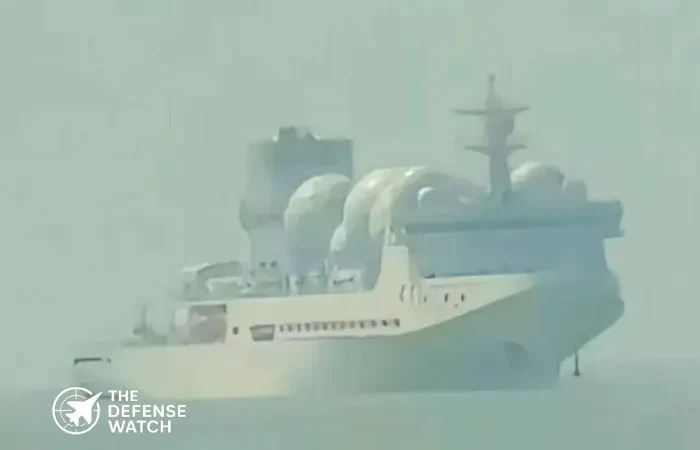
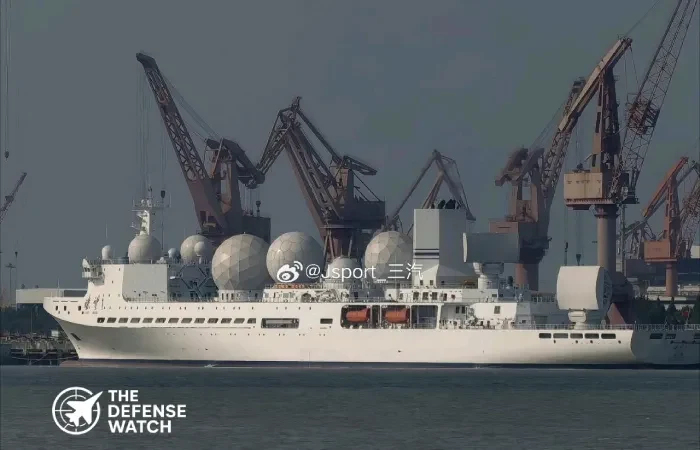
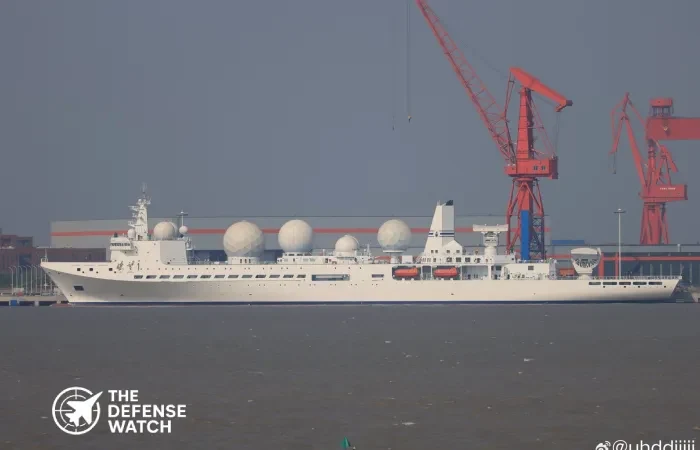
China Liaowang-1 Ocean Surveillance and Tracking Ship
The Liaowang-1 is a Chinese ocean surveillance and tracking vessel designed to monitor missile tests, satellite launches, and naval activities across vast ocean regions. Operated by the People’s Liberation Army Navy (PLAN), the ship functions as a mobile intelligence and telemetry platform capable of collecting radar, communications, and electronic data far from Chinese territory.
Unlike traditional warships built primarily for combat, Liaowang-1 focuses on strategic monitoring and data gathering. The vessel supports space tracking missions, ballistic missile testing programs, and maritime surveillance tasks. Large tracking antennas, high power radar arrays, and advanced communications systems allow the ship to relay real time telemetry back to command centers on land.
Because of its long endurance and ability to operate in remote ocean regions, Liaowang-1 has become an important component of China’s space and missile testing infrastructure. The ship can deploy for extended periods to track rockets and satellites during launches that pass beyond the reach of mainland radar coverage.
Manufacturer
Liaowang-1 was constructed by Jiangnan Shipyard, a major Chinese naval shipbuilding facility. The ship belongs to the Yuan Wang class of tracking vessels, which are designed specifically for space support and electronic intelligence missions. These ships are equipped with large satellite tracking dishes, advanced telemetry receivers, and secure communications links.
The design prioritizes stability and sensor capacity rather than offensive weapon systems. Its large deck structures house tracking domes and antenna arrays that monitor objects in space and on the ocean surface.
Speed and Range
Liaowang-1 is powered by a conventional diesel propulsion system that allows it to reach speeds of roughly 20 knots. While not built for high speed maneuvering, the vessel emphasizes endurance. It can travel thousands of nautical miles and remain at sea for extended monitoring missions.
This long range capability allows the ship to operate in international waters where it can observe missile tests, naval exercises, and space launch activities across different regions.
Cost / Price
Exact procurement costs for Liaowang-1 have not been publicly disclosed. However, ships in the Yuan Wang tracking fleet are estimated to cost several hundred million dollars due to their specialized radar systems, telemetry equipment, and long range communications technology.
These vessels represent a strategic investment for China’s military and space programs because they extend tracking coverage far beyond mainland radar networks.
Disclaimer Note
The information provided on TheDefenseWatch.com is for general informational purposes only. While we strive to ensure the accuracy, completeness, and timeliness of our content regarding defense and aerospace products, technologies, and specifications, we cannot guarantee that all information is 100% accurate or up-to-date due to the evolving nature of military technology and classified data.TheDefenseWatch.com does not warrant the reliability, suitability, or availability of the information for any specific purpose. Users are advised to consult official sources, such as manufacturers, government publications, or defense agencies, for precise and verified data before making decisions based on our content.We are not affiliated with any defense manufacturers, governments, or military organizations mentioned. Opinions, reviews, and ratings reflect expert analysis but are subjective and should not be considered endorsements. TheDefenseWatch.com is not responsible for any errors, omissions, or consequences arising from the use of this website’s content.External links are provided for convenience and do not imply endorsement. TheDefenseWatch.com reserves the right to update or modify content without prior notice. By using this website, you agree to our Privacy & Cookies Policy.
More Defense Systems from Jiangnan Shipyard
New Arrivals


Popular Comparisons
-
 J-10C vs JF-17 Thunder: Which Fighter Is More Capable?
View Comparison →
J-10C vs JF-17 Thunder: Which Fighter Is More Capable?
View Comparison → -
Tejas vs Gripen: Key Differences and Capabilities
View Comparison →
-
Tejas vs MiG-21 Bison: How India Replaced Its Iconic Supersonic Fighter
View Comparison →
-
F-35 vs F-16: Stealth, Sensors and Combat Roles
View Comparison →
-
Tejas Fighter Jet vs F-16 Fighting Falcon: Capability Compared
View Comparison →
-
Rafale Fighter Jet vs F-16 Fighting Falcon : Which Fighter Has the Edge?
View Comparison →
-
Su-57 Fighter Jet vs J-20 Fighter Jet: Stealth and Air Combat Compared
View Comparison →
-
Mirage 2000 vs Tejas Mk1A: Legacy Combat Power vs Indigenous Modernization
View Comparison →
-
Rafale Fighter Jet vs F-22 Raptor: Which Air Dominance Fighter Has the Edge?
View Comparison →
-
Tejas Fighter Jet vs. Rafale Fighter Jet: India’s Indigenous Fighter Meets France’s Proven Multirole Combat Aircraft
View Comparison →


- Pratt & Whitney Begins $100 Million Polish Expansion for F-35 Engine Parts

- Northrop Grumman Wins $43.9 Million Contract for Trident II Rocket Motor Facilities
- Ukraine Drone Strikes Disrupt Russian Data Centers, Raising Questions About AI Infrastructure Security
- Lockheed Martin Wins $114.6 Million Contract to Redesign F-35 Navigation Systems
- Project Agincourt Pushes Pentagon to Speed Up Autonomous Weapons Fielding
- Northrop Grumman Factory Expansion Aims to Increase B-21 Raider Production
- France Orders Four More SAMP/T NG Air Defense Systems
- France and UAE Revive Rafale F5 Fighter Development Partnership
- P-800 Oniks Missile: Range, Speed and BrahMos Comparison
- Ukrainian Drone Unit Caused 70% of Simulated U.S. Brigade Casualties in Germany Exercise

Fighter Jets
-
 F-100 Super Sabre
-
North American F-86 Sabre
-
Northrop YF-23 Fighter
-
Rafale F5 Fighter
-
SU-57 Felon Stealth Fighter
-
Boeing F/A-XX Fighter
-
JF-17 Thunder Fighter Jet
-
F-47 Fighter Jet
-
MIG-31 Fighter Jet
-
J-10CE Fighter Jet
-
Chengdu J-10 Fighter Jet
-
Chengdu J-10C Fighter Jet
-
Gripen E Fighter Jet
-
Tejas Mk1A Fighter Jet
-
Tejas Mk‑2 Fighter Jet
-
F-16V Viper Block 70 Fighter Jet
-
F-15EX Eagle II Fighter
-
F-15E Strike Eagle Fighter
-
F/A-18E/F Super Hornet Fighter Jet
-
Saab Gripen F Fighter Jet
-
JAS 39E/F Gripen Fighter Jet
-
JAS 39 Gripen Fighter Jet
-
F-35A Lightning II Fighter Jet
-
F/A-18F Super Hornet







Recent Compares
-
J-10C vs JF-17 Thunder: Which Fighter Is More Capable?
View Comparison →
-
Tejas vs Gripen: Key Differences and Capabilities
View Comparison →
-
Tejas vs MiG-21 Bison: How India Replaced Its Iconic Supersonic Fighter
View Comparison →
-
F-35 vs F-16: Stealth, Sensors and Combat Roles
View Comparison →
-
Tejas Fighter Jet vs F-16 Fighting Falcon: Capability Compared
View Comparison →
Latest Defense Systems
10 Compares Defense Systems
-
J-10C vs JF-17 Thunder: Which Fighter Is More Capable?
View Comparison →
-
Tejas vs Gripen: Key Differences and Capabilities
View Comparison →
-
Tejas vs MiG-21 Bison: How India Replaced Its Iconic Supersonic Fighter
View Comparison →
-
F-35 vs F-16: Stealth, Sensors and Combat Roles
View Comparison →
-
Tejas Fighter Jet vs F-16 Fighting Falcon: Capability Compared
View Comparison →
-
Rafale Fighter Jet vs F-16 Fighting Falcon : Which Fighter Has the Edge?
View Comparison →
-
Su-57 Fighter Jet vs J-20 Fighter Jet: Stealth and Air Combat Compared
View Comparison →
-
Mirage 2000 vs Tejas Mk1A: Legacy Combat Power vs Indigenous Modernization
View Comparison →
-
Rafale Fighter Jet vs F-22 Raptor: Which Air Dominance Fighter Has the Edge?
View Comparison →
-
Tejas Fighter Jet vs. Rafale Fighter Jet: India’s Indigenous Fighter Meets France’s Proven Multirole Combat Aircraft
View Comparison →
- Pratt & Whitney Begins $100 Million Polish Expansion for F-35 Engine Parts
- Northrop Grumman Wins $43.9 Million Contract for Trident II Rocket Motor Facilities
- Ukraine Drone Strikes Disrupt Russian Data Centers, Raising Questions About AI Infrastructure Security
- Lockheed Martin Wins $114.6 Million Contract to Redesign F-35 Navigation Systems
- Project Agincourt Pushes Pentagon to Speed Up Autonomous Weapons Fielding