Space Force Closes Out GPS III Program With Most Advanced Navigation Satellite Ever Launched
The U.S. Space Force successfully launched the GPS III-8 mission — Space Vehicle 10 (SV10) — delivering the final GPS III satellite to orbit and bringing to a close the service’s most ambitious navigation satellite modernization effort to date. The completed constellation marks 32 active satellites, with additional vehicles held on orbit in reserve, giving the U.S. military and its allies the most jam-resistant, high-precision global positioning architecture ever deployed.
- GPS III SV10 launched April 21, 2026 aboard a SpaceX Falcon 9 from Cape Canaveral Space Force Station, completing the 10-satellite GPS III series.
- SV10 features M-code technology delivering three-times greater positioning accuracy and eight-times stronger jamming resistance than the previous constellation generation.
- The satellite carries an optical crosslink demonstration payload — a laser communications system enabling direct satellite-to-satellite communication in orbit, a key capability being matured for GPS IIIF.
- The mission completed in under seven weeks after a pivot from ULA’s Vulcan Centaur to SpaceX’s Falcon 9 — showcasing the NSSL program’s launch flexibility.
- The active GPS constellation now stands at 32 operational satellites, with additional vehicles held in orbital reserve for redundancy. Lockheed Martin is under contract for 12 next-generation GPS IIIF satellites, which will deliver a 60-fold boost in anti-jamming performance.
The Big Picture
GPS underpins virtually every dimension of modern military operations — from precision-guided munitions and unmanned systems to logistics, communications timing, and command-and-control networks. For adversaries seeking to contest U.S. military dominance, degrading GPS has become a strategic priority. Russia has employed large-scale GPS jamming and spoofing in Ukraine and across Eastern Europe. China has invested heavily in electronic warfare systems designed to disrupt satellite navigation signals in the Indo-Pacific theater.
The completion of the GPS III constellation directly addresses this threat environment. It represents the culmination of a modernization effort that began over a decade ago and now delivers operationally meaningful improvements to U.S. forces operating in contested electromagnetic environments.
What’s Happening
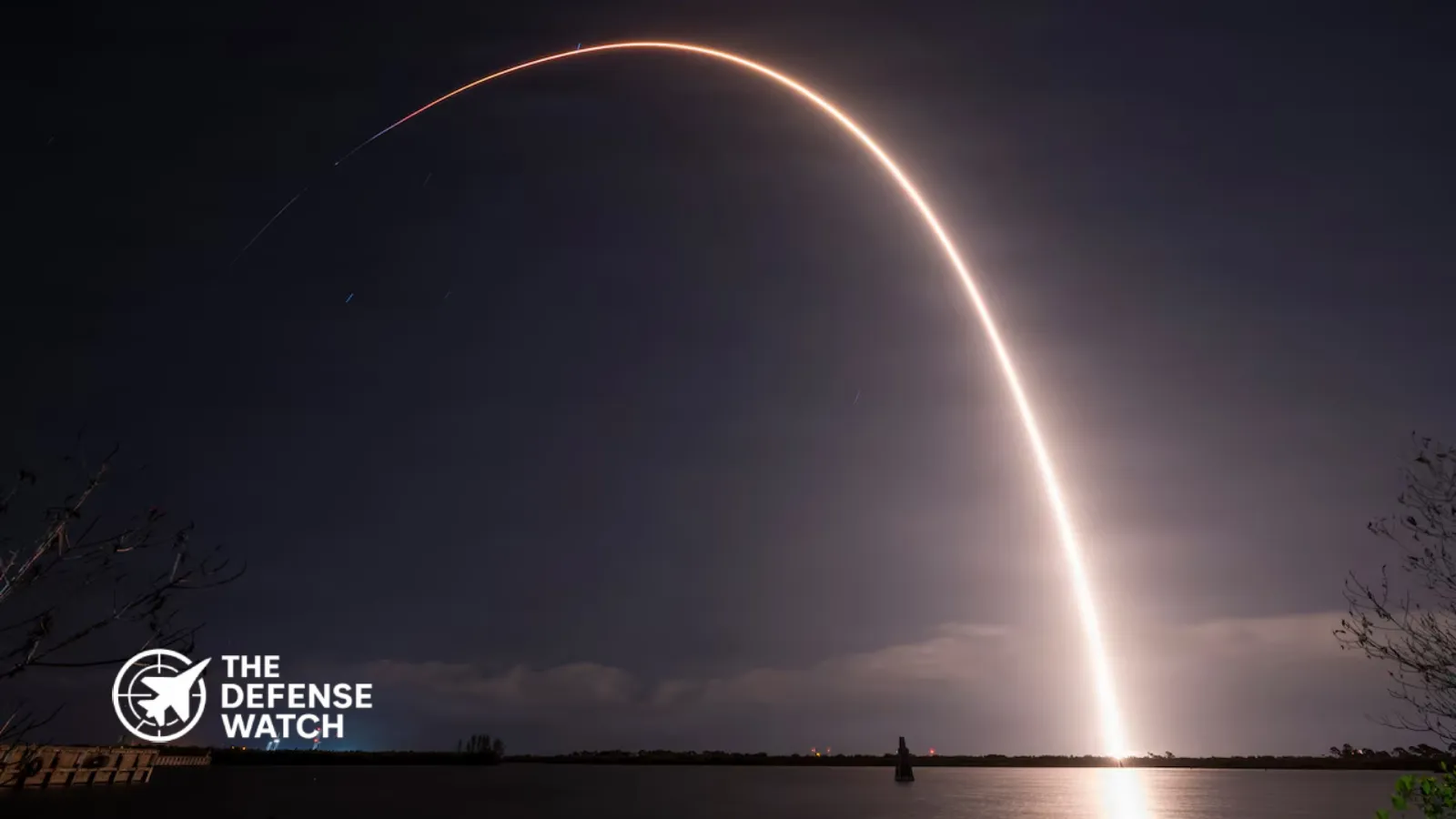
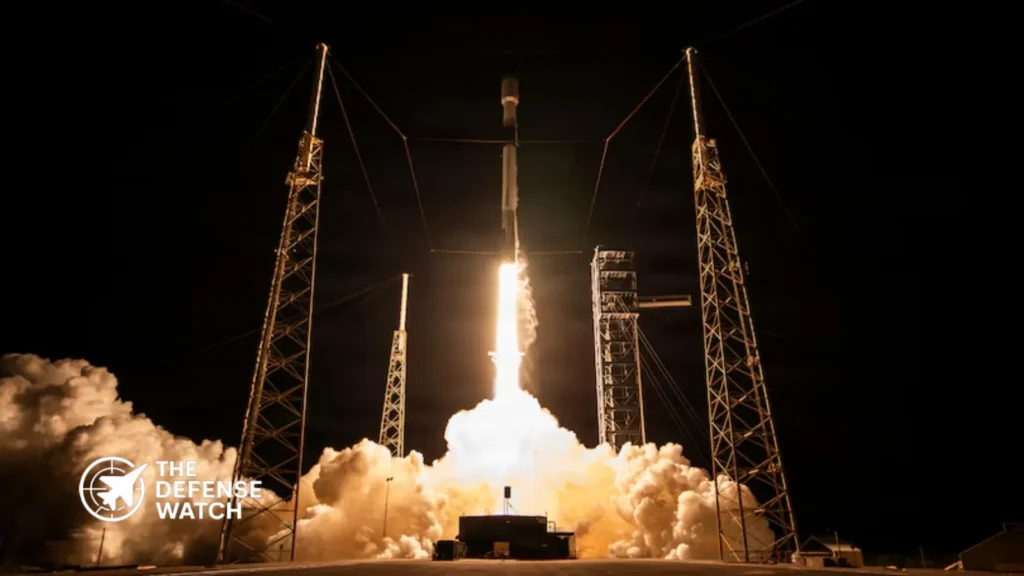
A SpaceX Falcon 9 lifted off from pad 40 at Cape Canaveral Space Force Station at 2:53:25 a.m. EDT on April 21, 2026, carrying GPS III-8 Space Vehicle 10 into medium Earth orbit.
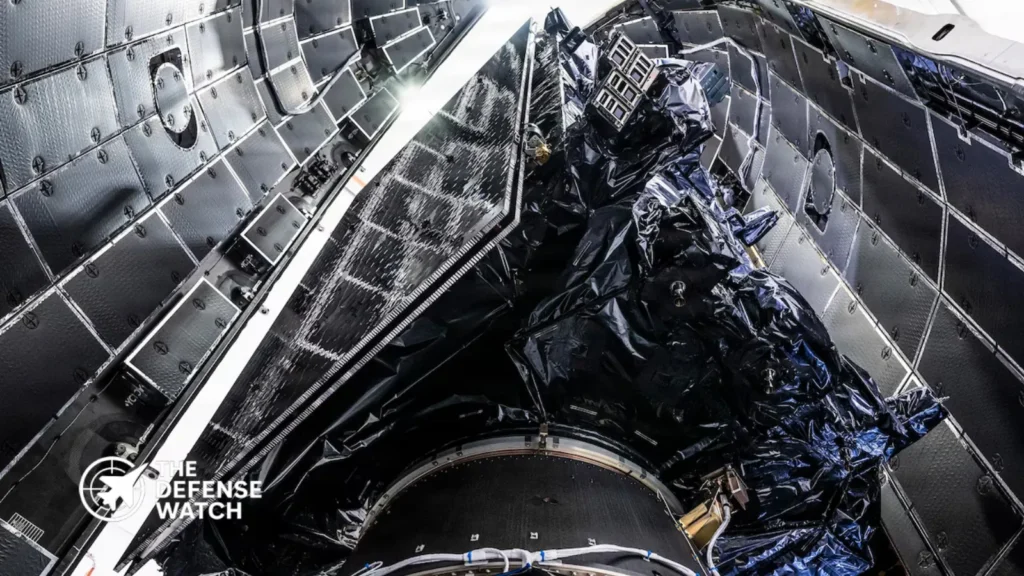
Space Systems Command (SSC) and Combat Forces Command (CFC) jointly executed the National Security Space Launch mission. SV10 integrates a crosslink demonstration payload, a new space-qualified atomic clock, a Laser Retroreflector Array, and the first-ever use of a 3D-printed Omni Antenna on a GPS satellite.
The satellite achieved signal acquisition shortly after launch and is currently being managed from Lockheed Martin’s Denver Launch and Checkout Operations Center, where it will remain until formally integrated into the operational GPS control network.
SV10 will raise its orbit over approximately 10 days to achieve its operational position, followed by two to three days of on-orbit testing before satellite operations transfer to the Space Force.
Why It Matters
SV10 provides the constellation an additional satellite equipped with M-code technology, delivering GPS capabilities three-times more accurate and eight-times more resistant to jamming than the previous constellation generation.
That anti-jamming margin is operationally critical. In modern peer-level conflict, adversaries routinely attempt to deny, degrade, or deceive GPS-dependent systems. Stronger M-code resistance means U.S. forces retain reliable positioning and timing even when operating inside heavily jammed environments — a scenario that has become the baseline assumption for any high-end conflict.
SV10 stands as the most innovative space vehicle in GPS program history, integrating multiple technology demonstrations simultaneously. The optical crosslink payload is particularly significant. This laser communications system tests direct satellite-to-satellite communication in orbit before it is integrated on next-generation GPS IIIF satellites. A GPS constellation capable of routing signals internally — without relying on ground-based uplinks — dramatically reduces the vulnerability of the architecture to ground-based jamming or a disruption in the terrestrial control segment.
SV10 also carries a demonstration Digital Rubidium Atomic Frequency Standard clock, an advanced atomic clock providing reliable and precise timekeeping capabilities.Improved atomic clock accuracy cascades across all GPS-dependent systems, tightening the timing precision that financial networks, air traffic control, and military communications infrastructure depend upon.
Strategic Implications
Completing the GPS III constellation is more than a technical milestone — it is a strategic signal. At a time when space has been formally recognized as a warfighting domain, the U.S. has demonstrated its ability to build, launch, and sustain the world’s most capable satellite navigation architecture despite adversarial pressure, industry delays, and competing procurement priorities.
The resilience built into the completed constellation — redundant on-orbit spares, anti-jam M-code signals, and now experimental inter-satellite laser links — directly supports U.S. deterrence posture. Adversaries considering whether to attack space-based U.S. capabilities must now account for a constellation that is harder to jam, harder to spoof, and designed with built-in redundancy to sustain operations even if individual satellites are degraded or destroyed.
For joint force commanders, the constellation improvement translates directly into more reliable precision strike, more assured ISR handoffs, and tighter synchronization across multi-domain operations. In the Indo-Pacific — where any conflict with China would span vast distances and demand extreme timing precision across naval, air, and land forces — a more resilient GPS backbone matters operationally and tactically.
Competitor View
China and Russia have both tracked U.S. GPS modernization closely and have accelerated their own parallel programs in direct response. China’s BeiDou-3 constellation reached global operational capability in 2020 and continues expanding. Russia’s GLONASS system has undergone sustained modernization efforts. Both programs are designed in part to ensure their own forces remain PNT-independent of U.S. GPS — and to give them leverage in denying GPS to adversaries.
The completion of GPS III, with its dramatically improved anti-jamming margins, narrows the operational window that adversary EW systems previously held against the legacy GPS architecture. Beijing and Moscow will take note. The optical crosslink demonstration onboard SV10 — previewing a future inter-satellite mesh capability — signals that the U.S. intends to push GPS resilience further still, making ground-based jamming progressively less effective against the evolving constellation.
What To Watch Next
With GPS III SV10 in orbit, Lockheed Martin is now focused on production of GPS IIIF satellites. Among the upgrades, GPS IIIF will feature Regional Military Protection, delivering more than a 60-fold boost in anti-jamming performance.
Lockheed Martin has integrated augmented reality and digital twin technologies to accelerate production of the 12 GPS IIIF satellites it is under contract to build at its Denver facility.
The on-orbit testing of the optical crosslink demonstration aboard SV10 will directly inform the design baseline for GPS IIIF’s inter-satellite communications architecture. Results from that testing — along with the Digital Rubidium Atomic Frequency Standard clock demonstration — will determine how aggressively those technologies are incorporated into the next-generation series.
Operationally, the Space Force’s Mission Delta 31 will transition SV10 into the active constellation through the GPS operational control network. Watchers should also monitor how quickly the remaining legacy Block IIA and IIR satellites are retired as newer GPS III and eventual IIIF satellites provide sufficient coverage and redundancy.
Capability Gap
The GPS III program was designed to replace aging Block II satellites that lacked robust anti-jamming capability and were increasingly vulnerable to adversary electronic warfare. The legacy architecture was built during an era when adversaries lacked both the motivation and the technical sophistication to systematically attack GPS signals. That era has ended.
The NSSL program’s flexibility — including the ability to pivot launch providers — was demonstrated again with this mission, executing a change in under seven weeks following a switch in launch service provider. That agility matters strategically: a satellite program that can only fly on a single vehicle is a program that adversaries can potentially delay through industrial or political pressure.
This was the fourth time SpaceX carried a GPS satellite originally assigned to ULA’s Vulcan rocket, following persistent development delays with that vehicle. While Vulcan has now received NSSL certification, its recent grounding in high-power configurations following a booster anomaly reinforces why launch diversification remains essential to national security space strategy.
One realistic limitation of GPS III worth noting: M-code capability requires compatible receivers. The military still fields large numbers of legacy GPS receivers that cannot exploit M-code’s enhanced security and anti-jamming performance. Fielding compatible terminals across the joint force remains an ongoing challenge that the improved constellation alone cannot solve.
The Bottom Line
The completion of the GPS III constellation gives U.S. forces a materially stronger, more jam-resistant navigation architecture precisely when adversary electronic warfare capabilities have made the old one dangerously vulnerable — and the GPS IIIF program already in production ensures that advantage will continue to widen.