

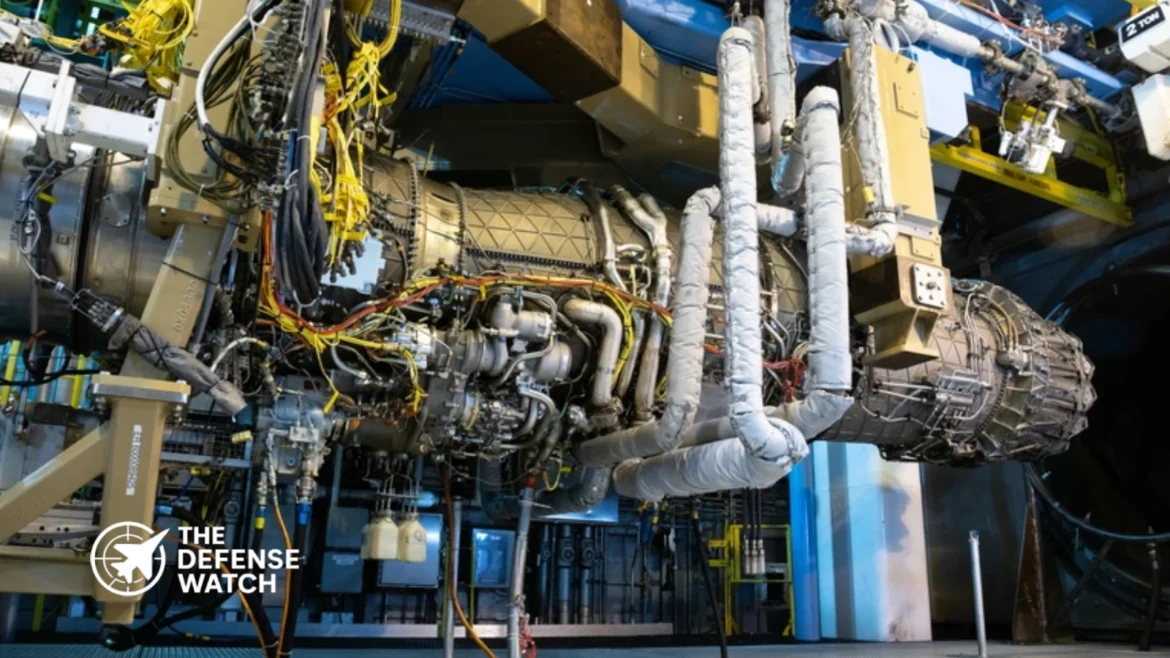
Finland Completes First F135 Engine Assembly
Finland has completed its first locally assembled F135 engine, giving Patria an operational production capability ahead of the arrival of the country’s first F-35A Lightning II fighters. Patria announced September 3 that the engine was completed at its new Linnavuori assembly and maintenance facility in Nokia, Finland.
Takeaways
Finland has completed its first locally assembled F135 engine as Patria establishes the industrial base needed to support the country’s incoming F-35A fleet.
The milestone is significant because the Linnavuori facility is being established not simply as an assembly site, but as part of Finland’s long-term F-35 propulsion support infrastructure. Patria is responsible for initial engine assembly and is expected to take on maintenance, repair, overhaul and upgrade work later in the program.
Production began following a February 2026 agreement between Patria and Pratt & Whitney, an RTX business. The initial assembly phase is scheduled to continue through 2030, after which the facility will transition toward broader F135 sustainment activities.
Linnavuori Establishes a Domestic F135 Sustainment Base
The Finnish approach is closely tied to the country’s emphasis on security of supply.
When Finland selected the F-35A in 2021, its procurement decision placed substantial weight on domestic industrial participation and the ability to maintain critical defense capabilities during exceptional circumstances. The government’s plan calls for critical maintenance capacity to be established within Finland while also connecting the fleet to the wider multinational F-35 support network.
That requirement is particularly important for propulsion.
The F135 is the sole engine used across all three F-35 variants and represents one of the aircraft’s most technically demanding sustainment areas. Pratt & Whitney has described its global F135 support system as a distributed network involving depot facilities, operating bases and other support infrastructure serving F-35 users worldwide.
For Finland, having trained personnel and dedicated infrastructure inside the country provides an additional layer of control over an essential part of fighter readiness.
The capability does not mean Finland will operate independently of the international F-35 sustainment system. Instead, the Linnavuori facility adds Finnish capacity within that wider network, allowing national and multinational support arrangements to work together.
F135 Production Is Timed With the Arrival of Finland’s F-35A Fleet
The timing of the engine milestone is closely aligned with Finland’s aircraft introduction schedule.
Finland ordered 64 F-35A Block 4 fighters to replace its aging F/A-18C/D Hornet fleet. The aircraft are scheduled for delivery between 2026 and 2030, with the first Finnish F-35As arriving at the Lapland Air Wing in Rovaniemi during autumn 2026.
Eight Finnish F-35 aircraft are also part of the U.S.-based training effort, allowing Finnish pilots and maintainers to build experience before the fleet becomes fully established at home. The broader program is therefore progressing on several tracks at once, including aircraft production, personnel training, infrastructure construction and domestic industrial participation.
The engine assembly milestone adds another piece to that transition.
Key Finnish F-35 Program Facts
Area Finland’s Program Aircraft F-35A Lightning II Quantity 64 aircraft Configuration Block 4 Engine Pratt & Whitney F135 Finnish engine facility Patria Linnavuori, Nokia Engine assembly Planned through 2030 Future engine support Maintenance, repair, overhaul and upgrade First aircraft arrival in Finland Autumn 2026 Main operating location Lapland Air Wing, Rovaniemi Finland’s Ministry of Defence says the F-35 procurement also includes training, sustainment solutions, spare parts, maintenance services and related infrastructure. The aircraft are intended to replace the Hornet fleet and provide the Finnish Air Force with a fighter system designed for service into the 2060s.
Why Domestic Engine Capability Matters
The most important aspect of the Patria milestone is not the assembly of a single engine. It is the development of industrial knowledge that can support the propulsion system over decades.
Modern fighter sustainment depends on specialized equipment, certified processes, trained technicians, engineering support and access to replacement components. Establishing these capabilities before a fleet reaches full operational scale gives Finland time to build the workforce and technical processes required for long-term support.
Patria says the F135 program is expected to create approximately 50 direct jobs between 2025 and 2030. The company has also described Linnavuori as a long-term location for F135 maintenance and sustainment activities after the initial production phase.
This creates an industrial capability with value beyond the initial aircraft delivery schedule.
Finland’s F-35 industrial participation also includes production of aircraft structures. Lockheed Martin identifies Patria as a Finnish F-35 partner responsible for front fuselage manufacturing as well as F135 engine assembly and sustainment. The company says the broader F-35 industrial effort involves more than 30 Finnish companies and academic institutions.
The result is a more distributed Finnish industrial base around the aircraft rather than a procurement model focused solely on buying completed fighters.
Integration With the Global F-35 Support Network
Domestic capability is only one part of the F135 sustainment model.
The F-35 program is designed around a multinational industrial and logistics structure. Pratt & Whitney has supplied more than 1,400 production F135 engines, supporting a global F-35 enterprise that includes 20 allied nations, according to company figures released in 2026.
That scale matters because engine maintenance and supply-chain resilience depend on common standards and access to a wider pool of technical expertise.
Finland’s Linnavuori capability therefore adds a national node to a larger system. This approach is consistent with Finland’s NATO membership and its emphasis on maintaining national defense capabilities while participating in collective defense arrangements.
For NATO, the broader value is interoperability. Finland’s F-35 fleet will operate alongside other European F-35 fleets, including those of Norway and Denmark, while benefiting from common aircraft, propulsion and support architecture. Finland’s Ministry of Defence has specifically identified NATO interoperability and participation in the Alliance’s collective defense structure as important elements of its post-accession defense posture.
The F135 Engine Remains Central to F-35 Readiness
The F135 provides propulsion for every F-35A, F-35B and F-35C aircraft. For Finland, which is procuring the conventional takeoff and landing F-35A, the engine is a central component of aircraft availability and operational readiness.
The Finnish F-35A uses the F135-PW-100 configuration. Finnish Ministry of Defence technical data lists a maximum afterburning thrust of approximately 191 kilonewtons for the engine.
Pratt & Whitney is also developing the F135 Engine Core Upgrade, intended to improve the engine’s durability and provide additional thermal and performance capacity for future F-35 capabilities. The company says the upgrade will use the existing F135 sustainment infrastructure and provide a pathway for continued propulsion support as the aircraft evolves.
That makes Finland’s investment in engine expertise relevant beyond the initial production period.
A workforce trained during assembly can provide a foundation for later maintenance and potentially more advanced sustainment activities as the Finnish F-35 fleet matures.
Finland’s F-35 Industrial Strategy Takes Shape
The first Finnish-assembled F135 is therefore best understood as part of a much larger industrial strategy.
Finland’s original F-35 decision included an industrial participation package designed to strengthen domestic production, maintenance and security of supply. The government estimated thousands of direct and indirect person-years of employment from the industrial participation arrangements.
The Linnavuori facility turns one part of that strategy into an operational capability.
With engine assembly now underway, aircraft deliveries approaching and future maintenance planned at the same site, Finland is building the industrial infrastructure required to support its F-35 fleet over a service life expected to extend for decades.
For Finland, the immediate objective is straightforward: ensure that the arrival of the F-35A is matched by the technical infrastructure needed to keep the aircraft available. For the wider F-35 program, the development adds another European location to the aircraft’s growing global propulsion sustainment network.
What Comes Next
The next major milestones will be the arrival of Finland’s first F-35As at Rovaniemi, continued F135 assembly at Linnavuori and the gradual development of the Finnish maintenance workforce.
Patria’s current production phase is scheduled to run through 2030. The company then plans to adapt the facility for F135 maintenance and overhaul activities that will continue throughout the lifecycle of Finland’s F-35 fleet.
The first completed engine is therefore an early indicator that Finland’s F-35 transition is moving beyond aircraft procurement and into the more demanding phase of establishing a sustainable national operating and maintenance system.
For a country preparing to operate advanced fifth-generation fighters in NATO’s northern flank, that support infrastructure will be as important to long-term readiness as the aircraft themselves.
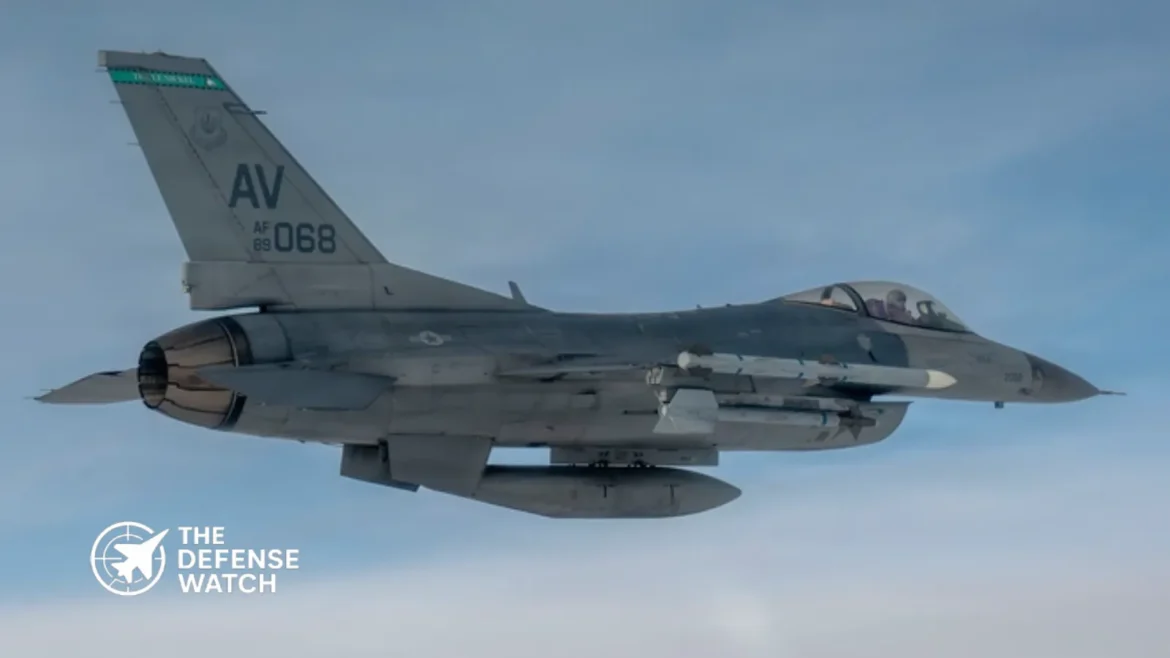
- RTX awarded $3.81 billion contract modification for F135 propulsion systems supporting F-35 Lot 18 and Lot 19 production.
- Contract covers U.S. Air Force, Navy, Marine Corps, international partners, and Foreign Military Sales customers.
- Work spans multiple U.S. locations with completion expected by March 2028.
- Funding includes FY2024 and FY2025 aircraft procurement accounts plus partner and FMS contributions.
- Contract awarded by Naval Air Systems Command on a non-competitive basis.
RTX Secures Major F135 Engine Contract For F-35 Production
RTX has secured a $3.8 billion F135 engine contract to support ongoing F-35 production, reinforcing its central role in powering the Joint Strike Fighter fleet. The award, issued by Naval Air Systems Command, finalizes production terms for Lot 18 and advances procurement for Lot 19 aircraft.
The contract modification converts a previously undefinitized agreement into a finalized structure while adding new production scope. It reflects continued demand for the F-35 program across U.S. services and international partners.
Scope And Structure Of The Contract
The $3,813,591,875 modification covers the production of F135 propulsion systems, the sole engine used across all variants of the F-35 fighter. This includes aircraft operated by the U.S. Air Force, Navy, and Marine Corps, as well as allied nations participating in the program and Foreign Military Sales customers.
The contract combines cost-plus-incentive-fee and fixed-price incentive elements. This hybrid structure is commonly used in large defense programs to balance cost control with performance incentives, particularly when production complexity remains high.
Funding allocations reflect the multinational nature of the F-35 program. Contributions come from U.S. fiscal year 2024 and 2025 aircraft procurement budgets, alongside partner nation funding and a significant share from Foreign Military Sales.
Notably, more than $1.46 billion of the total comes from FMS customers, highlighting continued export demand for the F-35 platform.
Industrial Base And Production Footprint
Work under the F135 engine contract will be distributed across a broad U.S. industrial base. Key locations include Connecticut, Indiana, Washington, Maine, California, and several other states, with additional work conducted both within and outside the continental United States.
East Hartford, Connecticut, accounts for the largest share at 17 percent, reflecting RTX’s primary engine manufacturing hub. Other notable contributions come from Indianapolis, Middletown, and Kent, Washington.
This distributed production model supports supply chain resilience and aligns with Pentagon priorities to maintain a robust domestic defense industrial base.
From an operational standpoint, the wide geographic spread also reduces risk tied to localized disruptions, a factor that has gained importance in recent years due to global supply chain pressures.
Program Significance And Strategic Context
The F135 engine contract is a critical component of the broader F-35 program, which remains the cornerstone of U.S. and allied tactical airpower. As production transitions from early low-rate initial production to more sustained output, engine manufacturing has become a key pacing element.
Delays or inefficiencies in propulsion system delivery can directly impact aircraft rollout schedules. By definitizing Lot 18 and advancing Lot 19 procurement, the Pentagon is signaling confidence in production stability moving forward.
The inclusion of international partner funding also underscores the program’s long-term sustainability. Countries across Europe, Asia, and the Middle East continue to invest in the F-35, ensuring steady demand for engines well into the next decade.
At the same time, the reliance on a single engine type for all F-35 variants continues to draw attention. While it simplifies logistics and maintenance, it also creates a single point of dependency within the supply chain. This makes contracts like this one essential for maintaining production continuity.
Funding Breakdown And Timeline
The contract pulls from multiple funding streams, including:
- FY2024 Navy aircraft procurement
- FY2024 Air Force aircraft procurement
- FY2025 Navy and Air Force procurement funds
- Cooperative program partner contributions
- Foreign Military Sales funding
A portion of the obligated funds, approximately $430.8 million, is set to expire at the end of the current fiscal year. This adds urgency to execution timelines and reinforces the need for efficient contract performance.
The program is scheduled for completion by March 2028, aligning with projected F-35 production timelines for Lot 18 and Lot 19 aircraft.
Acquisition Strategy And Industry Implications
The contract was awarded on a non-competitive basis, consistent with RTX’s position as the sole manufacturer of the F135 engine. While this limits competition, it reflects the technical complexity and certification requirements associated with fifth-generation fighter propulsion systems.
From a policy perspective, the award highlights ongoing challenges in balancing competition with program continuity in high-end defense systems. Developing an alternative engine for the F-35 would require significant investment and time, making near-term competition unlikely.
However, the scale of the contract and the long-term demand profile could renew discussions around future propulsion upgrades or alternative engine programs.
Outlook For The F-35 Program
The latest F135 engine contract reinforces the steady momentum of the F-35 program despite past cost and sustainment concerns. Continued investment from both the United States and international partners suggests strong confidence in the platform’s operational value.
As production ramps up and more aircraft enter service globally, engine reliability, maintenance efficiency, and lifecycle cost will remain key focus areas.
For RTX, the contract secures a significant revenue stream while strengthening its position within the defense propulsion market.
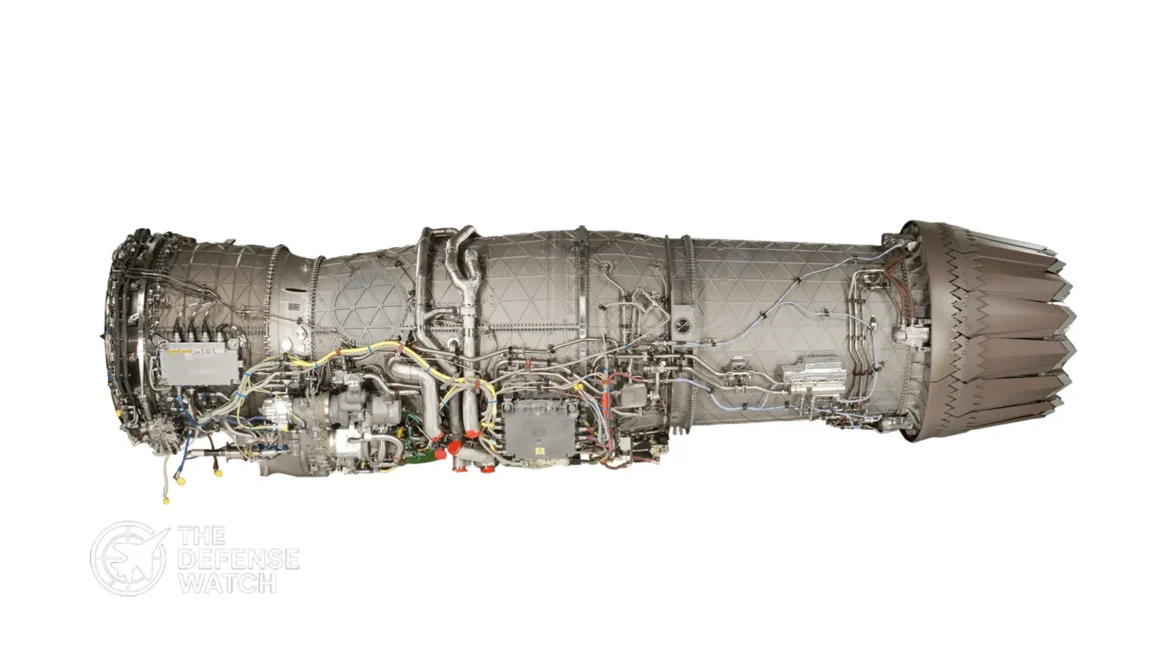
RTX F135 propulsion system contract supports F-35 Lot 20 production
RTX Corp. has been awarded a not to exceed $230.6 million F135 propulsion system contract to protect the F-35 Lot 20 engine delivery schedule, according to a U.S. Department of Defense contract announcement. The agreement funds long lead time materials and components needed to sustain production of 138 F135 engines for the U.S. Air Force, Marine Corps, Navy, international partners, and Foreign Military Sales customers.
The contract was issued by Naval Air Systems Command at Patuxent River, Maryland, and was not competitively awarded.
Contract scope and structure
The RTX F135 propulsion system contract is structured as a combination fixed price incentive, firm target, cost plus incentive fee, advanced acquisition, undefinitized contract. Its primary purpose is to secure critical materials, parts, and manufacturing efforts required to prevent schedule disruptions in the F-35 Lot 20 production cycle.
Long lead items are essential for the F135 engine due to its complex global supply chain, specialized materials, and extended manufacturing timelines. Funding these elements early helps stabilize production and reduce downstream risks as full-rate manufacturing ramps up.
The effort supports 138 propulsion systems across multiple customers, reflecting the multinational nature of the F-35 program and the shared reliance on the F135 engine as its sole powerplant.
Production locations across the United States
Work under the RTX F135 propulsion system contract will be performed across a broad U.S. industrial base, underscoring the engine program’s economic and strategic footprint.
Key workshare locations include:
East Hartford, Connecticut, 17 percent
Indianapolis, Indiana, 10 percent
Middletown, Connecticut, 8 percent
Kent, Washington, 7 percent
North Berwick, Maine, 4 percent
El Cajon, California, 3 percent
Cromwell, Connecticut, 3 percent
Whitehall, Michigan, 3 percent
Portland, Oregon, 2 percent
San Diego, California, 2 percent
South Bend, Indiana, 2 percent
Columbus, Georgia, 1 percent
Hampton, Virginia, 1 percent
Manchester, Connecticut, 1 percent
Cheshire, Connecticut, 1 percent
Elmwood Park, New Jersey, 1 percent
Various locations across the continental United States, 34 percentThe contract is scheduled for completion in May 2031.
Funding breakdown and fiscal details
Funding for the RTX F135 propulsion system contract comes from multiple sources tied to both U.S. and international F-35 procurement.
At the time of award, the following funds will be obligated:
$35.22 million from fiscal 2025 Air Force aircraft procurement funds
$26.63 million from fiscal 2025 Navy aircraft procurement funds
$42.68 million from non U.S. Department of Defense partner Navy funds
$126.03 million from Foreign Military Sales fundsNone of the obligated funds will expire at the end of the current fiscal year, providing budget stability for the long lead procurement effort.
Importance of the F135 engine to the F-35 program
The Pratt and Whitney F135, produced by RTX, is the most powerful fighter engine currently in operational service. It powers all three variants of the F-35 Lightning II, including the conventional takeoff and landing F-35A, the short takeoff and vertical landing F-35B, and the carrier-capable F-35C.
Ensuring on-time delivery of F135 engines is critical to meeting aircraft production targets set by the U.S. services and international customers. Engine delays can cascade across final assembly lines, pilot training pipelines, and operational unit stand-ups.
The Lot 20 production phase comes as the F-35 program continues to recover from earlier supply chain disruptions and modernization challenges, making early investment in long lead items a priority for program managers.
Strategic implications for allies and partners
A significant portion of the contract funding is tied to non U.S. Department of Defense partners and Foreign Military Sales customers. This reflects continued demand for the F-35 among allied air forces and the importance of maintaining a predictable delivery schedule.
Stable F135 engine production supports partner confidence in the F-35 enterprise and helps align multinational fleet growth with shared training, sustainment, and operational planning efforts.
By securing long lead materials now, the U.S. Navy and its partners aim to reduce risk as international F-35 fleets expand through the late 2020s and early 2030s.
Oversight and contracting authority
Naval Air Systems Command is the contracting activity for the RTX F135 propulsion system contract. NAVAIR manages naval aviation acquisition programs and plays a central role in coordinating engine procurement for both Navy and Marine Corps F-35 variants, while also supporting joint and international stakeholders.
The contract is identified under reference number N0001926C0118.
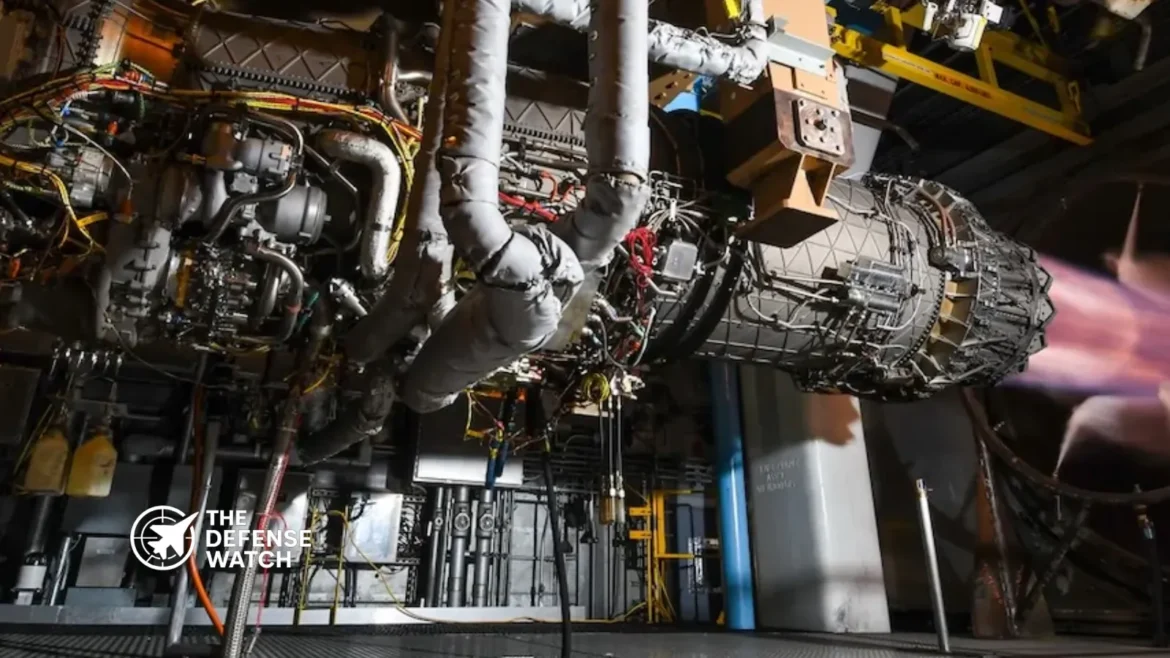
Patria, Pratt and Whitney Expand Finland F 35 Engine Assembly Capability
Patria and Pratt and Whitney have finalized an agreement enabling final assembly of the F135 engine in Finland for the country’s F 35 Lightning II fleet, a move that significantly expands domestic sustainment capacity for the Finland F 35 program.
(adsbygoogle = window.adsbygoogle || []).push({});The agreement supports Finland’s HX Fighter Program and reinforces national security of supply by ensuring critical propulsion system expertise remains available within the country throughout the F 35 lifecycle.
The announcement was confirmed by Patria and Pratt and Whitney, an RTX business, as part of broader industrial cooperation tied to Finland’s acquisition of 64 F 35A fighters.
Strengthening Finland’s F 35 Sustainment Ecosystem
Under the agreement, Patria will perform final assembly operations for the F135 engine, the sole powerplant for all variants of the F 35 Lightning II. The work will be carried out at Patria facilities in Finland and will support both operational readiness and long term sustainment of the Finnish Air Force’s future fighter fleet.
The F135 engine is one of the most powerful fighter engines ever produced and is central to the F 35’s performance, survivability, and mission flexibility. Local final assembly capability reduces reliance on external supply chains and improves resilience during crisis or high operational tempo scenarios.
Pratt and Whitney has emphasized that distributed sustainment across partner nations is a core element of the global F 35 enterprise, ensuring fleet availability while lowering long term operating risk.
Role of Patria in Finland’s Defense Industrial Base
Patria already plays a major role in Finland’s defense aviation ecosystem, with decades of experience in aircraft maintenance, repair, and overhaul. The addition of F135 engine final assembly further expands its technical portfolio and positions the company as a critical node within the global F 35 sustainment network.
According to Patria, the agreement will create high skill jobs and deepen domestic expertise in advanced propulsion systems. The company has also highlighted the importance of knowledge transfer and long term workforce development associated with the Finland F 35 engine assembly program.
This effort aligns with Finland’s broader defense industrial policy, which prioritizes sovereignty, readiness, and secure access to essential military capabilities.
Pratt and Whitney’s Global F135 Sustainment Strategy
Pratt and Whitney continues to expand its international sustainment footprint as the global F 35 fleet grows. More than a dozen countries now operate or have ordered the aircraft, with global flight hours increasing steadily year over year.
(adsbygoogle = window.adsbygoogle || []).push({});The company views partner nation industrial participation as essential to sustaining the fleet at scale. Final assembly and maintenance work performed outside the United States helps balance workload, improve turnaround times, and strengthen allied interoperability.
The Finland agreement complements other regional F135 sustainment hubs across Europe and the Asia Pacific, reinforcing the resilience of the overall F 35 propulsion enterprise.
Finland’s HX Program and Strategic Context
Finland selected the F 35A Lightning II in 2021 to replace its aging F A 18 Hornet fleet, citing survivability, sensor fusion, and alliance interoperability as key decision factors. The HX Fighter Program represents one of the largest defense procurements in Finnish history.
The inclusion of F135 engine final assembly in Finland supports Helsinki’s requirement for national security of supply, particularly given the country’s geographic proximity to Russia and its recent accession to NATO.
Ensuring domestic access to propulsion system expertise reduces operational risk and enhances Finland’s ability to sustain high readiness levels independently if required.
Implications for NATO and Regional Defense
Finland’s growing role in F 35 sustainment has broader implications for NATO’s northern flank. As more European allies field the F 35, distributed sustainment capabilities improve collective readiness and reduce single point dependencies.
(adsbygoogle = window.adsbygoogle || []).push({});Local F135 engine assembly also supports rapid recovery of aircraft during extended operations, contributing to alliance air power resilience in the Baltic and Arctic regions.
Timeline and Next Steps
Patria and Pratt and Whitney have not disclosed detailed timelines for initial assembly operations, but the work is expected to align with Finland’s F 35 delivery schedule later this decade.
Preparatory investments in facilities, tooling, and workforce training are already underway as part of the broader industrial participation package associated with the HX program.
Once operational, the Finland F 35 engine assembly capability will remain in place throughout the aircraft’s projected service life, which extends well into the 2060s.