Executive Summary
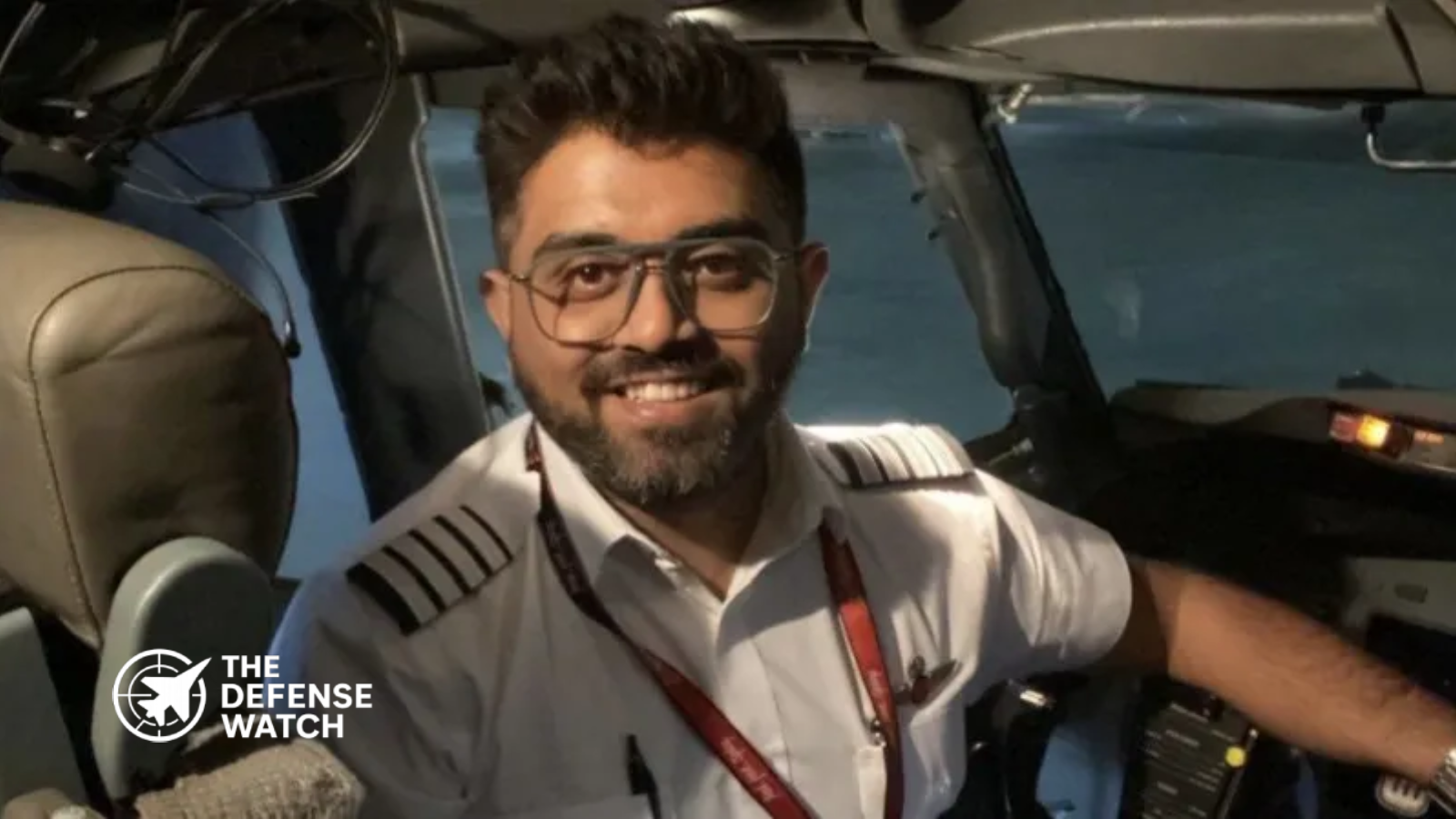
- Captain Smit Machchhar, an Indian national and Flydubai captain, was seriously injured after another pilot attacked him aboard Flight FZ1073 on September 30 while the aircraft was traveling from Dubai to Tel Aviv.
- Flydubai confirmed that the aircraft landed safely at Tabuk Airport in Saudi Arabia and that all passengers were safe. Israeli and Indian officials subsequently credited Machchhar and others aboard the aircraft with helping prevent a potentially catastrophic outcome.
- The incident highlights a different aviation-security problem from conventional hijacking scenarios: the vulnerability of a commercial aircraft when a threat originates inside the flight deck and the importance of cockpit access procedures, crew coordination, and rapid recovery from loss of control.
Smit Machchhar: Indian Pilot Stabbed on Flydubai Flight
Captain Smit Machchhar, an Indian commercial pilot flying for Flydubai, was stabbed during a cockpit confrontation aboard Flight FZ1073 on September 30 after the aircraft departed Dubai for Tel Aviv.
The Boeing 737 was diverted to Tabuk Airport in northwestern Saudi Arabia after an emergency developed during the flight. Flydubai confirmed that the aircraft landed safely and that all passengers were accounted for. The airline said it was working with the relevant authorities and that the circumstances of the incident remained under investigation.
Machchhar was subsequently identified as the injured pilot. Indian Prime Minister Narendra Modi publicly praised him on October 1, saying the captain showed courage and determination to protect other people despite being seriously injured.
Israeli Prime Minister Benjamin Netanyahu also praised Machchhar and credited his actions with helping prevent a major disaster. The political leaders’ descriptions are important context, but the precise sequence of events remains subject to the ongoing investigation.
Who Is Captain Smit Machchhar?
Machchhar is an Indian commercial pilot from Mumbai with more than a decade of airline experience.
Before joining Flydubai, he worked for Indian carrier SpiceJet. Publicly available professional information identifies him as having served as a line training captain, a role that involves operating scheduled flights while also supporting the development and assessment of other pilots.
Machchhar joined Flydubai as a captain in 2022 after more than a decade with SpiceJet, according to reporting based on his professional profile. He has been reported as having more than 9,500 hours of total flight experience, with some reports putting the figure at approximately 9,750 hours. Because the figure comes from his professional profile rather than an airline operational release, it should be treated as a reported career figure rather than a newly verified flight-hour total.
His aviation training began in New Zealand. Former aviation instructor Philip Kean of Mainland Air in Dunedin told the BBC that Machchhar had appeared calm under pressure during his training. The account is consistent with the importance of cockpit decision-making during abnormal situations, although training for an emergency landing is fundamentally different from dealing with an intentional cockpit assault.
What Happened Aboard Flydubai FZ1073?
Flight FZ1073 departed Dubai International Airport for Ben Gurion International Airport on September 30.
During the flight, an altercation developed inside the cockpit. Flydubai initially described the event as a conflict in the cockpit and confirmed that the aircraft was ultimately brought under control and diverted to Tabuk. The airline has not publicly provided a detailed reconstruction of the confrontation or disclosed a motive.
Israeli officials subsequently said that one pilot attacked and stabbed the other pilot and that the aircraft entered a dangerous descent. Reports based on flight-tracking data indicate that the aircraft experienced a rapid loss of altitude before the emergency diversion.
The aircraft also transmitted emergency transponder codes during the incident. Public reporting indicates that the aircraft used squawk 7700, the international emergency code, and subsequently squawk 7500, the code associated with unlawful interference or hijacking.
These codes are operational indicators rather than proof of a particular motive. Determining exactly why they were selected, and at what point during the confrontation, will form part of the investigation.
The Critical Role of Cockpit Access
One of the most significant elements of the incident was the interaction between the cockpit and the cabin.
According to accounts cited by Israeli officials, Machchhar was able to open the cockpit door after being attacked, allowing passengers and crew members to intervene. Other people aboard the aircraft then helped restrain the attacker and regain control of the situation.
That sequence matters from an aviation-security perspective because modern commercial aircraft are designed around a basic assumption that the flight deck must remain physically separated from the passenger cabin.
The cockpit door is a major security barrier, particularly against external threats. An attacker already inside the cockpit presents a different problem because the normal security architecture is no longer operating under its intended conditions.
The incident therefore illustrates an important distinction between preventing unauthorized cockpit entry and responding to an emergency involving an authorized member of the flight crew.
Why the Emergency Descent Matters
Flight-tracking information reported after the incident indicates that FZ1073 experienced a very rapid descent.
The exact aircraft parameters and flight-control inputs should not be treated as established until investigators reconstruct the flight using aircraft data, cockpit voice recordings, air traffic control information and other evidence.
Reports have described a descent involving thousands of feet in a very short period. However, figures circulating in media reports differ, including differences in the altitude reached and the duration of the descent. TheDefenseWatch is therefore not treating those individual numbers as an established aircraft-performance metric.
What is clear is that the aircraft experienced a significant emergency while in flight and subsequently diverted to Tabuk, where it landed safely. Flydubai has officially confirmed the safe landing and the safety of passengers.
Why Pilot Training and Crew Coordination Matter
The incident also demonstrates why airline safety depends on more than aircraft technology.
A modern airliner incorporates multiple layers of protection, including redundant flight-control systems, navigation equipment, communications systems, standardized cockpit procedures and trained flight crews. None of these systems eliminates the possibility of a deliberate human threat originating inside the flight deck.
In that environment, crew resource management becomes particularly important.
Commercial pilots are trained to manage abnormal situations through defined procedures, communication and division of responsibilities. A physical confrontation creates an unusual situation because it can simultaneously become a security emergency, a medical emergency and a flight-control emergency.
The ability to maintain aircraft control while dealing with an injured crew member and a hostile actor can place extraordinary demands on everyone aboard the aircraft.
The Broader Aviation-Security Lesson
The FZ1073 incident is not evidence that existing aviation security procedures have failed generally. It is an unusual event that demonstrates the difficulty of protecting an aircraft from an insider threat.
Since the September 11, 2001 attacks, commercial aviation security has placed substantial emphasis on preventing unauthorized people from entering the cockpit. Hardened cockpit doors and access-control procedures are central elements of that approach.
An attacker who is already part of the operating crew creates a fundamentally different security problem.
That distinction has implications for airline procedures, crew medical support, cockpit access protocols and the ability of cabin personnel to respond when the flight deck itself becomes the location of the emergency.
The incident may therefore receive attention from aviation authorities not simply because of the physical attack, but because investigators will need to determine how the aircraft was controlled during the confrontation, how cockpit access was managed, how communications were maintained and how the crew and passengers coordinated their response.
Captain Machchhar’s Professional Background
Machchhar’s background is also relevant because his response occurred within a career built around emergency management and flight safety.
According to reporting based on his professional profile, he accumulated more than 9,500 hours of commercial flying experience and spent much of his career operating Boeing 737-family aircraft. He also held training responsibilities at SpiceJet before joining Flydubai.
A senior pilot who previously worked with Machchhar at SpiceJet described him positively in comments reported by PTI. His former New Zealand instructor likewise recalled him as calm during training.
Those accounts do not establish exactly what happened in the cockpit. They do, however, provide context for why colleagues and government officials have emphasized his experience and composure.
What Officials Have Said
Prime Minister Modi publicly described Machchhar as a hero and said his actions helped save hundreds of lives. The official Prime Minister’s Office statement also said India was proud of the captain and wished him a rapid recovery.
Modi later spoke with Machchhar’s family and said Indian missions were providing assistance to the injured pilot.
Netanyahu similarly credited Machchhar with helping prevent a catastrophic outcome. Reports also identify an Israeli passenger, Yaniv Hayun, among those who intervened during the emergency.
The separate contributions of the flight crew, passengers and other individuals are significant. The aircraft did not survive because of a single action alone. The available accounts indicate that control of the aircraft and the threat inside the cockpit were addressed through a combination of pilot action, passenger intervention and crew response.
What Remains Unknown
Several important questions remain unanswered.
Investigators will need to establish the exact sequence of events inside the cockpit, the identity and motive of the attacking pilot, the weapons or object used in the assault, the precise flight-control inputs during the descent and the communication between the aircraft and air traffic control.
The airline has specifically urged against premature conclusions while authorities establish the facts.
The motive is particularly important. Public descriptions of the event have varied, and some reports have used terrorism-related terminology. Those characterizations should remain attributed to the officials or publications making them until investigators establish the facts.
The Strategic Aviation-Security Significance
The FZ1073 incident demonstrates a narrow but important vulnerability in commercial aviation: security measures designed primarily around preventing external intrusion cannot by themselves eliminate threats originating within the operating crew.
For airlines, the practical lessons could involve a review of cockpit access procedures, crew threat recognition, emergency communications and coordination between cabin personnel and flight crews.
For regulators, the investigation could provide information about how existing procedures perform when the flight deck becomes both the source of the security threat and the location from which the aircraft must continue to be controlled.
The incident also reinforces the importance of redundancy in commercial aviation. Even when the flight crew is disrupted, an aircraft can remain recoverable if enough systems, procedures and trained people continue functioning.
That resilience is one of the central principles of modern airline safety.
Current Status
Machchhar was taken to a hospital in Tabuk after the aircraft landed. Indian officials have said he remains in stable condition, while reports indicate that he has undergone medical treatment following the attack.
Flydubai has confirmed that all passengers were safe and that it was cooperating with the authorities investigating the incident.
The investigation will ultimately determine the exact sequence of events and the circumstances that led to the cockpit confrontation.
For now, the established facts are that Flydubai Flight FZ1073 was diverted safely to Saudi Arabia following an in-flight cockpit incident, Captain Smit Machchhar was seriously injured, and the aircraft landed with its passengers safe.
The public praise from Indian and Israeli leaders reflects the significance they attach to the actions attributed to Machchhar. The final aviation-safety assessment, however, will depend on evidence from the aircraft, crew, passengers and investigating authorities.