Executive Summary
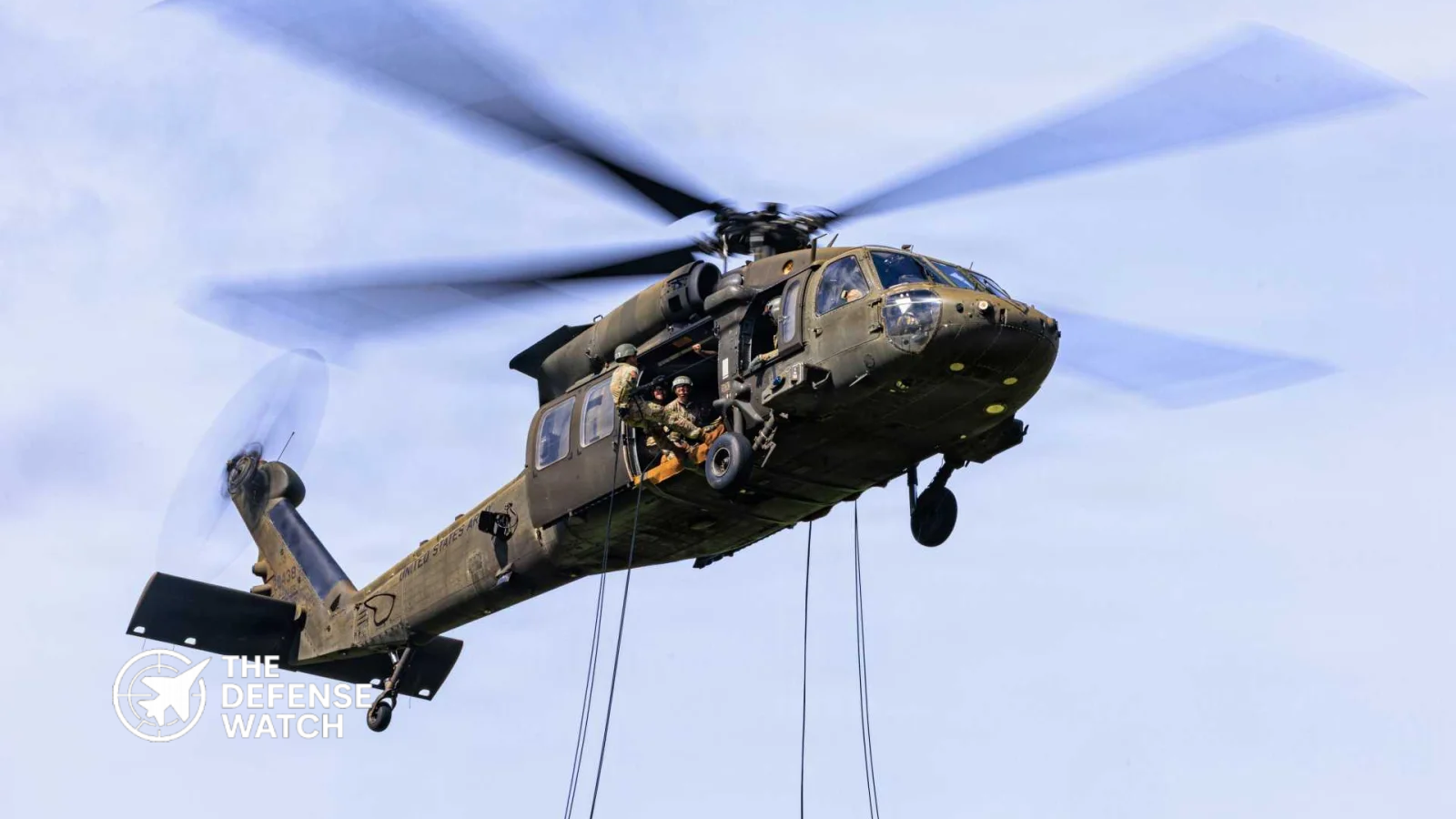
- Sikorsky and the U.S. Army have established a new production agreement initially covering 16 UH-60M Black Hawk helicopters, with deliveries beginning in 2028. The arrangement is designed to keep the production line active as the Army’s existing multiyear procurement period winds down.
- Sikorsky says the agreement could expand by more than 100 aircraft as additional U.S. requirements and allied Foreign Military Sales cases mature. That figure represents expected future growth, not a firm order for more than 100 additional helicopters.
- The production decision comes alongside a broader UH-60M modernization effort involving greater power, increased payload and range, launched effects, autonomy and a more open digital architecture. The Army has already demonstrated launched-effects operations from the H-60M during 2026 testing.
U.S. Army Expands UH-60M Black Hawk Production Pipeline
The U.S. Army and Sikorsky have established a new production framework intended to keep the UH-60M Black Hawk manufacturing line active beyond the Army’s current multiyear procurement cycle, with an initial commitment for 16 helicopters and a potential expansion of more than 100 additional aircraft over the coming years. Sikorsky, a Lockheed Martin company, announced the agreement on Sept. 30, 2026, with deliveries of the initial aircraft scheduled to begin in 2028.
The announcement is significant less because of the initial 16-aircraft quantity than because of the acquisition structure. The Army is creating a mechanism that can absorb additional U.S. and allied demand as requirements and Foreign Military Sales cases mature, reducing the risk of a production interruption between major procurement actions.
New Production Structure Extends Black Hawk Procurement
The initial agreement covers 16 UH-60M aircraft. Sikorsky says it is expected to increase by more than 100 aircraft in the coming years, but the company has not described those future aircraft as a firm purchase commitment.
That distinction matters for assessing the size of the program. The current announcement establishes a pathway for additional procurement rather than authorizing a confirmed fleet expansion of more than 100 helicopters.
The arrangement follows the Army’s existing UH-60M multiyear procurement strategy. The fiscal 2026 Army aircraft procurement documents show that the previous multiyear program included a minimum of 120 UH-60M and HH-60M aircraft across fiscal years 2022 through 2026. The FY2026 budget requested funding for 24 UH-60M aircraft, with procurement funding of $732.1 million.
Item Current information Aircraft UH-60M Black Hawk Initial new agreement quantity 16 aircraft Potential additional aircraft More than 100 Initial deliveries 2028 Manufacturer Sikorsky, a Lockheed Martin company Industrial base 230 suppliers across 43 states Previous Army multiyear procurement FY2022 to FY2026 FY2026 budget quantity 24 UH-60M aircraft FY2026 UH-60M procurement funding $732.1 million The Army’s FY2026 budget documentation also identifies Sikorsky as the prime contractor for the UH-60M airframe and government-furnished equipment.
Why Production Continuity Matters
For a mature military aircraft, maintaining the manufacturing base can be almost as important as the number of aircraft ordered in a single year.
Sikorsky says Black Hawk production relies on 230 suppliers across 43 states. The company also says it spends more than $1.5 billion annually through the Black Hawk industrial base and supports approximately 55,000 U.S. jobs. Those figures are company-reported rather than independent government assessments.
The practical issue is that specialized aerospace manufacturing capacity cannot necessarily be recreated quickly after a production line shuts down. Long-lead components, qualified suppliers, tooling, engineering expertise and trained production workers all contribute to the time and cost required to restart production.
The new structure therefore gives the Army greater flexibility to insert additional aircraft without waiting for a completely new production restart.
This is particularly relevant because the Army is simultaneously pursuing modernization of its existing Black Hawk fleet rather than treating the UH-60M as a static legacy platform.
Black Hawk Modernization Moves Beyond the Current UH-60M
The Army and Sikorsky are pursuing a modernization path that could keep the Black Hawk relevant into the 2070s.
Sikorsky’s Black Hawk modernization material identifies several areas of development, including the Improved Turbine Engine, Modular Open Systems Approach architecture, autonomy, sustainment improvements and greater aircraft power. The company says the modernization effort is intended to build on Army investments associated with Future Vertical Lift.
The distinction between today’s UH-60M and future modernization configurations is important. The capabilities being discussed for the next modernization cycle should not automatically be treated as equipment installed on all 16 aircraft covered by the current production agreement.
Among the proposed improvements are:
Modernization area Potential operational effect Increased engine power Greater available aircraft power for demanding missions Higher payload capacity More flexibility for troops, equipment and external loads Increased range Greater reach for dispersed operations Modular digital architecture Easier integration of future mission systems Launched effects Ability to deploy or control unmanned systems from the helicopter Autonomy Potential reduction in crew workload and new mission options Digital sustainment More data-driven maintenance and fleet management Exact future performance figures for payload, range and engine output should not be treated as confirmed specifications for the current production batch unless the Army formally establishes them.
Launched Effects Could Change the Black Hawk’s Tactical Role
One of the more important developments is the Army’s work to integrate launched effects with the H-60M.
In June 2026, Army aviation personnel conducted a successful flight test involving multiple medium-range launched effects from an H-60M Black Hawk at Fort A.P. Hill, Virginia. The Army described the capability as part of an effort to extend the reach, lethality and survivability of the force.
The capability was subsequently demonstrated during Project Convergence Capstone 6 at Fort Irwin, California, in July. Army personnel said the testing continued the effort to integrate air-launched effects into the H-60M.
This changes the utility helicopter concept from simply transporting personnel and equipment toward a more connected battlefield node.
A Black Hawk carrying or controlling unmanned systems could potentially support reconnaissance, communications, targeting or other missions while reducing the need for the crewed helicopter itself to approach the most heavily defended areas. The precise operational employment of these capabilities will depend on Army doctrine, integration testing and future procurement decisions.
Higher Power and Payload Are Central to the Modernization Case
The Army’s modernization challenge is partly driven by the demands placed on helicopters operating in increasingly dispersed and contested environments.
Sikorsky has identified the Improved Turbine Engine as a central element of the future Black Hawk configuration. The company says the modernization effort is intended to provide greater power and fuel efficiency, allowing improvements in payload, endurance and mission flexibility.
Sikorsky has also previously reported that T901 Improved Turbine Engines were delivered for Black Hawk integration work. The Army and Sikorsky have been working toward testing the engine on Black Hawk aircraft.
The significance is not simply a higher engine rating. Additional available power can provide more margin when the aircraft is operating at high gross weight, in demanding environmental conditions or while carrying external loads.
For Army aviation, that becomes increasingly important as helicopters are expected to operate across larger distances and support distributed formations.
Autonomy and Open Architecture Add Another Layer
The Black Hawk modernization effort also extends into autonomy.
In 2024, DARPA awarded Sikorsky $6 million to install its ALIAS and MATRIX flight autonomy system on an Army-owned experimental fly-by-wire UH-60M. The program was intended to evaluate capabilities ranging from reduced pilot workload to potentially uninhabited flight operations.
The Army’s broader modernization work also includes the Scalable Digital Backbone, which is intended to support modularity and open standards. The fiscal 2026 budget documentation identifies the digital backbone as part of the Army’s effort to advance Modular Open Systems Architecture objectives for the Black Hawk.
An open digital architecture has an industrial advantage as well as an operational one. If future mission systems can be integrated through standardized interfaces, the Army can potentially modernize the platform without redesigning large portions of the aircraft each time a new sensor, communications system or autonomous capability is introduced.
That approach is particularly relevant for an aircraft expected to remain in Army service for decades.
The Industrial Base Is Part of the Capability
The new production agreement also addresses a less visible part of military readiness: the ability to manufacture aircraft when demand rises.
Sikorsky says the Black Hawk industrial base includes 230 suppliers spread across 43 states. Lockheed Martin also reports that it has invested more than $1 billion in Sikorsky manufacturing facilities and research laboratories over the past 11 years.
For the Army, preserving this industrial network provides options.
A continuous production line can support new Army procurement, allied demand and potentially future modernization configurations without requiring the industrial base to rebuild itself after a prolonged production gap.
The arrangement also provides a bridge between near-term UH-60M procurement and longer-term Army aviation transformation.
Black Hawk Remains Relevant Despite Future Vertical Lift
The Army is not pursuing the Black Hawk in isolation from its future aviation programs.
Future Vertical Lift is intended to introduce new rotorcraft capabilities, including the Army’s future long-range assault capability. That creates a long-term question over how much of the current utility helicopter mission should migrate to new aircraft and how much should remain with modernized H-60 variants.
The production agreement suggests that the Army continues to require additional Black Hawks during this transition period.
That does not necessarily mean the UH-60M will replace future aircraft programs. Instead, the Army can use continued Black Hawk production and modernization to maintain available lift capacity while new-generation aviation systems mature.
This creates a layered approach: maintain a large and established fleet while progressively introducing new capabilities through engines, digital systems, launched effects and autonomy.
What the 100-Plus Figure Actually Means
The headline figure requires careful interpretation.
Sikorsky says the agreement is expected to increase by more than 100 aircraft in the coming years. The company has not announced a firm purchase order covering those aircraft.
The likely procurement mechanism is therefore more important than the headline number. The agreement allows additional aircraft to be incorporated as U.S. requirements and allied FMS cases mature.
Confirmed or reported element Assessment 16 UH-60M aircraft Initial agreement Deliveries beginning in 2028 Confirmed by Sikorsky More than 100 additional aircraft Expected future expansion, not a firm order U.S. Army demand Potential source of additional aircraft Allied demand Potential source through FMS cases Future modernization Separate from the confirmed configuration of the initial aircraft This structure gives the Army a mechanism to expand production without treating every future aircraft as a separate standalone production restart.
Strategic Implications for Army Aviation
The immediate effect is production continuity. The broader effect is preserving a mature utility helicopter ecosystem while the Army changes how aviation operates in contested environments.
The Black Hawk has historically been centered on air assault, troop movement, medical evacuation, resupply and other utility missions. The Army’s 2026 launched-effects demonstrations show how that role can expand toward networked operations involving crewed and unmanned systems.
The challenge will be integrating these capabilities without turning the aircraft into an increasingly complex platform that is difficult to maintain or upgrade.
That makes the open-architecture element important. A digital backbone and modular mission systems can provide a path for incremental modernization rather than repeated major aircraft redesigns.
For the industrial base, the new agreement provides another advantage: it creates an ongoing production framework around which suppliers can plan capacity and investment.
Outlook
The UH-60M Black Hawk is entering a different phase of its service life. Instead of relying solely on large periodic procurement contracts, the Army and Sikorsky are moving toward a production structure that can absorb additional aircraft as U.S. and allied demand develops.
The initial 16-aircraft commitment is modest compared with the potential expansion, but the larger significance lies in keeping the production system active beyond the current procurement cycle.
At the same time, Army testing of launched effects, work on improved propulsion and continued development of autonomy and open digital architecture indicate that the Black Hawk is being adapted for a battlefield where range, connectivity, unmanned systems and survivability are increasingly important.
The key question over the next several years will not simply be how many additional UH-60Ms the Army buys. It will be how quickly the service can integrate these modernization technologies across the existing fleet while maintaining the production and sustainment capacity needed to support Army and allied requirements.