Executive Summary:
Rheinmetall CEO Armin Papperger says he has no intention of stepping down despite round-the-clock security linked to alleged threats against him. The comments come as Germany’s largest defense contractor expands weapons production, supports Ukraine and broadens its role across Europe’s defense industrial base.
Rheinmetall CEO Rejects Pressure Amid Security Threats
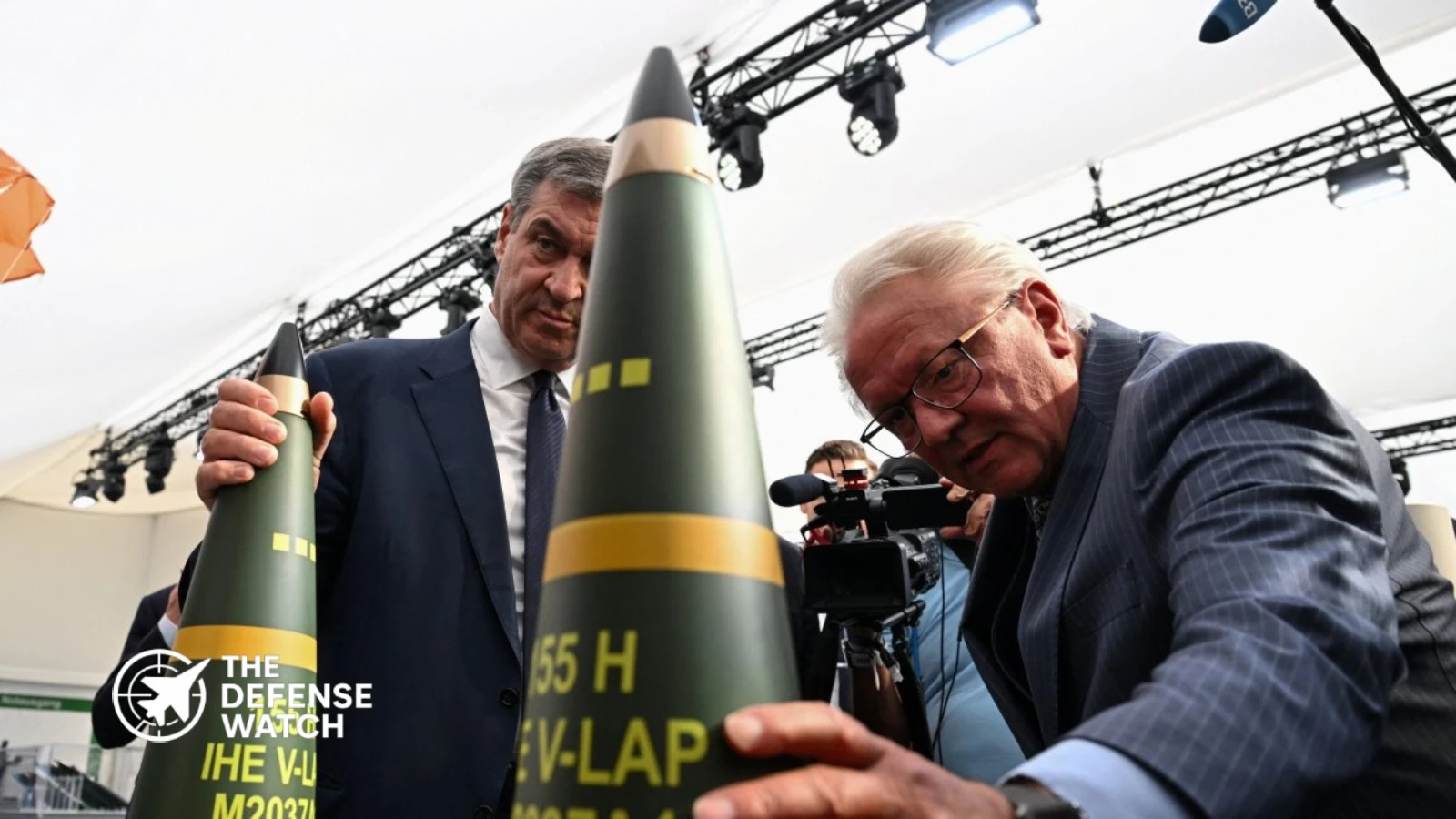
Rheinmetall CEO Armin Papperger says he will remain in his position despite heightened personal security measures and alleged threats connected to his company’s support for Ukraine.
In comments released Aug. 9 by the Deutsche Presse-Agentur, Papperger said that backing away from the responsibilities of leading a major defense company was not an option. He said people unable to withstand the pressure should not hold such positions.
Papperger, 63, has been Rheinmetall’s chief executive since 2013. The company has become one of Europe’s most important defense manufacturers as Germany and other NATO members accelerate efforts to rebuild military stocks and expand domestic production capacity.
The security concerns surrounding Papperger are not new. German authorities significantly increased his protection in 2024 following reports that Western intelligence agencies had disrupted an alleged Russian plot targeting him. German public broadcaster ARD later reported that security officials had detected suspicious activity but characterized the precise nature of the threat as unclear.
Papperger Says He Will Stay
Papperger said he currently has a contract extending for another three and a half years and indicated that he has no plans to leave Rheinmetall.
He also acknowledged the unusual security environment surrounding his position. According to reports, Papperger said his property had previously been targeted by a fire and that demonstrations had taken place outside his home. He said German authorities were protecting him as far as possible.
The German defense executive continues to appear publicly at major industrial and political events while accompanied by security personnel.
His continued role matters because Rheinmetall’s business has expanded substantially beyond traditional weapons manufacturing. The company now operates across land systems, weapons and ammunition, air defense, digital systems and naval capabilities.
Why Rheinmetall Has Become Strategically Important
Rheinmetall’s growing importance is closely tied to Europe’s effort to rebuild military capacity after decades of relatively limited defense investment.
The company’s 2025 results show the scale of that expansion. Rheinmetall reported €9.94 billion in sales, a 29% increase from 2024, while its operating result rose 33% to €1.84 billion. Its order backlog reached €63.8 billion at the end of 2025, up 36% year over year.
Rheinmetall entered 2026 expecting another major increase in activity.
| Rheinmetall Indicator | 2025 Result | 2026 Guidance |
|---|---|---|
| Sales | €9.94 billion | €14.0 billion to €14.5 billion |
| Sales growth | 29% | 40% to 45% |
| Operating result | €1.84 billion | Margin around 19% |
| Order backlog | €63.8 billion | Continued major expansion |
Source: Rheinmetall’s 2025 annual results and 2026 guidance.
That growth reflects sustained demand for ammunition, armored vehicles, air defense systems and other military equipment across Germany and allied countries.
Rheinmetall has also increased its role in areas that are strategically important to NATO’s ability to sustain a prolonged conflict, including artillery ammunition, air defense and missile production.
The Threat Extends Beyond One Executive
The security issue surrounding Papperger is part of a wider concern among European governments about espionage, sabotage and other forms of hostile activity against defense companies.
German intelligence services have warned defense-industry personnel to remain particularly vigilant, citing increased risks associated with espionage and sabotage attributed to Russian state actors. The warning reportedly included concerns about potential targeted attacks against individuals in senior management positions depending on developments in the Ukraine war.
This creates a different security problem from conventional military attacks.
Defense companies are increasingly part of the strategic infrastructure of NATO countries. Their factories, logistics networks, engineering teams and executives can influence military readiness even when they are located hundreds of miles from an active battlefield.
The recent security environment around German infrastructure illustrates the broader challenge. A drone carrying explosives was discovered at Leipzig/Halle Airport in August, prompting German authorities to investigate what officials described as a serious hybrid-security concern. No perpetrator has been publicly established in connection with that incident.
For defense manufacturers, the implication is that physical security increasingly has to be integrated with cybersecurity, counter-drone protection, intelligence monitoring and personnel security.
Rheinmetall Is Expanding the Industrial Base
Rheinmetall’s expansion is not limited to existing production lines.
In July, the company announced plans with Lockheed Martin to establish production of the Army Tactical Missile System, or ATACMS, at Rheinmetall’s Unterlüß facility in Germany. The companies described the project as the first and only ATACMS production facility outside the United States.
The arrangement is strategically significant for both sides of the Atlantic.
For Europe, localized production can reduce dependence on long-distance supply chains and provide additional manufacturing capacity for weapons already used by allied forces.
For the United States, cooperation with European manufacturers can help expand the wider allied industrial base at a time when American missile inventories and production capacity face heavy demand.
Reuters reported Aug. 7 that Rheinmetall expects the ATACMS venture to take time to reach meaningful production levels, underscoring a broader problem facing Western militaries: expanding a sophisticated missile production line cannot be achieved simply by adding workers or increasing factory hours.
Production depends on specialized components, energetics, testing infrastructure, tooling, qualified suppliers and regulatory approvals.
Ammunition Capacity Is Another Priority
Rheinmetall is also investing heavily in ammunition manufacturing.
The company said in July that it was expanding its propellant production capability at its Nitrochemie Aschau site as part of its broader Project Firepower initiative. The goal is to strengthen the supply chain for ammunition components and reduce potential bottlenecks in areas such as propellants, explosives and fuzes.
This is particularly relevant after the Ukraine war demonstrated how quickly artillery ammunition can be consumed during sustained high-intensity combat.
The industrial lesson for NATO is straightforward: stockpiles alone are not enough. Alliances need manufacturing capacity capable of replacing weapons and ammunition at wartime consumption rates.
Rheinmetall’s Expanding Role in European Defense
Rheinmetall’s strategic position has also widened through acquisitions and new partnerships.
The company completed its acquisition of Naval Vessels Lürssen in early 2026, giving it a larger presence in naval systems and allowing it to compete across a wider portion of the German military procurement market. Rheinmetall said its naval activities now extend from unmanned naval vehicles to corvettes and frigates.
The company is also expanding into space-based intelligence and surveillance through Rheinmetall ICEYE Space Solutions.
That diversification matters because European governments are increasingly seeking defense suppliers capable of integrating multiple domains rather than providing individual weapons in isolation.
Rheinmetall’s portfolio now includes land combat systems, ammunition, air defense, digital networks, naval platforms and space-based intelligence capabilities.
Implications For NATO And The United States
The security situation surrounding Papperger illustrates a broader change in the defense industry.
Major European contractors are no longer simply commercial suppliers competing for peacetime procurement contracts. They are increasingly treated as strategic assets supporting national and allied military readiness.
That shift has several implications for the United States.
First, a stronger European defense industrial base can reduce pressure on U.S. production lines. Additional European capacity for ammunition, missiles, armored vehicles and air defense systems gives NATO more options during a prolonged crisis.
Second, industrial cooperation is becoming increasingly important. The Rheinmetall-Lockheed Martin ATACMS project demonstrates how American defense technology can be paired with European manufacturing capacity.
Third, protecting defense companies is becoming part of national security policy. Security measures increasingly have to cover not only factories and classified information but also senior executives, engineers, supply chains and critical infrastructure.
The challenge is therefore larger than the personal security of one executive.
Papperger’s decision to remain at Rheinmetall comes as the company assumes a larger role in rebuilding European military capacity. His comments underline how the defense industry’s transformation is occurring alongside a more contested security environment in which industrial infrastructure and personnel can themselves become targets.
For Germany and its NATO partners, the strategic objective is not simply to manufacture more weapons. It is to build an industrial base that can continue operating, expanding and supplying allied forces under sustained pressure.