

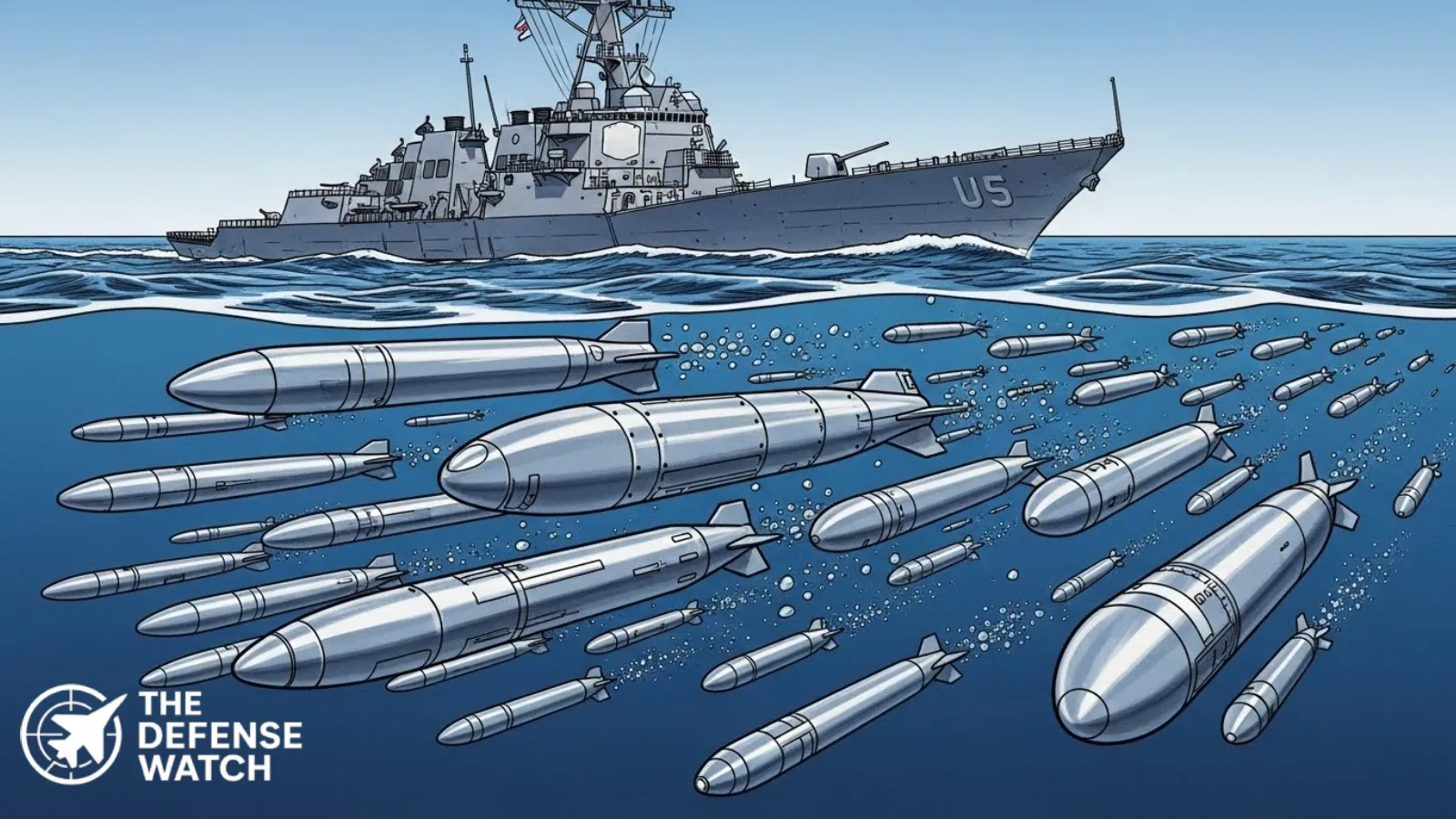
US and South Korea Agree to Build Underwater Drone Swarms for Indo-Pacific Security
In a move aimed at strengthening undersea capabilities against China’s growing maritime presence, the United States and South Korea have agreed to co-develop low-cost autonomous underwater drone swarms for the US Navy. The deal, announced in December 2025, pairs South Korea’s Hanwha Group with US defense startup Vatn Systems to accelerate production of scalable underwater systems that can perform surveillance and strike missions across contested littoral waters.
Background on Underwater Autonomy and Strategic Need
Pressure on undersea dominance in the Indo-Pacific has risen with China’s rapid naval modernization and expanding fleet of submarines and unmanned systems. The region’s contested sea lines of communication and geographic chokepoints have highlighted the need for novel approaches to maritime security and deterrence. Autonomous underwater systems offer a way to extend presence and sensing without exposing crewed vessels to risk.
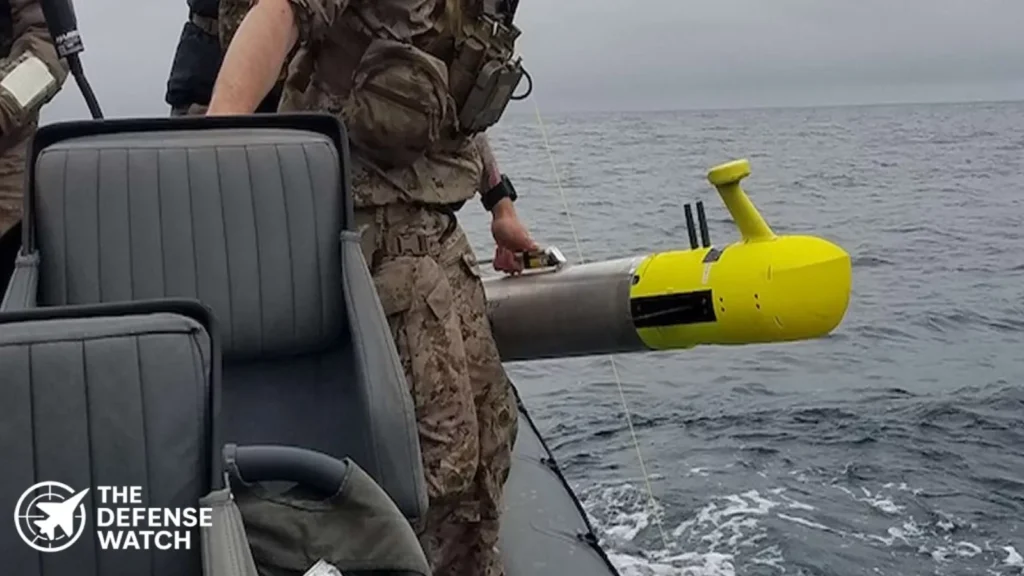
The Republic of Korea Navy (ROKN) has also been expanding its unmanned maritime portfolio, including surface and underwater vehicles, as part of a broader shift toward autonomy and distributed operations. South Korean industry has been active in the global market for unmanned maritime systems and has developed platforms ranging from surveillance AUVs to concepts for larger anti-submarine unmanned underwater vehicles and unmanned surface vessels.
Partnership Details and Technology
Under the agreement, Hanwha and Vatn Systems will jointly produce autonomous underwater drones based on Vatn’s Skelmir S6 design, often described as a compact modular underwater effector. These torpedo-shaped vehicles weigh about 50 to 60 pounds, measure roughly 6 inches in diameter, and can carry payloads between 10 and 20 pounds. They can reach speeds up to 20 knots and operate out to about 20 nautical miles at depths around 100 meters.
The drones are designed for expendability and mass deployment. Vatn’s mission software enables a single operator to plan and monitor hundreds of vehicles at once using mobile tactical systems. Launch options include shore sites, small boats, submarines, surface combatants, or aircraft, giving commanders flexible deployment options in response to evolving threats.
The S6 platform is built to accept a range of mission payloads including kinetic warheads, electronic warfare modules, or cyber and sensor packages without extensive integration into host platforms. At an estimated unit cost of about 75,000 US dollars, these systems are far cheaper than traditional large UUVs or crewed platforms, enabling saturation tactics across strategic maritime zones.
Hanwha, already a major supplier of submarines, mine countermeasure systems, and unmanned maritime vehicles for the ROKN, brings industrial scale and integration expertise. Its shipyard capacity in South Korea and the United States will support scaling Vatn’s small batch innovations into production-level quantities.
Strategic Context and US Naval Goals
For the US Navy, the partnership fits into broader efforts to field large numbers of affordable autonomous systems under initiatives like the Pentagon’s Replicator program. Replicator calls for thousands of attritable unmanned systems across domains to offset adversary numerical advantages, particularly in contested Indo-Pacific waters where GPS denial and electronic disruption can degrade traditional platforms.
Analysts see the mass use of cheap autonomous effectors as a way to create undersea “saturation zones” that can act like mines, screen high-value units, or detect and pursue enemy submarines. The approach reflects a shift toward distributed maritime operations and layered defense strategies that rely on both crewed and uncrewed assets.
For Seoul, the agreement deepens defense industrial cooperation with Washington and accelerates technology transfer in autonomy software, networking, and certification standards consistent with US Navy requirements. It also offers South Korea a pathway to adapt the effector family for its own needs, including mine hunting, port defense in the Yellow Sea, and layered anti-infiltration barriers around key naval installations.
Expert and Policy Perspectives
Experts note that affordable autonomous systems are rapidly reshaping naval planning. Massed underwater drones could complicate adversary maneuvers by forcing them to account for extensive sensor networks and potential strike vectors. Low unit cost gives commanders the option to deploy swarms at scale, changing how sea control and denial might be executed in high-intensity conflict scenarios.
The partnership also signals a shift in alliance industrial ties. Hanwha’s recent investments in Vatn, including a reported 60 million dollar funding round, bind South Korean defense industrial capacity more closely to US military needs. This comes amid broader US efforts to diversify defense supply chains with allied participation and enhance interoperability across platforms and systems.
Policy observers argue that such cooperation helps address capability gaps in a region where China has invested heavily in undersea platforms and counter-access strategies. Autonomous systems may not replace traditional submarines and crewed vessels, but they offer a complementary set of tools that could deter or blunt adversary action by complicating their operational calculus.
Looking Ahead
The Hanwha-Vatn agreement sets the stage for rapid experimentation, testing, and scaling of autonomous underwater drones within the next few years. Key milestones to watch include field trials with the US Navy, integration with existing fleet and littoral combat systems, and export or allied adoption across the Indo-Pacific. Future exercises may reveal how these systems operate alongside crewed assets and complement broader distributed maritime operations.
