

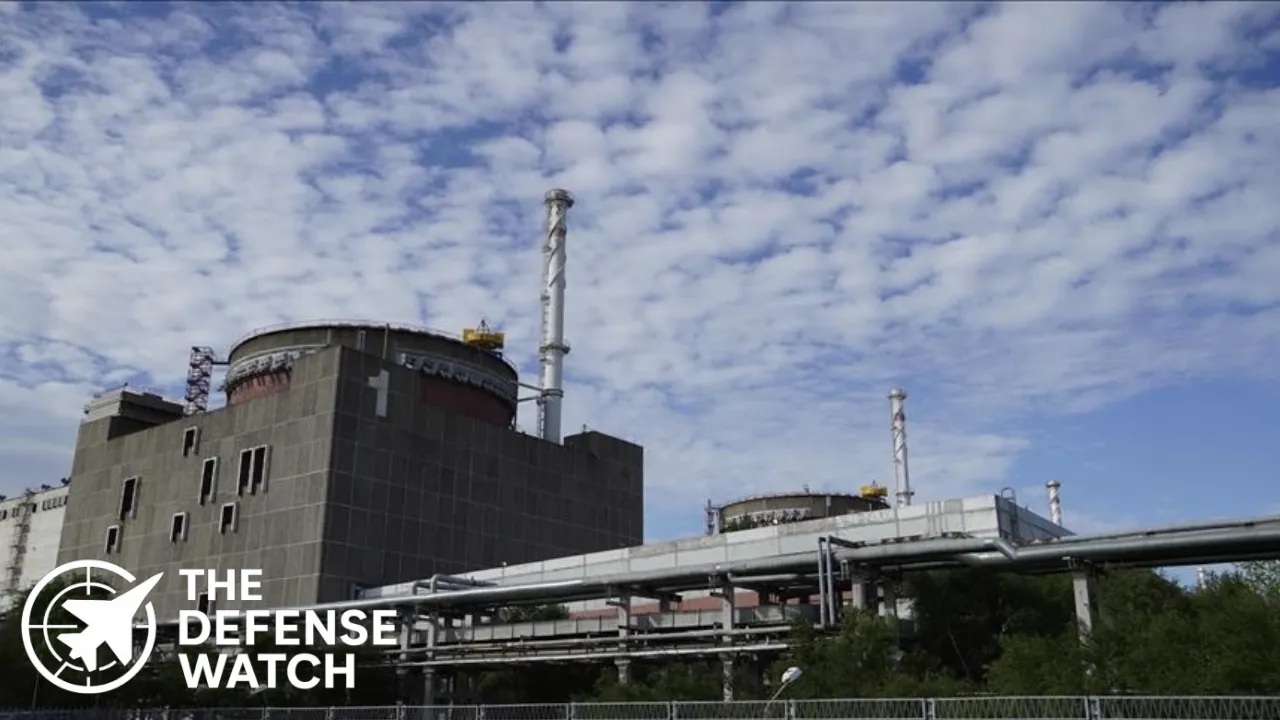
What’s Happened: Slow Creep and Power Cut Sabotage
Russia’s gradual consolidation of control over the Zaporizhzhia nuclear power plant — Europe’s largest — is sparking renewed alarm, as repeated outages, power-line damage, and allegations of sabotage raise the specter of a potential nuclear safety crisis.
Power was cut again in late September, severing the plant’s last external connection to Ukraine’s grid, forcing operators under Russian control to rely on back-up diesel generators.
Greenpeace and satellite analysts say there is no evidence of shell-crater damage to the downed pylon, suggesting deliberate sabotage rather than warhead strikes.
The outage triggered a ceasefire between Russian and Ukrainian forces to allow IAEA-supervised repairs. But critics warn the crisis could be politically manufactured to tighten Russian control over the site.
Context: Why Zaporizhzhia Matters
- Russia seized the plant in March 2022, early in its full-scale invasion of Ukraine.
- All six of its reactors remain in cold shutdown, but residual heat still requires active cooling.
- The plant once supplied nearly 20% of Ukraine’s electricity, making it both a symbolic and strategic asset.
- The IAEA maintains a contingent at the site, but its ability to enforce safeguards is limited under Russian occupation.
- After the destruction of the Kakhovka dam in 2023, water supply for cooling became more precarious, worsening safety risks.
Detailed Developments
Power‐Line Outage & Sabotage Allegations
- On September 23, the final 750 kV line supplying the plant was severed.
- Experts from McKenzie Intelligence Services, working with Greenpeace, found no signs of explosions or crater damage at the pylon site.
- Shaun Burnie, a nuclear specialist at Greenpeace, said the imagery “strongly suggests deliberate sabotage” to isolate the plant from Ukrainian power.
- According to a leaked Russian IAEA submission, Moscow had a contingency plan to reroute power from the Russian grid if the Ukrainian lines were cut.
Repair Under Ceasefire
- In October, IAEA-led teams brokered temporary ceasefires to begin restoration of the lines.
- The main 750 kV “Dniprovska” line was repaired under the first phase, per IAEA Director General Rafael Grossi.
- A secondary 330 kV line (Ferosplavna-1) is also under repair, though it passes through contested areas.
- IAEA warned that without a stable connection, the plant’s reliance on diesel generators is unsustainable.
Political Stakes & Moscow’s Long Game
- Russia’s Foreign Ministry has formally declared the plant part of its national territory, rejecting any joint operation or transfer.
- Sergey Lavrov, Russia’s foreign minister, ruled out handing control to third parties, including the U.S., saying it belongs to Rosatom.
- Ukrainian officials and Western experts warn that Russia may be manufacturing a nuclear crisis to justify full integration into the Russian energy grid.
- After annexing the region, Moscow reportedly began building new high-voltage transmission infrastructure to connect the plant to the Russian grid.
Expert & Policy Perspectives
From a geopolitical standpoint, analysts see Russia’s “slow creep” not as an accident but as a calculated strategy. By fragmenting supply lines, isolating the plant, and controlling its narrative, Moscow appears to be repositioning Zaporizhzhia as a leverage point — both for regional power politics and as a bargaining chip in potential peace deals.
IAEA Director Grossi has repeatedly warned that the plant’s fragile power situation represents a long-term nuclear safety risk.
Meanwhile, Global Policy Journal analysts argue that Russia’s legal reinterpretation of the plant’s status under annexation is part of a broader effort to normalize control, undermining international norms on nuclear governance.
Ukraine’s Foreign Ministry has urged greater IAEA engagement and called for sanctions against Rosatom, saying that only Kyiv’s regulators should have a say in operating the plant.
What Comes Next
- IAEA monitoring will remain critical: any new outages or damage will be scrutinized under international frameworks.
- Russian grid link: Observers will closely watch how fast and how deeply Russia integrates the plant into its power network.
- Diplomatic pressure: Kyiv and its allies may lean more heavily on the IAEA, sanctions, and international forums to contest Moscow’s claims.
- Safety risk escalation: A repeat of a prolonged blackout, or generator failure, could turn a political crisis into a catastrophic nuclear accident.

1 comment
[…] Zaporizhzhia region remains one of the most strategically important fronts in the war. Control of the area […]