Executive Summary:
Saab has launched the Sirius Compact L24R, a new fixed-site passive electronic warfare sensor designed for persistent strategic surveillance. The system can detect and classify radar emissions from aircraft, ships, and surveillance systems while supporting both fixed and mobile deployments.
Saab Expands Sirius Electronic Warfare Portfolio
Saab announced the launch of the Sirius Compact L24R during the AOC EW Europe symposium in Helsinki, introducing a new passive electronic warfare sensor aimed at strategic national security missions.
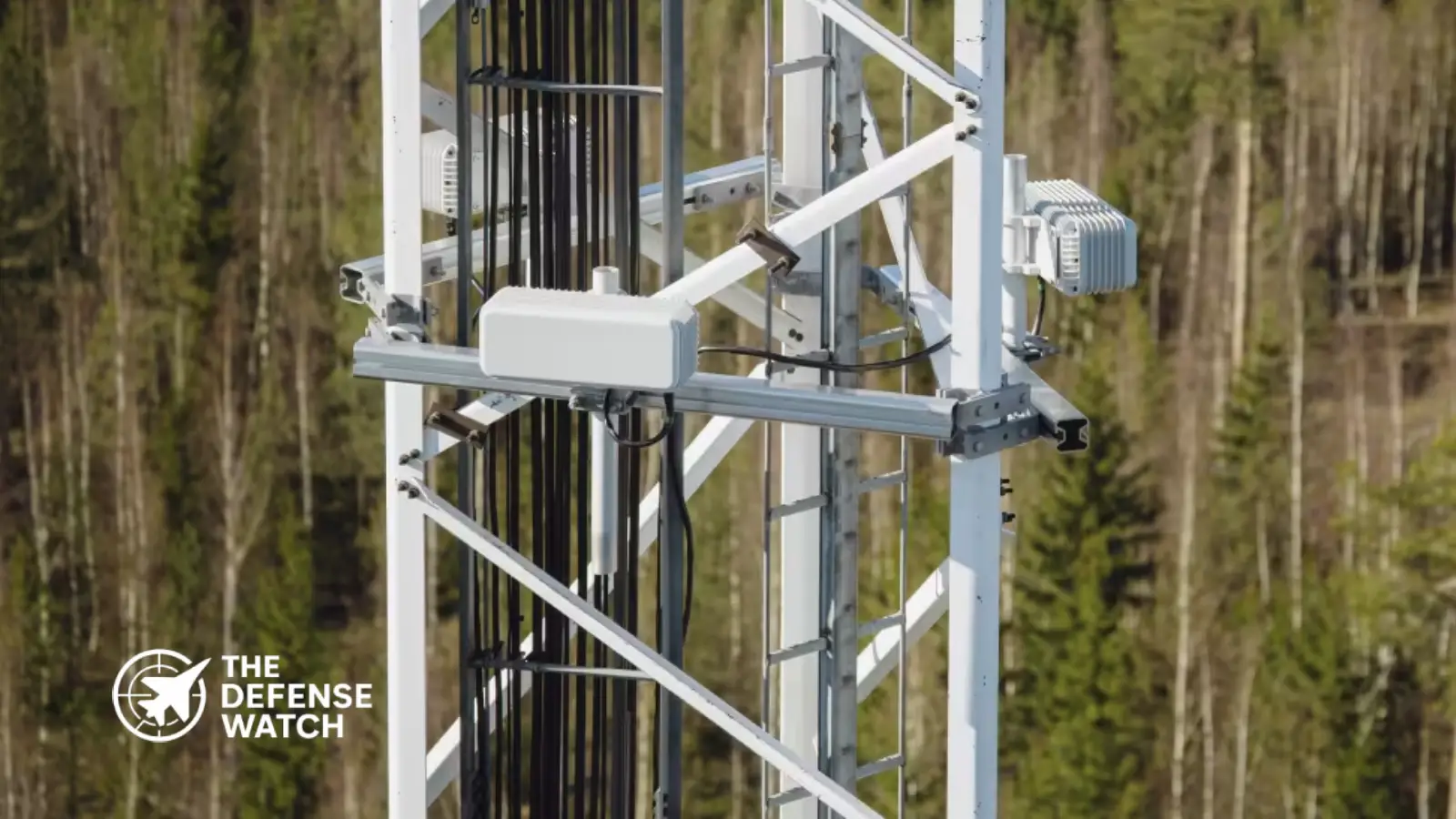
The Sirius Compact L24R is part of Saab’s broader Sirius Compact family of electronic support measure (ESM) systems. The new variant is specifically optimized for fixed installations on masts, towers, and existing infrastructure, allowing operators to establish persistent wide-area surveillance coverage.
According to Saab, the sensor can detect, track, classify, and localize radar emissions from a range of airborne and maritime threats, including fighter aircraft, surveillance radars, and surface vessels.
Carl-Johan Bergholm, head of Saab’s Surveillance business area, described the system as an expansion of the company’s tactical electronic warfare portfolio into strategic fixed-site operations.
“The new Sirius Compact sensor, L24R, is a welcome extension to the existing tactical Sirius Compact R-ESM portfolio, with a sensor built specifically for persistent, fixed-site surveillance, offering wide area strategic coverage,” Bergholm said.
Focus On Passive Surveillance And Survivability
The Sirius Compact L24R reflects a broader trend in modern electronic warfare toward passive sensing technologies. Unlike active radar systems that emit signals and can reveal their position, passive EW sensors operate silently by intercepting and analyzing electromagnetic emissions from other platforms.
This capability has become increasingly important as militaries seek to improve survivability in contested electromagnetic environments where active emissions can expose assets to detection and targeting.
Saab stated that the Sirius Compact L24R can operate autonomously while continuously processing intelligence data without storing sensitive information directly on the sensor. That approach reduces cybersecurity risks and supports integration into distributed defense networks.
The modular design also allows rapid deployment and easier integration into existing command-and-control architectures. Saab noted the system supports both fixed and mobile deployment concepts, providing operational flexibility for military and national security users.
Growing Demand For Electronic Warfare Systems
The launch comes as global defense organizations accelerate investment in electronic warfare and spectrum dominance capabilities. Modern military operations increasingly depend on the ability to monitor, exploit, and protect the electromagnetic spectrum across air, land, sea, cyber, and space domains.
Passive ESM systems such as the Sirius Compact L24R are particularly valuable for early warning, maritime surveillance, border monitoring, and integrated air defense missions. Their ability to identify radar signatures without transmitting signals makes them difficult to detect while improving situational awareness.
European defense firms have expanded electronic warfare development programs in response to rising regional security tensions, increased drone activity, and the growing use of advanced radar systems in modern conflicts.
Saab has steadily expanded its electronic warfare and surveillance portfolio in recent years, complementing its airborne early warning aircraft, radar systems, and naval combat technologies.
Strategic Implications For NATO And Regional Security
The introduction of fixed-site passive EW sensors aligns with broader NATO efforts to strengthen persistent surveillance and electromagnetic intelligence capabilities across Europe and other operational theaters.
As electronic warfare becomes central to modern combat operations, systems capable of maintaining long-duration passive monitoring are expected to play a larger role in integrated air and missile defense networks.
The Sirius Compact L24R could appeal to military operators seeking cost-effective surveillance coverage without relying solely on larger airborne platforms or traditional active radar installations.
Its small physical footprint and modular architecture may also support deployment in remote or austere environments where infrastructure and maintenance access are limited.
Saab Positions For Expanding EW Market
The global electronic warfare market has seen sustained growth as defense planners prioritize spectrum operations and counter-detection capabilities. Saab’s latest Sirius Compact variant positions the company to compete in a sector increasingly shaped by distributed sensing, autonomous processing, and networked intelligence sharing.
The company did not disclose technical specifications such as detection range, frequency coverage, or planned production timelines during the announcement.
However, the launch signals continued industry movement toward scalable passive surveillance solutions designed for both strategic and tactical missions.