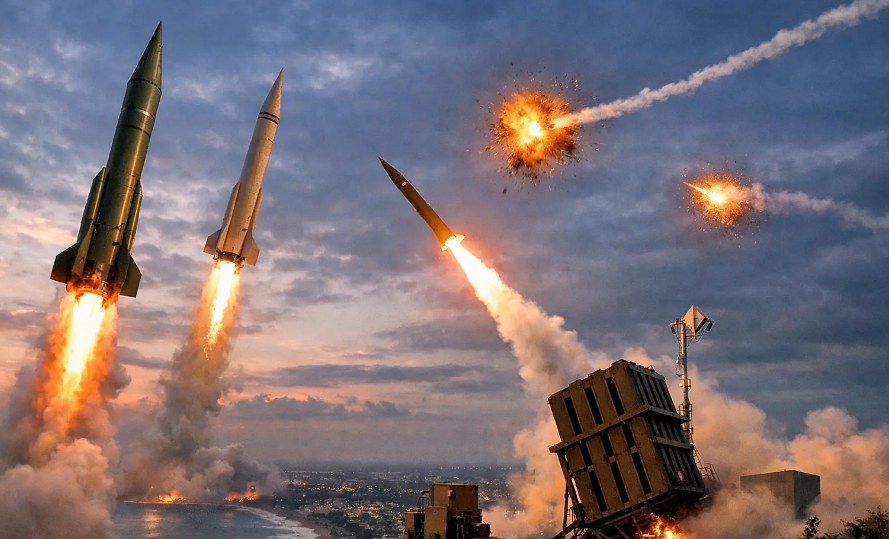
Operation Midnight Hammer to Operation Epic Fury
The Trump vs. Iran conflict did not ignite overnight. It was built layer by layer — through maximum pressure sanctions that strangled the Iranian economy, a 60-day diplomatic ultimatum that Tehran ultimately rejected, B-2 stealth bombers that flew 18 hours across the Atlantic to drop 30,000-pound bunker-busters on underground nuclear vaults, and finally, a full-scale joint U.S.-Israeli military campaign that killed Iran’s supreme leader and plunged the global energy market into crisis. The story of how the world arrived at this point — and where it stands today — is one of the most consequential chapters in post-Cold War American defense and foreign policy. This is the complete timeline of the Trump vs. Iran confrontation: what happened, why it happened, and what remains dangerously unresolved.
- ► Trump reimposed “maximum pressure” sanctions on Iran on February 4, 2025, pledging to reduce Iranian oil exports to zero and demanding a new nuclear agreement within 60 days.
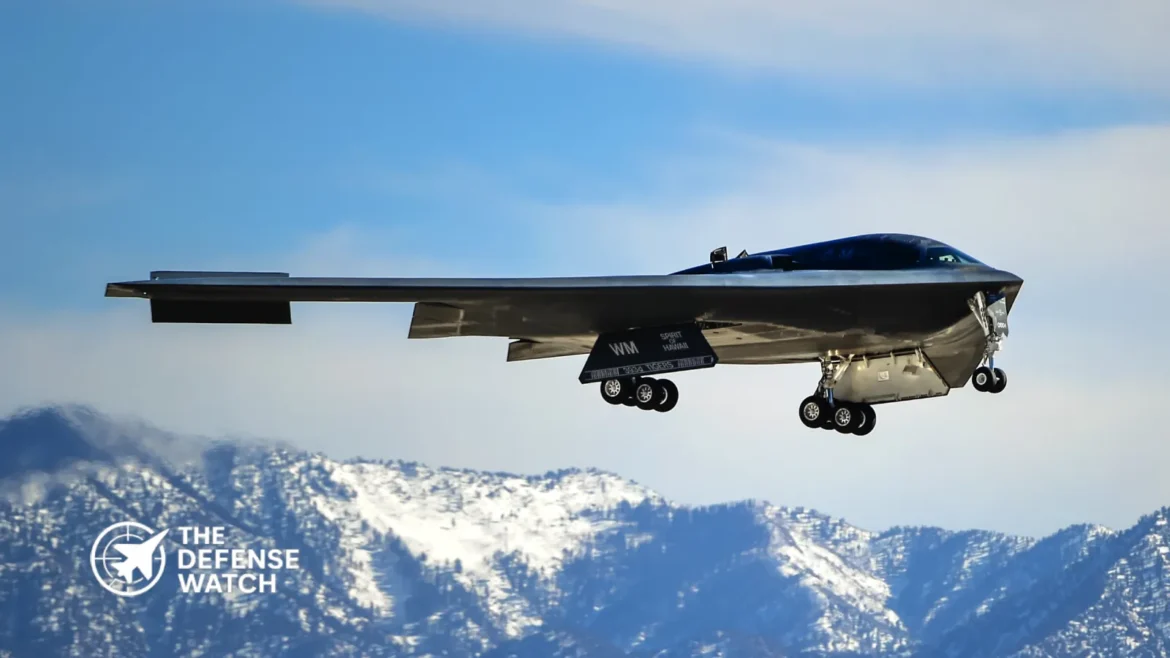
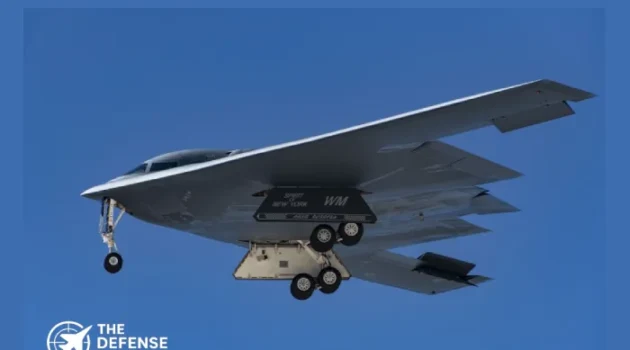
- ► Operation Midnight Hammer — June 21–22, 2025 — saw seven B-2 Spirit stealth bombers and a submarine strike Iran’s Fordow, Natanz, and Isfahan nuclear facilities using 14 GBU-57 bunker-busting bombs in combat for the first time.
- ► Operation Epic Fury launched February 28, 2026 — a joint U.S.-Israeli campaign striking at least nine Iranian cities, killing Supreme Leader Ayatollah Ali Khamenei, and destroying over 5,000 targets including missile sites, naval assets, and regime leadership compounds.
- ► Iran retaliated by striking U.S. military facilities in Qatar, Kuwait, Bahrain, and the UAE and moved to blockade the Strait of Hormuz — triggering the largest oil supply disruption in recorded history, with prices surging past $114 per barrel.
- ► As of April 2, 2026 — over four weeks into active warfare — the U.S. is simultaneously conducting airstrikes, holding back-channel talks with Tehran, and threatening further escalation, with no ceasefire or formal deal in place.
Phase One — Maximum Pressure Returns: January–March 2025
The Trump administration wasted no time signaling its Iran posture after returning to power in January 2025. On February 4, 2025, Trump formally reimposed his “maximum pressure” policy on Iran. Within weeks, the administration announced new sanctions targeting an international network accused of selling millions of barrels of Iranian crude to China, with proceeds alleged to fund Iran’s military and proxy activities. The measures designated Sepehr Energy — described as a front company for Iran’s Armed Forces General Staff — alongside associated oil tankers and individuals.
The financial pressure was already visible before Trump’s second term formally began. As early as October 2024, Iranian oil exports to China were declining, driven by anticipation of new U.S. sanctions. By early 2025, a major Chinese government-owned port announced it would cease accepting goods from OFAC-blacklisted entities, including Iran.
These sanctions were never purely punitive instruments — they were designed as leverage in the nuclear showdown Trump knew was coming.
Phase Two — The Letter and the 60-Day Clock: March–May 2025
On March 7, 2025, Trump announced he had written a personal letter to Supreme Leader Ali Khamenei, expressing his desire to initiate new nuclear negotiations while warning that failure to accept the proposal could expose Iran to serious military consequences. Trump simultaneously pledged to reduce Iranian oil exports to zero.
The letter’s demands were sweeping: Iran was required to fully dismantle its nuclear program, halt all uranium enrichment, and sever financial and material support for regional proxy forces — all within two months. In exchange, Washington offered sanctions relief and the normalization of relations. Khamenei initially declined even to acknowledge the communication, and Iranian officials signaled the conditions were unacceptable.
Indirect negotiations nonetheless began in April 2025, with Oman serving as a back-channel venue. Multiple rounds followed — in Rome, Istanbul, and elsewhere — but each ended without a substantive breakthrough. The central impasse was immovable: Washington demanded zero enrichment; Tehran insisted enrichment was a sovereign and non-negotiable right.
Meanwhile, Iran’s nuclear program was advancing rather than slowing. By May 31, 2025, the IAEA reported that Iran had sharply increased its stockpile of uranium enriched to 60 percent purity — just below weapons-grade — reaching over 408 kilograms, a nearly 50 percent rise since February. The agency warned that this quantity was sufficient for multiple nuclear weapons if further enriched. On June 12, the IAEA voted to formally censure Iran. Tehran responded by declaring it would construct an entirely new enrichment facility at an undisclosed location.
The 60-day window had closed. Israel moved first.
Phase Three — The Twelve-Day War: Israel’s Operation Rising Lion, June 13–24, 2025
On June 13, 2025, Israel launched Operation Rising Lion — a surprise offensive targeting Iranian military sites, nuclear facilities, and regime infrastructure. The campaign’s opening strikes degraded Iran’s air defense network, struck missile launch sites across the country, and killed several senior Iranian military leaders and nuclear scientists.
The 12-day Israel-Iran conflict killed top Iranian military leaders and caused significant damage to Iran’s military and nuclear infrastructure. Iran retaliated with waves of ballistic missiles and drones toward Israeli territory, though the scale of successful intercepts by Israeli and American air defense systems significantly limited the damage. Following the Israeli attack, the sixth round of U.S.-Iran nuclear talks, scheduled for June 15 in Oman, was indefinitely suspended.
The diplomatic off-ramp had been closed. Washington now faced a binary choice: stand aside or act.
Phase Four — Operation Midnight Hammer: The First U.S. Strike on Iran’s Nuclear Core, June 21–22, 2025
On the evening of June 21, 2025, the United States launched the most technically complex American military operation in decades. Gen. Dan Caine, Chairman of the Joint Chiefs of Staff, described it as “the largest B-2 operational strike in U.S. history,” inflicting “extremely severe damage and destruction” on its three targets.
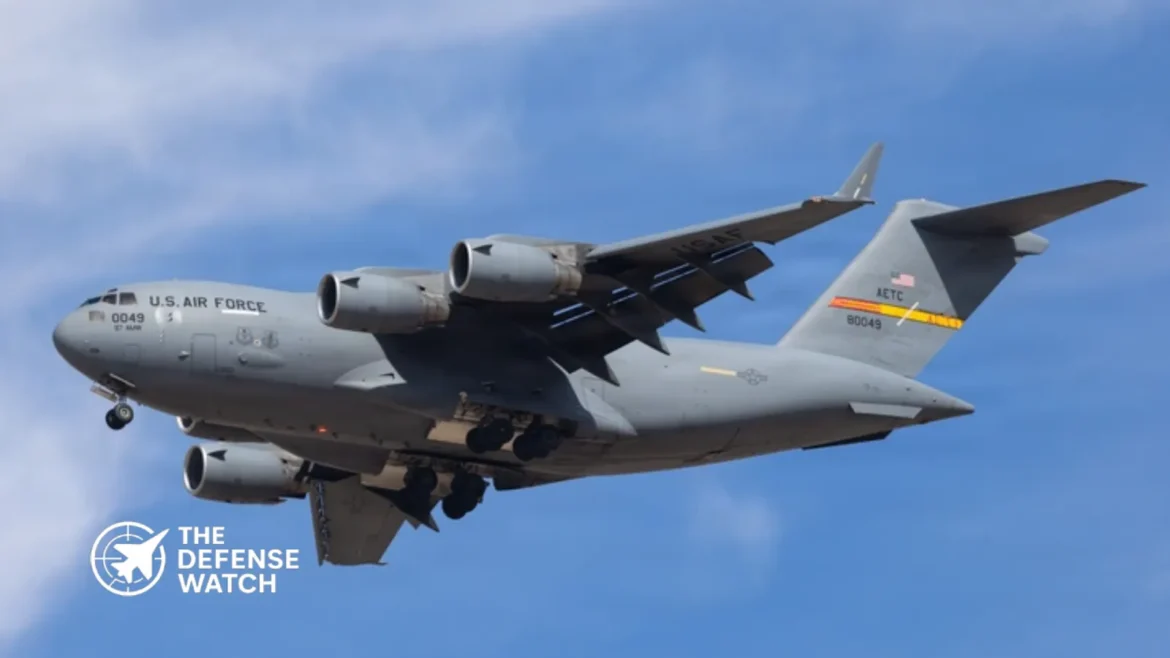
Seven B-2 Spirit bombers of the 509th Bomb Wing departed Whiteman Air Force Base in Missouri and flew eastward for 18 continuous hours toward Iranian airspace, refueling mid-air three times. The mission carried extraordinary operational secrecy. It was described as “a highly classified mission with very few people in Washington knowing the timing or nature of the plan.”
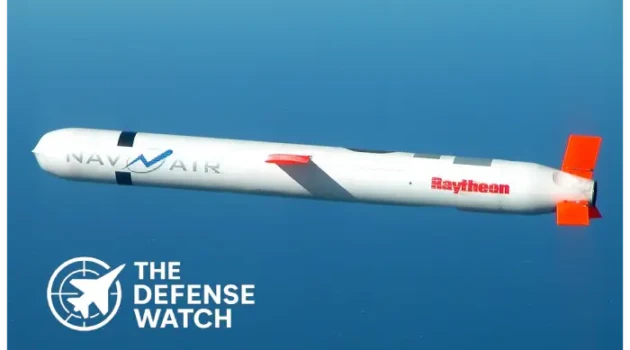
The mechanics unfolded with precision across three targets simultaneously. At approximately 5 p.m. ET — just before the B-2s entered Iranian airspace — a U.S. submarine launched more than two dozen Tomahawk cruise missiles against surface infrastructure at Isfahan. Six B-2s attacked Fordow first, dropping six bombs each on the two main ventilation shafts: the initial bombs blew off concrete covers to expose the shafts, while subsequent penetrators drove deep into the facility. A seventh B-2 dropped two MOPs on Natanz.
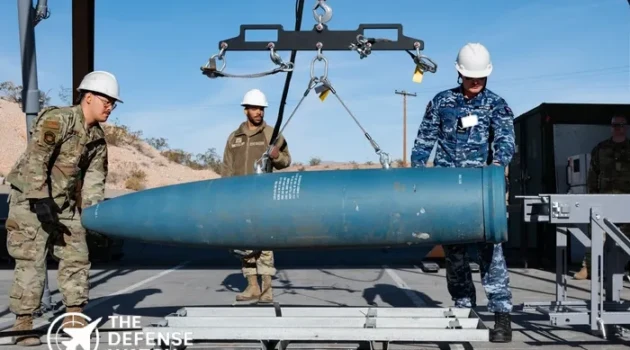
In total, U.S. forces employed approximately 75 precision-guided weapons during the operation, including 14 GBU-57 Massive Ordnance Penetrators — the weapon’s first-ever operational use in combat. Each MOP weighs 30,000 pounds and carries 11 tons of TNT-equivalent explosive power, designed specifically to defeat hardened, deeply buried facilities. Before Midnight Hammer, the weapon had never been dropped in a live conflict.
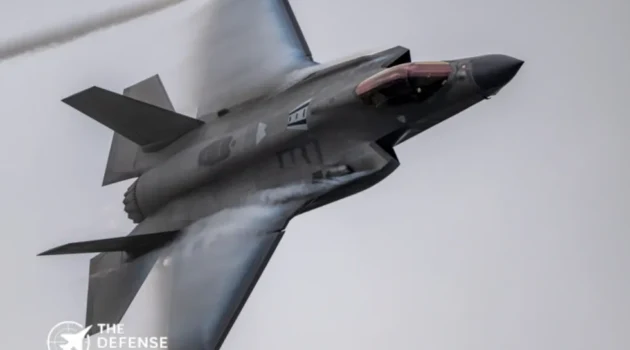
As the strike package entered Iranian airspace, the U.S. employed several deception tactics, including decoys, while fourth- and fifth-generation aircraft swept ahead of the bombers at high altitude, clearing for enemy fighters and surface-to-air missile threats. “We are currently unaware of any shots fired at the U.S. strike package on the way in,” Caine confirmed at a Pentagon briefing.
Trump declared that evening that “Iran’s key nuclear enrichment facilities have been completely and totally obliterated.” But the reality was more nuanced. A leaked Defense Intelligence Agency assessment suggested the strikes may have fallen short of their stated objective — with core components of Iran’s program, including centrifuges and enriched uranium stockpiles, possibly not destroyed or having been relocated before the attack. Pentagon spokesman Sean Parnell acknowledged the U.S. believed the strikes “degraded their program by one to two years.”
The hunt for Iran’s four hundred kilograms of enriched uranium continued in the weeks following the strikes, with U.S. and international officials uncertain about the fate of the material.
Phase Five — Ceasefire, Collapse, and the Road to War: July 2025 – February 2026
A ceasefire ended the Twelve-Day War on June 24, 2025 — but it resolved nothing fundamental. Iran’s parliament voted to suspend cooperation with the IAEA, prompting the United Kingdom, France, and Germany to trigger the JCPOA’s snapback mechanism in August. The UN Security Council failed to pass a resolution to stop those snapback sanctions, supported by only 4 of its 15 members, meaning UN sanctions were set to resume at the end of September 2025.
The economic pressure proved destabilizing. The reimposition of international and U.S. sanctions sent the Iranian rial into freefall, triggering a nationwide outbreak of protests beginning December 28, 2025. After the protests were brutally repressed — with people killed by gunfire on an unprecedented scale — the United States moved naval and air force assets into the region.
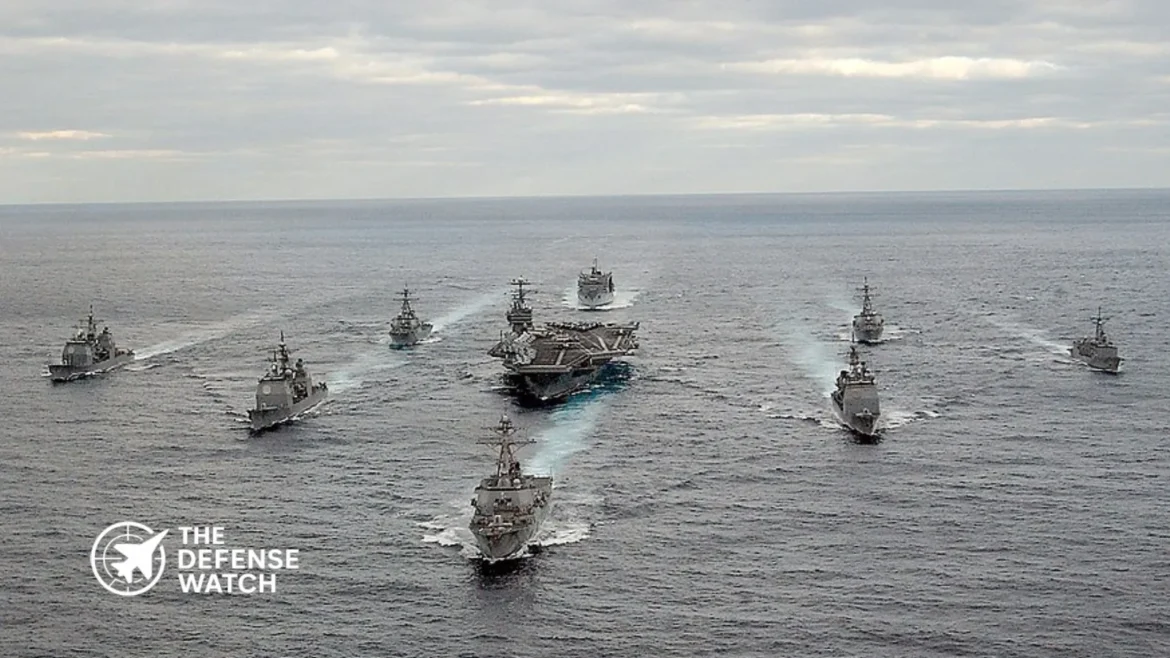
In January 2026, Trump issued a blunt social media warning that a “massive Armada” was heading to Iran, led by the aircraft carrier Abraham Lincoln, and urged Tehran to “come to the table” or face military consequences. The administration simultaneously escalated OFAC sanctions against additional Iranian officials.
Diplomatic signals were, nonetheless, still flickering. As late as February 27, 2026 — the day before the strikes — Oman’s Foreign Minister Badr Al-Busaidi reported that a breakthrough had been reached: Iran had agreed to never stockpile enriched uranium and to accept full IAEA verification, and had agreed to irreversibly downgrade its existing enriched uranium to the lowest possible level. Al-Busaidi declared that peace was “within reach” and that talks were expected to resume March 2.
They never did.
Phase Six — Operation Epic Fury: The Full-Scale War Begins, February 28, 2026
At approximately 7:00 a.m. local Iranian time on February 28, 2026, the United States and Israel commenced coordinated, large-scale strikes against a wide range of targets across Iran. The U.S. operation was codenamed Operation Epic Fury; Israel’s parallel campaign was named Operation Roaring Lion.
Trump announced the attacks in a TruthSocial post at 2:00 a.m. EST — there was no public address, and no Congressional briefing beyond a notification to the Gang of Eight shortly before strikes commenced. The eight-minute video message to the Iranian people concluded with Trump declaring: “the hour of your freedom is at hand.”
The stated objectives of Operation Epic Fury were fourfold: obliterate Iran’s ballistic missile arsenal and production capacity, annihilate the Iranian navy, sever its support for terrorist proxy networks, and ensure Iran could never acquire a nuclear weapon.
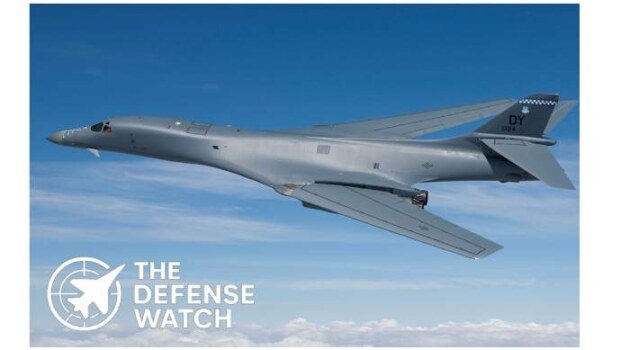
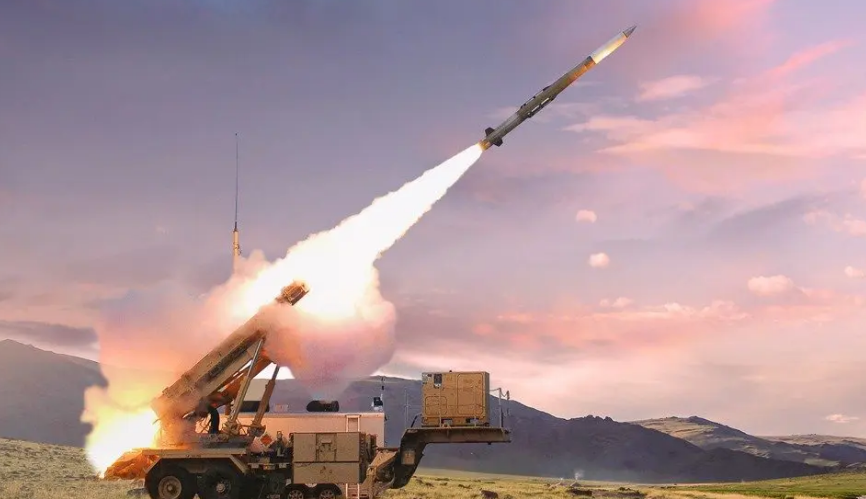
The scale dwarfed Midnight Hammer. In its first ten days, Operation Epic Fury struck over 5,000 targets and damaged or destroyed 50 Iranian naval vessels, employing B-1, B-2, and B-52 bombers alongside LUCAS drones and both Patriot and THAAD missile defense systems.
The opening phase focused on decapitating senior Iranian leadership while degrading missile infrastructure, launch systems, and air defenses. In the hours that followed, Iran initiated large-scale retaliation — expanding the conflict beyond Iranian territory into a region-wide exchange touching multiple Gulf states and allied military assets.
Among the first day’s most consequential outcomes: a strike on Supreme Leader Ali Khamenei’s compound in Tehran was confirmed, with subsequent updates confirming his death. Intelligence for the strike had been gathered through an unconventional means. The Financial Times separately reported that compromised traffic cameras and mobile phone networks provided intelligence about Khamenei’s meeting with senior officials, which determined the timing of the strike.
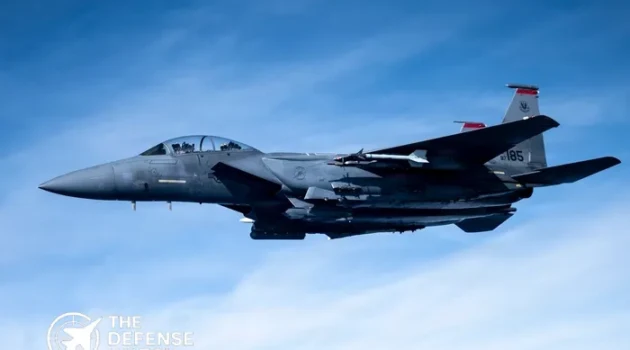
Iran’s retaliation was immediate and regional. Iran launched missile attacks against U.S. military facilities in Qatar, Kuwait, the United Arab Emirates, and Bahrain, as well as strikes on Israel, Jordan, and Saudi Arabia. The U.S. Embassy in Kuwait was struck and closed indefinitely. A Kuwaiti F/A-18 shot down three American F-15Es in a friendly-fire incident; all six crew members survived.
Iran moved to blockade the Strait of Hormuz. Tehran threatened to “completely” close the waterway and strike energy and desalination facilities critical for drinking water across the region. Oil prices surged past $114 per barrel — the highest since the COVID-19 pandemic — as traffic through the Strait collapsed and Iranian strikes hit oil facilities in Saudi Arabia and the UAE.
The IEA described the disruption as “the largest supply disruption in the history of the global oil market.”
Iran’s New Leadership and a Regime That Endured
The death of Ayatollah Ali Khamenei — who had served as supreme leader since 1989 — created an immediate succession crisis. On March 3, Israel bombed Iran’s 84-member Assembly of Experts as they gathered for a preliminary meeting to elect the next supreme leader. Despite the strike, Mojtaba Khamenei — the late supreme leader’s son — was elected on March 8, 2026, and Iran’s top leaders, including parliament speaker Mohammad Bagher Ghalibaf, Ali Larijani, and President Masoud Pezeshkian, pledged their allegiance to him.
The regime had survived decapitation. Despite Trump’s claim that the United States had won the war, the regime remained intact, with Khamenei’s son as the new supreme leader — and Iran’s negotiating positions appeared to have hardened rather than softened.
The Energy Crisis Goes Global
The Strait of Hormuz blockade rapidly escalated from a regional military matter to a global economic emergency. Qatar’s energy minister Saad al-Kaabi warned on March 6 that if the war continued, other Gulf energy producers might be forced to halt exports entirely and declare force majeure. The International Monetary Fund warned that every ten percent increase in energy prices over the course of 2026 is expected to raise global inflation by nearly half a percent. Bangladesh closed universities early for the summer; Pakistan and the Philippines declared four-day work weeks. The IEA urged households across the world to reduce highway speeds, take public transportation, and work from home to mitigate the fuel crisis.
In a significant reversal of its own sanctions policy, the Trump administration temporarily lifted restrictions on Iranian oil stranded on ships at sea. U.S. Treasury Secretary Scott Bessent said the move was expected to quickly add approximately 140 million barrels to the global market. The relief was set to last until April 19, 2026.
Where Things Stand: April 2, 2026
The conflict has now entered its fifth week since the February 28 strikes, with no formal ceasefire, no peace framework, and both military operations and diplomatic signaling continuing simultaneously.
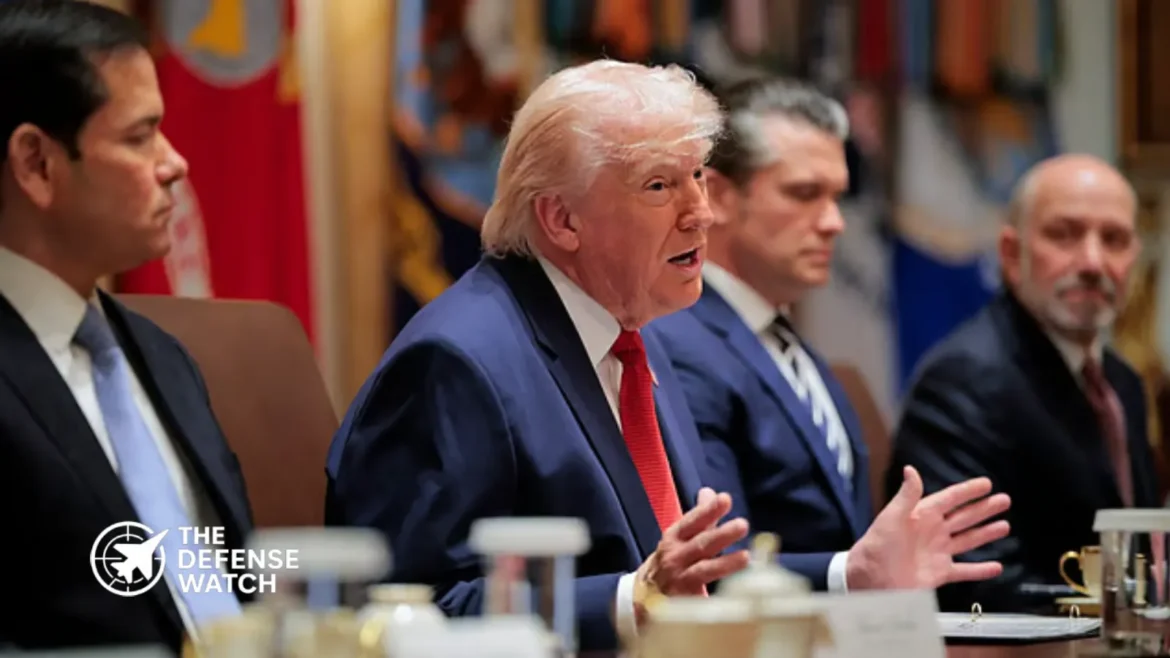
Trump told reporters at a Cabinet meeting that the United States is engaged in “very substantial talks with the right people” in Tehran, pointing to Iran’s willingness to allow eight oil tankers through the Strait of Hormuz as evidence that the interlocutors hold genuine influence within the new leadership.
Iran’s own demands, however, have hardened dramatically. Tehran’s stated negotiating positions now include collecting fees from ships transiting the Strait of Hormuz, guarantees that all strikes will stop, the lifting of all U.S. and international sanctions, the right to retain its missile program, reparations from the United States, and the closure of American military bases in the Persian Gulf. These conditions far exceed what Iran had asked before the war began.
Speaker of the Iranian parliament Mohammad Bagher Qalibaf stated on March 23 that “no negotiations have been held” with the United States — directly contradicting Trump’s claims of progress.
Trump, for his part, has insisted the conflict is nearly over. He has publicly said the war could end “soon” and that the United States has already achieved many of its military objectives in Iran. Yet he has simultaneously threatened new escalation, setting a deadline for Iran to reopen the Strait of Hormuz or face airstrikes on Iranian power plants — while declining to clarify whether that deadline remains in effect when pressed by reporters.
Analysis: A Campaign That Achieved Its Tactical Goals — But Not Its Strategic Ones
Operation Midnight Hammer was, on its own narrow technical terms, an extraordinary demonstration of American airpower. Flying more than a third of the entire B-2 fleet 18-plus hours round-trip, employing the GBU-57 MOP in combat for the first time, striking three hardened underground facilities in 25 minutes without losing a single aircraft or crew member — this represented the culmination of decades of investment in stealth technology, precision munitions, and joint operational planning. Operation Epic Fury then demonstrated an even broader capability: the systematic targeting of a nation-state’s leadership, military infrastructure, naval forces, and communications simultaneously, using cyber operations and intelligence from compromised networks to eliminate a sitting head of government in real time.
But tactical dominance has not translated into strategic resolution. Nine months after Midnight Hammer was launched on the premise that Iran’s nuclear program had been “obliterated,” a senior Trump aide was telling reporters that Iran was one week from nuclear bomb-making material. The regime survived Epic Fury’s opening strikes and reconstituted a new supreme leader within eight days. Iran’s retaliatory strikes against U.S. partners across the Gulf — combined with the Strait of Hormuz blockade — imposed costs on the global economy that Washington was ultimately forced to partially absorb by lifting its own oil sanctions.
Perhaps the most revealing detail in the entire chronology is the February 27, 2026 moment: on the day before the largest American military operation in a generation, Oman’s foreign minister was announcing that a genuine diplomatic breakthrough had been reached and that peace was within reach. Whether those negotiations were genuine, misrepresented, or deliberately derailed remains one of the critical unresolved questions of the conflict — and one that will shape how this war is judged for years to come.
The United States has demonstrated it can hit any target in Iran. What remains unproven is whether it can convert that firepower into a durable settlement that prevents Iranian nuclear ambitions while stabilizing the region and the global energy market that both American consumers and global partners depend on.
FAQs
What is Operation Epic Fury?Operation Epic Fury is the U.S. military’s code name for the large-scale joint U.S.-Israeli military campaign that began on February 28, 2026. It targeted Iranian leadership, ballistic missile infrastructure, naval assets, proxy networks, and the remnants of Iran’s nuclear program. In its first ten days alone, over 5,000 targets were struck and 50 Iranian naval vessels were damaged or destroyed.
What is Operation Midnight Hammer?Operation Midnight Hammer was the June 21–22, 2025 U.S. air and naval strike on three Iranian nuclear facilities — Fordow, Natanz, and Isfahan — using seven B-2 Spirit stealth bombers and submarine-launched Tomahawk cruise missiles. It was the first combat use of the GBU-57 Massive Ordnance Penetrator bunker-busting bomb and the largest B-2 operational strike in U.S. history.
Did Trump bomb Iran?Yes, twice. The first time was during Operation Midnight Hammer on June 21–22, 2025, targeting nuclear facilities. The second and far larger campaign — Operation Epic Fury — began February 28, 2026, targeting Iranian military infrastructure, naval assets, and leadership, including Supreme Leader Ayatollah Ali Khamenei, who was killed in the strikes.
Why did Trump bomb Iran?The Trump administration cited Iran’s refusal to accept a nuclear deal within a 60-day diplomatic window, its rapidly expanding uranium enrichment stockpile, and the IAEA’s formal censure of Iran’s nuclear non-compliance. Operation Epic Fury was additionally framed as targeting Iran’s missile forces, navy, and proxy networks.
Has the U.S. declared war on Iran?No. Despite President Trump characterizing operations as “major combat operations,” the United States has not formally declared war on Iran. Under Article I, Section 8 of the U.S. Constitution, only Congress holds the authority to declare war.
What happened to Iran’s Supreme Leader after the strikes?Supreme Leader Ayatollah Ali Khamenei was killed during the opening hours of Operation Epic Fury on February 28, 2026. His son, Mojtaba Khamenei, was elected as the new Supreme Leader on March 8, 2026.
Is the Strait of Hormuz still closed?As of early April 2026, Iran has moved to blockade the Strait of Hormuz, severely restricting tanker traffic. The Trump administration has temporarily lifted sanctions on Iranian oil stranded at sea and has threatened additional airstrikes on Iranian power plants if the waterway is not reopened.
¦ KEY FACTS AT A GLANCE- Italy has denied stopovers for some US military aircraft transiting through Sicily toward the Middle East.
- The decision affects operations at Naval Air Station Sigonella, a key NATO logistics hub.
- The move reflects political sensitivity over escalating Middle East military activity.
- US airlift and refueling routes may require adjustments or alternative basing options.
- The development signals friction within allied coordination despite ongoing NATO commitments.
Italy US Military Aircraft Stopover Restrictions Highlight Operational Friction
Italy US military aircraft stopover restrictions are reshaping air mobility planning as Rome declines to support certain US flights transiting through Sicily en route to the Middle East. The decision affects operations at Naval Air Station Sigonella, a critical hub for US and NATO logistics in the Mediterranean.
The Big Picture
US military air mobility depends on a network of allied bases across Europe to sustain operations in the Middle East. Italy plays a central role in that network, particularly through Sigonella, which supports surveillance aircraft, tankers, and strategic airlift platforms.
Rising tensions and sustained US air operations in the Middle East have increased the tempo of flights passing through Southern Europe. This places political and operational pressure on host nations that must balance alliance commitments with domestic and regional concerns.
Italy’s decision reflects a broader trend where European allies exercise tighter control over how their territory supports expeditionary military operations.
What’s Happening
Italian authorities recently denied permission for certain US military aircraft to stop over in Sicily while en route to the Middle East. The restriction specifically impacts flights that would typically use Sigonella for refueling, crew rest, or logistical staging.
The move does not represent a full closure of the base to US forces. Instead, it introduces case by case limitations tied to mission type and political considerations.
US officials continue to operate from Sigonella, but the denial of select stopovers forces planners to reroute or adjust flight profiles.
Defense News first reported the development, citing officials familiar with the situation.
Why It Matters
Air mobility underpins US global military reach. Even limited restrictions at key nodes can disrupt efficiency, increase flight times, and strain tanker support.
Sigonella serves as a forward logistics platform for intelligence, surveillance, reconnaissance missions, as well as transport aircraft supporting operations across the Middle East and North Africa.
Restricting stopovers creates friction in an already complex air bridge. Aircraft may need to divert to alternative bases in Spain, Greece, or other NATO locations, adding operational cost and reducing responsiveness.
The decision also highlights how political considerations can directly affect military logistics, even among close allies.
Strategic Implications
Italy’s move introduces uncertainty into NATO’s southern logistics corridor. While the alliance remains cohesive, operational flexibility depends on predictable access to infrastructure.
Reduced access to Sigonella could slow surge operations or complicate sustained air campaigns. It also places greater reliance on fewer alternative bases, which may face capacity constraints.
From a deterrence perspective, any perceived friction in allied coordination could be noted by adversaries. However, the limited scope of the restriction suggests Italy aims to signal political caution without undermining NATO commitments.
The development underscores the importance of distributed basing strategies. The US has increasingly emphasized flexible basing and dispersed logistics to mitigate such risks.
Competitor View
Russia and Iran are likely to interpret the restrictions as evidence of political sensitivity within NATO regarding Middle East operations.
Moscow has long highlighted divisions within Western alliances. Even limited constraints on US operations can reinforce that narrative.
Tehran may view the decision as a sign that sustained US air campaigns carry political costs for regional partners. This could factor into its assessment of US operational endurance.
China, while less directly involved in the region, continues to study alliance cohesion as part of its broader strategic analysis.
What To Watch Next
US planners will likely adjust routing for aircraft supporting Middle East operations. Increased use of alternative bases in Southern Europe is expected.
Diplomatic engagement between Washington and Rome may clarify the scope of restrictions. Future decisions will indicate whether this is a temporary measure or part of a longer term policy shift.
Monitoring flight patterns and tanker deployments will provide insight into how the US adapts its air mobility network.
Any expansion of restrictions to other NATO bases would signal a broader shift in alliance dynamics.
Capability Gap
The Italy US military aircraft stopover issue highlights a vulnerability in reliance on fixed allied infrastructure.
US forces depend heavily on predictable access to overseas bases. When access becomes conditional, operational tempo and flexibility can suffer.
The situation reinforces the need for greater investment in long range airlift, aerial refueling capacity, and expeditionary basing concepts.
However, alternatives are not without limits. Longer routes increase fuel consumption and reduce payload efficiency. Dispersed basing requires additional logistical coordination and infrastructure investment.
The Bottom Line
Italy’s restriction on US military aircraft stopovers introduces operational friction in a critical logistics corridor, underscoring the strategic importance of allied access in sustaining global air operations.
¦ KEY FACTS AT A GLANCE- The United States ranks #1 on the 2026 Global Firepower Index with a PowerIndex score of 0.0741 and a defense budget exceeding $895 billion.
- Russia holds #2 with a score of 0.0788, maintaining the world’s largest nuclear arsenal and over 1.3 million active personnel.
- China ranks #3 with 2+ million active troops, 3 aircraft carriers, and a defense budget of approximately $266 billion — the fastest-growing navy in the world.
- India holds #4 globally, backed by 1.45 million active personnel, nuclear deterrence, and a $75 billion defense budget.
- The 2026 index evaluated 145 nations across 60+ indicators including manpower, air power, naval strength, logistics, and financial capacity.
Which Country Has the Strongest Army in the World in 2026?
The question of which country possesses the strongest army in the world in 2026 is not answered by a single number. It is a composite picture drawn from defense budgets, technological depth, nuclear deterrence, logistics infrastructure, and the hard-won credibility of real-world combat experience. The 2026 Global Firepower Index draws on more than 60 individual factors — ranging from unit quantities and financial standing to logistical capacity and geography — to calculate each nation’s PowerIndex score across 145 countries. The lower the score, the more powerful the force.
By every available metric in 2026, the United States of America holds that top position — as it has for two decades. But the gap between Washington and its nearest competitors is narrowing in ways that should concern defense planners across the Western alliance.
#1 United States — The Undisputed Standard
Ranked as the world’s most powerful military since 2005, the U.S. tops the 2026 Global Firepower Index with a score of 0.0741. Its dominance rests on unmatched defense spending, global force projection, nuclear capabilities, advanced air and naval power, and an extensive network of overseas bases.
The U.S. fields 1,328,000 active personnel and 2,127,000 in reserve, backed by a defense budget of $895 billion — a figure that eclipses the combined spending of most of the world’s top militaries. Its technological edge — spanning fifth-generation stealth fighters, nuclear-powered carrier strike groups, satellite-based command networks, and a rapidly expanding drone and cyber warfare apparatus — remains unmatched in scale and integration.
The United States Army alone maintains 485,000 active-duty soldiers, 336,000 Army National Guard personnel, and 189,500 Army Reserve personnel, constituting the most battle-tested ground force in modern history.
TheDefenseWatch Analysis: The United States’ primary advantage in 2026 is not merely hardware — it is systemic. Decades of joint warfare doctrine, interoperability with NATO partners, and an unbroken chain of institutional learning from conflicts in Iraq, Afghanistan, and Syria give the U.S. military an adaptive quality that raw numbers cannot capture. However, high operational tempo and congressional debates over defense appropriations continue to create friction within the force’s long-term readiness picture.
#2 Russia — Nuclear Colossus Under Strain
Russia holds second place with a Power Index score of 0.0791. Its strength lies in vast nuclear arsenals, long-range missile forces, a large standing military, and significant land warfare capabilities.
Moscow fields 1,320,000 active personnel and a reserve pool of 3,570,000 troops, with a defense budget of $126 billion. Russia’s strategic deterrent — anchored by thousands of nuclear warheads and an array of intercontinental ballistic missiles, including the Sarmat ICBM — gives it a geopolitical weight that its conventional performance in Ukraine has, in some ways, challenged.
The ongoing war in Ukraine has exposed critical weaknesses in Russian logistics, precision-strike capability, and combined-arms coordination. Yet Russia continues to invest heavily in electronic warfare, hypersonic missile systems, and long-range aviation, ensuring it cannot be dismissed as a declining power.
TheDefenseWatch Analysis: Russia’s 2026 ranking reflects a military that remains dangerous at the strategic level even as it bleeds manpower and equipment in Eastern Ukraine. Moscow’s ability to reconstitute its ground forces while simultaneously sustaining a war economy is being tested in real time — the outcome of which will define Russia’s military standing well into the 2030s.
#3 China — The Fastest-Rising Challenger
China commands the world’s largest standing army with expanding naval and air capabilities. Heavy investment in technology and modernization underpins its global military ambitions. China fields 2,035,000 active personnel, 3,045,000 in reserve, and a defense budget of $266.85 billion.
At a crossroads, 2027 is set to become a pivotal year for Chinese military aspirations — a reference to the People’s Liberation Army’s (PLA) self-imposed deadline to become a “world-class military” capable of fighting and winning a modern war. Beijing has invested massively in carrier-based aviation, hypersonic glide vehicles, space warfare capabilities, and artificial intelligence-driven command systems.
China’s navy now operates three aircraft carriers, with additional hulls under construction. Its ballistic missile submarine fleet continues to grow, and its anti-access/area denial (A2/AD) strategy presents a credible challenge to U.S. naval operations throughout the Western Pacific.
#4 India — South Asia’s Nuclear Giant
India holds the 4th position with a score of 0.1346. As South Asia’s leading military power, India combines large manpower, nuclear deterrence, expanding indigenous defense production, strong missile forces, and growing air and naval capabilities.
India maintains 1,455,550 active personnel — more than either Russia or the United States — and a reserve force of 5,137,000 troops, all supported by a $75 billion defense budget. New Delhi’s ambitious “Atmanirbhar Bharat” (self-reliant India) defense manufacturing initiative is steadily reducing dependence on foreign arms imports while building domestic production capacity across fighters, missiles, and warships.
India’s ongoing border friction with China and long-standing tensions with Pakistan ensure that its military investment is not abstract — it is operationally driven and geopolitically consequential.
#5 Through #10 — The Rest of the Top Tier
South Korea secures fifth place, focusing on advanced technology, a strong reserve force, and defense readiness structured to counter regional threats — particularly from North Korea. Its active force of 600,000 is backed by 3,800,000 reserves and a $50 billion budget.
The United Kingdom placed sixth, maintaining nuclear deterrence, a capable navy, and forces designed for global deployment alongside allies. France followed closely with a versatile military, modern aircraft, and the capacity to conduct overseas operations independently. Japan ranked eighth, with a focus on maritime security, missile defense, and advanced technology reinforced by strategic partnerships.
Türkiye maintains a sizeable active and reserve force, growing domestic production, drone capability, and regional influence in the Middle East, while Italy fields a modern NATO-standard military with aircraft carriers, cyber defense, and participation in multinational operations and peacekeeping missions.
What Separates the World’s Strongest Armies in 2026?
The 2026 rankings make one thing unmistakably clear: military power today is multidimensional. Raw troop counts alone no longer determine strategic outcomes.
Modern warfare increasingly favors countries investing in advanced technology. Artificial intelligence systems, drones, cyber warfare capabilities, and satellite surveillance are now decisive factors in determining global military strength.

In 2026, military effectiveness depends more on training, modern equipment, and strategic coordination than sheer numbers. Highly skilled, technologically advanced forces consistently outperform larger, less-modern armies.
Personnel-wise, China’s two million active troops provide numerical superiority, while the United States and Israel lead in drones, cyber warfare, and missile defense systems. On the nuclear dimension, Russia and the United States each dominate with over 5,000 warheads.
The Emerging Challenge: Technology, Alliances, and Budget Pressure
Perhaps the most consequential shift in 2026 is not who holds the top spot — it is the structural change in how military power is being built and projected. Rising powers including France, Germany, Israel, and South Korea are showing consistent growth due to technological upgrades, modernization programs, and strategic alliances.
Alliance architecture is increasingly central. NATO’s combined firepower, AUKUS’s trilateral submarine technology transfer, and the Quad’s Indo-Pacific security framework all multiply the effective deterrent power of member states beyond what individual rankings suggest.

Meanwhile, critics of standard military indexes note that the lack of precision in weighting asset capability can lead to oversized scores for armies with plentiful but outdated equipment. A destroyer built in 1993 and a carrier launched in 2023 are not equivalent — yet both count as a single unit in many composite rankings.
TheDefenseWatch Analysis: The real story of global military power in 2026 is a world fragmenting into competing technological blocs. The United States leads — but the margin is slimmer than headline budgets suggest. China’s PLA is acquiring not just weapons, but doctrines, space assets, and cyber capabilities that were, until recently, the exclusive domain of Washington. Russia, despite its Ukraine losses, retains a strategic deterrent that keeps it in the conversation. And mid-tier powers like South Korea, Turkey, and India are investing with a discipline and urgency that is reshaping regional balances faster than traditional assessments capture. The next decade will not be defined by who has the biggest army — it will be defined by who can best integrate AI, unmanned systems, and real-time data into a cohesive fighting force.
FAQs
Which country has the strongest army in the world in 2026?The United States holds the top position on the 2026 Global Firepower Index with a PowerIndex score of 0.0741, supported by an $895 billion defense budget, over 13,000 aircraft, 460 naval vessels, and more than 800 overseas military installations.
Where does China rank in global military strength in 2026?China ranks third on the 2026 Global Firepower Index. It fields the world’s largest standing army with over two million active personnel and is rapidly expanding its blue-water navy and aerospace capabilities ahead of its stated 2027 military modernization deadline.
How is military strength measured by Global Firepower?The Global Firepower Index uses more than 60 individual indicators including manpower, defense budget, air power, naval assets, land forces, logistics, geographic factors, and natural resource capacity. Nuclear capability is factored in through special modifiers rather than direct scoring.
Is Russia still a top military power despite the Ukraine war?Yes. Russia remains ranked #2 globally in 2026. While the war in Ukraine has exposed logistical and coordination weaknesses in its conventional forces, Russia’s nuclear arsenal, long-range missile systems, and electronic warfare capabilities continue to position it as a major strategic power.
Which military is growing fastest in 2026?China’s PLA represents the most rapid large-scale military build-up in the world. Its naval expansion — now including three aircraft carriers — combined with hypersonic missile development, AI integration, and space warfare programs makes it the most consequential rising military force in the 2026 rankings.
¦ KEY FACTS AT A GLANCE- The U.S.-Israel conflict with Iran began on February 28, 2026, under Operation Epic Fury, killing Supreme Leader Ali Khamenei and targeting nuclear and military sites across Iran.
- Iran’s IRGC closed the Strait of Hormuz to most traffic immediately after the strikes; tanker transit dropped by approximately 70%, with over 150 ships anchored outside the waterway. Brent crude surged above $126 per barrel at its peak.
- Washington delivered a 15-point ceasefire framework to Tehran via Pakistan on or around March 23; Iran formally rejected the plan on March 25 and submitted its own five-point counterproposal demanding war reparations and sovereignty over the Strait of Hormuz.
- Trump extended his deadline for Iran to reopen the Strait to April 6, 2026, citing “ongoing talks” — while simultaneously deploying the USS Tripoli amphibious group with 2,500 Marines and ordering 1,000 paratroopers from the 82nd Airborne to the region.
- Iran holds an estimated 440 kilograms of highly enriched uranium; the IAEA has confirmed an “ambitious” nuclear program but has found no direct evidence of a structured weapons program at the time of the strikes.
Iran-US Ceasefire Talks Remain Deadlocked as Hormuz Standoff Defines a New Middle East War
Iran-US ceasefire negotiations entered a critical and volatile phase this week, with Washington and Tehran exchanging competing peace proposals through third-party intermediaries while each side simultaneously escalated military and economic pressure. As of March 27, no direct dialogue has been established, no ceasefire is in place, and the Strait of Hormuz — the world’s most important energy chokepoint — remains effectively closed to most international shipping.
The Big Picture
The conflict that erupted on February 28, 2026, marks the most direct U.S. military engagement with Iran in modern history. Operation Epic Fury, a coordinated U.S.-Israeli strike campaign, struck Iran’s nuclear infrastructure, military command nodes, and senior leadership — including Supreme Leader Ali Khamenei. Within days, Iran’s Islamic Revolutionary Guard Corps (IRGC) retaliated by closing the Strait of Hormuz, striking U.S. military bases across the Gulf, and launching ballistic missile salvos at Israel.
The strategic stakes are without parallel in recent decades. The Strait of Hormuz handles roughly 20 percent of global seaborne oil and natural gas in peacetime. Its closure has driven Brent crude above $100 per barrel — exceeding $126 at the peak — and analysts compare the supply disruption to the 1970s energy crisis. Iran has positioned control over the strait as both a military weapon and a future diplomatic asset, making it the defining issue of any potential settlement.
What’s Happening
Washington’s 15-Point Framework
Using Pakistan as its primary intermediary — with Egypt and Turkey playing supporting roles — the Trump administration delivered a 15-point “action list” to Tehran around March 23. U.S. Special Envoy Steve Witkoff confirmed the framework publicly on March 26, describing it as a basis for a possible peace deal. The proposal reportedly includes a one-month ceasefire, during which both sides would restart negotiations.
The core U.S. demands, as reported by The New York Times and Al Jazeera, center on three pillars: Iran surrendering its stockpile of highly enriched uranium, halting all further enrichment, and accepting limits on its ballistic missile program. Washington also demands that Tehran cease support for regional militant groups including Hezbollah and the Houthis in Yemen.
In exchange, the U.S. reportedly offered full sanctions relief — a significant economic incentive for an Iranian economy hammered by decades of restrictions and now further strained by active conflict.
Iran’s Five-Point Counterproposal
Tehran formally rejected the 15-point plan on March 25 and submitted a five-point counterproposal through intermediaries. Iran’s conditions, confirmed by state broadcaster Press TV and the IRGC-linked Tasnim News Agency, include: an end to all U.S. and Israeli attacks on Iran and on Iranian-backed forces in Lebanon and Iraq; legally binding mechanisms guaranteeing that neither Washington nor Jerusalem would resume hostilities; full payment of war reparations; a comprehensive ceasefire across all conflict fronts including Hezbollah and Hamas; and international recognition of Iranian sovereignty over the Strait of Hormuz.
The Wall Street Journal separately reported that Tehran is also demanding the closure of all U.S. military bases in the Gulf region — a demand that would require Washington to fundamentally restructure its regional force posture.
The Diplomatic Limbo
Iranian Foreign Minister Abbas Araghchi publicly stated that his government has not engaged in negotiations and does not plan to — while simultaneously acknowledging that messages are “being exchanged through friendly countries.” Tasnim confirmed on March 26 that Iran had sent an official response to Washington the previous evening. The semantic distinction Tehran draws between “message exchanges” and “negotiations” is deliberate: it preserves domestic political cover for a regime that publicly frames any dialogue with the U.S. as capitulation.
Why It Matters
The Iran-US ceasefire talks carry consequences that extend far beyond the immediate conflict zone.
The Strait of Hormuz closure constitutes the largest single disruption to global energy supply since the 1970s oil embargo. Oil prices above $100 per barrel have cascaded through global supply chains — driving fertilizer shortages that threaten agricultural production, elevating aviation fuel costs to the point where multiple carriers have suspended Middle East routes, and increasing consumer fuel prices sharply in U.S. markets.
On the nuclear dimension, the IAEA has confirmed Iran holds approximately 440 kilograms of highly enriched uranium. Whether that stockpile survived U.S. and Israeli strikes on the Natanz, Fordow, and Isfahan nuclear facilities is a central intelligence question that shapes the entire negotiating dynamic. If Iran retains meaningful enriched material, it retains leverage. If the strikes substantially degraded that stockpile, Washington’s negotiating position improves considerably.
Strategic Implications
The gap between the two sides’ positions is not merely tactical — it reflects fundamental incompatibilities in strategic objectives.
Washington seeks a post-conflict Iran that is militarily neutered: stripped of enrichment capacity, denied long-range missile reach, and severed from its proxy network. This would permanently alter the regional balance of power in favor of U.S. allies, particularly Israel and the Gulf Cooperation Council states.
Tehran’s counterproposal preserves exactly what Washington seeks to remove. Sovereignty over the Strait of Hormuz — even as a formal legal claim — would institutionalize Iran’s ability to threaten global energy markets as a deterrent against future military action. Demanding the closure of U.S. bases would hollow out America’s forward deterrence architecture in the Gulf, built over decades and currently housing approximately 50,000 U.S. troops.
The troop movements signal that Washington has not abandoned the military option. The deployment of USS Tripoli with 2,500 Marines, combined with 1,000 paratroopers from the 82nd Airborne, provides the U.S. with a credible forcible-entry capability — the kind required to seize port infrastructure or secure the strait by force if diplomacy collapses.
Trump’s April 6 deadline for Iran to reopen the Strait — backed by a threat to strike Iranian power plants — functions as compellence rather than deterrence: it demands a specific action under threat of escalation. Whether Tehran treats it as a credible red line or as political theater will determine the near-term trajectory of the conflict.
Competitor View
China and Russia are watching the Hormuz crisis with strategic interest that defies a simple allied-versus-adversary framework.
China receives a substantial share of its crude oil through the Strait of Hormuz. The IRGC has confirmed that Chinese-flagged vessels may transit the waterway, effectively carving out a preferential lane for Beijing. This gives China an implicit stake in the conflict’s continuation at manageable intensity — high enough to weaken U.S. credibility and strain the global economy, but not so severe that Chinese energy imports are disrupted.
Russia has a parallel interest in elevated oil prices, which benefit its hydrocarbon export revenues even as Western sanctions persist. Moscow is also a potential guarantor of any security arrangement Tehran might seek — a role that would expand Russian strategic influence in the Persian Gulf at minimal direct cost.
Both nations abstained from the UN Security Council resolution condemning Iranian retaliatory strikes on Gulf states, signaling that neither intends to facilitate a swift U.S. diplomatic victory.
Iran’s Houthi allies in Yemen have explicitly threatened to attack Red Sea shipping if the U.S. attempts to reopen the Strait by force, which would open a second maritime front and further constrain global energy logistics.
What To Watch Next
April 6 Deadline: Trump’s extended ultimatum expires on April 6. If Iran has not meaningfully reopened the Strait, Trump has threatened strikes on Iranian power plants. Whether he executes that threat — or extends the deadline again — will signal the credibility of U.S. coercive diplomacy.
Islamabad Meeting: UN nuclear watchdog chief Rafael Grossi has indicated a meeting in Islamabad is under discussion, potentially involving Iranian representatives. If that session occurs, it would represent the first identifiable formal contact point in the indirect channel.
82nd Airborne and Marine Deployment: The arrival posture of the 82nd Airborne and the USS Tripoli group in theater will clarify whether the U.S. is positioning for a negotiated solution or a forced strait-opening operation. The 82nd’s paratroopers specialize in seizing airfields and key terrain in hostile environments — exactly the kind of capability needed to take and hold port or coastal infrastructure.
Iran’s Nuclear Stockpile Assessment: Intelligence assessments of how much enriched uranium Iran retains after the strikes will drive the nuclear dimension of any framework. Witkoff’s public insistence on a complete halt to enrichment — a harder line than the pre-war U.S. position — suggests Washington believes the strikes degraded Iran’s program sufficiently to demand permanent cessation rather than a monitored cap.
Capability Gap
The central capability gap this crisis exposes is Washington’s difficulty translating overwhelming air power into durable political outcomes.
U.S. and Israeli forces have demonstrated the ability to strike deeply into Iranian territory, neutralize senior leadership, and degrade nuclear infrastructure. What they have not demonstrated is the ability to force Iran’s compliance with specific behavioral demands — particularly the reopening of the Strait of Hormuz — without a ground or naval component that carries significant escalation risk.
Iran, conversely, has shown that a determined adversary can impose severe global economic costs even while absorbing substantial military punishment. The closure of the Strait is a form of asymmetric coercion that does not require air superiority or advanced technology — it requires only the credible threat of mine warfare, anti-ship missiles, and IRGC small-boat attacks on tanker traffic.
Any sustainable resolution must address this gap: creating conditions under which Iran cannot credibly threaten the Strait in the future, without requiring a permanent U.S. military occupation of Iranian territorial waters.
The Bottom Line
Washington and Tehran remain structurally incompatible in their war-termination demands — but the converging military and economic costs of continued conflict may ultimately force both sides toward a compromise that neither can fully claim as victory.
â– KEY FACTS AT A GLANCE- â–º US F-22 Raptors were recently sighted operating from RAF Lakenheath in the United Kingdom.
- â–º The deployment comes amid ongoing U.S. force posture adjustments linked to Middle East security concerns.
- â–º F-22 Raptors provide air dominance, stealth penetration, and advanced sensor fusion capabilities.
- â–º The United Kingdom remains a critical forward operating hub for U.S. Air Force deployments into Europe and beyond.
- ► Movement underscores Washington’s emphasis on flexible, rapid-response airpower positioning.
US F-22 Raptors Sighted In UK Amid Middle East Force Posture Review
US F-22 Raptors operating from the United Kingdom are drawing attention as Washington reviews its Middle East airpower posture.
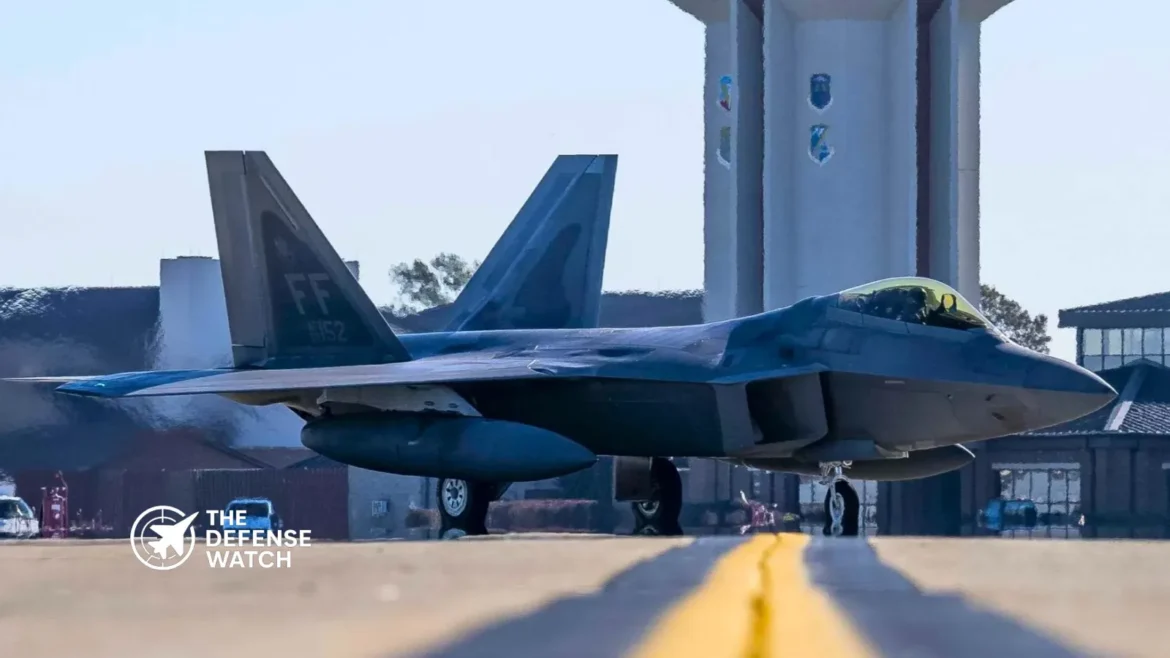
Recent imagery and reporting indicate that F-22 aircraft have been sighted at RAF Lakenheath, a long-standing U.S. Air Force hub in Britain. While U.S. officials have not publicly detailed the mission profile, the timing aligns with broader Pentagon adjustments to regional force deployments.
The presence of the aircraft may signal preparations for reinforcement or contingency options tied to Middle East security dynamics. The U.S. Department of Defense has repeatedly emphasized that it retains the ability to surge advanced air assets where needed.
Strategic Value Of The F-22 Raptor
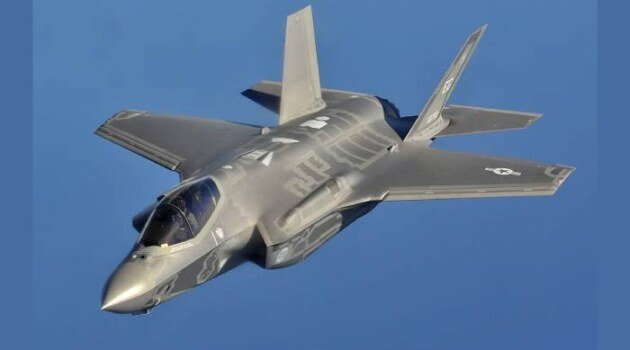
The F-22 Raptor remains the U.S. Air Force’s premier air superiority fighter. Developed by Lockheed Martin, the platform combines low observability, supercruise capability, and advanced avionics.
Unlike multirole fighters, the F-22 is optimized for air dominance missions. It can penetrate contested airspace, conduct beyond-visual-range engagements, and coordinate targeting data across joint forces. Its AN APG-77 radar and sensor fusion architecture allow pilots to detect and track threats at extended distances.
Although the aircraft is not permanently based in Europe, RAF Lakenheath frequently hosts rotational deployments. The base also supports the F-35A fleet assigned to U.S. Air Forces in Europe, making it a logical staging point for advanced fighter operations.
From a force posture standpoint, forward positioning F-22 Raptors in the UK provides geographic flexibility. Aircraft can rapidly deploy eastward toward the Middle East or operate across the European theater in support of NATO commitments.
Middle East Airpower Context
The Middle East remains a priority theater for U.S. Central Command. In recent months, Washington has adjusted air and naval deployments in response to regional tensions, threats to maritime traffic, and risks to U.S. personnel.
The U.S. Department of Defense has not formally confirmed that the F-22 Raptors sighted in the UK are earmarked specifically for Middle East operations. However, such deployments are consistent with established U.S. practice of maintaining strategic ambiguity while ensuring credible deterrence.
Historically, the F-22 has been deployed to the Middle East to counter advanced air defense systems and provide air superiority coverage. Its presence serves both operational and signaling purposes. The aircraft’s stealth profile complicates adversary planning and reinforces U.S. escalation control options.
Why The UK Matters In U.S. Force Projection
RAF Lakenheath plays a central role in U.S. transatlantic air operations. The base offers hardened infrastructure, munitions storage, and established logistics pipelines.
In practical terms, stationing F-22 Raptors in the UK reduces transit time to multiple theaters. Aircraft can move south toward the Middle East, east toward Eastern Europe, or remain in the North Atlantic area.
This flexibility aligns with the Pentagon’s shift toward dynamic force employment. Rather than maintaining large, static footprints, the U.S. military increasingly relies on rotational deployments and rapid repositioning.
For allies, visible F-22 operations reinforce collective defense commitments. For potential adversaries, they signal readiness without requiring permanent basing changes.
Operational And Strategic Implications
The sighting of US F-22 Raptors in the UK should be viewed within a broader pattern of calibrated force adjustments. It does not automatically indicate imminent military action.
Instead, it reflects layered deterrence. By moving high-end assets closer to potential flashpoints, the U.S. preserves response options while maintaining strategic depth.
There is also an interoperability dimension. Operating from the UK allows F-22 units to integrate with NATO air forces and conduct joint training. Such coordination improves readiness for both European and Middle Eastern contingencies.
At the same time, the limited fleet size of the F-22 makes each deployment notable. With fewer than 200 aircraft built and a smaller number mission-capable at any given time, any forward positioning signals deliberate planning.
Looking Ahead
As of now, U.S. officials have not announced a permanent redeployment. The situation underscores how quickly airpower assets can shift in response to evolving security conditions.
The presence of US F-22 Raptors in the UK reinforces Washington’s emphasis on flexibility, deterrence, and alliance coordination. Whether tied directly to Middle East contingencies or broader NATO considerations, the move reflects a force posture designed for rapid adaptation.
-
For defense planners, the key takeaway is clear. Advanced air dominance assets remain central to U.S. strategy, and their movement often speaks as loudly as formal policy statements.
-
â– KEY FACTS AT A GLANCE- â–º Trump was briefed on multiple U.S. military options in Iran, according to The Wall Street Journal.
- â–º One option reportedly targets senior political and military leaders in an effort to destabilize the regime.
- ► A limited strike alternative focuses on Iran’s nuclear and ballistic missile programs.
- â–º The U.S. is assembling its largest regional force posture since the 2003 Iraq invasion.
- â–º The buildup signals heightened deterrence and contingency planning across the Middle East.
Trump Briefed On U.S. Military Options In Iran, WSJ Reports
U.S. military options in Iran were presented to former President Donald Trump in a detailed briefing outlining potential operations designed to inflict maximum damage on Tehran’s leadership and regional network, according to a report by The Wall Street Journal.
The report states that the proposed courses of action range from a broad campaign aimed at eliminating key political and military leaders to a more limited strike package focused on Iran’s nuclear and ballistic missile infrastructure.
At the same time, the United States is concentrating what the Journal describes as its largest military force in the Middle East since the 2003 invasion of Iraq, signaling a significant shift in regional posture.
A Spectrum Of Strike Options
According to the Journal, the most expansive proposal involves a coordinated campaign to eliminate numerous Iranian political and military leaders. Such a course of action would likely resemble a decapitation strategy designed to disrupt command and control structures.
Historically, similar approaches have been used in counterterrorism campaigns against non state actors. Applying that model to a sovereign state such as Iran would represent a far more complex and escalatory step.
A more limited option focuses on infrastructure linked to Iran’s nuclear enrichment and ballistic missile programs. That could include strikes on hardened facilities, missile production sites, and command nodes tied to the Islamic Revolutionary Guard Corps.
The distinction between the two paths is significant. One is regime focused. The other is capability focused. Each carries different operational demands and escalation risks.
Largest U.S. Force Concentration Since 2003
The reported buildup marks the largest U.S. military concentration in the Middle East since the Iraq invasion in 2003, a campaign launched under President George W. Bush.
While specific force elements were not detailed in the report, such deployments typically involve carrier strike groups, long range bomber task forces, air defense assets, and additional ground based support units.
In recent years, U.S. Central Command has maintained a rotational presence across Gulf states, along with air and naval patrols intended to deter Iranian activity. Expanding that posture to 2003 levels suggests a contingency planning environment rather than routine deterrence.
From a strategic standpoint, force concentration serves two purposes. It enhances operational readiness. It also sends a political signal to both adversaries and regional partners.
Strategic And Regional Implications
Any execution of the outlined U.S. military options in Iran would have immediate regional consequences.
Iran maintains a network of allied groups and proxy forces across Iraq, Syria, Lebanon, and Yemen. A broad strike campaign could trigger retaliatory actions against U.S. forces or partner nations.
A limited strike on nuclear and missile facilities might aim to constrain escalation. However, even a targeted operation could prompt asymmetric responses, including cyber operations or missile launches.
For Gulf allies, the expanded U.S. presence may provide reassurance. At the same time, regional capitals are likely assessing the risk of becoming staging grounds or potential targets.
Energy markets would also be sensitive to any disruption in the Strait of Hormuz, a critical maritime chokepoint for global oil shipments.
Military Planning Versus Political Decision
It is important to distinguish between military planning and policy execution.
The Pentagon routinely develops a range of contingency options for potential crises. Briefing national leadership on those options does not equate to a decision to act.
The Journal report indicates that the courses of action are designed to maximize pressure on the Iranian regime. Whether such plans move beyond the planning stage depends on political direction, alliance coordination, and evolving regional dynamics.
In the current environment, the scale of U.S. deployments suggests that deterrence and preparedness are central objectives. Still, the presence of detailed strike options underscores how rapidly tensions could escalate if diplomatic channels fail.
â– KEY FACTS AT A GLANCE- â–º The Arab Atomic Energy Agency signed a strategic nuclear cooperation agreement with Rosatom.
- â–º The partnership focuses on peaceful nuclear energy use, scientific research, personnel training, and infrastructure development.
- â–º Arab states will participate in the MBIR Multipurpose Fast Neutron Research Reactor project in Russia.
- â–º MBIR is designed for advanced reactor physics research, fuel cycle testing, and materials experimentation.
- â–º The agreement strengthens Russia’s nuclear diplomacy and long-term scientific influence in the Middle East.
- â–º Arab participation may influence future nuclear reactor procurement decisions and regulatory standards.
- â–º International safeguards and IAEA oversight will monitor research activities to ensure peaceful use.
AAEA Rosatom Nuclear Energy Agreement Deepens Scientific Cooperation
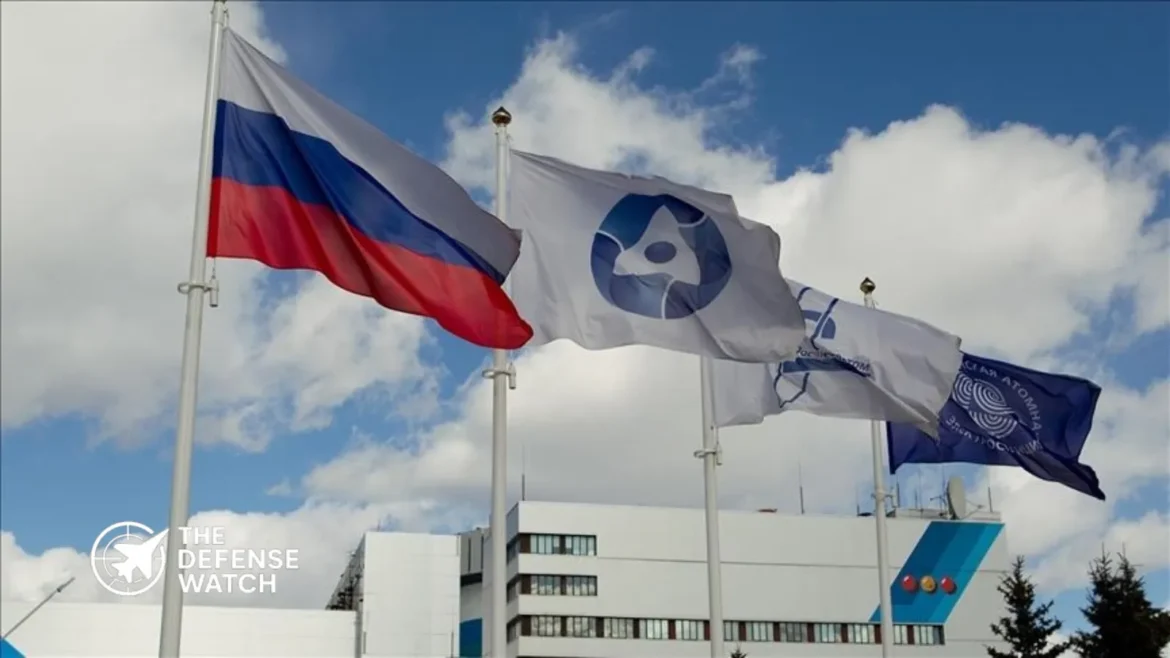
The AAEA Rosatom nuclear energy agreement formalizes cooperation between the Arab Atomic Energy Agency and Russia’s state nuclear corporation, Rosatom, on the peaceful use of nuclear energy, including participation in the MBIR Multipurpose Fast Neutron Research Reactor project.
On the surface, the agreement centers on research, training, and infrastructure development. However, its timing and structure point to a broader strategic dimension. Russia is reinforcing its long-term nuclear partnerships in the Middle East at a time when global energy supply chains are under pressure and geopolitical alignments are evolving.
The agreement expands collaboration in advanced reactor science through MBIR, a next-generation fast neutron research reactor designed to support fuel cycle innovation, materials testing, and advanced reactor development. For Arab states seeking to expand civil nuclear capabilities, this offers access to a high-end research ecosystem that few countries can provide.
For Moscow, it strengthens a tool it has used effectively for two decades: nuclear diplomacy.
What the MBIR Project Represents
The MBIR reactor, under construction in Dimitrovgrad, is designed as one of the world’s most powerful multipurpose fast neutron research reactors. Fast neutron reactors differ from conventional thermal reactors in their ability to test advanced fuels and materials under intense neutron flux, making them central to next-generation nuclear technology, including closed fuel cycles and advanced safety systems.
Russia has positioned MBIR as an international research platform. By inviting foreign participation, Rosatom seeks to anchor long-term scientific cooperation, attract foreign investment, and lock in partnerships that can extend for decades.
For Arab states, access to MBIR offers:
- Advanced reactor physics research
- Training for nuclear engineers and scientists
- Participation in fuel cycle experimentation
- Data and materials testing that would be costly to replicate domestically
For Russia, it consolidates its position as one of the few countries capable of delivering the full nuclear value chain, from research to construction to fuel supply and waste management.
Why This Matters Now
The agreement comes at a time when Middle Eastern governments are revisiting energy security strategies. Several states in the region are pursuing nuclear power to diversify away from hydrocarbons while maintaining export revenues. At the same time, global competition in civil nuclear exports has intensified.
The United States, through frameworks such as Section 123 agreements under the Atomic Energy Act, maintains strict nonproliferation conditions. France, through EDF, and South Korea, through KEPCO, compete aggressively in reactor exports. China has expanded nuclear cooperation in Asia and Africa.
Russia remains one of the most active nuclear exporters globally. According to Rosatom public data and assessments from the World Nuclear Association, Russia has built or is constructing dozens of reactors abroad. The company’s integrated financing model, often supported by state loans, makes it an attractive partner for countries seeking turnkey solutions.
The AAEA Rosatom nuclear energy agreement must be seen in this competitive landscape. It strengthens Moscow’s technical footprint in the Arab world beyond individual bilateral reactor deals, extending influence into multilateral institutional frameworks.
Operational Impact on Regional Nuclear Programs
From an operational standpoint, the agreement enhances human capital development in participating Arab states.
Nuclear energy programs require decades of investment in training, regulatory oversight, safety culture, and technical infrastructure. By embedding Arab researchers and engineers in the MBIR ecosystem, Rosatom effectively shapes future technical standards and professional networks.
This has practical implications:
- Reactor design familiarity may favor Russian technology in future procurement decisions.
- Regulatory approaches could align more closely with Russian methodologies.
- Fuel supply and back-end services may gravitate toward Rosatom-linked arrangements.
For countries at early stages of nuclear development, this type of institutional alignment often precedes large-scale procurement decisions.
The U.S. Department of Energy and the Nuclear Regulatory Commission emphasize that long-term technical engagement influences regulatory culture. In this sense, scientific cooperation is not politically neutral. It shapes pathways.
Industrial and Financial Dimensions
Rosatom’s model differs from Western competitors in one key area: vertical integration.
The corporation controls uranium mining, fuel fabrication, reactor construction, engineering services, and decommissioning. This end-to-end model reduces fragmentation and simplifies contract structures for partner states.
By connecting the Arab Atomic Energy Agency to MBIR research activities, Rosatom expands the upstream portion of that value chain. Research cooperation often translates into commercial opportunities down the line.
The financial implications are significant. Nuclear projects can exceed $10 billion per plant. Research cooperation may appear modest compared to reactor construction contracts, but it builds the technical confidence required for such investments.
In a region where sovereign wealth funds actively pursue strategic technology partnerships, research-level integration can be a precursor to large capital flows.
Regional Security Context
The Middle East remains a region where nuclear energy development is closely scrutinized for proliferation risks. The International Atomic Energy Agency maintains safeguards across regional programs, and the Non-Proliferation Treaty remains the governing framework.
Fast neutron research reactors attract particular attention because they are central to advanced fuel cycles, including plutonium management. While the MBIR project is framed for peaceful use, the technical expertise associated with fast reactor research has dual-use characteristics.
This does not imply violations. However, it underscores why external actors, particularly the United States and European Union, monitor such agreements closely.
Russia’s expanded nuclear engagement in the Arab world intersects with broader geopolitical trends:
- Gulf states balancing relations between Washington, Moscow, and Beijing
- Energy market coordination through OPEC+
- Regional hedging strategies amid U.S. force posture adjustments
In this context, civil nuclear cooperation is part of a larger diplomatic architecture.
Comparison With Western and Asian Competitors
The United States traditionally conditions nuclear cooperation on strict nonproliferation commitments. South Korea’s APR-1400 export model emphasizes safety track records and alliance-backed credibility. France leverages decades of operational expertise and EU regulatory integration.
Russia’s competitive advantages include:
- State-backed financing
- Rapid construction timelines
- Fuel supply guarantees
- Willingness to localize elements of production
China is also expanding research reactor exports and has invested in fast reactor development. However, Russia’s experience with fast neutron technology remains more mature in operational terms.
The AAEA Rosatom nuclear energy agreement strengthens Moscow’s comparative advantage in advanced reactor science, a niche area where few competitors operate at scale.
Strategic Assessment
The agreement’s broader impact lies in influence rather than immediate hardware deployment.
Regional Power Balance:
The deal reinforces Russia’s scientific presence in the Middle East. While it does not alter military balances directly, it expands Moscow’s leverage in energy diplomacy. Over time, countries aligned with Russian nuclear ecosystems may demonstrate greater policy flexibility toward Moscow in international forums.Deterrence Implications:
There is no direct military deterrence shift. However, advanced nuclear research capabilities contribute to national prestige and technological autonomy. States investing in nuclear science often gain broader industrial capacity that can spill into defense sectors.Budget and Procurement Signals:
Engagement in MBIR suggests participating states are considering long-term nuclear investments. This may precede reactor procurement decisions. For Western suppliers, it signals heightened competition in upcoming tenders.Alliance Dynamics:
The agreement reflects ongoing diversification by Arab states. Many continue strong defense ties with the United States while expanding economic and scientific links with Russia and China. This multipolar engagement reduces exclusive dependence on any single partner.Escalation Risks:
The primary risk lies in perception. Advanced nuclear cooperation in a sensitive region can trigger political scrutiny, particularly if geopolitical tensions intensify. Transparency and adherence to International Atomic Energy Agency safeguards will be critical to prevent misinterpretation.What Happens Next
Several developments are likely in the coming years:
- Expanded training programs and researcher exchanges tied to MBIR.
- Potential memoranda of understanding between individual Arab states and Rosatom for reactor feasibility studies.
- Increased Western diplomatic engagement aimed at preserving influence in regional nuclear sectors.
- Greater scrutiny from nonproliferation bodies to ensure safeguards compliance.
The AAEA Rosatom nuclear energy agreement is not a dramatic shift. It is a steady, structural move. Russia is embedding itself deeper into the scientific and institutional architecture of Middle Eastern nuclear development.
Iran Indicates Readiness For Nuclear Negotiations With US
Iran’s Foreign Minister Abbas Araghchi stated Sunday that Tehran is prepared to make compromises on its nuclear program if the United States engages in discussions about lifting sanctions, according to a Reuters report. The statement marks a potential shift in diplomatic positioning as both nations navigate complex Middle East security dynamics.
Speaking during an interview, Araghchi emphasized that any negotiations must include substantive talks on sanctions relief, signaling that Iran views economic pressure removal as prerequisite for nuclear concessions. The announcement comes amid heightened regional tensions and follows years of stalled diplomacy since the US withdrew from the Joint Comprehensive Plan of Action (JCPOA) in 2018.
Background On Iran’s Nuclear Program Development
Iran’s nuclear program has been a focal point of international security concerns for over two decades. Since the US exit from the JCPOA under the Trump administration, Tehran has systematically increased its uranium enrichment levels, moving beyond the 3.67% purity cap established in the original 2015 agreement.
According to International Atomic Energy Agency (IAEA) reports, Iran currently enriches uranium to 60% purity—significantly closer to the 90% threshold required for weapons-grade material. This escalation has prompted urgent calls from Western powers for renewed diplomatic engagement to prevent potential nuclear weapons development.
The original JCPOA, negotiated by the Obama administration alongside European powers, China, and Russia, provided Iran sanctions relief in exchange for strict limitations on its nuclear activities. The agreement included provisions for international monitoring, restrictions on centrifuge operations, and caps on uranium stockpiles.
Details Of Current Iranian Position On Negotiations
Araghchi’s statement represents Iran’s most explicit indication of negotiating flexibility in recent months. The foreign minister outlined that Tehran’s willingness to compromise depends entirely on Washington’s approach to sanctions discussions.
We are ready to engage in negotiations and make necessary compromises, but this requires the United States to seriously discuss the lifting of sanctions,” Araghchi stated, according to the Reuters report. The minister did not specify which aspects of Iran’s nuclear program might be subject to negotiation.
Iran has maintained that its nuclear program serves peaceful purposes, including energy generation and medical isotope production. However, Western intelligence agencies have expressed concerns about potential military dimensions, particularly given enrichment levels that exceed civilian requirements.
The timing of Araghchi’s comments coincides with ongoing regional developments, including Iran’s support for proxy forces across the Middle East and tensions with Israel. These broader geopolitical factors complicate any potential nuclear agreement framework.
US Policy Stance And Diplomatic Considerations
The current US administration faces complex calculations regarding Iran policy. While preventing Iranian nuclear weapons capability remains a stated national security priority, Washington must balance diplomatic engagement with concerns from regional allies, particularly Israel and Gulf Arab states.
US officials have previously indicated openness to diplomatic solutions but emphasized that any agreement must address Iran’s broader regional activities, including ballistic missile development and support for non-state actors. These expanded conditions represent a significant shift from the original JCPOA framework, which focused exclusively on nuclear issues.
Sanctions currently imposed on Iran target multiple sectors, including oil exports, banking, and shipping. The economic impact has been substantial, with Iran’s GDP contracting significantly since maximum pressure policies were implemented. However, Tehran has demonstrated resilience through gray market oil sales and regional trade partnerships.
Defense analysts note that any negotiations will require addressing verification mechanisms, given mutual distrust between Washington and Tehran. Previous agreements relied heavily on IAEA inspections, but Iran has reduced cooperation with international monitors since US withdrawal from the JCPOA.
Regional Security Implications And Strategic Context
Iran’s nuclear trajectory carries significant implications for Middle East security architecture. Regional powers, particularly Saudi Arabia, have indicated they would pursue their own nuclear capabilities if Iran develops weapons capacity, potentially triggering a regional arms race.
Israel has maintained that it will not permit Iran to acquire nuclear weapons, suggesting potential military options remain under consideration. Israeli officials have conducted extensive diplomatic efforts to discourage US re-engagement with Tehran without addressing what Jerusalem views as existential security concerns.
The US maintains substantial military presence across the Middle East, including naval assets in the Persian Gulf and air bases in Qatar, Bahrain, and other Gulf Cooperation Council nations. These deployments reflect ongoing concerns about Iranian capabilities and regional stability.
NATO allies, particularly European signatories to the original JCPOA, have advocated for renewed diplomatic engagement. France, Germany, and the United Kingdom have attempted to maintain the agreement’s framework despite US withdrawal, though with limited success given American sanctions pressure.
Technical Aspects Of Iran’s Nuclear Capabilities
Iran operates multiple nuclear facilities, including enrichment plants at Natanz and Fordow. The underground Fordow facility, built into a mountain near Qom, presents particular challenges for verification and potential military targeting due to its fortified construction.
Tehran’s centrifuge development has advanced significantly since JCPOA restrictions were abandoned. Iran now operates advanced IR-6 and IR-9 centrifuges, which enrich uranium more efficiently than the IR-1 models permitted under the original agreement. This technological progression complicates any negotiated rollback of capabilities.
The IAEA has reported that Iran’s stockpile of enriched uranium has grown substantially, with hundreds of kilograms enriched to 60% purity. While this remains below weapons-grade levels, nuclear experts note that the technical gap between 60% and 90% enrichment is significantly smaller than earlier stages of the enrichment process.
Iran’s heavy water reactor at Arak, redesigned under JCPOA provisions to limit plutonium production, represents another dimension of the nuclear program. Any comprehensive agreement would need to address both uranium enrichment and plutonium pathways to weapons capability.
Diplomatic Precedents And Negotiation Challenges
The original JCPOA required years of intensive negotiations, involving multiple rounds of talks in various locations. The agreement’s complexity reflected the technical nature of nuclear limitations and the political sensitivities of all parties involved.
Critics of the JCPOA argued that “sunset provisions”—time-limited restrictions that would expire after 10-15 years—merely delayed rather than prevented Iranian nuclear weapons capability. Proponents countered that the verification regime and diplomatic framework provided valuable tools for monitoring and engagement.
Any new agreement would likely face intense scrutiny from the US Congress, which retains authority over sanctions relief through legislative action. Previous efforts to codify JCPOA provisions in US law failed, contributing to the agreement’s vulnerability to executive branch policy changes.
International partners including China and Russia complicate the diplomatic equation. Both nations have expanded economic ties with Iran and may resist pressure tactics favored by Washington. Any sustainable agreement would require buy-in from these permanent UN Security Council members.
Current Status Of International Monitoring Efforts
The IAEA continues to monitor declared Iranian nuclear facilities despite reduced cooperation from Tehran. Iran has removed surveillance cameras and limited inspector access at various sites since 2021, creating gaps in the international community’s understanding of program developments.
IAEA Director General Rafael Grossi has made multiple visits to Tehran seeking expanded access and cooperation. These efforts have yielded limited results, with Iran maintaining that cooperation levels correspond to compliance with existing legal obligations rather than JCPOA provisions it no longer considers binding.
Undeclared sites and past military dimensions of Iran’s nuclear program remain contentious issues. The IAEA has identified particles of enriched uranium at locations Iran did not initially declare, raising questions about historical activities and current program scope.
Verification of any future agreement would require substantially enhanced monitoring compared to current levels. Technical experts emphasize that confidence in Iranian compliance depends on comprehensive access, including to military sites if credible information suggests nuclear-related activities.
Political Dynamics Within Iran’s Leadership
Iran’s political landscape features competing power centers, including elected officials, the Supreme Leader’s office, and the Islamic Revolutionary Guard Corps (IRGC). The IRGC controls significant economic assets and maintains hardline positions on many foreign policy issues.
Recent Iranian elections have seen fluctuating levels of reformist versus conservative influence, though ultimate authority on nuclear policy rests with Supreme Leader Ali Khamenei. His approval would be essential for any substantial compromise on nuclear capabilities.
Domestic political pressures in Iran include economic hardship caused by sanctions, which has generated public frustration. However, nationalist sentiment also creates resistance to perceived capitulation to foreign pressure, complicating any negotiated settlement that appears one-sided.
The generational transition in Iranian leadership over coming years may influence negotiating dynamics. Younger leadership cohorts face different strategic calculations regarding economic integration versus resistance to Western influence.
Economic Dimensions Of Sanctions And Potential Relief
US sanctions have targeted Iran’s most lucrative sectors, particularly petroleum exports that historically provided substantial government revenue. Enforcement efforts have involved sanctioning third-party entities that facilitate Iranian oil sales, creating global compliance pressures.
Iran’s economy has adapted through various mechanisms, including cryptocurrency usage, barter arrangements, and informal banking networks. Regional trade with neighboring states continues despite sanctions, though at reduced levels and under constrained financial terms.
Sanctions relief would potentially unlock billions in frozen Iranian assets held in foreign banks. The scope and timeline of any relief would be critical negotiating points, with Iran seeking immediate benefits and the US likely preferring phased implementation tied to verified nuclear steps.
European companies exited the Iranian market following US sanctions reimposition, despite EU efforts to maintain trade channels. Any durable economic normalization would require US policy certainty that extends beyond individual administrations.
Defense Industry Implications And Regional Arms Dynamics
Iran’s defense industrial base has developed indigenous capabilities partly in response to international isolation. Domestic production of missiles, drones, and other systems has progressed significantly, with Iranian unmanned systems now deployed in various regional conflicts.
The relationship between Iran’s nuclear program and conventional military modernization remains complex. Some analysts argue that nuclear capability would provide strategic deterrence allowing Iran to reduce conventional force requirements, while others suggest both programs advance in parallel.
Regional arms purchases by Gulf states have accelerated partly in response to Iranian capabilities. US defense contractors have benefited from substantial sales of advanced aircraft, missile defense systems, and naval platforms to Saudi Arabia, UAE, and other partners.
Israel’s qualitative military edge, enshrined in US policy, factors prominently in regional security calculations. Any shift in Iran’s nuclear status would trigger reassessments of Israeli force posture and capabilities requirements.
Prospects For Near-Term Diplomatic Progress
Diplomatic observers note significant obstacles to rapid agreement between Washington and Tehran. Beyond nuclear technical issues, broader regional dynamics including Yemen, Syria, and Lebanon complicate any comprehensive framework.
Confidence-building measures could potentially create conditions for substantive negotiations. These might include prisoner exchanges, limited sanctions relief for humanitarian goods, or technical discussions on specific nuclear facilities.
The role of third-party mediators may prove crucial given direct US-Iran negotiations’ political sensitivity. Oman has historically facilitated discreet communications, while European allies maintain channels with both sides.
Timing considerations include domestic political calendars in both nations. US administrations face constraints from congressional oversight, while Iranian leadership must navigate internal factional politics and public opinion.
Strategic Assessment For Defense Planning
US defense planning continues to account for potential Iranian nuclear breakout scenarios. Military options remain under development, though officials emphasize diplomatic solutions as preferred approaches.
The proliferation implications of Iranian nuclear weapons capability extend beyond the Middle East. Weakening of the global non-proliferation regime would affect security calculations in other regions including Northeast Asia.
Intelligence collection regarding Iran’s nuclear program remains a priority for US and allied services. Technical intelligence on enrichment activities, weapons design work, and delivery system development informs policy decisions.
Allied coordination on Iran policy involves extensive consultations among US, European, and regional partners. Diverging threat perceptions and economic interests complicate consensus-building on appropriate responses.
Trump Greenland deal claims meet Danish resistance
President Donald Trump said the United States has reached an understanding with Denmark on Greenland after negotiations he described as successful, calling it a very important deal for US national security. Danish officials quickly pushed back, stating that any agreement does not involve a transfer of sovereignty and that Greenland remains part of the Kingdom of Denmark.
Speaking to reporters aboard Air Force One on January 31, Trump said negotiations had started and that consensus had been reached on numerous issues. He added that Europe also wants the United States to conclude an agreement, without providing details on scope, timing, or legal terms.
Danish leaders responded by reiterating long standing positions that Greenland is not for sale and that sovereignty is non negotiable. Officials emphasized that any discussions with Washington focus on cooperation, not ownership.
What Trump said and what remains unclear
Trump framed the Greenland talks as a strategic matter tied to national security, a theme he has raised repeatedly since his first term. He told reporters that the deal would be good for everybody and suggested progress across multiple areas.
No formal agreement text has been released. The White House has not published details on defense basing, investment, or governance arrangements. The absence of specifics has left analysts cautious, with Danish authorities underscoring that negotiations continue and that public claims should not be read as final outcomes.
From Copenhagen’s perspective, the talks fall within existing frameworks for defense cooperation and economic engagement, not territorial change. Greenland’s own elected government also plays a central role in decisions affecting the island.
Why Greenland matters to US defense planning
Greenland holds strategic value due to its location between North America and Europe and its proximity to the Arctic. The island hosts Pituffik Space Base, formerly Thule Air Base, a key node for US missile warning, space surveillance, and Arctic operations.
As Arctic ice recedes, shipping lanes and access to natural resources are expanding, drawing increased attention from major powers including Russia and China. US defense planners view Greenland as critical to early warning systems and to maintaining freedom of movement in the North Atlantic and Arctic regions.
These realities underpin Washington’s interest in deepening cooperation with Denmark and Greenland, particularly in areas such as missile defense, space domain awareness, and infrastructure resilience.
Denmark and Greenland responses
Danish officials moved quickly to clarify that sovereignty was not part of any discussion. Statements from Copenhagen stressed that Greenland’s status is defined by international law and by the self rule framework that grants Greenland broad autonomy over domestic affairs.
Greenlandic leaders have historically welcomed US investment and security cooperation, while also insisting on respect for local governance and environmental protections. Any expansion of US activity typically requires consultation with Nuuk as well as Copenhagen.
The Danish government emphasized that dialogue with the United States remains constructive and focused on shared security interests in the Arctic.
Broader geopolitical context
The Trump Greenland deal narrative emerges amid heightened competition in the Arctic. Russia has expanded military infrastructure along its northern coast, while China has declared itself a near Arctic state and invested in polar research and infrastructure.
NATO allies have responded by increasing exercises, surveillance, and coordination in the High North. Denmark, as a NATO member, views cooperation with the United States as essential, but within established alliance norms and legal frameworks.
For Washington, reinforcing Arctic presence aligns with broader defense priorities that include missile defense modernization, space security, and protection of transatlantic sea lanes.
What to watch next
Key questions remain unresolved. These include whether any new basing agreements are planned, how investment and infrastructure projects would be structured, and how Greenland’s government will shape outcomes.
Until formal documents are released or joint statements issued, the Trump Greenland deal remains more a political claim than a defined policy shift. Danish insistence on sovereignty suggests continuity rather than change in Greenland’s legal status.
Future clarity is likely to come through official communiqués from Washington, Copenhagen, and Nuuk, rather than through off the cuff remarks.
China-UK Relations and Strategic Dialogue
China-UK relations have faced mounting strain over the past year, shaped by disputes over security policy, technology controls, and broader geopolitical alignment. Yet officials in both London and Beijing continue to stress that dialogue remains necessary, citing their shared responsibilities as permanent members of the United Nations Security Council and major global economies.
The bilateral relationship has become a test case for how mid-sized Western powers manage engagement with China amid rising competition between Beijing and Washington. For the UK, China policy now sits at the intersection of economic risk management, national security, and alliance commitments. For China, relations with London remain important as Beijing seeks stable ties with European powers.
Officials on both sides have framed engagement not as endorsement, but as a tool for managing risk and avoiding miscalculation.
A Relationship Marked by Friction
China-UK relations deteriorated steadily over the past year, driven by disagreements on issues ranging from technology supply chains to regional security. London has taken a more cautious stance on Chinese investment in sensitive sectors, while expanding scrutiny of research collaboration and telecommunications infrastructure.
The UK government has publicly described China as a systemic challenge, while also acknowledging areas where cooperation remains necessary. Beijing, in turn, has criticized what it sees as politicization of trade and security issues, warning against alignment with broader containment strategies.
Despite this, neither side has formally downgraded diplomatic ties. Embassy-level engagement, military attaché channels, and multilateral contacts remain in place.
Security and Defense Context
From a defense and security perspective, China-UK relations are shaped less by direct military confrontation and more by global posture and alliance dynamics. The UK plays a leading role in NATO and remains closely aligned with US Indo-Pacific strategy, including freedom of navigation operations and defense partnerships in Asia.
China views these moves as part of a wider security environment that increasingly involves European actors. While there is no direct military standoff between China and the UK, defense signaling, arms control dialogue, and crisis communication are increasingly relevant.
As permanent members of the UN Security Council, both countries retain influence over sanctions regimes, peacekeeping mandates, and conflict response. Analysts note that sustained communication between London and Beijing reduces the risk of diplomatic gridlock during international crises.
Economic Ties Under Review
Economic engagement remains a central but contested pillar of China-UK relations. China continues to rank among the UK’s largest trading partners, though investment flows have slowed amid tighter screening rules and political caution.
British officials have emphasized a policy of risk reduction rather than wholesale decoupling. This approach seeks to protect critical technologies while maintaining trade in non-sensitive sectors such as consumer goods and basic manufacturing.
Chinese officials have urged the UK to maintain an open investment environment and avoid what they describe as security overreach. Both sides appear aware that economic disengagement would carry costs at a time of global supply chain uncertainty.
Why Dialogue Still Matters
Despite tensions, policymakers in both capitals continue to argue that structured dialogue is essential. This includes diplomatic talks, economic working groups, and engagement through international institutions.
China and the UK share overlapping interests on climate policy, nuclear non-proliferation, and global financial stability. Cooperation in these areas does not require alignment on all political issues, but it does depend on sustained communication.
From a strategic perspective, dialogue also serves a stabilizing function. Even limited engagement can help clarify intentions, reduce misperception, and manage disagreements before they escalate.
Multilateral Pressure and Global Stability
The broader international environment has added urgency to calls for engagement. Ongoing conflicts, rising defense spending, and strained global governance mechanisms have placed additional pressure on major powers to coordinate where possible.
Within the UN Security Council, China and the UK are often required to engage directly on sanctions, ceasefire resolutions, and humanitarian access. Functional working relationships at this level can influence outcomes well beyond bilateral ties.
Defense analysts note that great power competition does not eliminate the need for cooperation on crisis response, arms control, and escalation management.
Outlook for China-UK Relations
China-UK relations are unlikely to return to the expansive tone seen in earlier decades. Structural differences on security, values, and alliance alignment remain. However, neither side appears to be seeking a full rupture.
Instead, the relationship is evolving into a more transactional and risk-managed framework. Dialogue, while limited, is increasingly viewed as a practical necessity rather than a political concession.
For London and Beijing alike, the challenge will be balancing strategic caution with the need to keep communication channels open in an increasingly fragmented global security environment.